Meiji Period Ivory Okimono of Fudō Myōō in Combat – Signed, with CITES
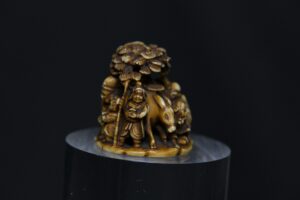
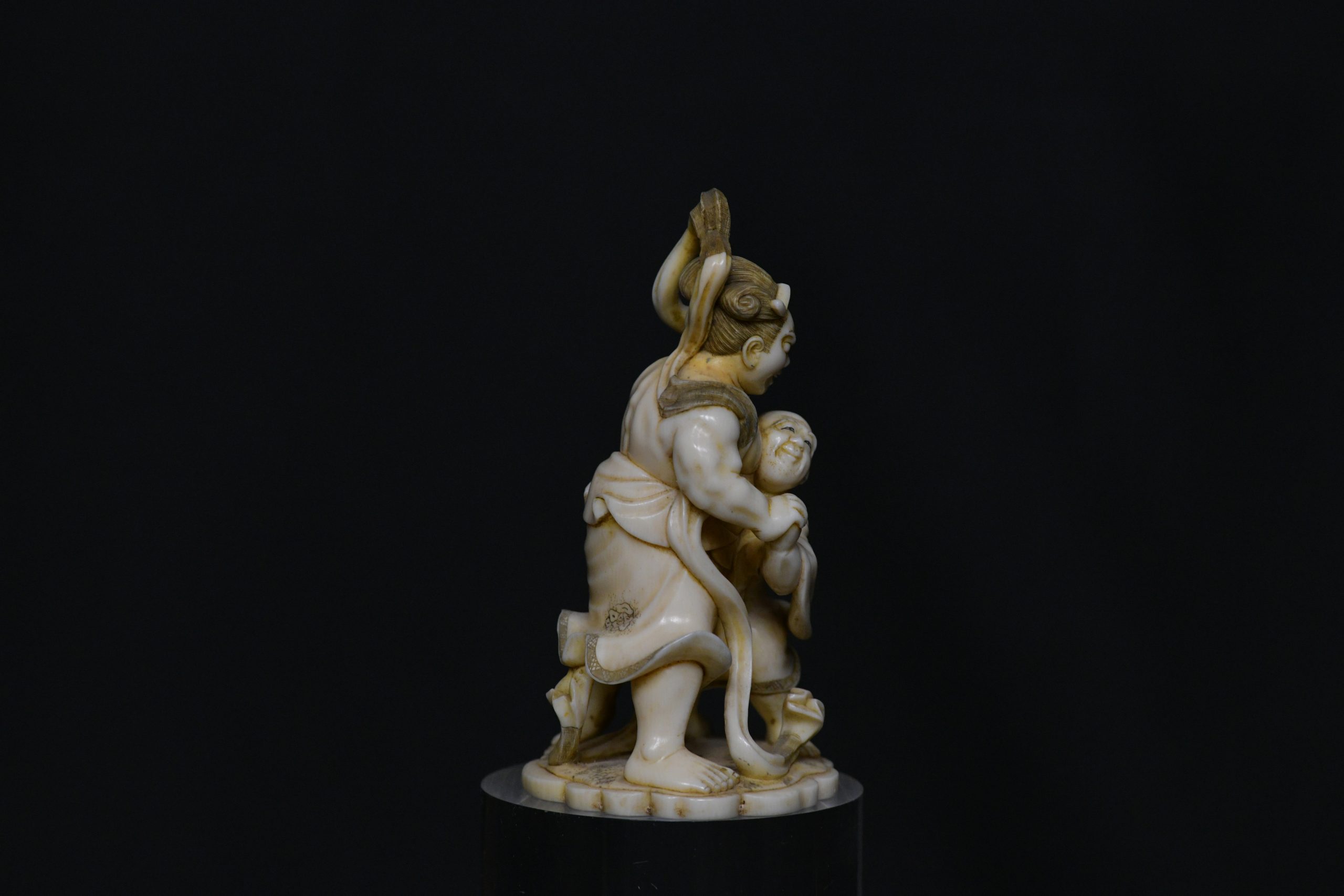
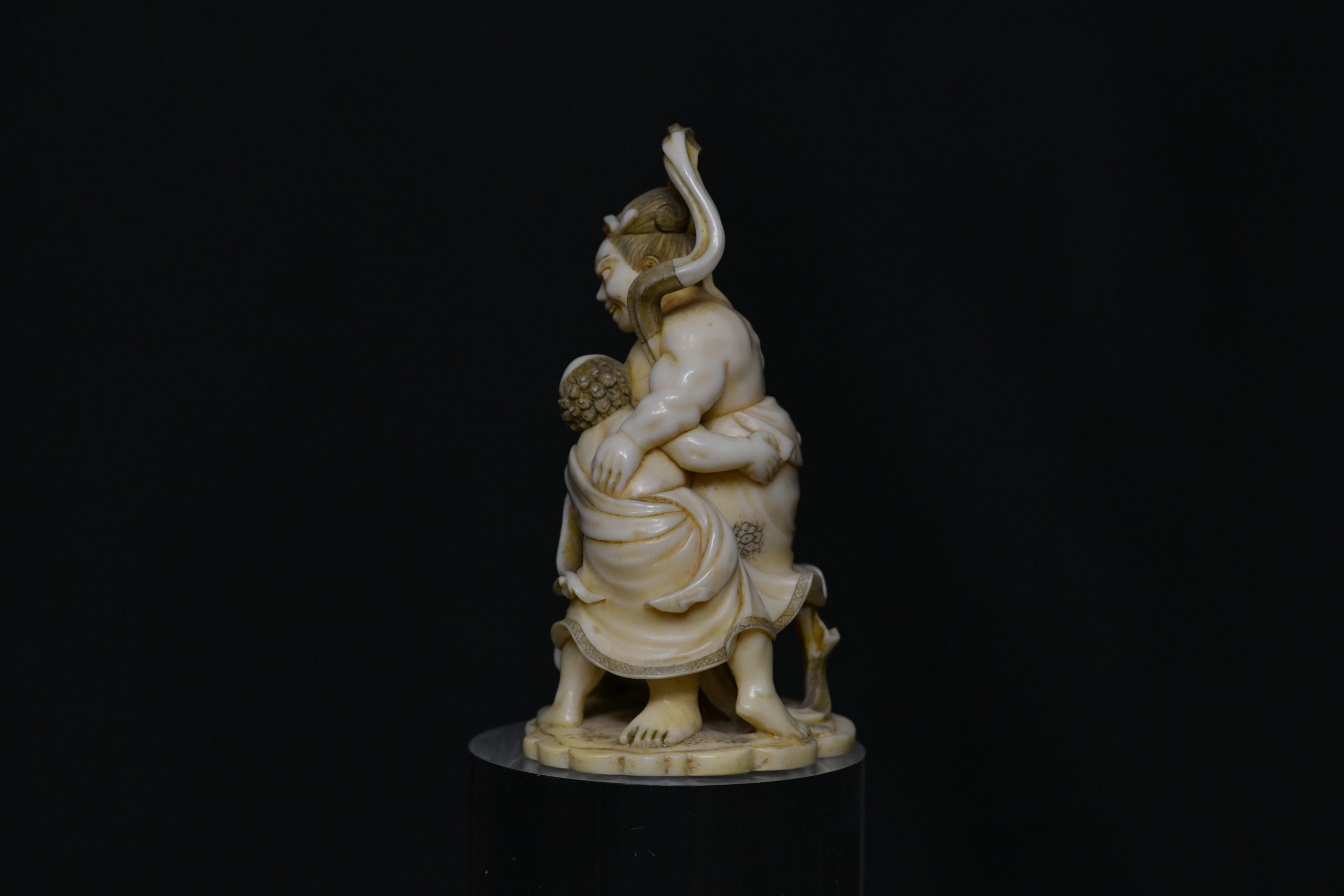
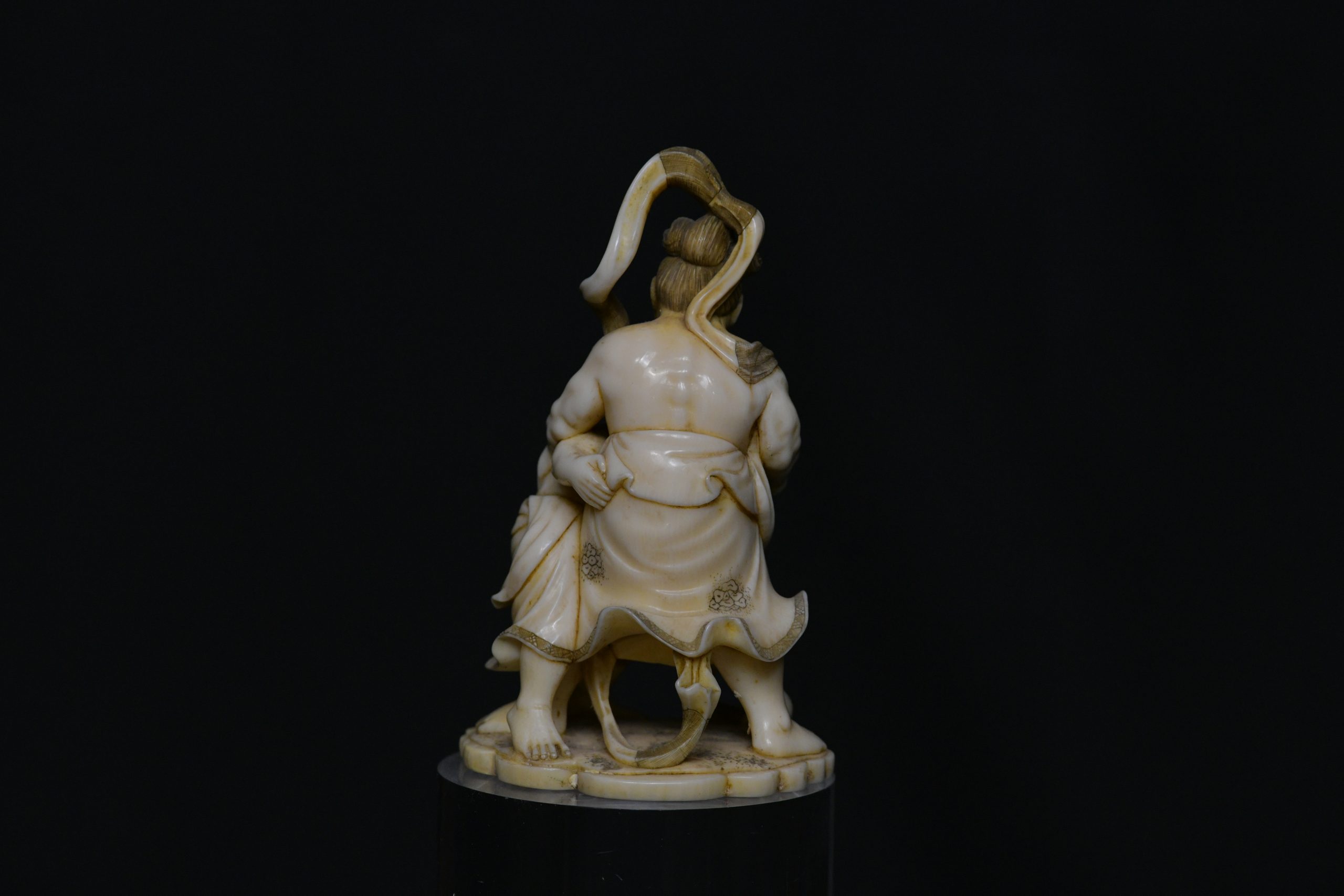
A striking Japanese ivory okimono from the Meiji period, dating to the late 19th century and depicting Fudō Myōō engaged in a dramatic physical struggle with a male figure.
The sculptor has created a compact but highly dynamic composition, using intertwined bodies, expressive gestures and carefully carved drapery to convey movement and tension from multiple viewing angles.
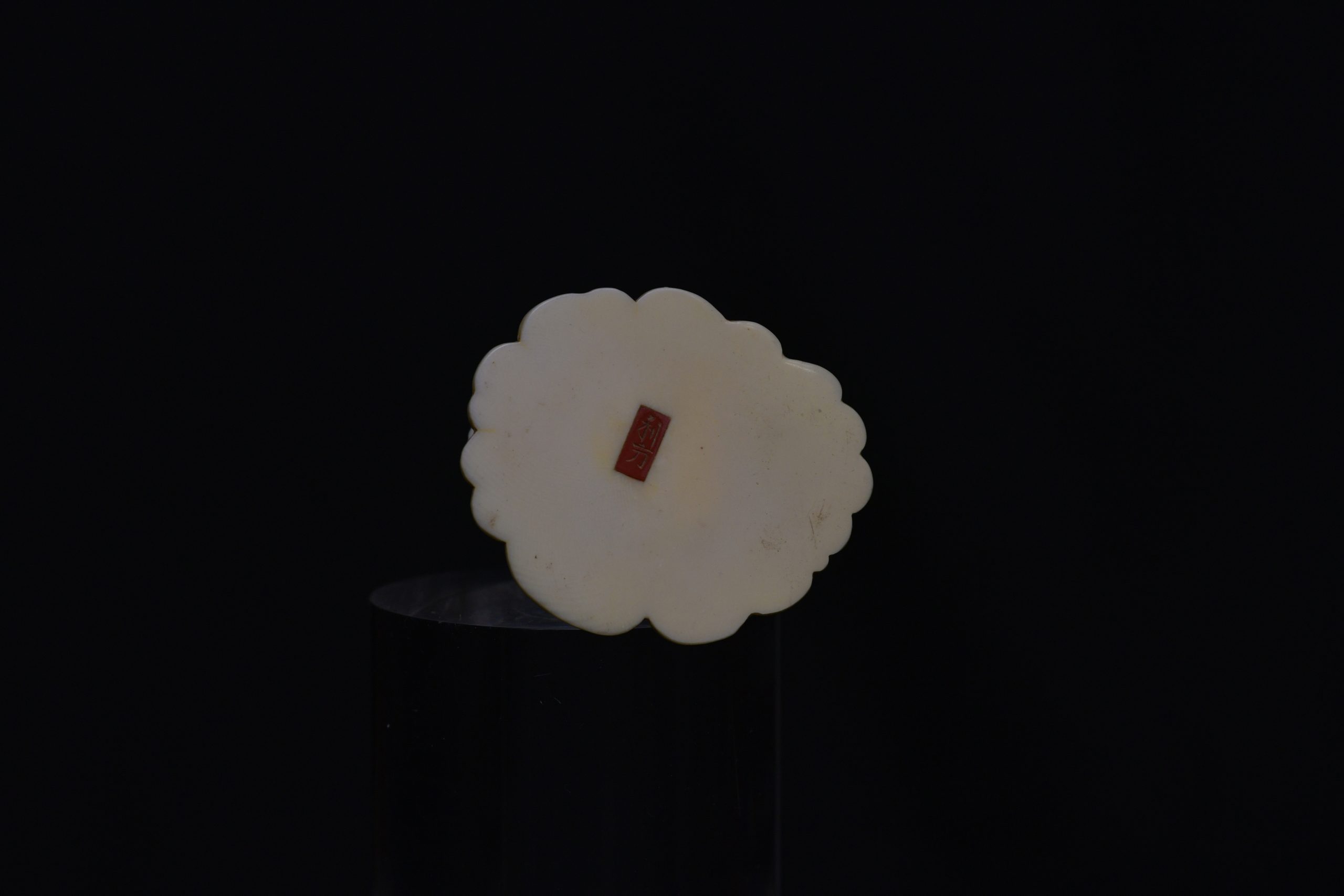
The piece is signed with a red inlaid signature tablet and is accompanied by both a certificate of appraisal and CITES documentation.
Fudō Myōō – The Immovable Wisdom King
Fudō Myōō is one of the most important protective figures in Japanese esoteric Buddhism and belongs to the group of deities known as the Myōō, or Wisdom Kings.
His name is commonly translated as “The Immovable One”, referring to the unwavering nature of enlightened wisdom and resolve.
Fudō is traditionally represented with a fierce expression and a powerful physical presence, imagery intended not as simple violence but as a symbolic manifestation of the force required to overcome ignorance, obstacles and harmful influences.
This okimono translates that powerful character into an unusually active figural composition, depicting Fudō in direct physical confrontation with another figure.
A Dynamic Figural Composition
The sculpture is notable for its strong sense of movement and interaction.
Rather than presenting Fudō in a static devotional pose, the carver has arranged the two figures in a closely interlocked struggle. The bodies, garments and gestures are designed to be read together, creating a composition that changes as the object is viewed from different angles.
This type of complex figural arrangement requires careful spatial planning on a very small scale, particularly where limbs, drapery and facial expressions overlap.
Fine Meiji Period Carving
The okimono dates to the Meiji period (1868–1912), and more specifically to the late 19th century.
This period was particularly important for Japanese decorative arts. Highly skilled carvers produced increasingly elaborate small-scale sculptures for domestic patrons and for an expanding international market interested in Japanese craftsmanship.
The present piece reflects that tradition through detailed modelling, expressive figures and a composition intended to reward close inspection.
Ivory Okimono
The sculpture is carved from ivory, a material historically used by Japanese carvers for finely detailed netsuke, okimono and other miniature works.
Its fine grain allowed artists to reproduce delicate facial features, folds of clothing, hair and small anatomical details with considerable precision.
The material should be understood within the historical context of Meiji-period Japanese decorative arts. This example is accompanied by CITES documentation, an important element in documenting the legal and historical status of antique ivory objects.
Signed with Red Inlay
The okimono bears a signature set within a red inlaid tablet.
This type of signature presentation provides a visually distinctive contrast with the surrounding ivory and is a feature frequently encountered on carefully finished Japanese decorative carvings of the period.
No specific attribution to an individual carver is asserted here beyond the surviving signature itself and the accompanying appraisal documentation.
Certificate of Appraisal and CITES Documentation
The piece is accompanied by supporting documentation:
- Certificate of appraisal: Included
- CITES documentation: Included
- Signature: Red inlaid signature tablet
- Period: Meiji period, late 19th century
The appraisal certificate forms part of the documented history of the object, while the CITES documentation is particularly relevant to its ivory material.
Dimensions
- Height: 9.5 cm
- Width: 5.5 cm
- Depth: 4.9 cm
Key Features
- Period: Meiji period, late 19th century
- Origin: Japan
- Type: Okimono
- Material: Ivory
- Subject: Fudō Myōō in combat with a male figure
- Style: Dynamic figural carving
- Signature: Signed with red inlay
- Documentation: Certificate of appraisal
- CITES: Documentation included
- Dimensions: 9.5 × 5.5 × 4.9 cm
Condition
The okimono retains the intricate modelling and expressive detail that define the composition, including the interacting figures, facial expressions and complex arrangement of the drapery.
As an antique Japanese carving from the late 19th century, minor surface variations, colour changes and traces of age should be understood within the historical character of the piece.
The accompanying appraisal and CITES documentation remain with the object.
A highly expressive Meiji-period ivory okimono of Fudō Myōō, distinguished by its unusual combat scene, intricate figural carving and powerful sense of movement. Signed with a red inlaid tablet and accompanied by appraisal and CITES documentation, it is a compelling example of late 19th-century Japanese miniature sculpture.