FREE EXPRESS INTERNATIONAL DELIVERY
1 in stock
1 in stock
Add to Compare
Add to Wishlist
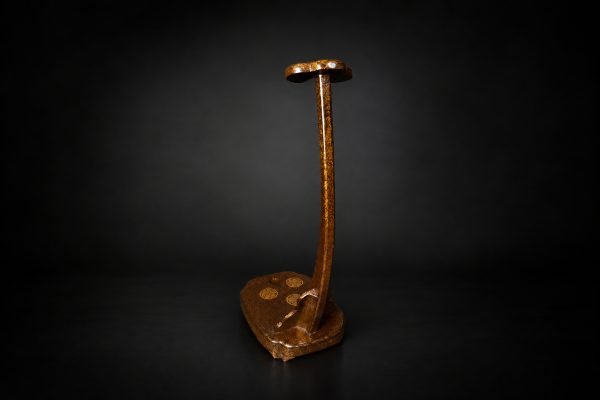
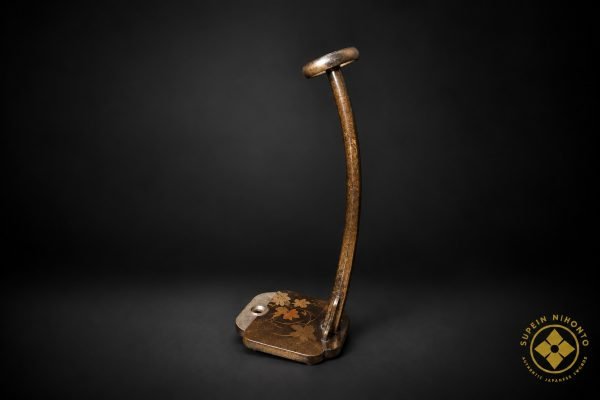
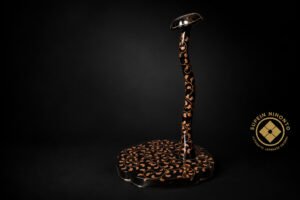
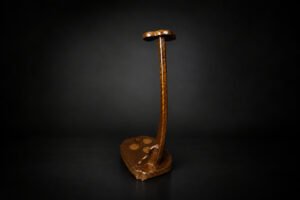
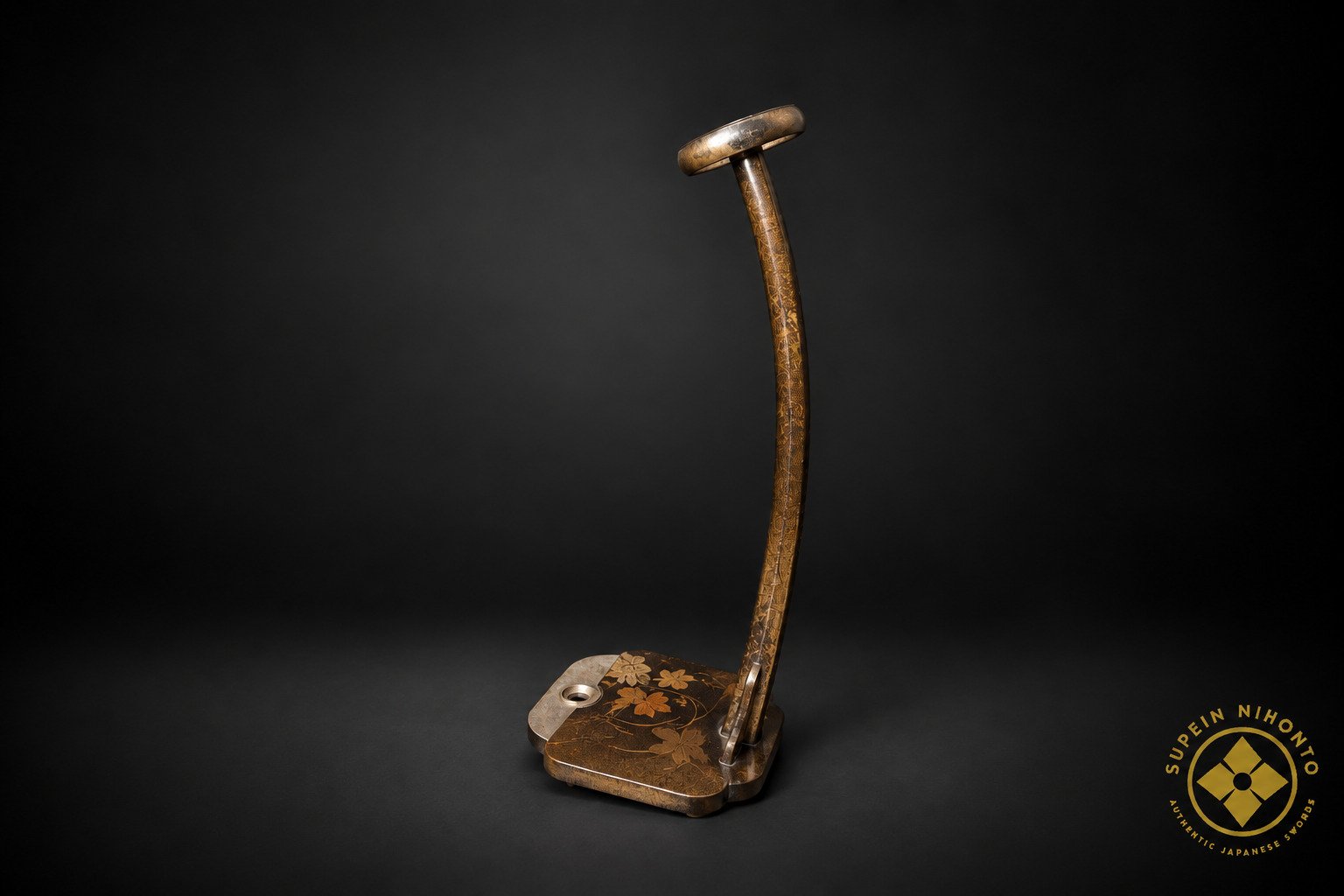
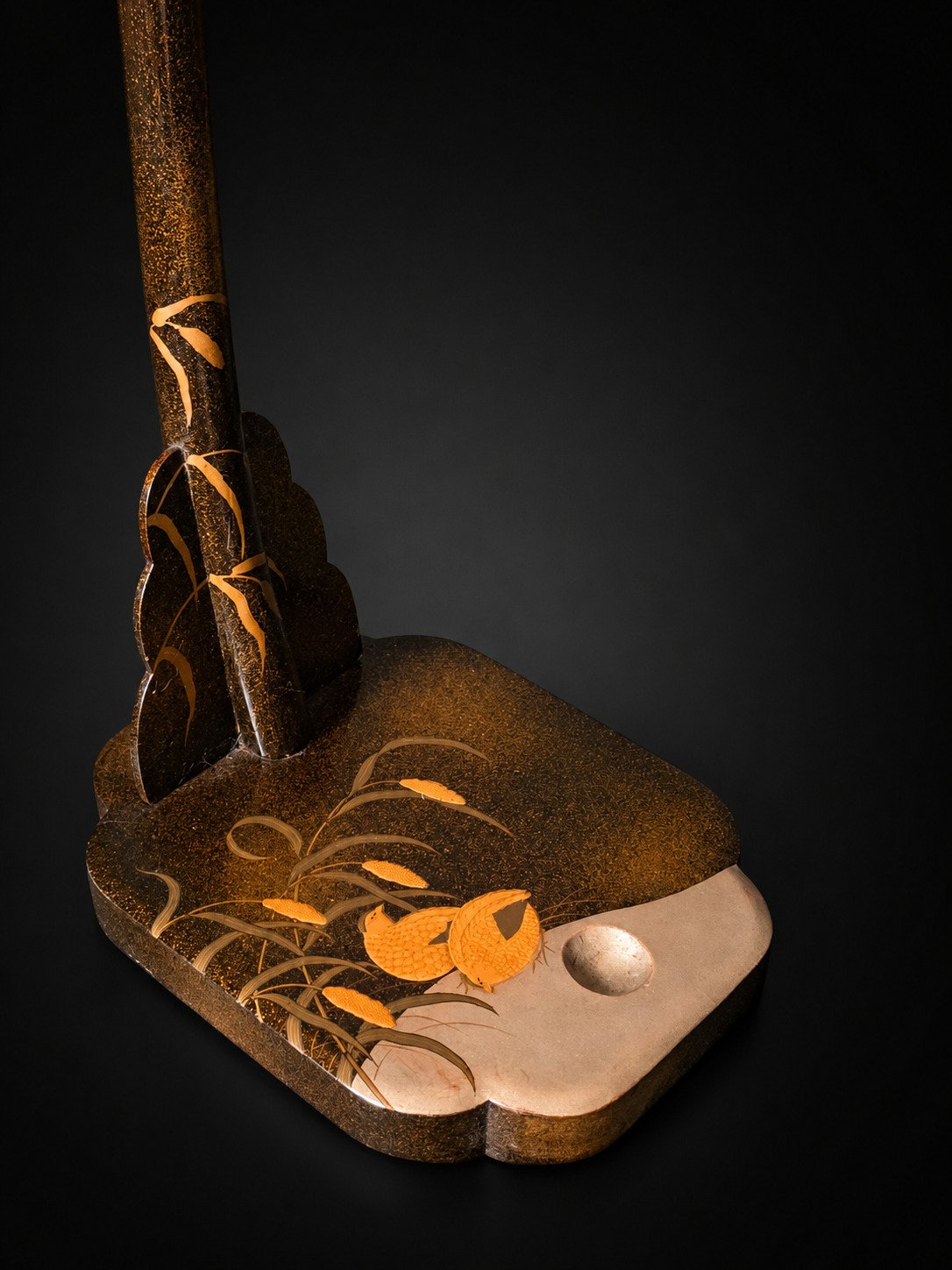
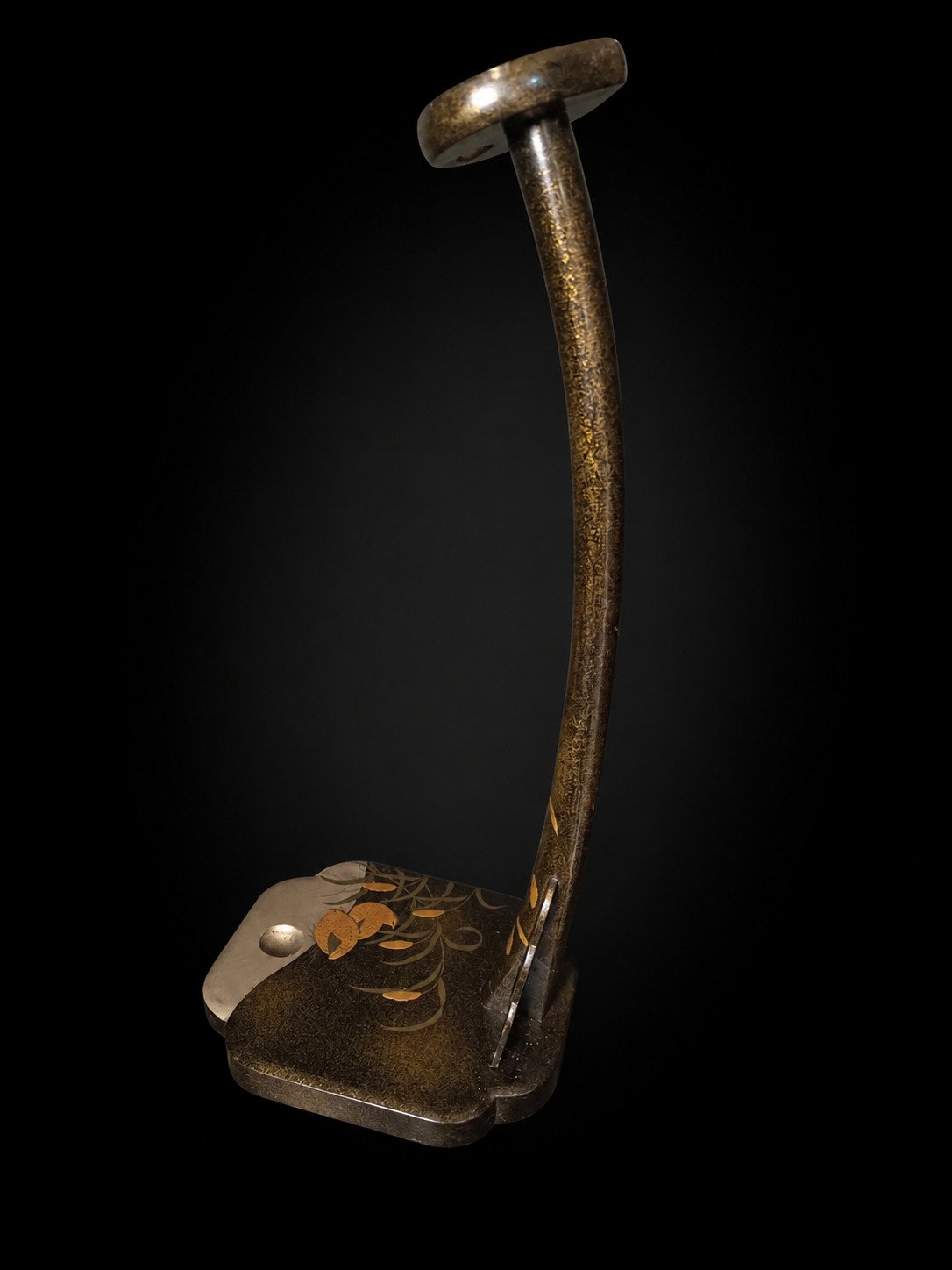
An exceptionally refined Japanese katana-kake from the 19th century, distinguished by its elegant vertical form, richly shimmering nashiji ground and finely executed takamaki-e decoration depicting quail among bending autumn grasses.
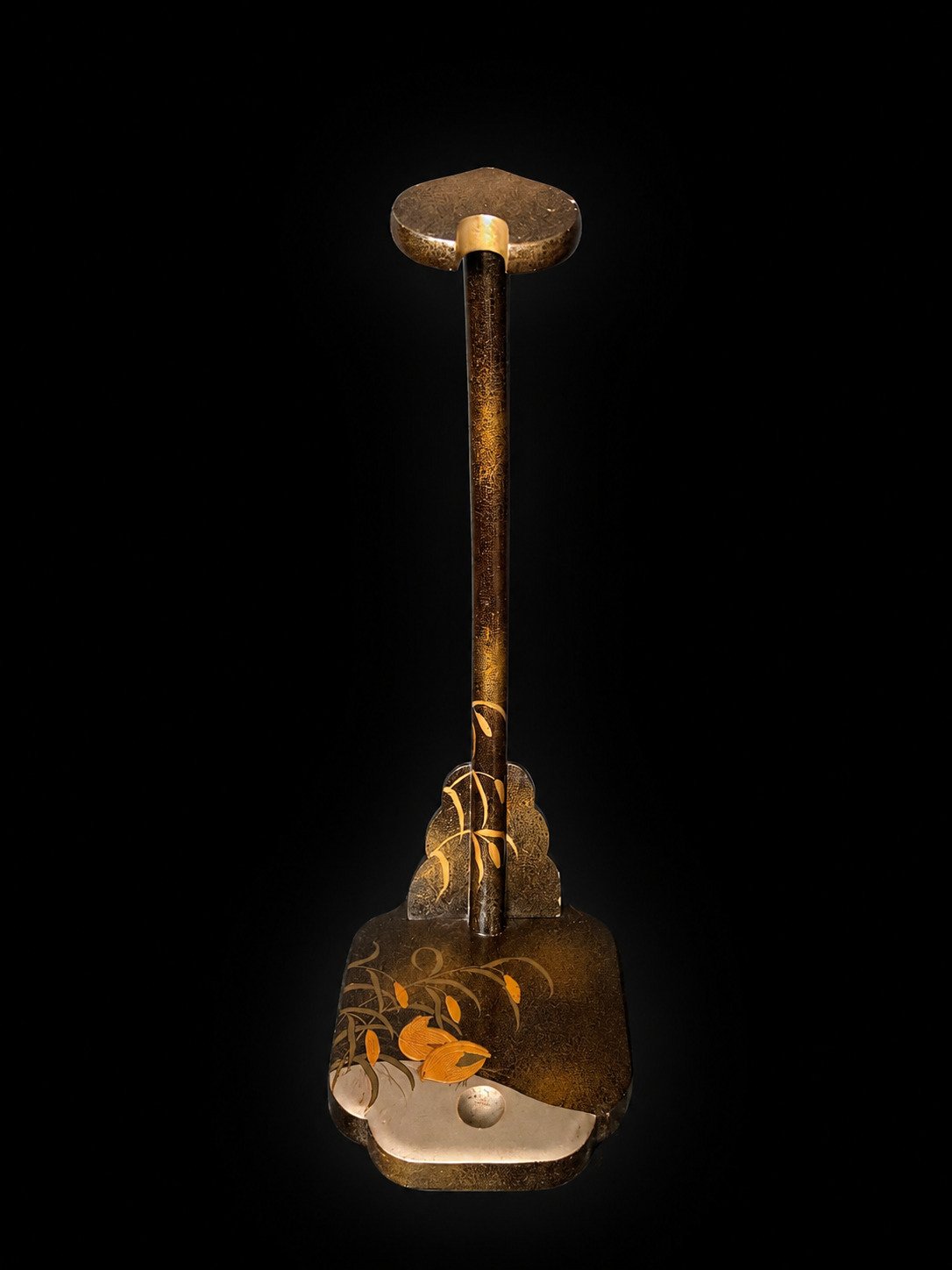
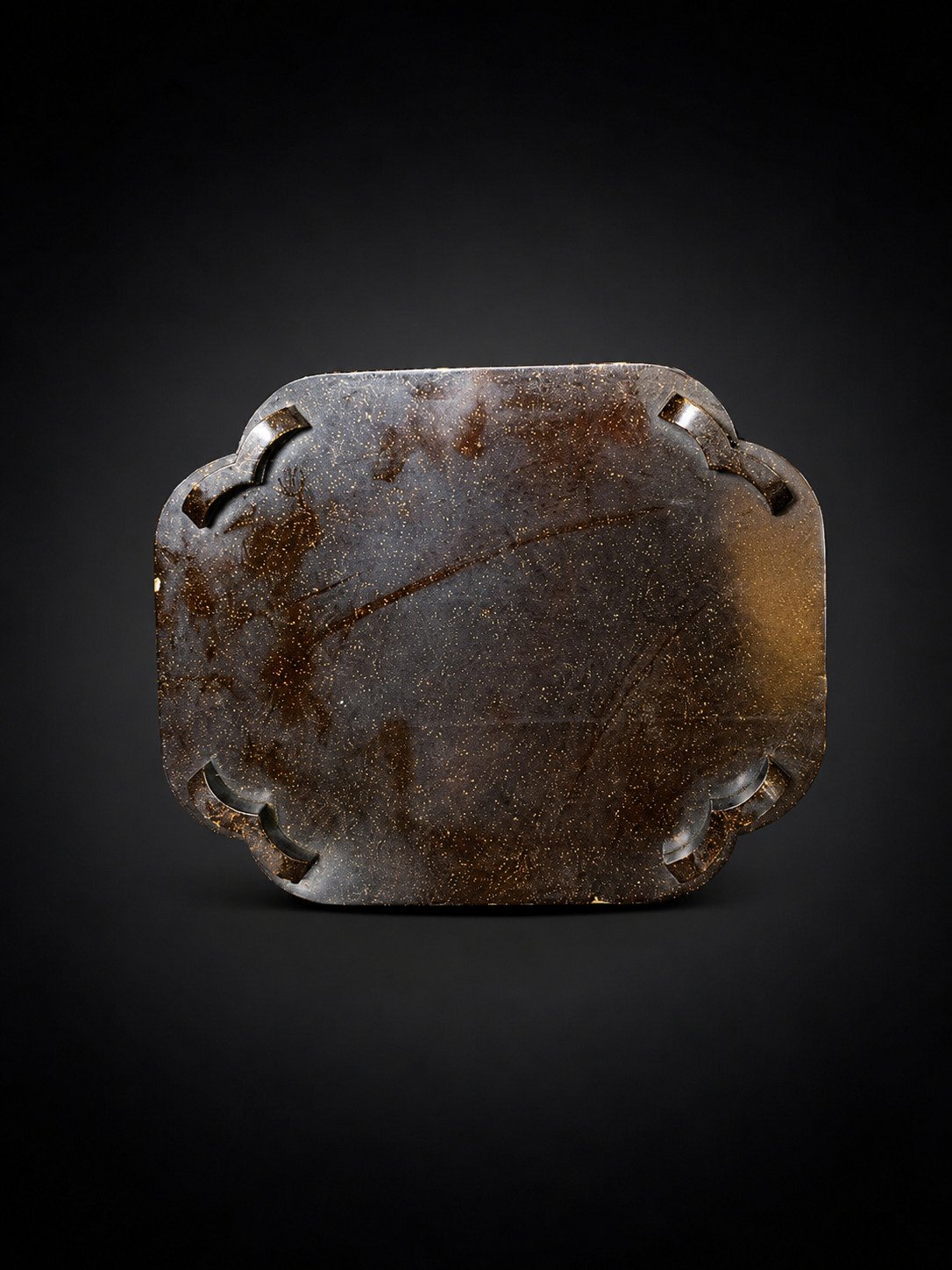
Designed to support and display a single Japanese sword, the stand combines a broad lobed base, a tall and gracefully curved neck and a shaped upper cradle. The visible surfaces are unified by a dense gold-flecked lacquer ground whose granular brilliance changes subtly according to the direction of the light.
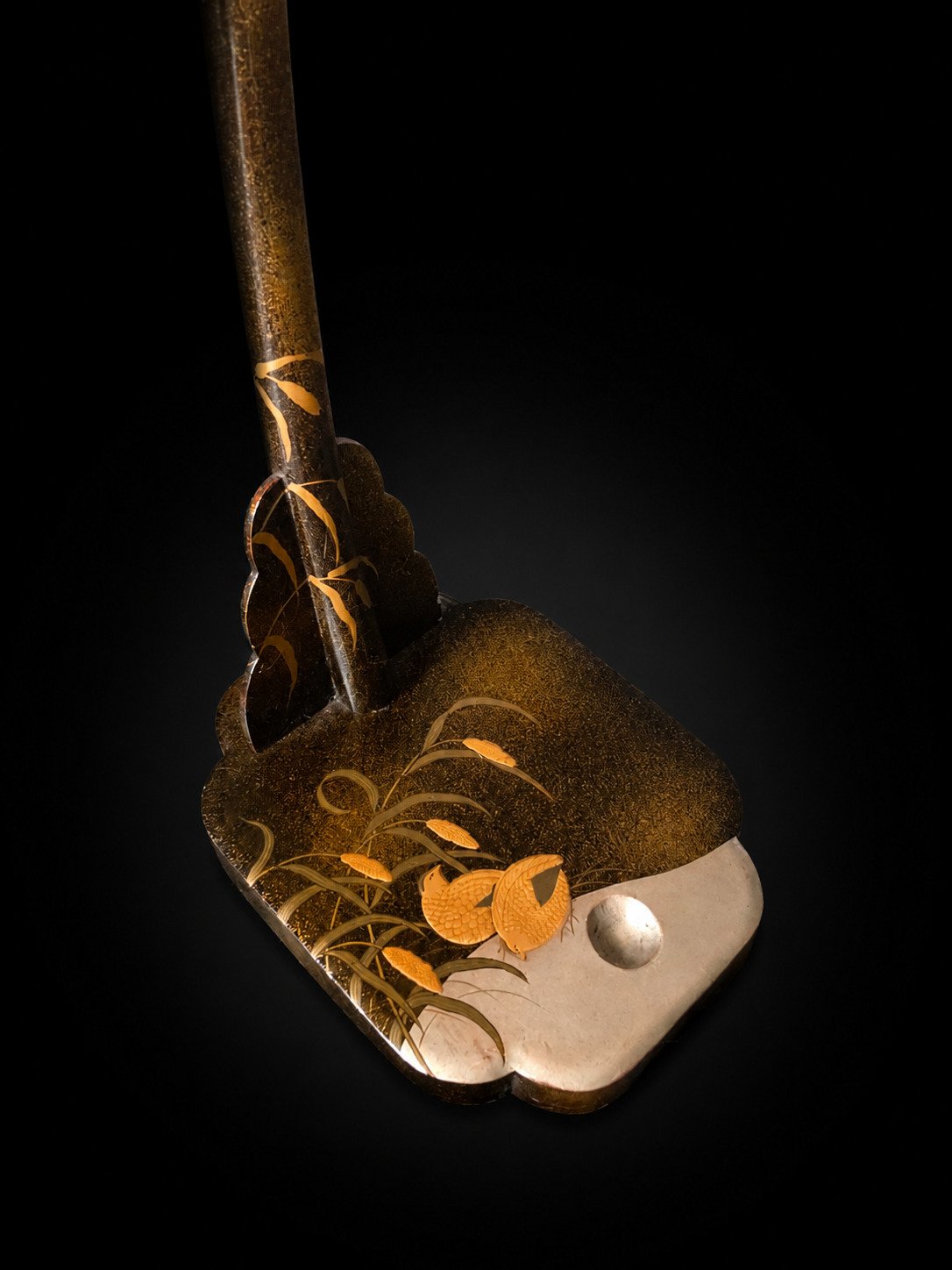
The principal decoration presents a pair of quail beneath ripened grain, a classical seasonal subject known in Japanese art through the association of uzura to awa — quail and millet. Executed in raised gold lacquer with silver-toned accents and finely incised details, the scene gives the functional sword stand the character of a sophisticated pictorial lacquer object.
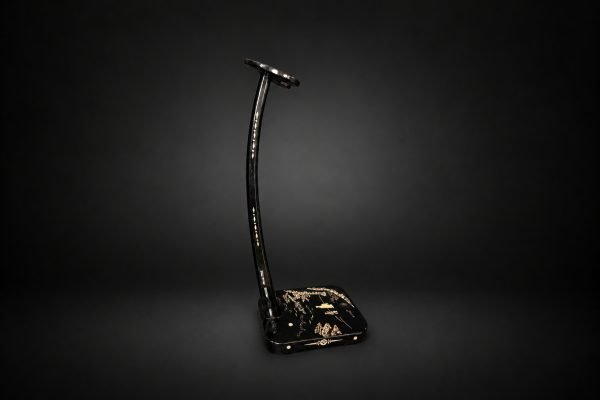
The katana-kake is constructed around a broad shaped base from which rises a tall, slender and gently curving vertical neck.
At approximately 66 cm high, its elongated proportions give the object a commanding vertical presence while retaining a remarkable sense of delicacy.
The upper section terminates in a shaped horizontal cradle with a central recess designed to receive and support a sword securely during display.
Unlike conventional horizontal sword racks intended for several blades, this vertical configuration presents a single sword as an individual object of importance.
One of the defining characteristics of the stand is its extensive nashiji lacquer ground.
Nashiji — literally associated with the appearance of the skin of a Japanese pear — is characterized by numerous fine metallic particles incorporated beneath or within translucent layers of lacquer, producing a dense, softly shimmering surface.
Here, the technique extends across the base and the long vertical structure, visually unifying the different architectural components of the stand.
Under direct or raking light, the innumerable metallic particles produce a granular golden brilliance that shifts continuously as the viewing angle changes.
Rather than functioning merely as a neutral background, the nashiji contributes substantially to the visual richness of the entire object.
From a distance, the surface appears warm and predominantly golden-brown. At closer range, however, the dense distribution of individual metallic flecks becomes increasingly apparent.
This creates an effect of considerable depth beneath the lacquer, contrasting beautifully with the more strongly raised takamaki-e elements of the pictorial decoration.
The distinction between the shimmering ground and the relief decoration is central to the sophisticated visual hierarchy of the piece.
The principal pictorial composition on the base depicts a pair of quail beneath tall stalks of ripened grain.
The plants bend naturally beneath the weight of their seed heads, creating a flowing diagonal movement across the surface of the base.
Beneath them, the two birds forage close to the ground, their compact bodies integrated naturally into the surrounding vegetation.
The restrained scale of the birds in relation to the grasses gives the composition the intimate quality of an observed moment in nature rather than that of a purely heraldic or formal ornament.
The association of quail (uzura) with millet or autumn grain (awa) belongs to an established repertoire of seasonal imagery in Japanese decorative art and painting.
Known broadly as uzura to awa, the subject combines the small ground-dwelling birds with ripened grasses and the atmosphere of autumn.
The motif was particularly well suited to intimate decorative compositions, where the bending stalks could create rhythm and movement around the compact forms of the birds.
On this katana-kake, the theme introduces a quiet naturalism that contrasts elegantly with the highly refined and luxurious lacquer techniques used to render it.
The birds are executed with the raised quality characteristic of takamaki-e, a lacquer technique in which areas of the design are built above the surrounding surface to create relief.
This added height gives the quail a tangible physical presence against the comparatively flatter nashiji ground.
Their plumage is carefully textured, with numerous small details suggesting the patterned feathers and compact bodies characteristic of the birds.
As light moves across the raised lacquer, individual sections of the plumage become more pronounced, enhancing both the naturalism and decorative richness of the composition.
The grain stalks surrounding the birds are rendered primarily in warm gold tones, with leaves and seed heads extending rhythmically across the base.
Raised lacquer provides physical definition to important elements, while finer incised and surface details articulate the leaves and vegetation.
The bending stems create a strong sense of natural movement, suggesting mature plants weighed down by their grain.
This combination of relief, line and metallic reflection demonstrates the ability of Japanese lacquer artists to translate botanical forms into highly sophisticated decorative compositions.
The warm gold palette is complemented by a prominent silver-toned crescent-shaped area occupying part of the foreground.
This pale metallic section creates a striking visual contrast with both the dark translucent lacquer and the extensive gold decoration surrounding it.
Within the silver-toned area is a small raised circular gold element, introducing another carefully controlled point of contrast.
The precise symbolic interpretation of these elements cannot be established from the object alone, although their placement may evoke an open area of ground or landscape together with a celestial motif such as the sun or moon.
The decorative programme continues beyond the base and extends upward along the tall curved neck.
A restrained botanical sprig executed in gold hiramaki-e follows the vertical structure, visually continuing the grain and autumnal theme of the principal composition.
Unlike the more strongly raised takamaki-e decoration of the birds, this comparatively flatter technique provides a delicate accent without interrupting the slender silhouette of the neck.
The continuation of the vegetal motif upward creates a visual connection between the pictorial base and the upper sword cradle.
At the junction between the base and the vertical neck is a shaped supporting bracket that provides both structural reinforcement and decorative transition.
Its sculptural profile introduces additional depth to the lower portion of the stand and visually anchors the tall upright to the broad base.
Fine gold accents emphasize its contours and integrate it with the surrounding lacquer decoration.
The careful treatment of this essentially structural component demonstrates the attention given to maintaining decorative continuity throughout the object.
The long curved neck terminates in a shaped horizontal platform designed to support the sword.
A central recess provides a natural resting point for the blade or mounted sword, while the projecting sides help maintain its position during display.
The upper section continues the rich lacquer treatment of the vertical support, ensuring that the highest and most functional part of the stand remains visually integrated with the rest of the object.
Its compact horizontal form provides an elegant visual conclusion to the pronounced vertical sweep of the neck.
The decorative composition is particularly notable for its restrained naturalism.
Rather than presenting an imposing mythological, martial or heraldic subject, the artist selected a quiet seasonal scene drawn from the natural world.
The small quail, bending grain and autumnal atmosphere transform the base into an intimate landscape whose richness emerges gradually through close observation.
This combination of modest natural subject matter with luxurious lacquer techniques is characteristic of the sophisticated visual contrasts found throughout Japanese decorative art.
The stand is distinguished not only by the quality of its individual decorative elements but also by the combination of several lacquer techniques within a single coherent design.
The extensive nashiji ground establishes a shimmering foundation, raised takamaki-e gives volume to the birds and vegetation, while finer hiramaki-e elements provide delicate linear accents.
Gold and silver-toned areas further expand the palette and create contrasts in both colour and reflectivity.
The successful integration of these techniques across a complex three-dimensional structure indicates considerable control of the lacquer medium and a high level of specialized craftsmanship.
Measuring approximately 66 × 30 cm, the katana-kake possesses a striking vertical silhouette.
The eye is drawn from the richly decorated base upward along the slender curved neck toward the upper sword cradle.
When used with a mounted Japanese sword, this arrangement would have elevated the blade above the detailed autumn landscape below, allowing both the sword and the lacquerwork to be appreciated simultaneously.
Even without a sword, the combination of sculptural form, shimmering nashiji and pictorial maki-e allows the stand to function as an important decorative lacquer object in its own right.
The materials, techniques and decorative vocabulary of the piece are consistent with accomplished Japanese lacquer production of the 19th century.
The use of nashiji in combination with multiple forms of maki-e reflects a mature decorative tradition in which differences of height, texture and metallic reflection were carefully orchestrated across the surface.
The quail-and-grain subject further connects the object to the long-established seasonal imagery found in Japanese painting and decorative arts.
Together, these characteristics make the stand a particularly attractive example of the intersection between Japanese sword culture and sophisticated lacquer craftsmanship.
The katana-kake survives in antique condition with age-related wear consistent with a 19th-century Japanese lacquer object.
The nashiji ground and substantial areas of the gold decoration remain clearly visible, preserving the characteristic interplay of granular metallic reflection and raised pictorial ornament.
Minor surface wear, irregularities, losses and historical changes to the lacquer or metallic decoration should be considered within the context of the age and use of an antique object of this type.
Please examine the accompanying high-resolution photographs carefully, as they form an essential part of the description and provide the most accurate record of the object’s present condition.
This katana-kake combines several qualities of particular interest to collectors of Japanese lacquer, samurai culture and sword-related objects.
Its elegant vertical configuration distinguishes it from conventional horizontal sword racks, while the extensive nashiji ground gives the entire structure a remarkably luxurious visual character.
The uzura to awa composition is especially appealing as an example of classical seasonal imagery, and the combination of raised quail, bending grain, gold and silver-toned details demonstrates the sophisticated pictorial potential of Japanese maki-e.
At 66 × 30 cm, it is a highly distinctive example of how an object created for the presentation of a Japanese sword could itself become an accomplished work of decorative lacquer art.
An exceptionally refined 19th-century Japanese katana-kake combining an elegant vertical silhouette with sophisticated lacquer decoration. A dense nashiji ground extends across the base and tall curved neck, producing a rich granular golden shimmer beneath the pictorial ornament. The base is decorated in gold and silver-toned maki-e with a classical uzura to awa composition of two quail foraging beneath bending stalks of ripened autumn grain, the birds rendered in raised takamaki-e with finely textured plumage. A contrasting silver-toned area and raised gold disc enrich the foreground, while a delicate hiramaki-e botanical sprig continues the seasonal theme along the upright. Measuring 66 × 30 cm, this distinctive single-sword stand brings together Japanese sword culture, classical seasonal imagery and the technical sophistication of 19th-century lacquer craftsmanship.

Order above 1.000,00 € gets free shipping.

Secure and hassle-free payment process.

Certificate of authenticity included.

Have questions? Contact us via WhatsApp.
Contact