

1 in stock
1 in stock
Add to Compare
Add to Wishlist
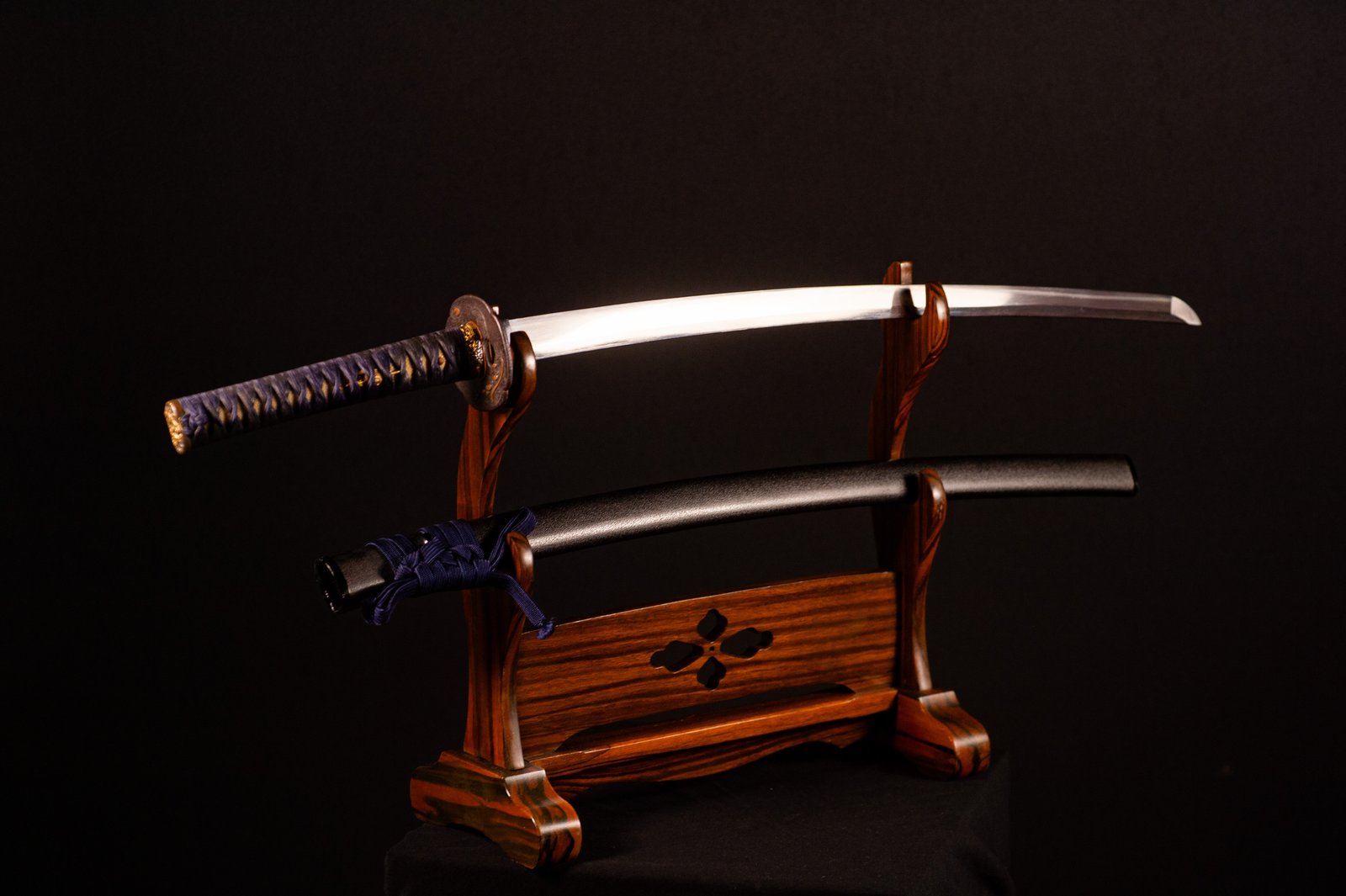
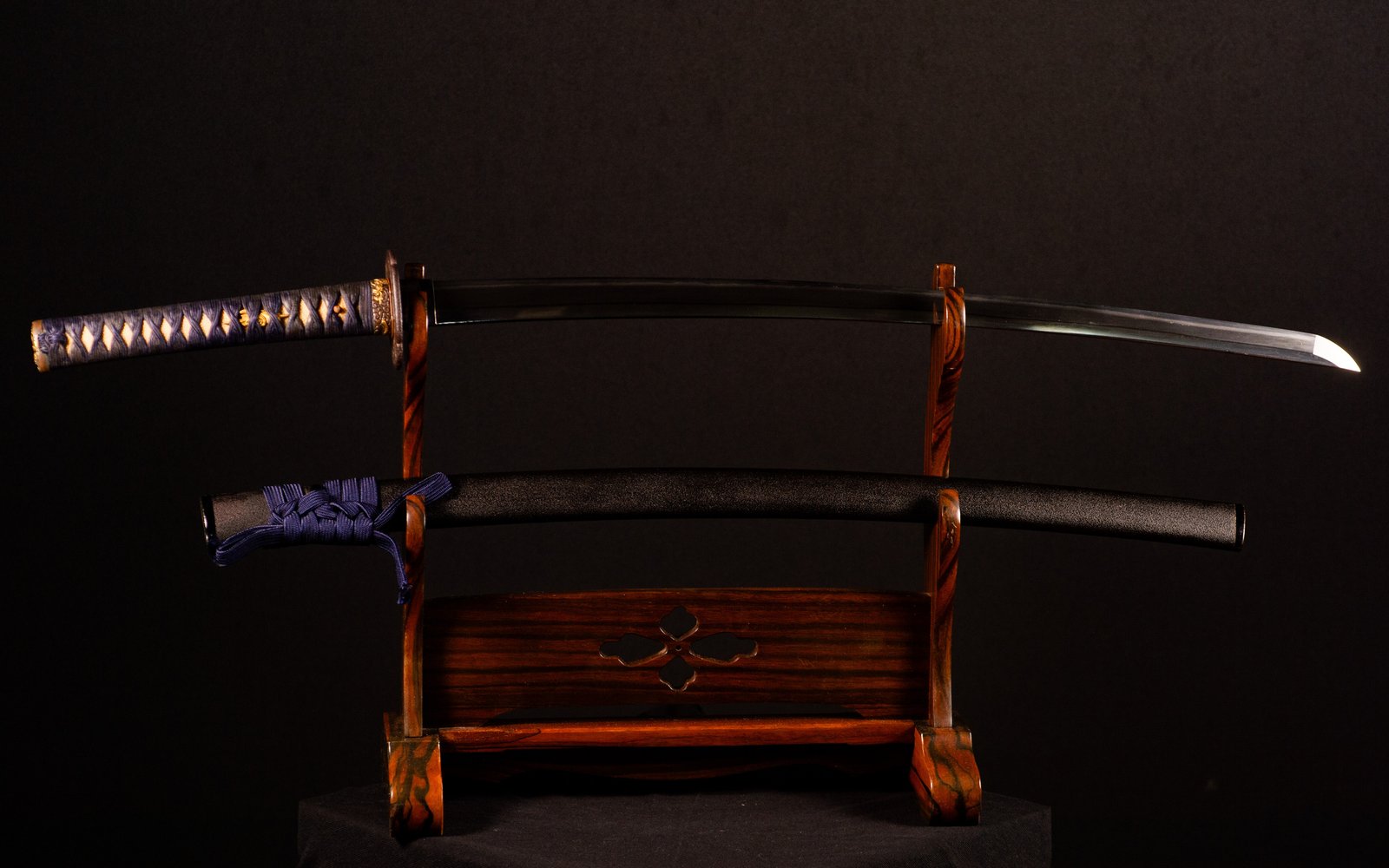
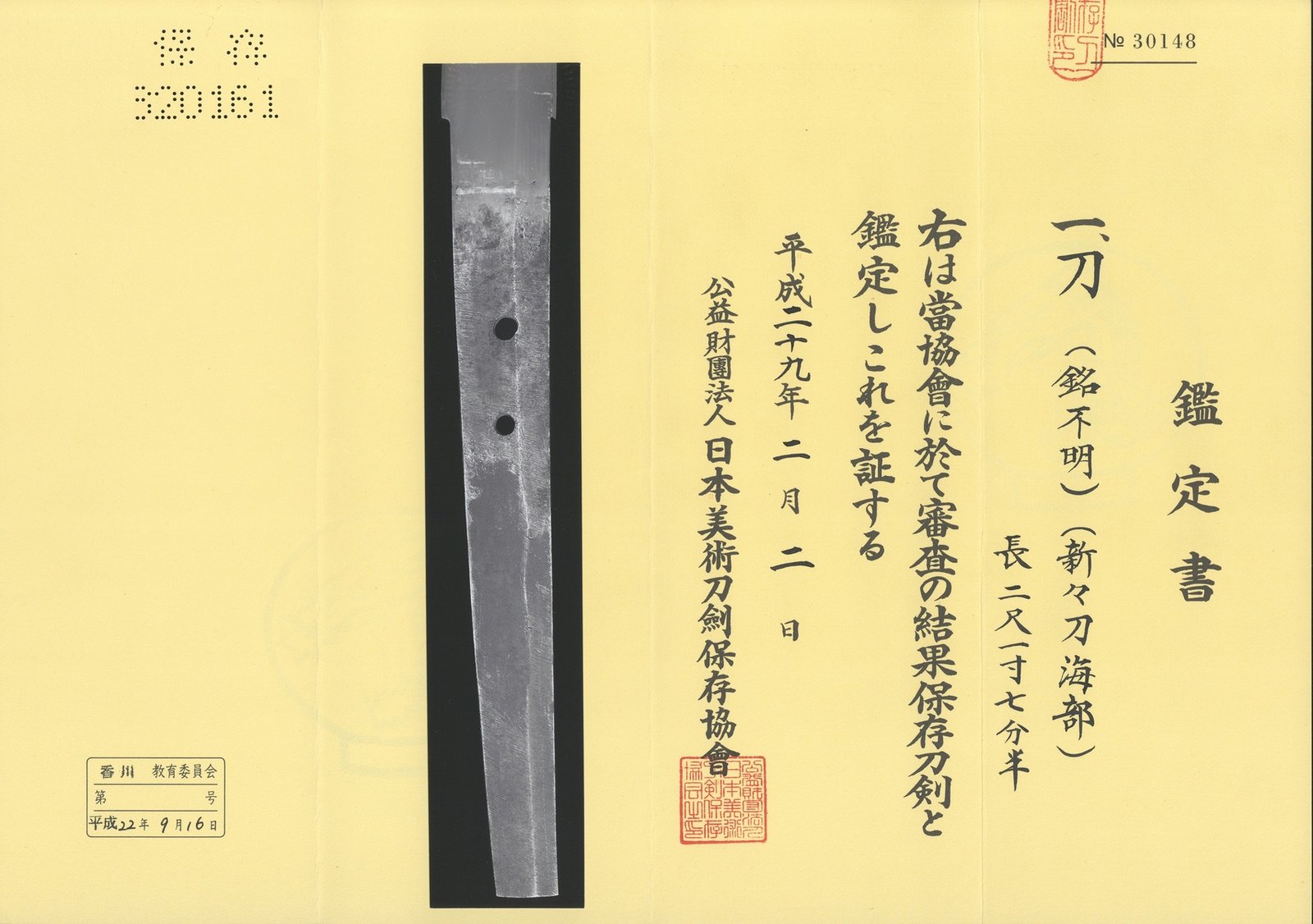
A refined and highly distinctive Japanese katana from the late Edo period, attributed by the NBTHK to the Kaifu tradition (海部) of Awa Province, present-day Tokushima. The unsigned blade is accompanied by NBTHK Hozon Tōken certification and its original Japanese registration document from Kagawa Prefecture, providing a strong documentary foundation for this historically significant shinshintō sword.
With a registered nagasa of approximately 65.9 cm, a well-defined sori of 1.7 cm and two mekugi-ana, the blade possesses substantial and elegantly curved proportions characteristic of a full-length katana.
Of particular interest is its attribution to the Kaifu tradition, one of Japan’s longest-lived regional swordmaking lineages. Originating in Awa Province, Kaifu smiths maintained an active tradition spanning several centuries and became particularly associated with the military culture of the region and the maritime forces of Awa.
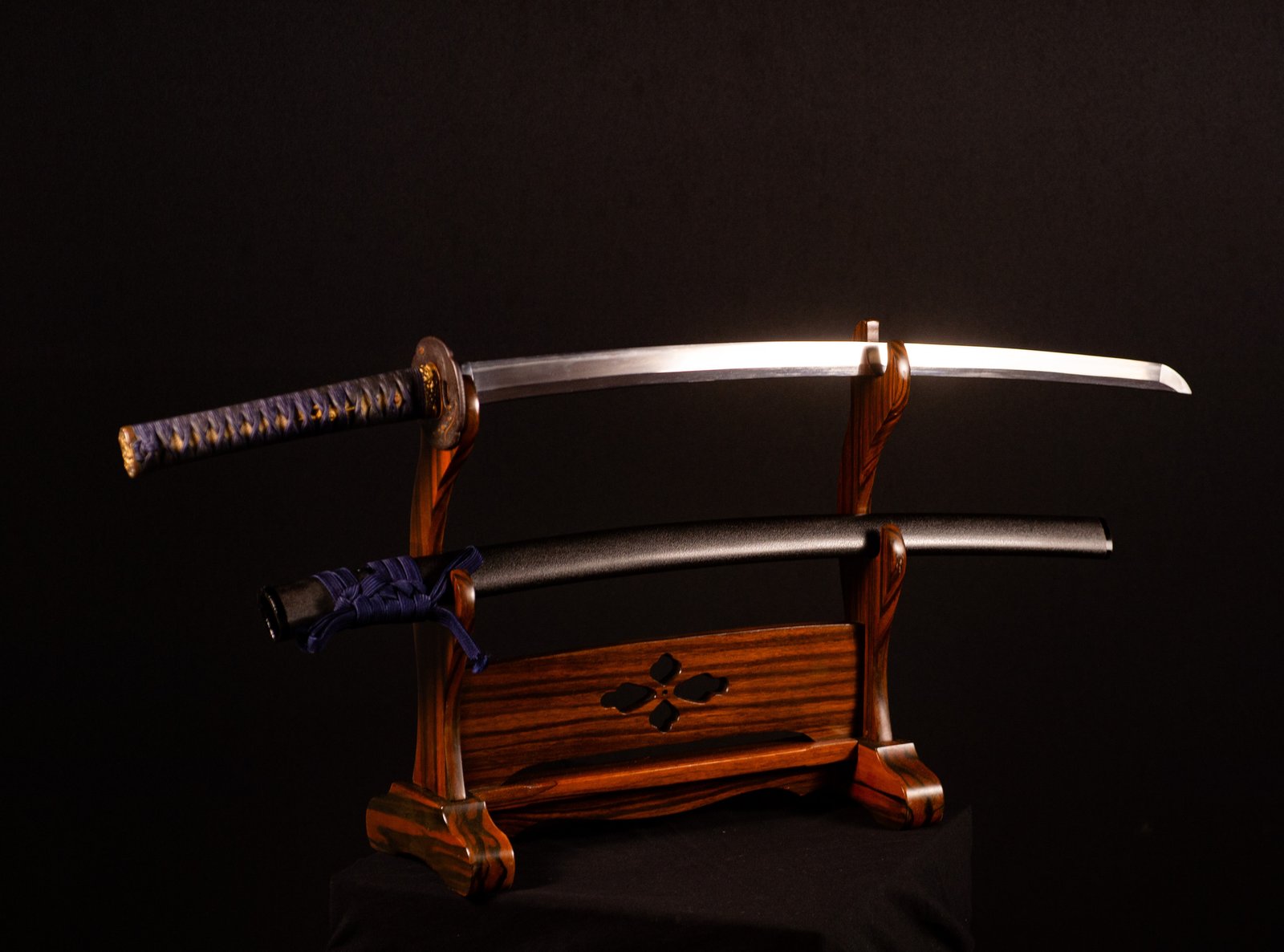
The blade is complemented by a striking and unusually coloured koshirae, combining purple-indigo silk, pale samegawa, black lacquer and an elegant decorative programme dominated by dragons and gilt metalwork.
The result is a sword combining historical interest, recognised Japanese certification and an exceptionally attractive mounting with a character markedly different from more conventional black-mounted katana.
The NBTHK attributes this unsigned blade to the Kaifu tradition of Awa Province.
Kaifu occupies a particularly interesting position in the history of Japanese swordmaking. Rather than representing a short-lived workshop or isolated lineage, it developed into one of Japan’s longest-running regional sword traditions, with production extending across several historical periods.
The tradition originated in southern Awa Province, in what is now Tokushima Prefecture on the island of Shikoku.
Kaifu smiths continued producing swords from the medieval period through the Edo era, with only a significant interruption following the fall of Kaifu Castle in 1575.
During the Edo period, the ruling Hachisuka family brought Kaifu smiths into the castle town of Tokushima, where the tradition continued through the later years of the Tokugawa shogunate.
This chronology corresponds naturally with the NBTHK attribution of the present blade to the Shinshintō period.
One of the most distinctive historical aspects of the Kaifu school is its association with the maritime forces of Awa Province.
Kaifu smiths traditionally supplied blades to warriors connected with the regional naval forces, giving the school an unusual relationship with Japan’s maritime military culture.
Certain Kaifu blades became famous for incorporating highly unusual practical features, including examples with a saw-like spine known as nokogiri-ba, reportedly associated with cutting ropes and rigging aboard vessels.
Although the present katana does not display such a feature, this historical association provides important context for understanding the distinctive identity of the Kaifu tradition.
Among the best-known historical swords associated with the school is the celebrated Iwakiri Kaifu, traditionally connected with the warlord Miyoshi Chōkei and later with the Kuroda family.
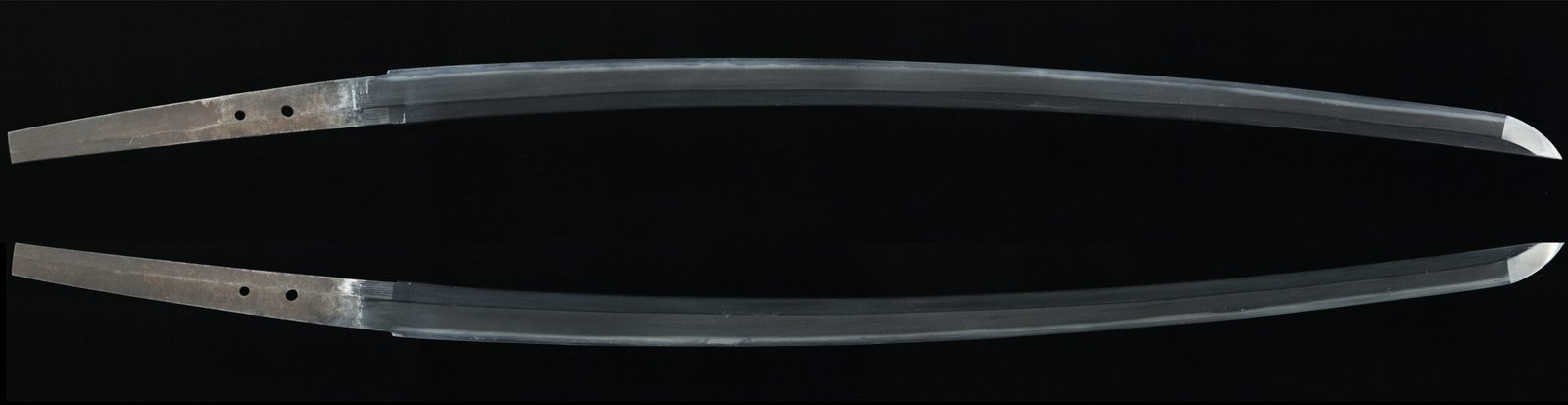
The blade has a registered length of approximately 65.9 cm, equivalent to 2 shaku 1 sun 7.5 bu.
Its sori of 1.7 cm creates a clearly defined and elegant curvature, giving the sword a balanced full-length katana profile.
The overall sugata is substantial without appearing excessively heavy, combining practical proportions with the flowing silhouette expected from a traditionally forged Japanese sword.
The blade remains unsigned and should therefore be understood according to the attribution established by the NBTHK rather than assigned to an individual smith.
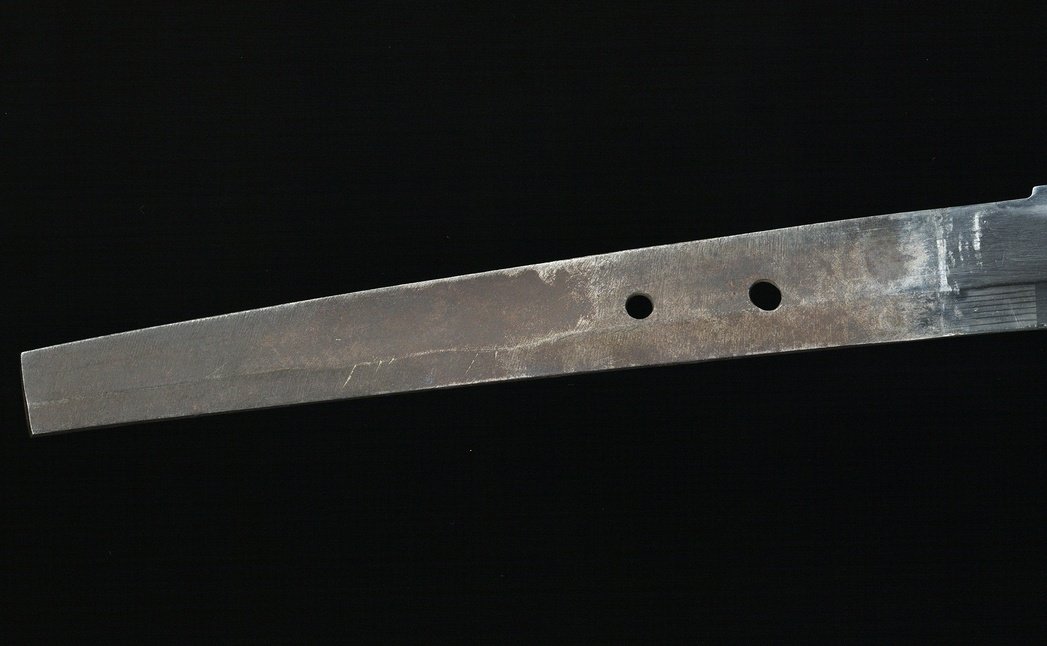
The nakago bears no surviving smith’s signature and the blade is therefore classified as mumei.
In Japanese sword scholarship, an unsigned blade is not necessarily unattributable. Characteristics including shape, construction, forging, tempering and regional workmanship can allow specialist organisations to identify a blade with a particular school or tradition.
In this case, the NBTHK has attributed the sword to the Kaifu tradition and to the Shinshintō period.
This attribution should be considered the principal scholarly identification of the blade.
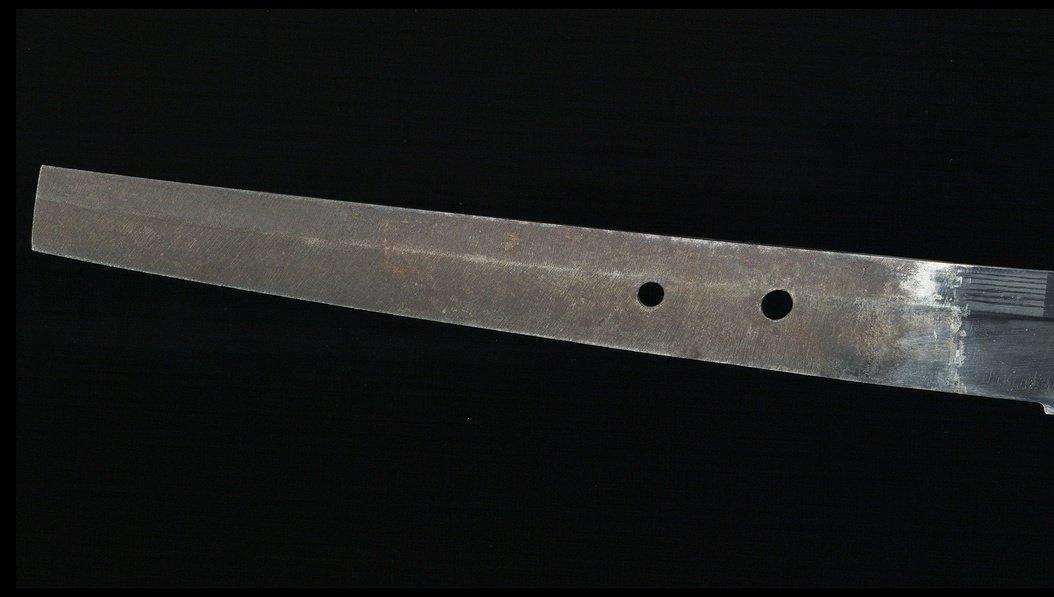
The nakago presents an aged surface consistent with an antique Japanese sword and displays two mekugi-ana.
The presence of multiple mounting holes records changes in the way the blade has been mounted during its history.
No signature is present.
The historical surface and patination of the nakago should be preserved, as these characteristics form an important part of the sword’s physical history.
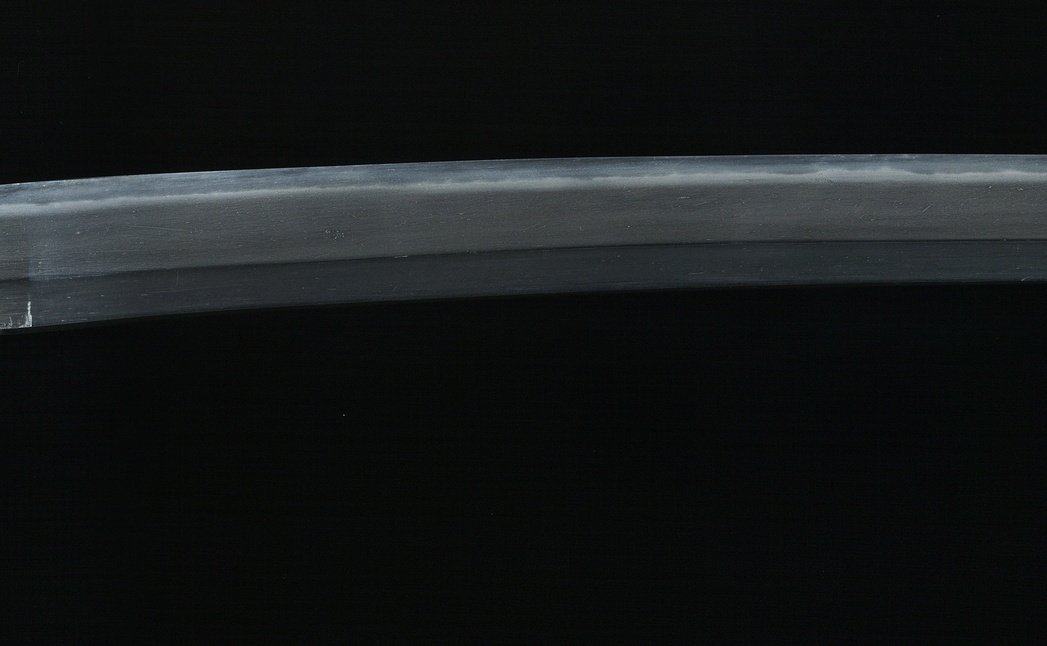
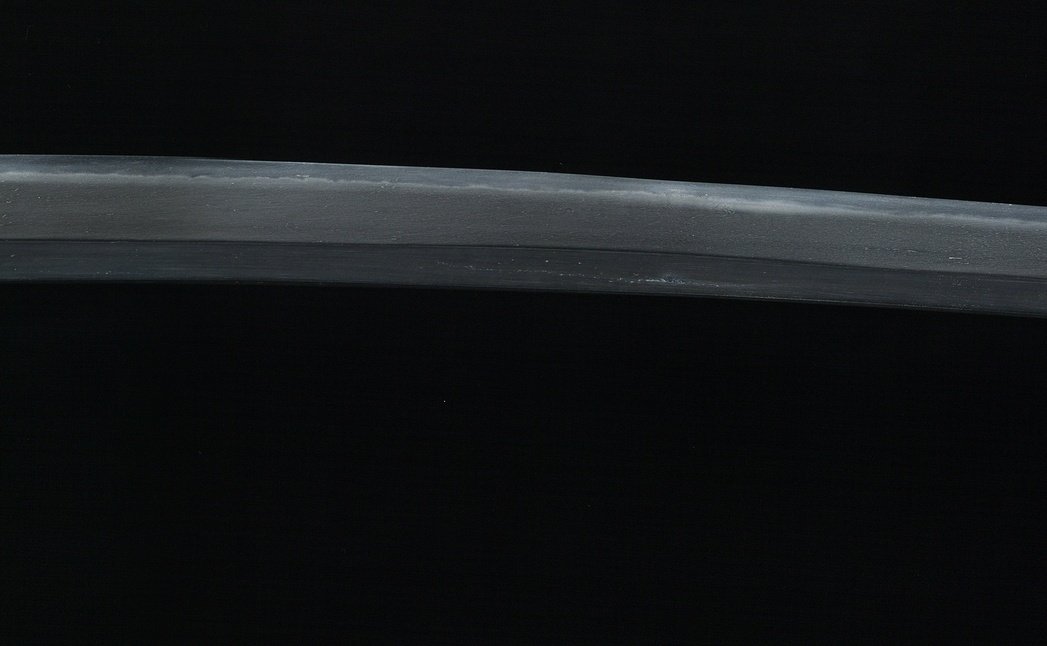
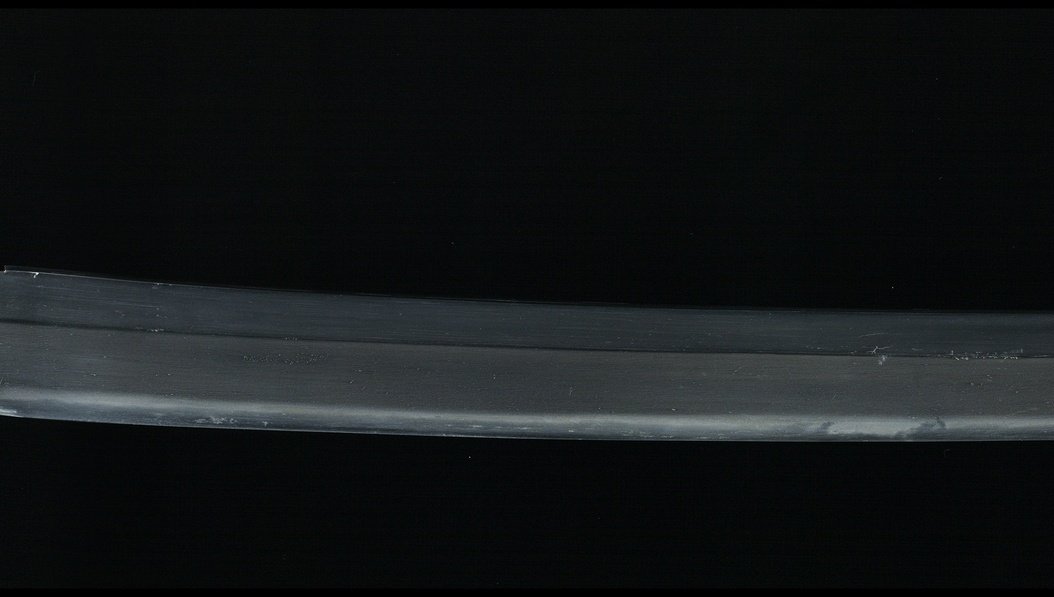
The blade displays a restrained but clearly visible hardened edge whose movement develops along the length of the sword.
Rather than relying upon an excessively flamboyant temper pattern, the visual character of the blade is defined by the relationship between its curvature, polished surface and subtle activity along the cutting edge.
Under suitable directional lighting, the transition between hardened edge and body of the blade becomes considerably more apparent, revealing the workmanship that contributed to the NBTHK’s attribution to the Kaifu tradition.
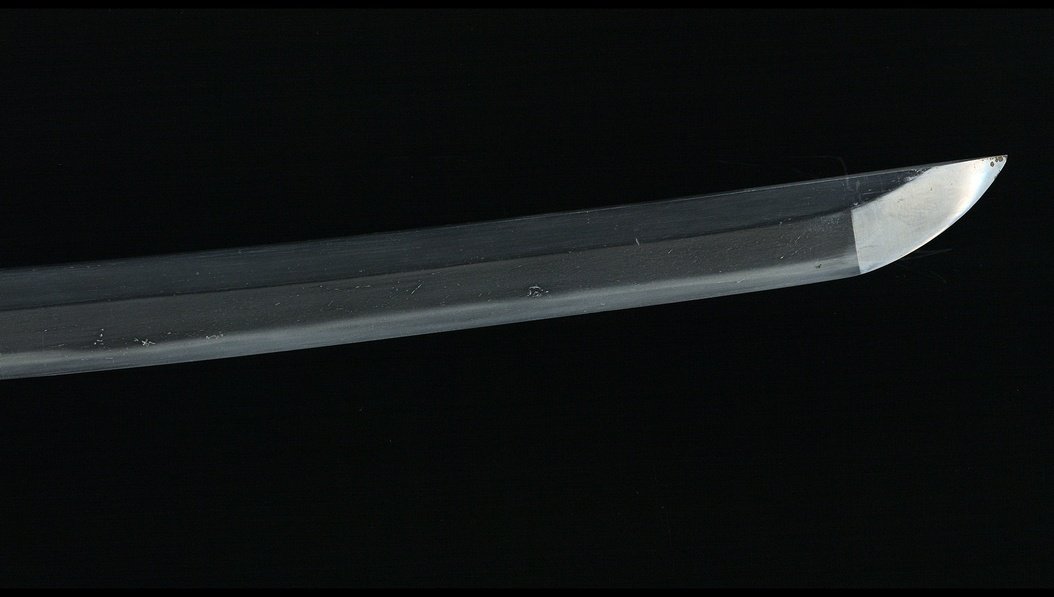
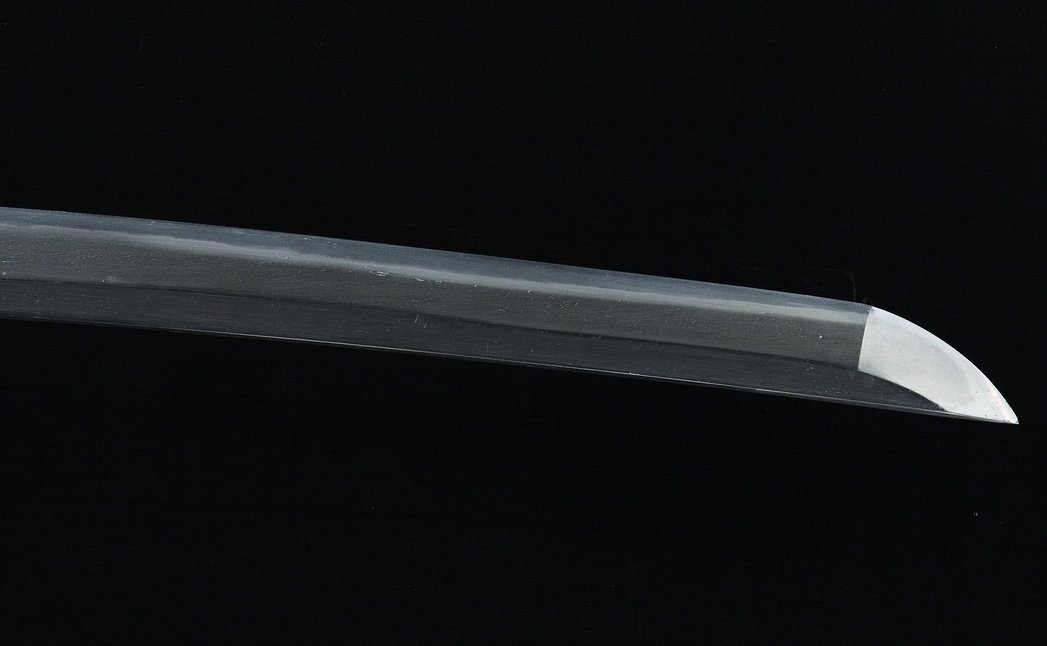
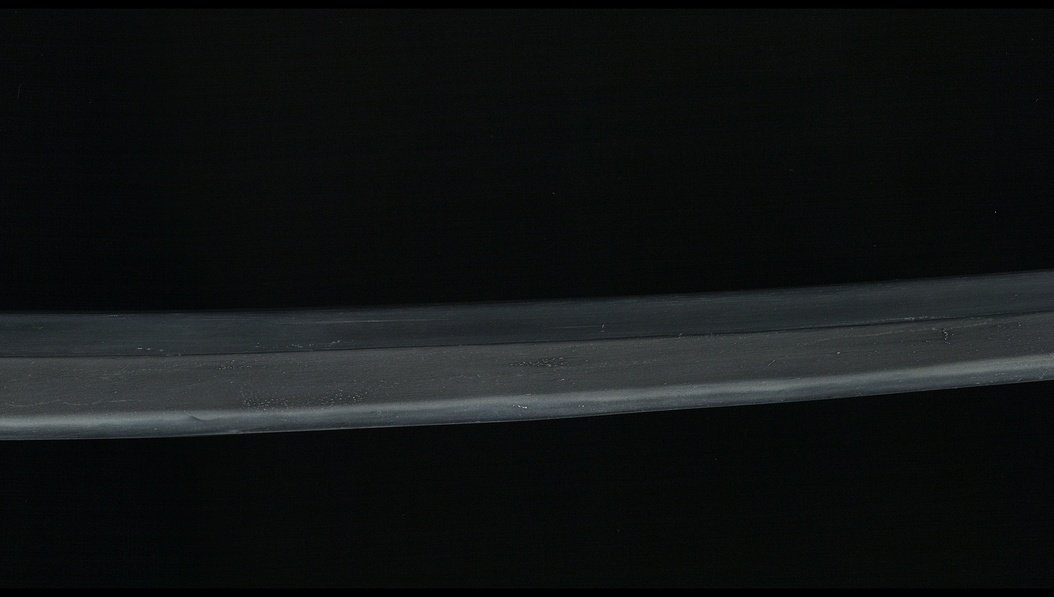
The blade terminates in a well-defined kissaki whose geometry remains balanced with the proportions of the sword.
The curvature continues naturally toward the point, giving the blade a controlled and cohesive profile from the base through to the tip.
The polished point provides a clear conclusion to the overall sugata and contributes to the elegant appearance of the sword.
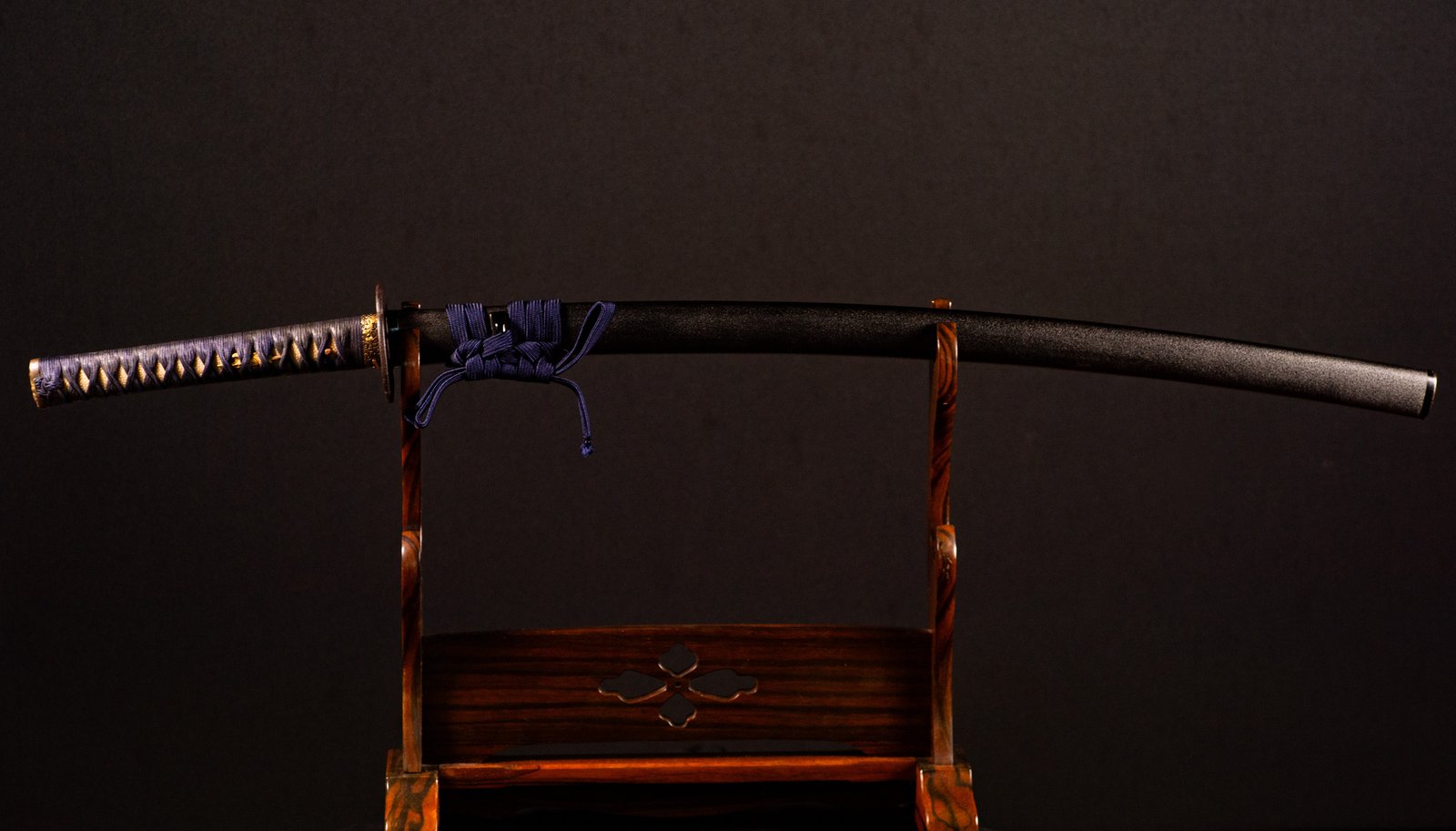
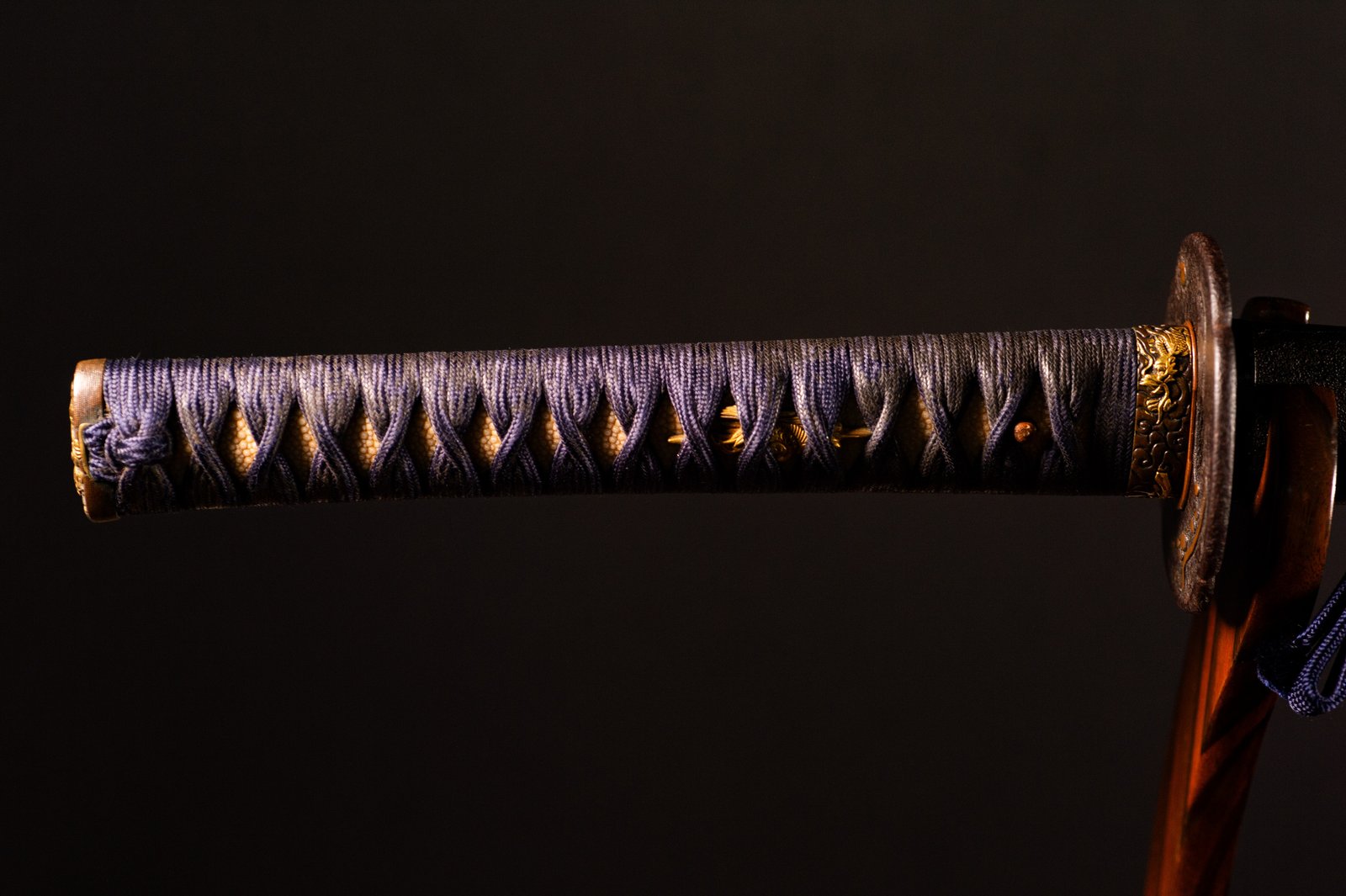
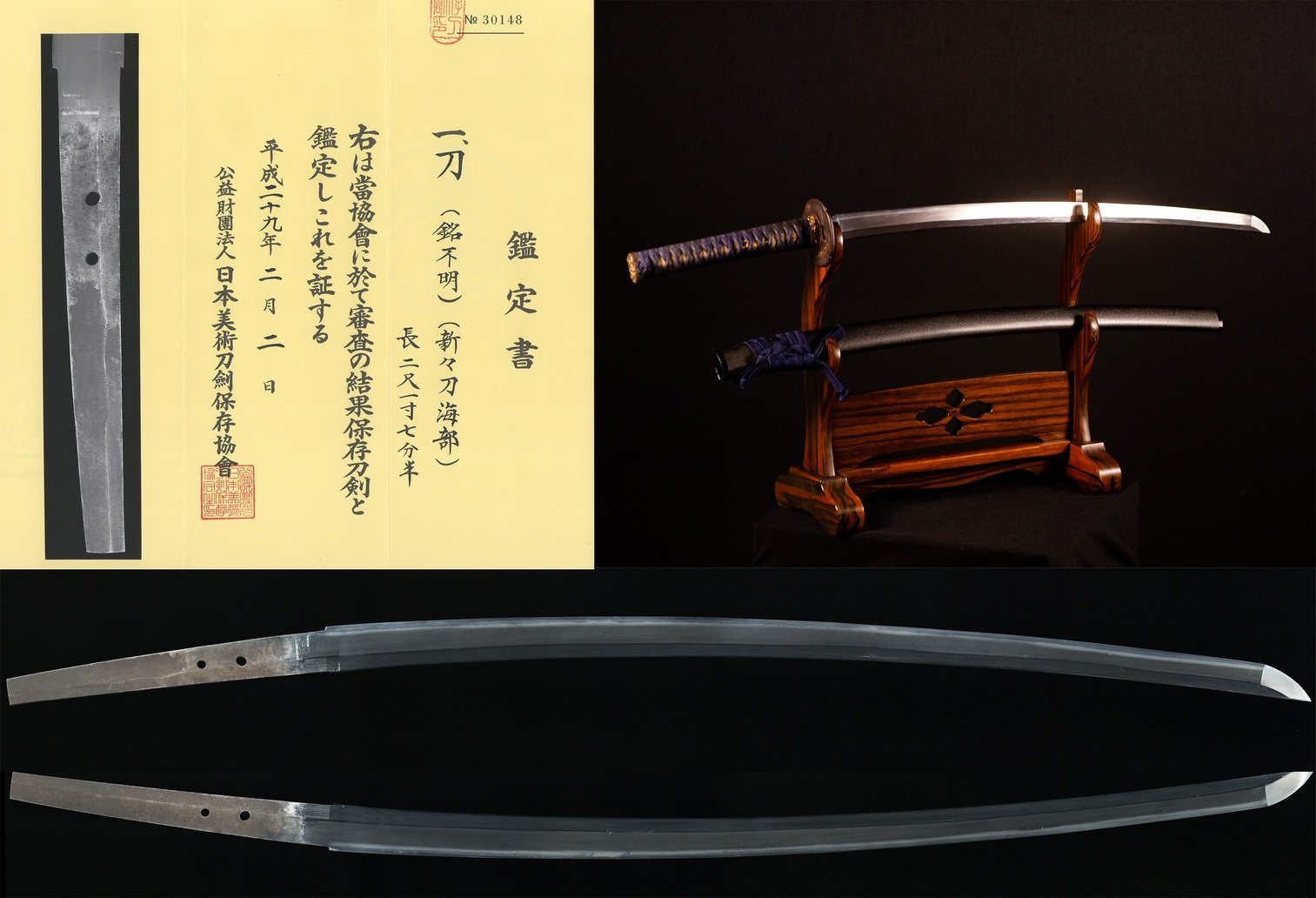
The katana is accompanied by an unusually attractive complete koshirae distinguished by its combination of purple-indigo silk, black lacquer and gold decoration.
This palette immediately sets the sword apart from the more conventional black or brown mountings commonly encountered on Edo-period Japanese swords.
The fittings follow a broadly coherent decorative programme centred around dragons, animals and natural motifs executed in gold against dark metal surfaces.
The restrained black saya serves as a visual counterbalance to the more elaborate handle fittings, allowing the gold decoration and purple textile elements to remain the principal accents of the mounting.
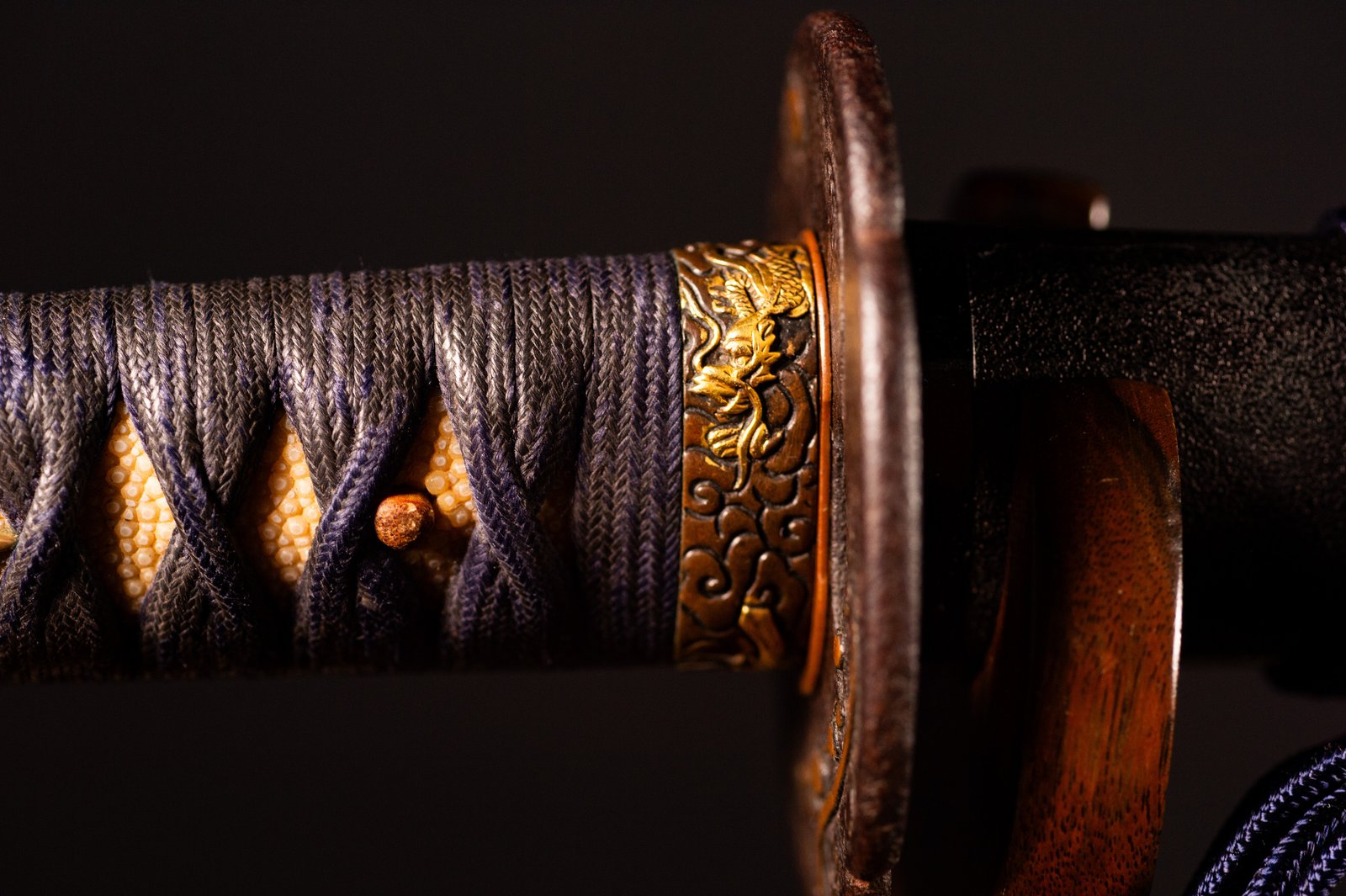
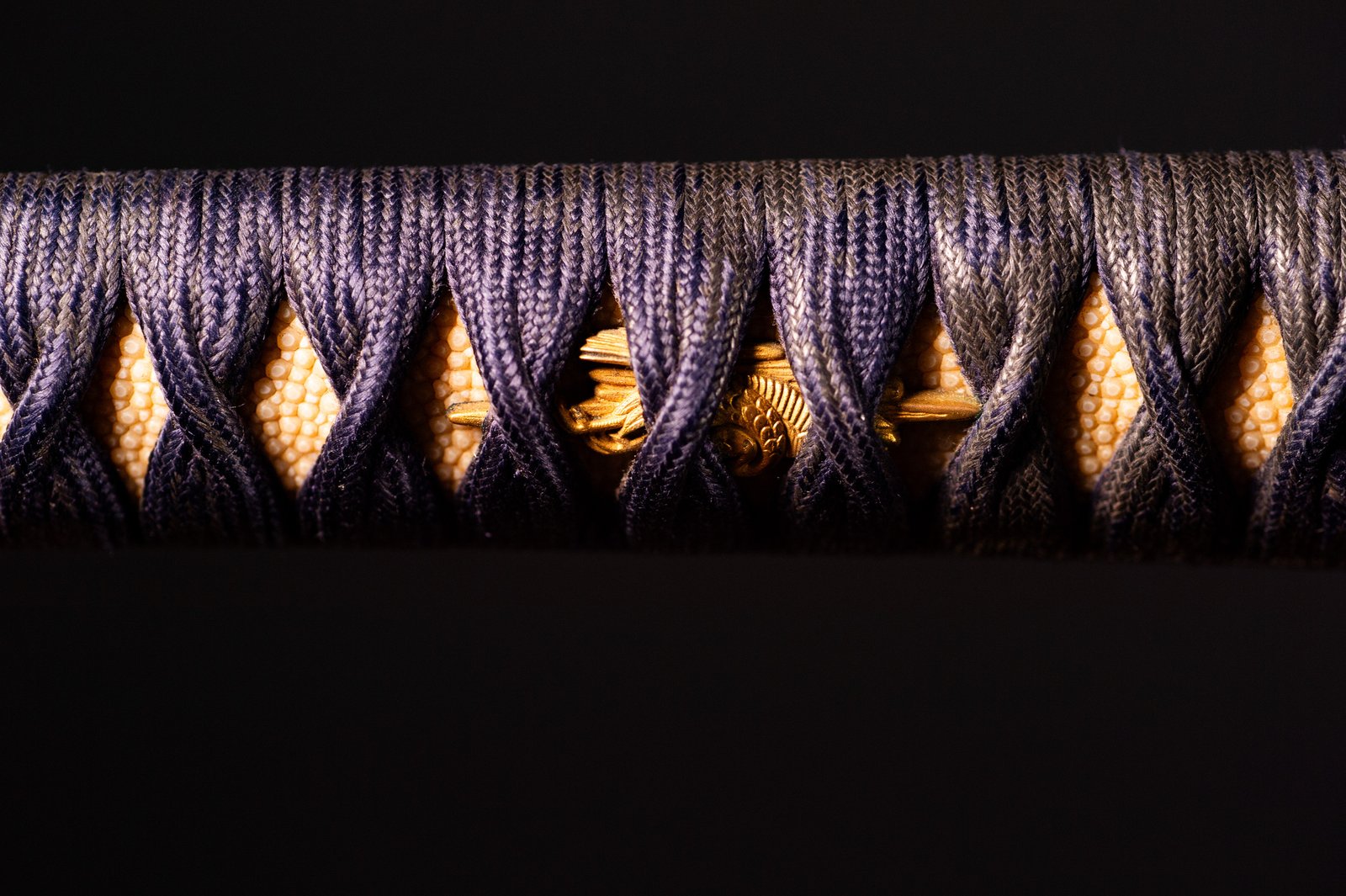
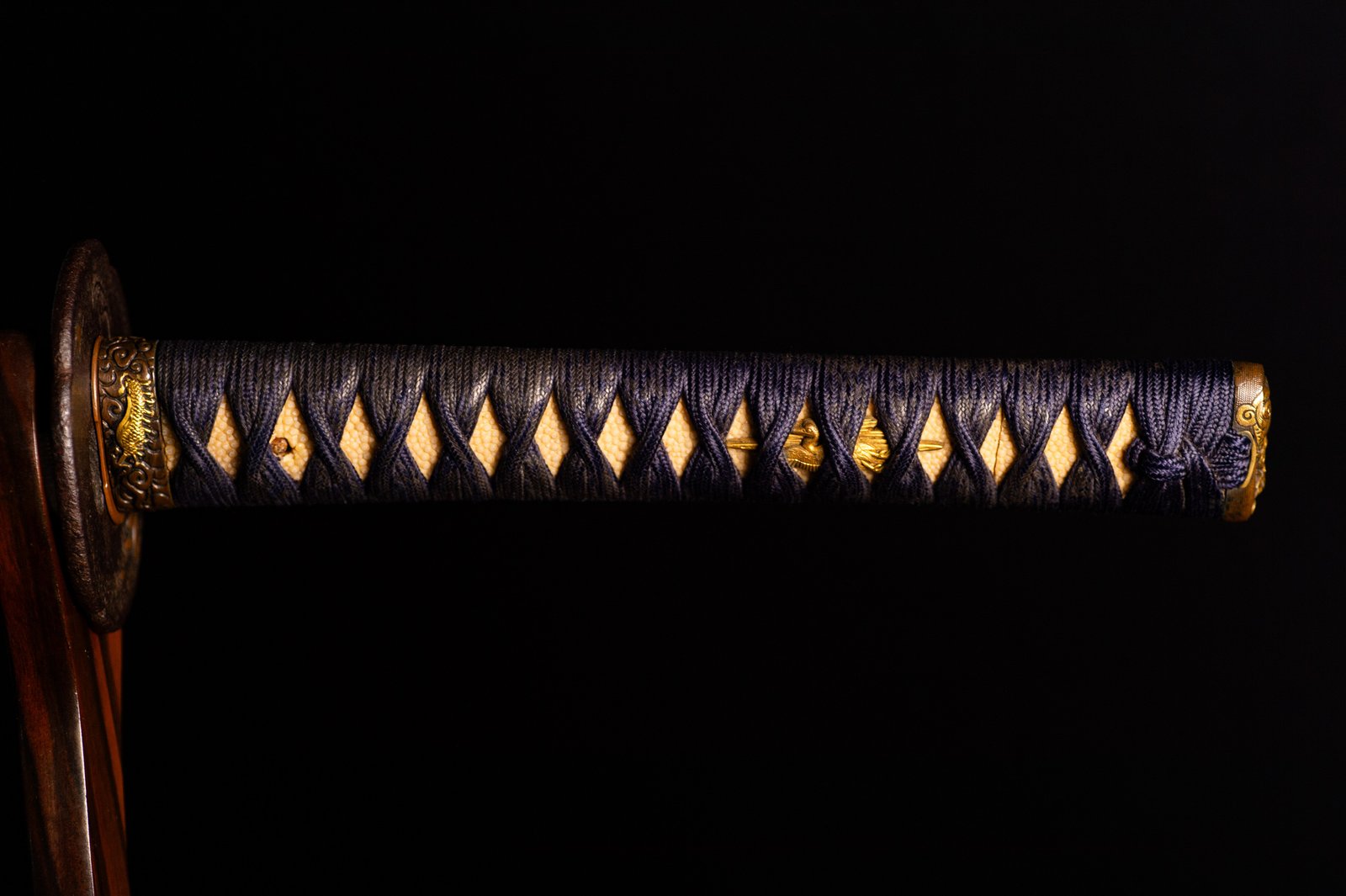
The tsuka is wrapped in distinctive purple-indigo tsuka-ito arranged in traditional fashion over pale samegawa.
The contrast between the deep coloured silk and the lighter ray skin produces a particularly striking visual effect.
This colour choice gives the mounting a more individual character than conventional black wrapping while remaining entirely compatible with the refined aesthetic of traditional Japanese sword furniture.
The diamond-shaped openings of the wrapping reveal the pale samegawa and the small decorative menuki beneath.
The menuki are small gilt fittings depicting bird figures.
Their warm golden colour appears through the openings of the purple-indigo wrapping, creating subtle points of contrast along the handle.
The scale of the decoration remains restrained, ensuring that the menuki enrich the mounting without visually dominating it.
These small naturalistic figures add another layer to the decorative vocabulary of the complete koshirae.
The fuchi is richly decorated with a scaled dragon rendered in gilt relief.
The dragon extends dynamically across the fitting, its scales and body carefully modelled against the darker ground.
The contrast between gold and the surrounding dark metal creates a strong visual focal point immediately adjacent to the tsuba.
Dragons occupy a central position in Japanese decorative arts and are traditionally associated with power, water, protection and supernatural authority.
Its inclusion here establishes the principal iconographic theme of the mounting.
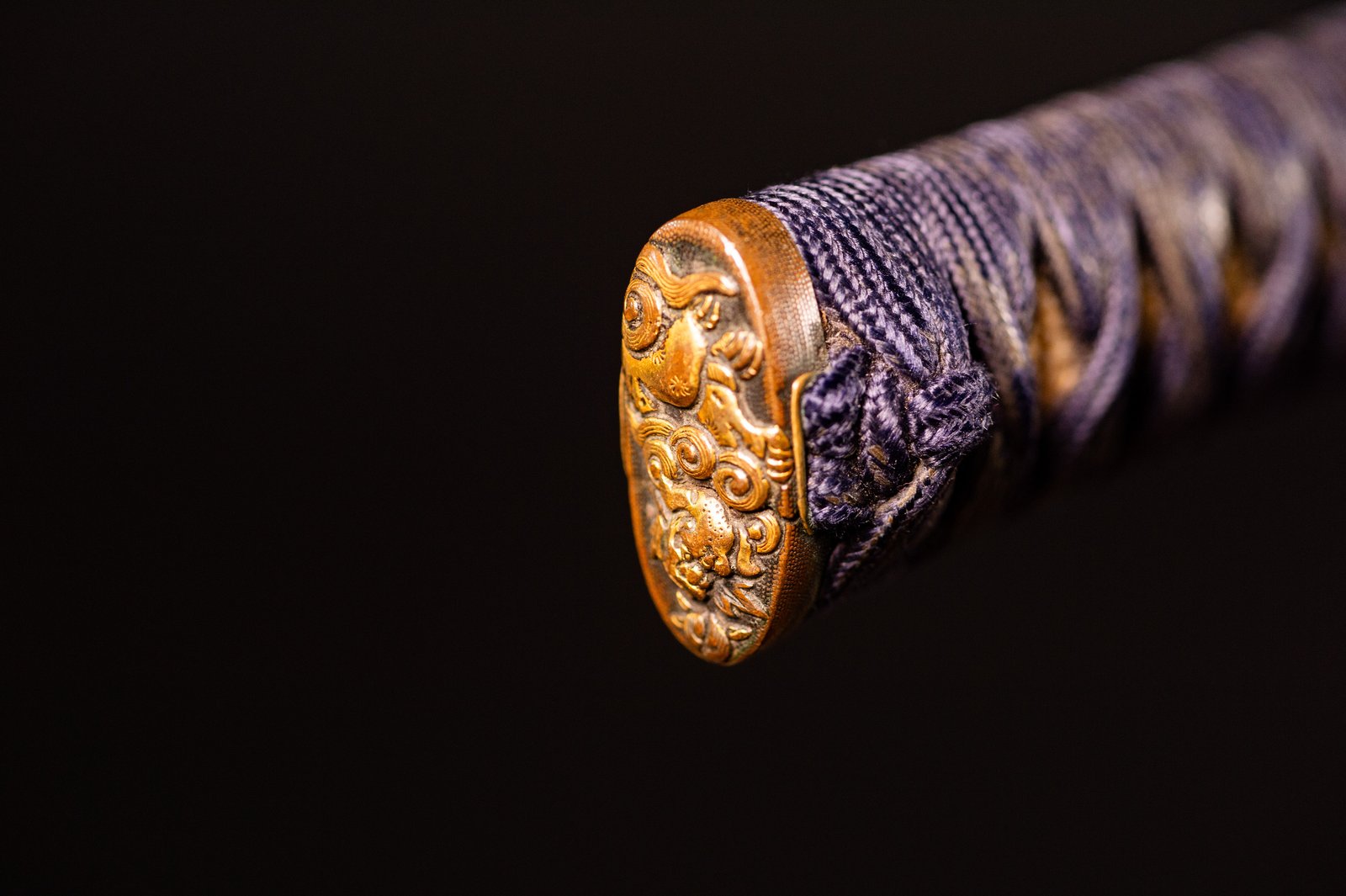
The matching kashira continues the gilt decorative programme.
Its surface combines scrolling cloud forms with a small animal figure, executed in relief against the darker metal background.
The workmanship visually connects the end of the handle with the more elaborate fuchi, producing a coherent pair of terminal fittings.
Together, the fuchi-kashira give the handle a sophisticated decorative character while maintaining the strong dark-and-gold palette of the mounting.
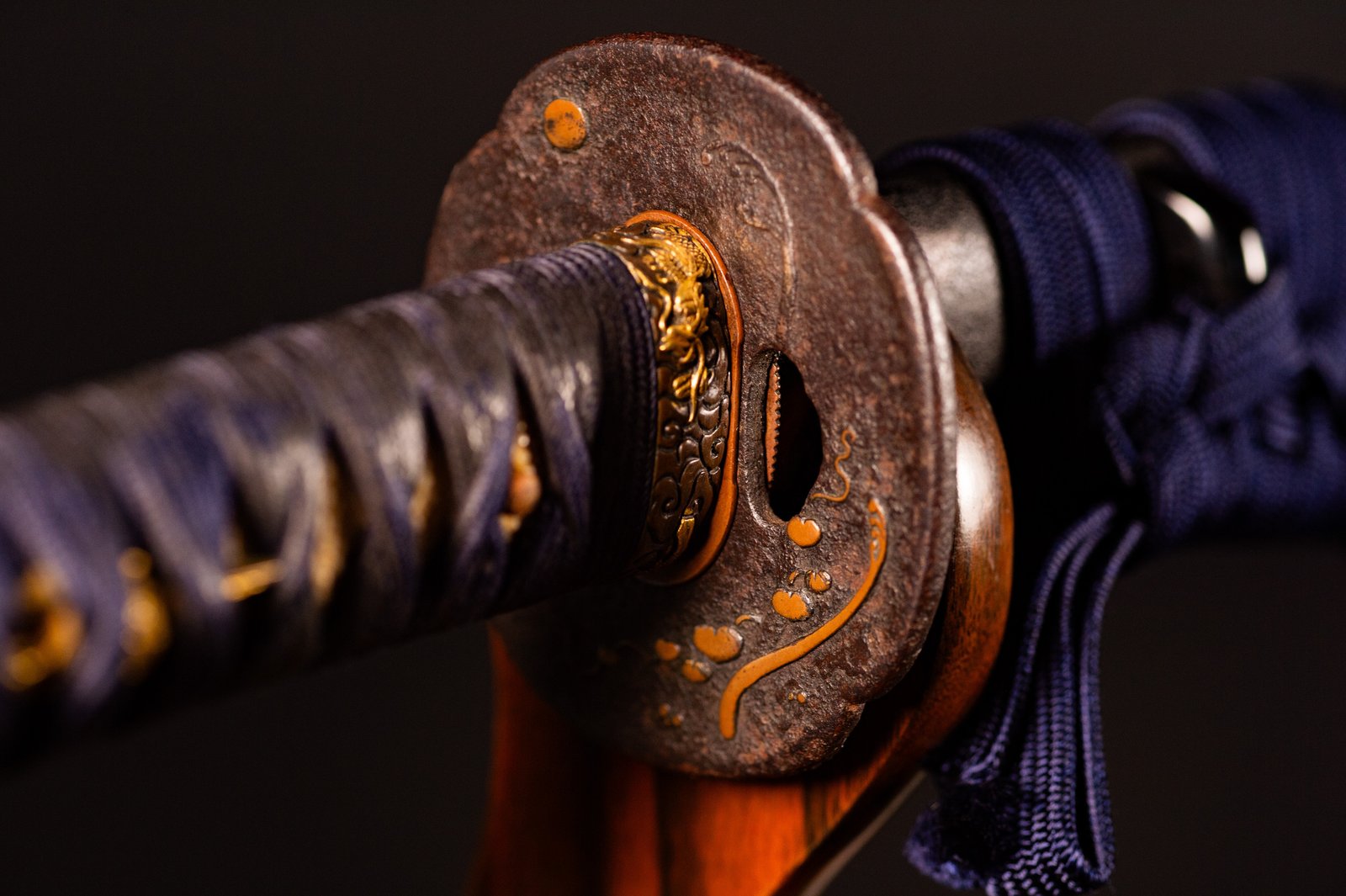
The tsuba is constructed from iron and presents different decorative treatments on its two faces.
One side features a dragon highlighted in gold takazōgan, continuing the principal dragon theme established by the fuchi.
The opposite side incorporates vegetal decoration executed with gold nunome-style detailing.
This contrast between figurative and foliate decoration gives the guard additional visual complexity while retaining a unified material palette of dark iron and gold.
The naturally aged iron surface provides an appropriate historical counterpoint to the brighter gilt elements.
The saya is finished in glossy black lacquer.
Unlike the elaborate handle fittings, the scabbard remains deliberately plain and undecorated.
This restraint is highly effective within the complete composition, preventing the mounting from becoming visually excessive and allowing the gold metalwork and unusual purple-indigo textile elements to attract attention.
The polished black surface also reinforces the formal character of the sword.
The saya is accompanied by a matching purple-indigo sageo.
Its colour closely corresponds to the tsuka-ito, creating visual continuity between handle and scabbard.
This coordinated use of textile colour is one of the most distinctive aesthetic elements of the complete mounting.
The blade is accompanied by an official NBTHK Hozon Tōken certificate.
The Nihon Bijutsu Tōken Hozon Kyōkai is the principal Japanese organisation dedicated to the study and preservation of traditionally manufactured Japanese art swords.
The certificate identifies the blade as:
Mumei – Kaifu (無銘・海部)
and places it within the Shinshintō period.
The Hozon designation confirms that the blade has passed NBTHK examination and has been recognised as an authentic Japanese sword worthy of preservation.
For collectors, this specialist attribution is particularly important for an unsigned blade because it provides a recognised scholarly identification of its tradition and historical period.
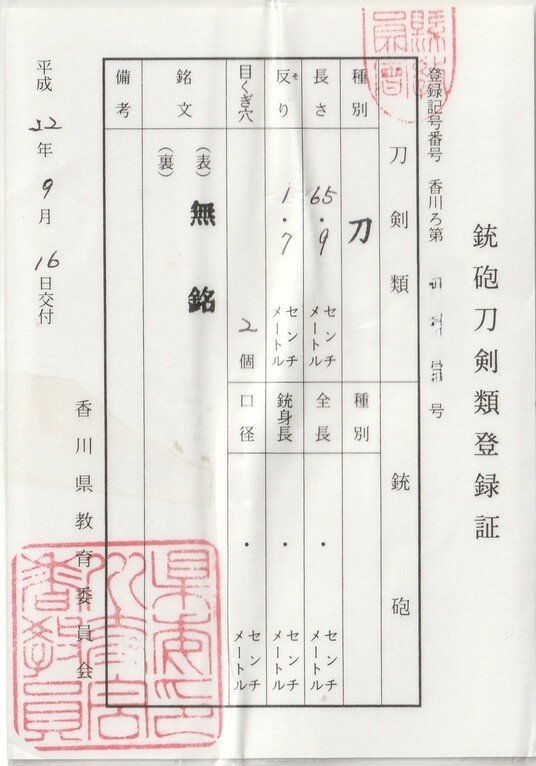
The sword retains its original Japanese Jūhō Tōken Rui Tōrokushō registration document from Kagawa Prefecture.
The document records the blade as a Japanese sword with a length of approximately 65.9 cm, a curvature of approximately 1.7 cm and two mekugi-ana.
The surviving registration dates to 16 September 2010.
The torokusho forms part of Japan’s national system for the legal registration and preservation of traditionally manufactured swords.
Together with the NBTHK certificate, it provides an important documentary history for the blade.
The blade remains in a state that allows its overall geometry, hardened edge and principal metallurgical characteristics to be appreciated.
The nakago retains its historical surface and shows two mekugi-ana, while remaining unsigned as recorded by the NBTHK.
The koshirae retains a particularly attractive overall appearance, with its purple-indigo textile work, pale samegawa, gold-highlighted fittings and glossy black saya forming a visually coherent ensemble.
As expected from an antique Japanese sword and historical mounting, natural signs of age and use are present and should be regarded as part of the object’s history.
This katana offers an attractive combination of documented attribution, regional historical interest, recognised Japanese certification and a highly distinctive complete mounting.
The attribution to the Kaifu tradition is particularly compelling. With a history spanning centuries and a close association with Awa Province and its maritime military culture, Kaifu represents one of the more individual regional traditions within Japanese swordmaking.
The blade’s Shinshintō dating demonstrates that this long-established tradition remained active into the final decades of the Edo period.
Its NBTHK Hozon certification is especially important because the blade is unsigned. Rather than relying upon a speculative commercial attribution, its identification as Kaifu comes directly from the recognised Japanese appraisal organisation responsible for the preservation and study of the Japanese art sword.
The original Kagawa torokusho adds another layer of Japanese documentation and records the physical characteristics of the blade.
From an aesthetic perspective, the complete koshirae provides substantial additional appeal. Purple-indigo silk over pale samegawa, gilt bird menuki, dragon fittings, dark iron and glossy black lacquer create a memorable combination that distinguishes this sword immediately from more conventionally mounted examples.
A distinctive and well-documented Shinshintō katana attributed by the NBTHK to the historic Kaifu tradition of Awa Province. Combining a well-proportioned 65.9 cm blade, NBTHK Hozon certification, original Japanese registration and an unusually elegant purple-and-gold dragon koshirae, this sword represents an attractive opportunity for collectors seeking a certified nihontō with strong regional identity, historical interest and exceptional display character.
| Época | Edo |
|---|

Order above 1.000,00 € gets free shipping.

Secure and hassle-free payment process.

Certificate of authenticity included.

Have questions? Contact us via WhatsApp.
Contact