


1 in stock
1 in stock
Add to Compare
Add to Wishlist
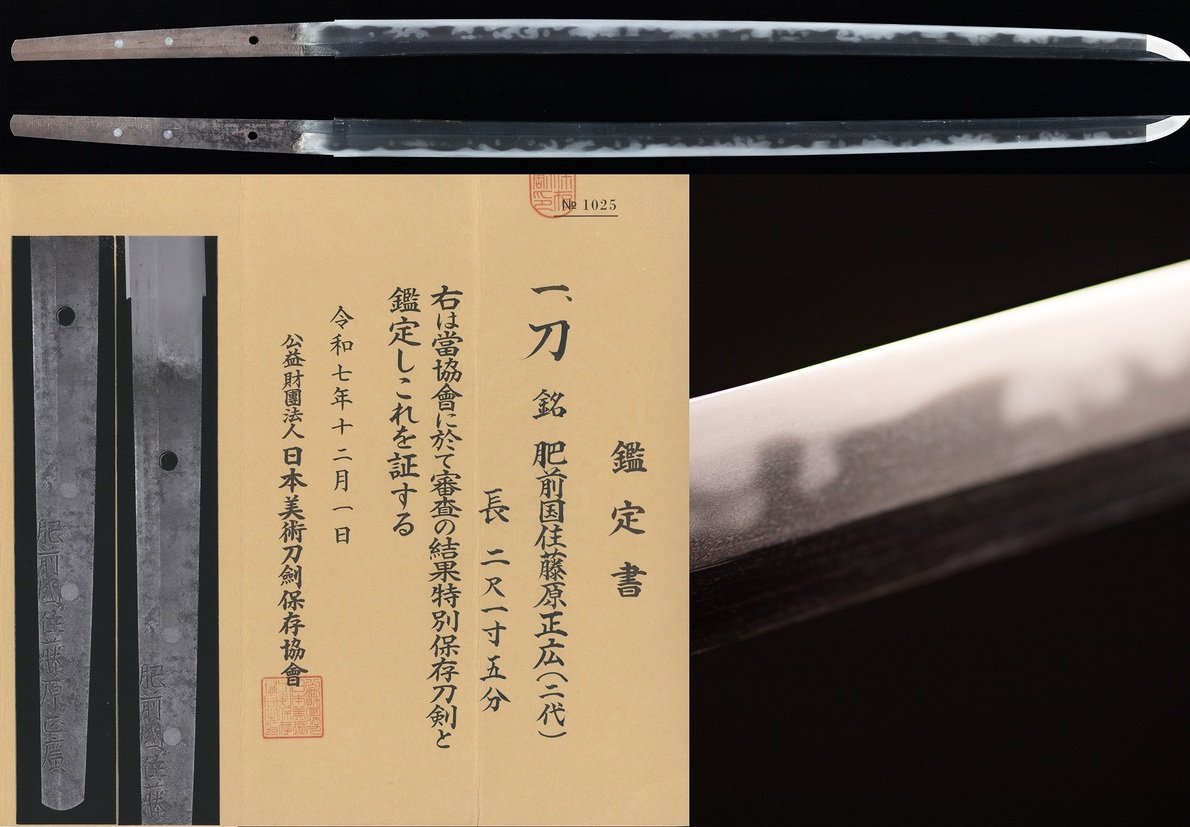
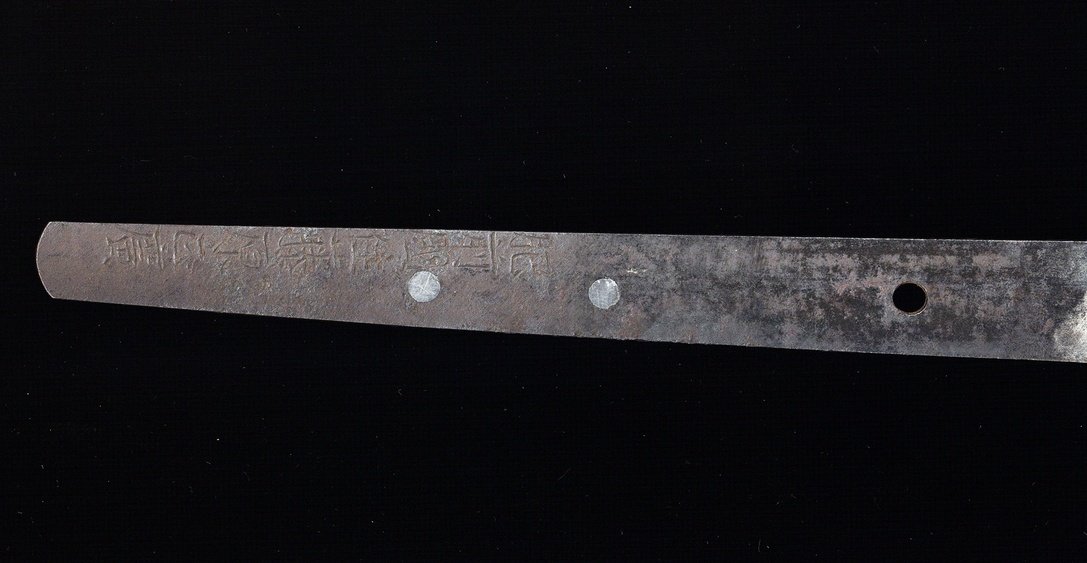
An exceptional and superbly documented Japanese katana by the second-generation Hizen Masahiro, signed 肥前国住藤原正広 – Hizen no Kuni Jū Fujiwara Masahiro. A son of the founding Kawachi no Daijō Masahiro and great-grandson of Hizen Tadayoshi, this smith belonged directly to one of the most important lineages of Edo-period Japanese swordmaking.
The blade is particularly significant for its plain Masahiro signature, without the Kawachi no Kami title received later in the smith’s career. Masahiro had originally signed Masanaga and adopted the name Masahiro following his father’s death in Kanbun 5 (1665), making this untitled signature characteristic of a restricted period early in his independent production.
Beyond its distinguished authorship, the sword stands out for its unusually shallow curvature, exceptionally refined Hizen jigane, vigorous gunome-midare hamon and abundant metallurgical activity.
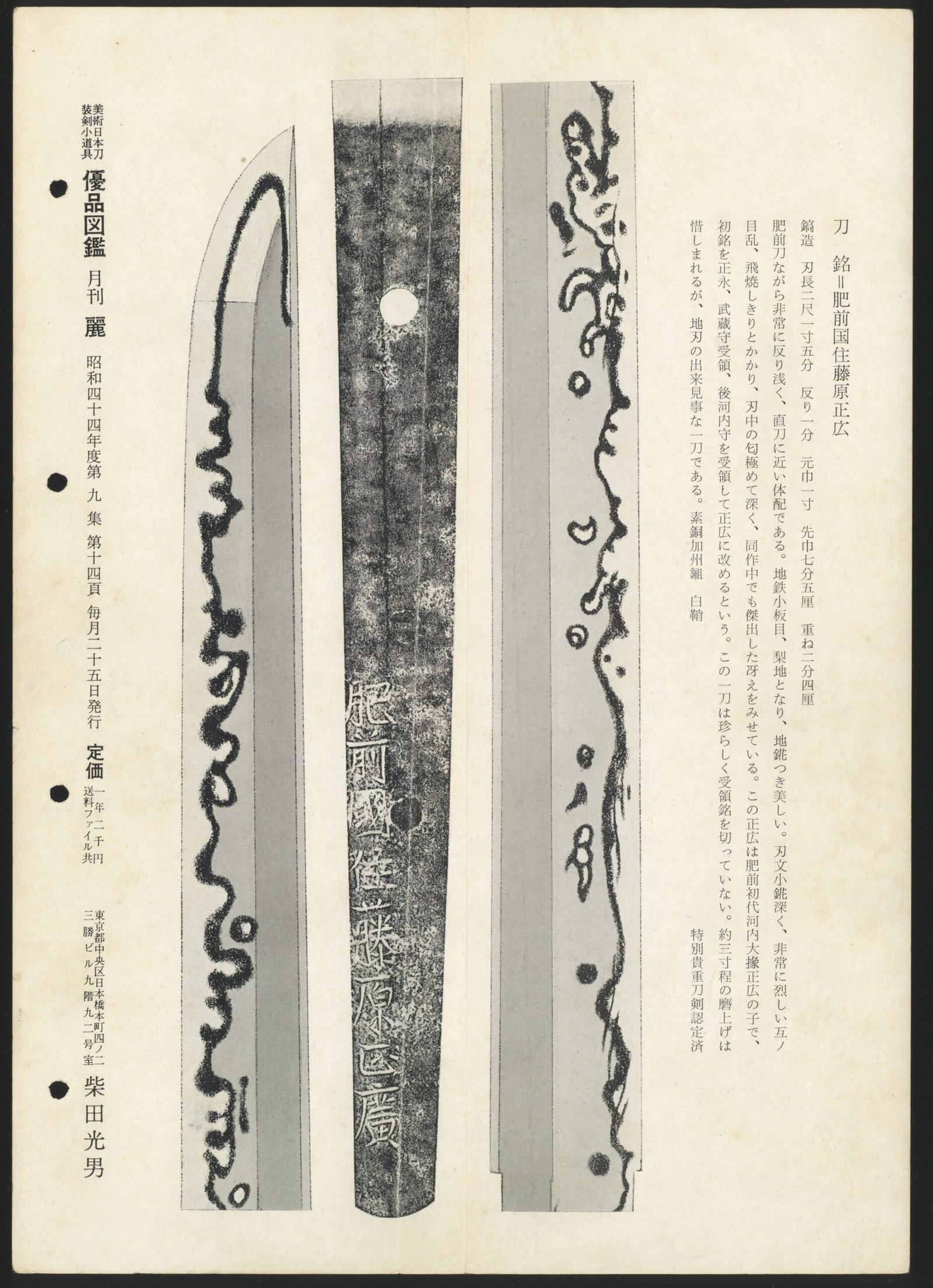
Its importance was already recognised decades ago. The blade appeared in the 1969 Yūhin Zukan (“Gallery of Fine Works”) section of the specialist Japanese sword-appreciation publication Rei (麗), where it was illustrated with a full oshigata and discussed as an outstanding example of Masahiro’s work.
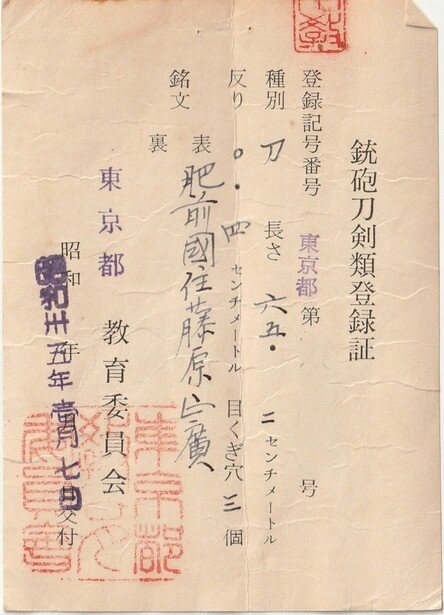
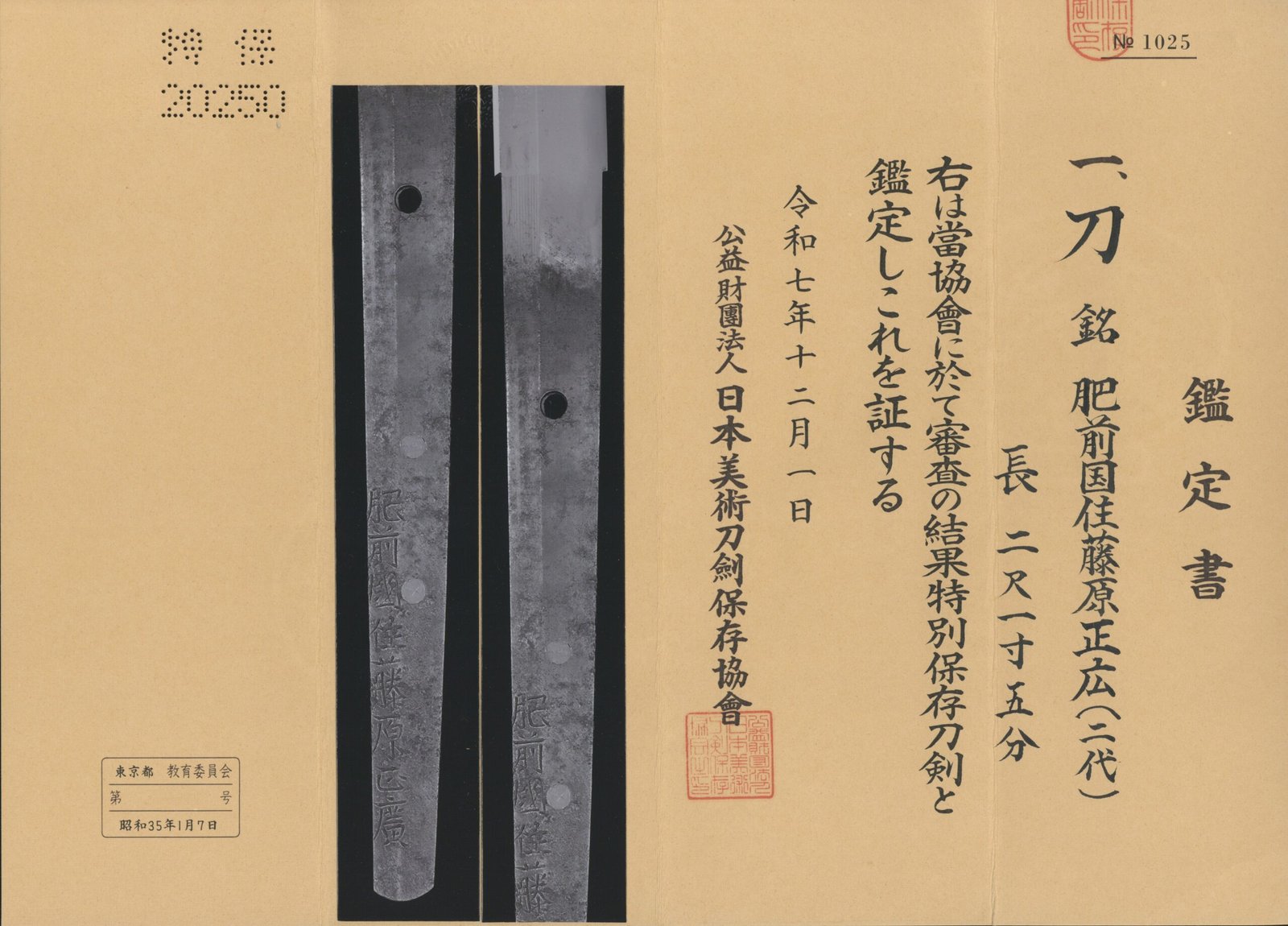
Today the blade is accompanied by a current NBTHK Tokubetsu Hozon Tōken certificate, its historical Tokyo registration document and the 1969 publication, creating an unusually rich documentary record extending across more than half a century.
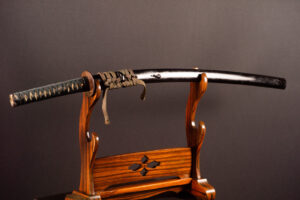
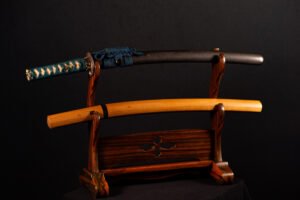
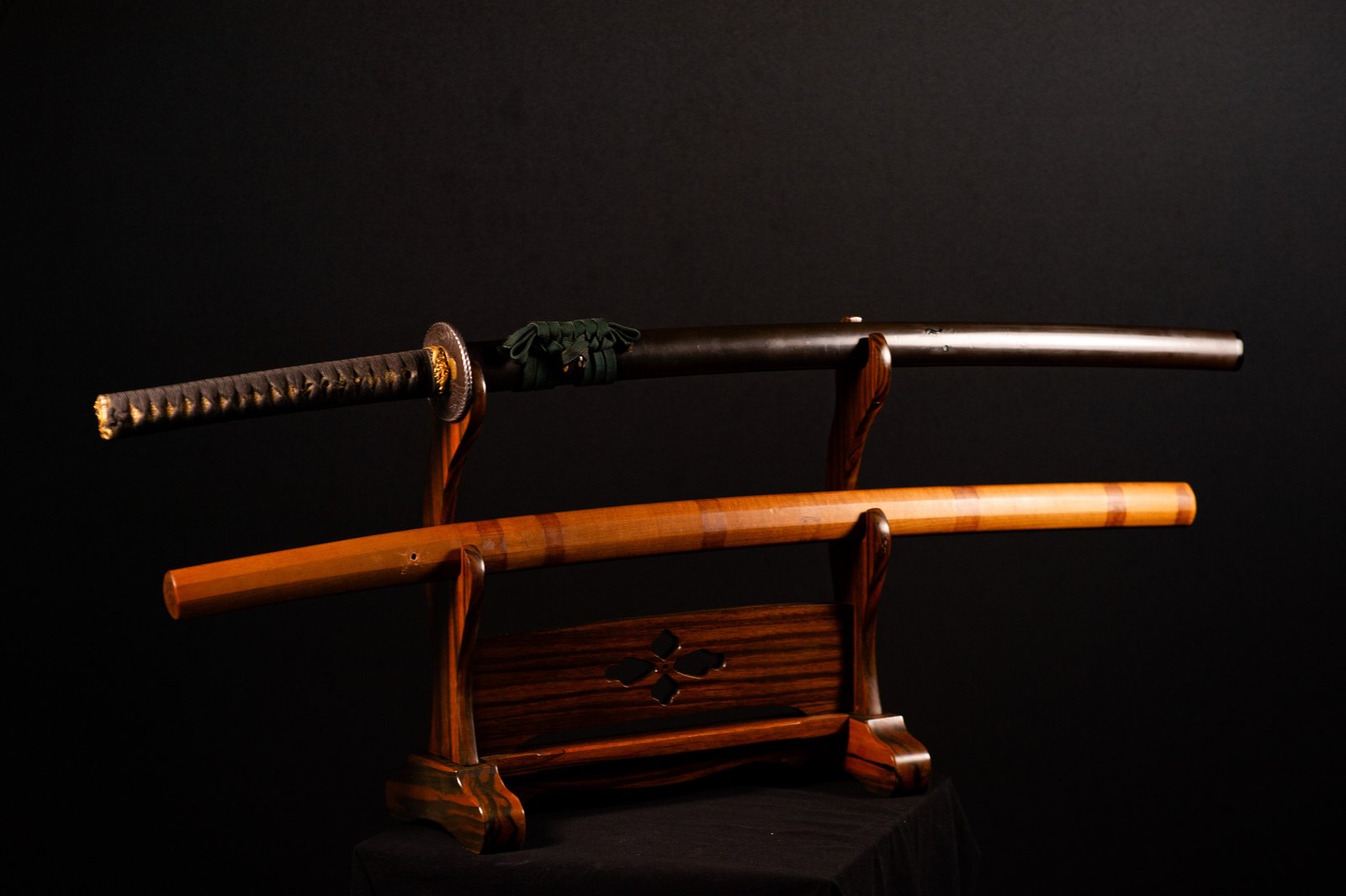
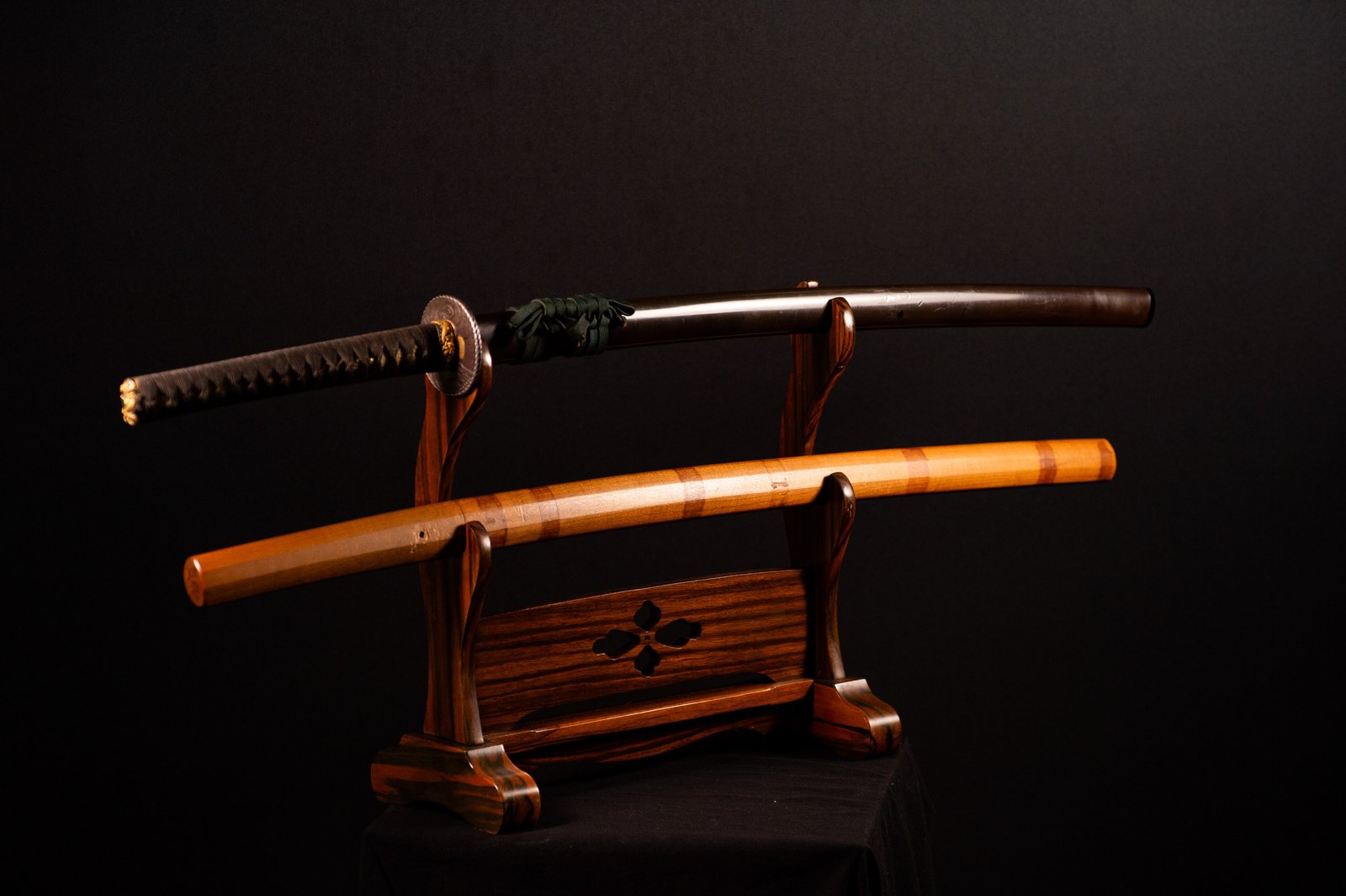
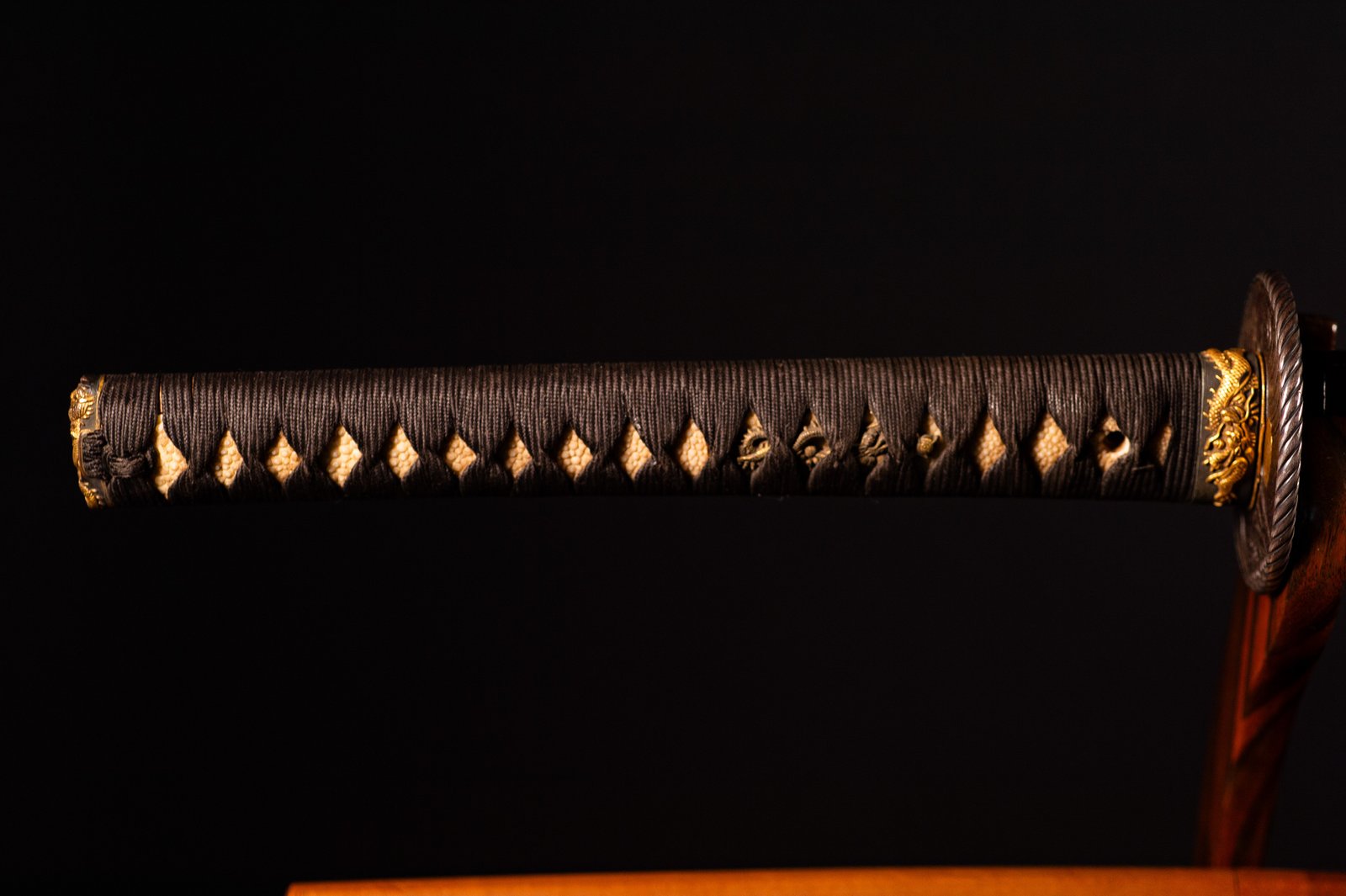
The sword is completed by an elegant and highly coherent dragon-themed koshirae, with shakudō fittings, gilt dragon decoration, black lacquer saya and dark green sageo.
The sword is supplied with a kimono or cotton storage bag, a Supein Nihonto certificate, its NBTHK documentation, a copy of its Japanese registration and the accompanying historical publication material.
The smith responsible for this blade was the second-generation Hizen Masahiro, a direct member of the celebrated Hizen Tadayoshi lineage.
Born around Kan’ei 3 (1626), he was the son of the first-generation Kawachi no Daijō Masahiro and the great-grandson of Hizen Tadayoshi, founder of the Hizen school.
The Hizen tradition developed in the domain of the Nabeshima family and became one of the most recognisable and technically accomplished schools of shintō sword production during the Edo period. Its finest blades are renowned particularly for their exceptionally refined steel and distinctive surface structure.
The second-generation Masahiro originally used the name Masanaga. Following the death of his father in Kanbun 5 (1665), he adopted the name Masahiro, continuing the family’s prestigious swordmaking tradition.
The signature found on this blade is therefore of particular interest.
The nakago bears the inscription:
肥前国住藤原正広
Hizen no Kuni Jū Fujiwara Masahiro
The significance of this inscription lies not simply in the name Masahiro, but in what is absent from it.
The blade does not carry the Kawachi no Kami honorific title that Masahiro would use later in his career. Combined with the historical chronology of his change from Masanaga to Masahiro, this plain signature places the sword within a particularly interesting period early in his independent output.
The historical 1969 study of this very blade specifically drew attention to this unusual untitled signature.
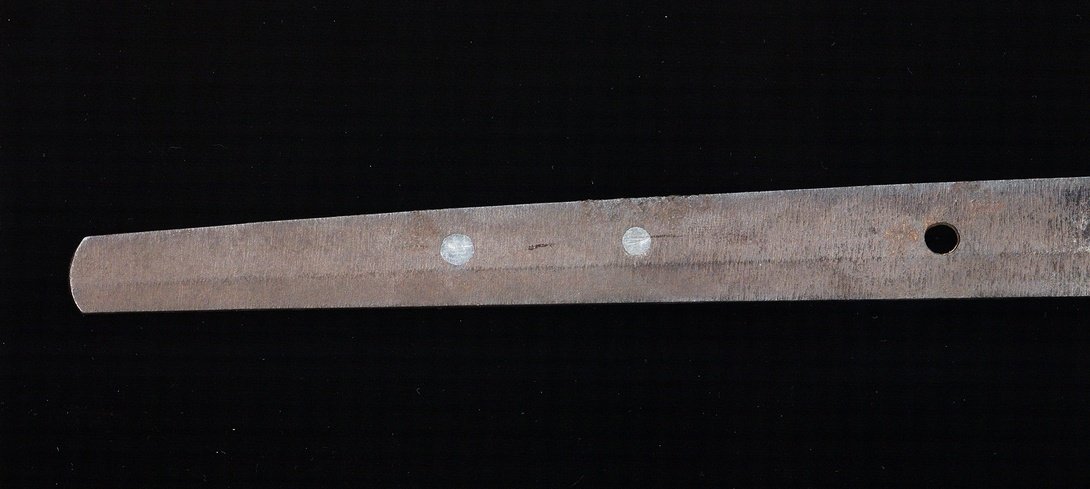
The mei remains preserved on the nakago despite an old shortening of the blade.
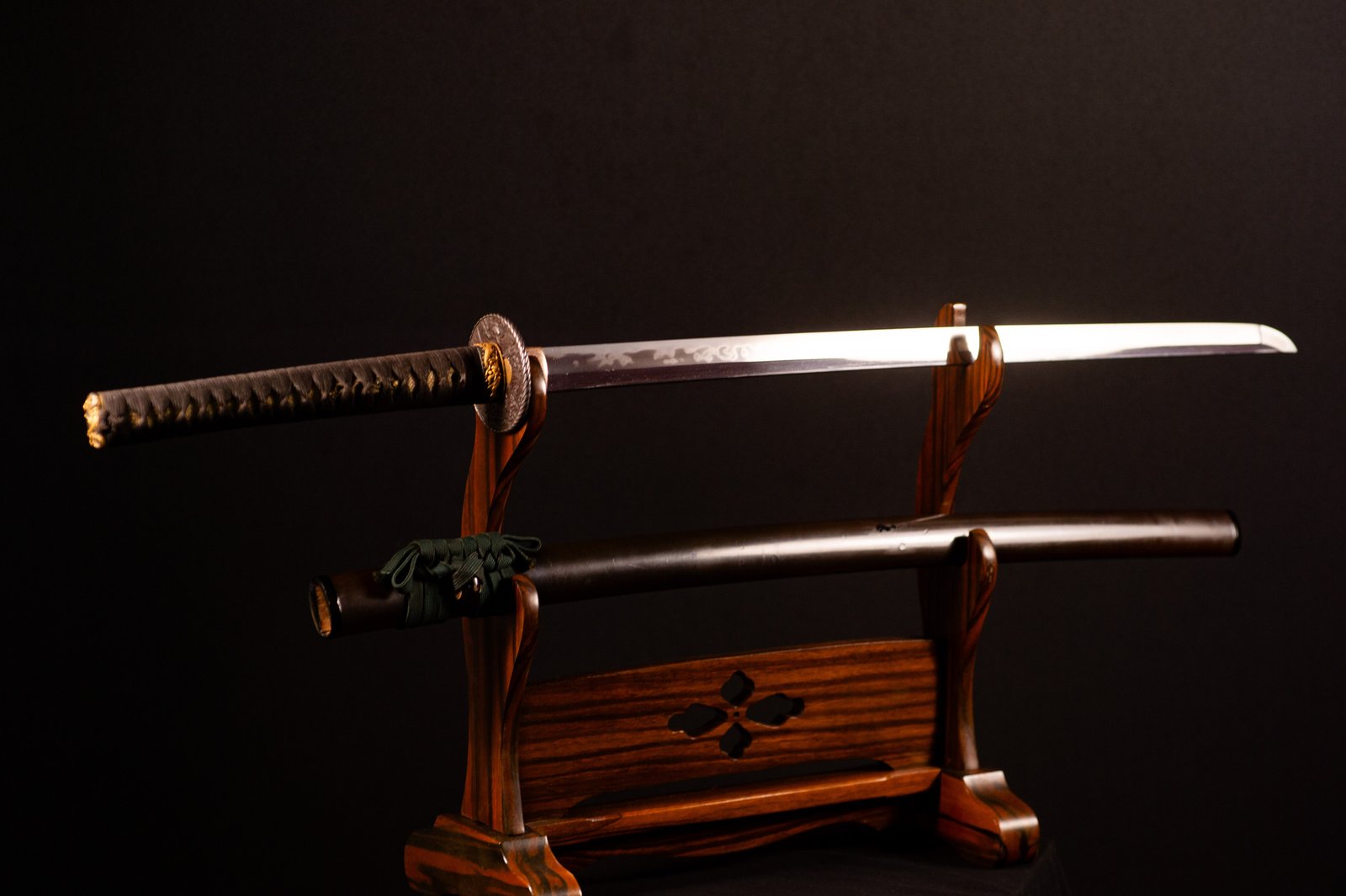
The blade immediately distinguishes itself through its remarkably shallow sori.
Its profile approaches an almost straight configuration, creating an elegant and powerful silhouette characteristic of the Kanbun era but particularly striking within the context of Hizen workmanship.
This restrained curvature gives the sword a markedly different presence from the more deeply curved forms frequently associated with Hizen blades.
The 1969 specialist publication already identified this feature as one of the notable characteristics of the sword, demonstrating that its unusual sugata has long been recognised by Japanese connoisseurs.
The blade combines this distinctive profile with refined forging and an active temper pattern, resulting in a sword whose apparent restraint in shape contrasts beautifully with the considerable activity visible within its steel.
One of the defining qualities of superior Hizen swords is the refinement of their jigane, and this blade provides an excellent expression of that tradition.
The forging presents an exceptionally tight ko-itame hada, approaching the fine nashiji-like texture associated with the celebrated Hizen konuka-hada.
Fine ji-nie are distributed throughout the surface of the steel, creating a delicate sparkling effect when the blade is viewed under appropriate light.
Rather than presenting a coarse or strongly visible grain, the steel appears remarkably compact and controlled. This dense forging is one of the qualities for which the finest works of the Hizen school are particularly appreciated.
The result is a sophisticated surface whose beauty becomes progressively more apparent under close examination.
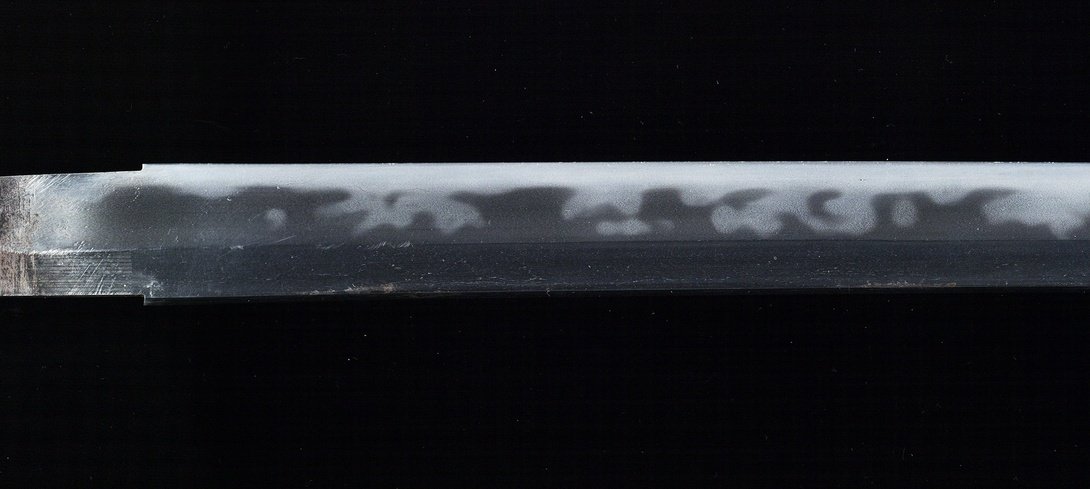
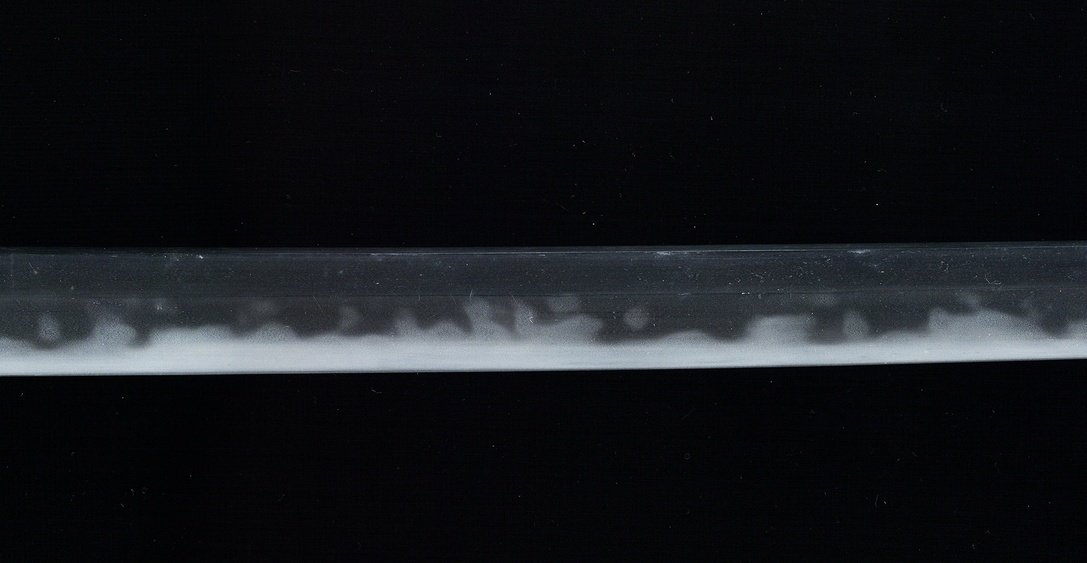
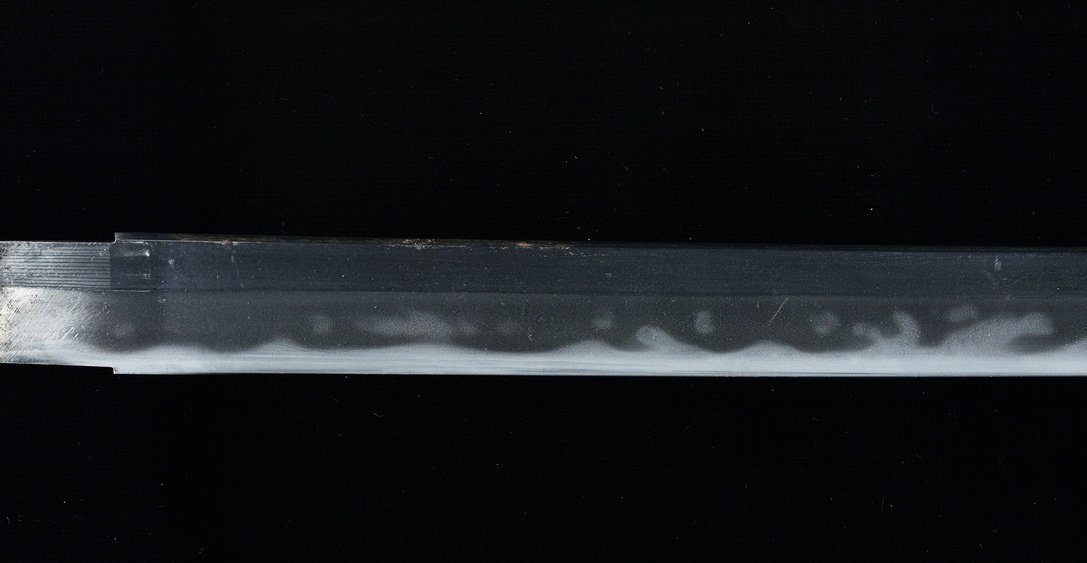
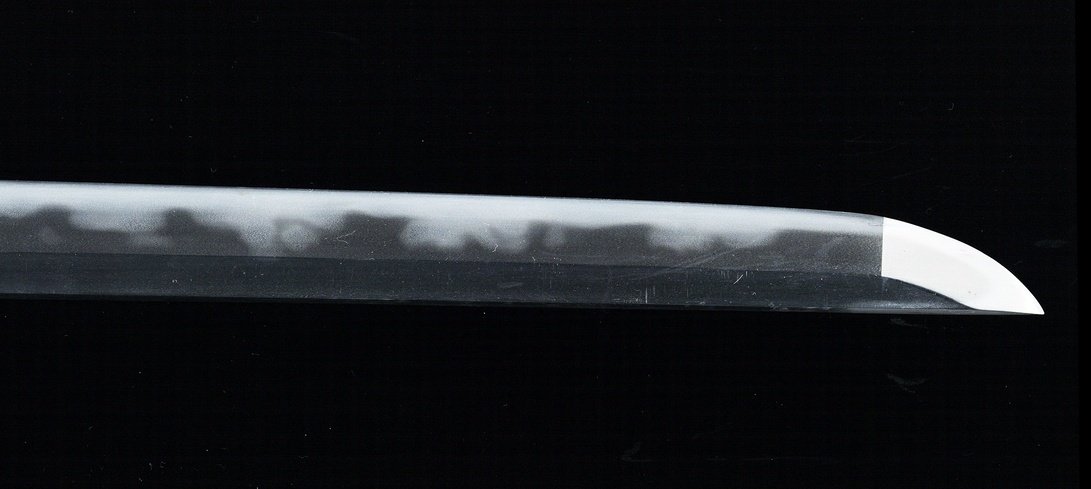
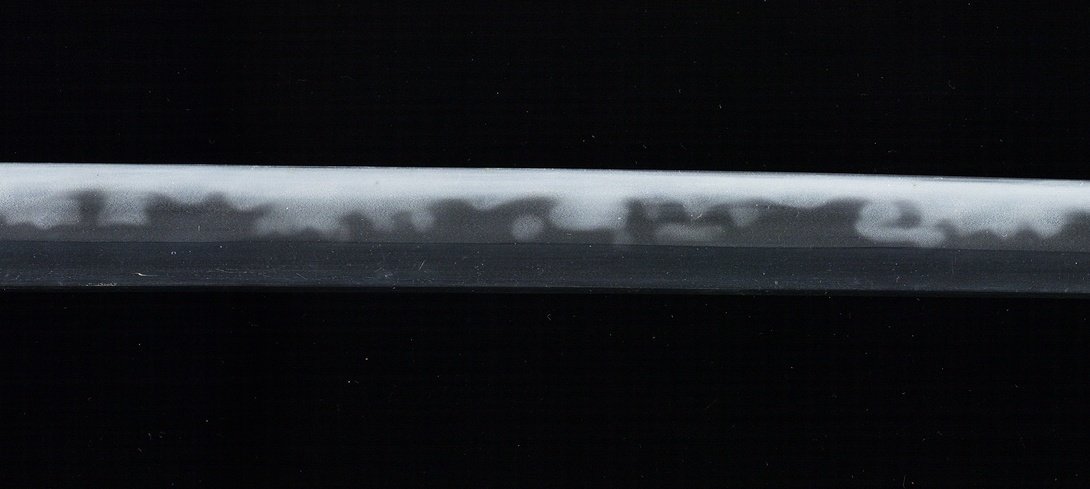
In contrast with the restrained geometry of the blade, the hamon is remarkably energetic.
It is formed primarily in a vigorous gunome-midare, developed in deep nioi and generously accompanied by nie.
Throughout the temper pattern appear frequent areas of tobiyaki — isolated patches of hardened steel that rise above the principal hamon into the ji.
These areas introduce considerable visual movement and complexity, giving the temper line a dynamic character that rewards close examination.
The historical appraisal published in 1969 specifically praised the quality of the tempering, describing it as displaying:
“dōsaku-chū demo kesshutsu shita sae”
— a brilliance standing out even among the smith’s own body of work.
This historical assessment is especially important because it demonstrates that the exceptional qualities visible in the blade today had already been recognised by specialist Japanese connoisseurs nearly six decades ago.
The point continues the disciplined construction visible throughout the blade.
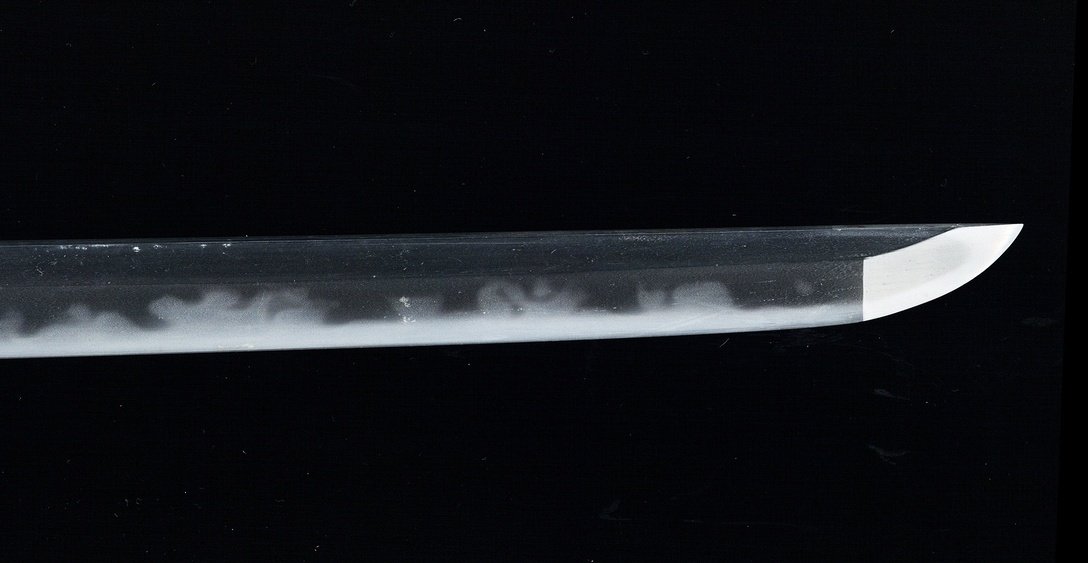
The hamon flows naturally into the kissaki, forming the boshi before turning back toward the spine.
The historical oshigata published in 1969 records this section of the blade in detail, including the form of the kissaki and the return of the boshi.
The survival of such an early graphic record provides an important point of comparison for the present condition of the sword.
The nakago preserves the signature Hizen no Kuni Jū Fujiwara Masahiro and displays several sequential mekugi-ana.
The 1969 specialist account records an old suriage of approximately three sun.
This historical shortening is consistent with the sequence of mounting holes visible on the tang today.
Importantly, the mei itself was preserved during the alteration and remains clearly present on the nakago.
Historical modifications of this type form part of the working life of Japanese swords and provide evidence of the blade’s continued preservation and remounting across successive generations.
The blade is accompanied by an exceptionally attractive koshirae constructed around a unified dragon theme.
Rather than combining unrelated decorative subjects, the principal fittings repeat variations of the dragon motif, creating a visually coherent mounting.
The dominant palette is deliberately restrained: near-black silk, dark shakudō, black lacquer and deep green are punctuated by carefully placed gilded dragon details.
This contrast gives the mounting considerable presence while avoiding excessive ornamentation.
The dragon occupies a particularly important position within Japanese art, where it is traditionally associated with power, water, protection and supernatural authority. Its use across the principal fittings creates an appropriate visual counterpart to a blade of this quality.
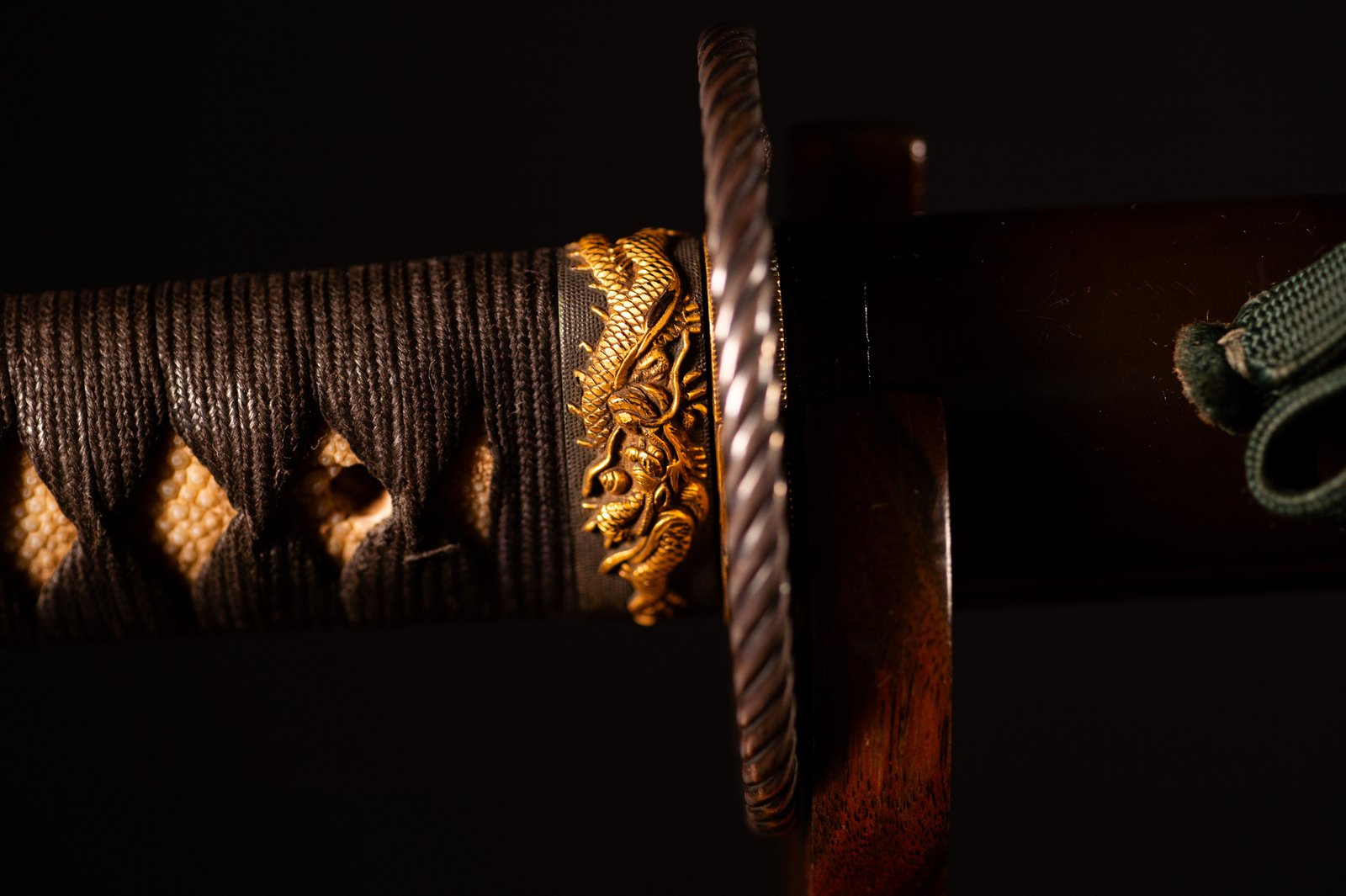
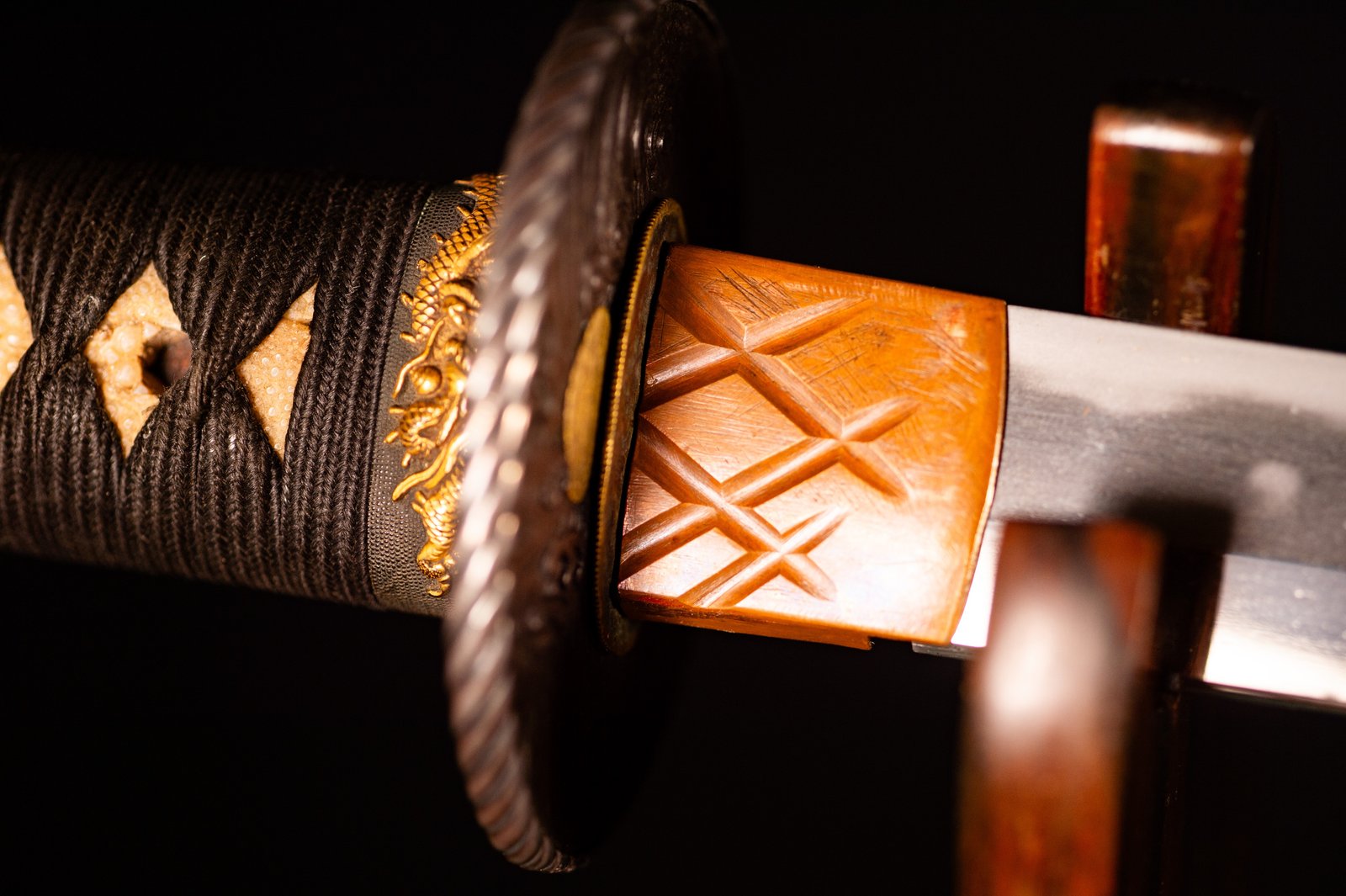
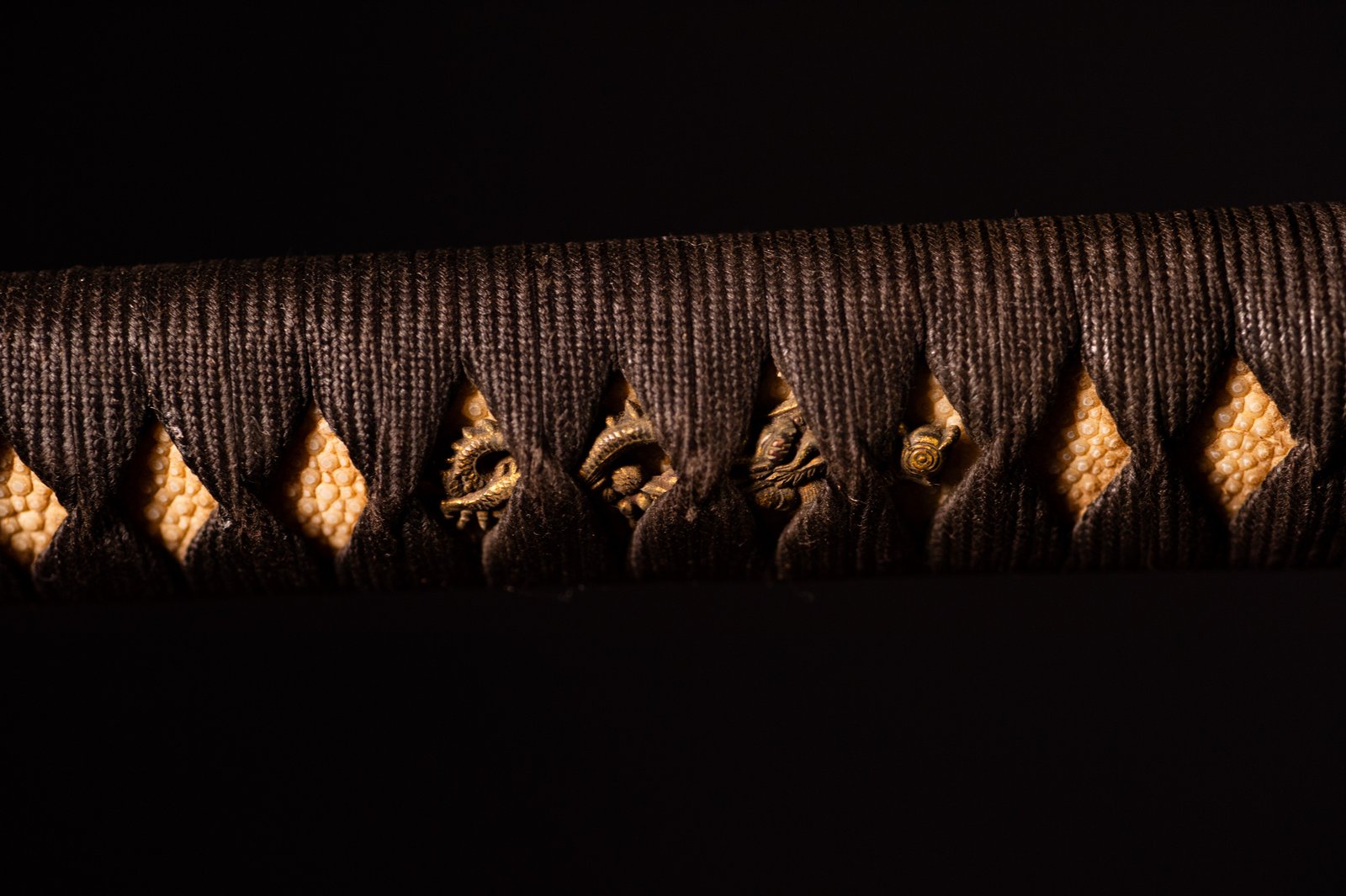
The tsuka is wrapped in near-black tsuka-ito applied in a tight traditional hineri-maki over pale samegawa.
The contrast between the dark wrapping and the lighter ray skin creates the classical alternating diamond pattern of a traditional Japanese sword mounting.
Within these openings appear small gilt dragon menuki, their golden surfaces emerging subtly from beneath the dark silk.
The restrained presentation prevents the decoration from becoming ostentatious, while close inspection reveals considerable attention to detail.
The menuki continue the principal iconography of the mounting with finely rendered gilt dragons.
Positioned beneath the tsuka-ito, the dragons appear intermittently through the diamond-shaped openings of the wrapping.
Their warm gold tone contrasts dramatically with the near-black silk and pale samegawa, adding depth to the handle while reinforcing the unified decorative program of the koshirae.
The fuchi is executed in dark shakudō and decorated with a gold dragon in relief.
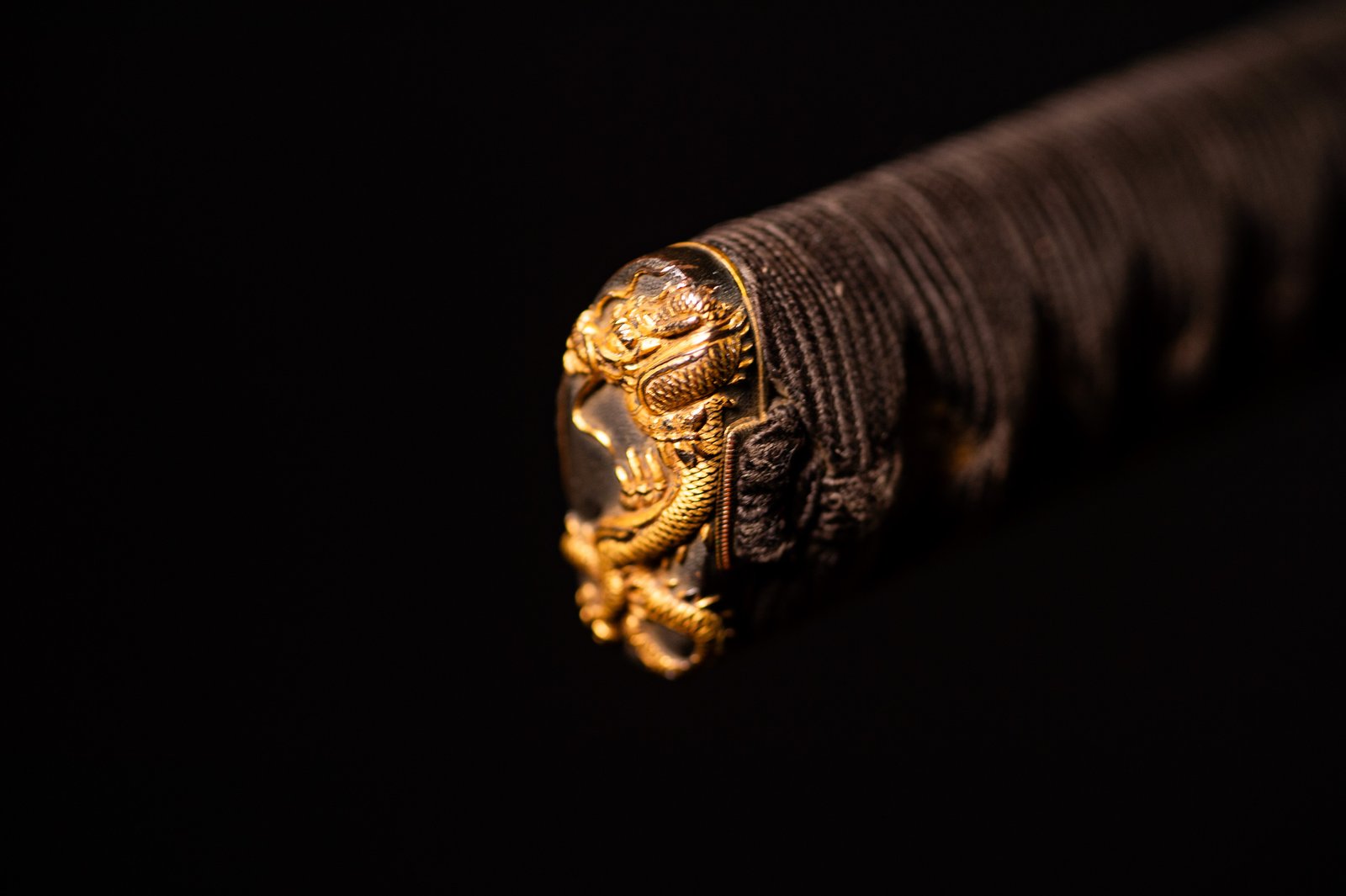
Particularly impressive is the kashira, where a large gilded dragon dominates the composition in high relief.
The creature is modelled with clearly defined scales, claws and anatomical details, creating a striking contrast against the dark ground of the metal.
The quality and prominence of this decoration make the fuchi-kashira among the strongest visual elements of the entire mounting.
Together with the menuki and tsuba, they establish a continuous dragon theme from one end of the tsuka to the other.
The tsuba continues the dragon iconography of the remaining fittings.
Its large dragon design is worked across a dark surface, while the outer mimi is finished with a contrasting silver-toned rim.
This border creates a subtle transition between the dark mounting and the polished steel of the blade while giving the guard a distinctive visual identity.
The consistency between the tsuba, fuchi-kashira and menuki is particularly important, giving the koshirae the appearance of a deliberately conceived decorative ensemble rather than an accumulation of unrelated fittings.
The saya is finished in glossy black lacquer, providing an elegant and deliberately restrained background for the elaborate dragon fittings of the handle.
Its smooth dark surface allows the textures of the shakudō, gold decoration and twisted iron of the tsuba to remain visually dominant.
A dark green sageo introduces a subtle colour accent while preserving the overall sober character of the mounting.
The resulting combination is refined, formal and highly effective: an understated saya paired with richly detailed fittings.
One of the most important aspects of this sword is its documented appearance in the specialist Japanese sword-appreciation publication Rei (麗).
The blade appeared in the magazine’s 1969 Yūhin Zukan (優品図鑑 – “Gallery of Fine Works”) section.
The surviving page contains a detailed oshigata of the sword, reproducing the temper line, kissaki, boshi and a rubbing of the nakago with its signature.
More importantly, the accompanying specialist commentary identifies several of the characteristics that continue to distinguish the blade today.
It specifically notes the unusually shallow curvature, discusses the signature and records the historical shortening of approximately three sun.
The appraisal also praises the quality of the temper line as outstanding even within Masahiro’s own production.
This publication establishes that the sword was already being studied and appreciated as a noteworthy work in Japan in 1969, providing an important historical record independent of its modern certification.
The blade is accompanied by a current NBTHK Tokubetsu Hozon Tōken certificate.
The Nihon Bijutsu Tōken Hozon Kyōkai (NBTHK) is the principal Japanese organisation dedicated to the study and preservation of the Japanese art sword.
The Tokubetsu Hozon designation represents an important level within the NBTHK appraisal system and is awarded to swords judged worthy of special preservation on the basis of their quality, authenticity and importance.
In this case, the certification confirms the attribution represented by the signature Hizen no Kuni Jū Fujiwara Masahiro.
For the collector, the combination of the physical blade, its historical documentation and current NBTHK certification provides an unusually strong foundation for the study and appreciation of the sword.
The documentation also includes the sword’s historical registration material from Tokyo.
This provides an additional documentary layer recording the blade within Japan’s post-war registration system for traditionally manufactured swords.
When considered together with the 1969 publication and current NBTHK Tokubetsu Hozon certificate, the surviving registration creates a documentary chain extending across more than half a century.
Few swords on the international market are accompanied by such a useful combination of historical publication, registration documentation and current specialist certification.
The blade is preserved in a condition that allows its refined Hizen jigane, active hamon, nie, nioi and tobiyaki to be properly appreciated.
The nakago retains its historical patina and clearly preserves the important Masahiro signature.
Its multiple mekugi-ana and historical suriage form part of the documented history of the sword and correspond with the information recorded in the 1969 publication.
The koshirae retains an attractive overall appearance, with the black lacquer, dark silk wrapping, shakudō fittings and gilded dragon decoration combining into a highly coherent ensemble.
As expected of an antique Japanese sword and mounting, natural signs of age and historical use are present and should be understood as part of the object’s long history.
This katana brings together several qualities that are rarely found so convincingly in a single sword: an important Hizen smith, a chronologically significant signature, exceptional workmanship, historical publication, modern NBTHK certification and a highly attractive complete koshirae.
The second-generation Masahiro occupies a distinguished position within the Hizen tradition. As the son of the first-generation Masahiro and great-grandson of Hizen Tadayoshi, his work belongs directly to the principal lineage responsible for establishing the reputation of Hizen swords during the Edo period.
The plain Hizen no Kuni Jū Fujiwara Masahiro signature adds particular historical interest because it belongs to the period after his adoption of the Masahiro name but before the later use of his honorific title.
The quality of the blade itself further elevates the piece. Its unusually shallow sori, extremely refined ko-itame approaching the celebrated Hizen konuka-hada, fine ji-nie, vigorous gunome-midare and frequent tobiyaki combine technical refinement with considerable visual energy.
Most importantly, these qualities are not merely a modern interpretation. The sword was already singled out for specialist appreciation in Japan in 1969, when its distinctive shape, signature and exceptional tempering were recorded in Rei‘s Yūhin Zukan.
The current NBTHK Tokubetsu Hozon certificate adds modern specialist authentication to that historical record, while the Tokyo registration provides an additional documentary link in the sword’s history.
Finally, the complete dragon-themed koshirae gives the piece exceptional display presence. The dark shakudō, gilt dragons, pale samegawa, black silk, silver-rimmed tsuba and glossy black saya form a sophisticated ensemble worthy of the blade it accompanies.
A distinguished and exceptionally well-documented Hizen katana, this second-generation Masahiro combines an important early signature, superb Hizen steel, dynamic gunome-midare with tobiyaki, an elegant dragon-themed koshirae and an extraordinary documentary history. Published and praised in Japan as early as 1969 and today certified NBTHK Tokubetsu Hozon, it represents a compelling opportunity for the advanced collector seeking a sword whose quality, attribution and historical appreciation are supported by multiple generations of Japanese documentation.
| Época | Edo |
|---|

Order above 1.000,00 € gets free shipping.

Secure and hassle-free payment process.

Certificate of authenticity included.

Have questions? Contact us via WhatsApp.
Contact