NBTHK Hozon Tantō by Bizen Osafune Harumitsu with Sanada Rokumonsen Koshirae
Muromachi Period, Sue-Bizen School, 16th Century
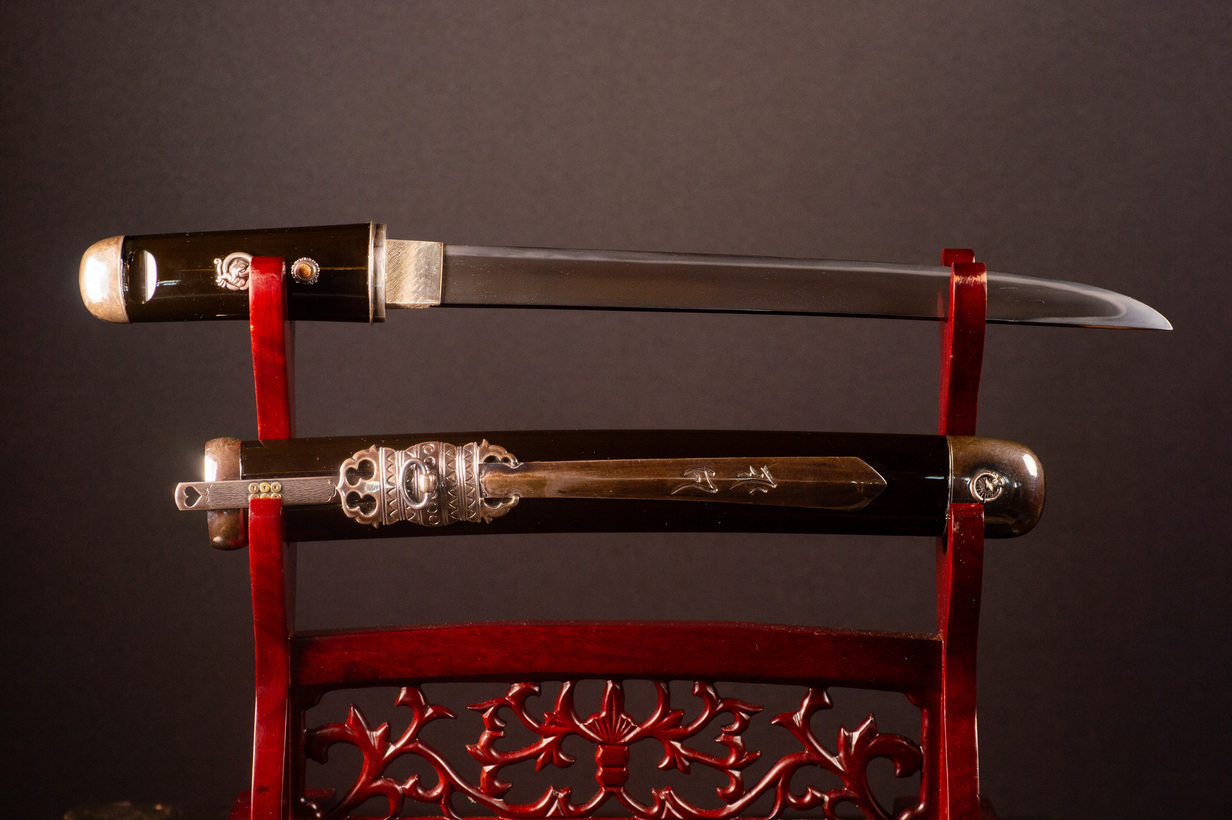
A finely preserved aikuchi tantō signed Bizen no Kuni Jū Osafune Harumitsu saku, attributed to the Sue-Bizen tradition of Osafune, and accompanied by an official NBTHK Hozon Tōken certificate and Japanese registration license.
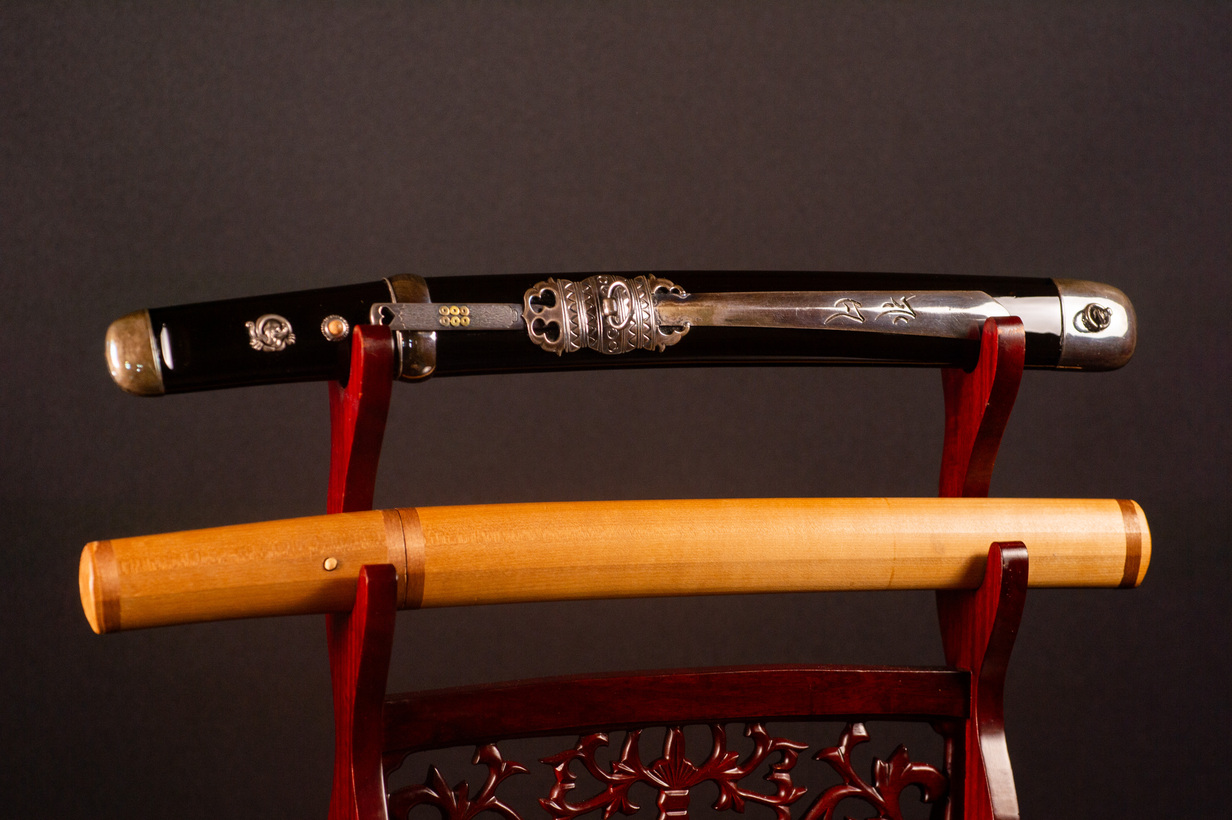
This elegant tantō is mounted in a refined black-lacquer aikuchi koshirae enriched with silver fittings and the celebrated rokumonsen six-coin crest associated with the Sanada clan, one of the most iconic warrior families of the Sengoku period.
The Smith (Bizen Osafune Harumitsu)
The blade bears the signature of Harumitsu 春光 of the Osafune school in Bizen province, today’s Okayama Prefecture. Bizen was one of the most prolific and celebrated swordmaking traditions in Japan, renowned for its exceptional steel, active hamon and long history of production.
Harumitsu was one of the leading smiths of the Sue-Bizen period, active alongside masters such as Katsumitsu, Munemitsu, Tadamitsu and Sukesada. The fuller signature form, including the personal name Jūrō Saemon-no-jō, indicates a higher-quality custom-ordered blade rather than ordinary mass production.
Signed Sue-Bizen tantō by Osafune smiths represent direct products of the samurai age, created during one of the most turbulent and active periods of Japanese sword history.
Historical Context
The Sue-Bizen smiths worked during the height of the Sengoku period, an age of near-constant warfare when demand for swords was immense. Osafune supplied blades to feudal lords, retainers and samurai throughout Japan.
This flourishing tradition came to a dramatic end with the great flood of the Yoshii River in 1591, which destroyed many of the historic Osafune forges. A signed tantō from this lineage therefore preserves an important chapter of late medieval Japanese swordmaking.
The Blade (Tōshin)
The blade is a compact and elegant hira-zukuri tantō with very slight curvature, typical of practical sidearms carried by samurai during the Muromachi period.
The hamon is an irregular midare in the lively Bizen manner, formed in nioi with visible nie activity. The jigane shows a tight itame and mokume structure, with the characteristic utsuri associated with the Bizen school.
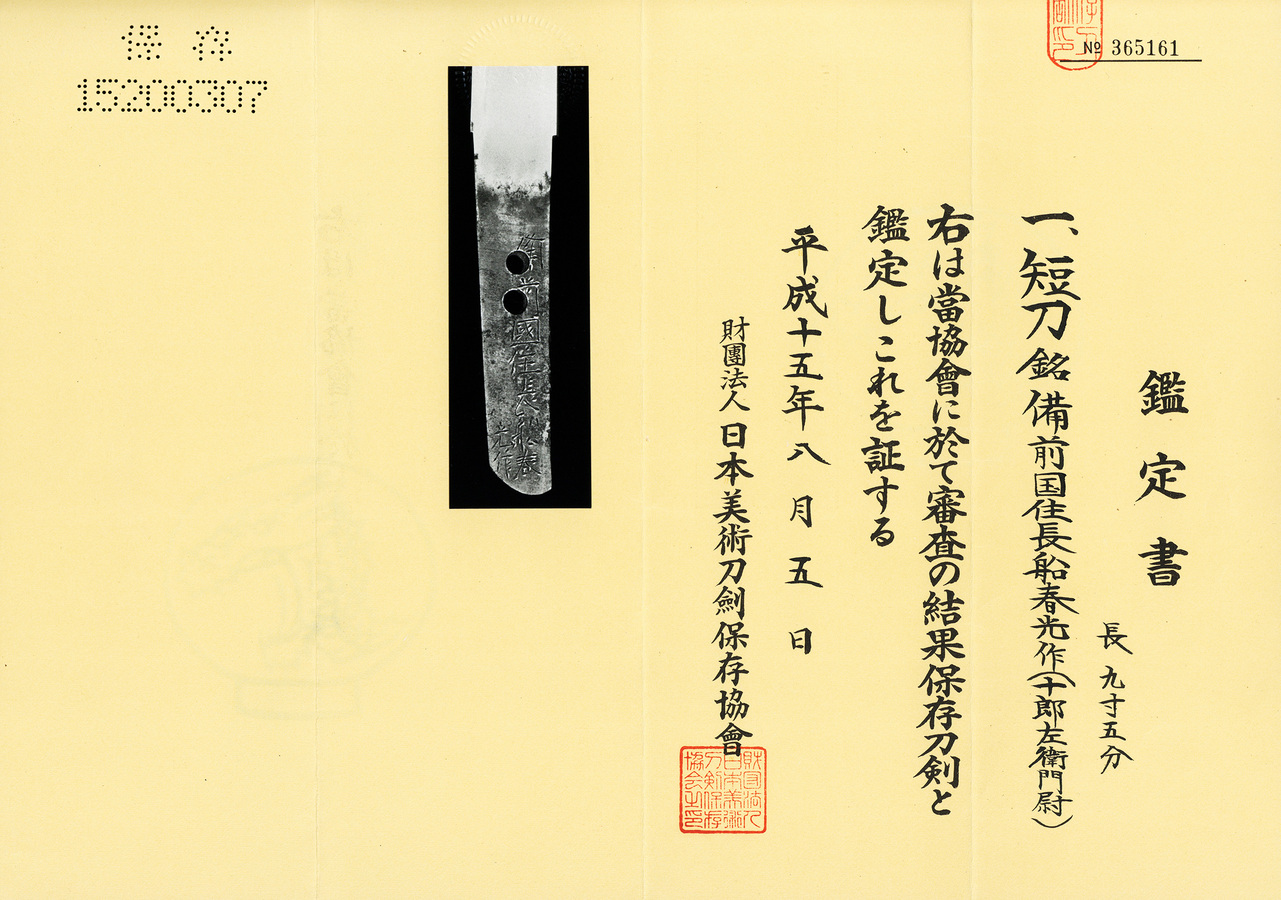
The nakago is ubu, preserving its original form, and bears the full signature. It has two mekugi-ana, while the signed tang remains fully intact.
The Koshirae
The tantō is mounted in an elegant aikuchi mounting, without tsuba, finished in lustrous black lacquer. The restrained profile gives the piece a refined and formal appearance.
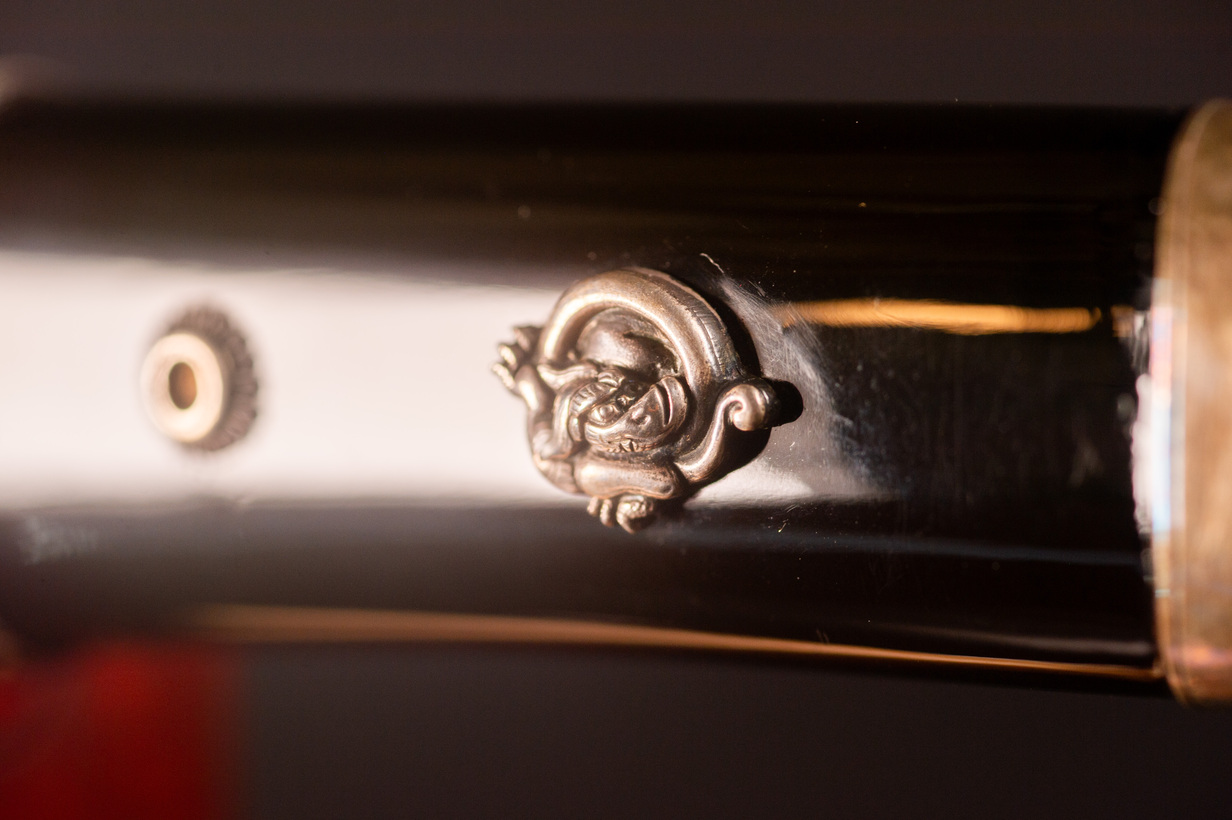
The silver fittings, including the kabutogane, kuchigane and kurikata, are finely chased and provide a striking contrast against the polished black lacquer of the saya.
The mounting also includes figural menuki and a pierced silver utility-pocket band, adding richness and technical refinement to the overall presentation.
The Sanada Six-Coin Crest (Rokumonsen)
The most distinctive feature of the koshirae is the gilt rokumonsen 六文銭 crest, inlaid into the silver kōgai-style plate and framed by heart-shaped inome openwork.
The six-coin motif is the celebrated heraldic emblem of the Sanada clan, one of the most famous warrior houses of the Sengoku and early Edo periods. It is closely associated with Sanada Masayuki and his son Sanada Nobushige, better known as Sanada Yukimura.
The six coins refer to the fare traditionally placed with the dead to cross the Sanzu River into the afterlife. On banners, armour and fittings, the motif became a powerful declaration of martial resolve: a warrior prepared to die before entering battle.
As a decorative theme on a tantō, the rokumonsen carries a profound martial meaning, linking the blade to one of the boldest and most celebrated warrior symbols of Japan.
Documentation
The blade is accompanied by an official NBTHK Hozon Tōken certificate, No. 365161, issued on 5 August Heisei 15 (2003).
It is also accompanied by its Japanese torokusho registration license, Tokyo No. 160270, identifying the blade as a tantō.
Specifications (寸法)
- Classification: Tantō 短刀
- Signature: Bizen no Kuni Jū Osafune Harumitsu saku 備前国住長船春光作
- Smith: Osafune Harumitsu 春光
- Tradition: Sue-Bizen, Osafune school
- Period: Muromachi period, 16th century
- Nagasa: 9 sun 5 bu / approx. 28.8 cm
- Sugata: Hira-zukuri tantō
- Hamon: Irregular midare in Bizen style
- Jigane: Tight itame and mokume with utsuri
- Nakago: Ubu, signed, two mekugi-ana
- Koshirae: Aikuchi mounting with black-lacquer saya and silver fittings
- Certificate: NBTHK Hozon Tōken, No. 365161
- Registration: Tokyo No. 160270
Collector’s Note
This tantō brings together several highly desirable qualities: a signed Sue-Bizen blade, NBTHK Hozon certification, complete aikuchi koshirae, and a powerful decorative program centred on the Sanada rokumonsen crest.
Combining historical importance, martial symbolism and refined craftsmanship, this Osafune Harumitsu tantō is a compelling example of Muromachi-period Japanese swordmaking and a distinguished piece for collectors of authentic nihontō and samurai culture.