




















1 in stock
1 in stock
Add to Compare
Add to Wishlist
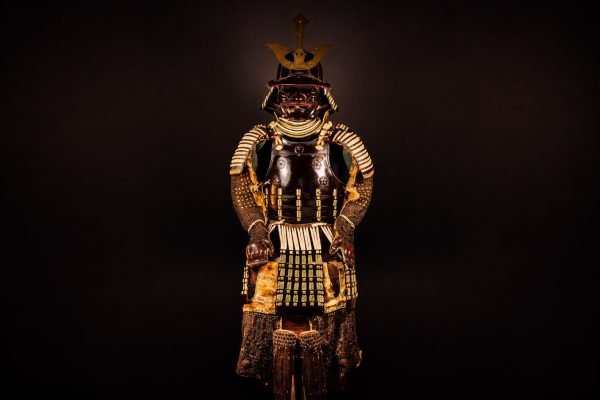
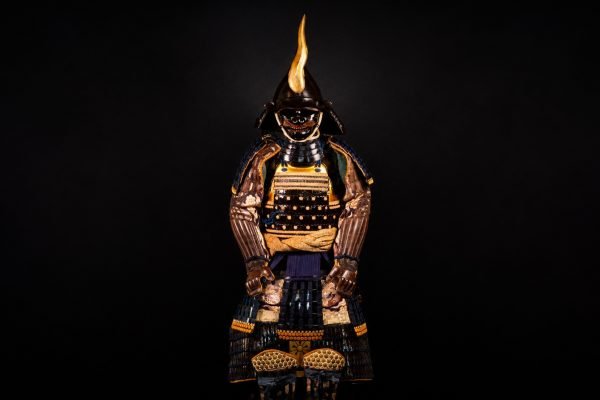
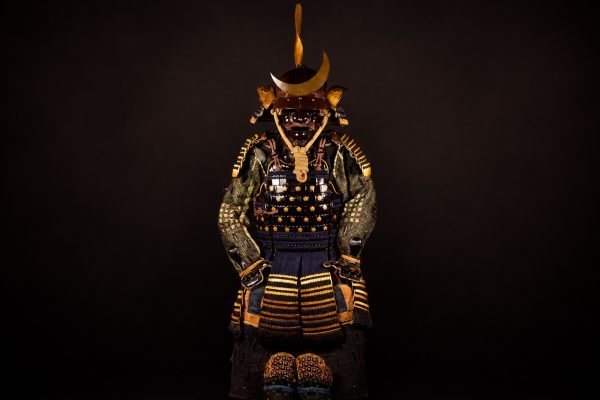
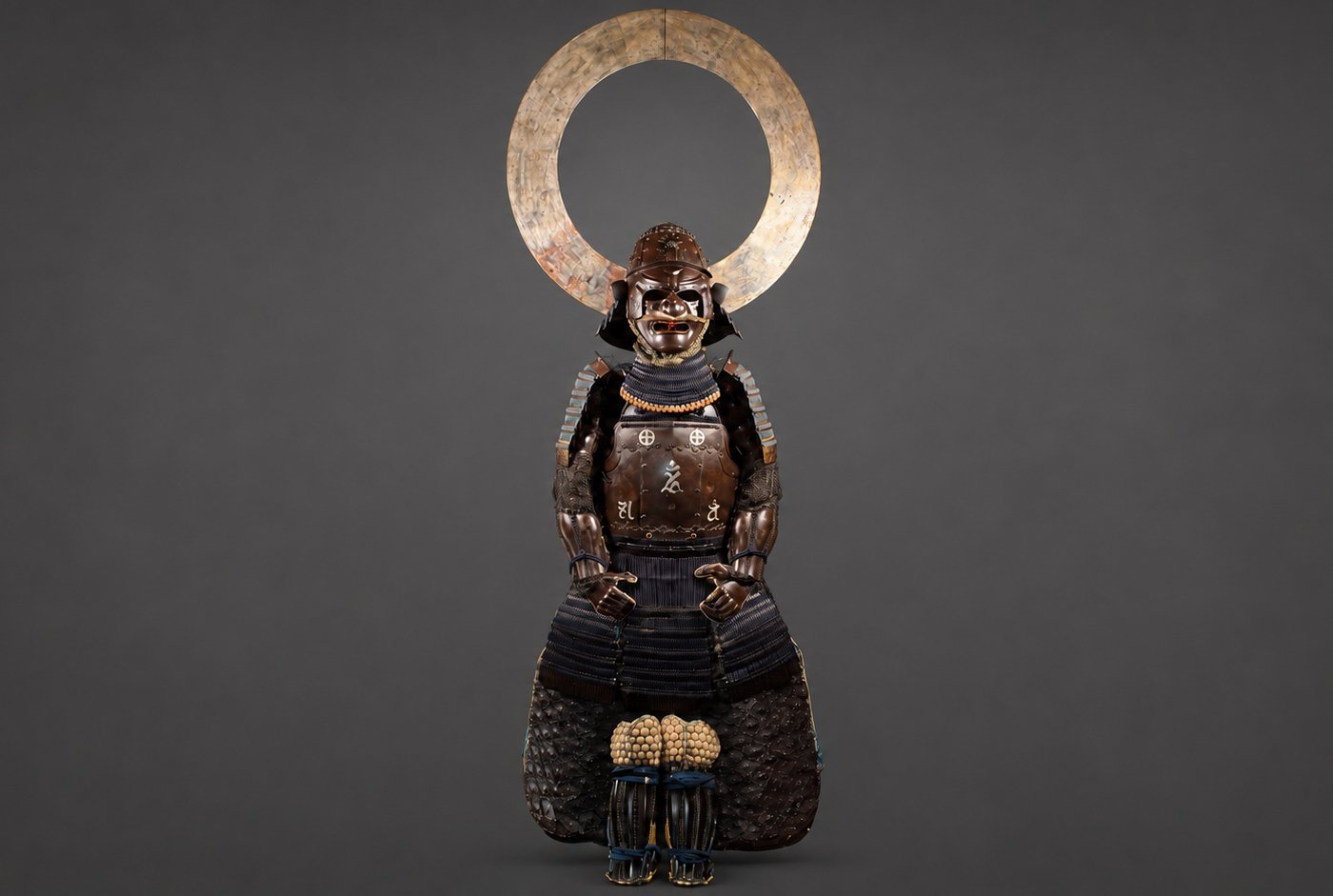
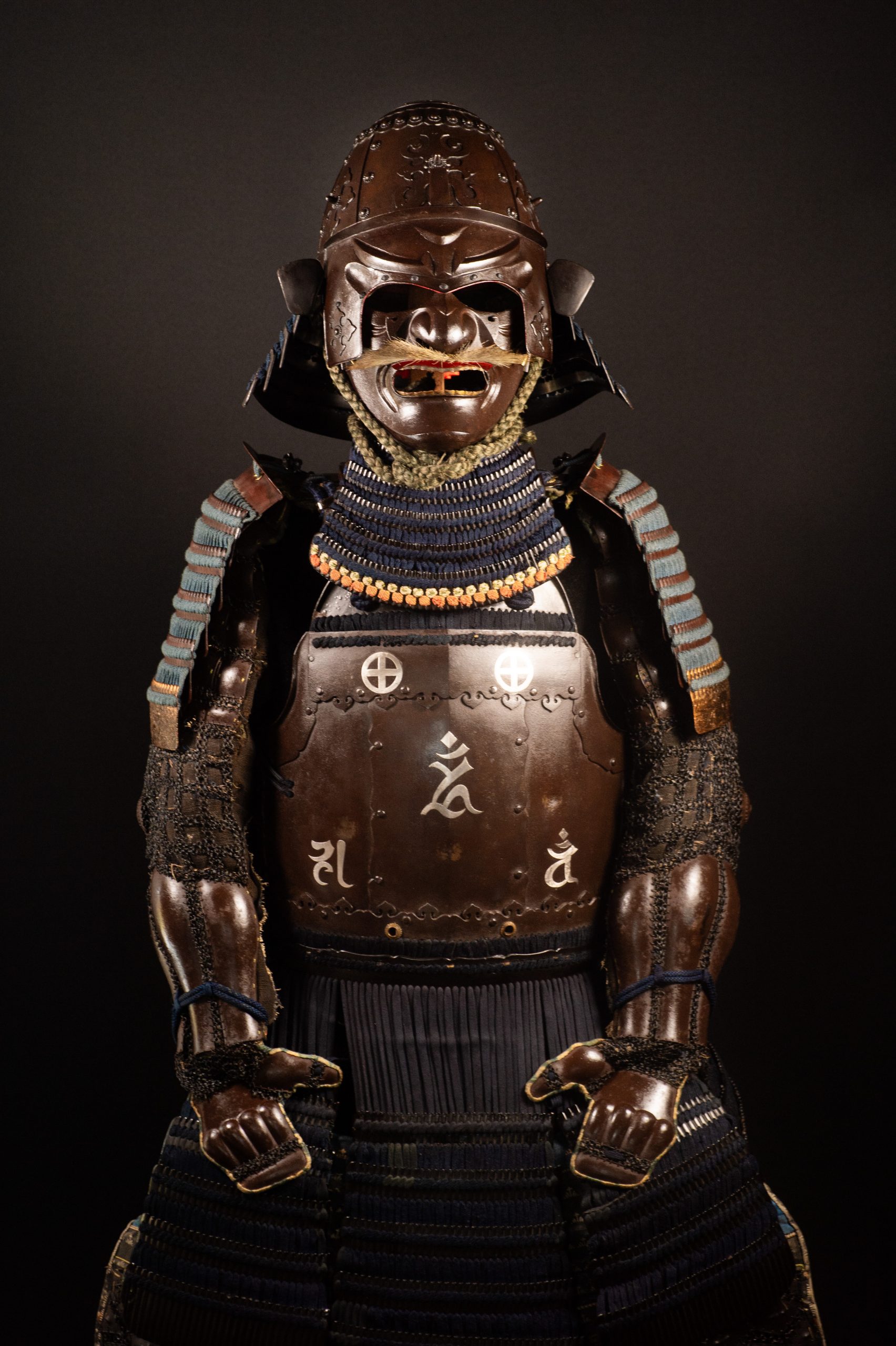
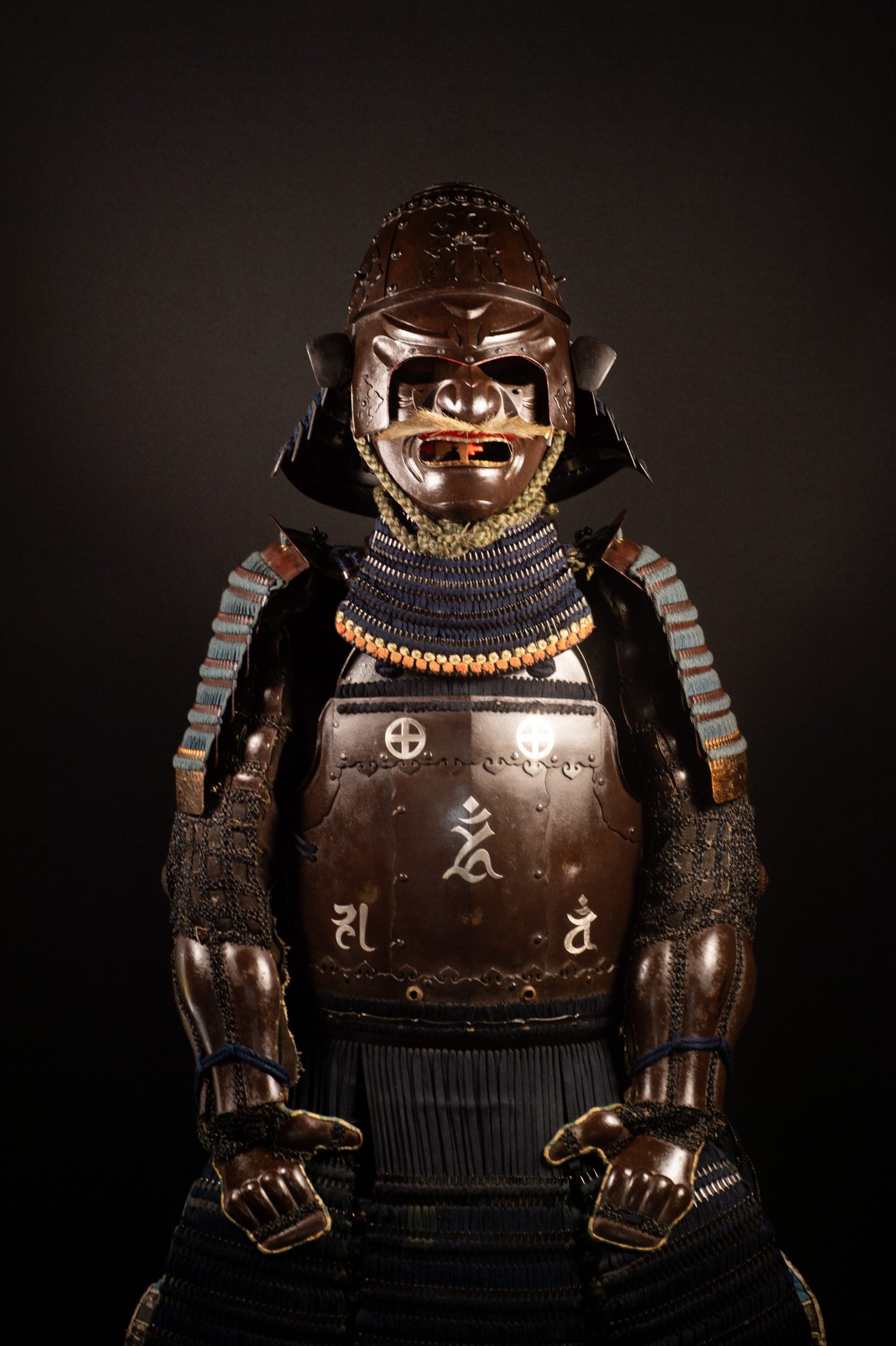
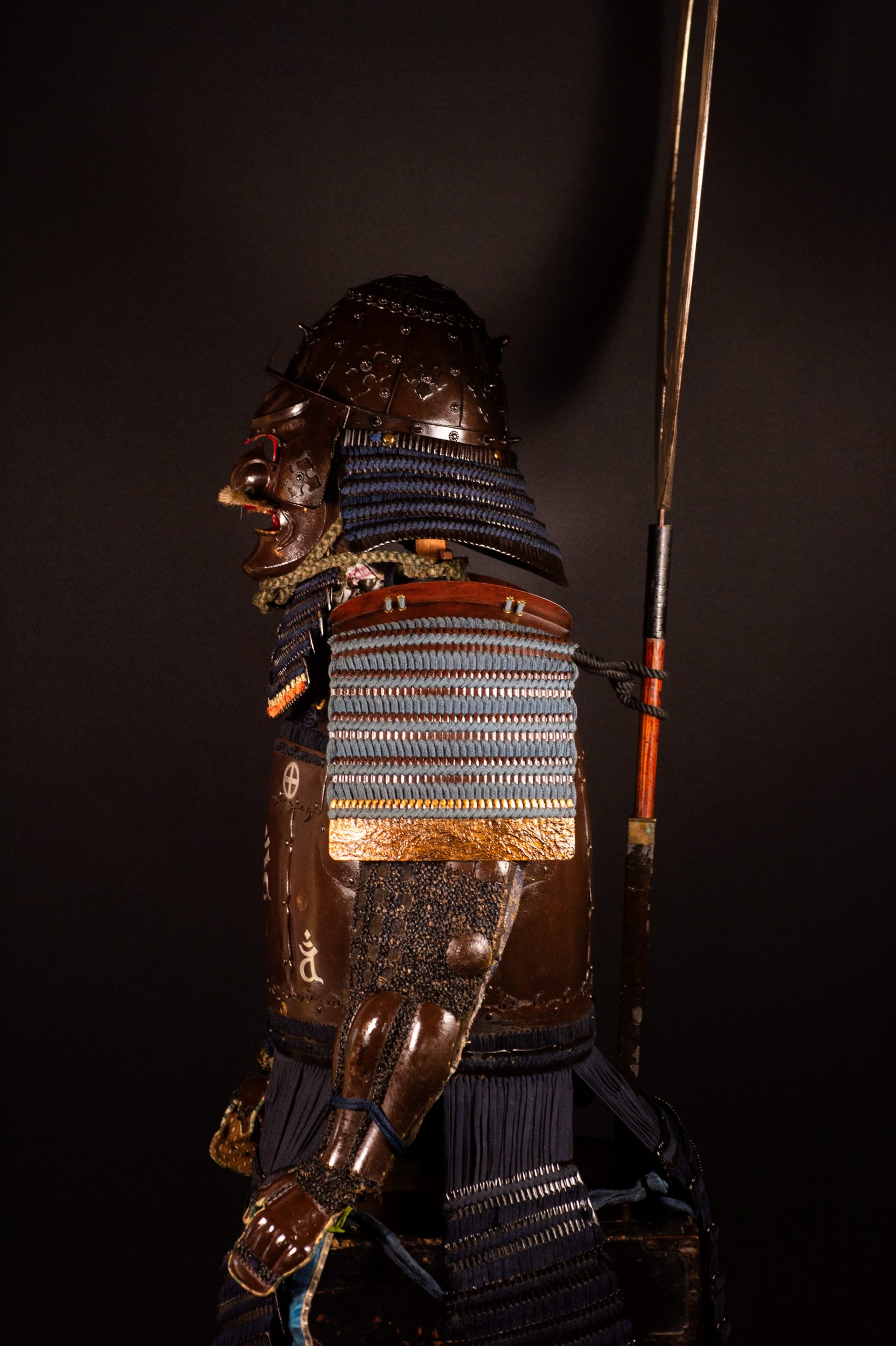
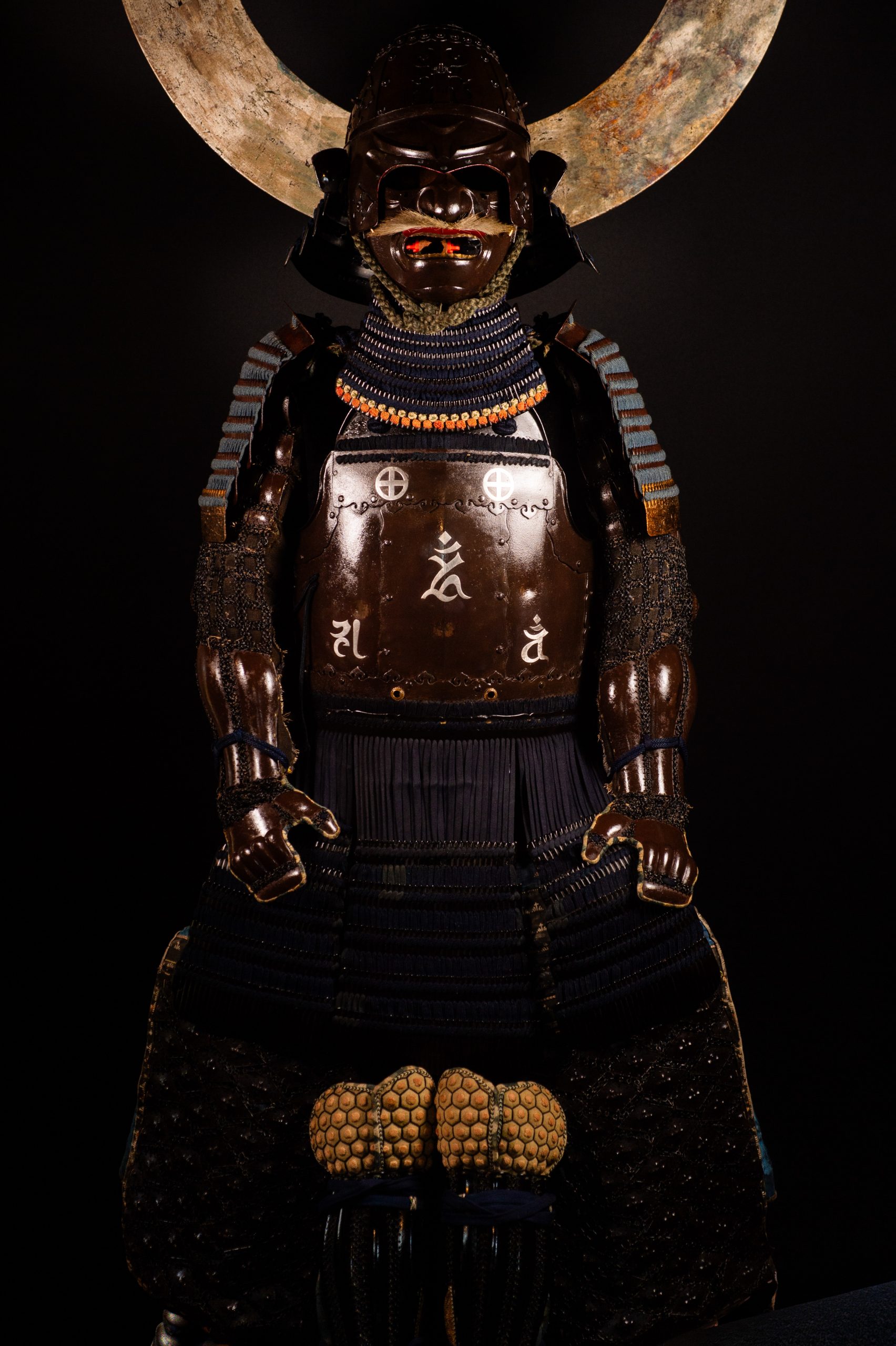
A complete Japanese tōsei gusoku samurai armour dating to the Edo period, circa 1800, combining dark lacquered iron, contrasting blue and blue-grey lacing, metallic decoration and an expressive facial armour ensemble.
The armour is centred around a substantial lacquered iron dō decorated with silver-toned motifs, accompanied by an ornamented kabuto, an expressive menpō with natural moustache, large sode, arm and leg protection, and a prominent circular element mounted behind the armour for display.
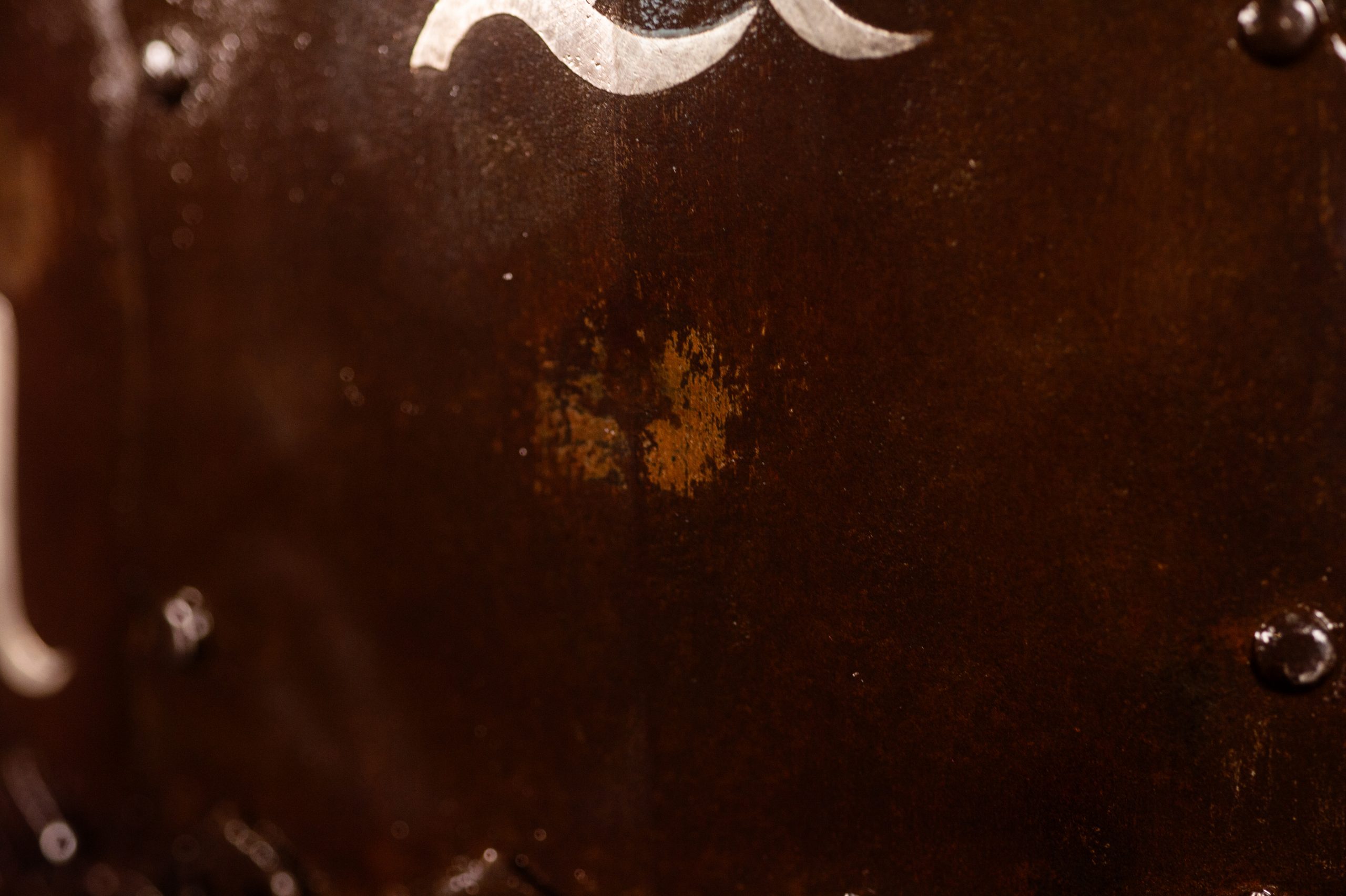
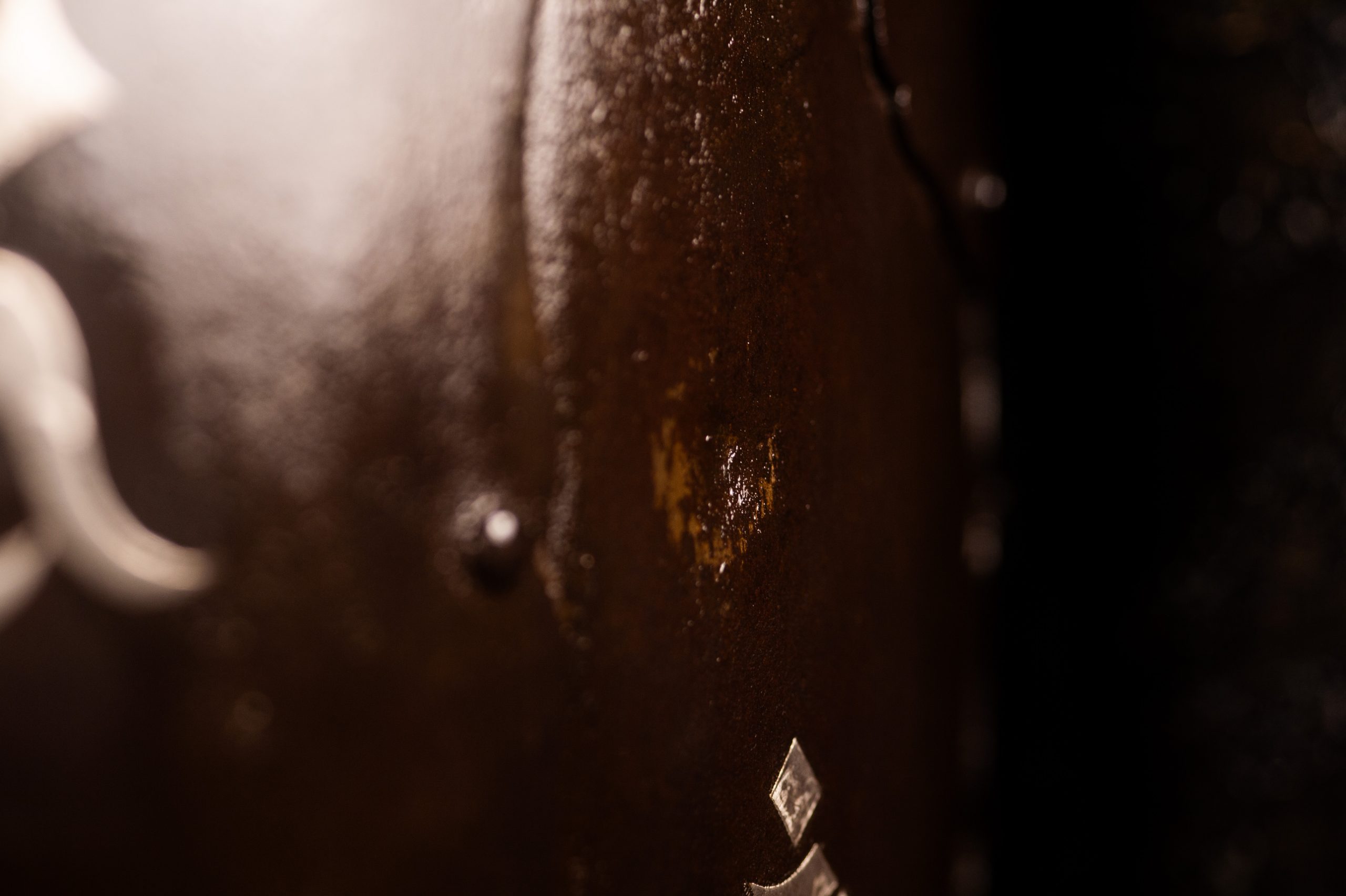
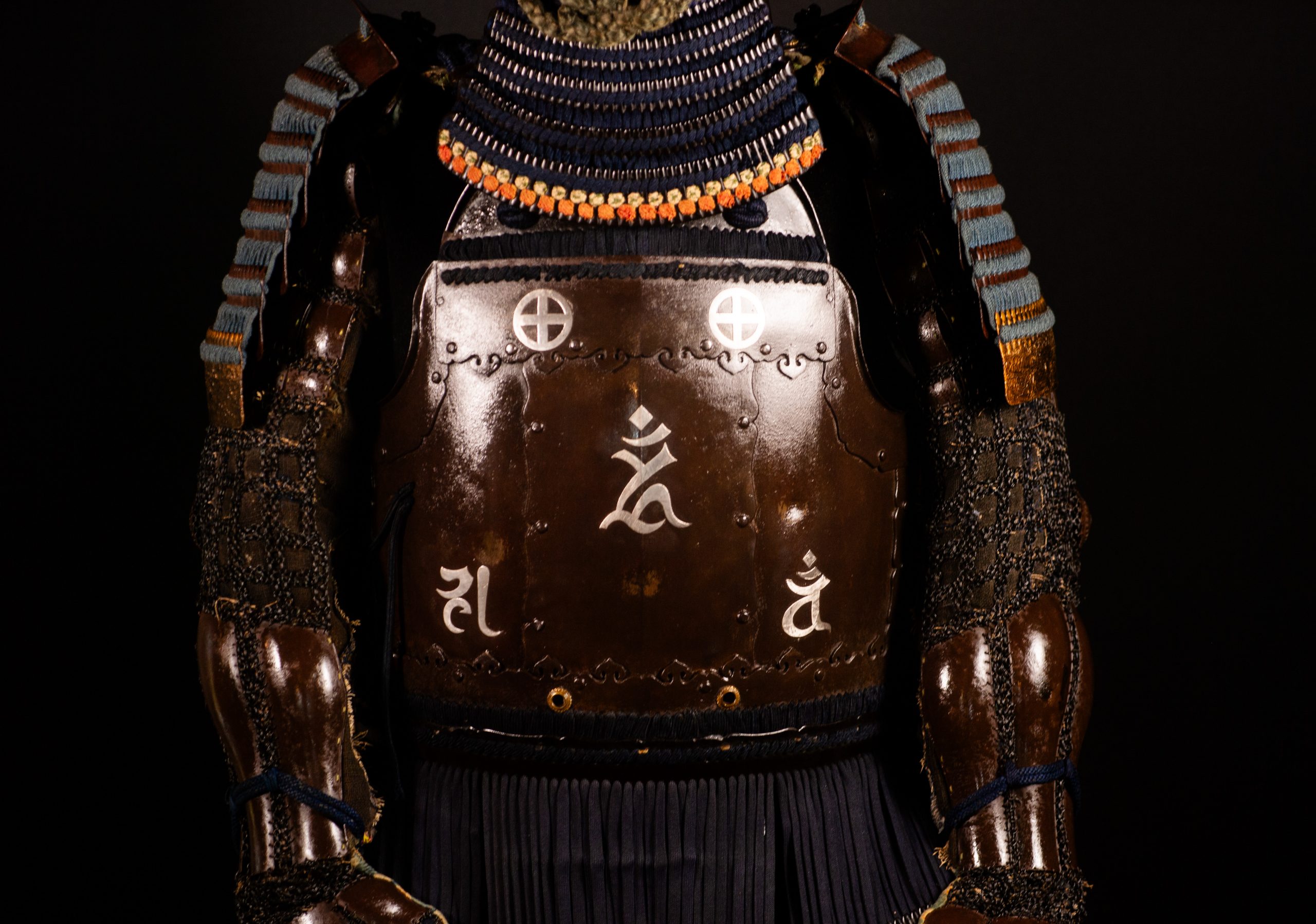
Of particular interest are several marks on the cuirass recorded with the armour as teppō impact marks. The marks did not penetrate the iron plate.
The armour is accompanied by a Supein Nihonto certificate. The display stand and storage box are included.
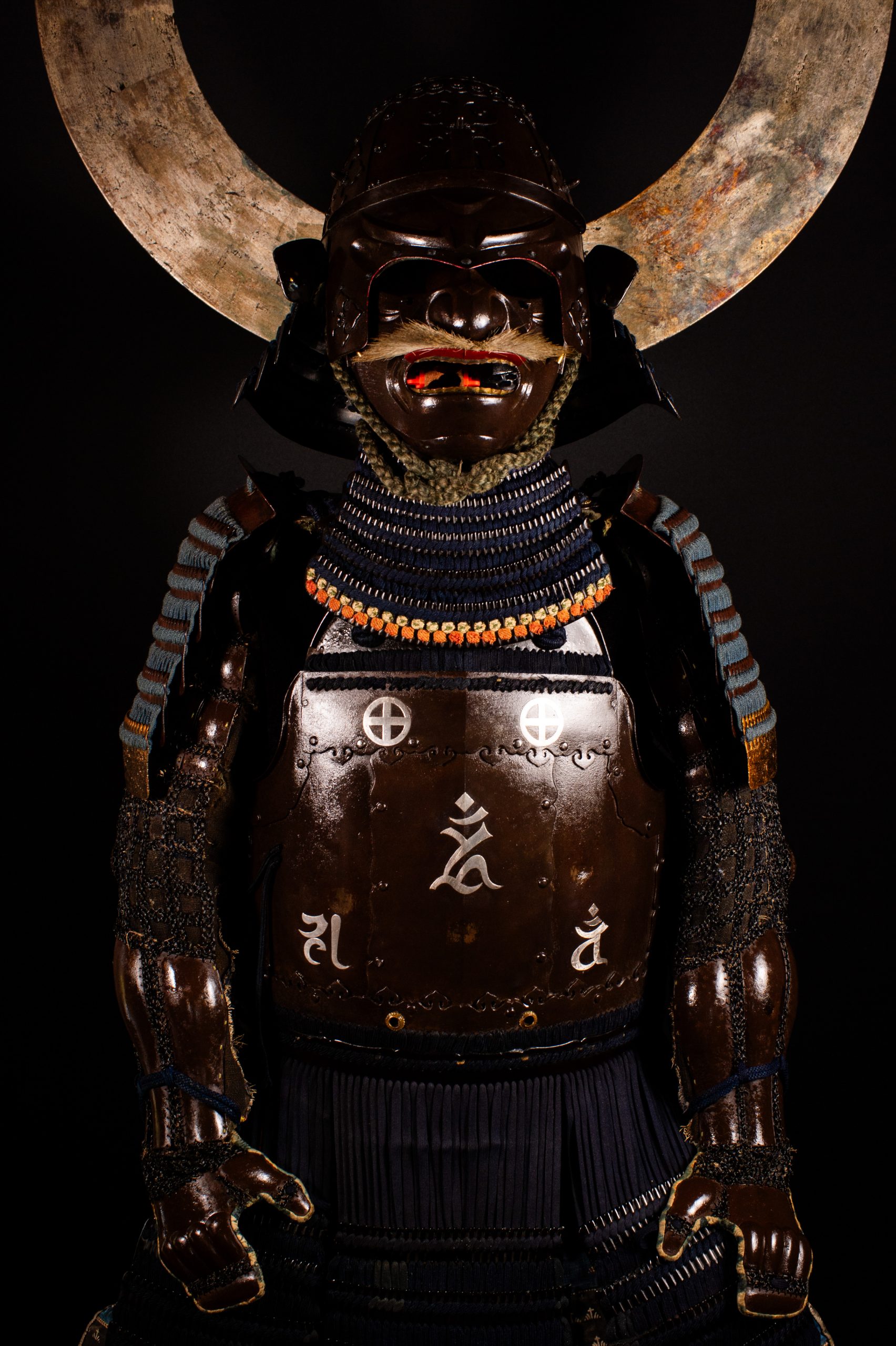
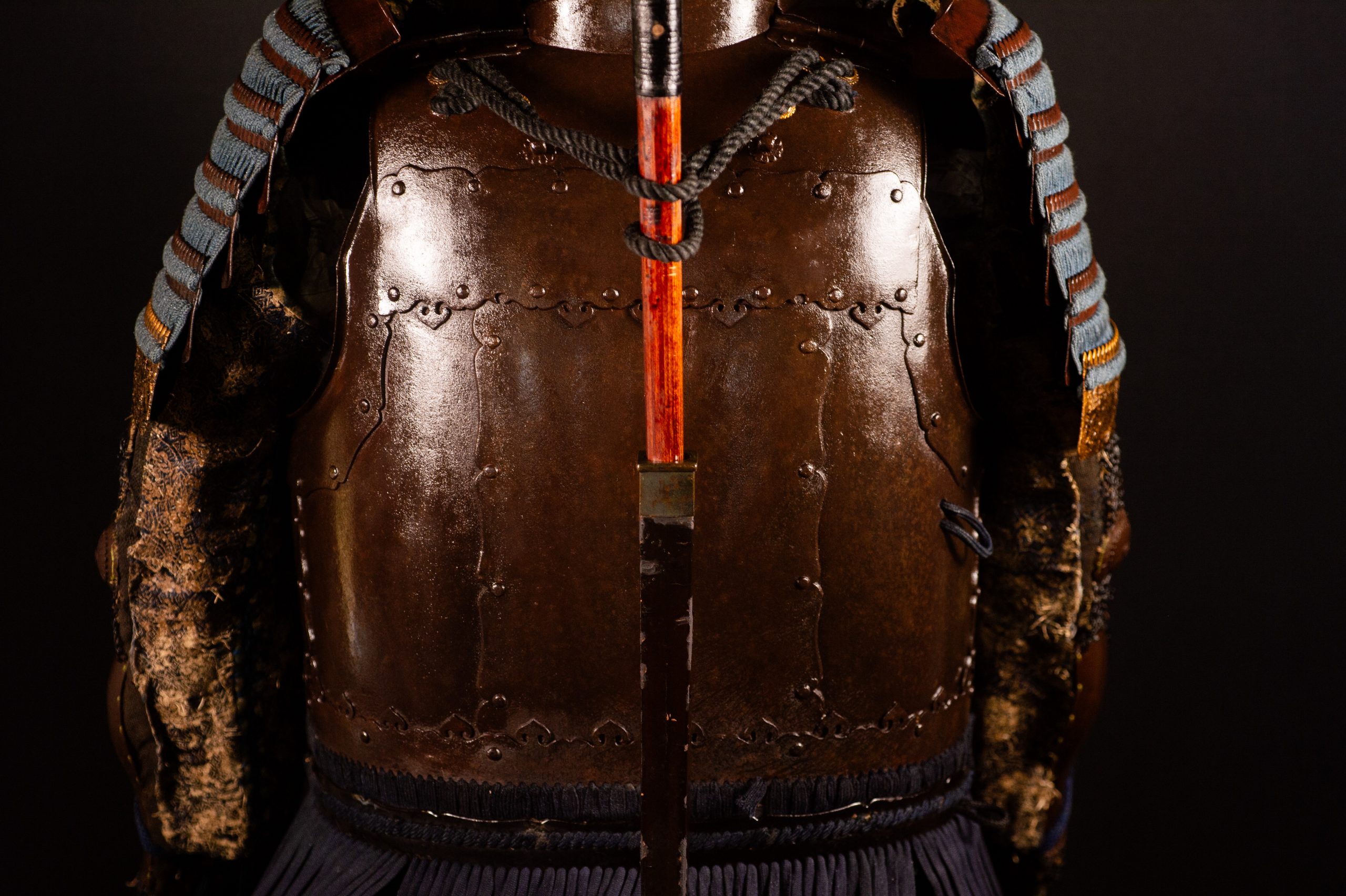
The central component of the armour is a dark lacquered iron dō.
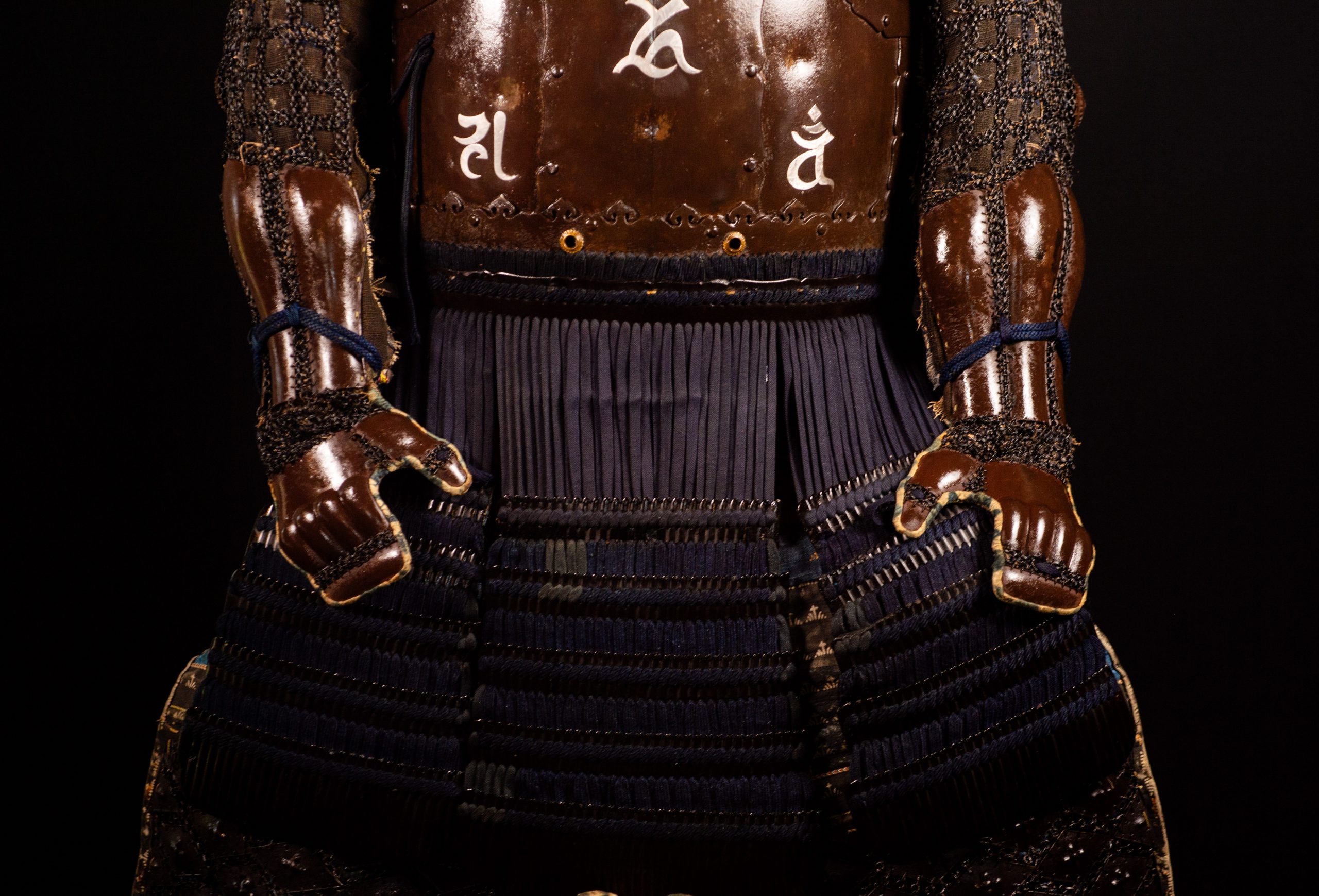
Its broad frontal surface gives the ensemble much of its visual character and provides the background for a series of contrasting metallic motifs.
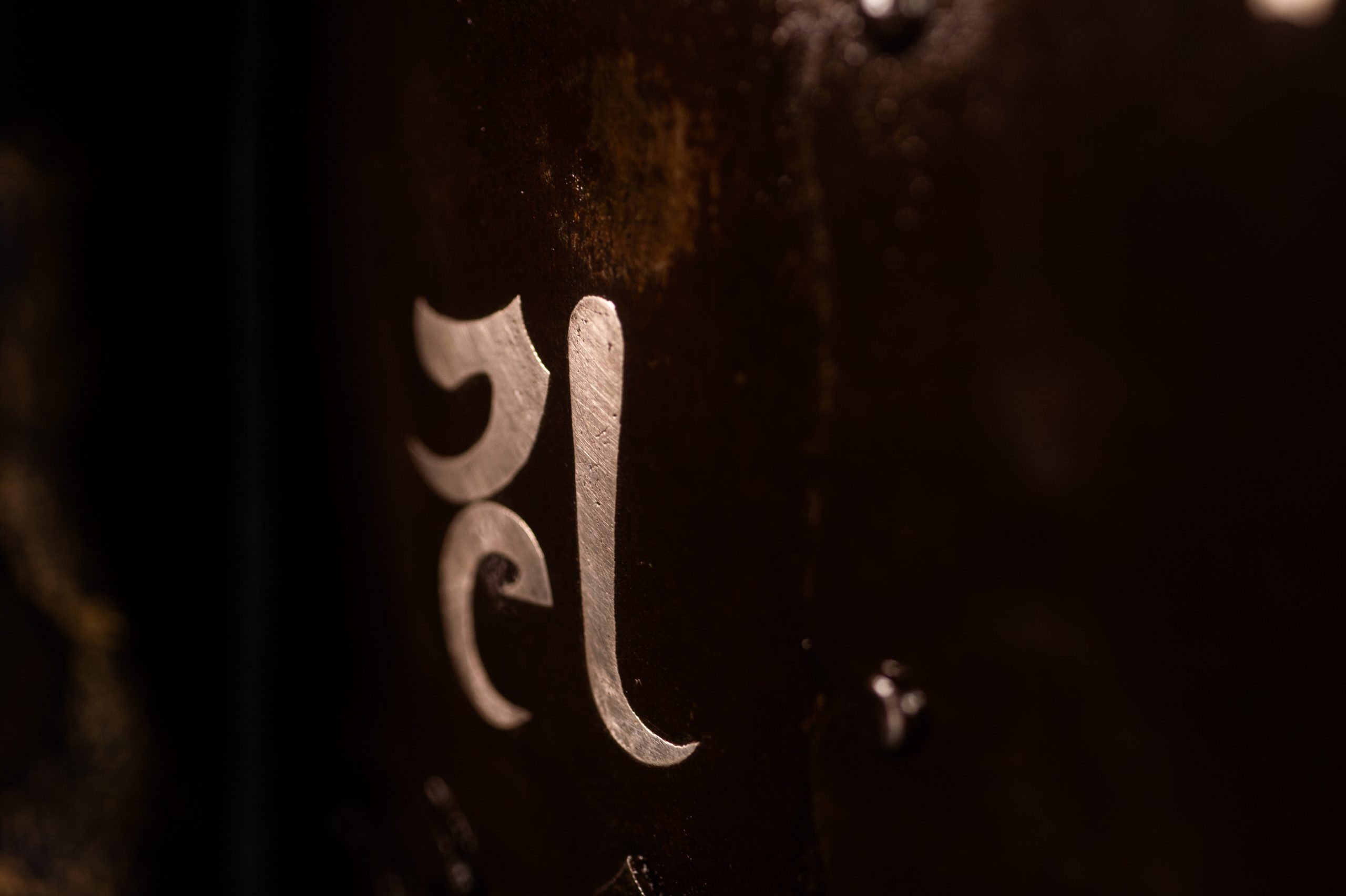
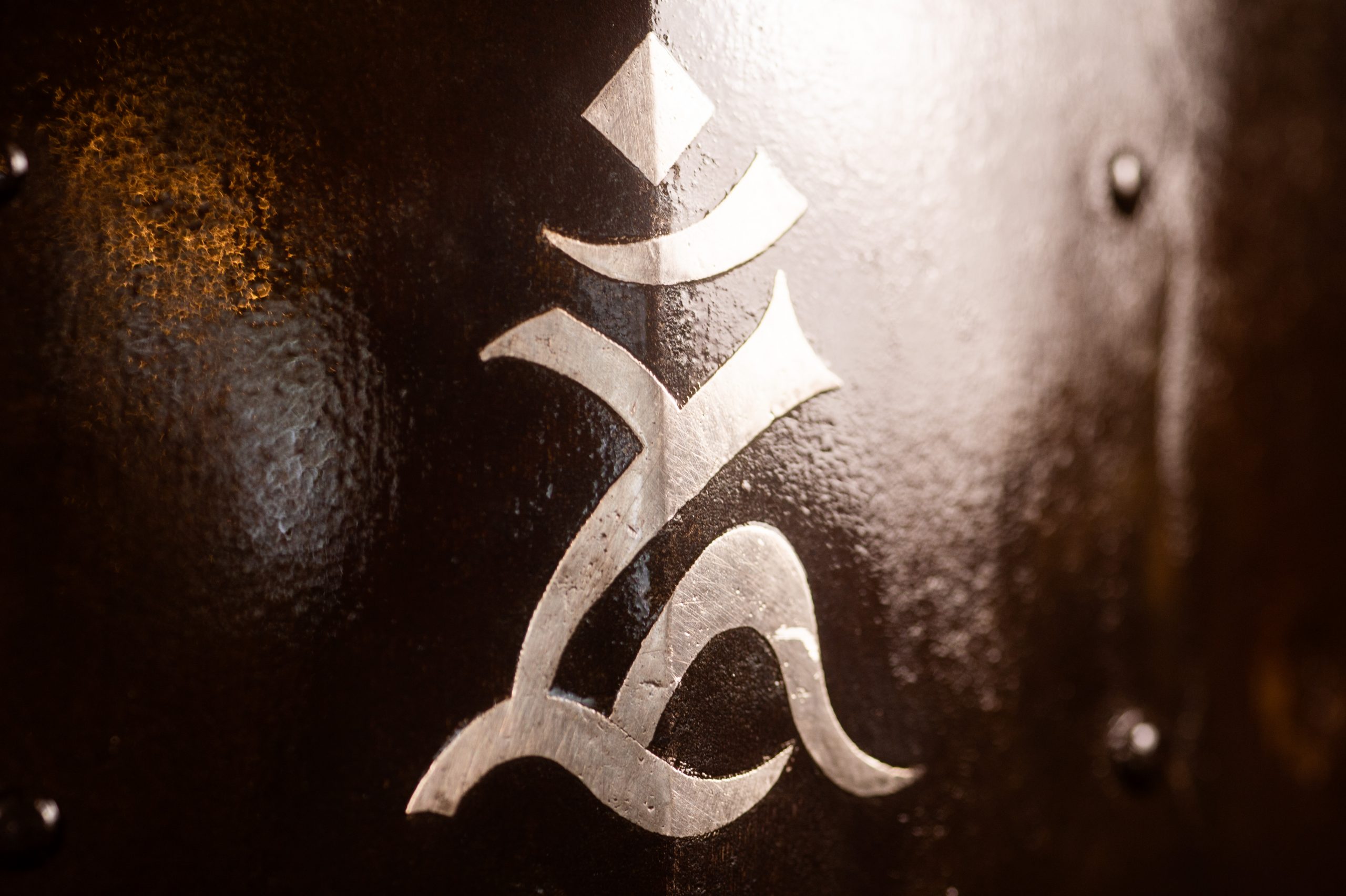
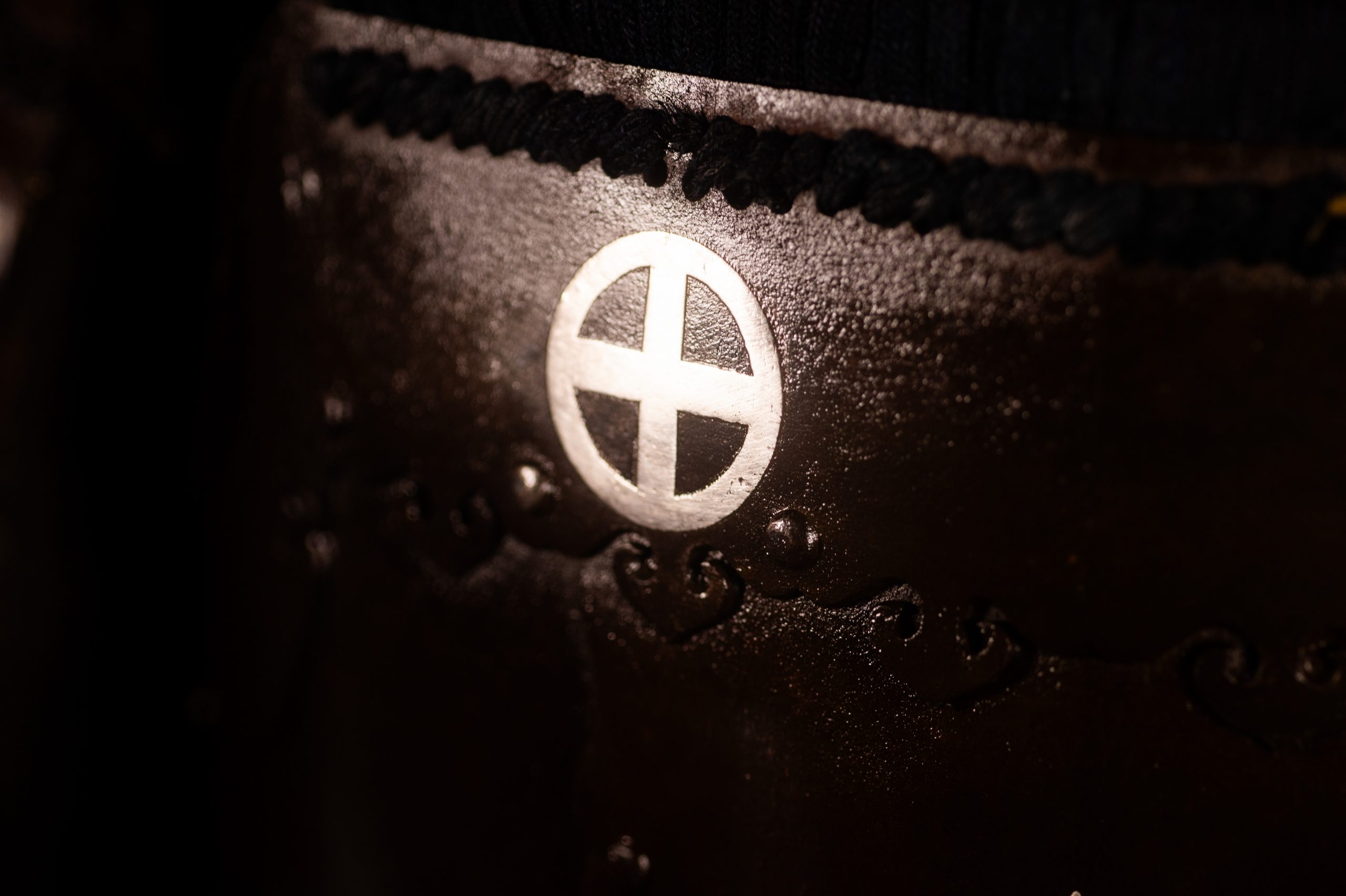
The upper section displays two circular cross emblems, while additional silver-toned characters or motifs are arranged across the front of the cuirass.
These pale details stand out strongly against the dark lacquered iron and create one of the most immediately recognizable features of the armour.
The upper section of the dō bears circular cross emblems.
This form is closely associated in Japanese heraldry with the well-known cross-in-circle mon used by the Shimazu family.
However, the presence of this motif alone should not be interpreted as documented provenance from the Shimazu clan, and no such provenance is asserted here.
One of the most unusual characteristics of the cuirass is the presence of impact marks recorded with the armour as resulting from teppō, the Japanese matchlock firearm.
The recorded impacts did not penetrate the iron plate.
These marks add an important technical dimension to the armour because they allow the thickness and defensive character of the cuirass to be appreciated in a way that is not normally visible from its decorative appearance alone.
No claim is made here that the impacts occurred during battle, as the circumstances in which the marks were produced are not documented with the armour.
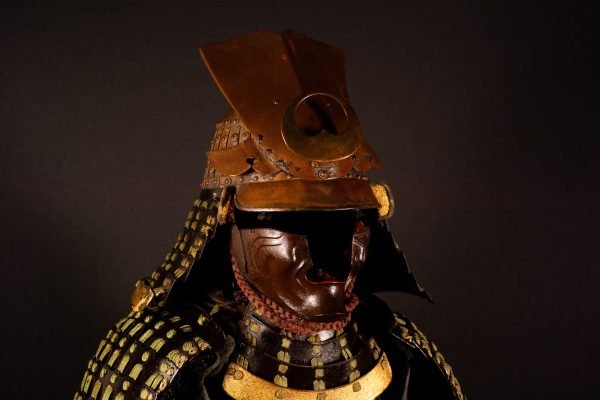
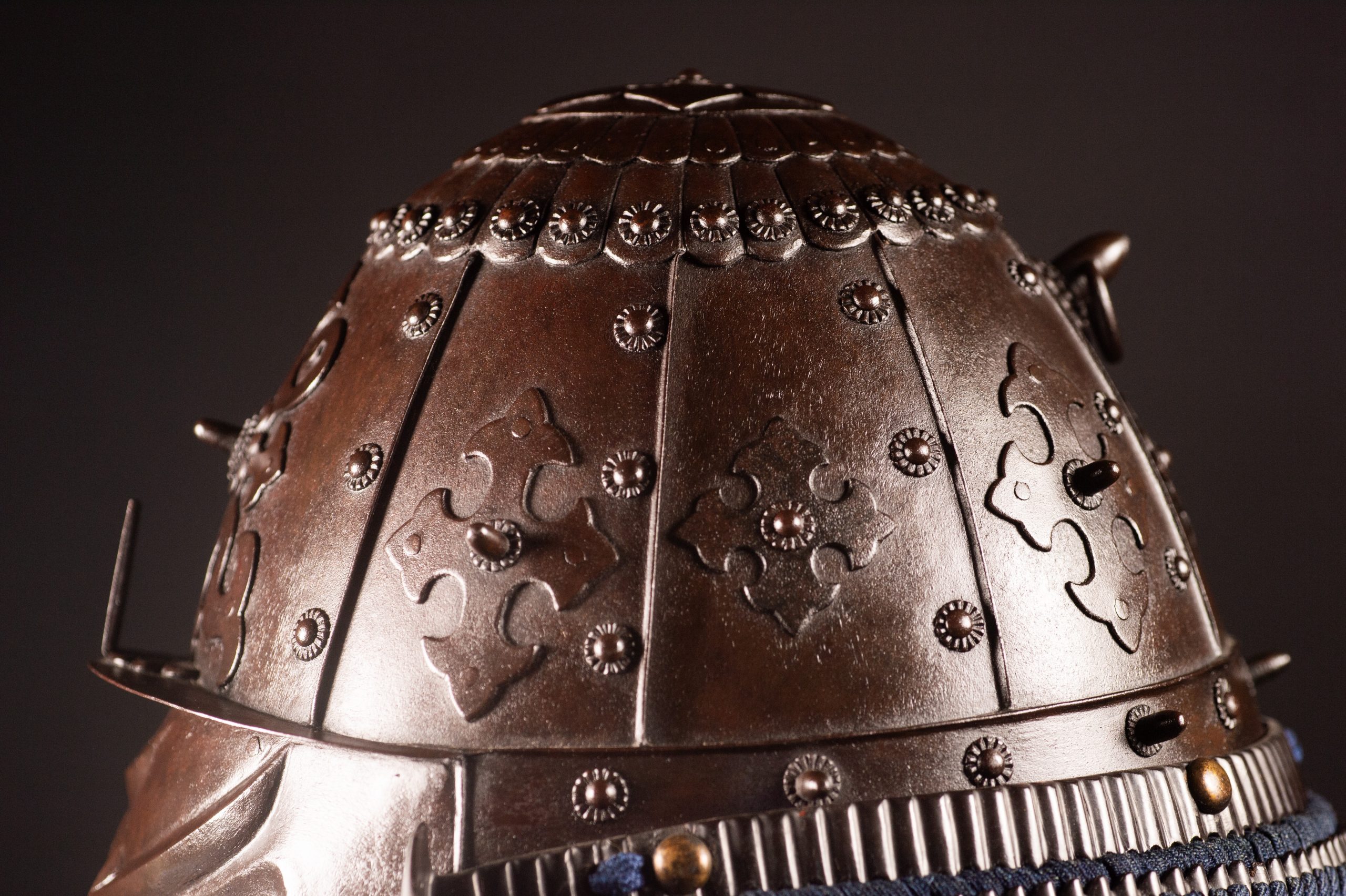
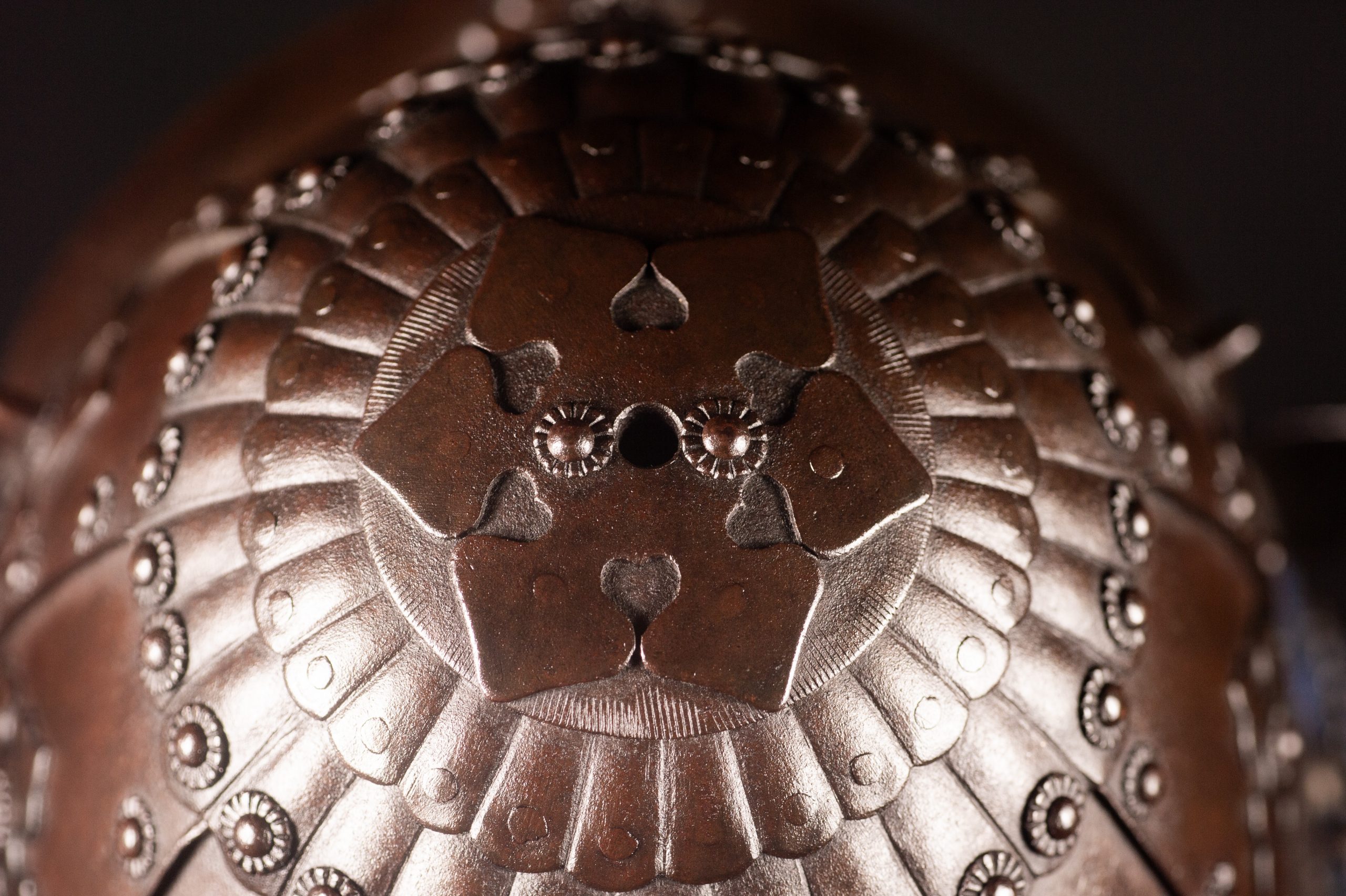
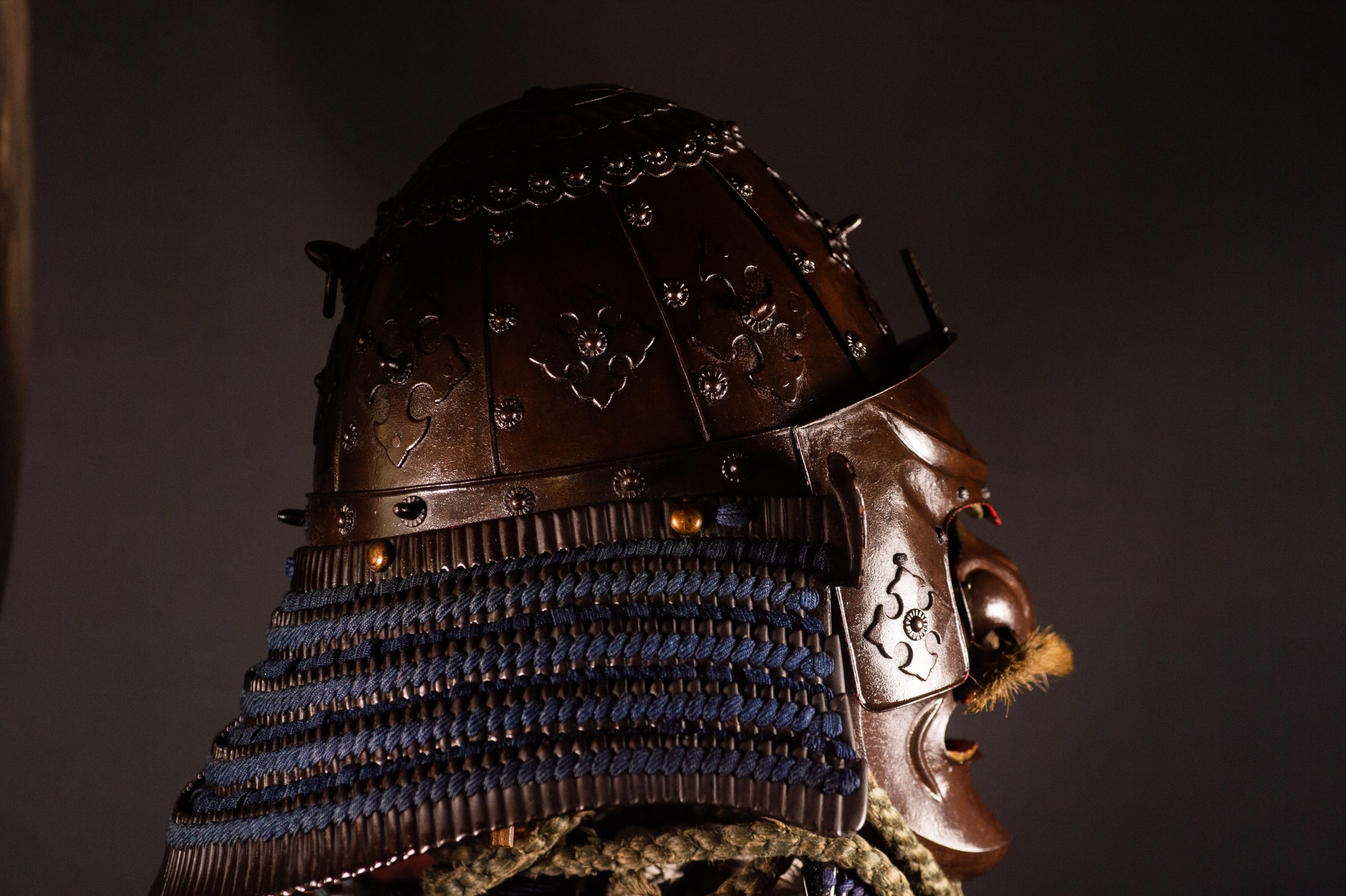
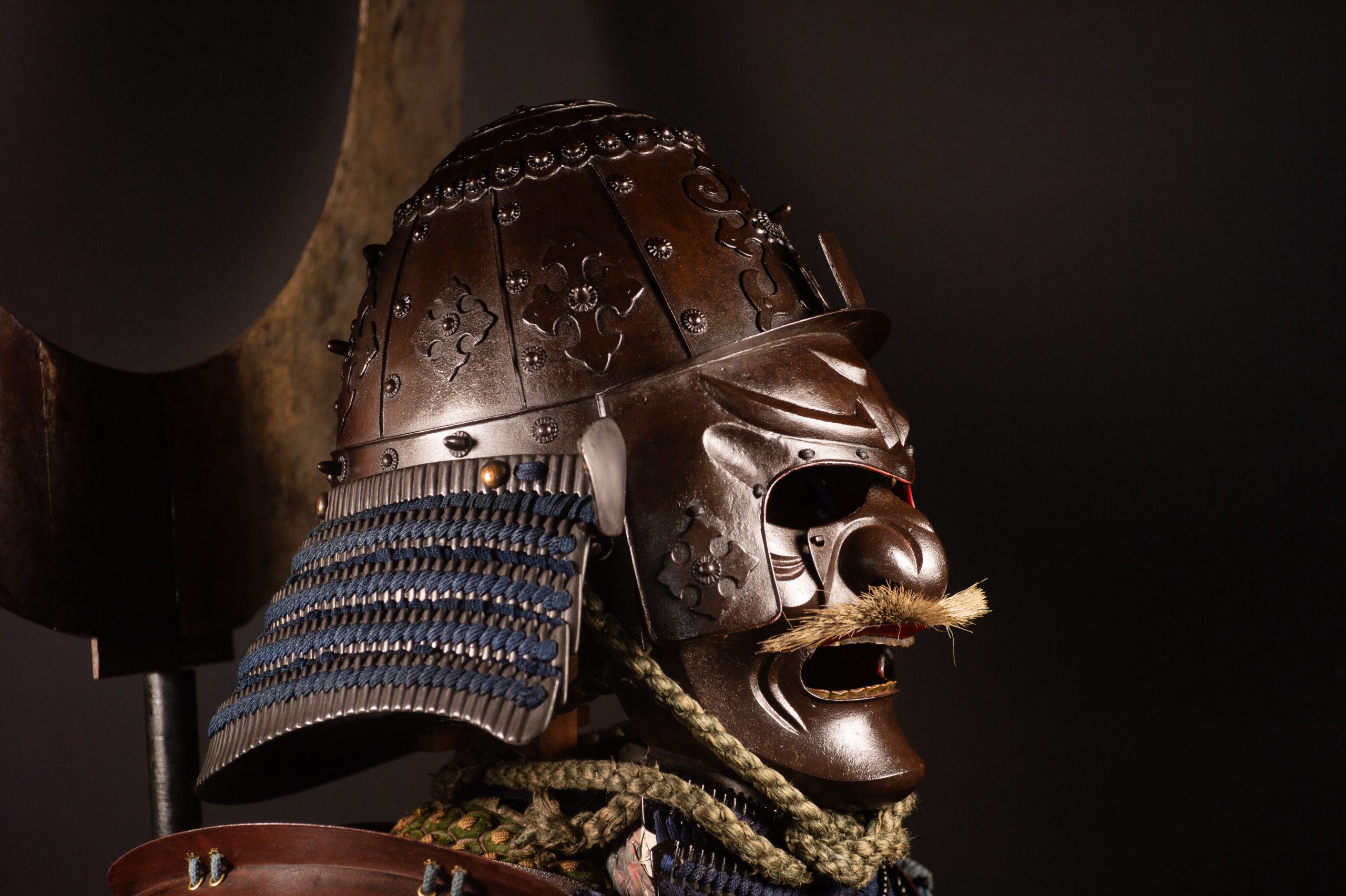
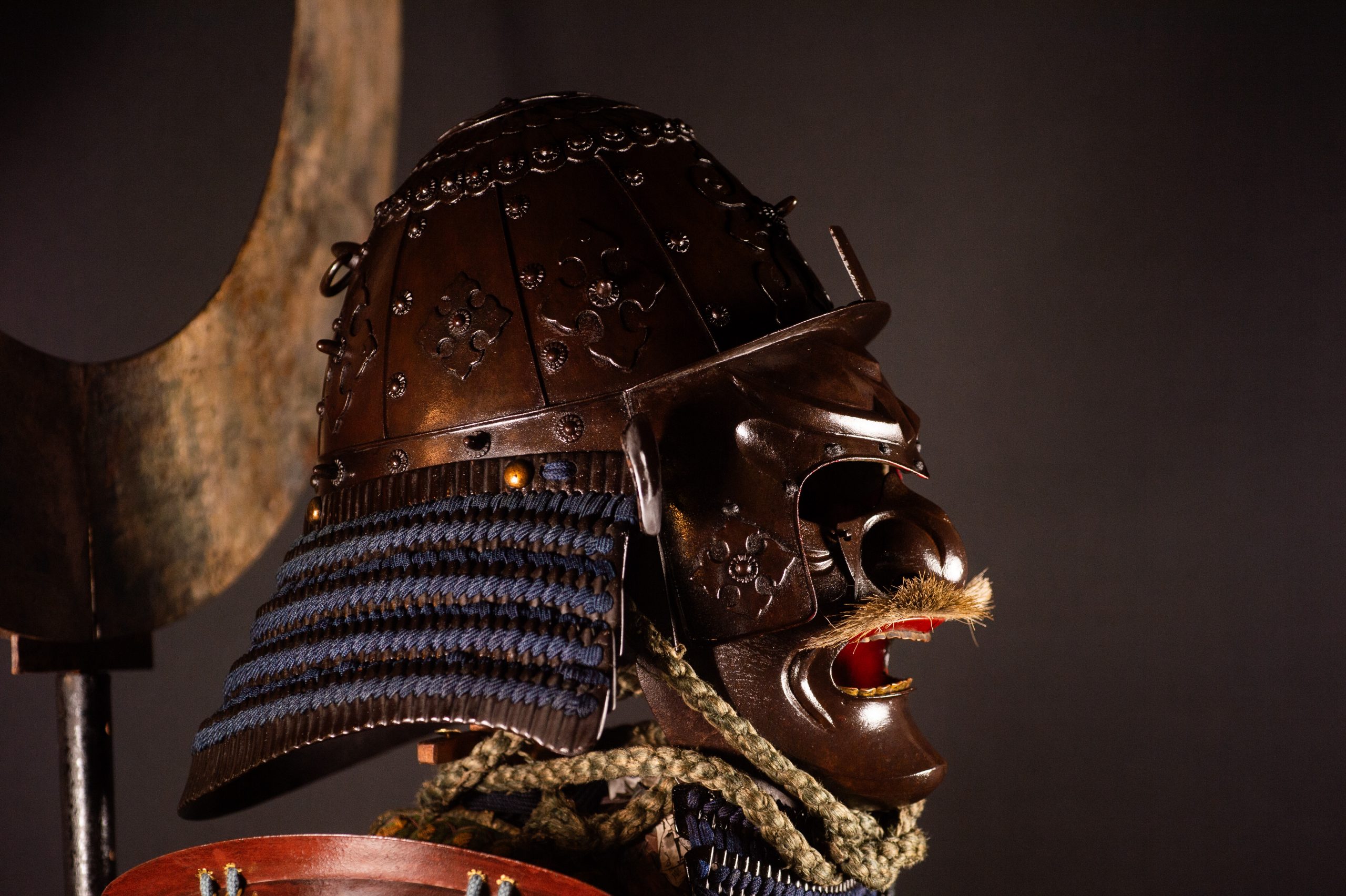
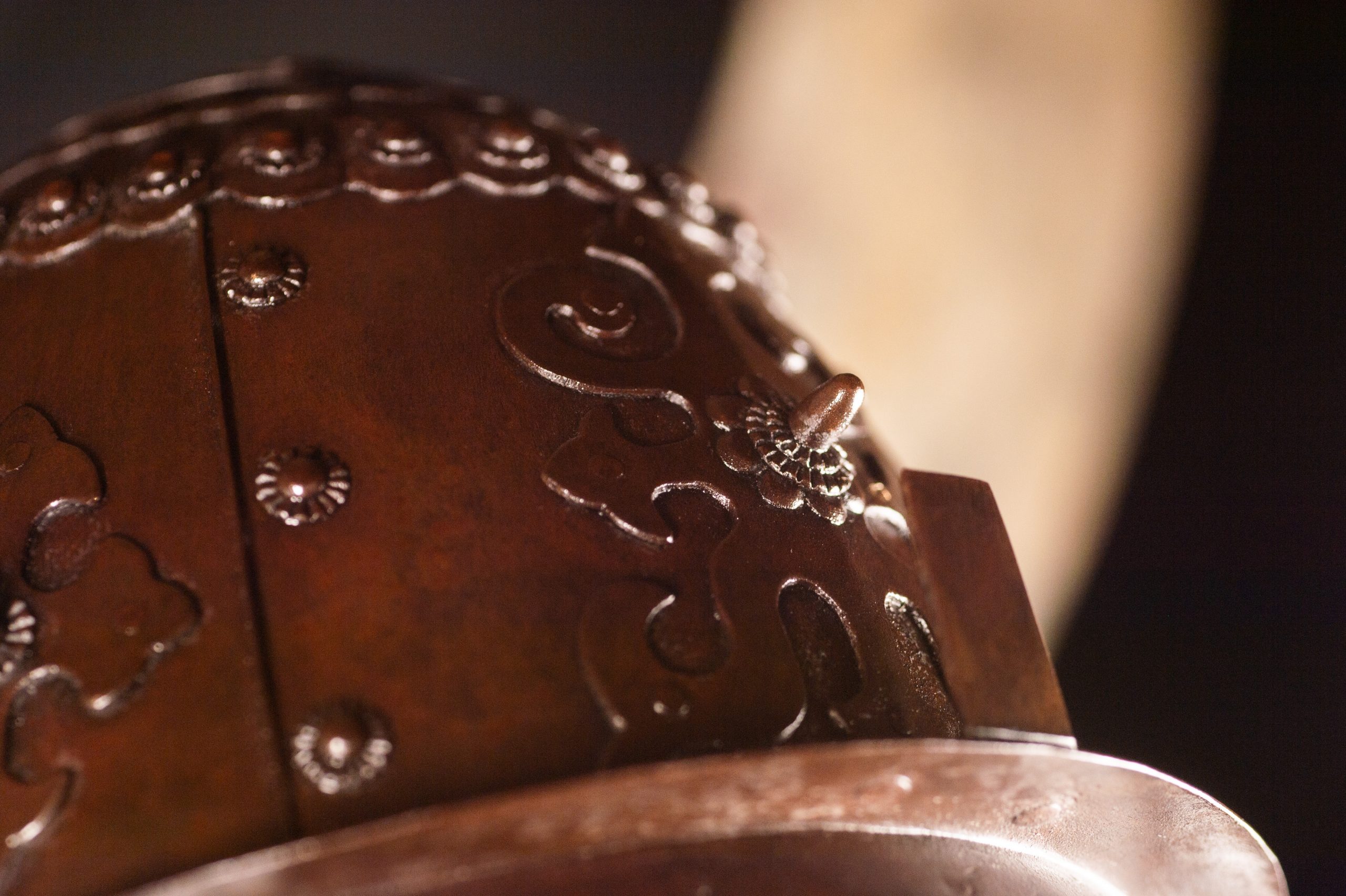
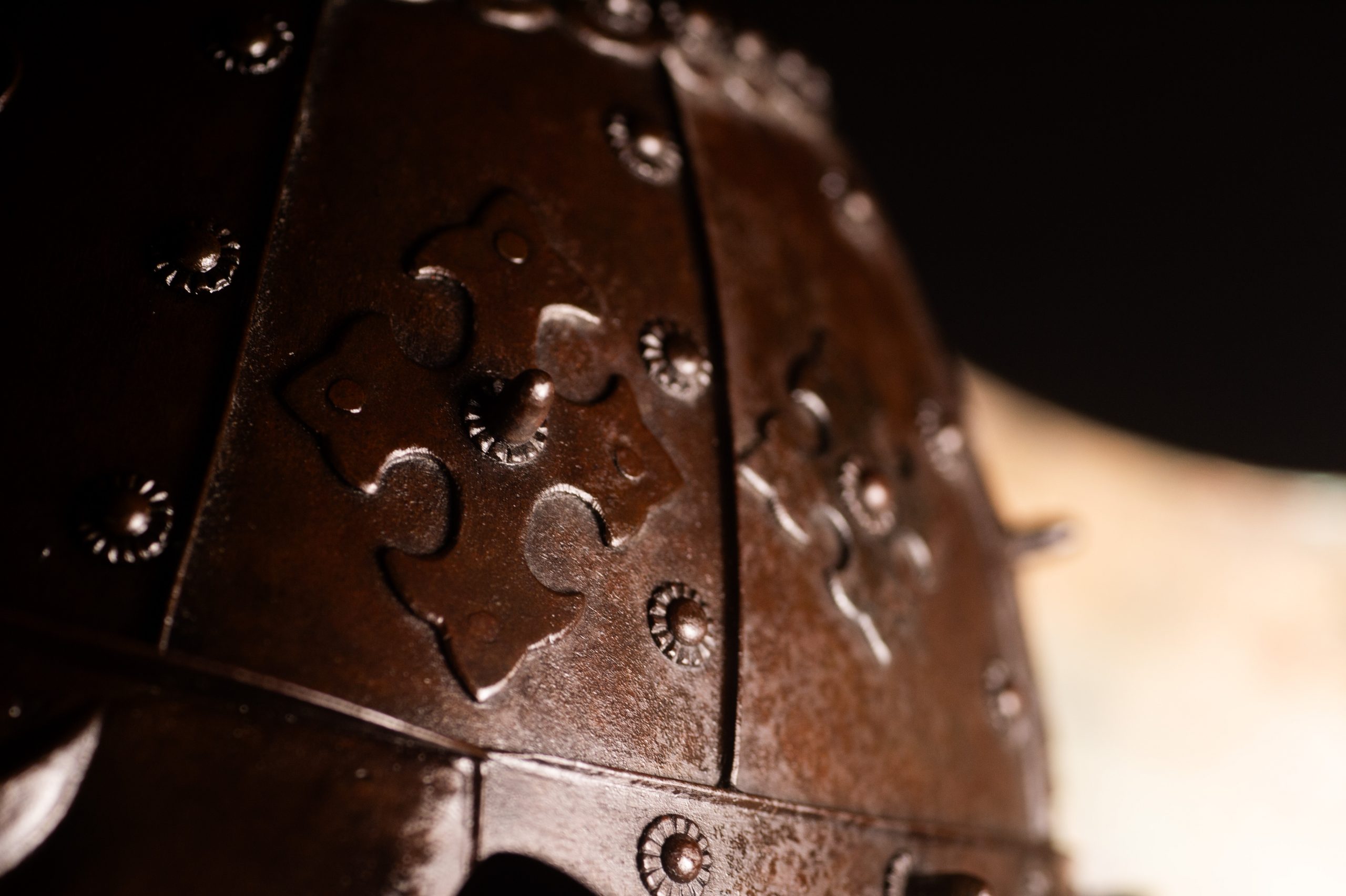
The armour is accompanied by a dark lacquered kabuto with a rounded, segmented bowl and a compact silhouette.
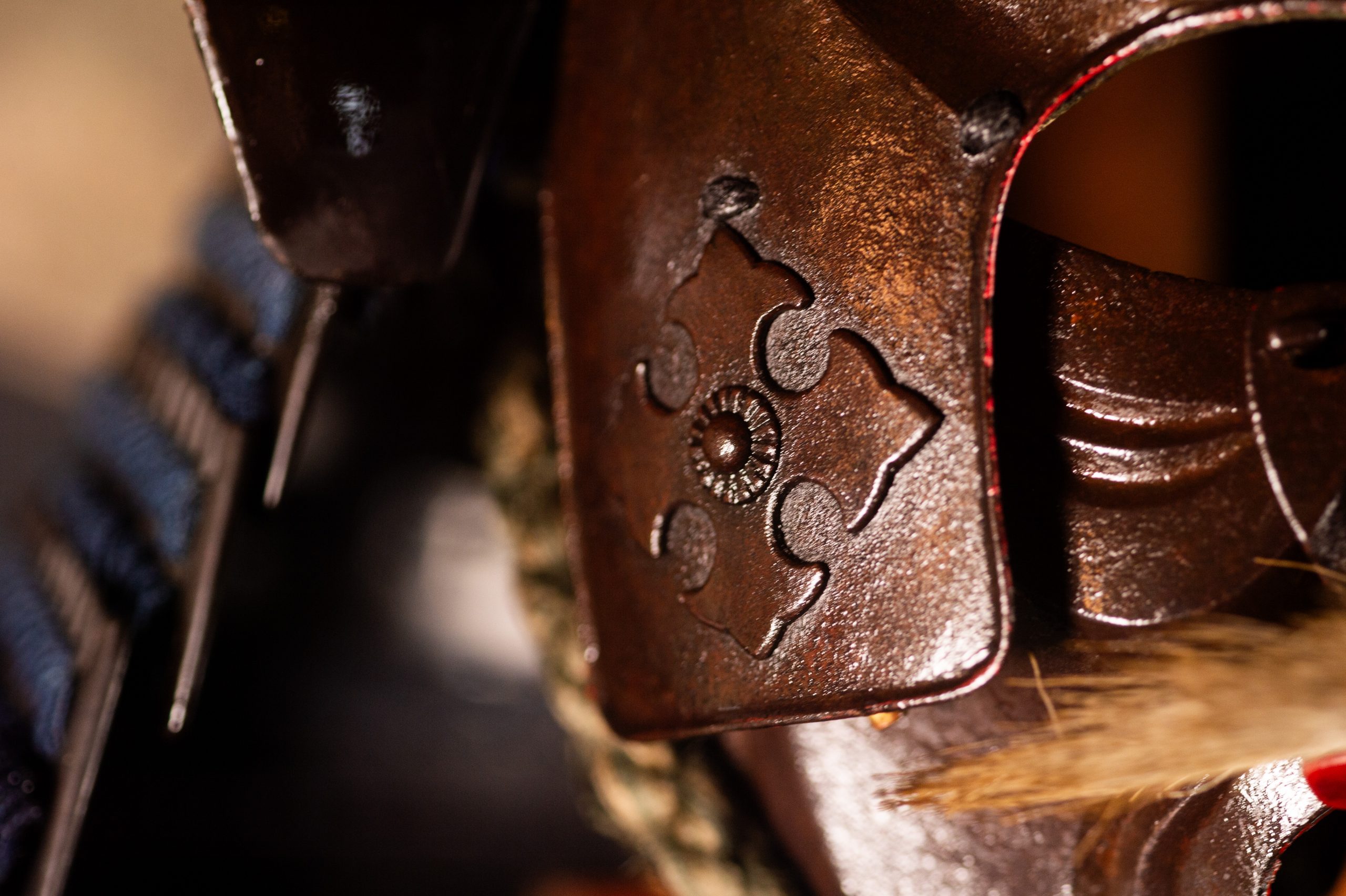
The surface of the helmet is enriched with applied decorative motifs and numerous ornamental fittings distributed across the bowl.
These details become particularly visible under directional light, where the raised decoration contrasts with the deep brown-black lacquered surface.
The helmet is completed by a multi-lame shikoro with dark blue lacing.
Beneath the helmet is a highly expressive dark lacquered menpō.
Unlike a hanpō, this facial armour incorporates protection around the nose as part of its sculpted form.
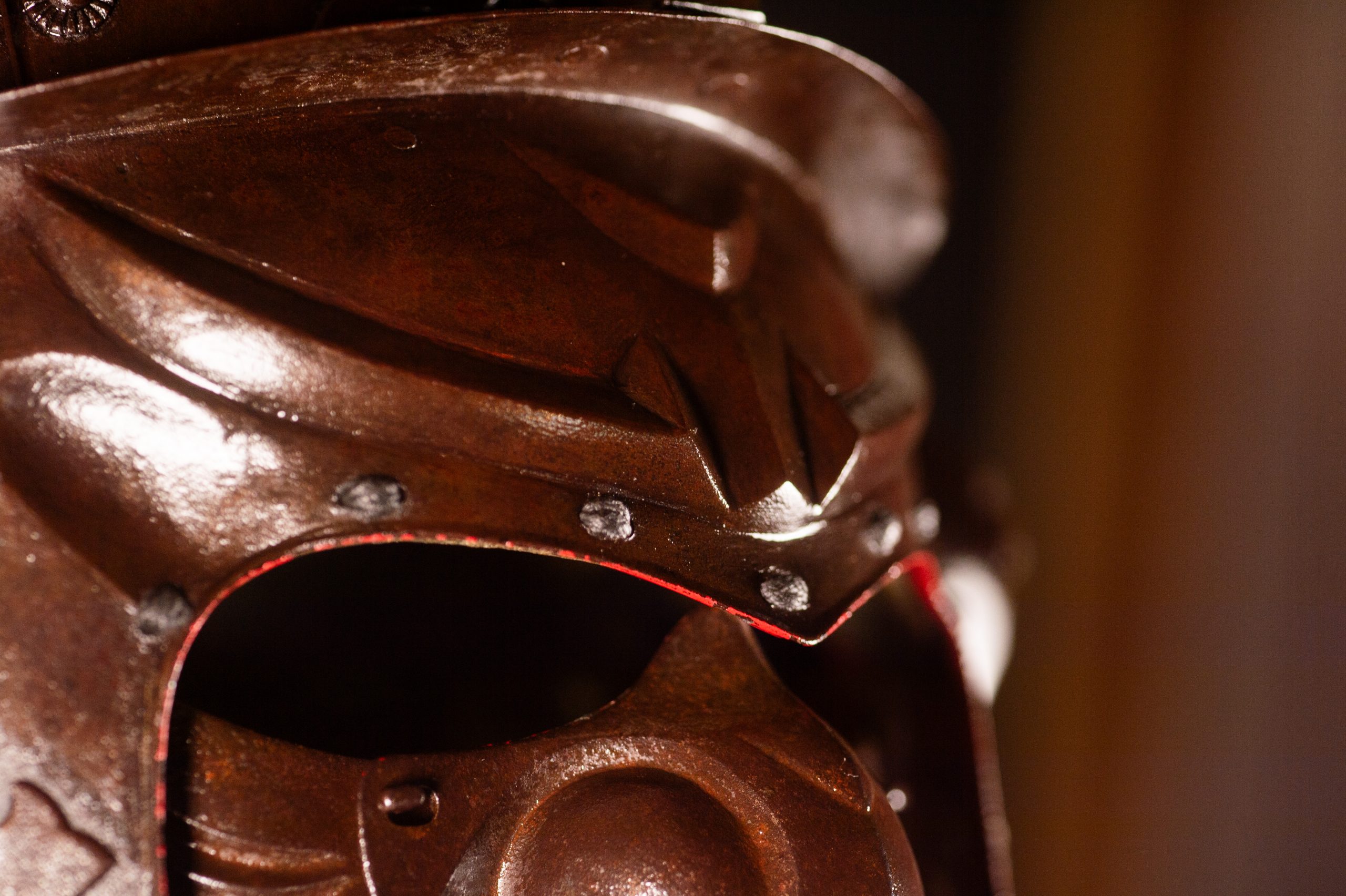
The mask is modelled with pronounced brows, cheeks, nose and mouth and retains a distinctive natural moustache.
A fine red line around part of the facial opening provides a subtle contrast against the dark lacquer, while the open mouth reveals additional red and gilt-toned detailing.
The menpō gives the armour a particularly strong facial presence when assembled for display.
The lower part of the kabuto is fitted with a layered shikoro.
Its horizontal lames are connected by dark blue lacing, creating a strong visual transition between the helmet and the armour below.
Additional braided protection surrounds the neck beneath the facial armour.
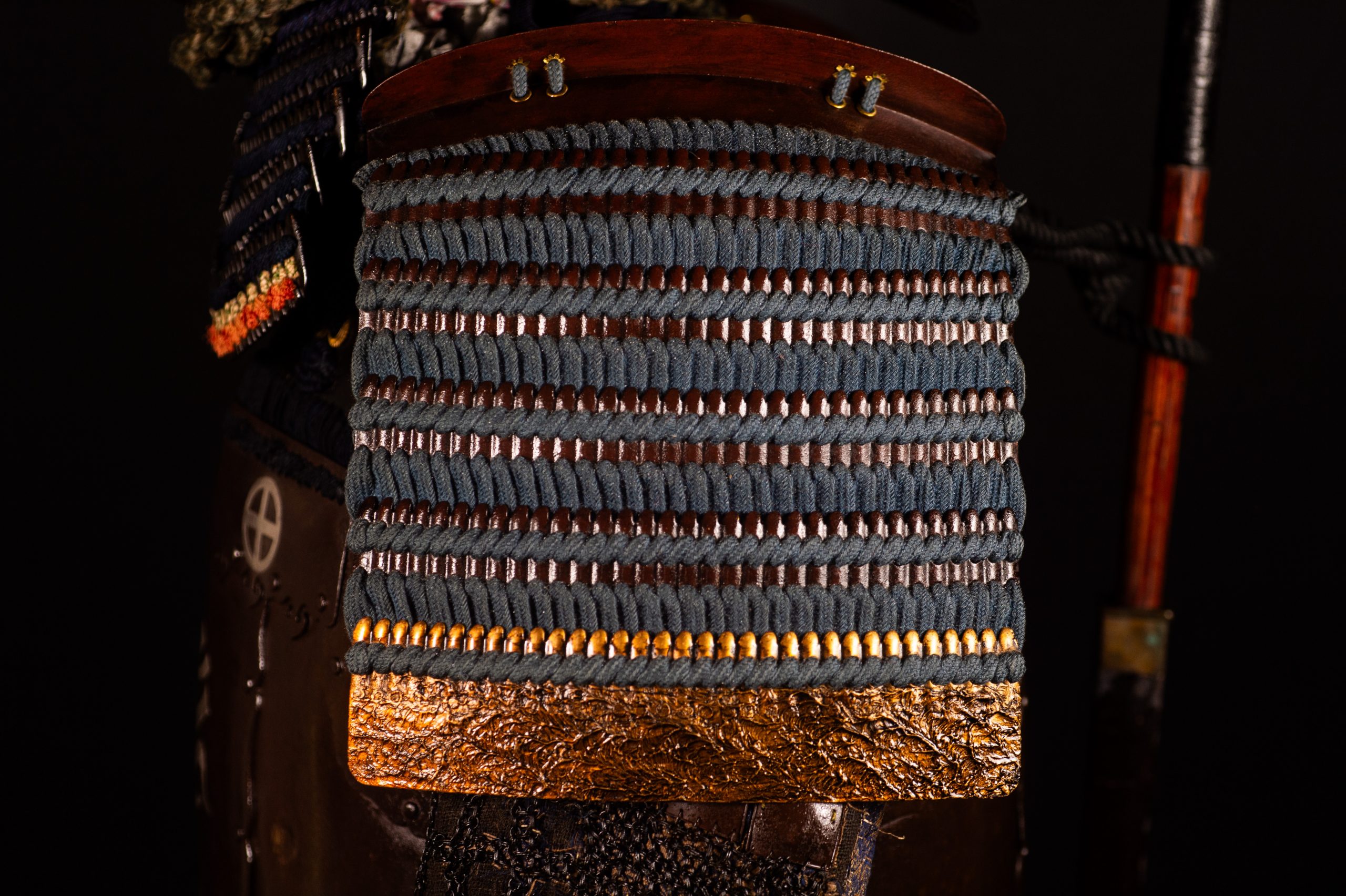
Large rectangular sode protect the shoulders.
They are constructed from horizontal lames joined by pale blue-grey lacing, with contrasting darker and warm-toned details.
Their broad shape gives the armour considerable width across the shoulders while balancing the large cuirass and helmet.
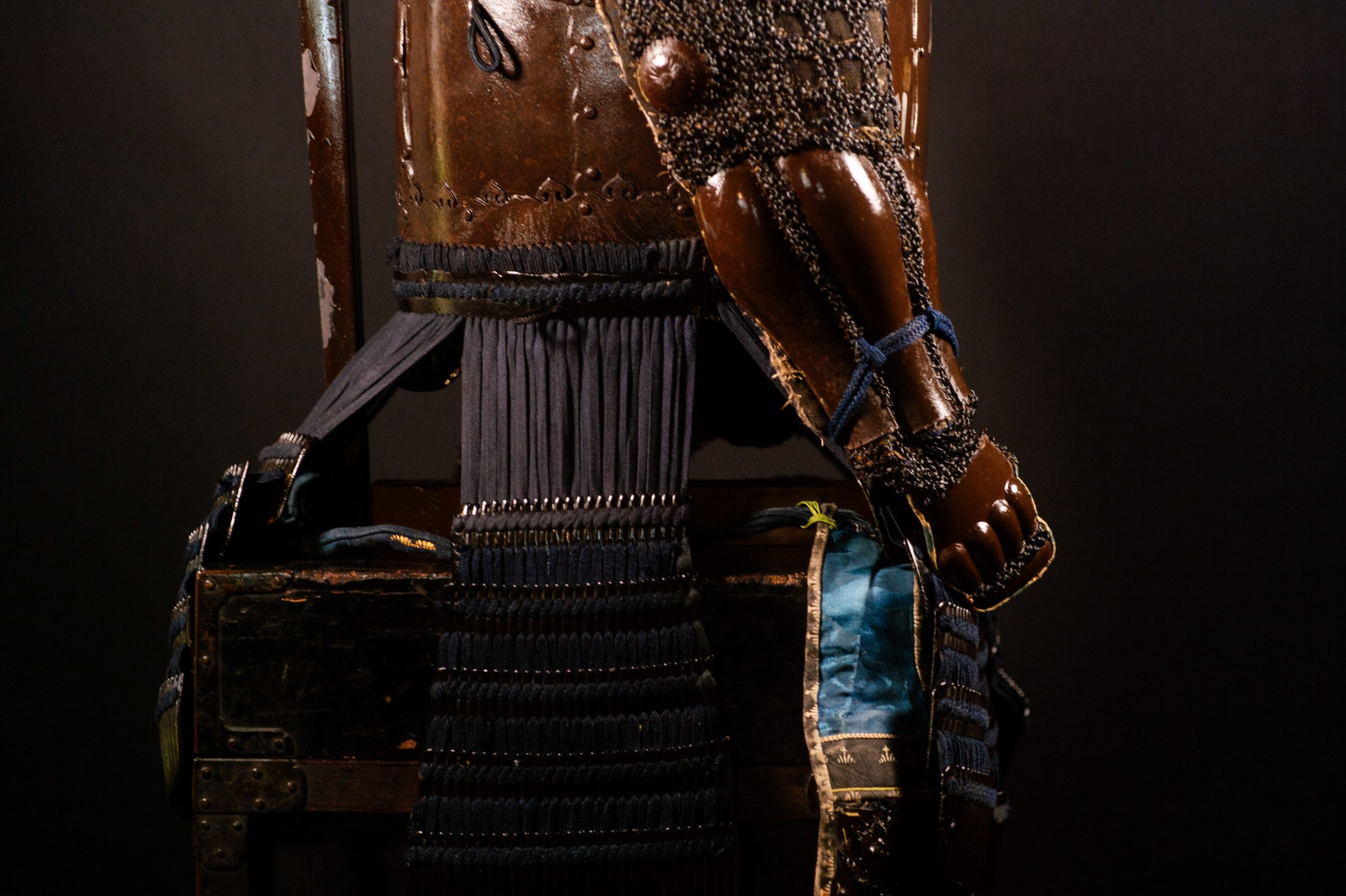
The arms are protected by traditional kote combining mail with lacquered protective plates.
The contrast between the dense dark mail and the smooth lacquered surfaces creates a clearly visible difference in texture along the arms.
Protective plates extend over the forearms and hands, continuing the dark lacquered finish used throughout the ensemble.
The lower section of the gusoku continues the dark colour scheme established by the cuirass and helmet.
Laced defensive elements protect the waist and upper legs, while additional protective components complete the lower part of the displayed armour.
Dark blue lacing provides visual continuity between the helmet, torso and lower armour.
The armour is dominated by deep brown and black lacquered surfaces.
Against this dark foundation, several details stand out clearly: the blue and blue-grey lacing, the pale metallic motifs on the dō, warm metallic accents and the lighter natural moustache of the menpō.
The result is a restrained but highly distinctive palette in which texture and surface treatment are as important as colour.
A particularly striking feature of the displayed ensemble is the large circular element positioned behind the armour.
Its scale extends far beyond the silhouette of the kabuto and creates a dramatic outline when the armour is viewed from the side or three-quarter angle.
No more specific identification of this element is proposed here without further documentation.
The armour is recorded as dating to the Edo period, circa 1800.
The ensemble combines established defensive components with extensive decorative treatment, including lacquered iron surfaces, contrasting lacing, applied ornament and metallic motifs.
No attribution to a particular armourer or workshop is made here beyond the dating recorded with the object.
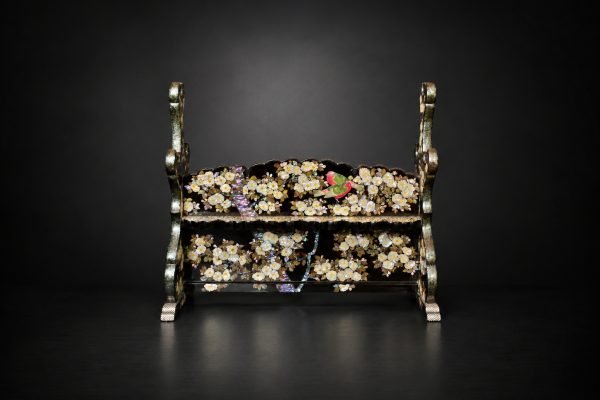
The armour is offered as a complete display ensemble and includes its display stand and storage box.
The principal visible components include:
The armour is accompanied by a certificate issued by Supein Nihonto.
This Edo-period gusoku is particularly notable for the combination of its dark lacquered surfaces, expressive menpō, richly decorated kabuto, silver-toned cuirass motifs and the impact marks preserved on the dō.
Its assembled form has considerable visual presence, while closer examination reveals very different textures and construction techniques across the helmet, mask, cuirass, lacing, mail and protective plates.
The teppō marks are especially interesting from a technical perspective, although they should be understood as impact marks recorded with the armour rather than as documented evidence of battlefield use.
A visually imposing Edo-period tōsei gusoku dating to circa 1800, combining a decorated kabuto, expressive menpō with natural moustache, dark lacquered iron dō with silver-toned motifs, contrasting blue lacing and impact marks recorded as teppō strikes. Supplied with a Supein Nihonto certificate, display stand and storage box.

Order above 1.000,00 € gets free shipping.

Secure and hassle-free payment process.

Certificate of authenticity included.

Have questions? Contact us via WhatsApp.
Contact
Discover exceptional Japanese swords, armor and works of art with our limited-time Black Friday offers.
OFFER ENDS NOVEMBER 30, 2026
Enter your code at checkout. Discounts cannot be combined with other coupons. Eligible orders only.