Wood Netsuke of a Reclining Rat with Food – Horn-Inlaid Eyes
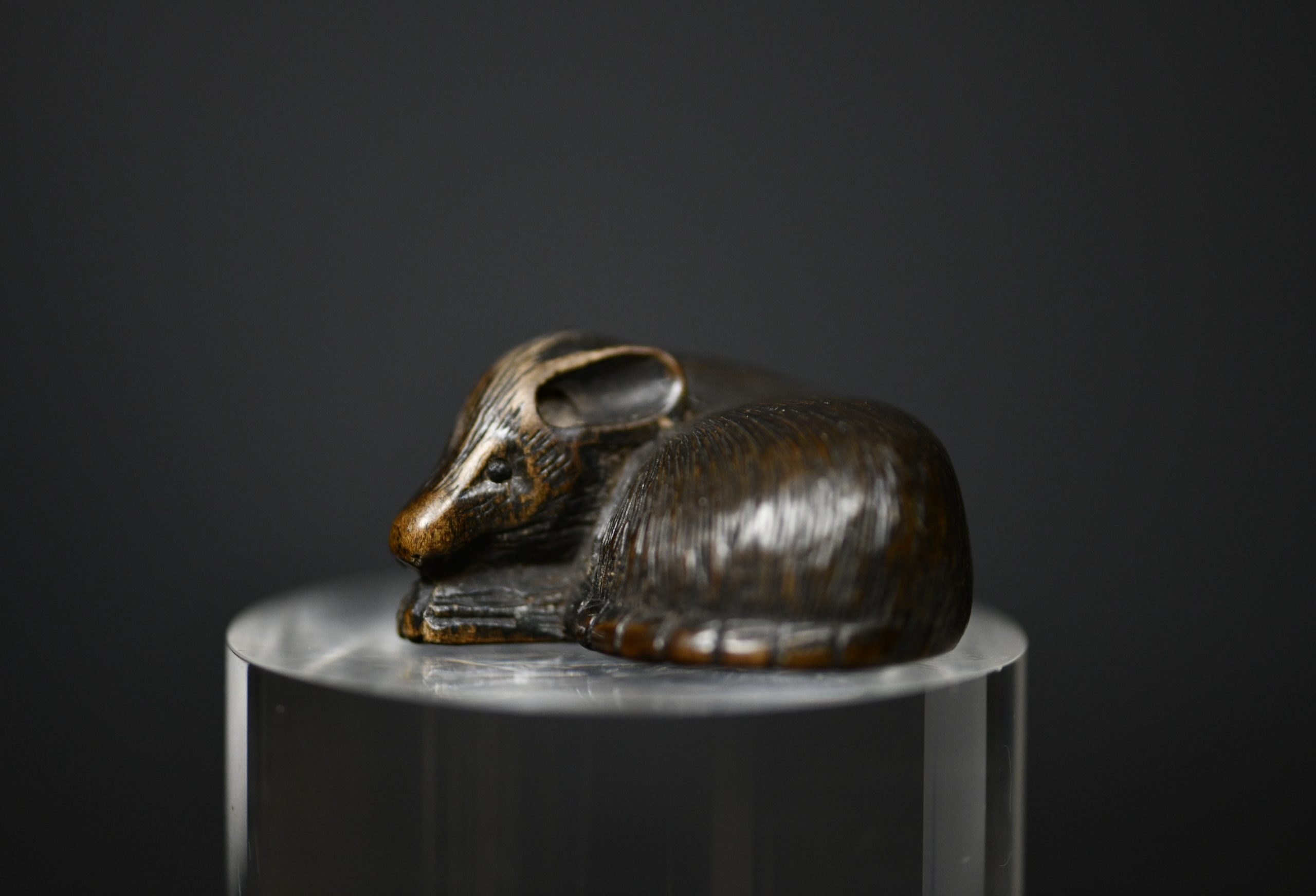
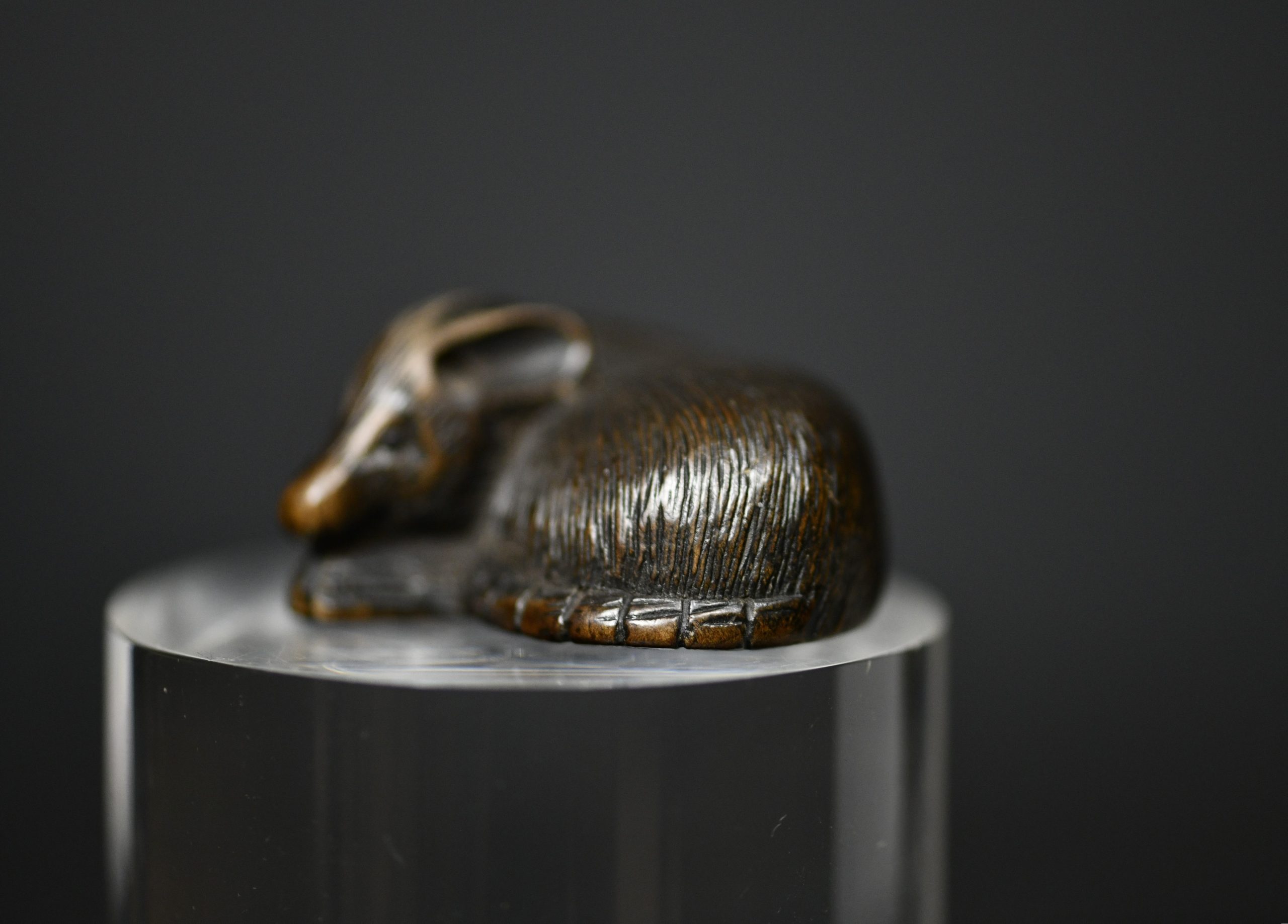
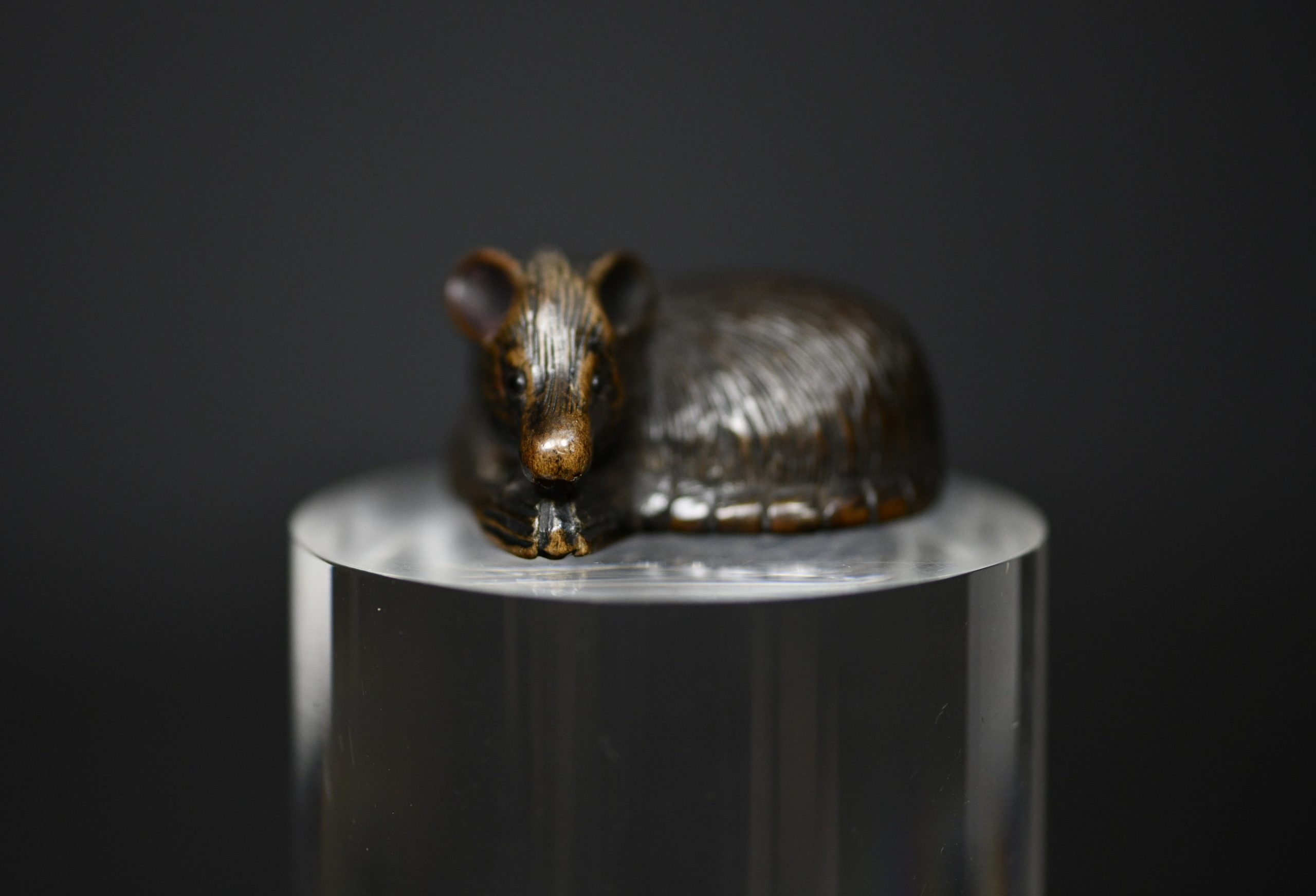
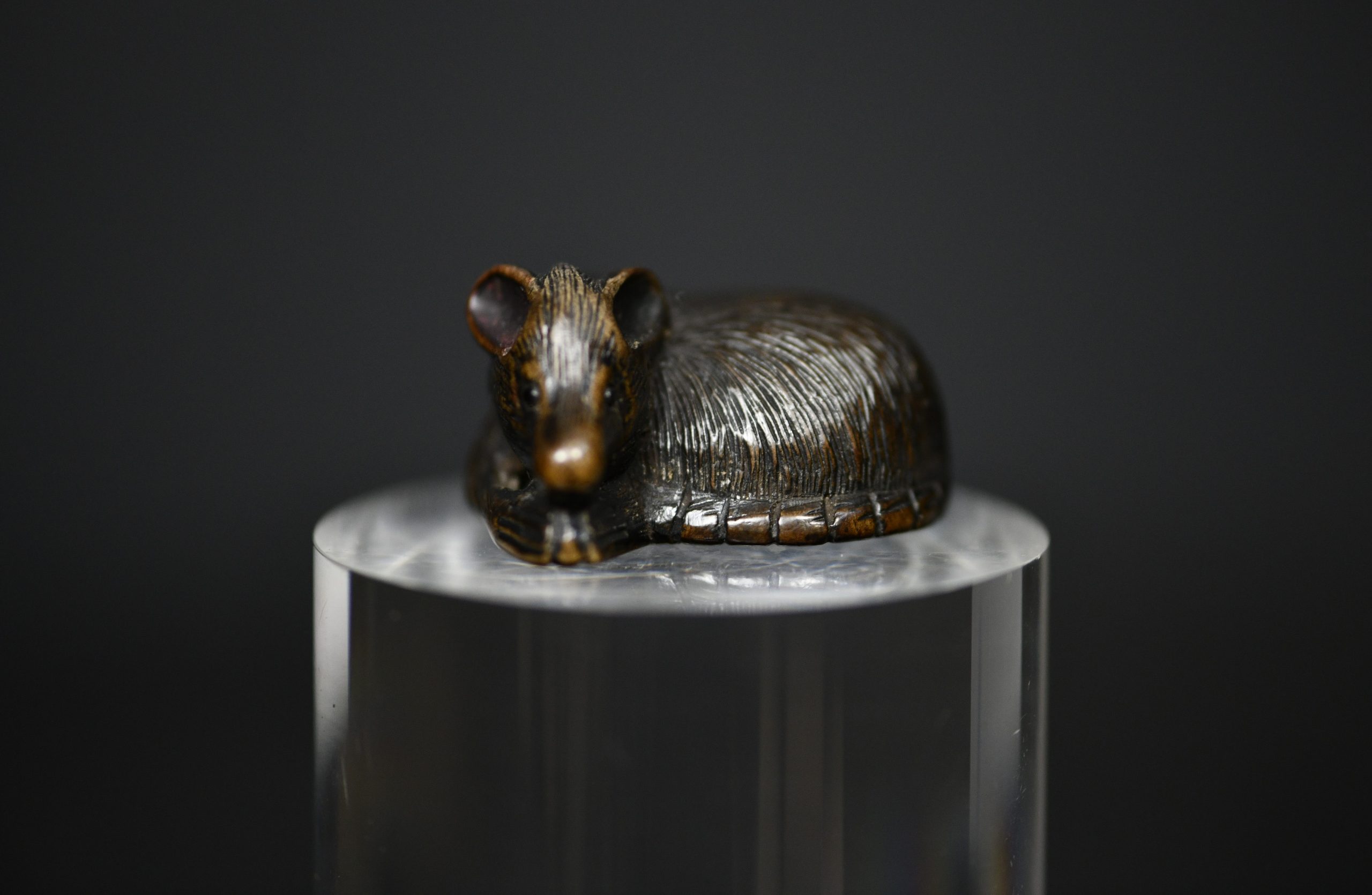
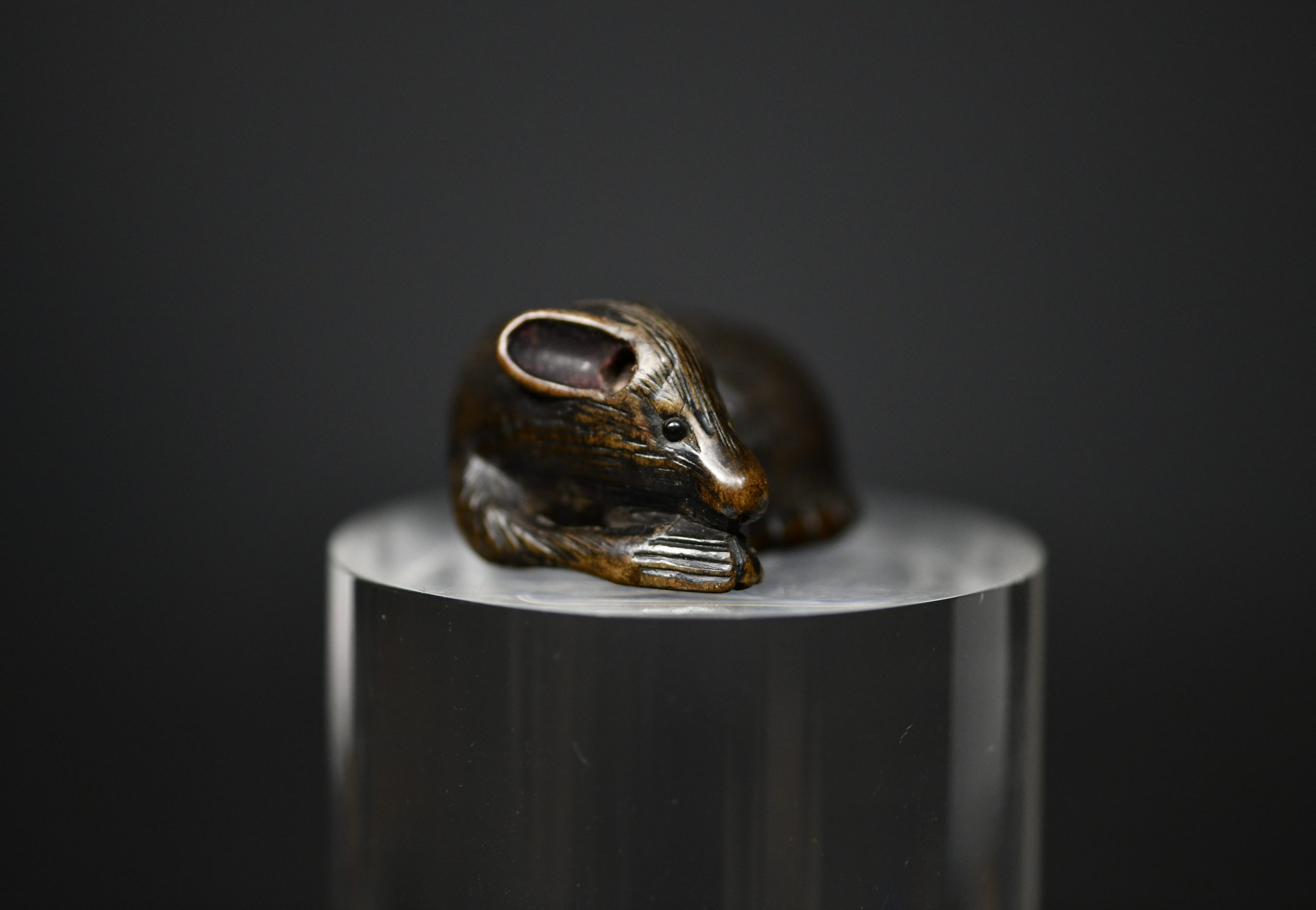
A finely carved Japanese wood netsuke depicting a reclining rat, shown holding food between its front paws.
The animal is arranged in a compact, rounded posture particularly well suited to netsuke carving. Careful modelling of the body, paws and facial features gives the small sculpture a lively naturalistic character.
A particularly distinctive detail is the use of horn inlay for the eyes, creating subtle contrast with the surrounding wood and drawing attention to the animal’s expression.
Dimensions: approximately 4.3 × 3.3 × 2.3 cm.
Reclining Rat Netsuke
The subject is a rat resting in a low, compact position, with a piece of food held between its front paws.
The composition focuses on a small moment of animal behaviour, transforming an everyday gesture into a miniature sculptural scene.
The rounded body and folded limbs create a cohesive silhouette that can be appreciated from multiple viewpoints.
Food Held Between the Front Paws
The rat holds food between its front paws, introducing a narrative element to the otherwise compact animal composition.
The gesture helps animate the figure and directs attention toward the head and front of the body.
As the specific type of food is not identified in the available description, it is left undescribed rather than assigning a particular fruit, nut or other object to the carving.
Horn-Inlaid Eyes
One of the most refined details of the piece is the use of horn inlay in the eyes.
Inlaid eyes were used by netsuke carvers to introduce contrast in colour and material while giving greater definition to an animal’s expression.
Against the surrounding wood, the darker or contrasting horn creates a small but effective focal point on the face.
Wood Carving
The netsuke is carved from wood, one of the principal traditional materials used for Japanese netsuke.
Wood was particularly suitable for animal subjects because it allowed carvers to create rounded volumes, fine surface detail and expressive features while retaining a warm tactile quality.
The compact treatment of this rat integrates the body, limbs and head into a balanced three-dimensional form.
Rats in Japanese Netsuke
Rats were a recurring subject in Japanese netsuke and other forms of miniature decorative art.
Their compact bodies, expressive faces and characteristic behaviour offered carvers numerous possibilities for naturalistic and animated compositions.
They could be shown resting, eating, grooming, climbing or interacting with objects, allowing a small sculpture to convey considerable movement and personality.
In this example, the combination of the reclining posture and food held between the paws creates an especially intimate and observational scene.
What Is a Netsuke?
A netsuke is a small Japanese toggle traditionally used to secure objects suspended from the obi, or sash.
Because traditional Japanese clothing did not include conventional pockets, personal belongings could be carried in hanging containers and accessories collectively known as sagemono.
The netsuke acted as a stopper above the obi, preventing the suspended object from slipping through the sash.
Although originally functional, netsuke developed into a sophisticated form of miniature sculpture depicting animals, people, mythology, folklore and scenes from everyday life.
Dimensions
- Length: 4.3 cm
- Width: 3.3 cm
- Depth: 2.3 cm
Key Features
- Object: Japanese netsuke
- Subject: Reclining rat
- Material: Wood
- Pose: Rat holding food between its front paws
- Eyes: Horn inlay
- Style: Compact naturalistic animal carving
- Dimensions: 4.3 × 3.3 × 2.3 cm
Collector’s Interest
The appeal of this netsuke lies in the combination of a classic animal subject, compact naturalistic modelling and carefully executed material details.
The horn-inlaid eyes add a refined contrast to the wood, while the food held between the front paws gives the rat a lively and recognisable sense of behaviour.
A charming Japanese wood netsuke of a reclining rat holding food between its front paws, distinguished by its compact naturalistic carving and finely inset horn eyes. A characterful example of Japanese animal sculpture in miniature.