Edo Period Ivory Netsuke of a Sennin with Dragon – 18th Century
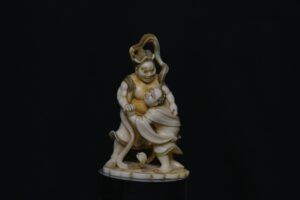
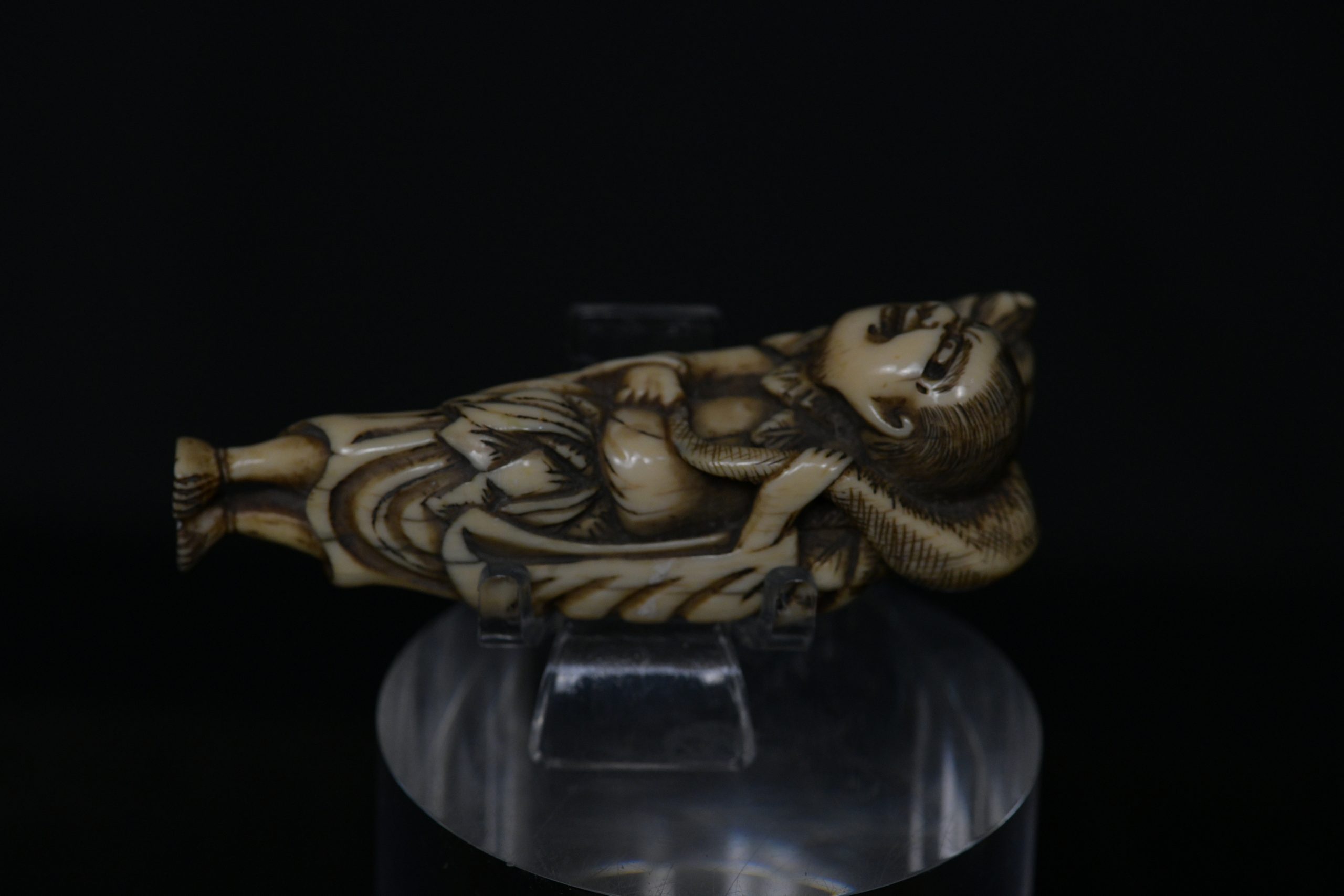
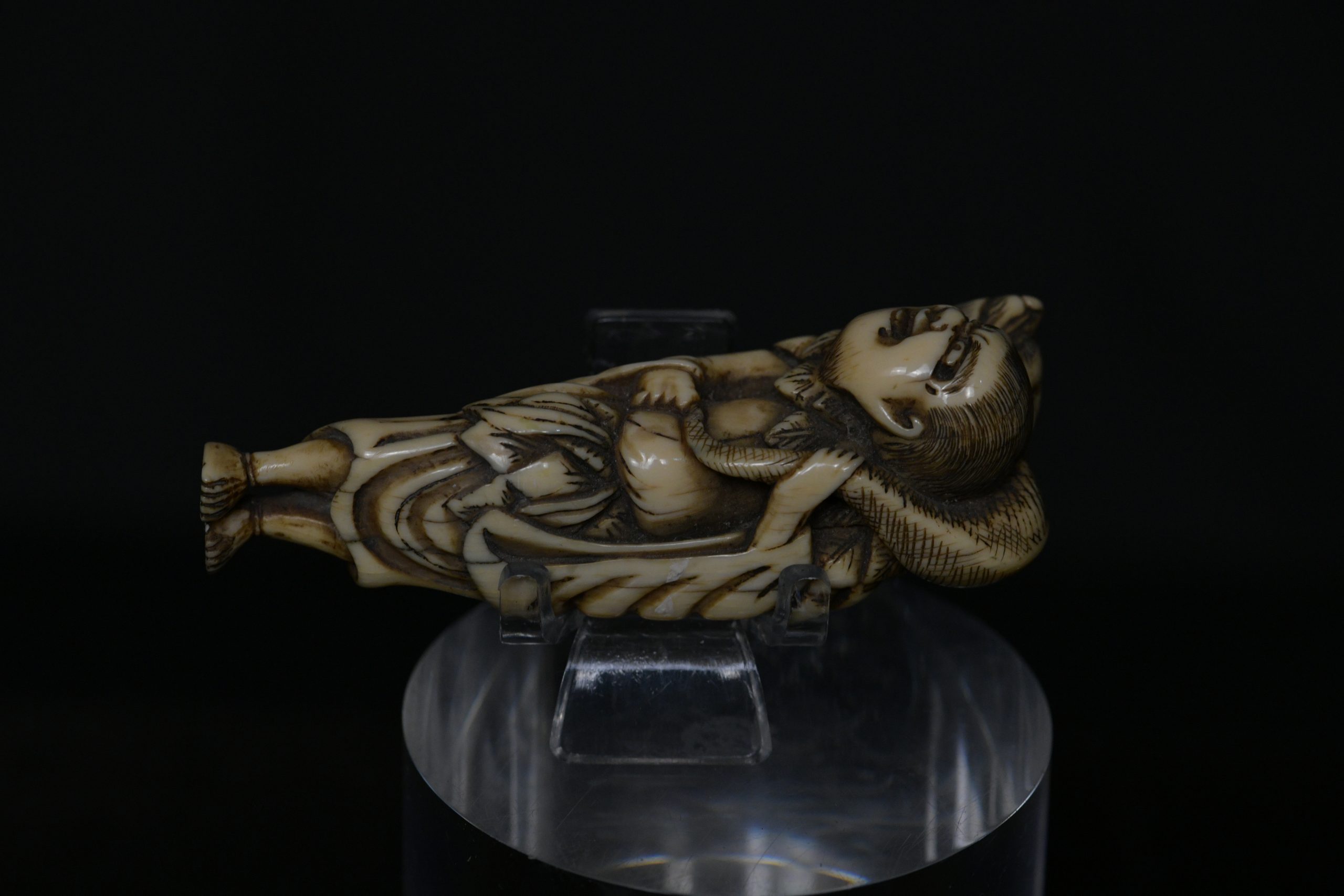
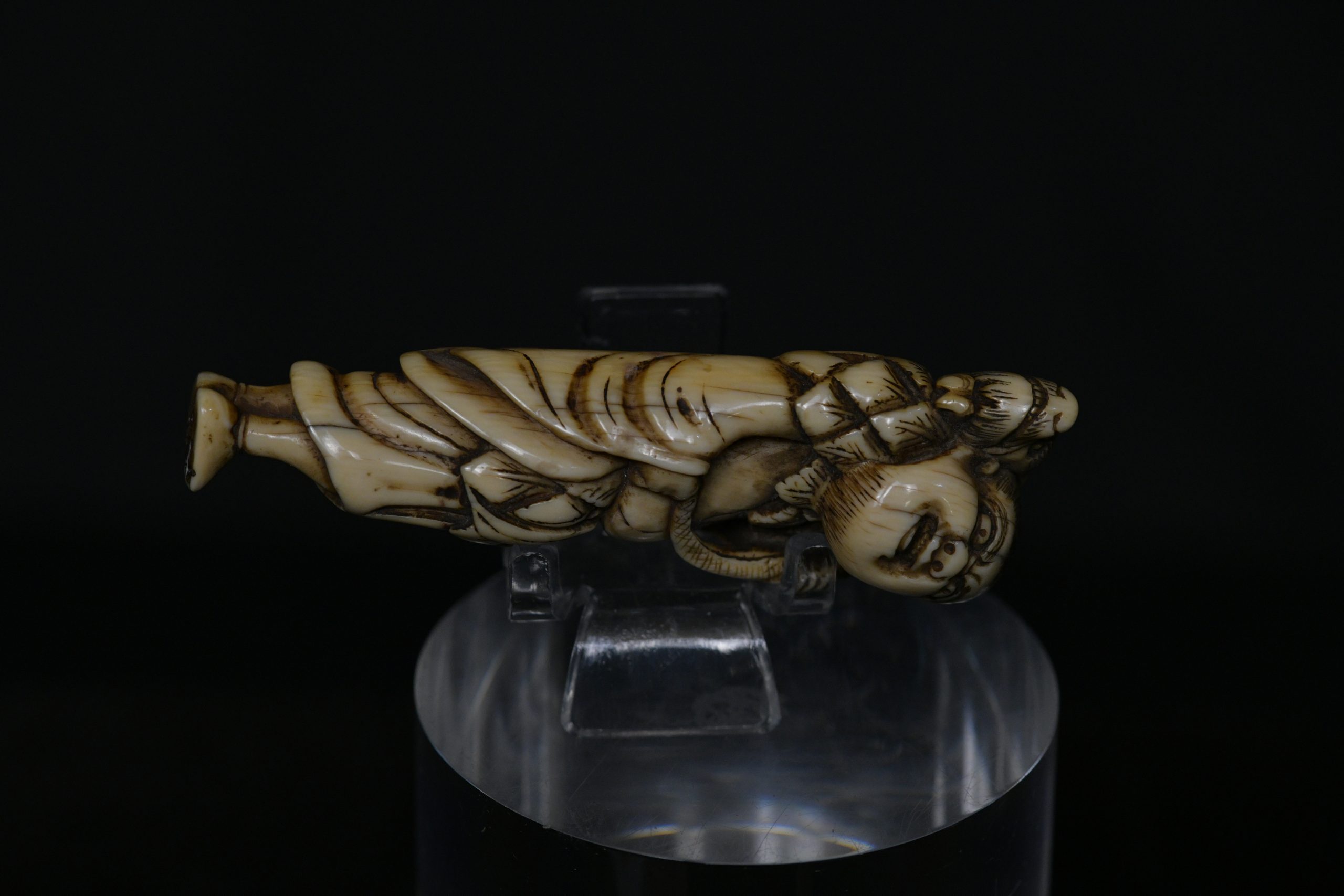
A distinctive antique Japanese ivory netsuke depicting a sennin with a dragon, dating from the early to mid 18th century during the Edo period.
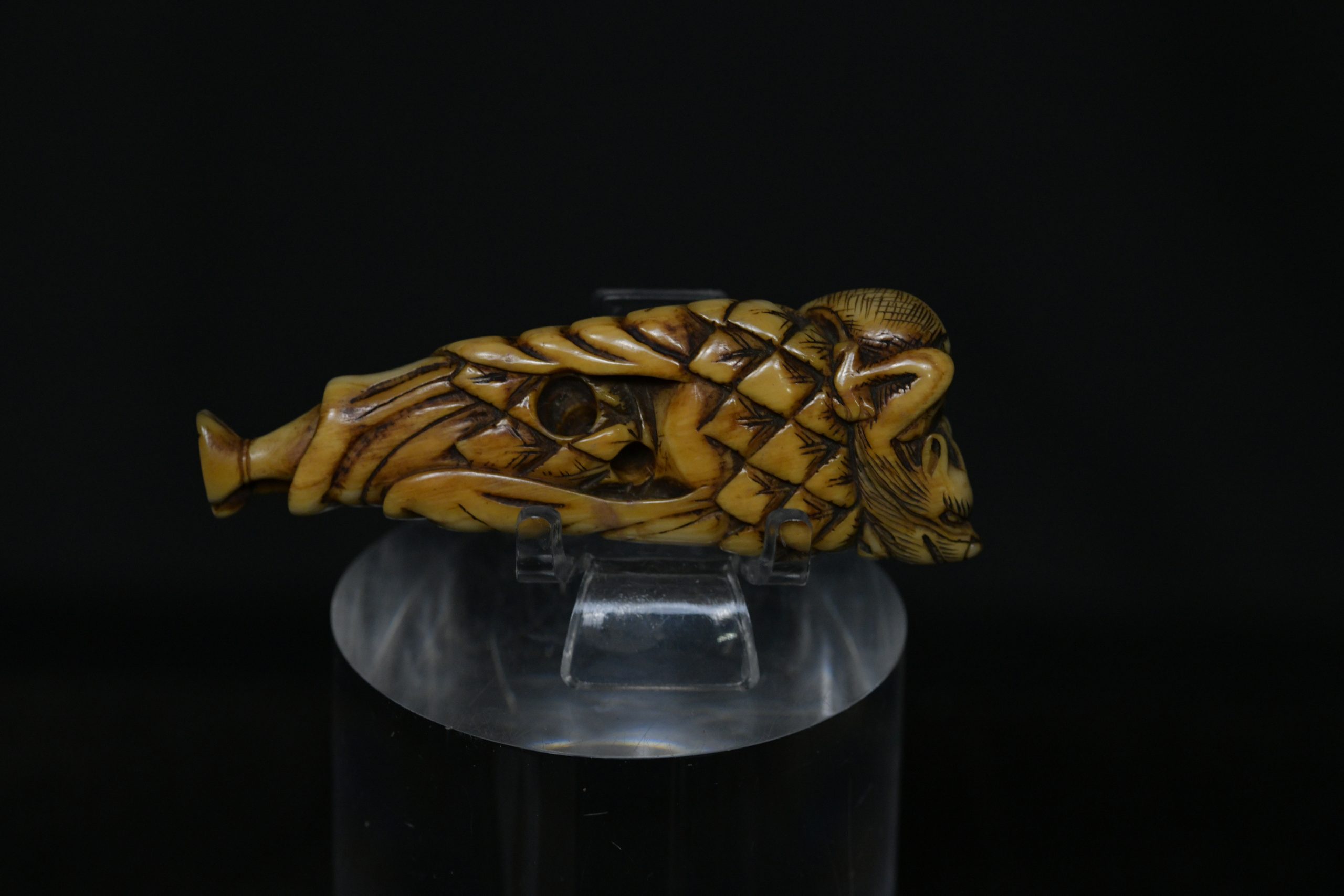
The composition presents the immortal as an elongated standing figure, with the dragon closely integrated around the upper body and shoulder. The combination of human and mythical forms gives the carving a strong vertical silhouette while allowing the viewer to discover details from several angles.
The piece is accompanied by a certificate of appraisal and CITES documentation.
Sennin – The Immortals of East Asian Tradition
Sennin is the Japanese term commonly used for legendary immortals or hermit figures derived largely from Chinese Daoist traditions and subsequently absorbed into Japanese art and folklore.
They are often portrayed as eccentric sages living apart from ordinary society, possessing supernatural abilities or maintaining a special relationship with animals, mountains and the forces of nature.
Because of their unusual appearance and rich symbolic associations, sennin became popular subjects in Japanese painting, sculpture, netsuke and other decorative arts.
The Dragon Motif
The dragon is one of the most important mythical creatures in East Asian visual culture and appears throughout Japanese religious, artistic and folkloric traditions.
Japanese dragons are commonly associated with water, natural forces, power, wisdom and supernatural authority.
In this netsuke, the dragon is not presented as an independent creature but is incorporated directly into the figure of the sennin, resting across the shoulder and creating a compact relationship between the human and mythical elements.
No specific identification of the individual sennin is asserted here beyond the traditional subject of a sennin accompanied by a dragon.
Early to Mid 18th-Century Edo Period
The netsuke is dated to the early to mid 18th century, within the Edo period.
This places the carving within an important phase in the development of netsuke as functional objects and miniature sculpture.
During the Edo period, netsuke were used as small toggles to secure suspended personal objects such as inrō, tobacco pouches and purses to the sash of traditional Japanese clothing.
Their practical role encouraged carvers to create compact but highly individual forms that were comfortable to handle while also rewarding close visual examination.
Ivory Carving
The netsuke is carved from ivory, a material historically used by Japanese artists for netsuke and other miniature sculptures because of its fine grain and capacity to retain extremely precise detail.
The sculptor uses the material to define the facial features, folds of the clothing and anatomical details of the dragon within a relatively narrow and elongated composition.
The ivory should be understood within the historical context of Edo-period Japanese decorative arts. The piece is accompanied by CITES documentation relating to its regulated material.
Figural Composition
At 7.7 cm high, the netsuke has a comparatively tall and slender profile.
The elongated form allows the sennin to remain the dominant visual element while the dragon creates movement around the upper part of the composition.
This close integration of the two figures prevents the sculpture from becoming visually static and encourages examination from several viewpoints.
Certificate of Appraisal and CITES Documentation
The netsuke is accompanied by supporting documentation:
- Certificate of appraisal: Included
- CITES documentation: Included
- Period: Edo period
- Date: Early to mid 18th century
The appraisal certificate forms part of the documented history of the object, while the CITES documentation is especially relevant because of the ivory material.
Dimensions
- Height: 7.7 cm
- Width: 3.8 cm
- Depth: 2.3 cm
Key Features
- Period: Edo period
- Date: Early to mid 18th century
- Origin: Japan
- Type: Netsuke
- Material: Ivory
- Subject: Sennin with dragon
- Style: Figural netsuke
- Documentation: Certificate of appraisal
- CITES: Documentation included
- Dimensions: 7.7 × 3.8 × 2.3 cm
Condition
The netsuke retains the detailed carving and strong figural composition characteristic of the piece, including the relationship between the sennin, his garments and the dragon positioned around the upper body.
As an antique Japanese ivory carving dating from the 18th century, natural variations in surface colour, patina and age-related wear should be understood within the historical character of the object.
The certificate of appraisal and CITES documentation accompany the piece.
An evocative 18th-century Edo-period ivory netsuke of a sennin with dragon, combining an important mythical subject with an unusually elongated and expressive figural composition. Accompanied by appraisal and CITES documentation, it represents an appealing example of early Japanese netsuke carving and the long-standing fascination with immortals and dragons in Japanese art.