September 16, 2026
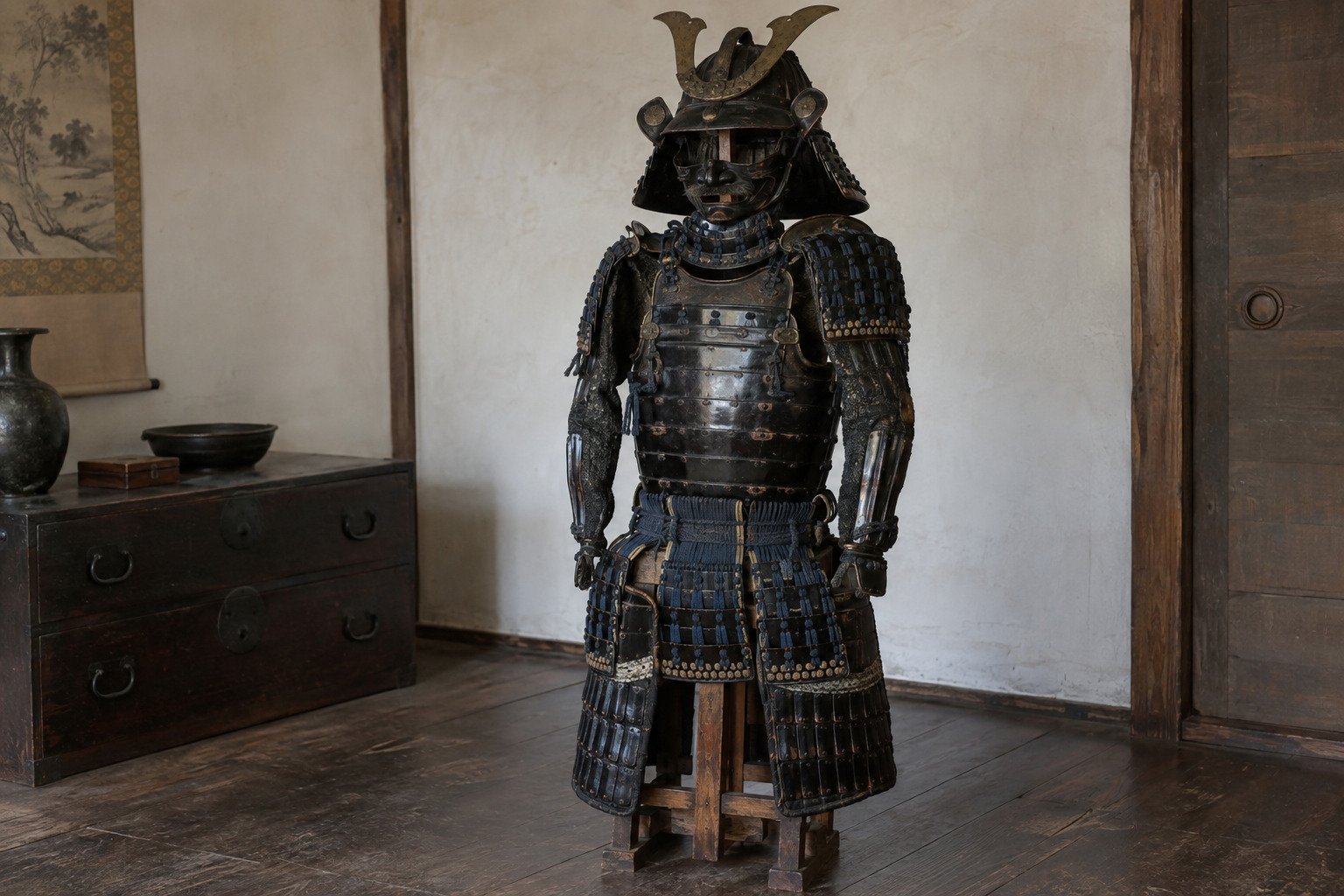
A suit of Japanese armor is made from many different materials. Iron provides strength, leather reduces weight, silk cords connect articulated sections, and textiles make the armor more comfortable to wear.
Holding much of this complex structure together—both visually and physically—is urushi, the traditional Japanese lacquer.
The dark surface of a samurai cuirass or kabuto was not simply painted black for decoration. Lacquer protected the materials beneath it, reinforced smaller components, and gave armorers another way to shape the identity of a suit.
For collectors, the condition of the lacquer can also reveal how an armor has aged, been stored, and possibly restored.
Urushi is a natural lacquer traditionally obtained from the sap of the lacquer tree.
Unlike ordinary paint, urushi hardens through a reaction involving moisture and oxygen in the air. Once properly cured, it forms a durable surface resistant to moisture, heat, salt, acids, and alcohol.
These qualities made it especially valuable for objects expected to endure frequent handling or changing environmental conditions.
Japanese lacquer was used on boxes, furniture, religious objects, sword scabbards, saddles, and many other works of art. On armor, it had the additional task of protecting materials intended for military use.
Japanese armor was not made exclusively from solid iron plates.
Earlier forms often used numerous small scales known as kozane, made from iron, hardened leather, or a combination of both. These scales were arranged into horizontal sections before being connected with cords.
Applying lacquer offered several advantages.
Iron exposed to moisture can rust. Lacquer created a barrier between the metal and its surroundings, helping to limit contact with water and humidity.
The coating did not make armor completely immune to corrosion, especially if it became scratched or damaged, but it provided an important layer of protection.
Leather was lighter than iron and could reduce the overall weight of the armor. Once shaped and covered with lacquer, it became firmer and more resistant.
This allowed armorers to combine iron and leather scales within the same component, balancing protection with mobility.
Lacquer could help consolidate groups of small scales and the leather thongs holding them together. The finished horizontal sections were then connected vertically by the colorful lacing known as odoshi.
Iron and leather have very different natural surfaces. A shared lacquer finish gave them a more consistent appearance and made it difficult to distinguish the two materials without closer examination.
This visual unity contributed to the refined character of Japanese armor.
Black lacquer is probably the finish most strongly associated with samurai armor. It created a deep, controlled surface that contrasted beautifully with colored silk lacing, gilt fittings, and clan crests.
However, Japanese armor was not always uniformly black.
Armorers also used:
During the Momoyama and Edo periods, increasingly elaborate armor could use bold colors and unusual surfaces to create a memorable visual identity.
Some armors were designed to appear restrained and practical. Others were clearly intended to demonstrate rank, wealth, family identity, or the personal taste of their owner.
Color alone, however, cannot determine the age or ownership of an armor. Old components were reused, armor was restored, and later craftsmen sometimes revived earlier styles.
Not every lacquered armor was finished with a perfectly smooth, glossy surface.
Armorers could vary the preparation and application of lacquer to produce different visual effects. Some finishes were highly polished, while others were deliberately textured or subdued.
A rough surface could reduce reflections and give an armor a more forceful appearance. Decorative finishes might imitate aged iron, leather, or other materials. Gold or silver powder could also be incorporated to create a richer effect.
The finish was part of the complete design. It had to work with the shape of the cuirass, the helmet, the fittings, the family crests, and the colors of the lacing.
This is why lacquer should not be considered separately from the rest of the armor. Its tone and texture influence how every other material is perceived.
Urushi was not limited to the cuirass and skirt.
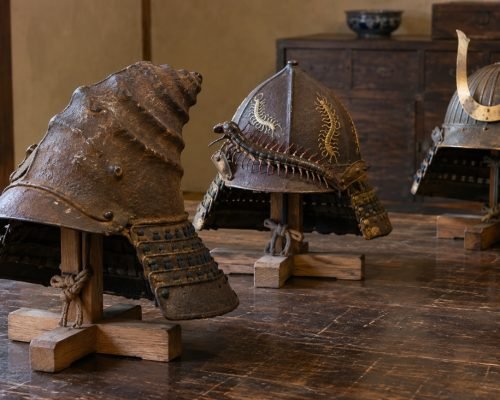
A kabuto assembled from multiple iron plates could be lacquered to protect the surface and create a unified finish. The shikoro, or neck guard, often combined lacquered rows with silk or leather lacing.
Face protection such as the menpō could also be coated with lacquer. Black and red finishes were common, and the interior was sometimes treated differently from the exterior.
Lacquer helped transform iron components into expressive objects. On a face mask, a dark finish could emphasize wrinkles, cheekbones, teeth, or an intimidating expression.
To learn more about the different parts and historical development of these helmets, read our guide to authentic samurai kabuto.
Properly cured urushi is extremely durable, but it is not indestructible.
Centuries of exposure, movement, storage, and restoration can leave visible traces.
Common condition issues include:
Ultraviolet light can gradually damage lacquer, while sudden changes in humidity may cause the material beneath it to expand or contract. This movement can produce cracks or cause sections of the coating to lift.
The different materials within an armor may also react differently to environmental changes. Iron, leather, wood, silk, and lacquer do not all expand, contract, or age in the same way.
That is one reason complete Japanese armor requires particularly careful conservation.
The lacquered surface can provide important information, but it must be interpreted alongside the rest of the object.
If the helmet, cuirass, shoulder guards, and skirt have noticeably different shades or textures, they may have been restored at different times or originally belonged to separate armors.
Small differences do not automatically prove that a suit is assembled. Natural aging and exposure can also affect each component differently.
Chips, cracks, and worn edges may be consistent with age and use. They can also reveal the material beneath the surface.
A discreet historical repair may form part of the armor’s history. A large modern repaint, by contrast, can conceal original lacquer and make the object more difficult to evaluate.
Surfaces hidden beneath overlapping plates, fittings, or textiles may preserve a finish closer to the original color and gloss.
Comparing exposed and protected areas can help determine how much the lacquer has changed.
Some armors have been treated with modern paint, varnish, oil, or synthetic coatings. These substances may create an unnatural shine, conceal damage, or react poorly with the historical surface.
An unusually uniform finish on a centuries-old armor deserves careful examination.
There is no simple answer.
Original lacquer in stable condition is historically important, even when it shows wear, small losses, or a softer surface than it once had. These signs can preserve evidence of age, construction, and use.
However, actively flaking lacquer may require professional conservation to prevent further loss.
The objective should not be to make an antique armor look new. Good conservation aims to stabilize surviving material while keeping repairs distinguishable from the original surface.
A completely refinished armor may look impressive from a distance, but much of its historical information may have been covered or removed.
Collectors should ask:
Clear documentation is particularly valuable when substantial restoration has taken place.
Antique lacquer should not be polished with household products or treated with commercial oils, waxes, or leather conditioners.
These substances can change the appearance of the surface, attract dirt, enter existing cracks, or make future conservation more difficult.
Basic preventive care includes:
Loose or lifting lacquer should be examined by a conservator familiar with Japanese materials. Attempting to glue a flake back into place without understanding the original layers can cause permanent damage.
Lacquer is sometimes treated as the background against which the more spectacular features of an armor are displayed.
In reality, it is one of the materials that gives Japanese armor its distinctive character.
Urushi protected iron from moisture, strengthened leather components, helped consolidate lamellar sections, and unified materials that would otherwise look very different. It also allowed armorers to experiment with color, texture, shine, and contrast.
For collectors, the lacquered surface is more than a finish. It can preserve evidence of craftsmanship, age, use, and restoration.
The next time you look at a samurai armor, pay attention to the surface beneath the cords and metal fittings. Look for changes in texture, areas protected from light, and places where the lacquer reveals the material underneath.
That dark surface is not simply decorative paint. It is part of the engineering, preservation, and visual identity of the armor itself.
Explore complete historical examples in our collection of authentic samurai armor.
CEO of SupeinNihonto, dealer and collector of ancient Japanese art and weapons from Canillo, Andorra.
Contact