October 5, 2026
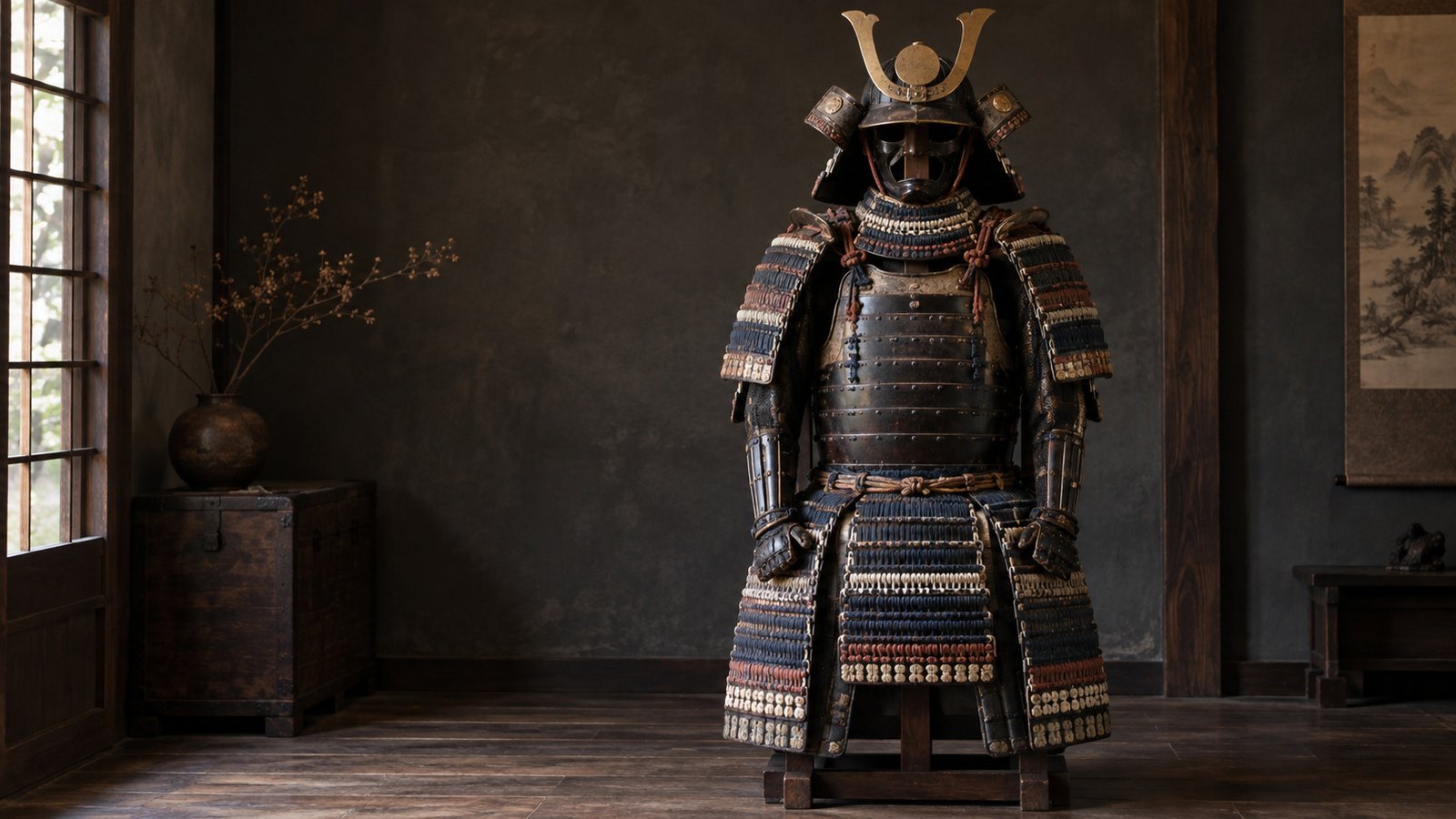
When looking at a complete suit of Japanese armor, most people first notice the imposing kabuto, the face mask, or the dark lacquered cuirass. Yet one of its most distinctive features is made from a much softer and more fragile material: the colorful cords connecting its protective plates.
This traditional system of samurai armor lacing is known as odoshi.
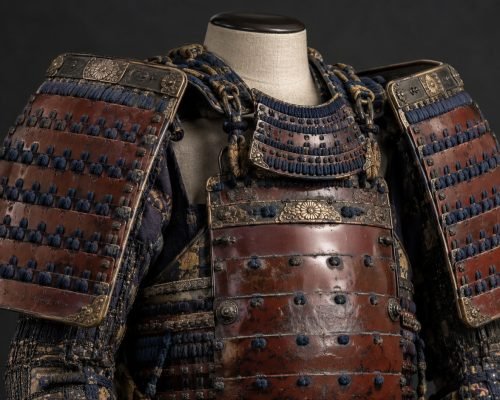
Odoshi gave Japanese armor much of its color and visual rhythm, but it was not added simply for decoration. The cords helped hold different sections together while allowing the armor to move with the warrior. They were an essential part of both its construction and its appearance.
The term odoshi refers to the cords used to connect the overlapping rows found on many forms of traditional Japanese armor.
Earlier armor was often constructed from numerous small scales made from iron or hardened leather. These scales were joined into horizontal sections, coated with lacquer, and then connected vertically with cords.
The same principle can be seen on several parts of an armor, including:
The result was a flexible structure that could move more naturally than a completely rigid shell. The overlapping rows protected the wearer while the cords allowed the different sections to shift as he walked, rode, or fought.
Readers who want to understand the broader construction of Japanese armor can also consult our guide to the differences between gusoku and yoroi.
Traditional odoshi was commonly made from tightly braided silk cord. Tanned deer hide was also used, either throughout an armor or in combination with silk.
These materials created a striking contrast with the lacquered iron and leather plates. Black armor could be transformed by rows of red, blue, white, purple, green, or yellow cord.
The lacing could cover much of the surface or appear at wider intervals, leaving more of the lacquer visible.
This combination of hard and soft materials is one of the defining characteristics of Japanese armor. Iron provided strength, lacquer protected the surface, and the cords united the different elements into a flexible whole.
Although Japanese armorers developed many decorative variations, two principal lacing methods are especially important.
Kebiki odoshi is a dense form of lacing in which the cords are positioned closely together.
The silk can cover much of the visible surface, creating broad areas of color across the shoulder guards, neck guard, and skirt. This luxurious appearance is closely associated with classical lamellar armor.
Producing such extensive lacing required a large amount of material and considerable labor. It was visually impressive, but the dense cords could also retain moisture and dirt.
Sugake odoshi uses lacing at wider intervals. More of the lacquered plates remain visible, giving the armor a more open and restrained appearance.
This should not be confused with missing or damaged lacing. Sugake odoshi was an intentional construction method and became particularly suitable for many later forms of armor.
These two styles allow us to see how armorers balanced structure, weight, appearance, and the amount of cord required.
Color could completely change the personality of an armor.
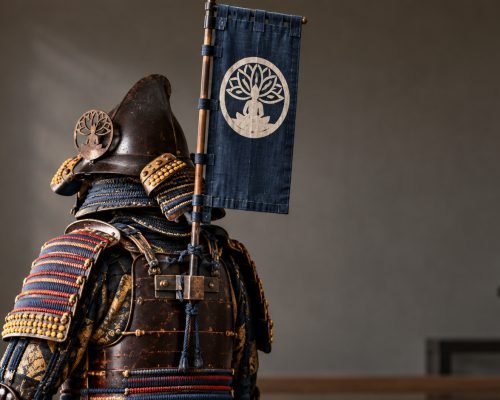
Deep blue lacing might create a sober appearance, while red or orange could produce a much stronger contrast against black lacquer. White cords gave armor a particularly refined look, although surviving white silk often appears cream, gray, or brown today.
Some suits used a single dominant color. Others combined several colors in horizontal bands, contrasting edges, or geometric patterns.
Colored cords could even form diagonal or triangular designs across the shoulder guards and skirt. These arrangements turned the armor into a carefully planned visual composition rather than a collection of unrelated protective parts.
It is tempting to assume that every color represented a particular clan or rank. The reality is more complicated. Color could reflect personal taste, family tradition, fashion, restoration, or the intended appearance of an individual armor.
A red-laced suit cannot be attributed to a particular clan from its color alone. Reliable identification requires examination of its construction, crests, inscriptions, age, and provenance.
The iron and lacquered parts of an armor may survive for centuries, but silk is much more vulnerable.
Light can fade the dyes. Humidity weakens the fibers. Dirt, insects, handling, and the weight of the plates can gradually damage the cords.
For this reason, many surviving armors have been relaced at some point in their history. Some were repaired during the Edo period, while others received new cords much more recently.
An armor can therefore contain several generations of lacing. A protected section may retain old silk, while exposed rows have been replaced. The helmet, shoulder guards, and skirt may also have been restored at different times.
This does not necessarily make the armor inauthentic. Samurai armor was maintained and repaired throughout its working life. However, collectors should know which parts are original and which have been restored.
Odoshi can provide important clues about the history of an armor.
Collectors should compare the material, color, spacing, and condition of the cords across all its components. Lacing that appears very different on the helmet, shoulder guards, and skirt may indicate repairs or the later assembly of pieces from different suits.
Protected areas beneath overlapping plates can sometimes preserve stronger traces of the original color. A purple cord may now appear brown, while dark blue leather may look almost black.
The way the cords are installed is also important. Incorrect tension can distort the curve of a shoulder guard or cause the skirt to hang unnaturally.
When examining armor, it is worth asking:
A careful restoration can help preserve an armor whose original cords can no longer support its weight. The problem is not replacement itself, but replacement that is poorly executed or incorrectly presented as original.
Odoshi is easy to overlook beside an elaborate helmet or an imposing iron mask. Nevertheless, it plays an essential role in the way Japanese armor looks, moves, and survives.
The cords connected its protective sections, introduced color, and allowed armorers to create designs ranging from restrained and practical to extraordinarily elaborate.
They can also preserve evidence of use, age, repair, and restoration. A faded thread or concealed knot may reveal more about an armor’s history than a polished metal fitting.
The next time you examine a Japanese armor, look beyond its kabuto and cuirass. Follow the cords across the neck guard and shoulder plates. Notice how the colors change and how each row overlaps the next.
Those fragile lines of silk and leather are not simply decoration. They are part of the structure and character of the armor itself.
You can explore complete historical examples in our selection of authentic samurai armor for sale or learn more about the construction and history of the samurai kabuto.
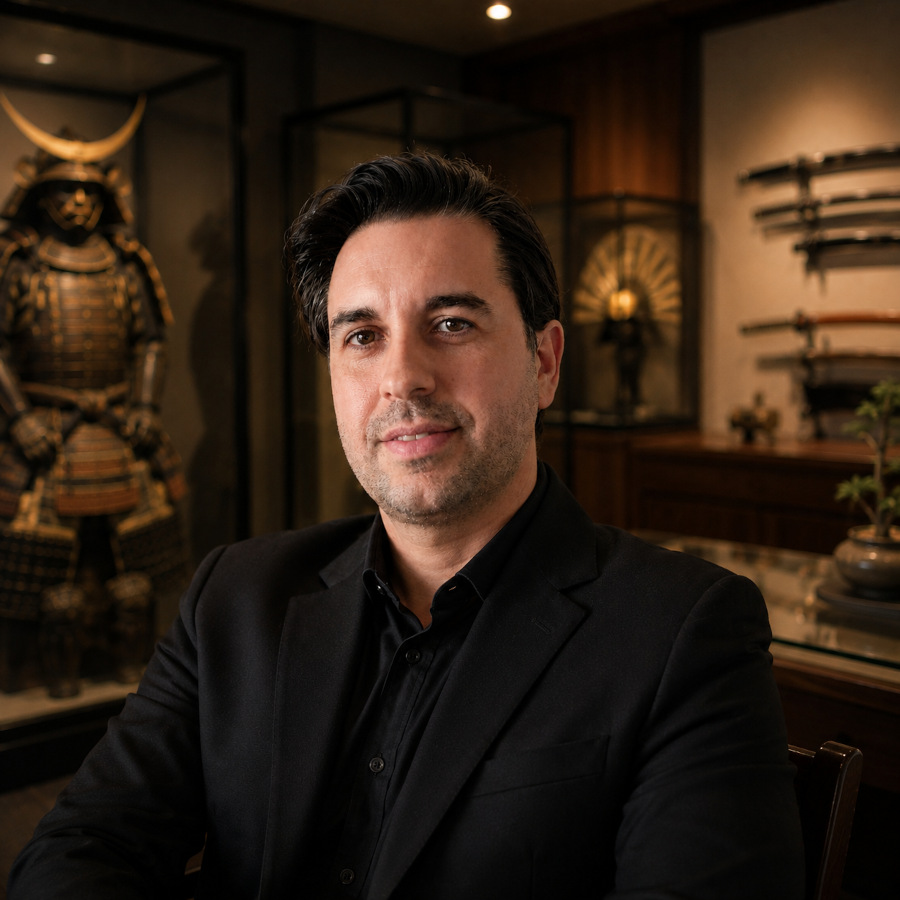
CEO of SupeinNihonto, dealer and collector of ancient Japanese art and weapons from Canillo, Andorra.
Contact