October 8, 2026
Genji motifs spread through Edo-period clothing and accessories because The Tale of Genji had become a symbol of classical Japanese beauty. Printing, kimono design, and pattern traditions such as Genjikō helped turn Genji motifs into a recognizable decorative language.
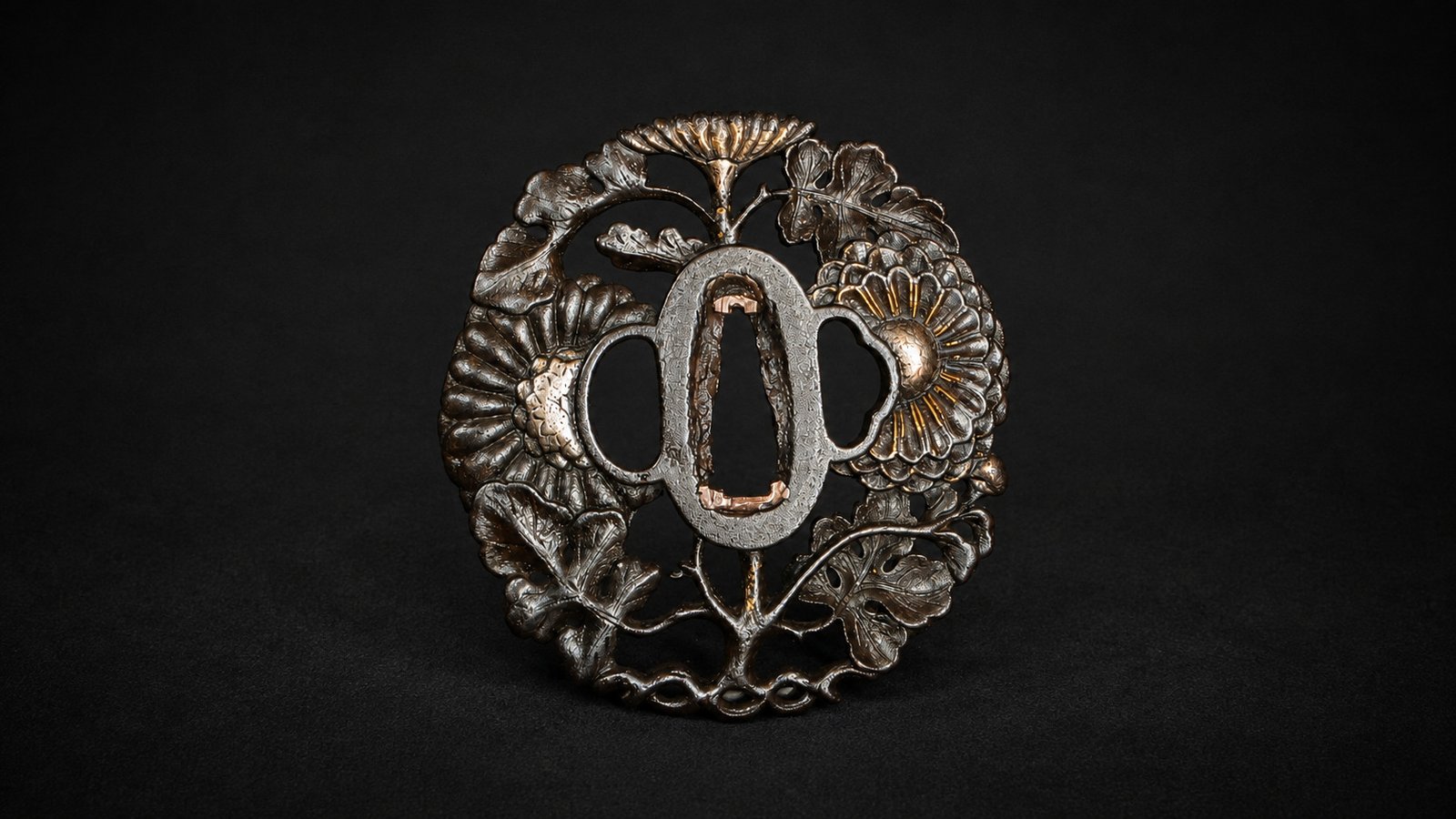
An iron sukashi tsuba with chrysanthemum and kashiwa-leaf design, used here as an illustrative example of Japanese decorative motif work.
Browse related Japanese decorative metalwork in the Tsuba collection.
The Tale of Genji became an important source of visual inspiration in Edo Japan because it was widely admired as a symbol of classical Japanese beauty. By the Edo period, the story had come to stand for a lost golden age of imperial court culture, which made its characters, scenes, and associated symbols attractive for decorative use.
Printing helped broaden that influence. The source notes that advances in movable type and woodblock printing allowed The Tale of Genji to spread beyond the upper class to wider audiences through printed versions, illustrations, and other mass-market works. Once the story circulated more broadly, its imagery could move into clothing and accessories as a familiar visual language.
Genji motifs entered dress in several forms. The source describes elegant seasonal decorations and kimono patterns inspired by The Tale of Genji, showing that the literature was translated into repeatable textile ornament rather than remaining a purely literary reference.
It also says that patterns based on scenes from the story made their way into kabuki costumes and into fashion designs for samurai and Edo women. This indicates that Genji imagery was not limited to one social group or one kind of garment; it became usable across different settings of Edo visual culture.
One important pattern tradition was Genjikō. The source explains that this design uses five vertical lines crossed by horizontal lines and originated in the practice of kōdō, the art of incense appreciation.
It also states that the 52 incense diagrams take their names from chapters of The Tale of Genji except for Kiritsubo and Yume no ukihashi. That naming system strengthened the connection between literary reference and decorative pattern, giving designers a structured way to evoke Genji without illustrating a specific scene.
The source says that kimonos and accessories with Genji-inspired patterns and designs were widely produced. That matters because accessories often carried the same visual language as garments, helping Genji references circulate as part of everyday dress and presentation rather than as isolated luxury objects.
The same source also mentions a later adaptation, Nise Murasaki Inaka Genji, and notes that numerous illustrators created pictures based on motifs from it even after the work was prohibited in the 1840s. This shows how Genji-related imagery continued to be reworked and redistributed in Edo visual culture.
Taken together, the evidence shows that Genji motifs spread through Edo-period clothing and accessories because literary prestige, printing, and pattern design reinforced one another. A classic text with courtly associations became a source of fashionable imagery, while printers and designers made that imagery available in forms that could be worn, copied, and adapted.
So the spread was not a single event but a process. Classical reputation gave Genji authority, print culture widened its audience, and textile and accessory design turned the story into a recognizable decorative vocabulary. In Edo culture, that vocabulary could appear as scene-based motifs, seasonal ornament, or formal patterns such as Genjikō.


CEO of SupeinNihonto, dealer and collector of ancient Japanese art and weapons from Canillo, Andorra.
Contact