FREE EXPRESS INTERNATIONAL DELIVERY
1 in stock
1 in stock
Add to Compare
Add to Wishlist
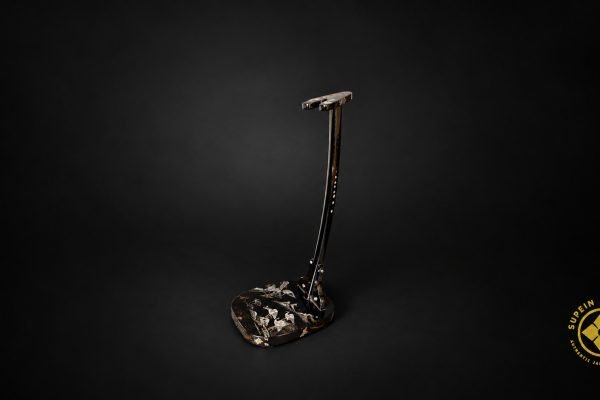
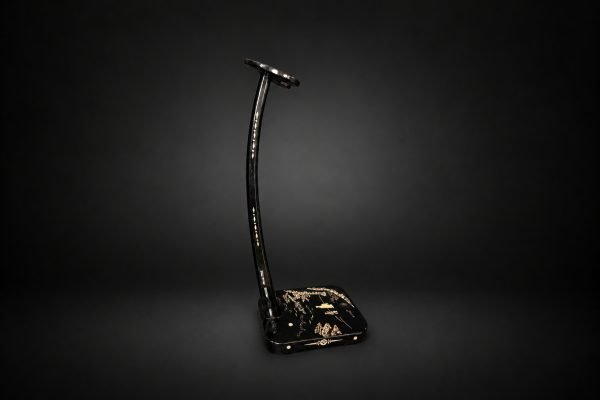
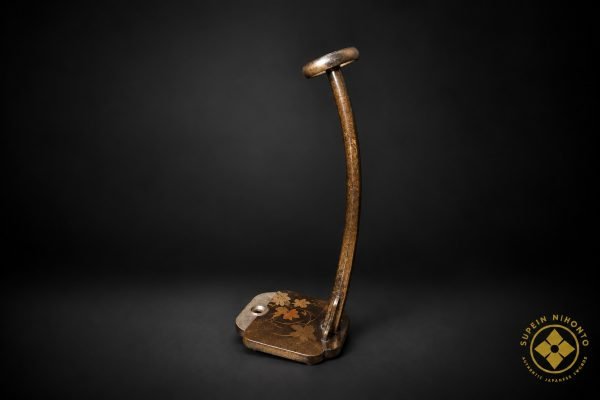
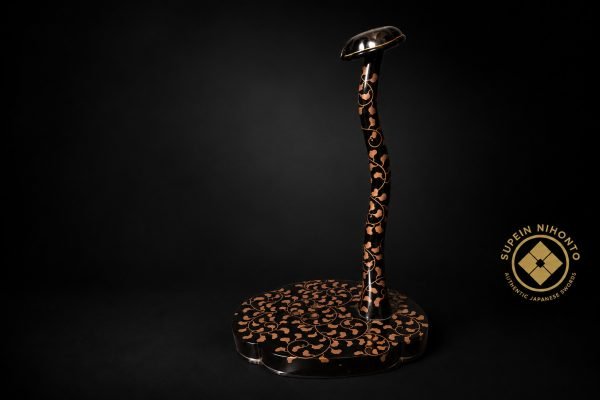
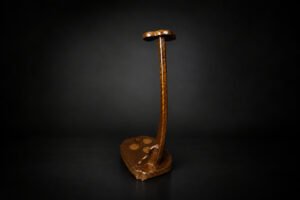
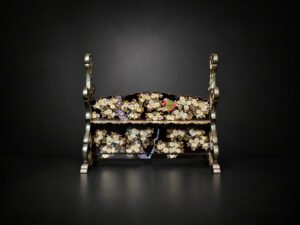
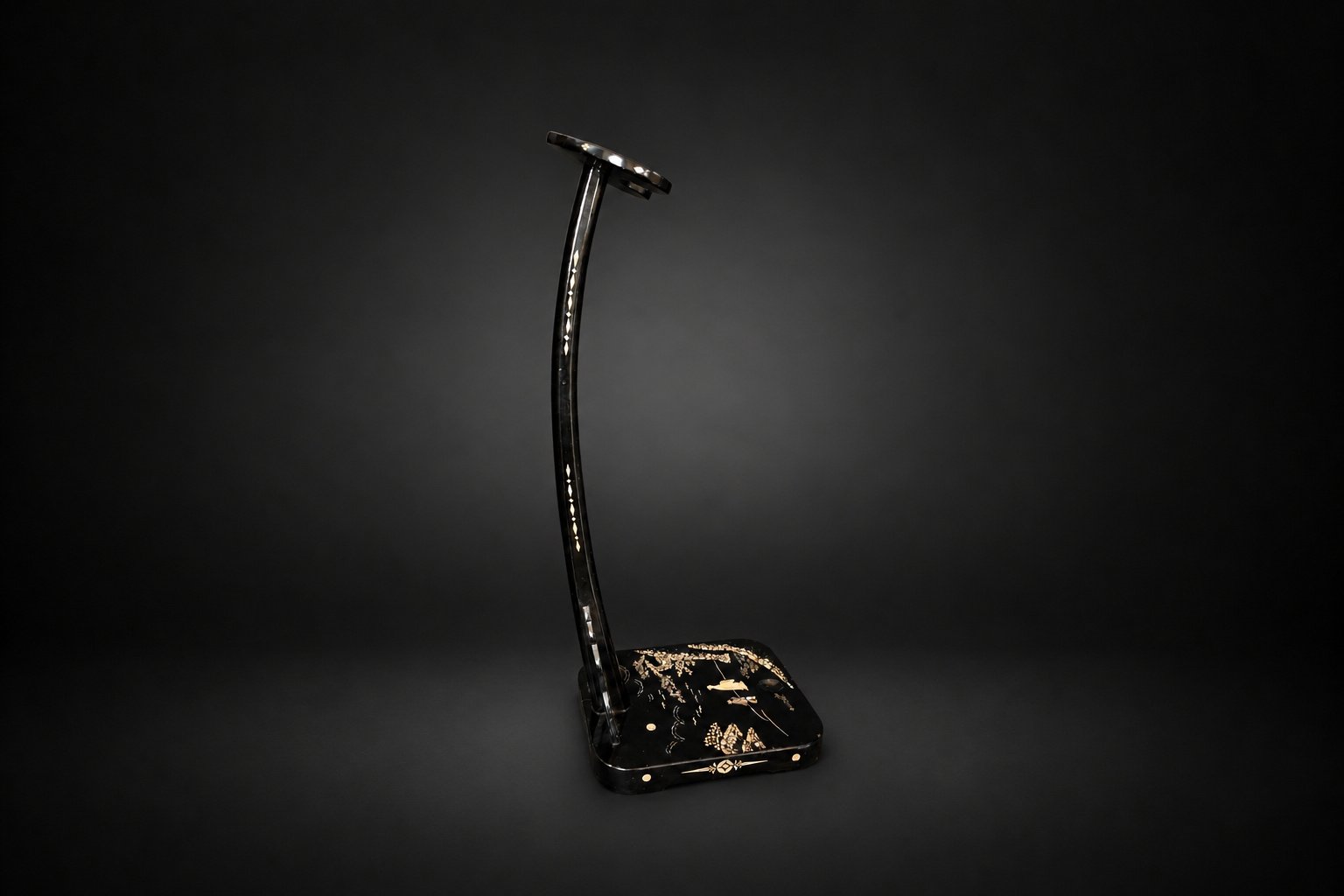
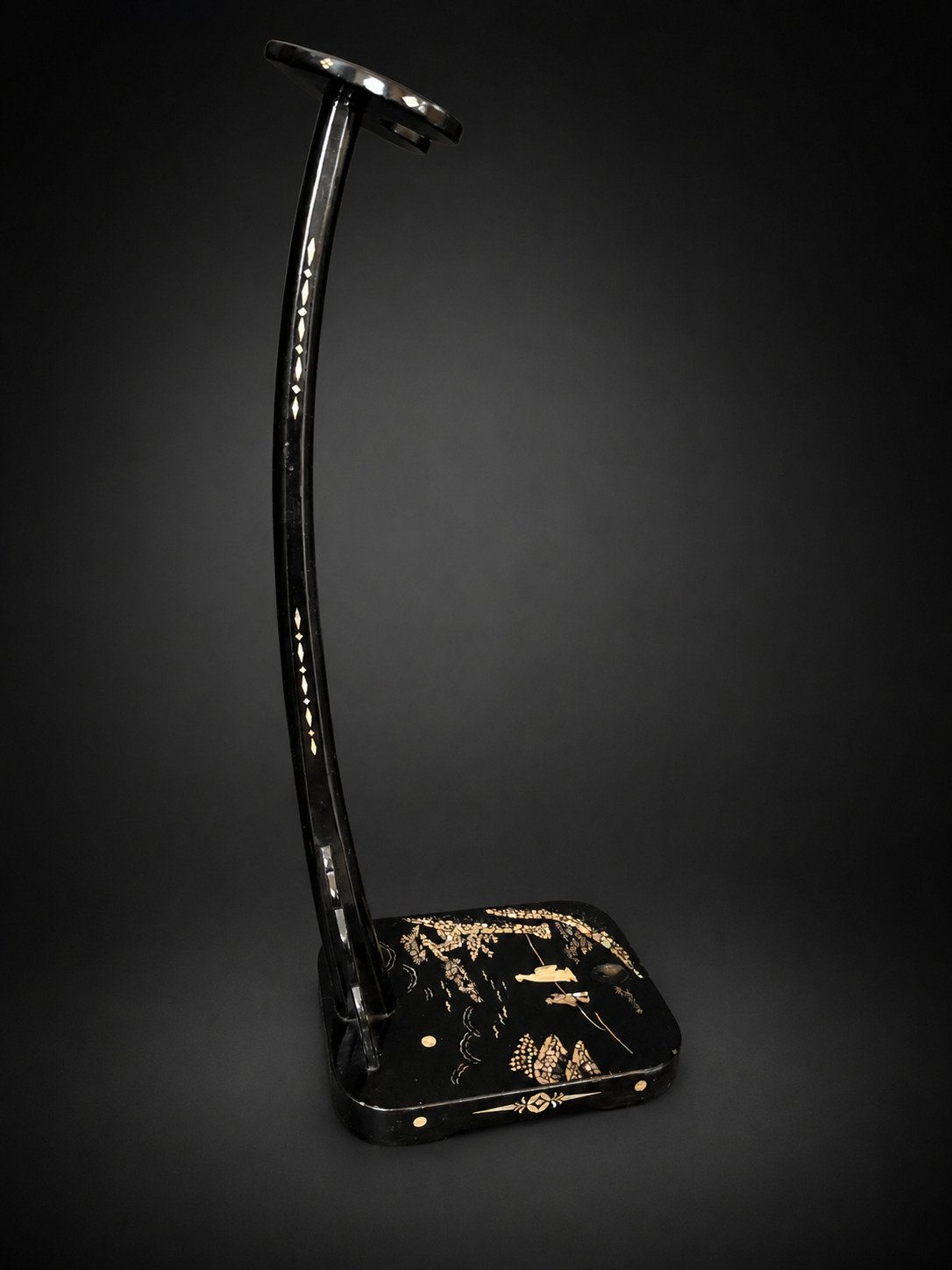
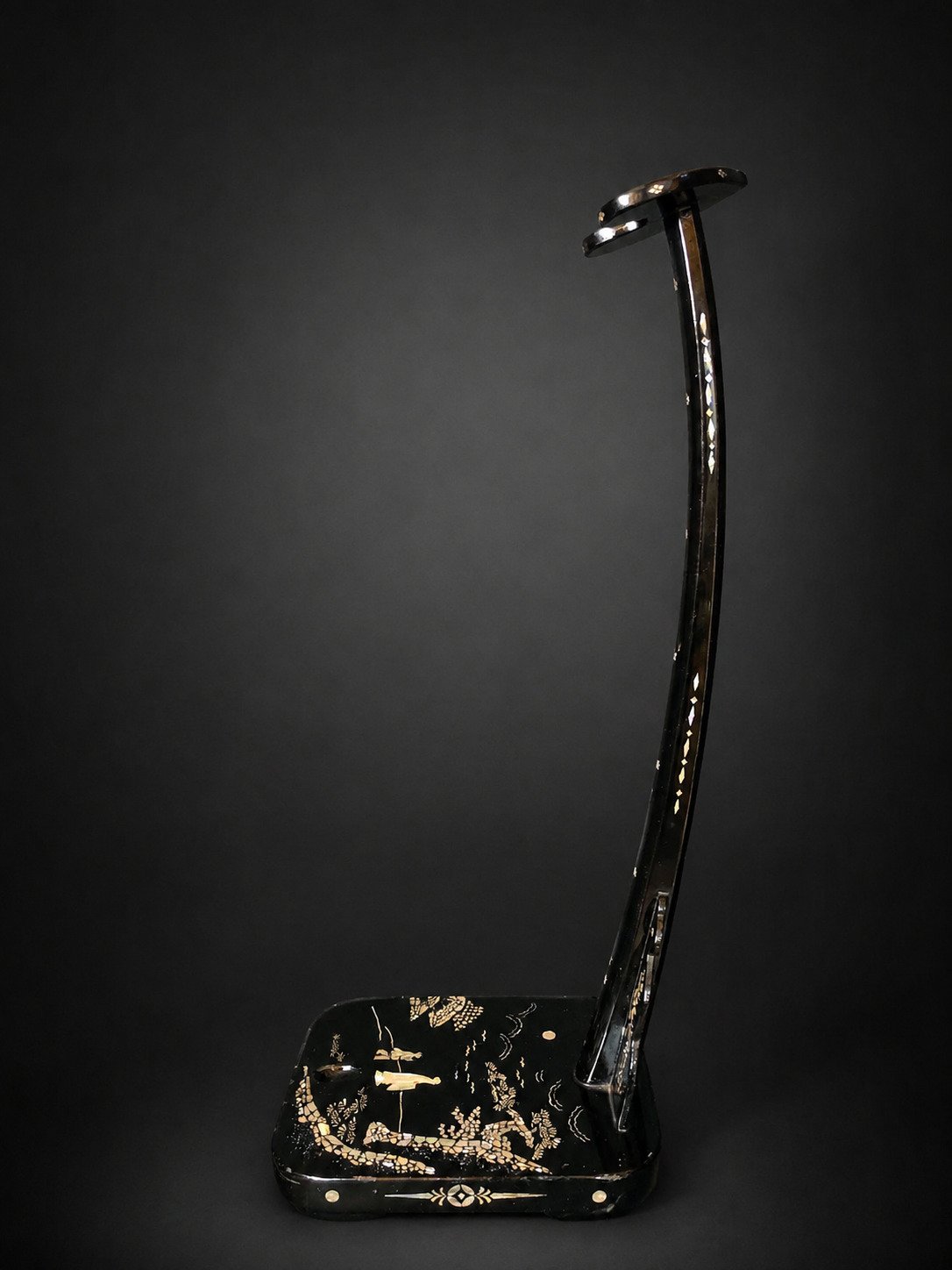
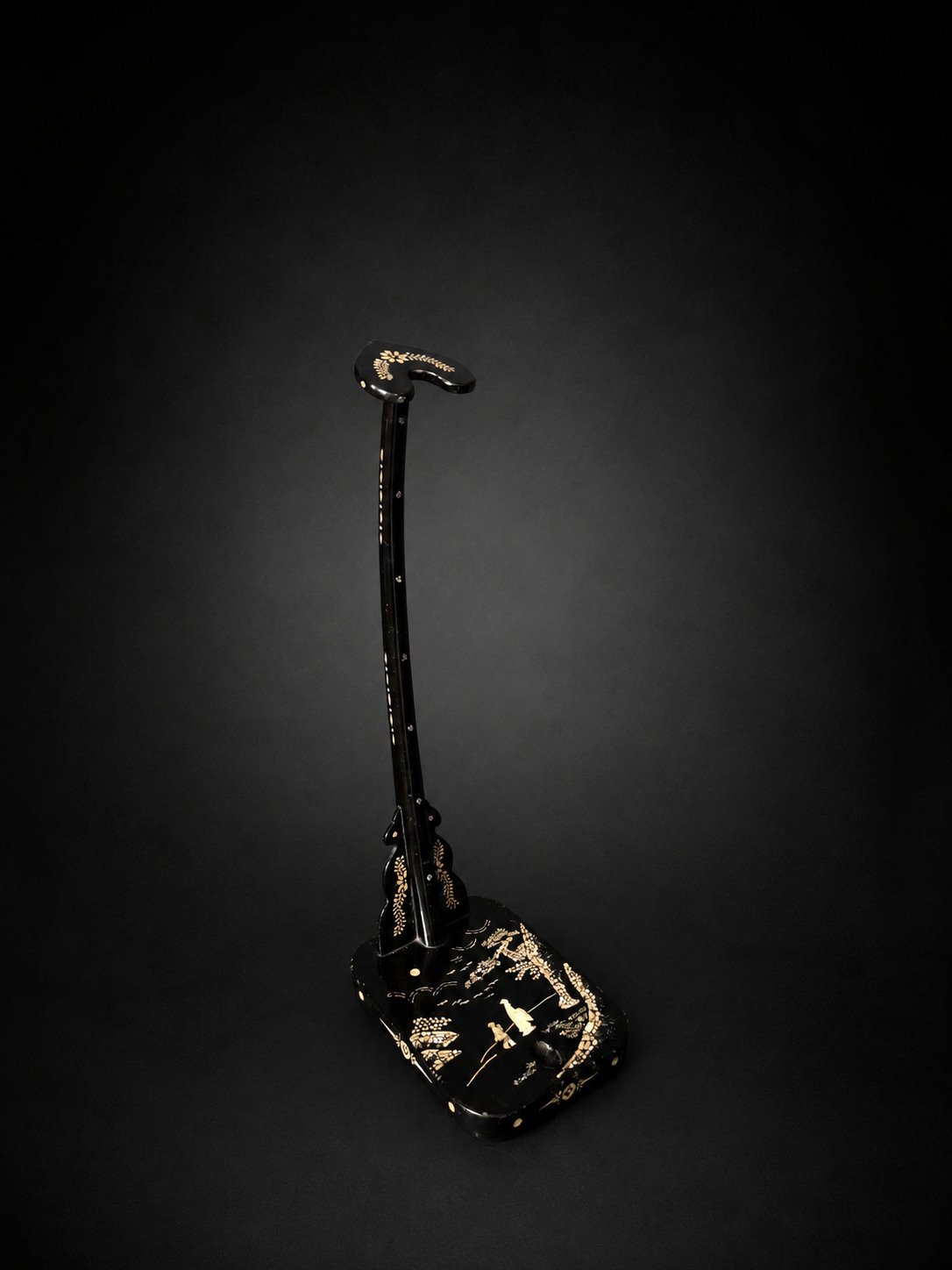
An elegant Japanese katana-kake from the 19th century, distinguished by its tall, gracefully curved silhouette and finely executed aogai raden decoration set against a deep polished black lacquer ground.
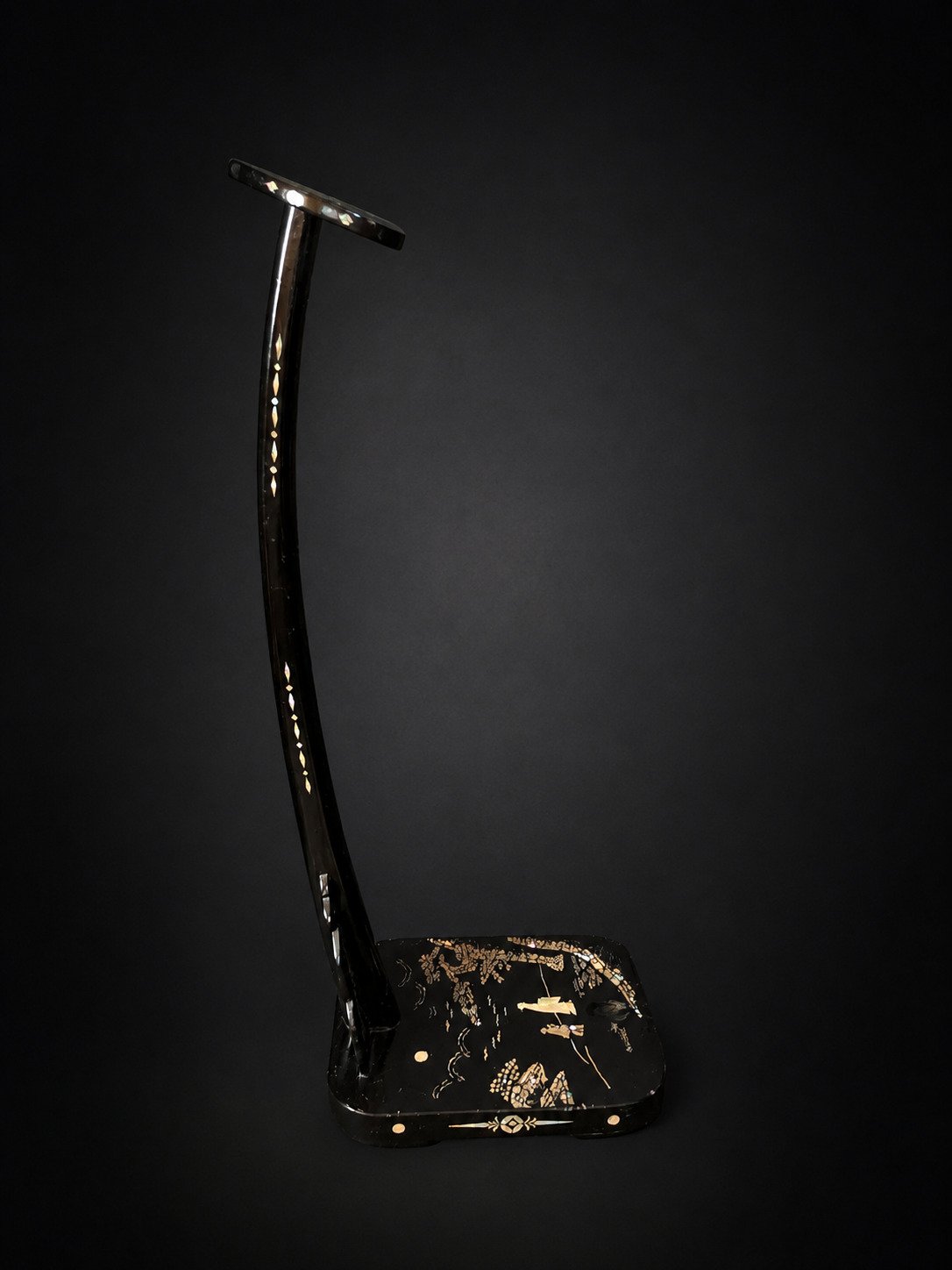
Designed to support and display a single Japanese sword, the stand combines a rounded rectangular base, a slender curved vertical neck and a shaped upper cradle. Delicate mother-of-pearl inlays extend from the pictorial landscape on the base along the upright and onto the upper support, creating a remarkably coherent decorative composition.
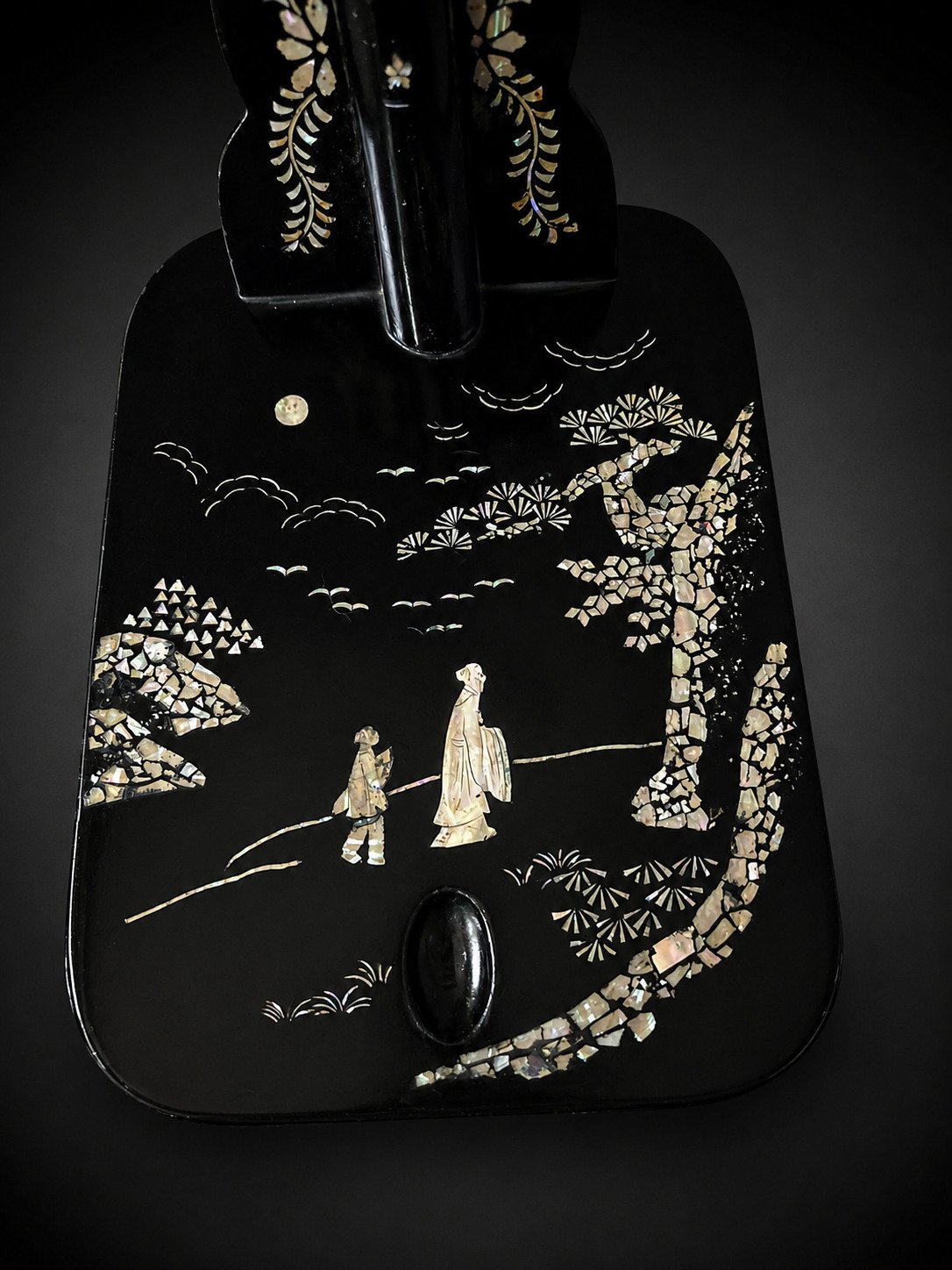
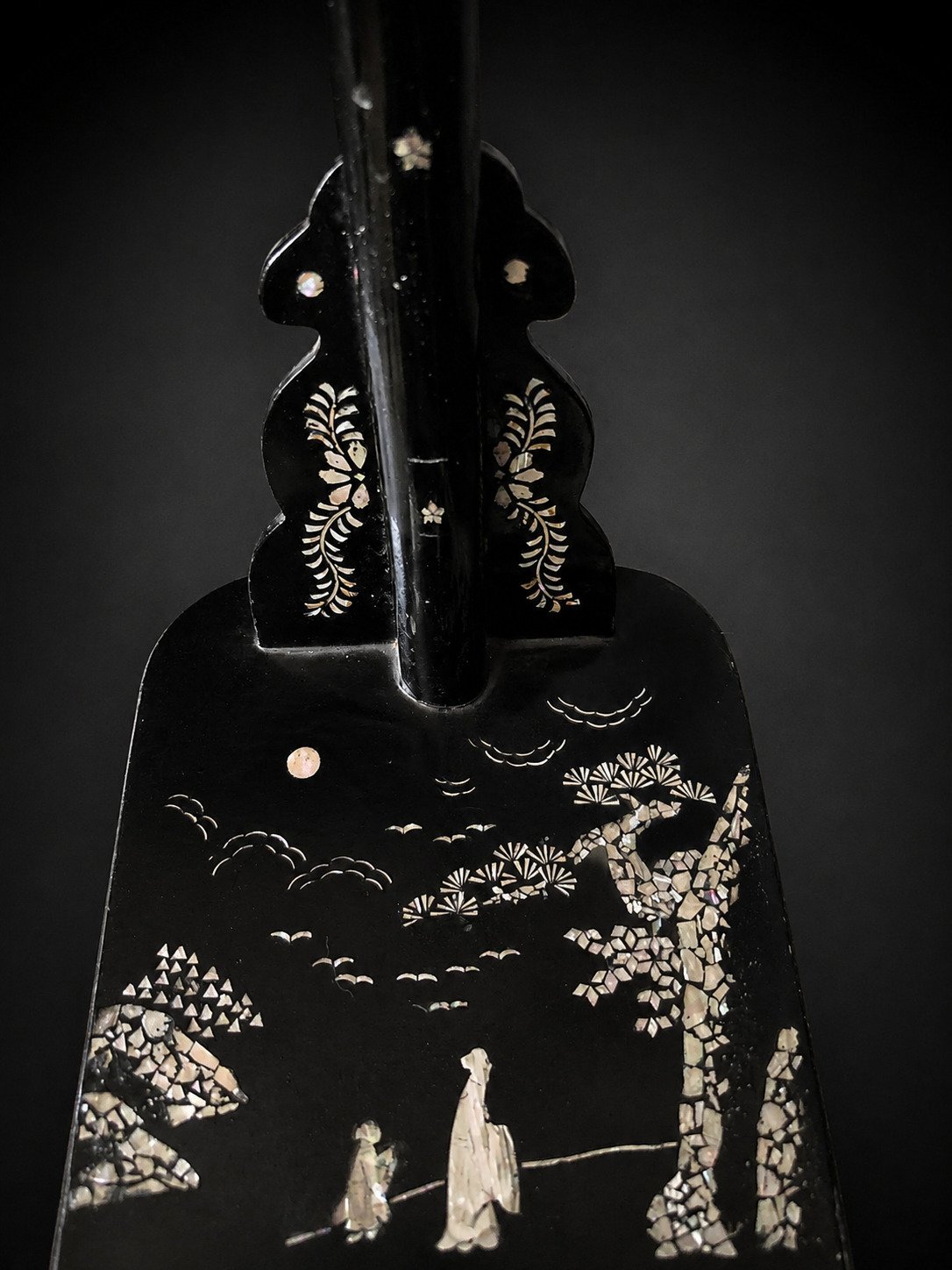
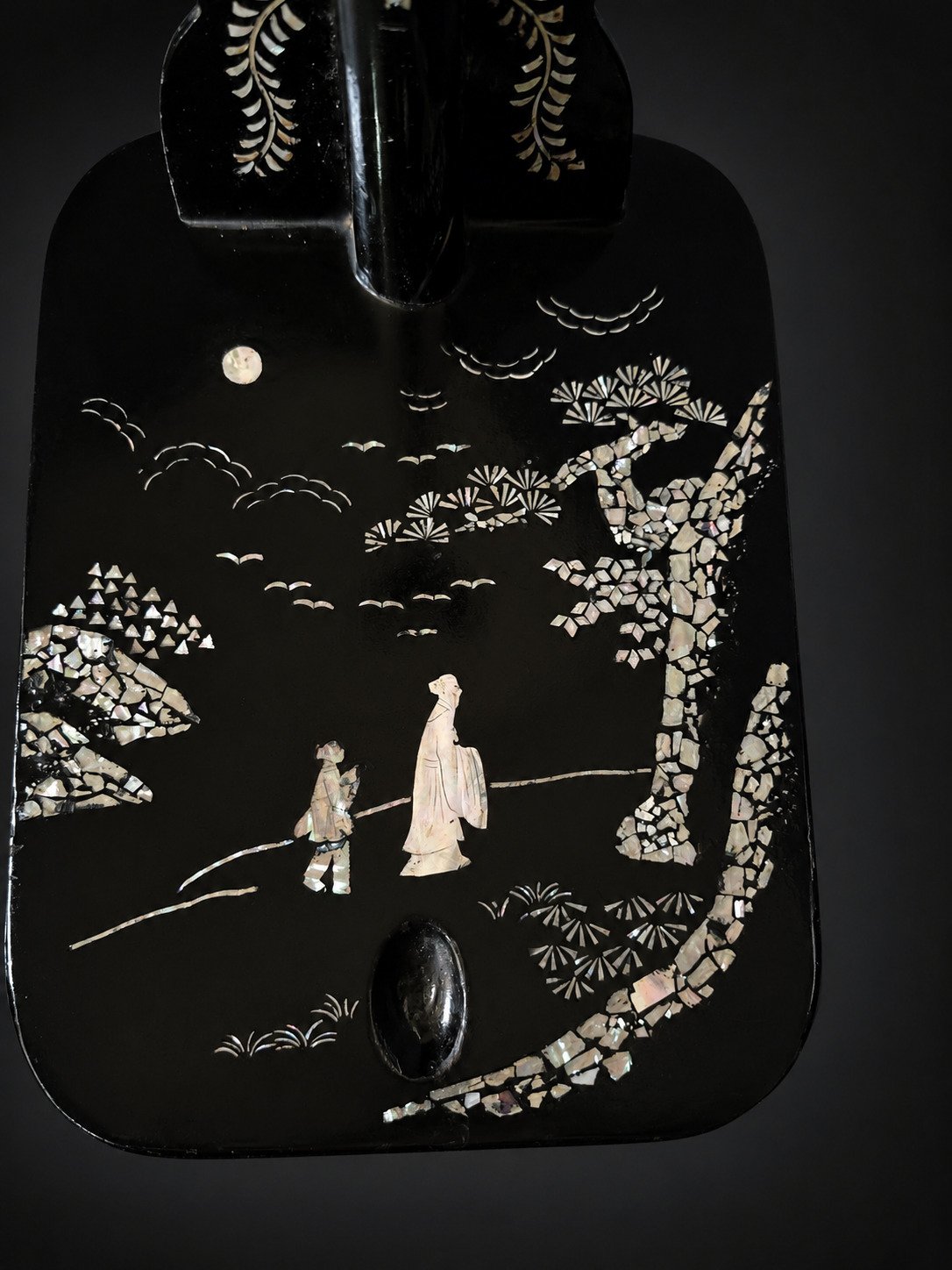
The principal scene depicts a robed elder accompanied by an attendant within a poetic landscape of wind-swept pine trees, distant mountains, flying birds and a luminous full moon. Executed in finely cut pieces of iridescent shell, the composition demonstrates the pictorial possibilities of Japanese raden lacquerwork.
The katana-kake is constructed around a broad rounded rectangular base from which rises a tall, slender and gracefully curved vertical support.
At approximately 66 cm high, the elongated neck gives the stand a pronounced vertical presence while retaining an elegant sense of balance.
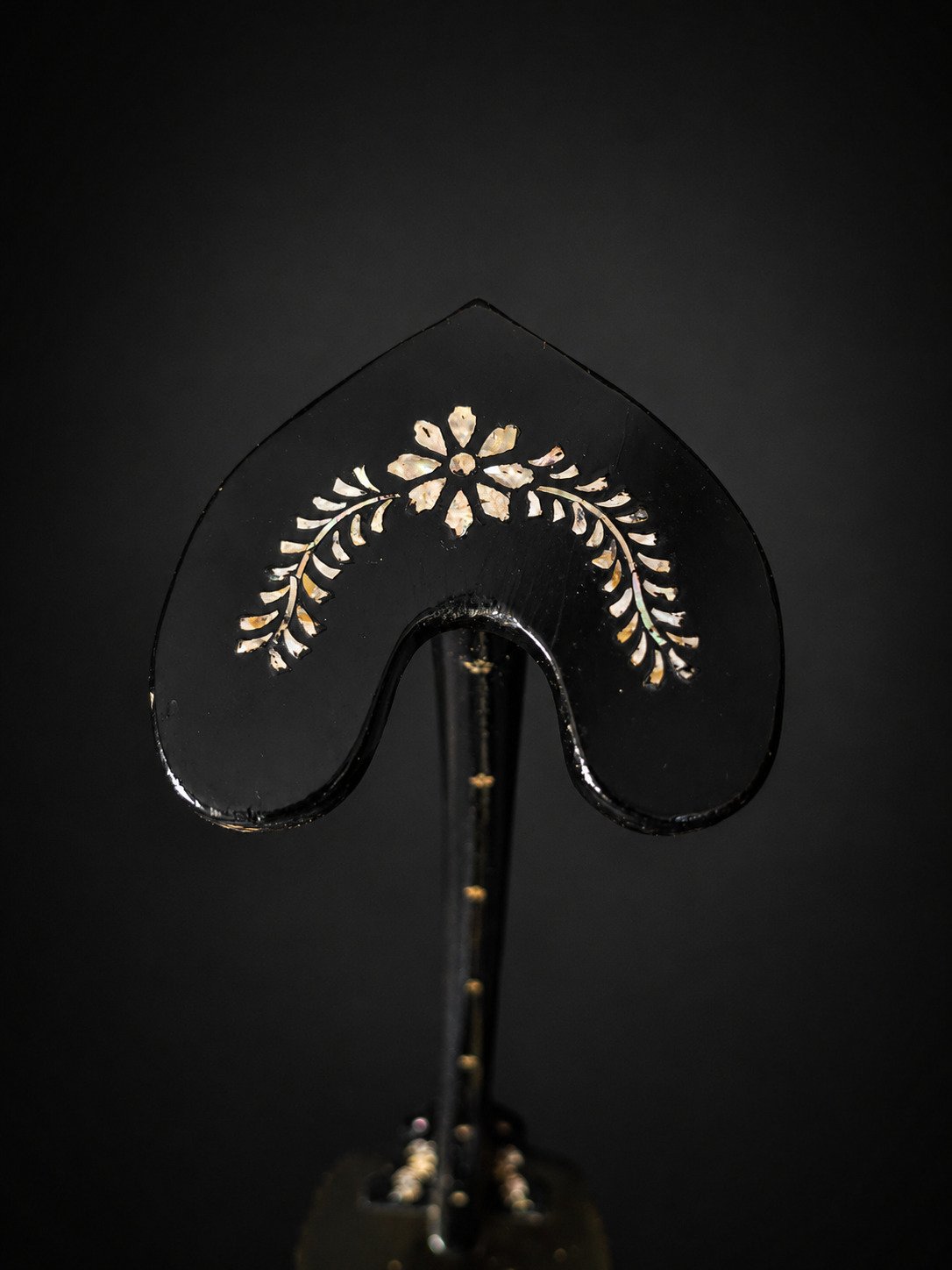
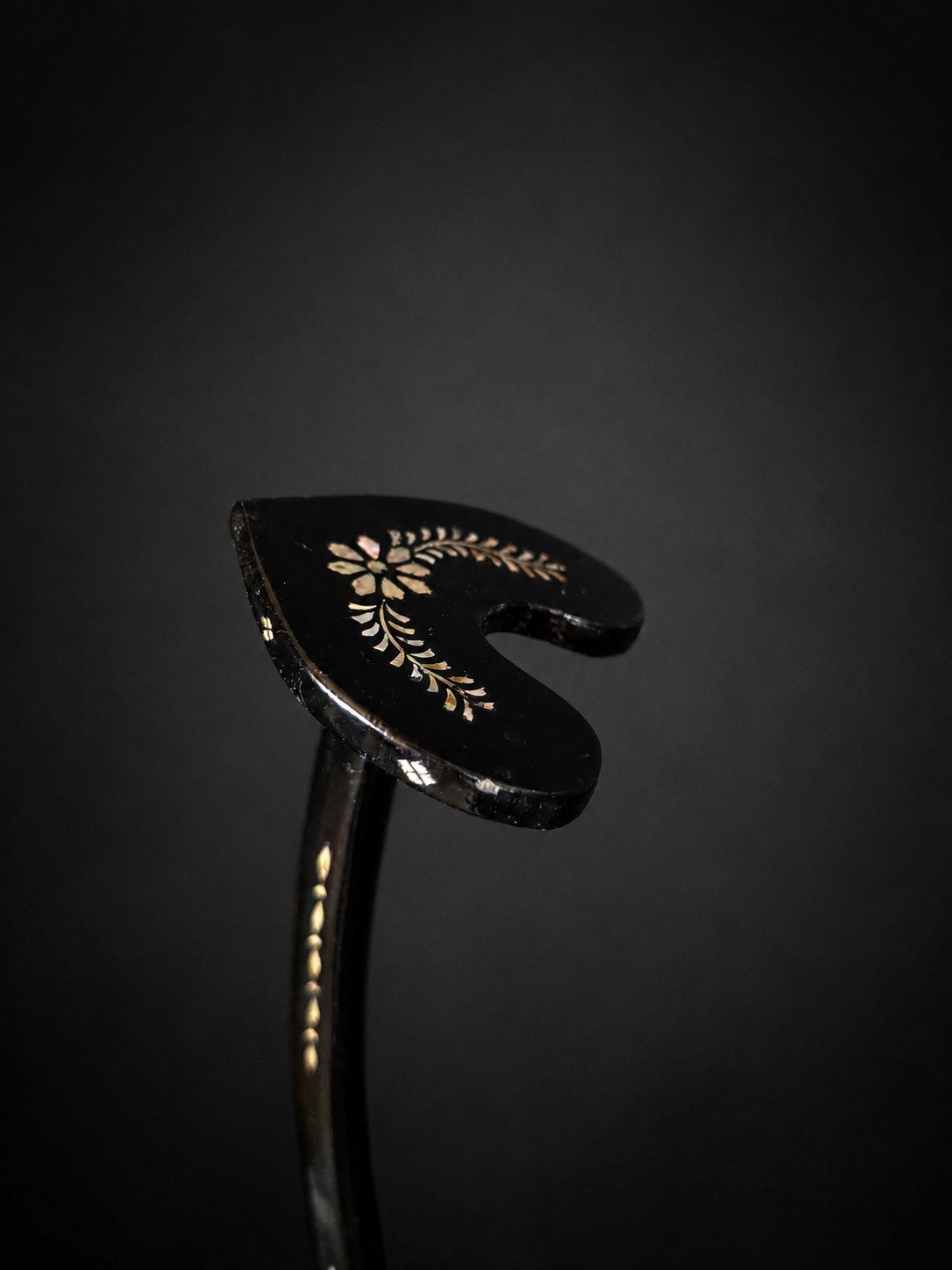
The upper section terminates in a shaped horizontal cradle with a central notch designed to receive and support a sword securely during display.
Unlike conventional horizontal katana-kake designed to accommodate several swords, this vertical configuration isolates a single blade and presents it as an individual object of importance.
The structure is finished in a deep black lacquer ground whose polished surface provides a dramatic setting for the luminous shell decoration.
The contrast between the dark lacquer and the iridescent mother-of-pearl is central to the visual character of the piece.
Depending on the direction and intensity of the light, the shell elements shift between pale ivory, silver, gold and subtle spectral tones, while the surrounding lacquer remains deep and reflective.
This interplay between darkness and reflected light is one of the defining aesthetic qualities of traditional Japanese raden decoration.
The principal ornamental technique is aogai raden, in which thin sections of iridescent shell are carefully cut and incorporated into a lacquer surface to form decorative or pictorial motifs.
Rather than limiting the shell to simple geometric ornament, the artisan used it here to construct an elaborate narrative landscape.
Individual pieces define human figures, garments, tree branches, pine needles, birds, mountains and other elements of the scenery.
The varying natural reflectivity of the shell gives the composition additional depth, causing different parts of the image to emerge or recede as the viewing angle changes.
The upper surface of the base is dominated by an extensive landscape rendered against the polished black lacquer ground.
A robed elder moves through the scene accompanied by a smaller attendant carrying belongings, introducing a narrative human element into the surrounding natural landscape.
Above and around the figures appear wind-swept trees, delicate foliage, birds in flight and distant mountainous forms.
The black lacquer itself becomes an important part of the composition, functioning as open space between the shell elements and giving the landscape an atmospheric sense of depth.
The two human figures form one of the principal focal points of the decoration.
The elder is represented in flowing robes, while the accompanying attendant appears to carry belongings or equipment as the pair travel through the landscape.
Despite the relatively small scale of the figures, the shell has been cut with sufficient precision to suggest posture, clothing and movement.
The treatment demonstrates how raden could be used not merely as surface ornament but as a genuinely pictorial medium capable of conveying narrative detail.
A circular full moon forms a luminous counterpoint to the dark lacquer ground.
Its restrained geometric form contrasts with the irregular silhouettes of the trees, mountains and figures surrounding it.
Against the deep black lacquer, the pale iridescent shell naturally suggests moonlight, enhancing the atmospheric quality of the landscape.
The result is a composition in which the reflective properties of the material contribute directly to the interpretation of the scene.
Pine trees form another important component of the landscape, their branches extending dynamically across the dark ground.
Fine shell elements have been used to suggest trunks, branches and clusters of pine needles with remarkable economy of material.
The directional movement of the branches introduces a sense of wind into the otherwise tranquil landscape.
In Japanese visual culture, pine trees have long carried associations with endurance and longevity, while also serving as one of the most characteristic elements of idealized natural scenery.
Small birds appear in flight within the composition, adding movement and further expanding the apparent space of the landscape.
Distant mountain forms are rendered through finely arranged shell fragments whose changing reflections create a textured appearance against the black lacquer.
These relatively small details are important to the overall composition, transforming the decorated surface of the base into a much broader imagined landscape.
The combination of foreground figures, trees, distant mountains and open sky creates a convincing sense of pictorial depth despite the essentially flat nature of the lacquer surface.
The decoration is not confined to the base.
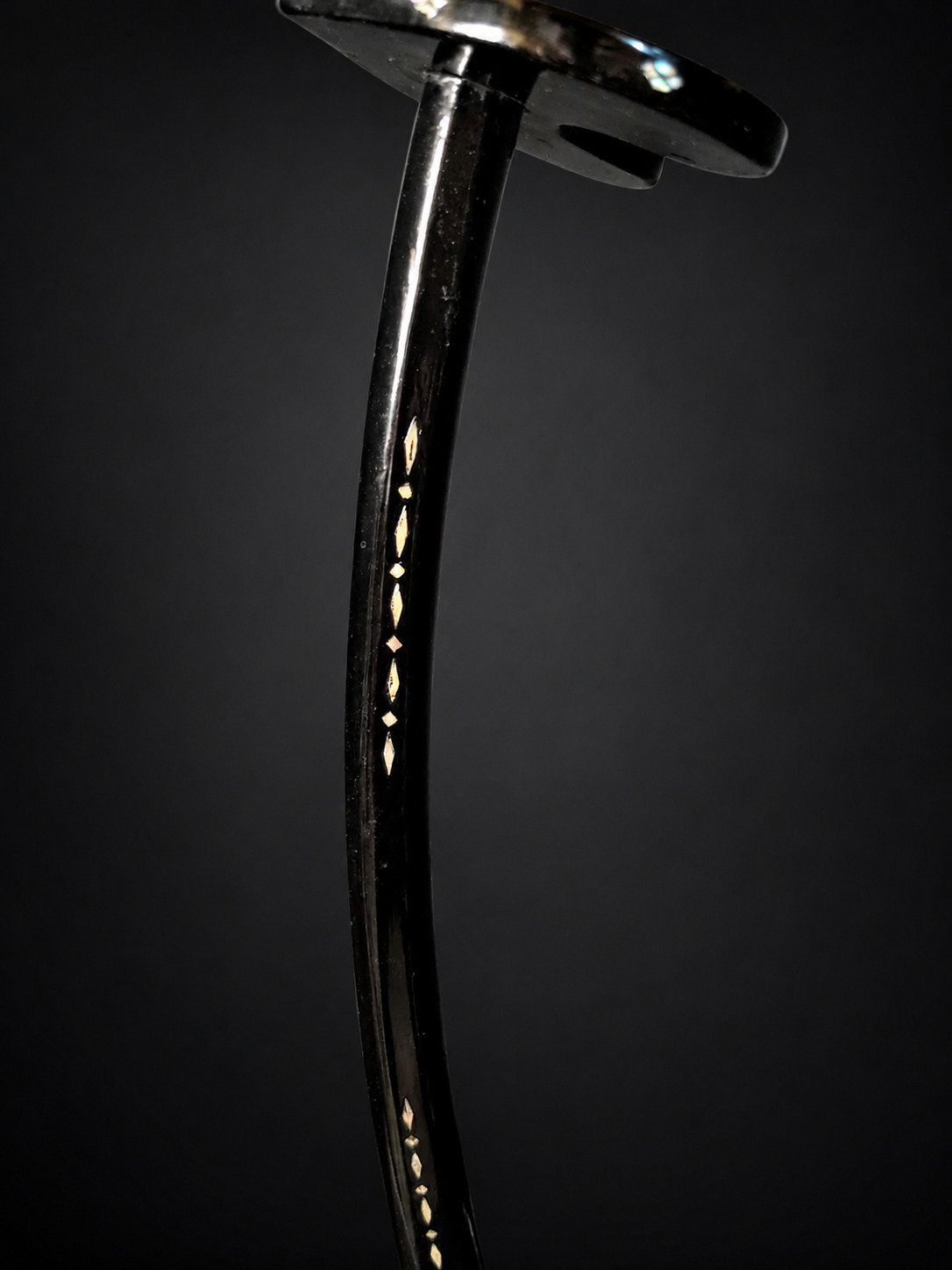
Along the inner curve of the tall vertical neck runs a delicate sequence of small mother-of-pearl lozenges and geometric elements.
Their regular rhythm emphasizes the curvature and extraordinary height of the upright while visually connecting the lower landscape with the upper sword cradle.
These small accents are particularly effective under direct light, appearing almost like points of illumination against the glossy black lacquer.
The upper support is itself treated as an important decorative element rather than as a purely functional component.
Its shaped horizontal form incorporates a central notch intended to receive the sword, while mother-of-pearl accents decorate the surrounding lacquer surface.
A stylized floral composition in shell introduces another natural motif at the highest point of the stand.
The continuation of the raden decoration from the base to the neck and upper cradle gives the entire object an unusual degree of decorative unity.
The broad base has a softly rounded rectangular profile that provides visual and structural stability to the exceptionally tall upright.
Its substantial surface also provides the principal field for the elaborate landscape composition.
The vertical support rises from one side of the base rather than its centre, creating an intentionally asymmetrical silhouette that is characteristic of this specialized form of sword display.
The combination of the low horizontal base and the long curving upright gives the object an almost sculptural character even when displayed without a sword.
One of the most noteworthy characteristics of the piece is the precision with which the shell elements have been cut and arranged.
The decoration moves from comparatively simple geometric lozenges on the neck to substantially more complex pictorial details across the base.
Drapery folds, foliage, pine needles, mountain textures and small figural elements are all suggested through carefully shaped fragments of shell.
This level of detail is consistent with a well-made Japanese lacquer object in which the raden decoration was intended to reward close examination as well as create an immediate visual effect from a distance.
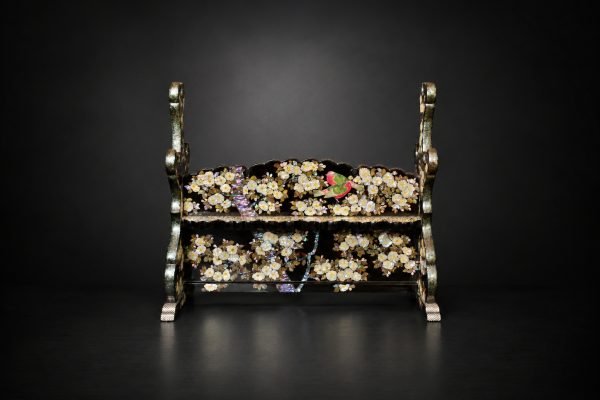
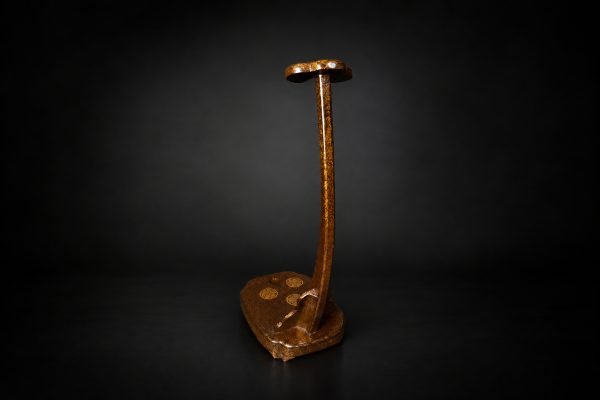
The composition, vertical format and treatment of the figural landscape share notable characteristics with other similarly constructed lacquer sword stands.
These similarities may suggest production within the same workshop tradition or possibly as part of a related group of objects.
Without documented provenance establishing that connection, however, it would be inappropriate to state conclusively that the stands originally formed a matched set.
The similarities remain significant from a comparative perspective and may provide useful evidence when studying the workshop context and decorative programme of the piece.
A katana-kake was more than a practical support: it formed part of the visual presentation of the Japanese sword.
In this unusually tall vertical configuration, the sword would have been elevated above the decorated base, allowing both the mounted blade and the lacquerwork of the stand to be appreciated together.
The restrained black surface would have provided an elegant visual setting for a sword, while the iridescent raden decoration added richness without overwhelming the object being displayed.
The result is a sophisticated balance between practical function, decorative craftsmanship and the ceremonial presentation of the Japanese sword.
The quality of the stand lies not only in the complexity of the landscape but also in the coherence of its overall design.
The deep black lacquer provides a continuous visual ground, while the raden decoration is carefully distributed across the base, upright and upper support.
The large pictorial composition below is balanced by much smaller geometric and floral shell accents along the vertical structure.
This hierarchy of decoration allows the eye to move naturally from the narrative landscape upward toward the sword cradle, reinforcing the tall and elegant proportions of the object.
The katana-kake survives in antique condition with age-related wear consistent with a 19th-century Japanese lacquer object.
The black lacquer retains its characteristic reflective appearance, while substantial areas of the mother-of-pearl decoration remain clearly visible throughout the base, neck and upper support.
Minor surface wear, losses, irregularities and historical changes to the lacquer or shell decoration should be understood within the context of the age and use of an antique object of this type.
Please examine the accompanying high-resolution photographs carefully, as they form an essential part of the description and provide the most accurate record of the object’s present condition.
This katana-kake combines several qualities of particular interest to collectors of Japanese lacquer, samurai culture and sword-related objects.
Its unusually tall vertical form distinguishes it immediately from the more familiar horizontal sword racks, while the extensive aogai raden landscape transforms the functional base into a sophisticated pictorial surface.
The combination of figures, moon, birds, pine trees and distant mountains gives the object a strongly atmospheric character, while the additional shell decoration extending along the neck and upper cradle demonstrates the comprehensive nature of its decorative conception.
At 66 × 29 cm, it is an elegant and highly distinctive example of how the presentation of the Japanese sword could itself become an important expression of lacquer craftsmanship and decorative refinement.
An elegant 19th-century Japanese katana-kake distinguished by its tall, gracefully curved form and extensive aogai raden decoration. Against the polished black lacquer ground, finely cut pieces of iridescent mother-of-pearl create an atmospheric landscape populated by a robed elder and attendant beneath a full moon, surrounded by flying birds, wind-swept pine trees and distant mountains. Additional geometric shell inlays follow the curve of the long vertical neck, while the shaped upper sword cradle carries further mother-of-pearl decoration. Measuring 66 × 29 cm, this refined single-sword stand combines sophisticated Japanese lacquer craftsmanship, detailed pictorial raden work and an unusually elegant vertical form in a highly distinctive display object.

Order above 1.000,00 € gets free shipping.

Secure and hassle-free payment process.

Certificate of authenticity included.

Have questions? Contact us via WhatsApp.
Contact