1 in stock
1 in stock
Add to Compare
Add to Wishlist
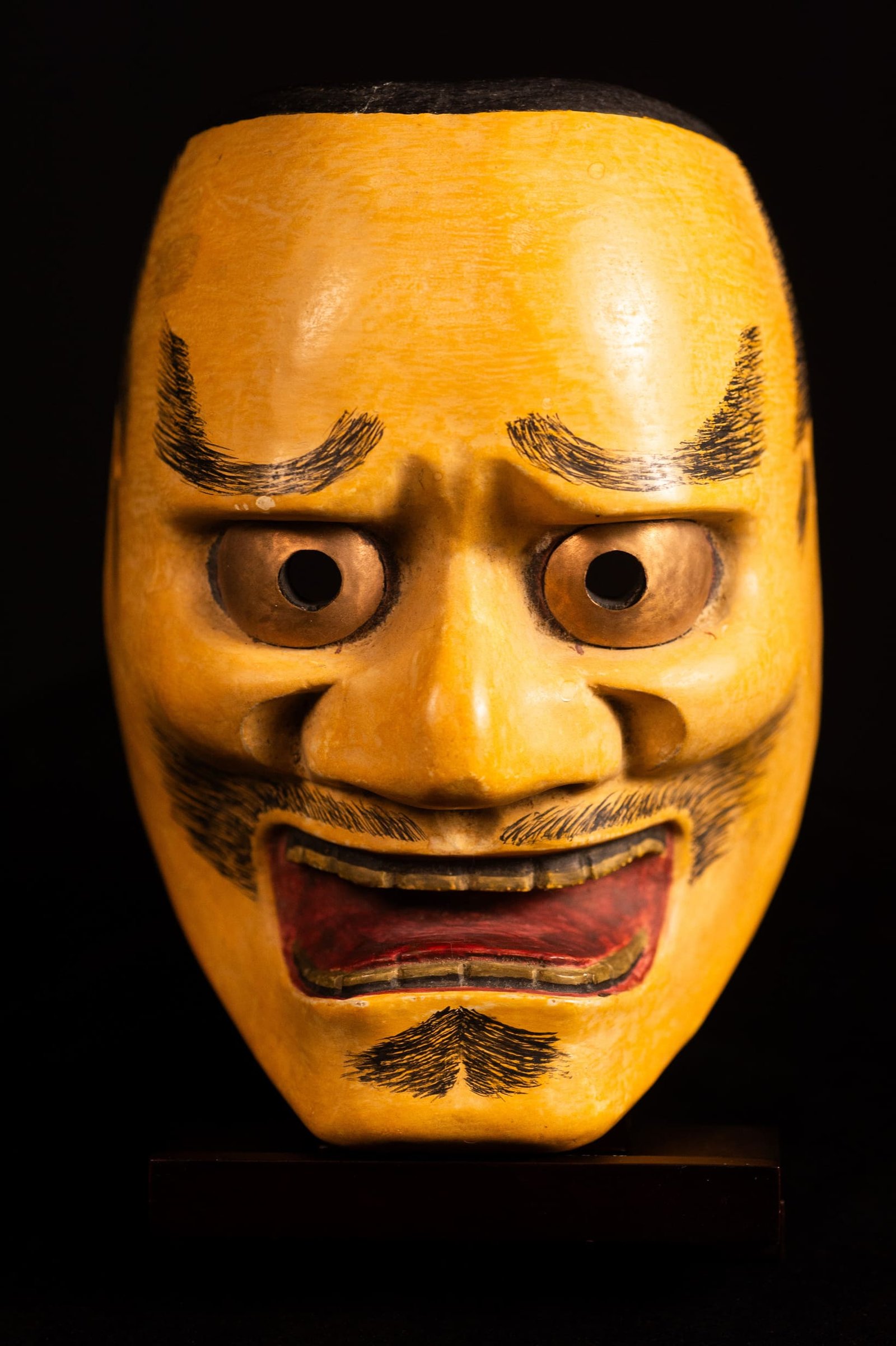
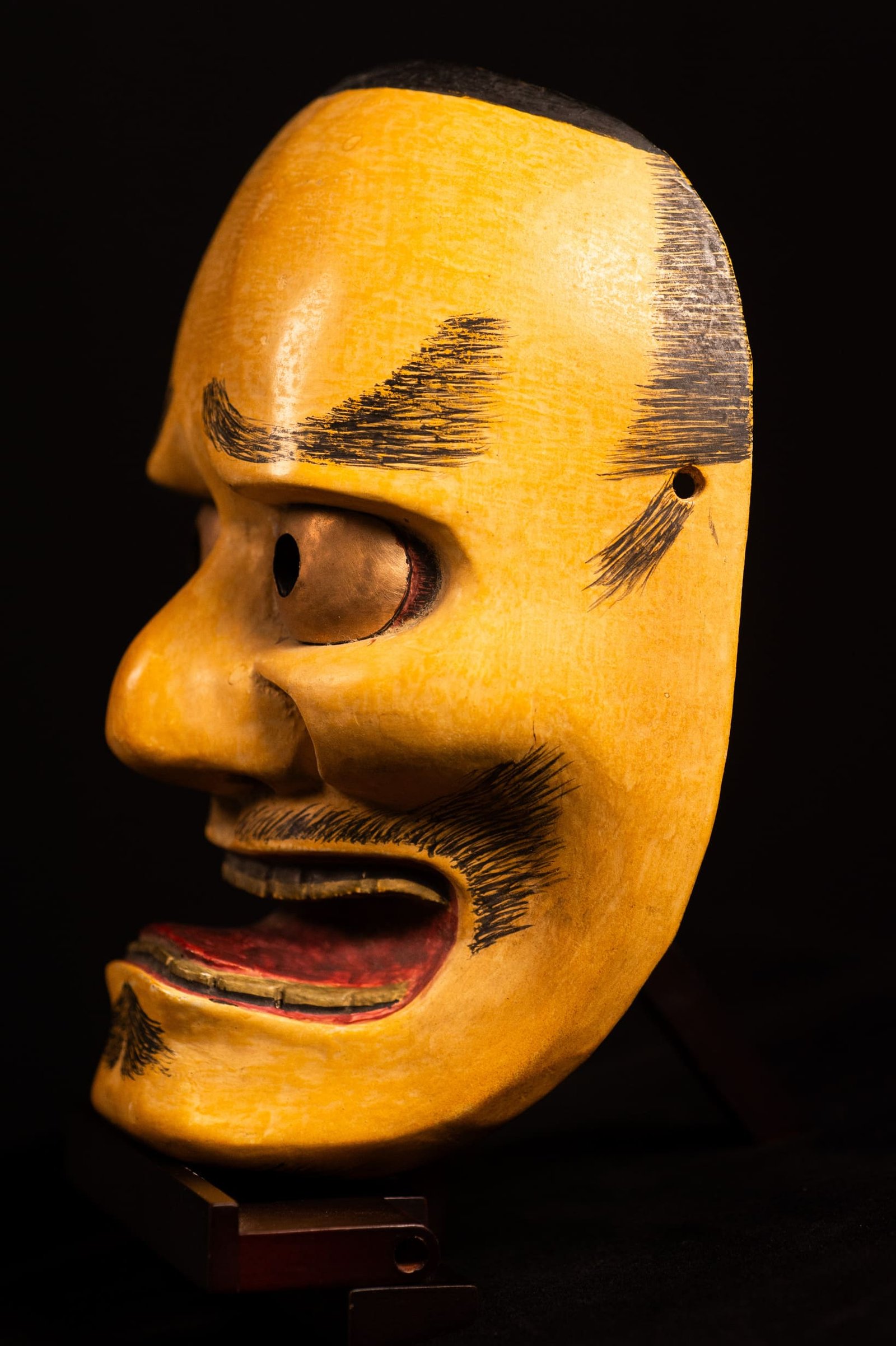
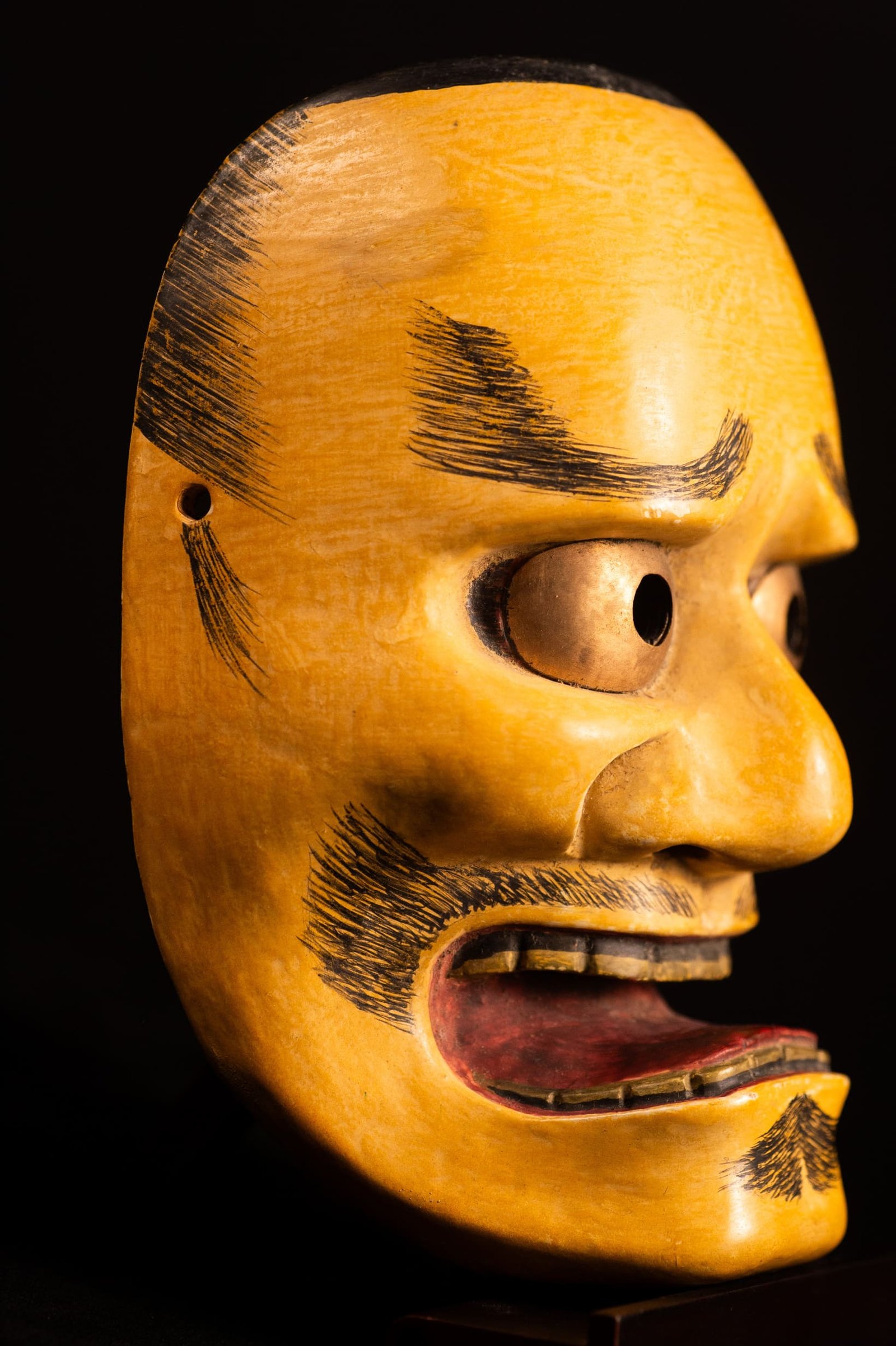
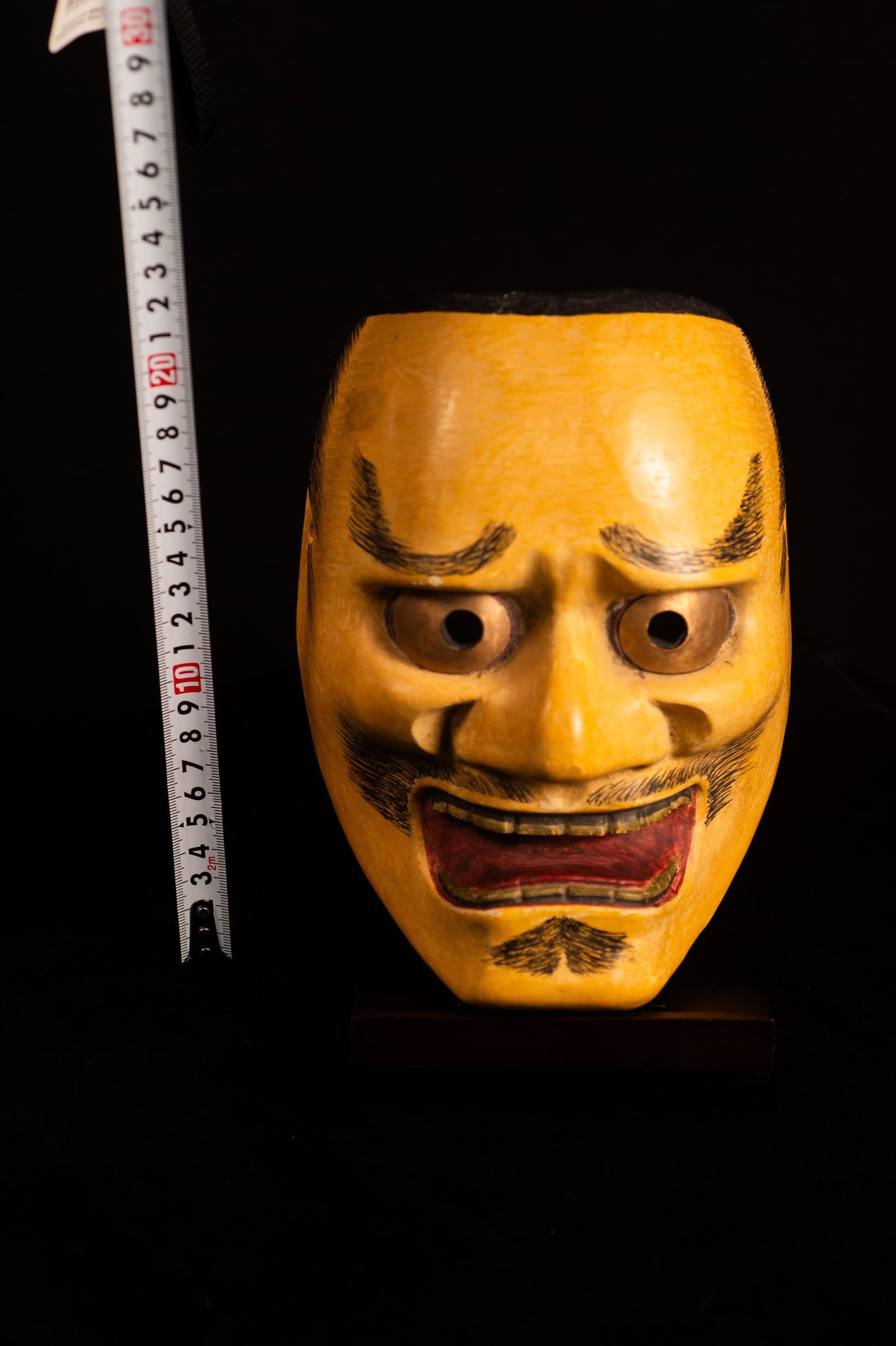
An expressive antique Japanese wooden mask representing Kentoku, a highly versatile character belonging to the comic tradition of Kyōgen theatre. Traditionally performed between or alongside Noh plays, Kyōgen introduces humour, movement and everyday human character into the refined theatrical world shared by both dramatic traditions.
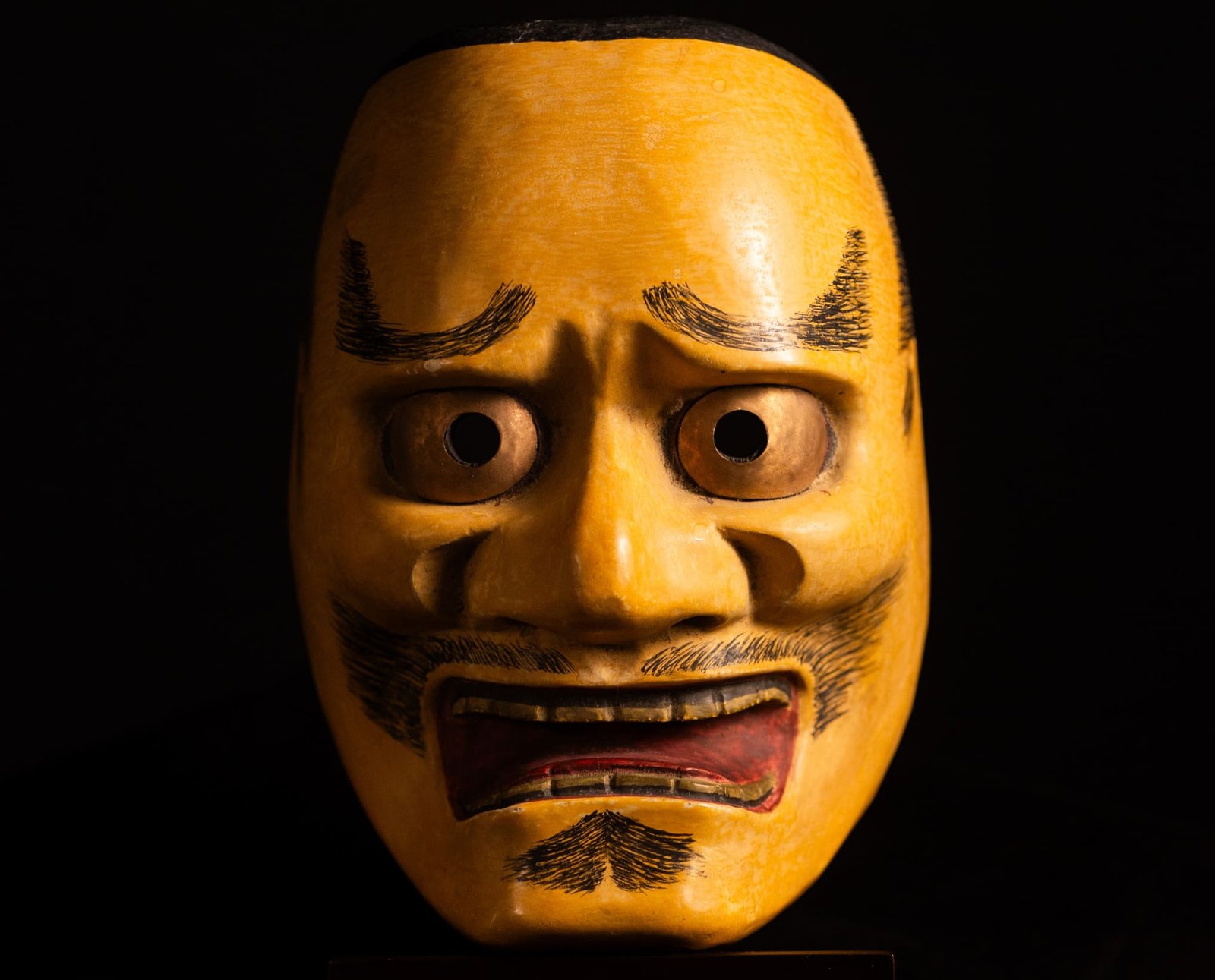
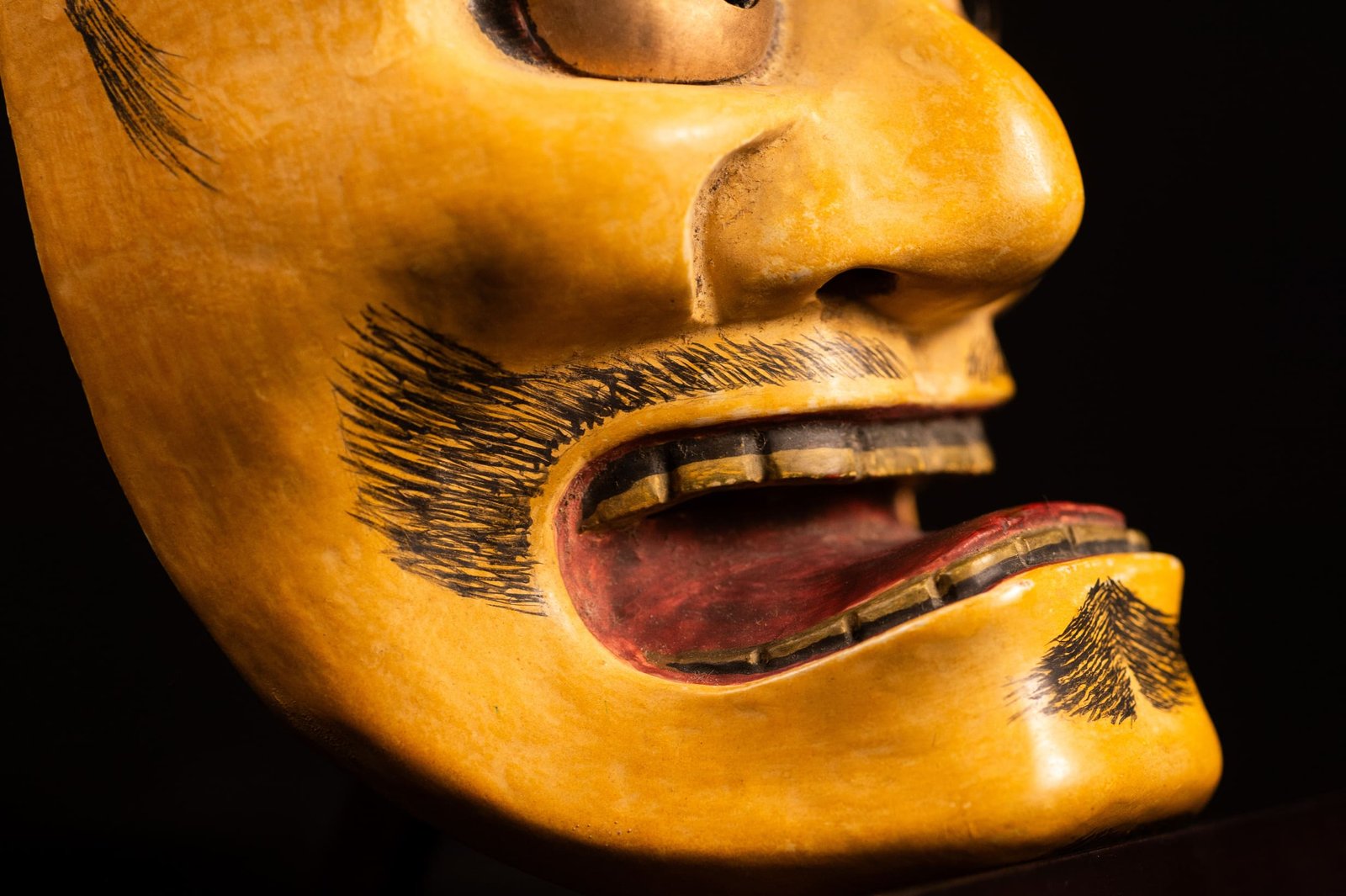
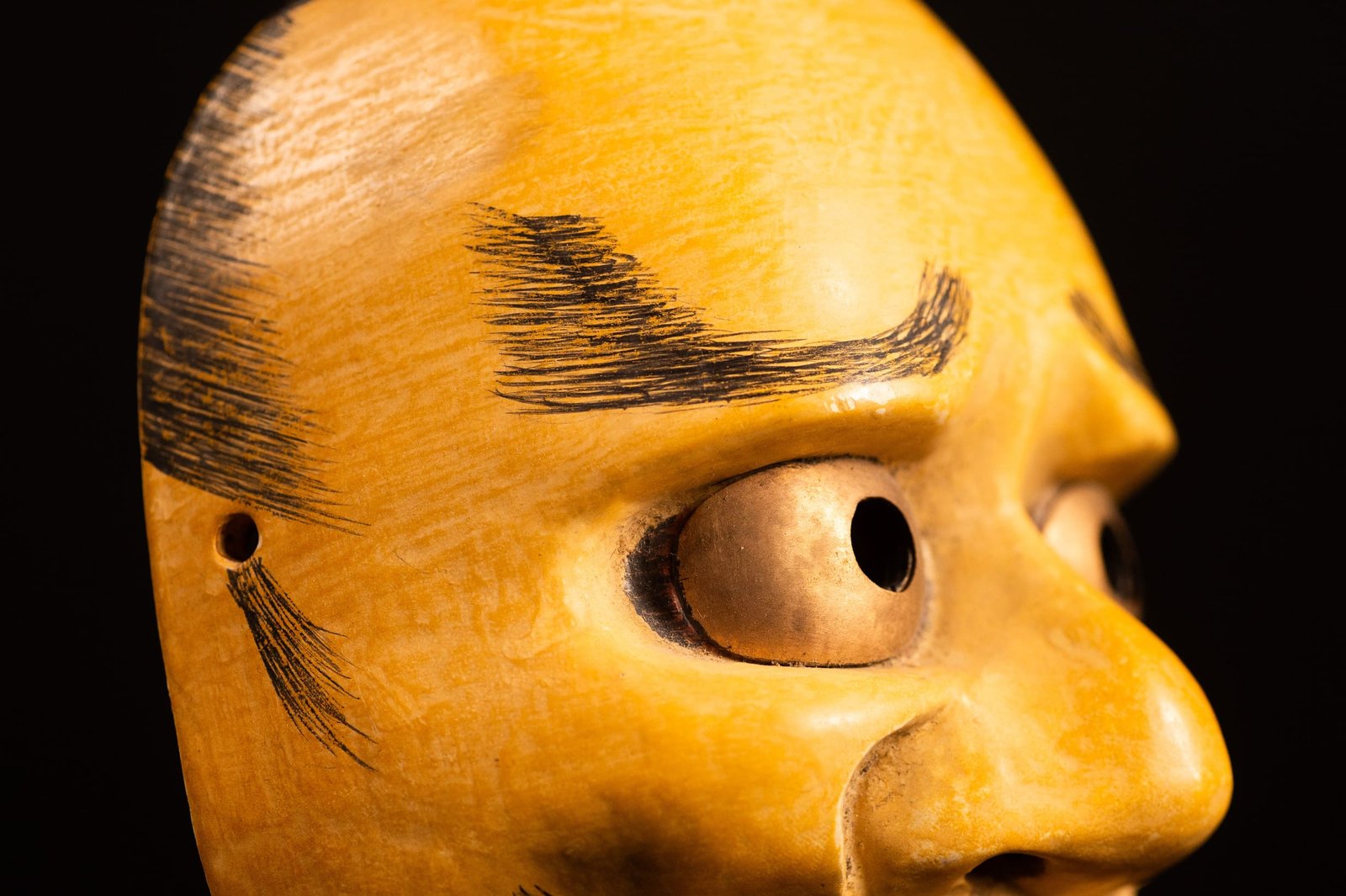
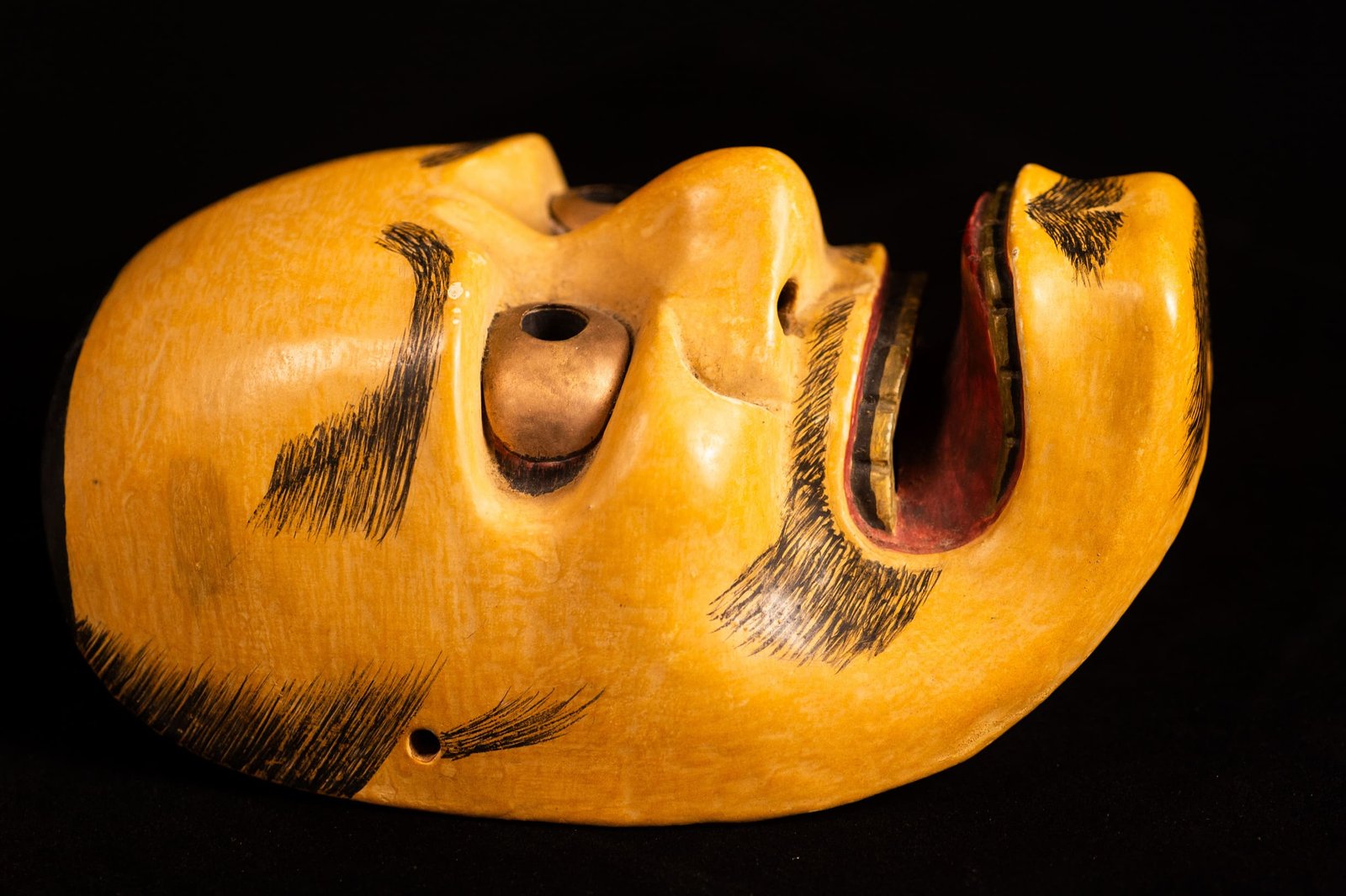
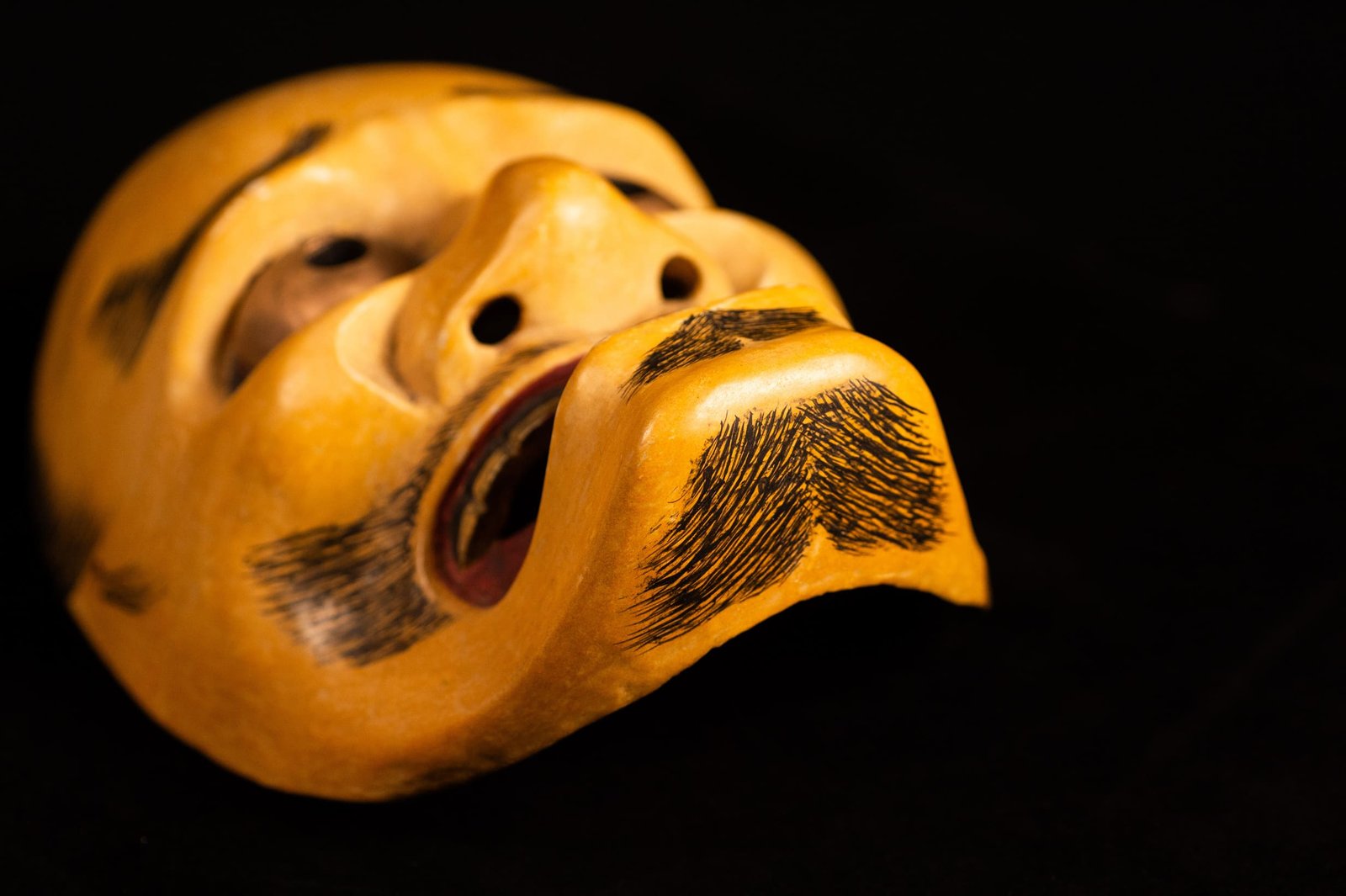
Carved at approximately life size and hand-painted with natural pigments, the mask is distinguished by its shaved crown, painted hairline, delicate moustache and pointed goatee. Its most striking features are the glaring gilt-metal eyes with drilled pupils and the broad grimacing mouth, which exposes painted teeth above a vivid red-lacquered interior.
The upward tilt of the pupils gives the mask an animated and unmistakably comic expression. Depending on the wig, costume and manner of performance, a Kentoku mask could be adapted to represent a range of humorous human or animal roles.
Kentoku is a versatile character mask associated with Kyōgen, the comic theatrical form traditionally performed in close relationship with Noh.
Unlike Noh masks that often portray highly specific spirits, deities, women, warriors or tormented supernatural beings, Kyōgen masks frequently emphasize recognisable human behaviour, physical comedy and exaggerated personality.
Kentoku’s facial structure is intentionally adaptable.
With different wigs, costumes and performance techniques, the mask can take on a variety of comic identities. It may suggest an eccentric human character in one context and a humorous animal-like figure in another.
This versatility is central to the character of the mask.
Rather than presenting a fixed emotional state, Kentoku offers a lively theatrical face whose meaning depends on the actor’s movements, costume and relationship with the other performers.
Kyōgen developed as the comic counterpart to Noh and has traditionally been performed between the more serious and poetic Noh plays.
Where Noh frequently explores spiritual encounters, memory, suffering and the supernatural, Kyōgen tends to focus on human weakness, misunderstanding, social inversion and physical humour.
The two theatrical forms share the same stage and developed in close historical relationship, but their dramatic tones differ considerably.
Kyōgen brings energy and comic relief to the performance programme. Its characters may include servants, masters, villagers, priests, travellers, supernatural beings and animals presented through an intentionally humorous dramatic language.
Masks are used more selectively in Kyōgen than in Noh. When present, they often exaggerate the character’s physical and emotional qualities, helping the audience identify the role immediately.
The present Kentoku mask embodies this comic theatrical function through its staring eyes, pronounced grimace and animated facial structure.
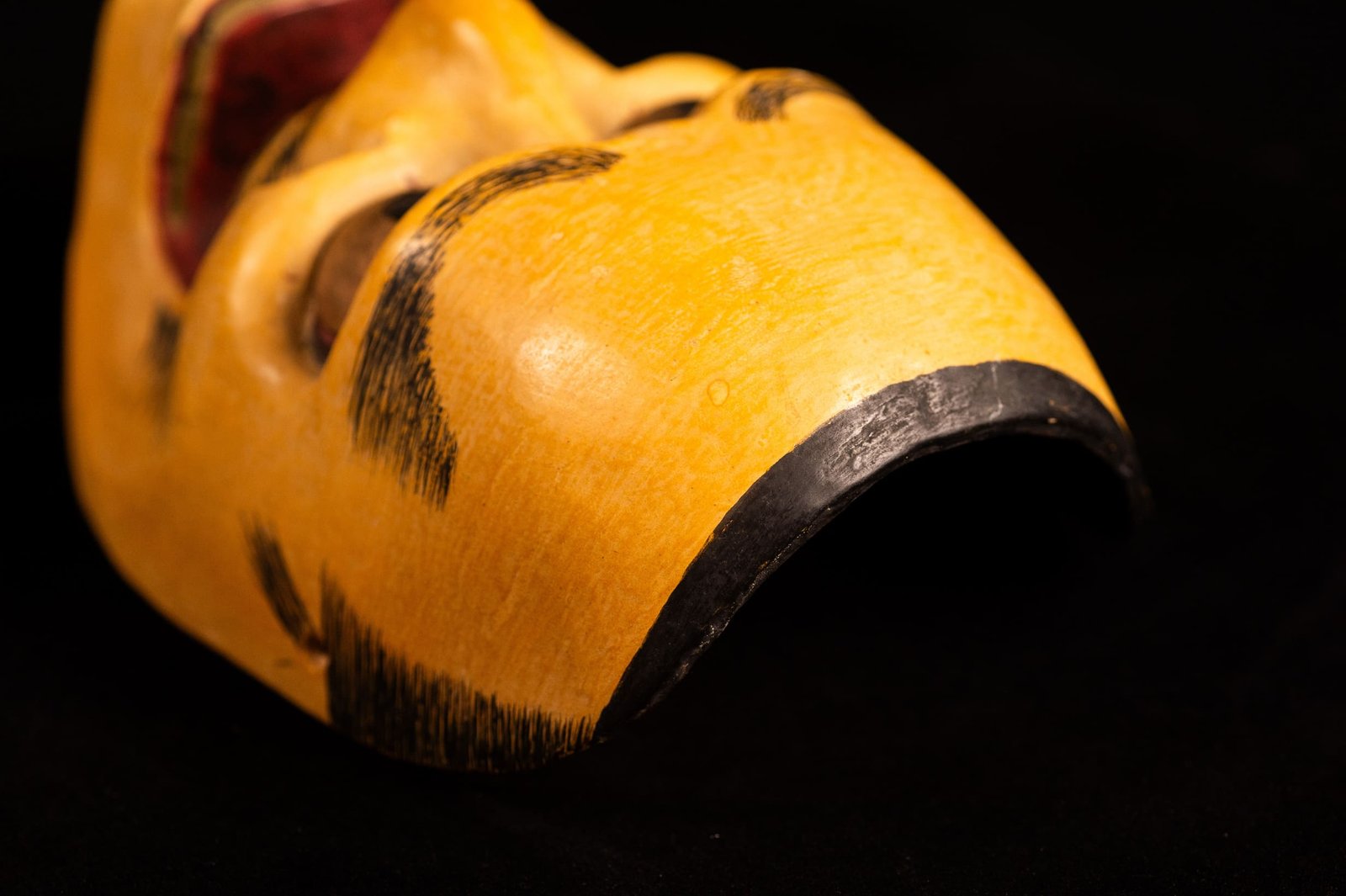
The mask is carved from wood as a complete sculptural form and subsequently hand-painted.
Its facial features are strongly modelled, with a projecting nose, rounded cheeks, deeply defined mouth and carefully formed areas around the eyes.
The carved structure creates the foundation of the expression, while painted details introduce additional character and visual clarity.
The mask is constructed at a 1:1 or life-size scale, corresponding to the proportions of a wearable theatrical mask.
Its side apertures would have allowed fastening cords to secure it to the performer’s head during use.
The interior has not been described in the supplied documentation beyond the object’s theatrical function. No signature, seal or attribution has been provided for this example.
The mask is hand-painted with natural pigments.
Its surface uses a restrained flesh-toned palette, complemented by darker painted facial hair, metallic eyes, painted white teeth and a red-lacquered mouth interior.
Natural pigments were capable of producing subtle variations in tone and texture that responded effectively to theatrical lighting.
Rather than creating a perfectly uniform surface, the pigments contribute to the mask’s individual character and emphasize the underlying sculptural form.
The painted areas around the hairline, moustache, goatee and mouth are especially important because they help define the figure at a distance.
The contrast between the relatively pale face and the darker or more reflective details makes the expression easy to read from the audience.
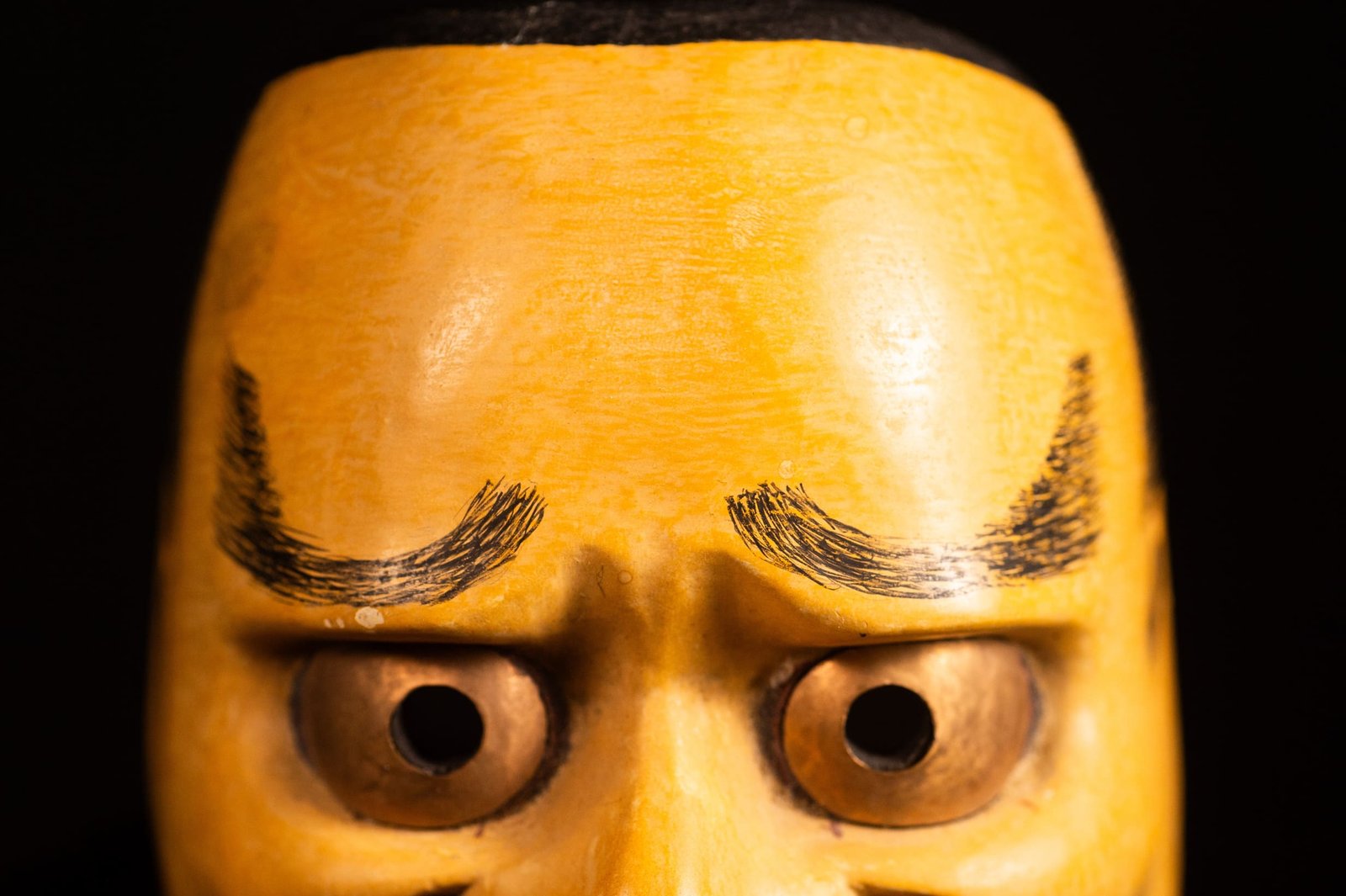
Kentoku is represented with a shaved crown bordered by a painted hairline.
This treatment gives the character a distinctive human appearance and provides a clear visual foundation for the use of different wigs or head coverings.
The painted hairline follows the upper contours of the forehead and frames the face without distracting from the eyes and mouth.
Its simplicity allows additional costume elements to modify the character’s identity during performance.
Combined with the thin moustache and goatee, the shaved crown suggests an eccentric or mature male figure while retaining enough neutrality for the mask to fulfil different theatrical roles.
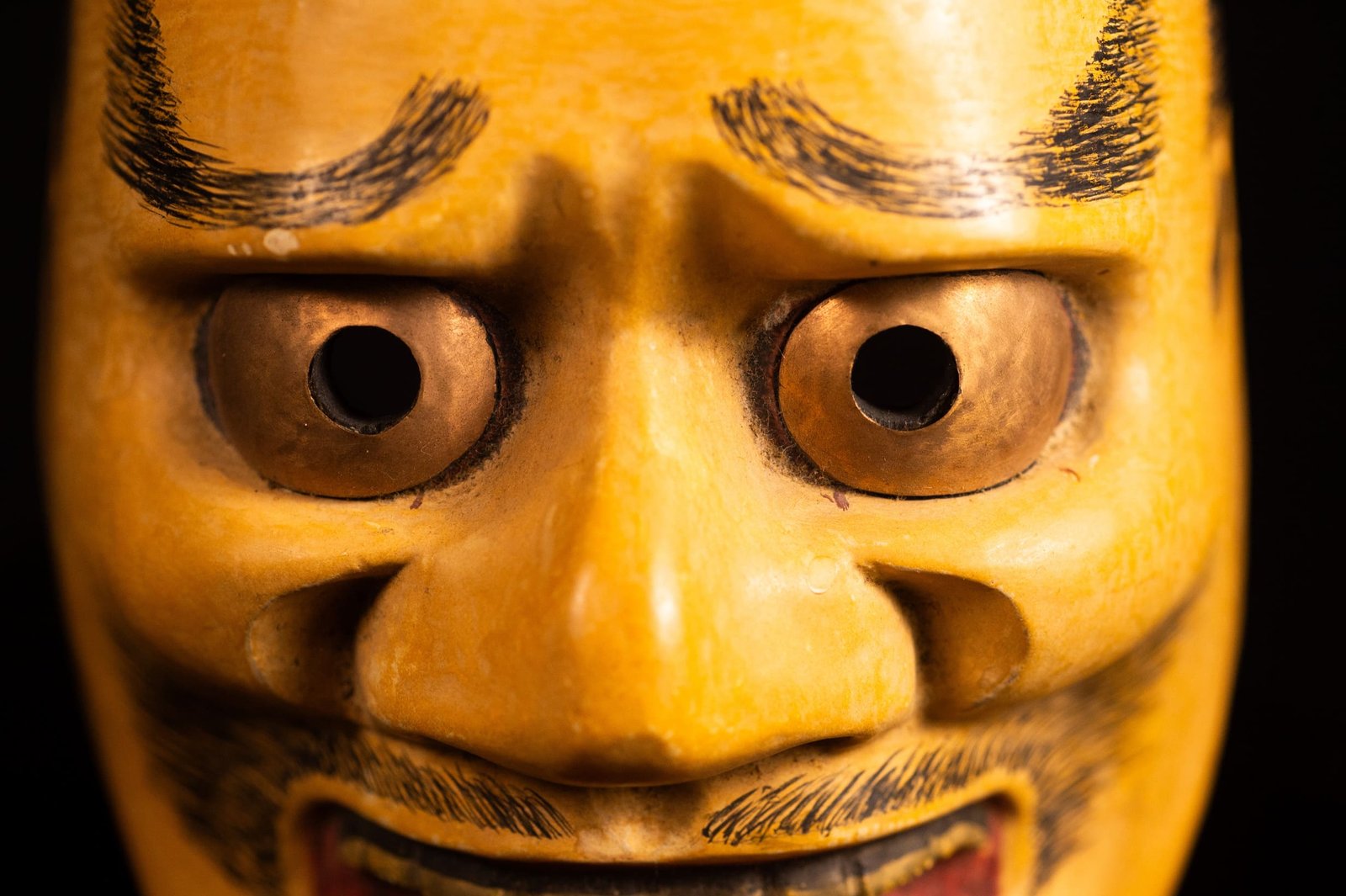
The most immediately striking feature of the mask is the pair of glaring gilt-metal eyes.
Unlike eyes created entirely through carved and painted wood, these metallic elements introduce a reflective surface that catches and redirects light.
The pupils are formed by drilled openings, allowing the performer to see through the mask.
Their upward-tilted position gives the face its distinctive comic quality.
The gaze appears exaggerated, distracted and animated, creating the impression that the figure is looking upward or reacting dramatically to something beyond the immediate scene.
Under changing light, the gilt-metal surfaces would have produced flashes of brightness, further emphasizing the eyes during movement.
This combination of reflective material, drilled pupils and unusual orientation contributes strongly to the mask’s lively theatrical presence.
The upward orientation of the pupils is essential to Kentoku’s humorous expression.
Instead of focusing directly ahead, the eyes appear to roll upward, giving the character an exaggerated, distracted or mischievous appearance.
The exact emotional effect can change according to the angle of the mask.
When the actor lowers the face, the upward pupils may become especially prominent and comic. When the mask is raised or turned, the eyes can appear surprised, bewildered or intensely alert.
This ability to produce different readings through movement is fundamental to Japanese theatrical masks.
The face itself remains fixed, but the performer, lighting and viewing angle animate the expression.
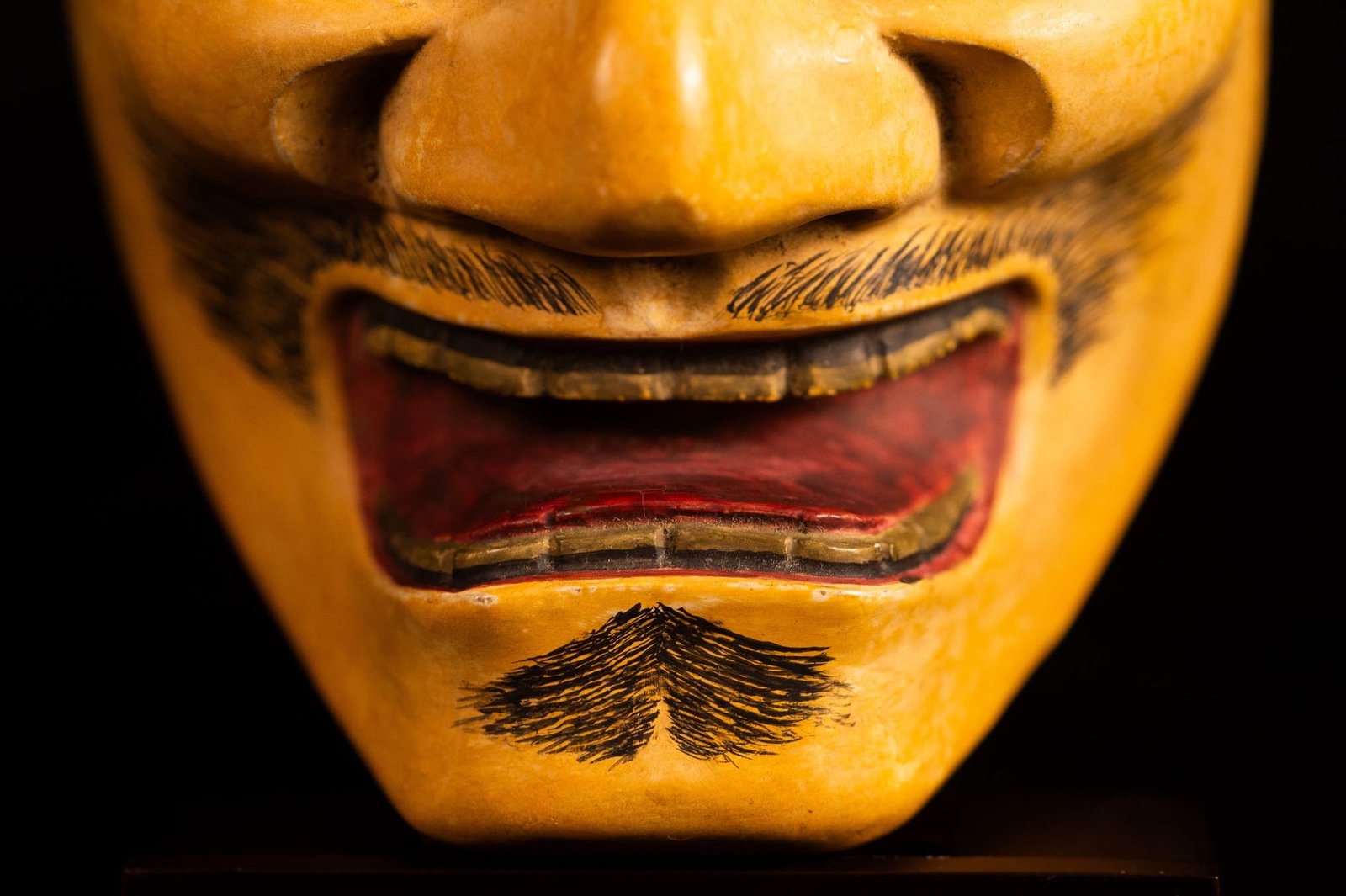
The mask has a broad, deeply carved mouth set in a pronounced grimace.
The lips are pulled apart to expose painted teeth, creating an expression that is energetic rather than threatening.
The wide mouth strengthens the comic character of the face and balances the large metallic eyes above it.
Rather than presenting a naturalistic smile, the expression is intentionally exaggerated for theatrical visibility.
The tension around the cheeks and mouth suggests that the figure may be laughing, grimacing, reacting with surprise or engaging in exaggerated comic speech.
This ambiguity makes the mask especially adaptable to different roles.
Painted teeth are visible within the open mouth.
Their light colour contrasts with the red-lacquered interior, making the expression clearly legible even from a distance.
The red interior creates a vivid focal point at the centre of the lower face.
It also gives the open mouth greater depth, enhancing the three-dimensional effect of the carving.
The contrast between the flesh-toned face, white teeth and strong red mouth contributes to the theatrical clarity of the mask.
These painted details would have been especially effective under stage lighting, where colour contrast helps an audience interpret the character’s expression.
A thin moustache is painted above the upper lip, accompanied by a narrow goatee beneath the mouth.
These restrained facial-hair details help establish the figure as an adult or older male character without overwhelming the comic expression.
The moustache follows the shape of the upper lip, while the goatee visually extends the lower part of the face.
Together, they introduce a slightly eccentric and individual appearance.
Because the facial hair is painted rather than formed from attached fibres, it remains closely integrated with the mask’s smooth surface and preserves the clarity of the exaggerated mouth.
One of the most important characteristics of Kentoku is its versatility.
The mask does not necessarily represent only one fixed individual.
By changing the wig, costume, posture and style of movement, the performer could adapt the same facial type to a range of comic or animal roles.
The large eyes and broad mouth provide a strong expressive foundation, while the simplified upper head allows wigs and costume elements to transform the silhouette.
This adaptability made character masks such as Kentoku valuable within a theatrical repertory.
A single mask could acquire different meanings depending on the surrounding performance.
The present example preserves the fundamental visual features that make Kentoku immediately lively, humorous and theatrically effective.
Masks have long played an important role in Japanese religious rituals, festivals and theatrical traditions.
When a performer wears a mask, the individual identity of the actor becomes less visible and the represented character takes precedence.
This transformation is not created by the mask alone.
Costume, movement, music, spoken delivery and the relationship between performers all contribute to the final identity presented on stage.
In the broader history of Japanese masks, this process has sometimes been understood as a form of symbolic possession or embodiment.
The performer temporarily becomes the human, supernatural or animal figure represented by the mask.
However, the present Kentoku mask should be understood specifically within its supplied classification as a versatile Kyōgen character mask. The broader religious history of Japanese masks does not establish that this particular face represents a named kami or deity.
Japanese masking traditions developed through a long interaction between theatre, ritual, festival and indigenous beliefs.
Historical figures, spirits, supernatural beings and divine presences known as kami could all be represented through masks in different contexts.
The act of covering the human face allowed the performer to cross symbolically from ordinary identity into a dramatic or spiritual role.
Within Noh, this transformation is often solemn and meditative.
Within Kyōgen, the same principle can be used to comic effect, exaggerating a personality, animal or unusual being for the audience.
Kentoku belongs to this comic world.
Its staring metallic eyes, exaggerated mouth and adaptable appearance demonstrate how the transformative power of the mask could be used not only to inspire reverence or fear, but also laughter and lively theatrical interaction.
The mask is carved at a 1:1 or life-size scale, corresponding to the proportions of a functional theatrical mask.
Its reflective eyes, broad mouth and graphic painted features give it a strong presence when displayed frontally.
Viewed from different angles, the expression changes as the pupils, mouth and facial contours interact with light.
For display, the mask should be supported in a way that avoids unnecessary pressure on the edges, fastening points, painted surface and projecting facial features.
Direct sunlight, excessive humidity and sudden temperature changes should be avoided to help preserve the carved wood, natural pigments, lacquer and metal components.
The gilt-metal eyes should also be protected from abrasion and unsuitable cleaning products.
The mask is described as antique.
No detailed conservation, restoration or condition report has been supplied.
As an antique hand-painted theatrical object, it may display age-related variations in the carved wood, pigments, lacquer and metal components.
These should be assessed through the complete photographic record before purchase.
No claims are made regarding a precise date, individual mask carver, workshop attribution or documented performance history.
The description is based on the supplied identification as a Kentoku mask from the Kyōgen theatrical tradition and on the documented visible features of the object.
This antique Kentoku mask is distinguished by its combination of carved form, painted detail and unusual metallic eyes.
The gilt-metal eyes are particularly important to its visual identity.
Their reflective surfaces and upward-tilted drilled pupils give the face an animated expression that remains effective under changing light and from different viewing angles.
The broad grimacing mouth provides a strong counterpoint to the eyes.
Its painted teeth and red-lacquered interior create depth and visual contrast, while the fine moustache and goatee add individual character without reducing the clarity of the expression.
The mask’s versatility is also significant.
Rather than being limited to a single emotional identity, Kentoku could be transformed through different wigs, costumes and performance styles into a range of comic or animal roles.
For collectors of Japanese theatre, Kyōgen and Noh-related art, antique masks or carved wooden sculpture, the piece offers a lively example of theatrical design created to communicate humour, movement and character directly to an audience.
An expressive antique Japanese Kyōgen mask representing Kentoku, a versatile comic character traditionally performed within the theatrical world shared with Noh. Carved from wood at life size and hand-painted with natural pigments, the mask features a shaved crown with painted hairline, thin moustache and goatee, glaring gilt-metal eyes with drilled upward-tilted pupils, and a broad grimacing mouth with painted teeth and a vivid red-lacquered interior. Its reflective gaze, exaggerated expression and adaptable character make it a distinctive example of Japanese comic theatre and an engaging object for a collection of Kyōgen masks, Noh-related art or antique Japanese sculpture.
| Época | Edo |
|---|

Order above 1.000,00 € gets free shipping.

Secure and hassle-free payment process.

Certificate of authenticity included.

Have questions? Contact us via WhatsApp.
Contact