

1 in stock
1 in stock
Add to Compare
Add to Wishlist
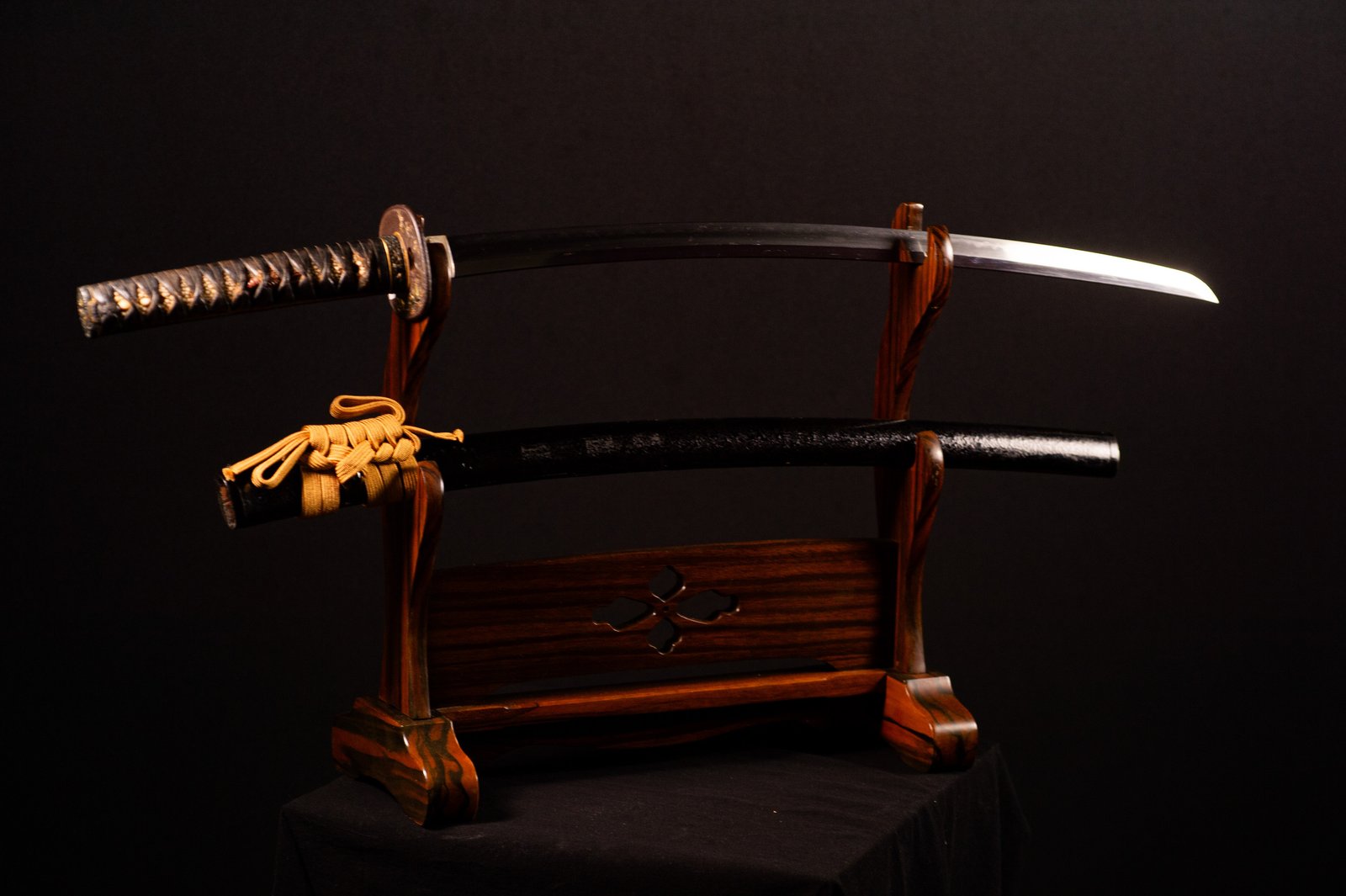
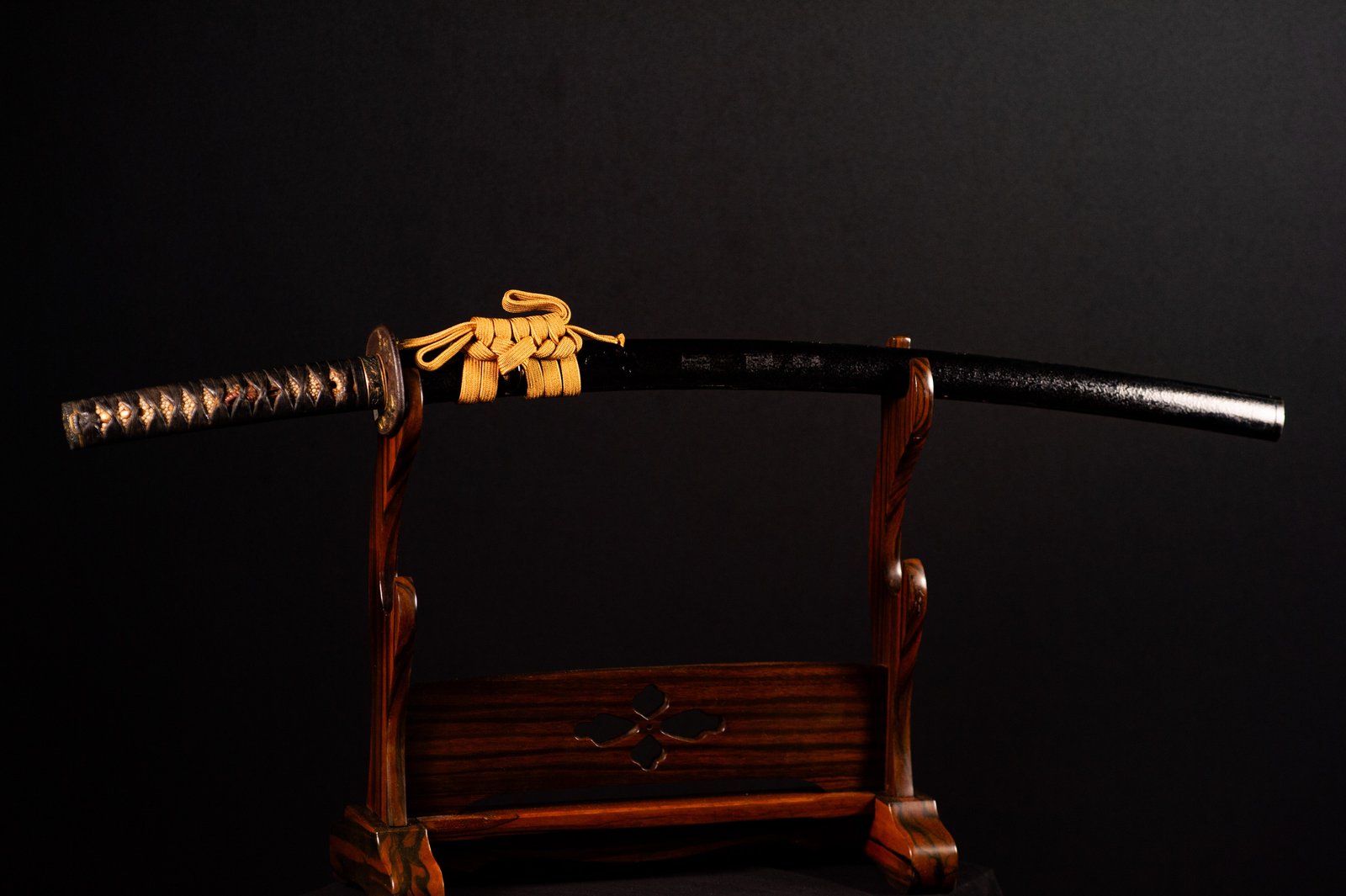
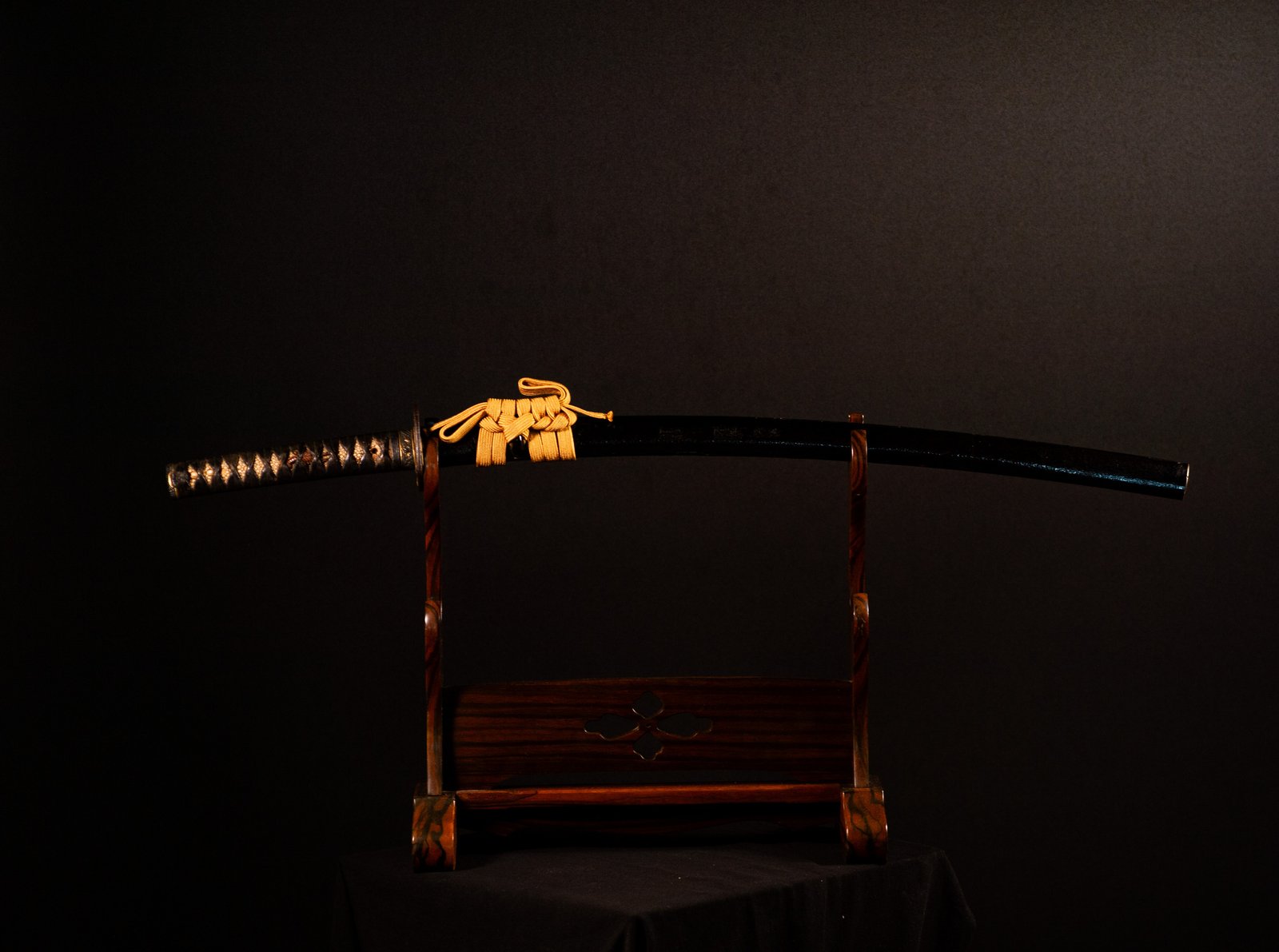
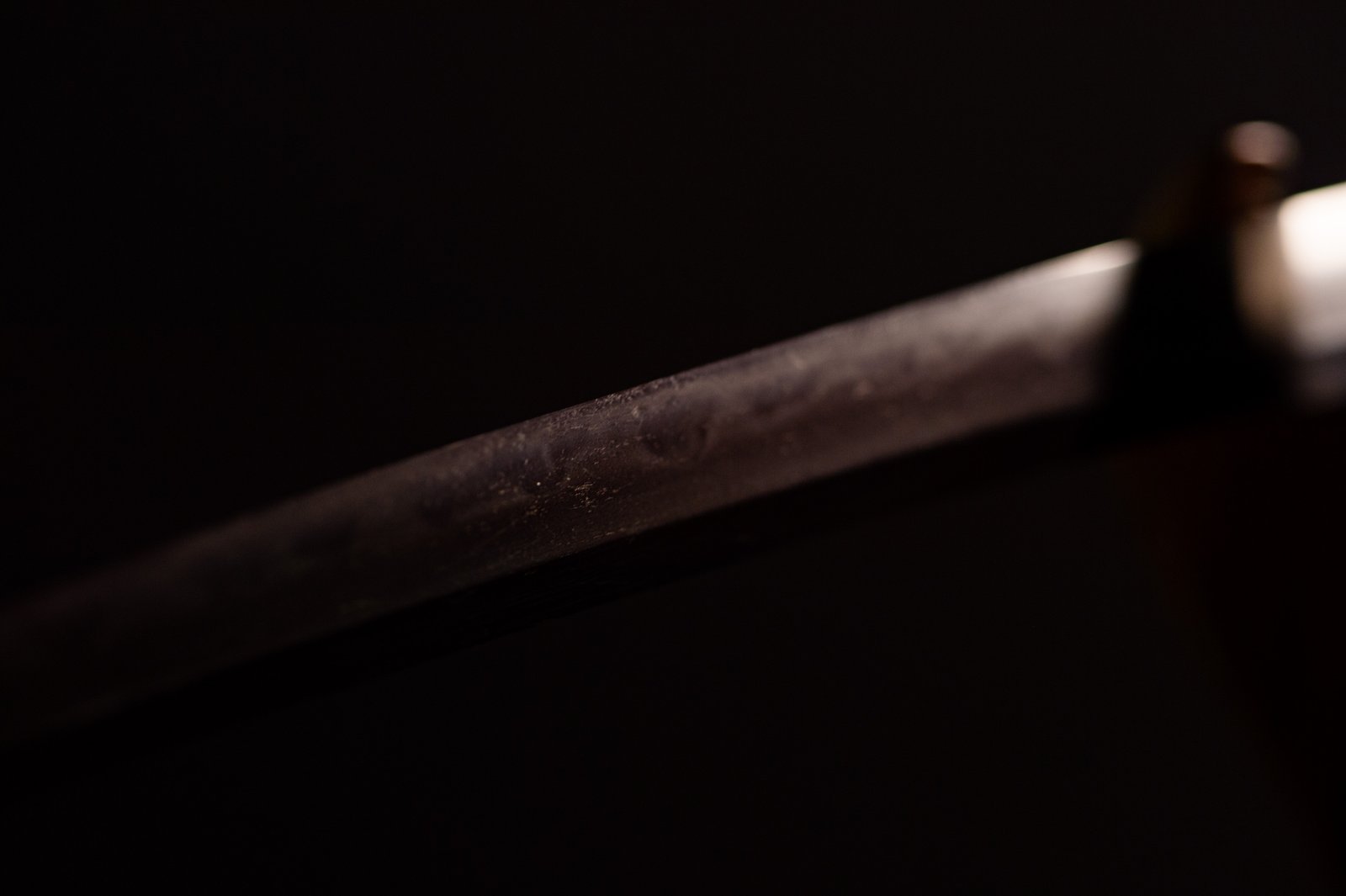
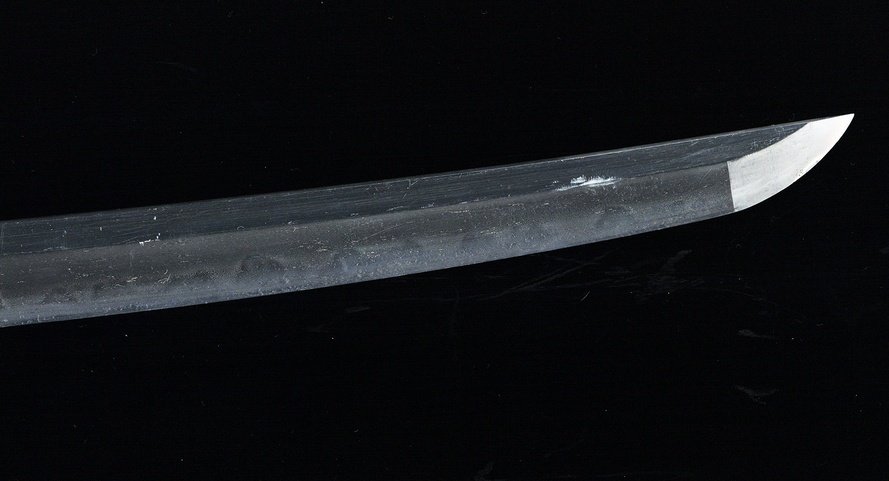
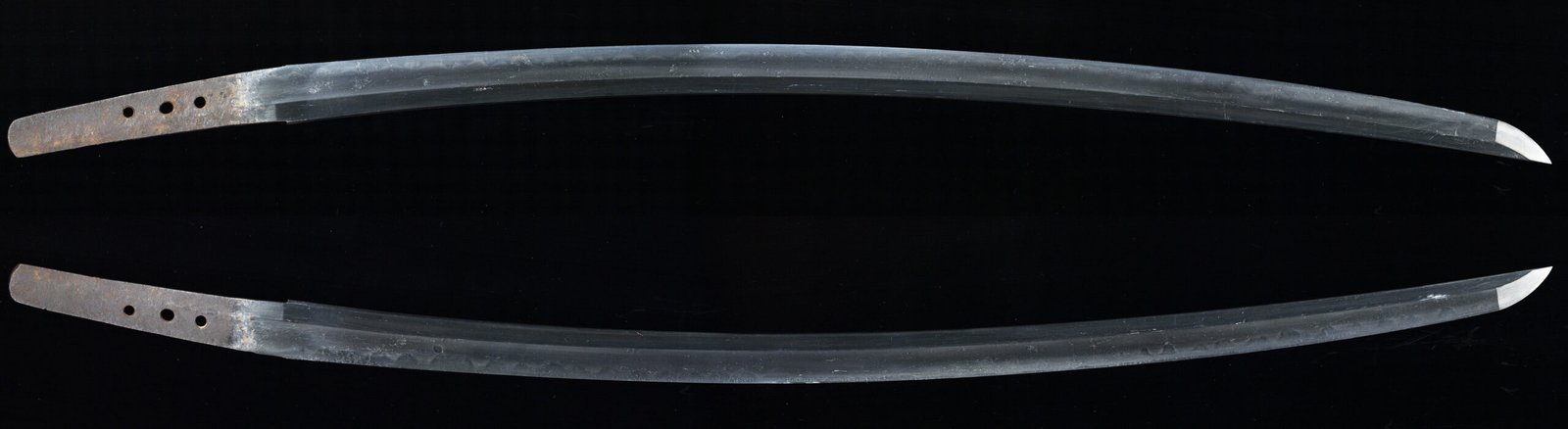
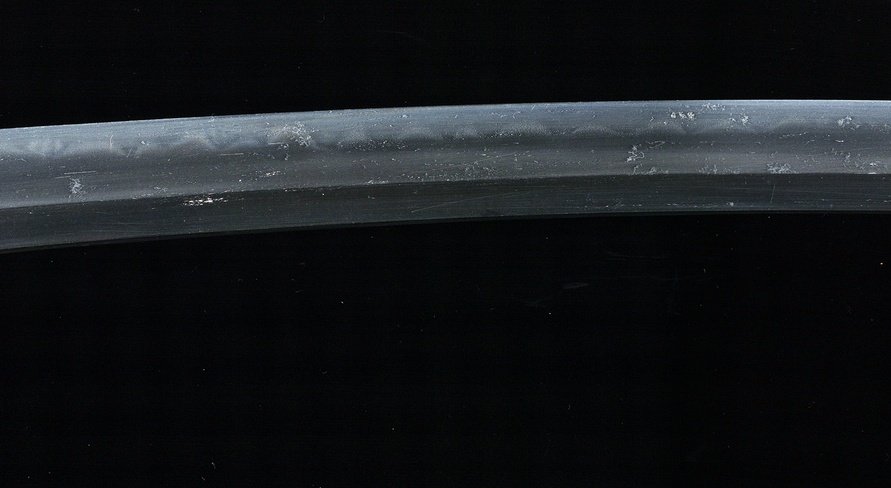
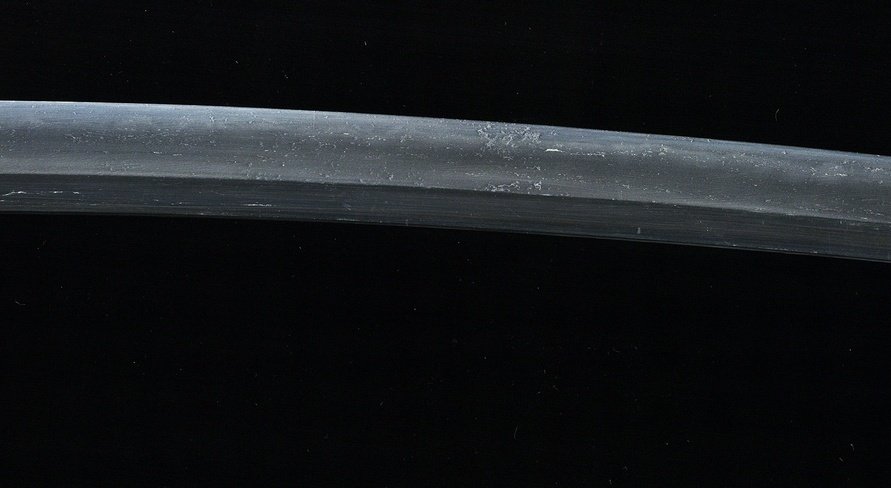
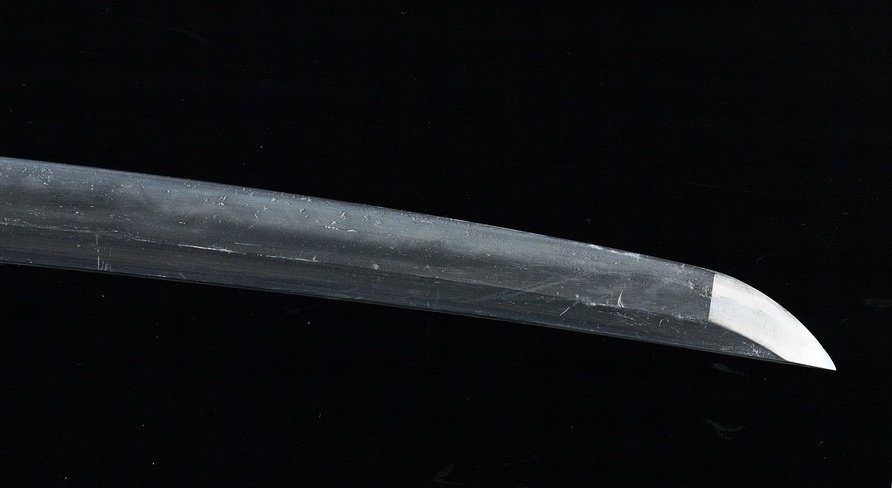
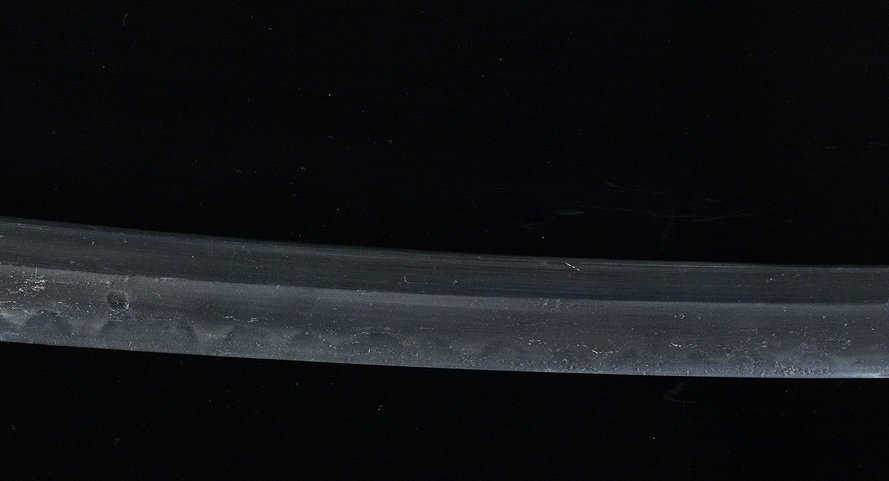
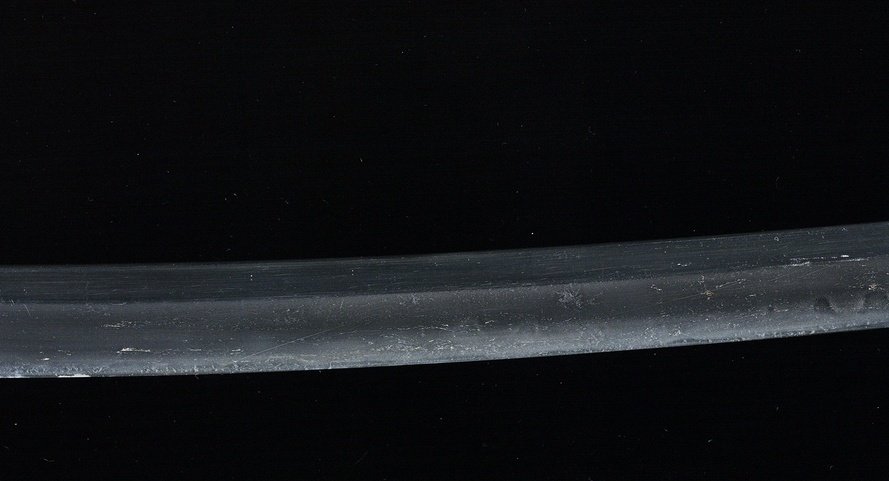
A particularly impressive Japanese ō-wakizashi from the early-to-mid Edo period, preserved in a complete and coherent traditional koshirae. With a registered nagasa of approximately 60.3 cm, this blade stands only a few millimetres below the traditional two-shaku boundary generally associated with katana, giving it the proportions, curvature and visual presence of a short katana while technically remaining within the wakizashi category.
The blade is mumei, unsigned on both sides as recorded on its Japanese registration document, and presents a pronounced sori of approximately 2.4 cm. Its substantial length and confident curvature distinguish it immediately from the more compact companion swords typically encountered in this class.
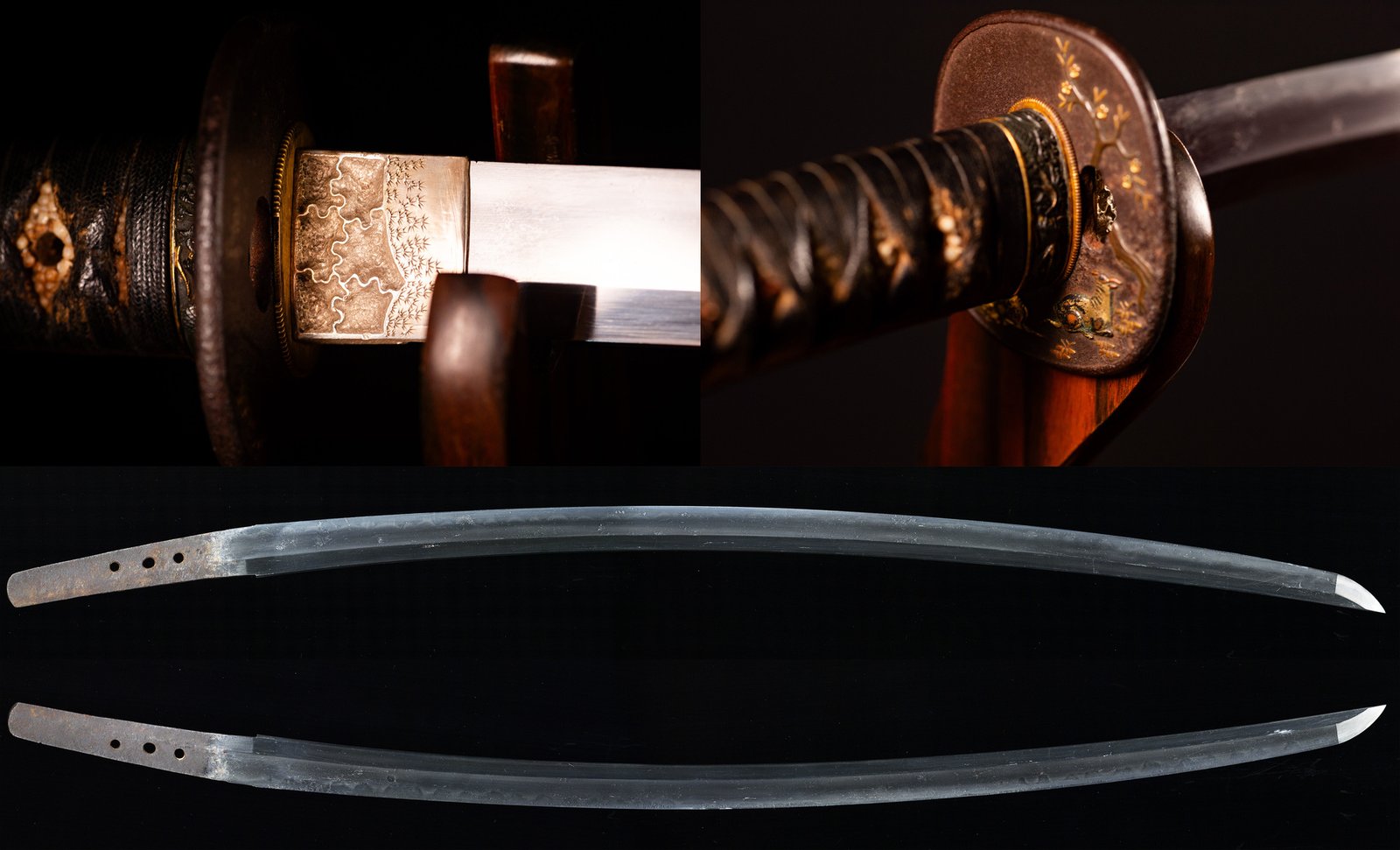
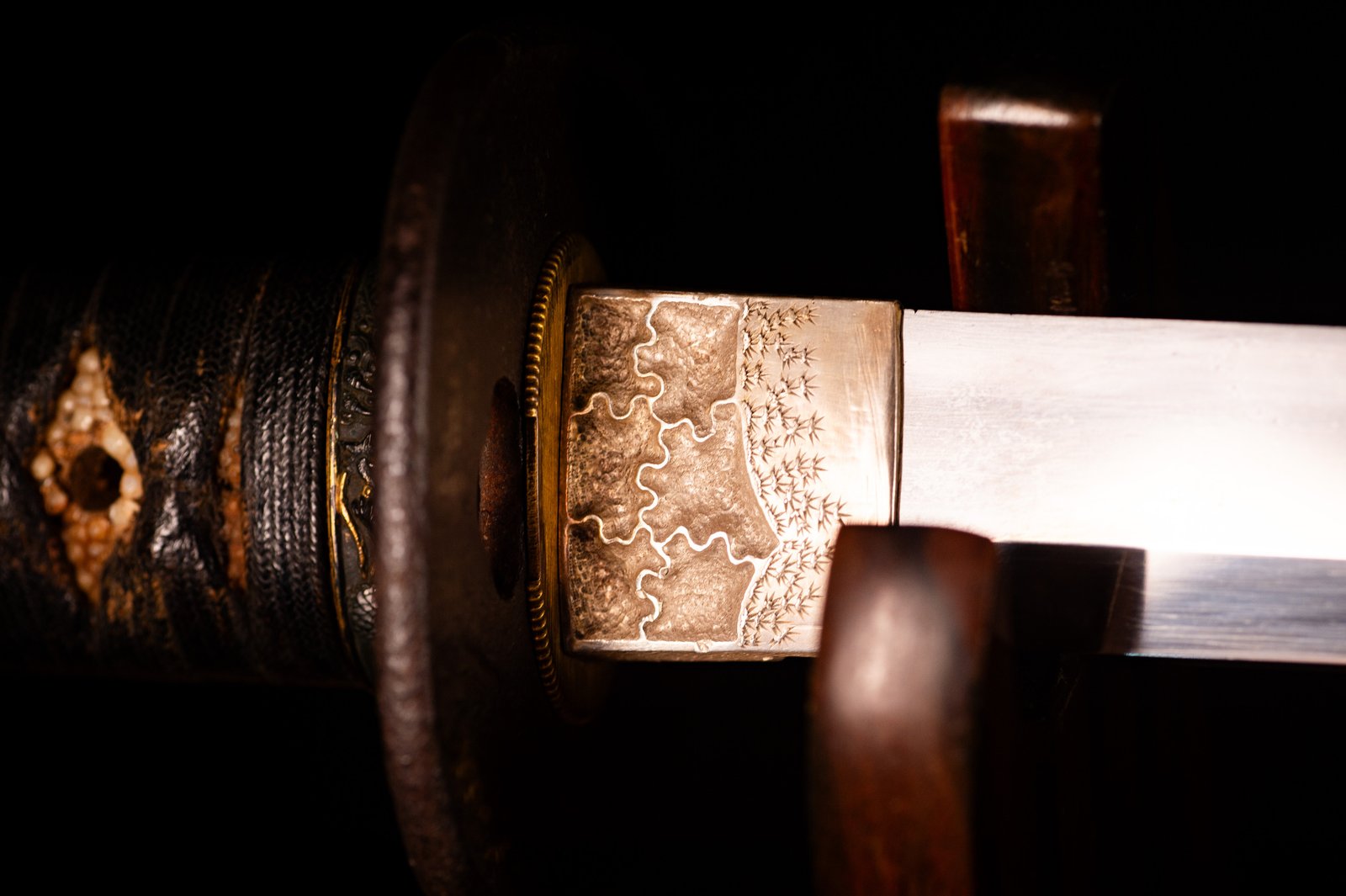
The sword is further distinguished by an unusually fine silver-covered gin-kise habaki, decorated in two registers with a geometric mountain-like pattern and finely textured needle-like ornament.
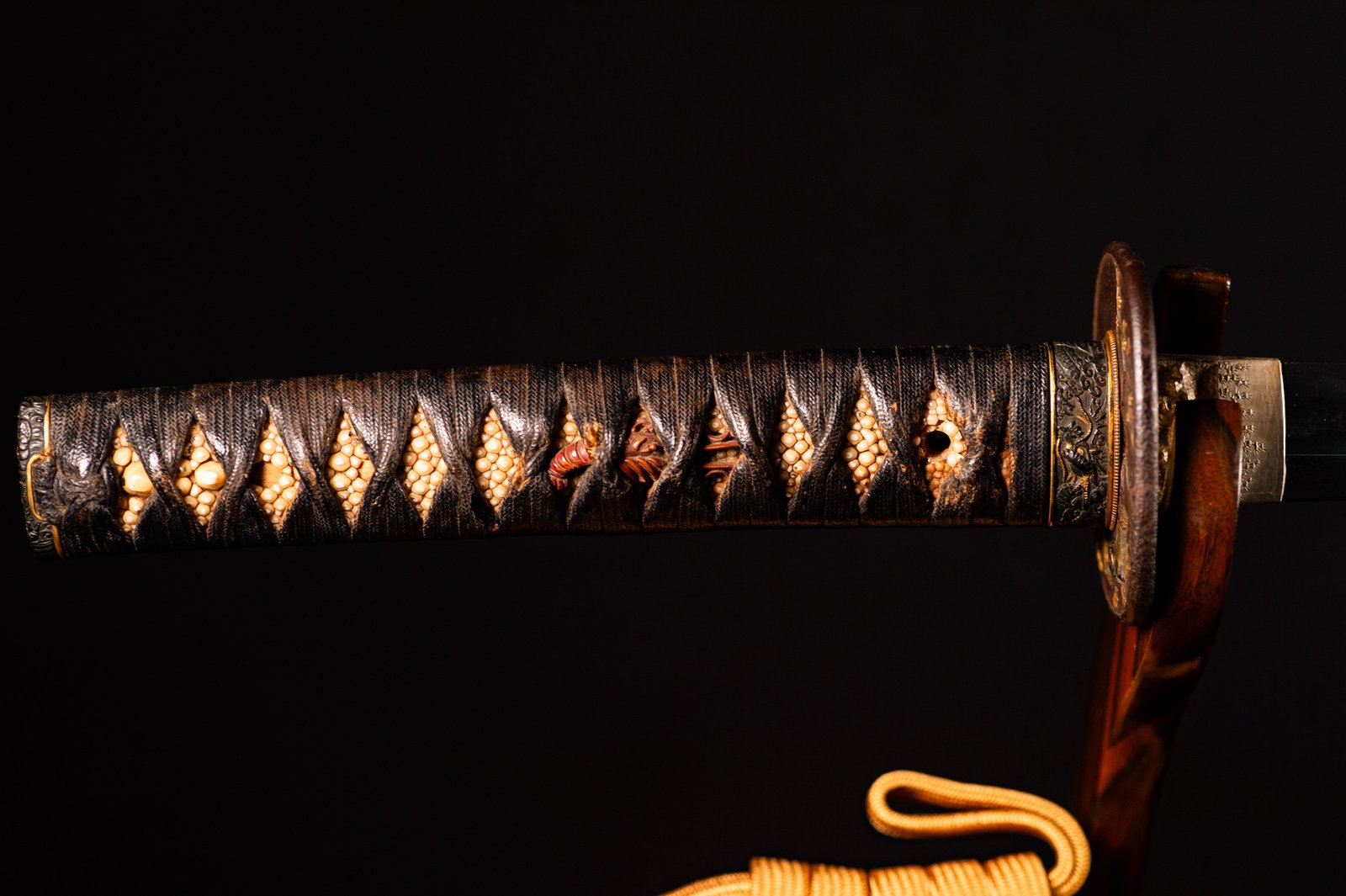
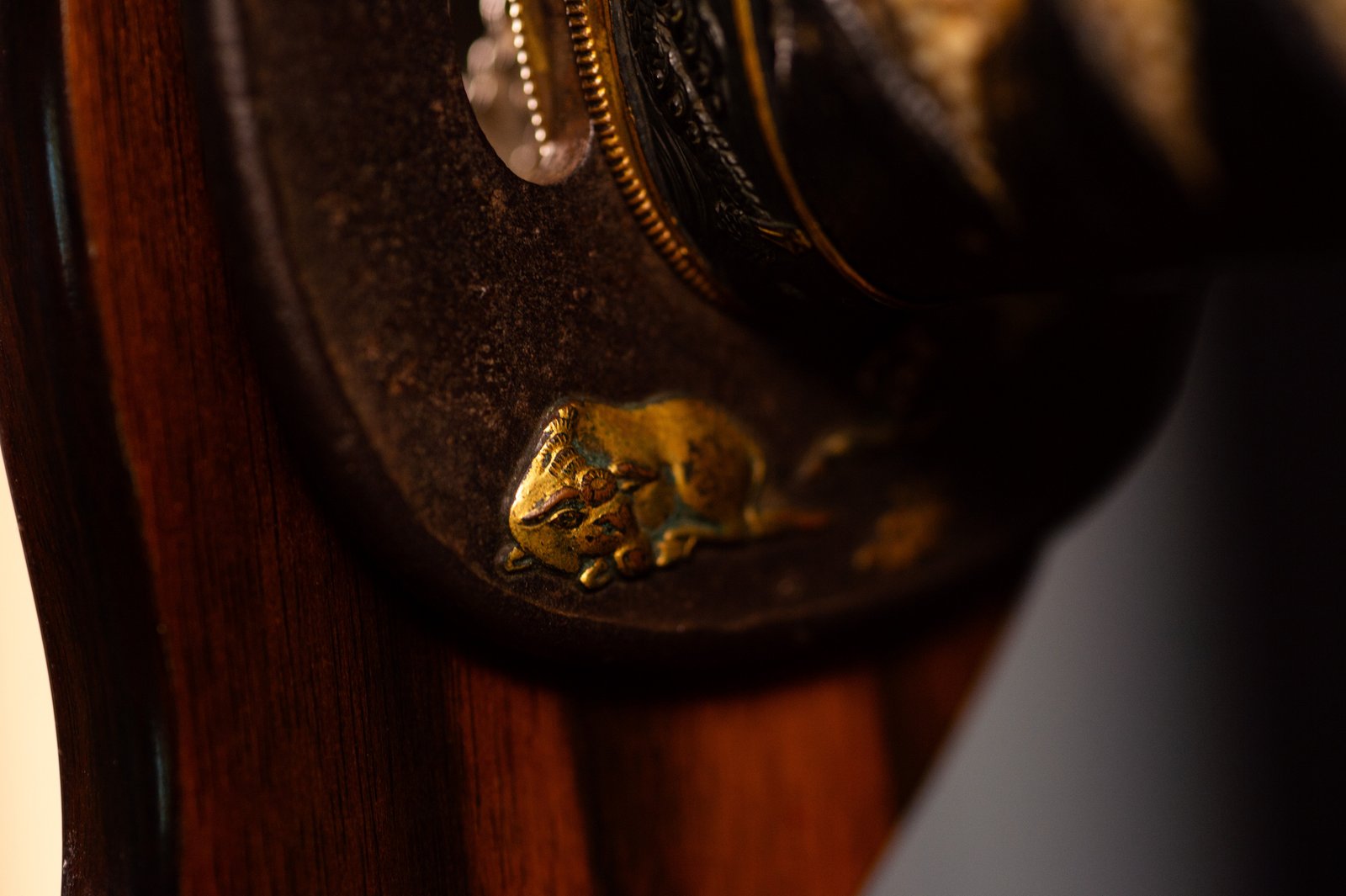
Its traditional mounting is equally attractive, combining black silk over pale samegawa, lobster menuki, matched dragon fuchi-kashira, an iron tsuba depicting a reclining deer beneath a flowering branch, glossy black lacquer saya and a formal gold-toned sageo.
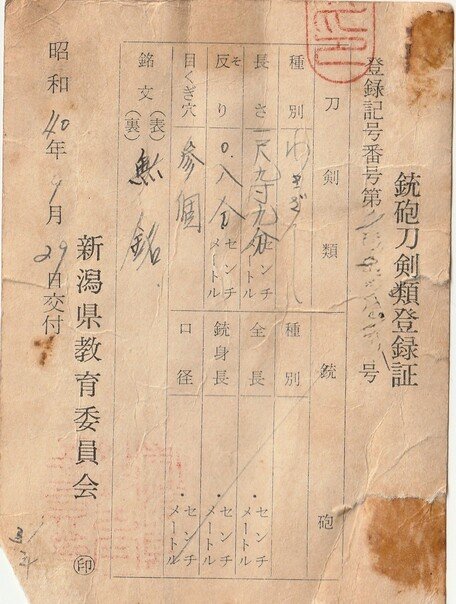
The piece retains its original Japanese Jūhō Tōken Rui Tōrokushō, issued by the Niigata Prefecture Board of Education on 29 July 1965, providing approximately six decades of documented Japanese registration history. :contentReference[oaicite:1]{index=1}
One of the most interesting characteristics of this sword is its exceptional length.
The blade is recorded at 1 shaku 9 sun 9 bu weak, equivalent to approximately 60.3 cm.
The traditional dividing line between wakizashi and katana is generally placed at 2 shaku, approximately 60.6 cm.
This blade therefore falls only a few millimetres below that threshold.
Technically, it should be classified as an ō-wakizashi, or large wakizashi, but visually and physically it possesses much of the presence of a short katana.
Its substantial blade length combined with a pronounced curvature gives the sword a particularly powerful profile and makes it suitable for presentation within either a serious wakizashi collection or alongside full-length katana.
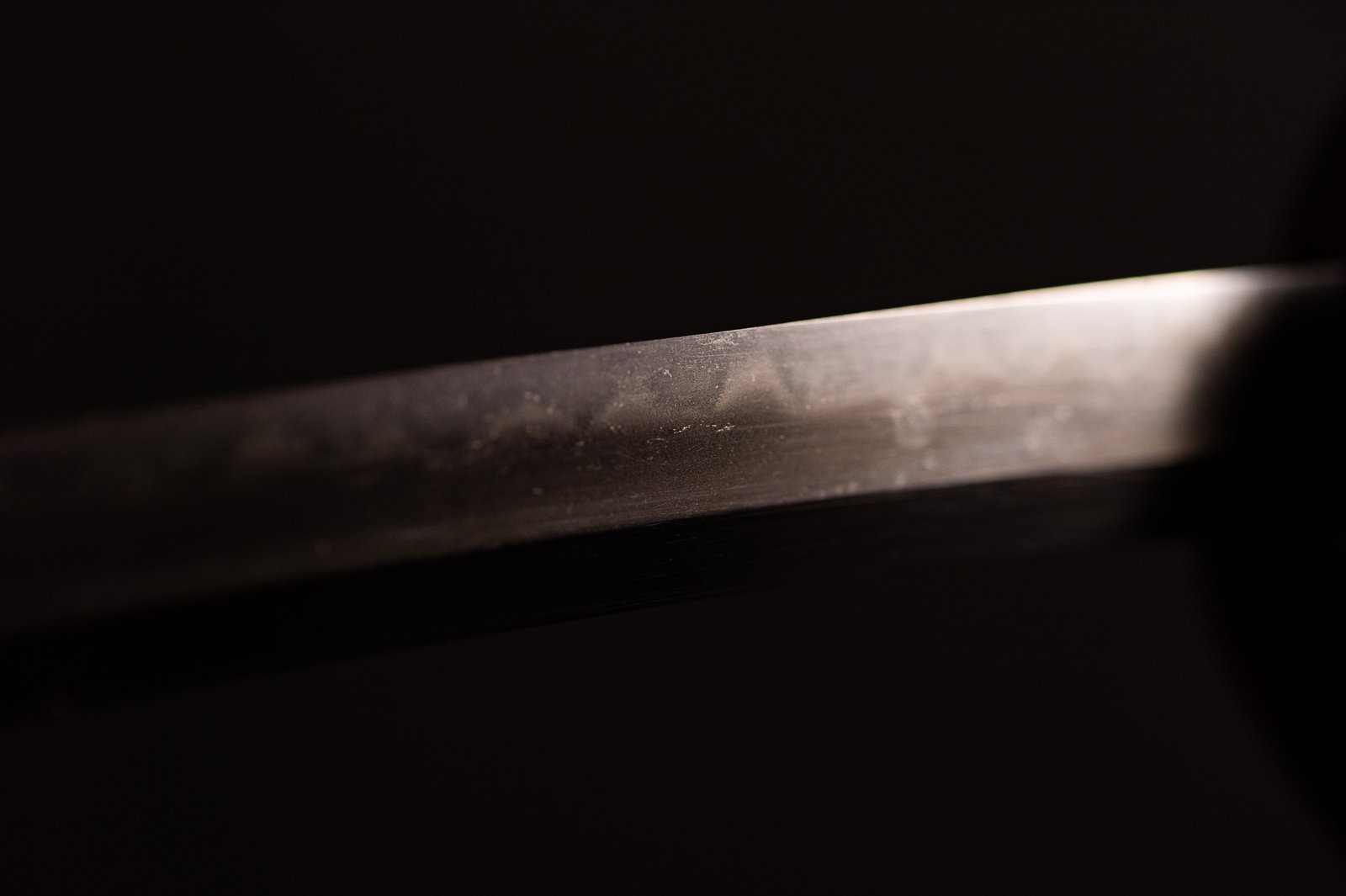
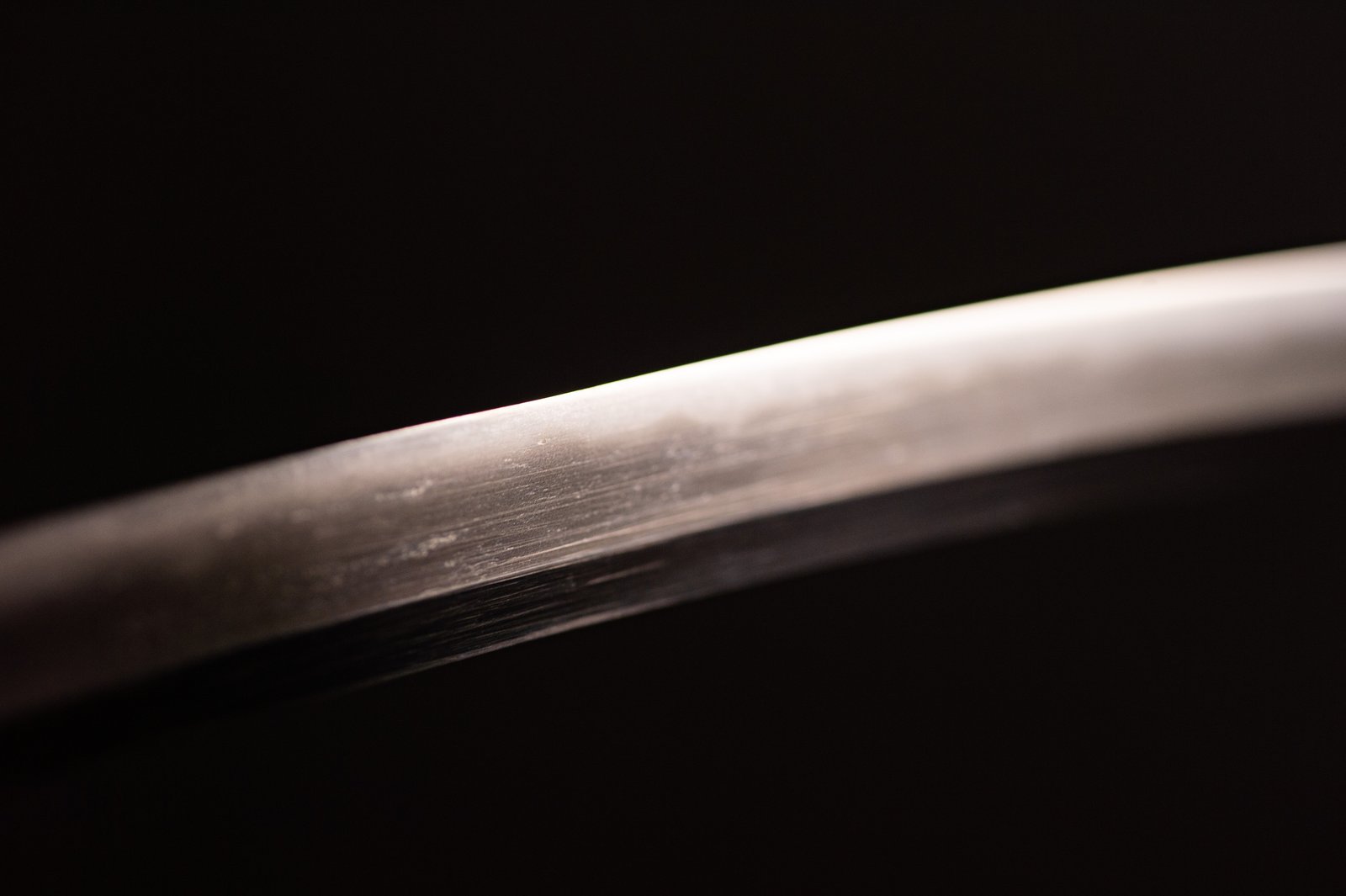
The blade presents a long, confident silhouette with proportions approaching those of a katana.
Its registered nagasa is approximately 60.3 cm.
The sori is approximately 2.4 cm, producing a clearly pronounced curvature that gives the blade an elegant but martial appearance.
Rather than the compact profile commonly associated with shorter wakizashi, this sword has an elongated and assertive sugata.
The combination of length and curvature creates an especially attractive visual balance when the sword is viewed as a complete mounted object.
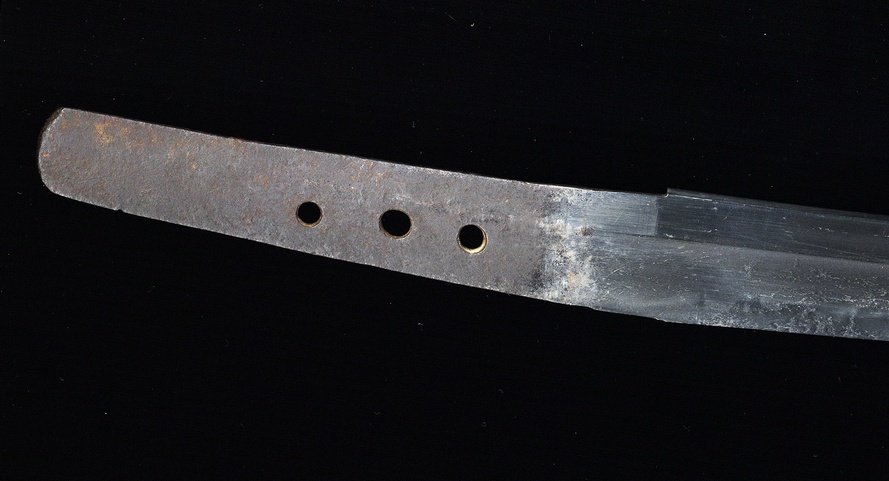
The blade is mumei, with no surviving signature on either face of the nakago.
This unsigned condition is explicitly recorded on the original Japanese registration document.
An unsigned blade should not automatically be considered inferior. Many genuine Japanese swords survive without signatures due to original manufacture, historical alterations or changes in mounting over the course of centuries.
In the present case, the sword should be appreciated primarily for its physical proportions, age, historical mounting, craftsmanship and documented Japanese provenance rather than assigned to an individual smith without supporting certification.
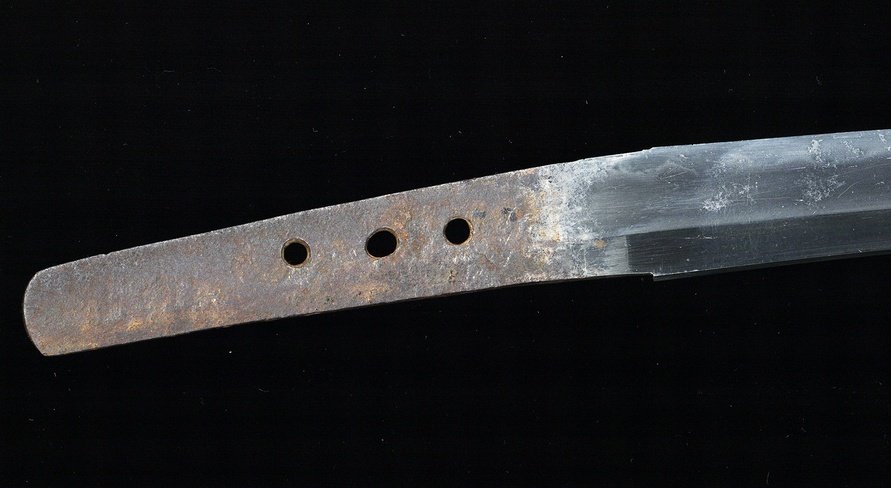
The nakago preserves a naturally aged, stable patina consistent with an antique Japanese sword.
It contains three mekugi-ana, demonstrating that the blade has undergone changes of mounting during its long history.
These mounting holes provide physical evidence of the sword’s extended working life and successive configurations.
The historical surface of the tang should be preserved exactly as it is and must never be cleaned or polished, since its natural patina forms an essential component of the blade’s age and material integrity.
One of the most distinctive individual elements of the sword is its exceptionally attractive gin-kise habaki.
The fitting is silver-covered and executed with a sophisticated two-register decorative design.
One section displays a strong geometric pattern reminiscent of interlocking mountains or puzzle-like forms, while the adjoining register is covered with extremely fine linear texturing evocative of bamboo or pine needles.
This is considerably more elaborate than an ordinary functional habaki.
Although fundamentally designed to secure the blade correctly within the saya, here the fitting has been treated as a decorative metalwork object in its own right.
Its craftsmanship adds a meaningful independent element of quality to the sword.
The blade is mounted in a complete and visually coherent traditional koshirae.
The ensemble follows a restrained black, dark-metal and gold palette, enriched by finely modelled animal and natural motifs.
Rather than appearing as an arbitrary assortment of fittings, the mounting presents a balanced decorative identity in which the different components complement one another.
The black silk wrapping, pale samegawa, sculptural lobster menuki, dragon fuchi-kashira, deer tsuba and glossy black lacquer saya together create an elegant and distinctly Edo-period presentation.
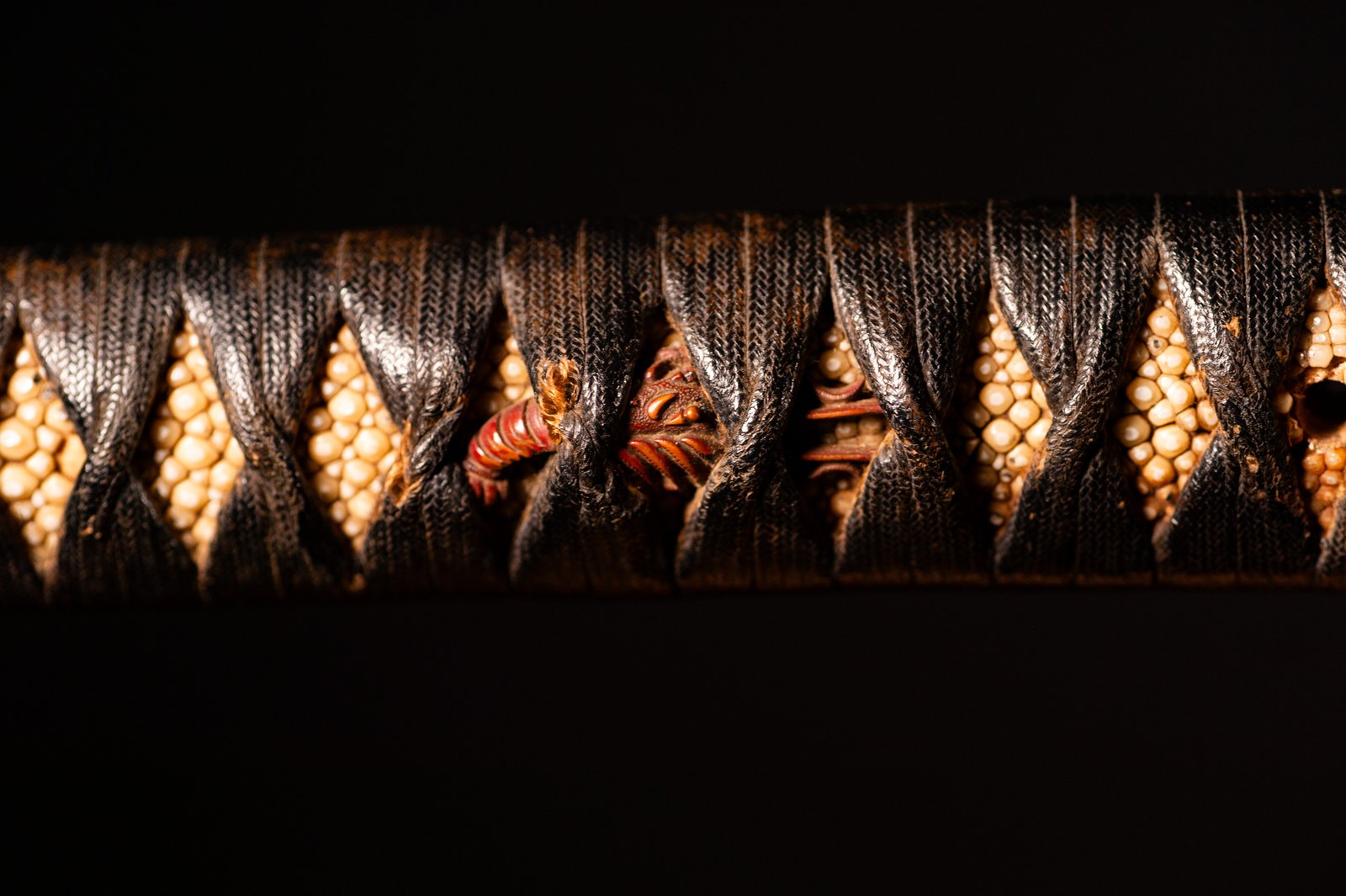
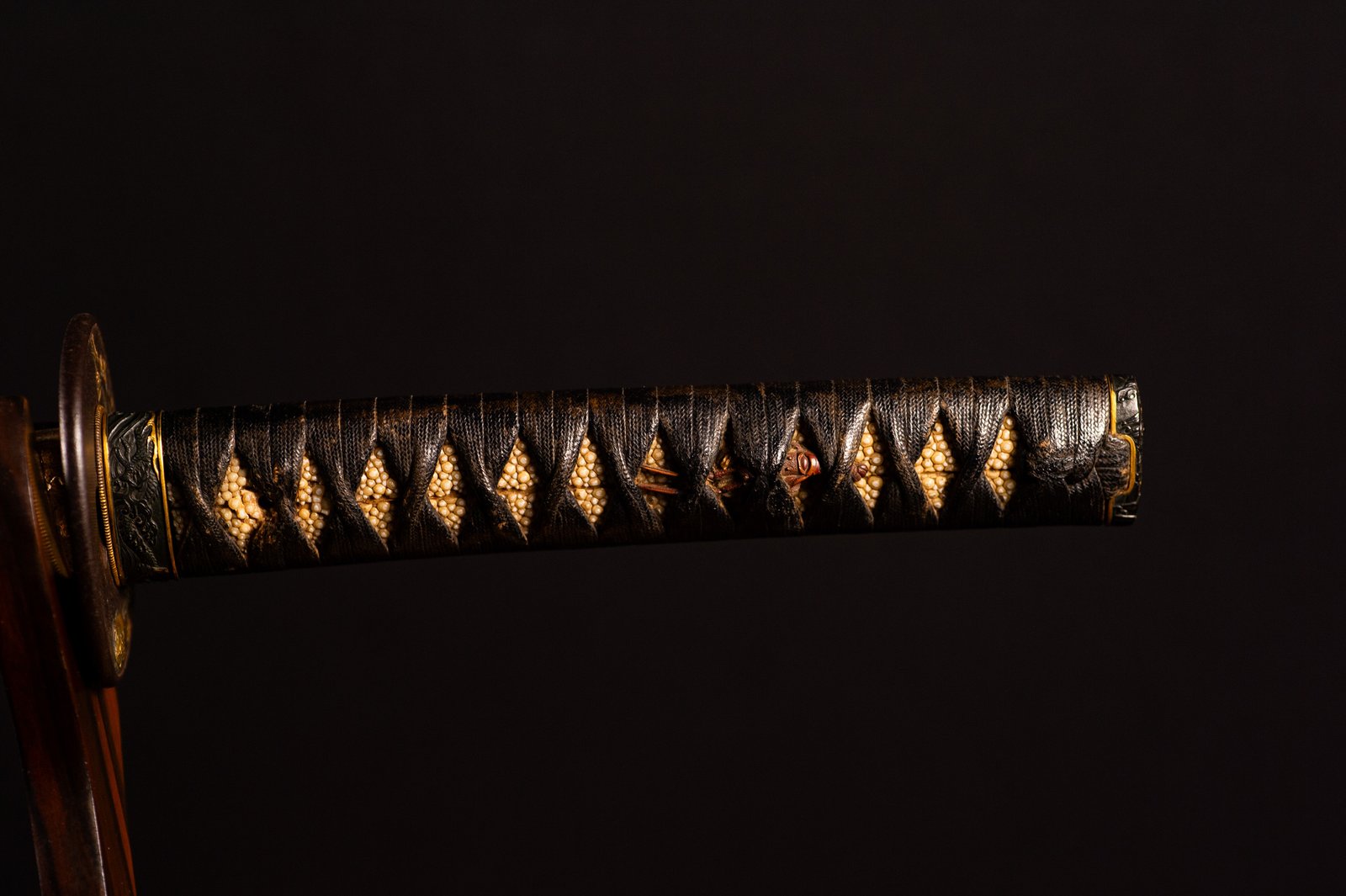
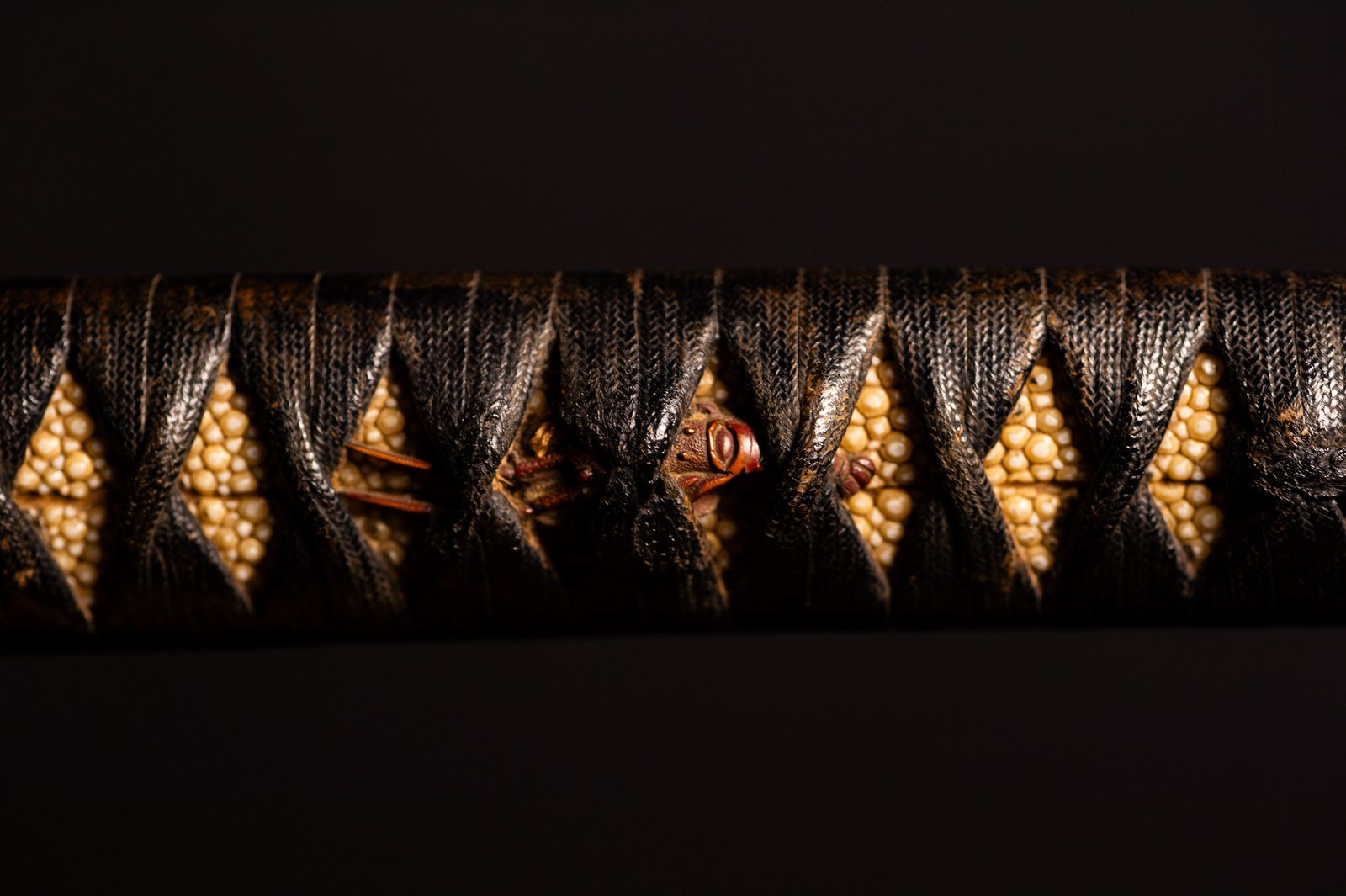
The tsuka is wrapped in black silk ito arranged in a traditional diamond-pattern weave over pale samegawa.
The contrast between the dark silk and light ray skin gives the handle a classical and disciplined appearance.
The wrapping remains in good visual condition, with regular diamond openings exposing the pale samegawa beneath.
The menuki are positioned beneath the wrapping and emerge naturally through these openings, exactly as intended in traditional Japanese sword mounting.
The menuki form a particularly charming pair depicting ebi, or lobsters.
They are rendered in reddish-brown metal using raised decorative work, with their articulated bodies and segmented tails clearly modelled.
The lobster is a classical auspicious motif in Japanese decorative culture.
Its curved body and long life traditionally associated it with longevity and graceful old age.
The warm reddish tones of the figures provide a subtle but effective contrast against the pale samegawa and black silk wrapping.
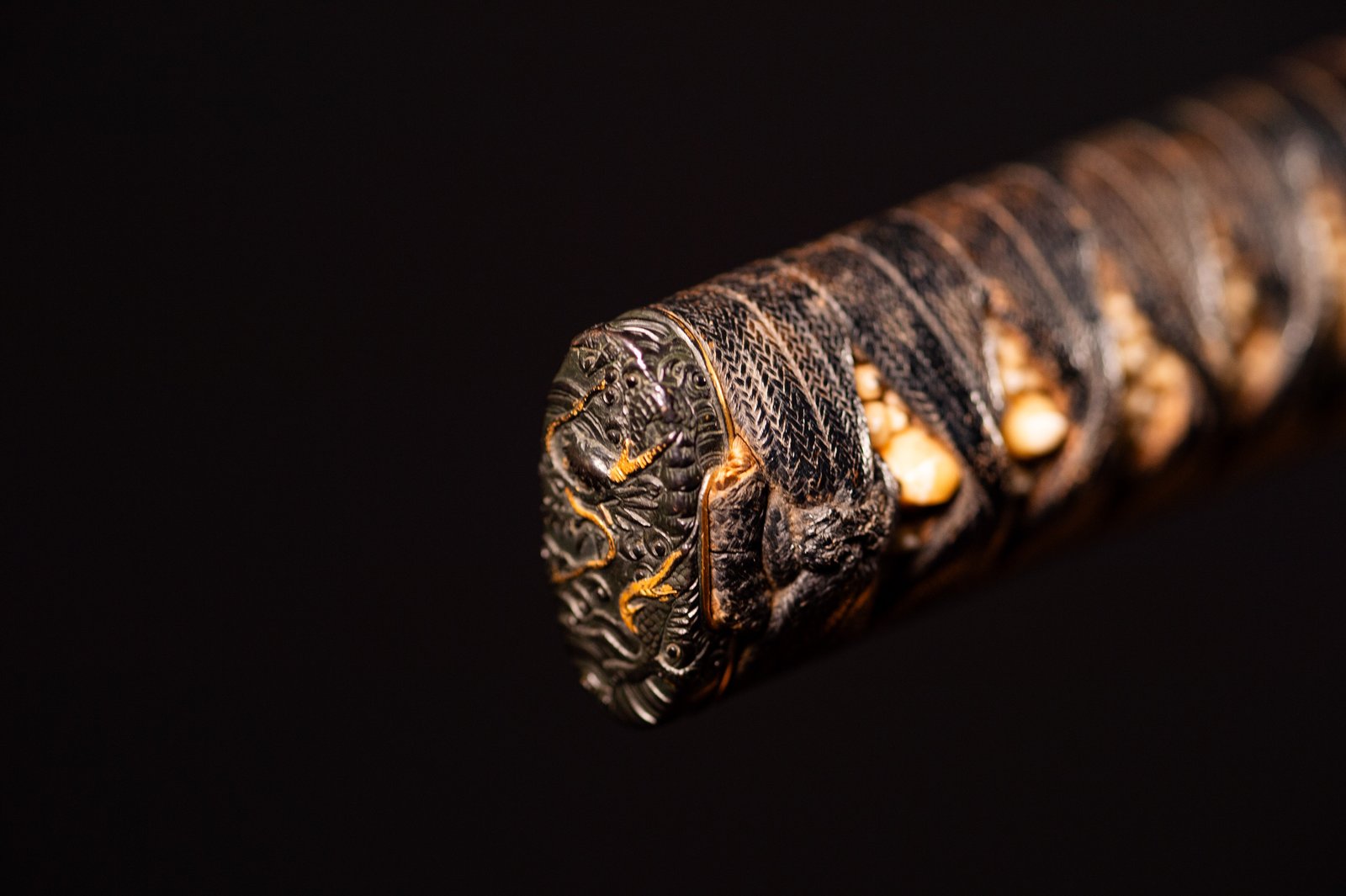
The matched fuchi and kashira are decorated with dragons, or ryū, worked in relief against a dark shakudō ground.
Traces of the original gold decoration remain visible across details such as scales and claws.
This surviving nokori-kinzōgan gives an important indication of the fittings’ original richness while preserving the natural evidence of age and historical handling.
The loss of portions of gilding over time has created a softer surface without eliminating the quality of the underlying work.
The dragon is among the most important motifs in Japanese art, traditionally connected with strength, protection, water and supernatural authority.
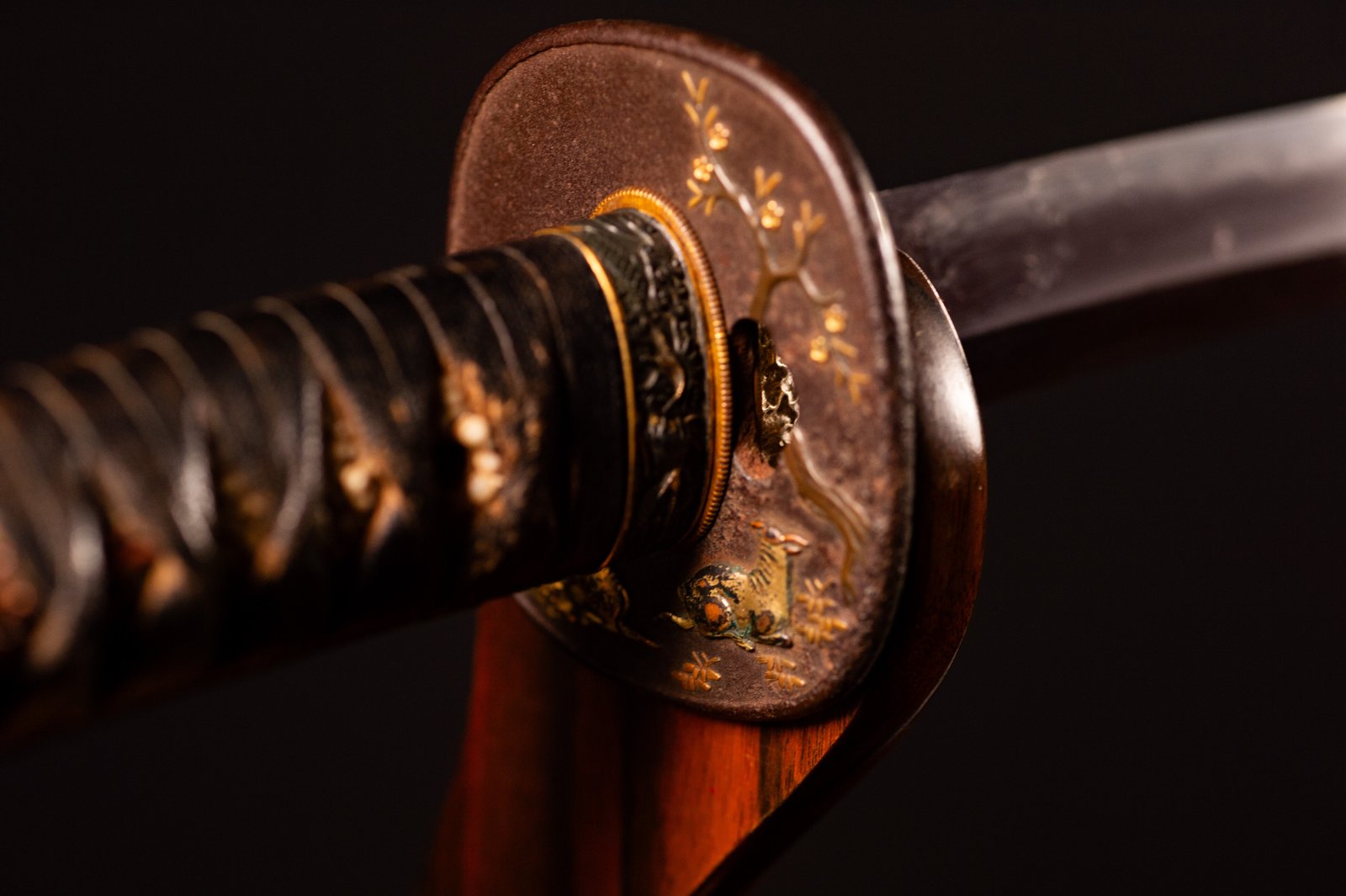
The tsuba provides a quieter visual counterpoint to the powerful dragon imagery of the handle fittings.
Its dark textured surface is decorated with a reclining deer beneath a flowering branch, highlighted with gold takazōgan.
The composition has a calm, almost autumnal atmosphere.
The reclining animal gives the scene a contemplative quality that contrasts elegantly with the dynamic dragons of the fuchi-kashira.
This balance between vigorous and restrained imagery is one of the more attractive aspects of the complete mounting.
The saya is finished in traditional glossy black lacquer.
Its surface remains deliberately plain, allowing the richer decoration of the metal fittings to carry the visual emphasis of the ensemble.
The simplicity of the black lacquer also gives the sword a formal appearance appropriate to its substantial proportions.
The kurikata remains intact.
The clean, reflective finish provides an elegant background to the more detailed fittings and helps unify the complete koshirae.
The saya is fitted with a formal gold-toned braided sageo.
Its warm colour introduces a restrained accent against the otherwise predominantly black mounting.
The choice of gold-toned textile also harmonises with the surviving gold decoration of the fuchi-kashira and tsuba, helping to visually connect the individual components of the sword.
The sword is accompanied by its original Japanese Jūhō Tōken Rui Tōrokushō, or firearms and sword registration certificate.
The document was issued by the Niigata Prefecture Board of Education on 29 July 1965, Shōwa 40.
It records the blade as unsigned and provides its traditional dimensions.
The survival of this approximately sixty-year-old document creates an established documentary history for the sword within Japan dating back to the mid-1960s.
The sword does not currently carry an NBTHK certificate, and no attribution to a specific smith or school should therefore be presented without further specialist examination or submission to shinsa. :contentReference[oaicite:2]{index=2}
The sword remains a coherent antique ensemble with natural evidence of age and historical use.
The nakago preserves a stable, undisturbed historical patina and three mekugi-ana.
The traditional mounting remains visually attractive, with the black silk ito, pale samegawa, reddish-brown lobster menuki, dragon fuchi-kashira, deer-decorated tsuba, glossy black lacquer saya and gold-toned sageo forming a harmonious presentation.
Some loss of the original gilding is visible on the dragon fittings, entirely consistent with age and historical handling.
These signs should be regarded as part of the history and character of the original fittings rather than modern defects.
The most immediately compelling aspect of this sword is its unusual size.
At approximately 60.3 cm, the blade falls only a few millimetres short of the traditional katana threshold.
This gives it an unusual dual identity: technically an ō-wakizashi, yet in proportions, curvature and visual presence it approaches a short katana.
For collectors, this makes the sword especially versatile and considerably more imposing than the average wakizashi.
The original Japanese registration from 1965 adds an important documentary component, establishing a recorded history in Japan extending back approximately sixty years.
Equally important is the koshirae.
The mounting combines several independently attractive fittings: the finely executed silver-covered gin-kise habaki, reddish-brown lobster menuki, matched dragon fuchi-kashira retaining traces of their original gold decoration, and the atmospheric deer-and-flowering-branch tsuba.
The quality of the habaki is particularly notable. Its complex two-register decoration elevates a fundamentally functional component into an object of decorative metalwork worthy of appreciation in its own right.
Unlike pieces whose appeal depends entirely upon attribution to a famous smith, this sword derives much of its character from the combination of its unusual dimensions, historical Japanese documentation and sophisticated complete mounting.
A striking early-to-mid Edo period ō-wakizashi whose exceptional 60.3 cm length places it only millimetres below katana classification. With its pronounced curvature, fine silver-covered gin-kise habaki, complete traditional koshirae with lobster menuki, dragon fuchi-kashira and deer-decorated tsuba, together with original Niigata registration from 1965, this sword offers an unusually compelling combination of martial presence, decorative craftsmanship and documented Japanese history.
| Época | Edo |
|---|

Order above 1.000,00 € gets free shipping.

Secure and hassle-free payment process.

Certificate of authenticity included.

Have questions? Contact us via WhatsApp.
Contact