October 5, 2026
European figures in inro and netsuke appear in specific works recorded by the Rijksmuseum and the Metropolitan Museum of Art. These examples include a Dutch merchant and a Portuguese figure on an inro, and Dutchmen holding roosters in two netsuke. The V&A provides context for European imagery on Japanese accessories.
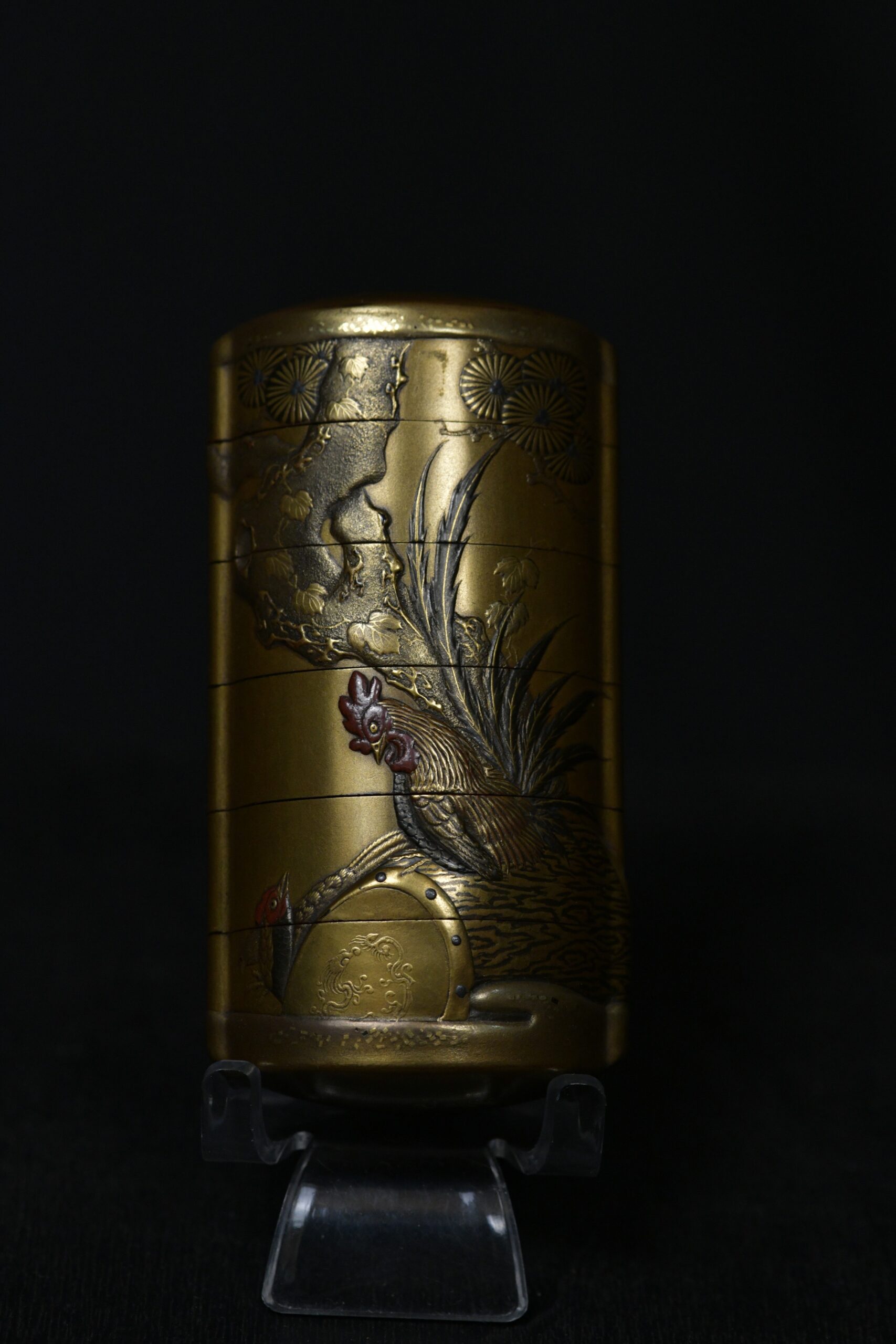
Illustrative inro with rooster decoration from the Supein Nihonto collection. This is not one of the museum objects depicting European figures discussed below.
For a related look at Japanese decorative lacquer cases, browse this collection of Inro collection.
Museum records show that European figures were sometimes included on Japanese inro and netsuke in the Edo period. In the documented examples used here, the figures are identified very specifically: a Dutch merchant, a Portuguese figure, a Dutchman with a rooster, and a Dutchman holding a cock. This article stays close to those museum records and does not try to assign broader meanings that the sources themselves do not state.
The Victoria and Albert Museum notes that after 1639 Japan was not entirely closed to foreign influence, even under sakoku. It also says that, after the Dutch became the only Europeans allowed to remain in Japan, the latter half of the 18th century saw rangaku, or Dutch learning, develop as an important intellectual current. In that setting, the museum says that the taste for Dutch things was widespread and included images of Europeans on fashionable accessories such as combs, inro, and netsuke.
The Rijksmuseum records an anonymous Japanese inro dated 1775 to 1800 as a five-part seal case with ojime and netsuke. Its description states that one side shows a Hollandse koopman, or Dutch merchant, and the other side shows a Portugees, or Portuguese figure. The same record also notes that the cord is not authentic, which is a catalog detail about the present object rather than a claim about its original use.
The Metropolitan Museum of Art catalogs a Japanese netsuke titled Dutchman with a Rooster. Its official metadata identifies the work as late 18th century, Edo period, made in Japan, and carved in ivory. Because the record stops at the catalog level, it gives the figure type and object details without adding an interpretation of why the Dutchman and rooster were paired.
The Met also records a Japanese netsuke titled Netsuke of Dutchman Holding a Cock in His Arms. Like the first example, it is cataloged as late 18th century, Edo period, Japanese, and made of ivory. The title itself is the key factual point here: the European figure is identified as a Dutchman, and the bird is identified as a cock.
Taken together, these records show that European figures on inro and netsuke were described by museums in concrete terms rather than general ones. The Rijksmuseum example presents both a Dutch merchant and a Portuguese figure on an inro, while the Met examples identify their European subject as Dutchman in two different netsuke titles. The sources do not ask us to read a single fixed meaning into every example; they simply document that specific Japanese small works did depict named European figures.
The value of these examples lies in their specificity. The Rijksmuseum identifies two different European figures on one inro, while the Met records two netsuke with Dutchmen holding birds. The V&A places European imagery on accessories within a broader interest in Dutch things. Read together, these sources provide context and individual examples. They do not establish how frequently each subject appeared, why a particular maker chose it, or a single symbolic meaning shared by all such works.
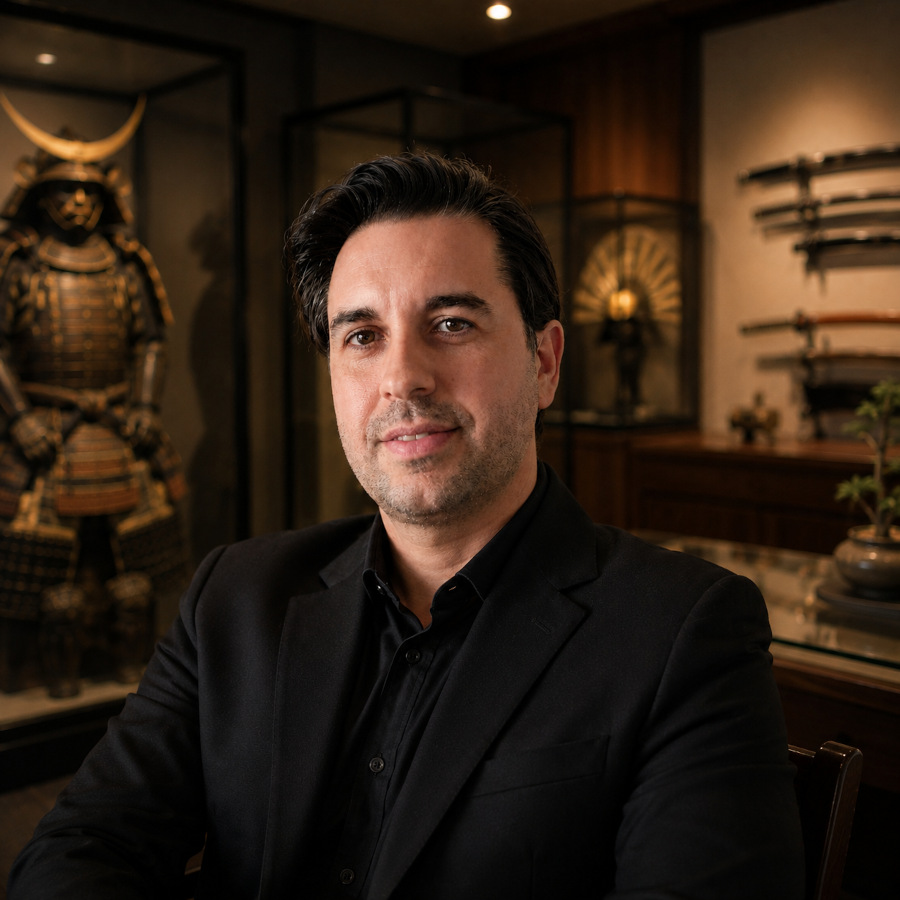
CEO of SupeinNihonto, dealer and collector of ancient Japanese art and weapons from Canillo, Andorra.
Contact