October 1, 2026
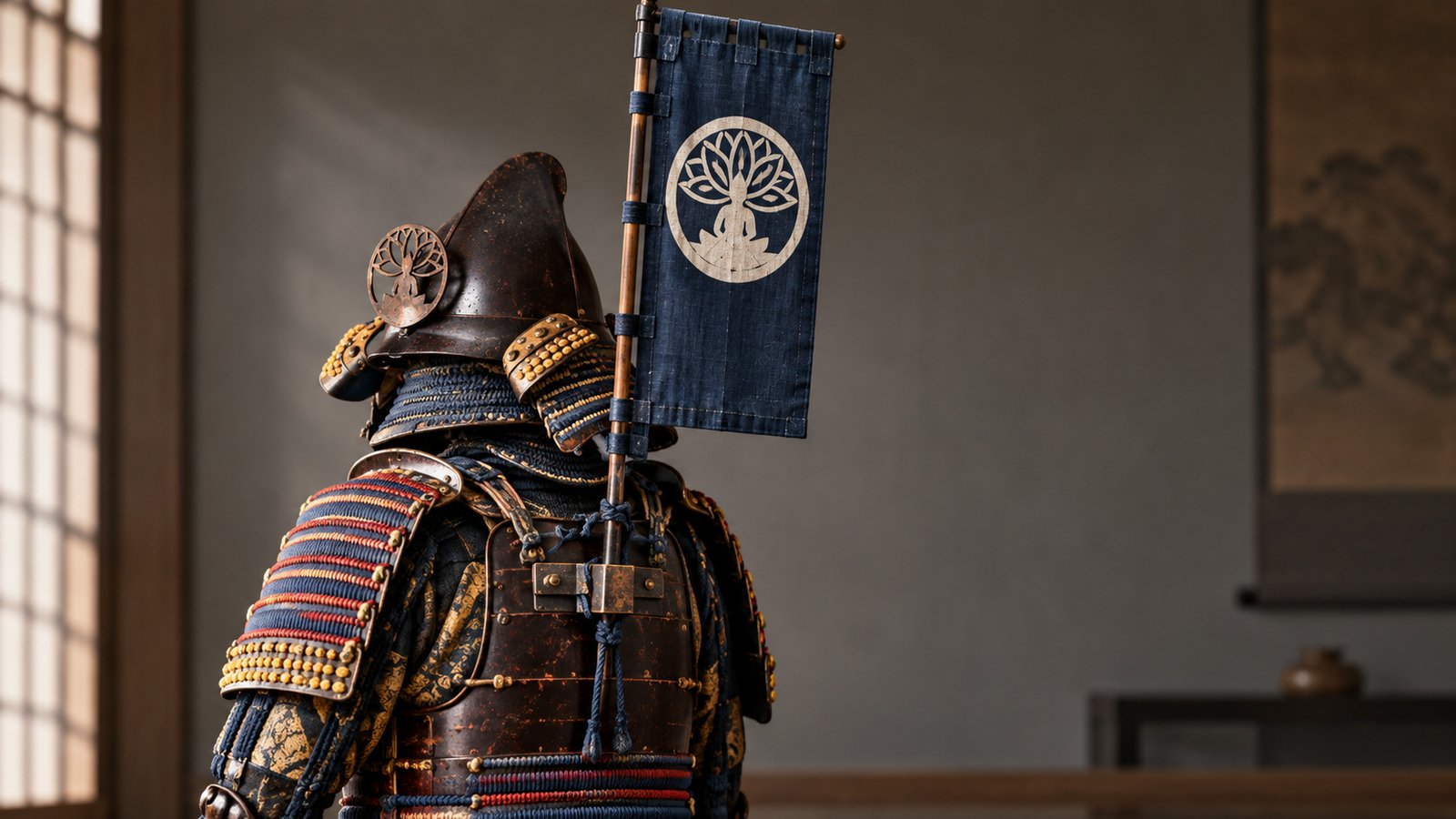
A small banner rising above a suit of samurai armour can change the way we read the entire ensemble. It was not simply decoration: a sashimono could help identify a warrior in the confusion of battle.
Many examples look like compact flags, but the term also appears in museum records for back-mounted insignia with less familiar forms. To understand a sashimono, look at both the sign it carried and the fittings that connected it to the armour.
A sashimono was a personal or military identifier worn on the back with Japanese armour. The Metropolitan Museum of Art describes examples used by soldiers for battlefield identification, mounted behind the cuirass on an L-shaped pole. Their banners could bear a family crest or another identifying symbol.
The mounting matters. A sashimono was designed to be carried as part of the armour, so its pole and fittings had to connect to the back of the cuirass. The Met describes one common form as a banner or personal flag attached to a bamboo rod.
This position distinguishes a sashimono from a maedate, the ornament mounted at the front of a helmet. The two could both display meaningful imagery, but they occupied different places and served different roles within the visual arrangement of the armour.
A banner is the form many people picture first: a piece of textile carried on a pole. Museum collections, however, document sashimono that depart from this familiar shape.
One 18th-century example at the Met uses wooden balls attached to flexible shafts made from baleen. The museum notes that, when moved, the balls would have struck one another and made a cracking sound. The object served as a personal identifier while also producing an audible effect.
Another Met record identifies a back ornament combining a sashimono with an uma-jirushi, a military insignium. Its materials include wood, lacquer, gold and wool.
These examples are a useful reminder: when a museum or seller calls an object a sashimono, examine the documented object itself. Do not assume that every example is a rectangular cloth flag.
Some sashimono displayed family crests or other identifying marks. These designs helped distinguish individuals or groups, but identifying a symbol does not automatically establish the history of a particular object.
The Met’s record for a textile sashimono describes a central emblem of interlocking circles, a design used by several Japanese families and particularly associated with the Wakisaka. This illustrates why a motif should be compared with documented examples rather than treated as conclusive proof of ownership.
When examining a design, first describe what is visible: its shape, colours, arrangement and materials. Then check whether a reliable museum or specialist record identifies the emblem. Keep that documented identification separate from claims about who carried a particular surviving banner.
A back-mounted standard needed a support that connected it to the armour. Collection records describe poles and fittings attached at the rear of the cuirass, but the exact arrangement can vary between objects.
When viewing a complete suit, look for a bracket or holder on the back of the cuirass and consider how it relates to the standard. A loose sashimono and a separate suit of armour should not be assumed to have originally belonged together solely because their style or colours appear compatible.
Photographs of the front of a suit may not show this system. Ask for a rear view of the armour, close-ups of the fittings and images of the standard from several angles.
A close inspection should include the standard and its attachment:
Avoid inserting a pole into old armour or adjusting fragile fittings to test how they work. Existing documentation and specialist examination are safer ways to understand the construction.
A sashimono makes most sense as part of the armour’s overall arrangement. The cuirass supports the fitting; the standard rises behind the wearer; its shape and design contribute to how the suit would have appeared from a distance.
When exploring the Gusoku and Yoroi in the Supein Nihonto collection, look at the rear of each suit as well as the front. A visible fitting or documented sashimono can reveal another part of the armour’s construction and intended display.
Sashimono refers to a back-mounted standard or identifier associated with Japanese armour. Many examples take the form of a small banner, although museum records also document other shapes.
Sashimono could identify a warrior or group on the battlefield. Their designs might include family crests or other identifying symbols.
It was mounted on the back of the cuirass using a pole and supporting fittings. The arrangement can vary between surviving examples.
No. Textile banners are familiar examples, but museum collections also record back-mounted insignia made from materials such as wood, lacquer, metal and baleen.
No. A sashimono was mounted at the back of the armour. A maedate is a frontal ornament on a helmet.
Not by itself. A design may be associated with several families or groups. Identifying the motif is only one part of researching an object’s history.
CEO of SupeinNihonto, dealer and collector of ancient Japanese art and weapons from Canillo, Andorra.
Contact