September 9, 2026

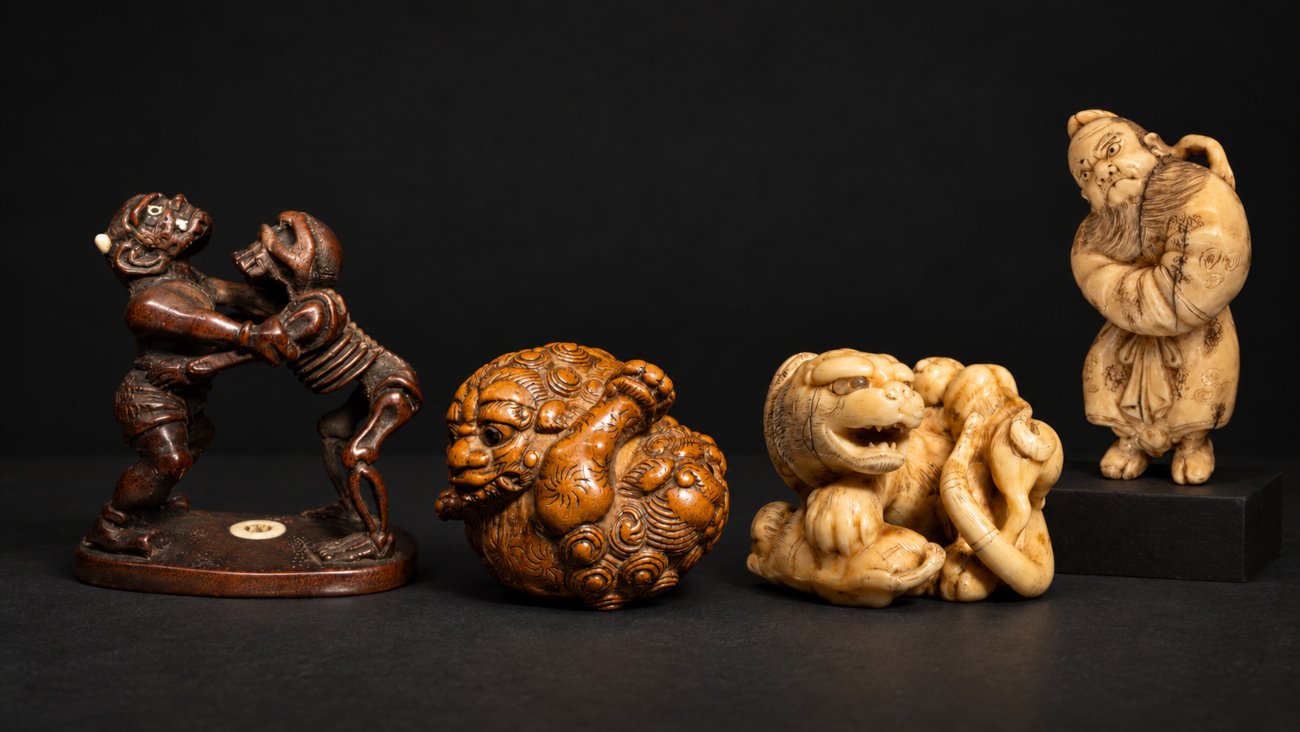
Learning how to identify antique netsuke is less about finding one decisive sign than understanding how many small details work together. The carving, surface, cord holes, material, wear, signature and subject should tell a coherent story. When one feature contradicts the others, the piece deserves closer examination.
This guide offers a structured way to look at a netsuke before purchasing it or seeking a professional opinion. It cannot authenticate an object from photographs alone, and no checklist can replace direct examination by an experienced specialist. It can, however, help you ask better questions, recognise meaningful features and avoid conclusions based on a single attractive detail.
If you are new to the subject, begin with our introduction to the history, function and principal types of netsuke. This guide focuses specifically on physical examination and collecting judgement.
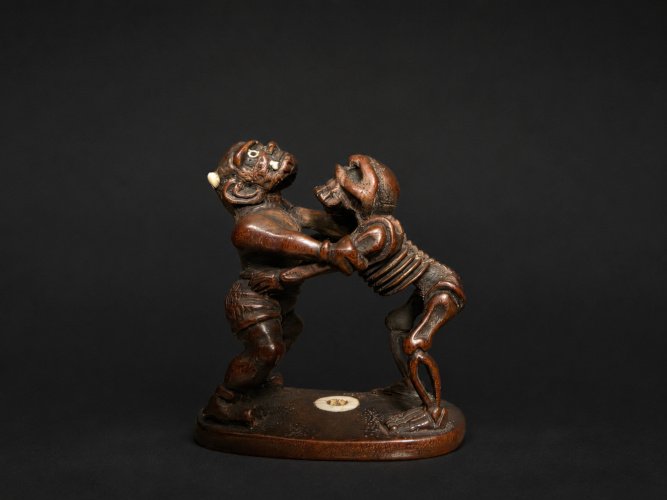
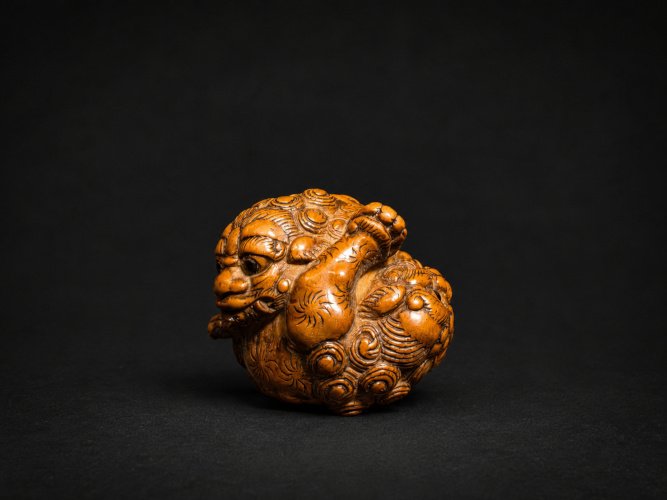
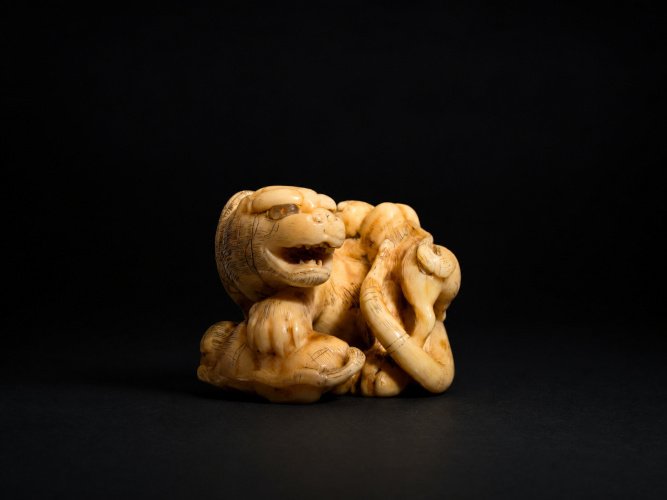
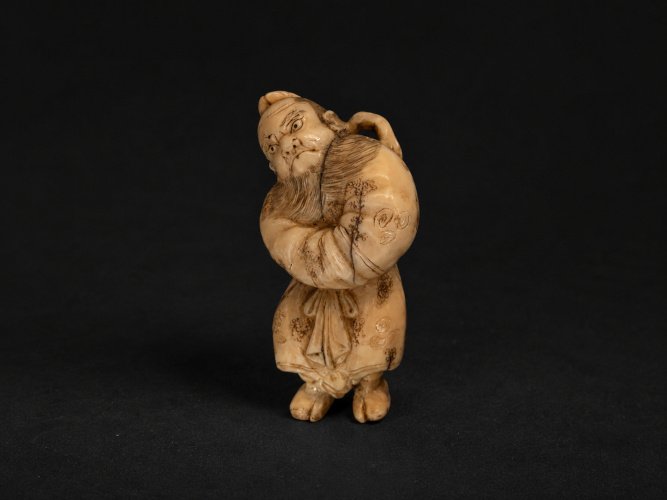
A netsuke was not originally conceived as a miniature sculpture for a cabinet. It was a wearable toggle used with an inrō, pouch or other sagemono suspended from the obi. This practical role influenced its entire design.
Before studying age or authorship, consider the object as something intended to be handled and worn:
Many genuine netsuke are remarkably sculptural, but their artistry normally coexists with function. A small carving with no practical cord arrangement may instead be an okimono, a later decorative carving or an object made in the style of netsuke.
There are exceptions and unconventional formats, so function is a starting point, not a verdict.
Good netsuke reward being turned in the hand. The composition should continue around the sides and underside rather than presenting only one convincing front.
On a figure, look at how the body folds into the overall shape. On an animal, follow the relationship between limbs, fur, eyes and posture. On a group, ask whether the forms remain legible when viewed from different directions.
Pay attention to the transitions between volumes. Strong carving often shows intention in areas that are easy to overlook: the space beneath an arm, the meeting of two garments, the underside of a paw or the rhythm of hair and fur.
Detail alone is not proof of quality. A busy surface can be mechanically repetitive, while a restrained carving can convey weight, expression and movement with very few cuts.
Also look for consistency. If the face is finely observed but the reverse is crude and unresolved, determine whether this is a deliberate workshop characteristic, later alteration or simply uneven workmanship. The aim is not to demand perfection, but to understand whether the whole object speaks the same visual language.
The cord openings are known as himotoshi. They are among the most informative functional features of many netsuke, but their existence alone does not establish age or authenticity. Modern carvers and imitators can add two holes just as easily as historical makers did.
Instead, study how the himotoshi relate to the design:
On some pieces, folds of clothing, spaces between limbs or other natural openings form part of the cord channel. On others, the holes are deliberately shaped and integrated into the underside. The important question is whether the system appears functional and compositionally considered.
Be cautious when the himotoshi look freshly drilled, unusually sharp or disconnected from the object’s balance while the surrounding surface appears heavily aged. This inconsistency does not automatically make a piece false, since holes can be altered or cleaned, but it should prompt further investigation.
Patina is one of the most misunderstood aspects of antique netsuke. A warm colour or glossy surface can be visually persuasive, yet colour alone does not prove prolonged use. Surfaces may darken through handling, oxidation, dirt, coatings, staining or deliberate treatment.
Natural wear tends to make sense in relation to handling and contact. Raised areas may become softer, recesses may retain darker material and the underside may show repeated contact. Cord wear, when present, should relate to the route through the himotoshi.
The transition between exposed and protected areas is often more informative than the overall colour.
Look for a coherent surface rather than an artificially aged appearance. Potential warning signs include colour pooled indiscriminately in every recess, abrasive scratches running in one direction, a glossy coating over cracks and dirt, or sharp new damage surrounded by an otherwise uniform dark surface.
Never scrub, polish or apply household products to test a netsuke. Cleaning can remove historically meaningful surface evidence and permanently reduce both its aesthetic and scholarly value. If there is active dirt, residue or material instability, consult a conservator familiar with Japanese works of art.
Wood and ivory were historically important netsuke materials, but surviving examples also include antler, bone, metal, lacquer, ceramic, shell and other substances. The Metropolitan Museum of Art’s overview of netsuke demonstrates the breadth of materials and established formats found in museum collections.
Material identification matters because it affects how a piece was carved, how it ages and what documentation may be required for its sale, export or import.
However, material is often difficult to determine accurately from colour or photographs. Bone can be mistaken for ivory, different types of ivory may be confused with one another, stained wood can conceal its grain and composite pieces may use several substances.
Use visual observations as clues, not final conclusions:
Avoid destructive tests, heated needles, chemical products or aggressive scraping. They can damage the object and still produce misleading results.
When regulated animal material may be present, ask the seller for a precise material description and the documentation relevant to the intended transaction and destination.
A signed netsuke is not necessarily more authentic, older or better than an unsigned one. Signatures can be genuine, added later, copied from known artists or placed on modern works. Conversely, important historical netsuke may be unsigned.
When examining a signature, ask:
Attribution should combine the inscription with stylistic comparison, workmanship, material, provenance and specialist reference material.
A famous name should increase the need for scrutiny, not reduce it. If a seller’s entire attribution rests on the signature, request the reasoning and comparable documented examples.
Museum databases can be useful for visual comparison. The British Museum’s netsuke collection, for example, allows collectors to compare recorded materials, subjects, dates, makers and formats across many catalogued objects.
Photographic comparison is educational, but it is not a substitute for expert attribution.
An old netsuke does not need to be flawless, but neither should every defect be romanticised as evidence of age. Condition affects how clearly the original design survives and may influence collectability.
Inspect the piece methodically under soft, directional light. Look for:
Repairs are not automatically unacceptable. A historical object may have been used, damaged and carefully restored. What matters is the scale of the intervention, whether it has been disclosed and how much original material and surface remain.
A good description should distinguish ordinary wear from structural damage and later restoration.
Netsuke subjects range from animals and plants to tradespeople, legendary figures, deities, demons and theatrical masks. The subject itself rarely establishes age. Popular motifs were repeated across generations and continue to be carved today.
Instead, examine how the subject is interpreted. Consider the proportions, movement, facial expression, treatment of clothing or fur, underside design and relationship between detail and overall mass.
Compare these features with securely catalogued examples, not merely with other objects offered online under similar descriptions.
Avoid assigning a precise school, city or carver from one familiar motif. Kyoto, Osaka, Edo and other centres developed recognisable tendencies, but individual carvers borrowed, adapted and departed from convention.
A cautious description that separates observation from attribution is more trustworthy than an impressive label unsupported by comparison.
To explore recurring themes and their cultural context without turning motif into automatic attribution, see our guide to the art and symbolism of netsuke.
Provenance is the documented history of ownership. It may be incomplete for small objects that have circulated for generations, but any reliable information can strengthen the object’s history and help clarify when and where it entered a collection.
Before buying, ask for:
Documentation should describe what is known and distinguish it from what is believed. Phrases such as “signed”, “attributed to”, “school of” and “in the style of” do not mean the same thing. Ask for clarification whenever wording is ambiguous.
It is easy to become distracted by an expressive face, an appealing animal or a famous signature. A consistent sequence keeps the examination grounded.
Surface colour can be produced or altered in many ways. Examine where wear occurs and whether the entire surface history is coherent.
A signature is one component of attribution. It must agree with the carving, material, period, inscription style and known body of work.
Front-facing photographs can hide the underside, cord arrangement, repairs and condition issues. Request complete, sharp images under neutral light.
Quality also appears in volume, movement, balance, expression and the resolution of less visible areas. More lines do not necessarily mean better carving.
Some changes are consistent with age and material; others indicate impact, poor storage or structural weakness. Describe the damage before interpreting it.
Names and dates can change as scholarship develops. The object’s workmanship, condition and appeal remain central.
High-resolution photographs can reveal carving quality, inscriptions, condition and some surface characteristics. They are valuable for preliminary assessment, especially when images cover every angle and include scale.
However, photographs cannot reliably convey weight, tactile surface, subtle tool marks, internal material structure or every restoration. Colour reproduction also varies between cameras and screens.
A responsible remote opinion should therefore state its limits. For a significant purchase, direct examination or an evaluation by a trusted specialist remains the safer approach.
The best way to identify and appreciate antique netsuke is to combine close observation with comparison and documentation.
No isolated feature—not patina, himotoshi, material or signature—can carry the full conclusion. A convincing piece brings these elements together in a form that is functional, visually coherent and honestly described.
Knowledge protects the collector, but collecting is not only an exercise in detection. Subject, expression, handling quality and the relationship between sculpture and function are part of what has made netsuke compelling for centuries.
Explore our current collection of antique Japanese netsuke to study individual pieces through detailed descriptions and photographs. Every available work is unique, so the selection changes as pieces enter private collections.
Essential questions to consider when examining the function, material, patina, signature and condition of an antique Japanese netsuke.
Start with the whole form and its function. A netsuke should normally be compact, comfortable to handle and equipped with a practical cord arrangement. Then examine its carving, material, surface, condition and documentation together.
No. Many have two drilled openings, sometimes of different sizes, but natural openings within the composition can also form the cord channel. The arrangement varies according to the type and design.
No. Signatures may be genuine, copied, added later or misread, while notable pieces can be unsigned. Attribution requires agreement between the inscription, workmanship, style, material, period and documented comparisons.
Look for wear and colour that correspond to handling, protected recesses and the cord route. An even dark coating or colour artificially concentrated in every recess deserves caution. Patina should be assessed as part of the complete surface, not by colour alone.
Not with certainty in many cases. Colour is not enough, and bone, different types of ivory and modern substitutes can be confused in images. Obtain a precise material description and expert assessment, particularly when legal documentation or international shipping is involved.
Not necessarily. Wear, minor losses or historical repairs may be present. What matters is that its condition is accurately disclosed and that the remaining surface and carving can be assessed clearly.
CEO of SupeinNihonto, dealer and collector of ancient Japanese art and weapons from Canillo, Andorra.