October 17, 2026
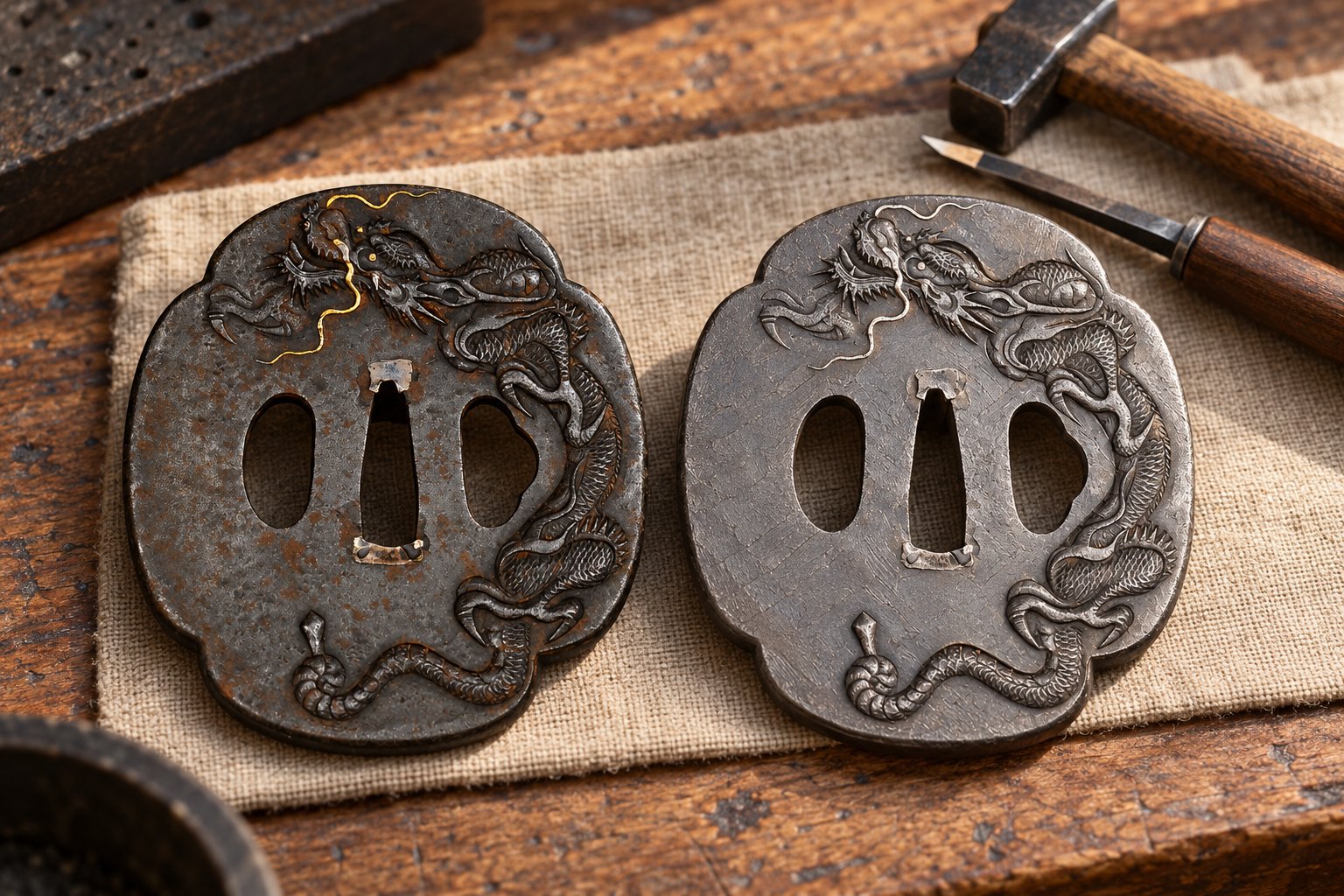
Tsuba copying in utsushi is a traditional way to study Japanese sword-guard making by reproducing an original form with the same materials and techniques. This article explains what utsushi means and why tsuba copying in utsushi is treated as an important part of workshop training.
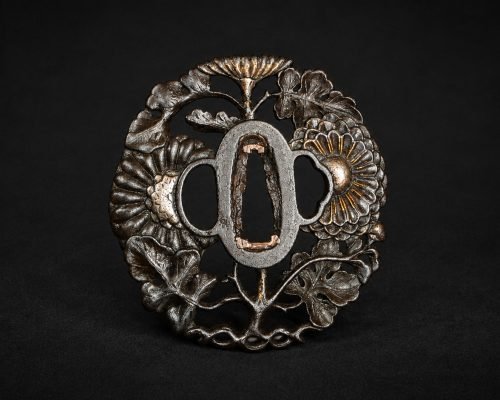
Cleveland Museum of Art tsuba with a fence and flower, shown here as an illustrative example of a Japanese sword guard.
See related tsuba examples in our collection:Tsuba collection.
In Japanese workshop training, copying a tsuba is called utsushi. The V&A explains that the practice uses the same materials and techniques as the original object, and that it has long been regarded as an important form of training for students who want to understand how a masterwork was made. In this sense, tsuba copying in utsushi is not a casual imitation but a disciplined way of learning through close reproduction.
The same source identifies a tsuba as the hand guard placed between the hilt and the blade of a Japanese sword. Its practical role was to protect the hand and help balance the weapon, so a trainee copying a tsuba is studying both utility and form at once.
The V&A’s example describes a replicated tsuba made from the same kinds of materials and with the same techniques as the original. That emphasis matters: the student does not simply redraw the pattern, but works toward matching the physical logic of the object itself. Utsushi therefore depends on careful attention to surface, shape, and the relationship between design and function.
Because the goal is to understand the making of an original work, copying in this context is closer to study than to substitution. The reproduced tsuba is valuable as training because it asks the maker to follow the methods of an earlier master and to confront the technical decisions embodied in the antique piece.
The V&A states directly that the copying of historical masterpieces is known in Japan as utsushi. In the museum’s explanation, the term applies to a training process built around understanding an original work’s processes, not simply repeating its outward appearance. That is why the name matters: it describes a method of learning through making, rather than a mere duplicate or replacement.
The V&A also identifies the original tsuba in its example as the work of Gotō Mitsuaki, the 16th master of the Gotō School. The reproduced guard serves as an exercise centered on that specific historical piece, showing how utsushi can connect study, technique, and respect for an earlier maker.
Utsushi does not mean that the copy replaces the original or pretends to be the same historical object. The point is to learn from the masterwork by reconstructing its methods as closely as possible. In the V&A example, the original tsuba is clearly distinguished from the replicated version, so the training value lies in process, not in confusion about identity.
Museum photograph. Cleveland Museum of Art · 1915.91 · CC0 · Official collection record
CEO of SupeinNihonto, dealer and collector of ancient Japanese art and weapons from Canillo, Andorra.
Contact