October 14, 2026
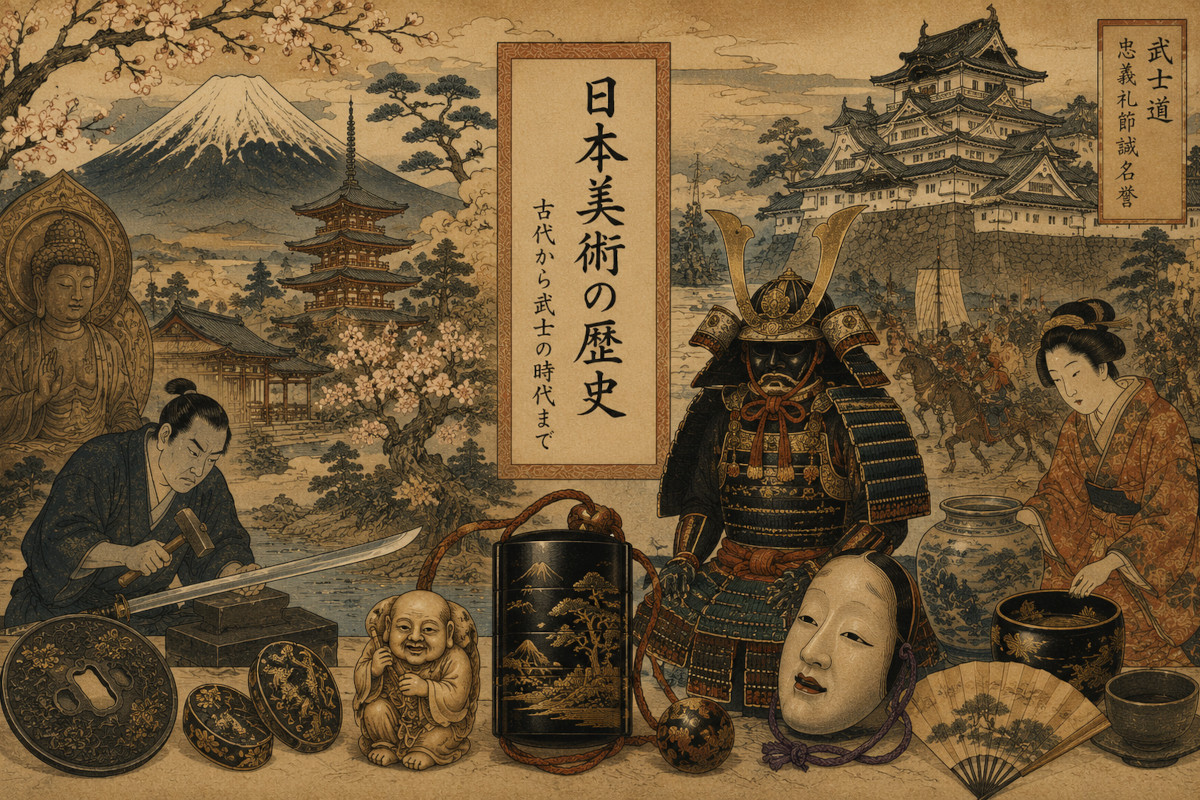
Japan possesses one of the world’s richest artistic traditions, shaped over thousands of years by religion, warfare, nature, craftsmanship, and philosophy. Unlike many artistic traditions that developed primarily for decoration, Japanese art often balanced beauty with practicality, producing objects that were both functional and aesthetically refined.
From the elegant ceramics of prehistoric settlements to the legendary swords of the samurai, Japanese artists developed techniques that continue to inspire collectors, museums, and historians worldwide.
This article explores the evolution of Japanese art through history, highlighting the major periods, artistic movements, and masterpieces that defined one of the most distinctive cultures in the world.
Japanese artistic traditions date back more than 10,000 years to the Jōmon period.
The earliest inhabitants of the Japanese archipelago produced remarkable pottery decorated with rope-like impressions, from which the term “Jōmon” (meaning “cord-marked”) originates. These vessels are among the oldest ceramic objects ever discovered.
During the Yayoi period (300 BC–300 AD), new influences arrived from the Asian mainland. Agriculture, metallurgy, and bronze casting transformed Japanese society, while artistic production became increasingly sophisticated.
Although relatively simple compared to later masterpieces, these early works established the foundations of Japanese craftsmanship.
The introduction of Buddhism from China and Korea during the 6th century dramatically transformed Japanese art.
New architectural styles emerged with the construction of temples, while sculptors created magnificent wooden and bronze images of Buddha and Bodhisattvas.
Painting, calligraphy, lacquerware, and religious metalwork flourished under imperial patronage.
Many of Japan’s oldest surviving artistic treasures date from this period and remain preserved in temples throughout the country.
Beginning in the late Heian period, military families gradually gained political influence.
With the establishment of the Kamakura Shogunate in 1185, the samurai became the dominant social class, shaping Japanese culture for nearly seven centuries.
Their influence extended far beyond warfare.
The samurai became patrons of:
Many of the artistic traditions admired today owe their development to samurai patronage.
Among all Japanese artistic achievements, none has become more iconic than the Japanese sword.
Unlike ordinary weapons, a nihonto represents the perfect union of metallurgy, aesthetics, spirituality, and craftsmanship.
Master swordsmiths spent decades perfecting techniques for forging tamahagane steel, producing blades celebrated not only for their effectiveness but also for their extraordinary beauty.
Collectors today admire features such as:
Each blade reflects both the individual craftsman and the historical period in which it was created.
Continue reading: History of Nihonto
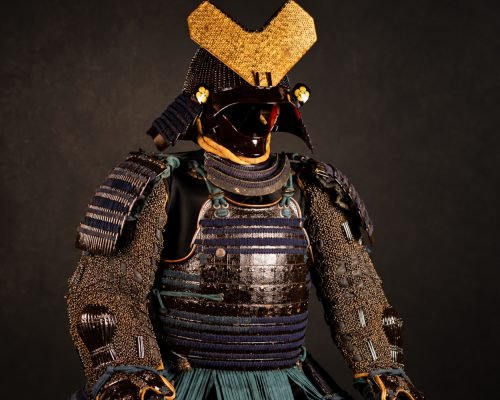
Japanese armour evolved continuously from the Heian period through the peaceful Edo era.
Early armour emphasized mounted archery, while later designs adapted to large-scale infantry warfare during the Sengoku period.
Armour makers combined:
The result was equipment that offered protection while expressing family identity, military rank, and artistic taste.
Even after the end of warfare, armour continued to be produced as ceremonial works of exceptional craftsmanship.
Continue reading: History of Japanese Armour
The Japanese sword included dozens of artistic components beyond the blade itself.
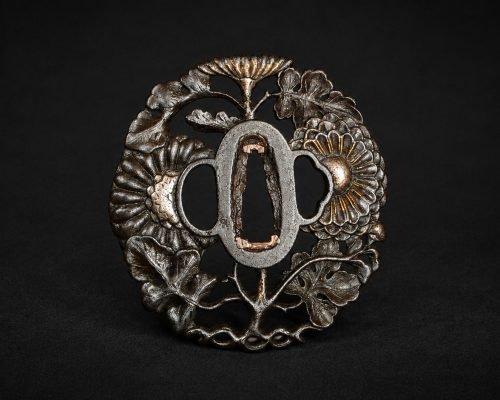
Metalworkers transformed functional fittings into miniature sculptures.
Among the most celebrated are:
These objects became canvases for extraordinary engraving, carving, inlay, and alloy techniques.
Subjects ranged from dragons and tigers to Buddhist symbolism, seasonal flowers, folklore, and scenes from classical literature.
Perhaps one of the most fascinating aspects of Japanese culture is how ordinary objects became artistic masterpieces.
Items originally created for practical purposes gradually evolved into highly collectible works of art.
Examples include:
Small carved toggles originally used to suspend personal belongings from the kimono sash.
Over time, they became miniature sculptures displaying astonishing creativity and technical mastery.
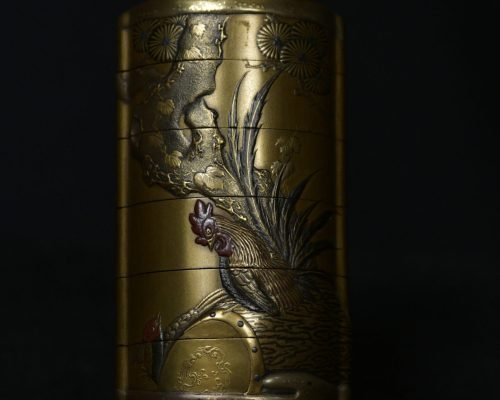
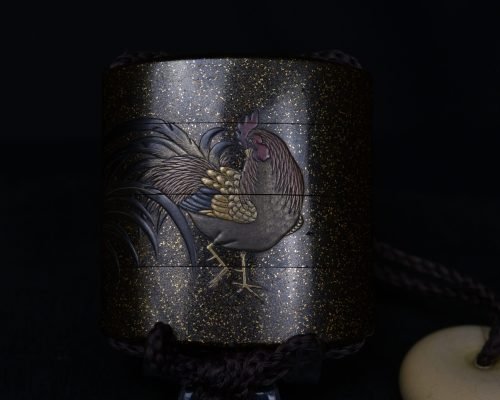
Elegant lacquer medicine cases worn by samurai and wealthy merchants.
Master craftsmen decorated them using gold maki-e, mother-of-pearl, and intricate lacquer techniques.
Japanese lacquer became one of the country’s greatest artistic achievements.
Generations of craftsmen perfected techniques that remain unmatched for durability and beauty.
The refinement of Japanese culture extended beyond objects.
Noh theatre developed during the Muromachi period as a sophisticated dramatic art combining poetry, music, dance, costume, and sculpture.
Its carved wooden masks remain among the finest examples of Japanese artistic expression.
Each mask captures subtle emotional transformations depending on lighting and viewing angle, demonstrating extraordinary craftsmanship.
The peaceful Edo period (1603–1868) marked one of Japan’s greatest artistic eras.
Without constant warfare, artisans devoted increasing attention to refinement and luxury.
During this period flourished:
Many of the antiques most sought after by collectors today originate from Edo workshops.
The abolition of the samurai class during the Meiji Restoration fundamentally transformed Japanese craftsmanship.
Demand for swords and armour declined dramatically.
Many artisans adapted by producing works intended for collectors and international exhibitions.
Although their original purpose disappeared, traditional techniques survived thanks to generations of dedicated craftsmen.
Today, Japanese art continues to fascinate museums, historians, martial artists, and collectors across the globe.
Authentic antiques provide a tangible connection to Japan’s cultural heritage, preserving techniques that often required decades to master.
Whether studying a samurai sword, an Edo-period netsuke, or a finely carved Noh mask, each object tells part of Japan’s remarkable artistic story.
Understanding that history enriches not only the appreciation of individual works but also the culture that created them.
If you would like to learn more about specific areas of Japanese art, explore our detailed historical guides:

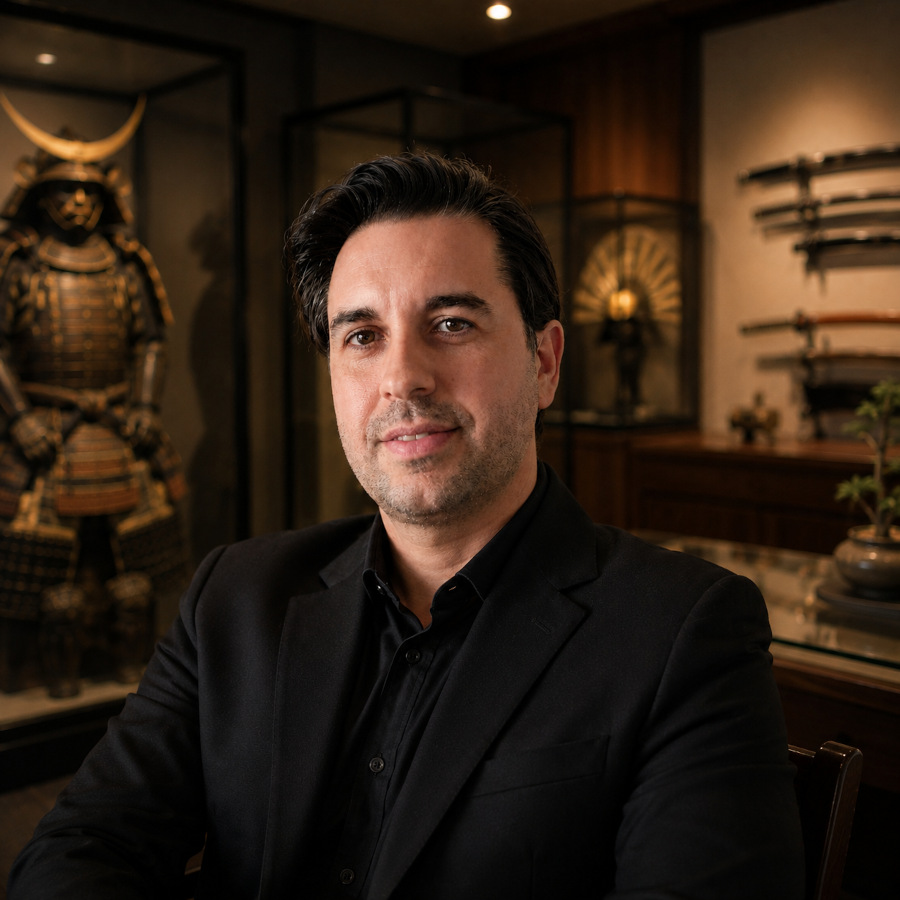
CEO of SupeinNihonto, dealer and collector of ancient Japanese art and weapons from Canillo, Andorra.
Contact