October 14, 2026
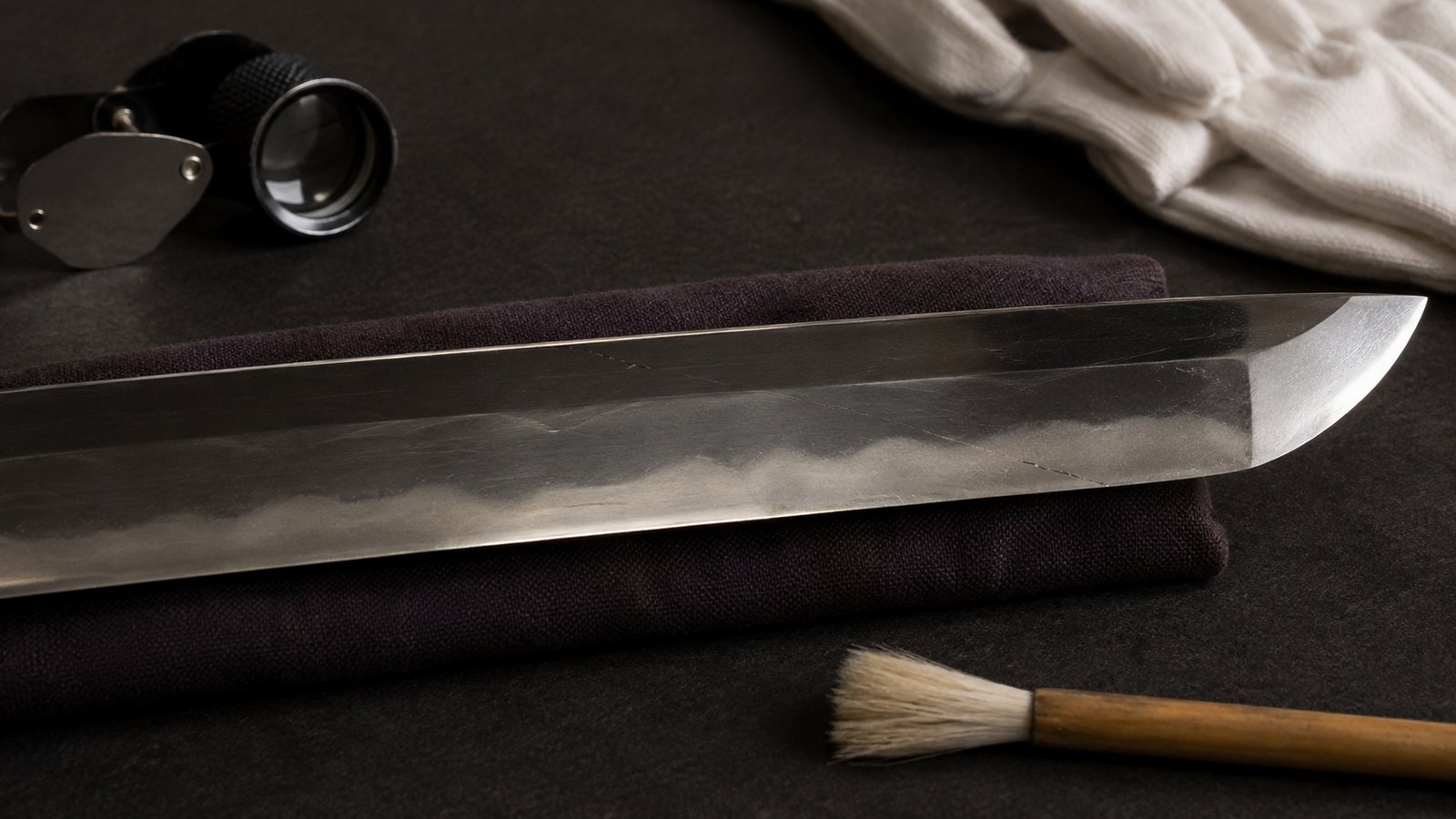
Condition vocabulary in Japanese swords can feel unforgiving: one short word may carry implications for safety, preservation, and collectability. This guide introduces three commonly discussed kizu (flaws)—hagire, fukure and kitae-ware—alongside related terms such as shinae. The aim is not to “diagnose” any specific blade at a distance, but to help you describe what you see, inspect responsibly, and know when to pause and seek qualified advice.
Collectors often use a small set of Japanese terms to summarise a blade’s condition. These words are useful precisely because they are compact—yet that same compactness can create misunderstanding if two people mean different things by the same term. A working vocabulary is therefore less about memorising jargon, and more about communicating observable features clearly and conservatively.
These definitions are deliberately practical. They describe what you might observe, not what any organisation, polisher, or paper would necessarily conclude. In real blades, categories can blur: a line that looks like ware may turn out to be a scratch; a “blister” may be something else entirely; a suspected hagire may require expert confirmation.
Precision reduces friction. When buyers and sellers exchange photographs and brief descriptions, small word choices can create large expectations. For instance, describing a line as “kitae-ware” suggests a structural feature in the steel; calling it “a fine linear mark, possibly ware” is more cautious and invites further inspection.
Precise language also helps restorers. If you can state location, length, orientation, and how the feature behaves under light, you provide actionable information without implying a cause. A good condition note is boring in the best sense: it aims to be repeatable, verifiable, and free from interpretation.
Hagire is one of the most emotionally charged words in sword collecting, because it is commonly associated with structural risk and difficult decisions. At the same time, it is also one of the most misidentified: reflections, scratches, or residues can mimic an edge crack. A careful, methodical approach is essential.
Use controlled, oblique light rather than bright, front-on illumination. A single strong light source (a desk lamp is sufficient) can be more revealing than diffuse room lighting.
Be cautious with magnification. A loupe can help, but it can also encourage overconfidence: micro-scratches and polishing lines can look dramatic at high magnification. If you use a loupe, return regularly to naked-eye viewing to keep scale and context.
If you suspect hagire, treat the blade as potentially compromised. That does not mean you must panic, but it does mean you should avoid actions that introduce stress or impact.
It is also worth separating two ideas that are often conflated: “safe to swing” and “valuable to study”. A blade can be unsuitable for any functional handling yet still teach you a great deal—so long as you do not let the flaw tempt you into experimentation.
Seek qualified evaluation when any of the following apply:
Professional evaluation does not necessarily mean immediate polishing. Often the most responsible first step is simply a careful in-hand inspection by someone experienced in Japanese swords, who can advise whether further action is sensible—or whether leaving the blade untouched is the least harmful option.
Fukure is commonly described in collector language as a blister or bubble. Visually it can be subtle: a slightly raised dome, a shallow pit, or a small circular area that looks different in texture or colour. Unlike a scratch, it often reads as a three-dimensional change rather than a purely linear mark.
Fukure can appear in different places, and location affects how concerned collectors may feel. Without over-interpreting, you can begin with what is observable:
Be wary of confusing fukure with active corrosion. Rust can create pits too, and the distinction is not always straightforward from photographs. Either way, the responsible response is the same: avoid probing, and focus on stabilising the environment (clean, dry storage) while seeking knowledgeable advice if the feature seems to be changing.
Collectors often ask whether a blister will “get worse”. There is no single answer, because stability depends on factors you cannot reliably assess at home: the depth of any void, the surrounding steel, and how the blade is stored and handled.
What you can do is manage risk:
A small, stable fukure may remain visually unchanged for a long period, particularly if the blade is stored correctly and handled minimally. Conversely, if a cavity is close to the surface, it may open further. The key is not to assume that intervention will improve matters.
It is tempting to think of polishing as a way to “remove” a flaw. With fukure, that expectation can be misleading. If there is a void beneath the surface, removing steel cannot fill it; it can only change how it presents—sometimes by reducing a raised dome, sometimes by opening a pit, and sometimes by making the feature more conspicuous.
Responsible decisions therefore tend to be conservative:
In practical collecting terms, it is often better to accept a disclosed fukure than to chase a speculative “improvement” that risks irreversible loss of material and information.
Linear flaws are among the most frequently discussed—and most frequently misunderstood—features in condition reports. Two terms, kitae-ware and shinae, are often mentioned together because they can appear superficially similar: both may present as lines. The distinction matters, because one is typically discussed as an opening (a separation), while the other is discussed as a bend mark (a deformation).
While only an experienced eye can offer confident judgement, a few cautious observations can help you frame what you are seeing:
Do not rely on touch. Running a fingernail along the surface risks scratching the polish and tells you little about a fine opening. Visual inspection, patient angle changes, and careful documentation are safer.
Collectors sometimes treat ware as a window into construction. It is fair to say that some ware appears to follow forging or weld-related lines, which is why the phrase kitae-ware exists in collector vocabulary. However, it is unwise to jump from a single flaw to conclusions about a particular maker, school, or period. Forged steel is complex, and appearance is shaped by many variables, including later polishing history and surface condition.
A practical, non-speculative way to approach it is:
That approach supports study and future comparison, while avoiding the trap of turning condition into an attribution narrative.
If you are writing a condition report, aim for neutral, measurable statements:
Where uncertainty exists, say so plainly. “Possible ware” is more honest—and more useful—than a definitive label based on a single photograph.
Collectors sometimes divide flaws into “fatal” and “non-fatal”. The idea is understandable, but it can also oversimplify. A more helpful approach is to think in terms of risk and purpose: what does this flaw imply for structural integrity, for safe handling, and for study or display?
Consider three broad tiers, recognising that real cases sit on a spectrum:
This framework does not replace expert assessment, but it helps you decide what to do next. If you suspect a structural concern, the default response should be to stop, secure the blade, and seek qualified review.
A blade can be unsuitable for any form of practical use while remaining meaningful for study. Many aspects of a Japanese sword—shape, proportions, surface activities, and craftsmanship—can be appreciated without testing the blade. Indeed, most serious collecting is fundamentally about preservation and study rather than performance.
If you consider a blade with disclosed flaws as a study piece, ask yourself:
These are collecting questions, not moral tests. The responsible element is disclosure, realistic expectations, and avoiding unnecessary intervention.
Condition affects how blades are discussed, traded, and submitted for third-party opinion. While it would be inappropriate to predict how any organisation or expert will judge a specific blade, it is fair to note general sensitivities within the market:
The most reliable practice is to separate “what it is” (an observable flaw) from “what it means” (a collecting decision). The first can be documented; the second depends on your goals and risk tolerance.
Inspection should be repeatable and low-risk. The goal is to see more, not to do more. If you are uncertain about safe handling, do not improvise: a cut or a drop can be far more consequential than any flaw you were trying to assess.
Throughout, aim to distinguish permanent-looking discontinuities from transient reflections. If a line disappears completely when the light moves, it may be an artefact of reflection rather than a flaw—though this is not a guarantee. When in doubt, document and seek review.
Avoid chemicals and household metal polishes. If you are dealing with active corrosion or uncertain residues, the safest option is usually to stop and consult a conservator or qualified specialist, rather than experimenting.
Documentation turns vague worry into manageable information. It also supports honest disclosure later.
Try to photograph the same area from multiple angles. A single “best” photo can mislead; a small set that shows how the feature behaves under changing reflections is often more informative.
For collectors, ethics in restoration is not abstract: it is the daily question of whether to intervene at all. Every intervention removes material or changes surfaces, and not every problem is solvable by polishing. With kizu, restraint is often the most responsible form of care.
Polishing can clarify the surface, reveal structure, and stabilise certain superficial issues when performed by a qualified professional within an appropriate scope. However, it is not a universal fix.
This is why experienced collectors often treat the decision to polish as a serious one, made with full awareness that the outcome may be improved legibility rather than improved condition.
Every polish is a subtraction. Even expert work, done for good reasons, alters the surface permanently. The ethical question is therefore whether the benefits—clarity, stability, or study value—justify the loss of material and original surface information.
In practice, a responsible stance includes:
Where flaws are present, it may be ethically preferable to preserve a stable, imperfect blade than to pursue an uncertain cosmetic ideal that accelerates material loss.
If you do pursue professional work, due diligence is part of conservation:
Reject any suggestion of filing, sanding, buffing wheels, or heat treatments. Such measures can destroy the surface and compromise the blade irreversibly.
Condition does not exist in a vacuum. It affects pricing discussions, the appetite for third-party opinions, and—most importantly—whether a given blade aligns with your collecting goals. The aim here is context, not appraisal.
In practice, pricing tends to reflect a combination of:
However, it is risky to assume that “rarity makes flaws irrelevant”. Even where collectors accept compromised condition, the blade must still be handled conservatively and described honestly. Your best protection is clarity: know what you are accepting and why.
Collectors sometimes seek third-party opinions for reassurance, record-keeping, or easier communication in future. Condition can influence how a blade is discussed, and in some cases whether a submission is considered worthwhile. That said, you should avoid treating paperwork as a substitute for personal understanding: documents do not remove the need for safe handling, responsible disclosure, or realistic expectations.
If you are considering any formal review process, factor in that:
Condition thresholds differ by collector. A practical way to set your own is to decide, in advance, what you are collecting for:
A disciplined strategy also reduces regret. If your rule is “no suspected hagire” or “no open fukure”, you will spend less time trying to talk yourself into risky decisions.
Many collectors treat hagire as a critical structural issue. Avoid use, handle cautiously and consider professional evaluation before decisions.
Minor surface openings may appear reduced after expert polishing, but a true weld opening is structural; removing steel cannot ‘heal’ it.
Some remain shallow and stable; others may open, especially if stressed. Avoid attempts to press, probe or level a blister.
Shinae can look like compressed, cloudy lines that shift with angle; cracks tend to stay dark and sharply linear. When unsure, pause and seek review.
It depends on severity, location and your goals. Study pieces with disclosed flaws can be worthwhile if priced accordingly and handled conservatively.
Continue your study with our guides on construction differences, pricing factors and preventive care before making any decision about flawed blades.
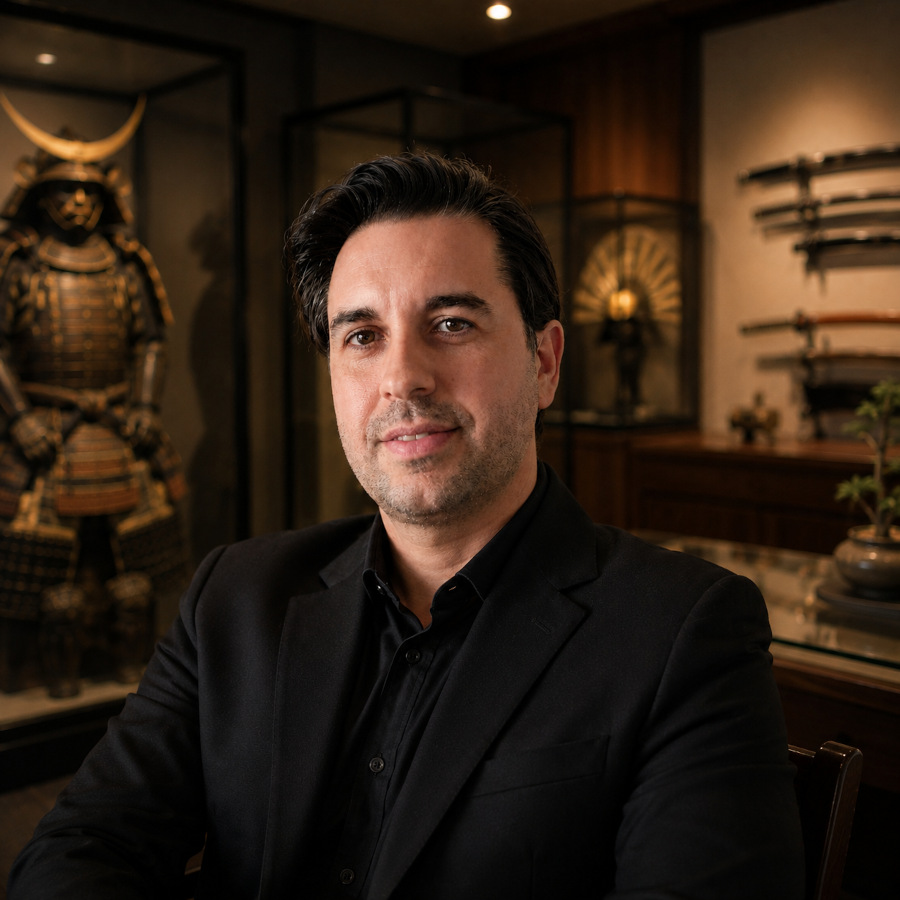
CEO of SupeinNihonto, dealer and collector of ancient Japanese art and weapons from Canillo, Andorra.
Contact