FREE EXPRESS INTERNATIONAL DELIVERY

1 in stock
1 in stock
Add to Compare
Add to Wishlist
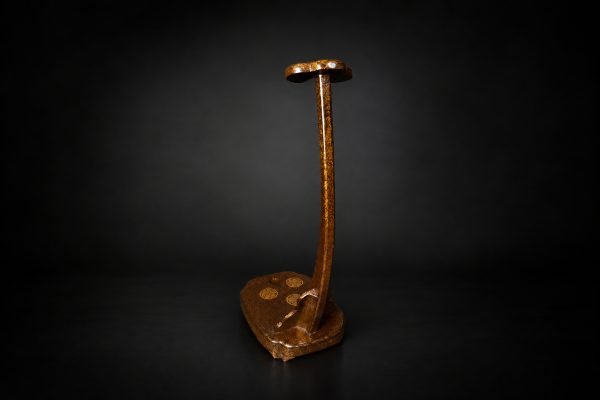
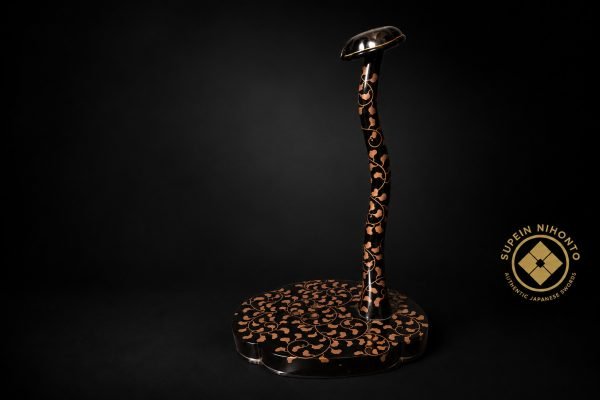
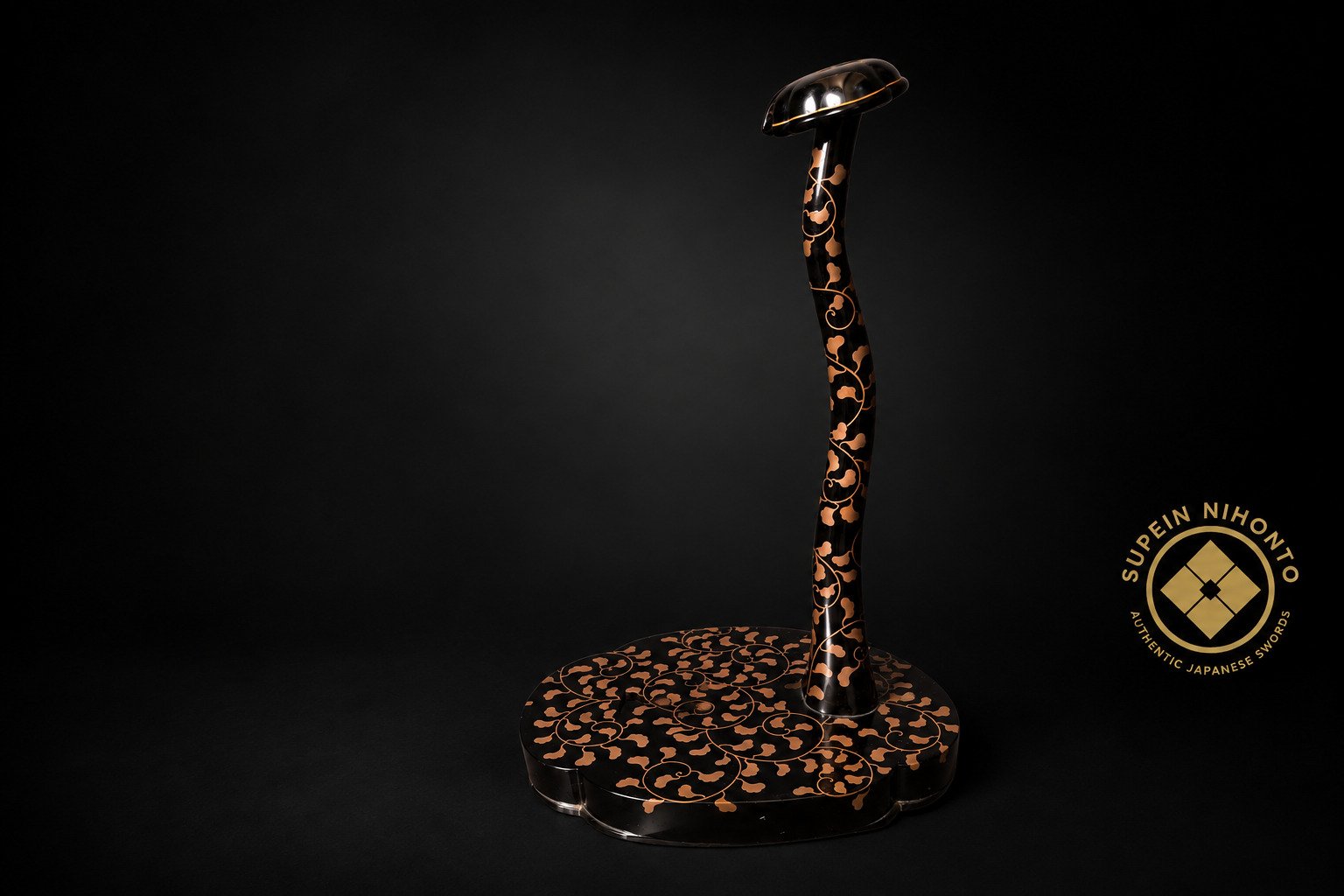
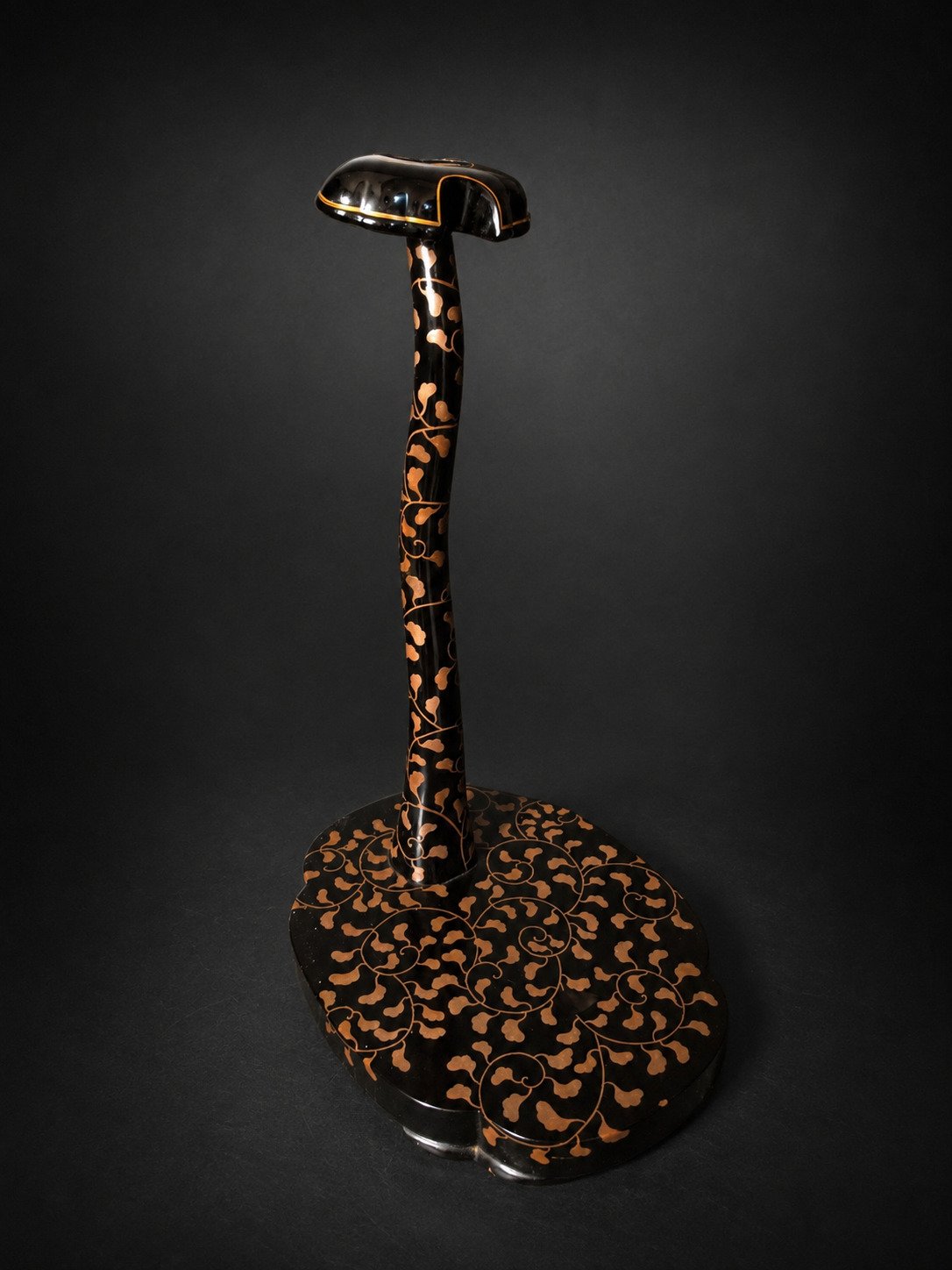
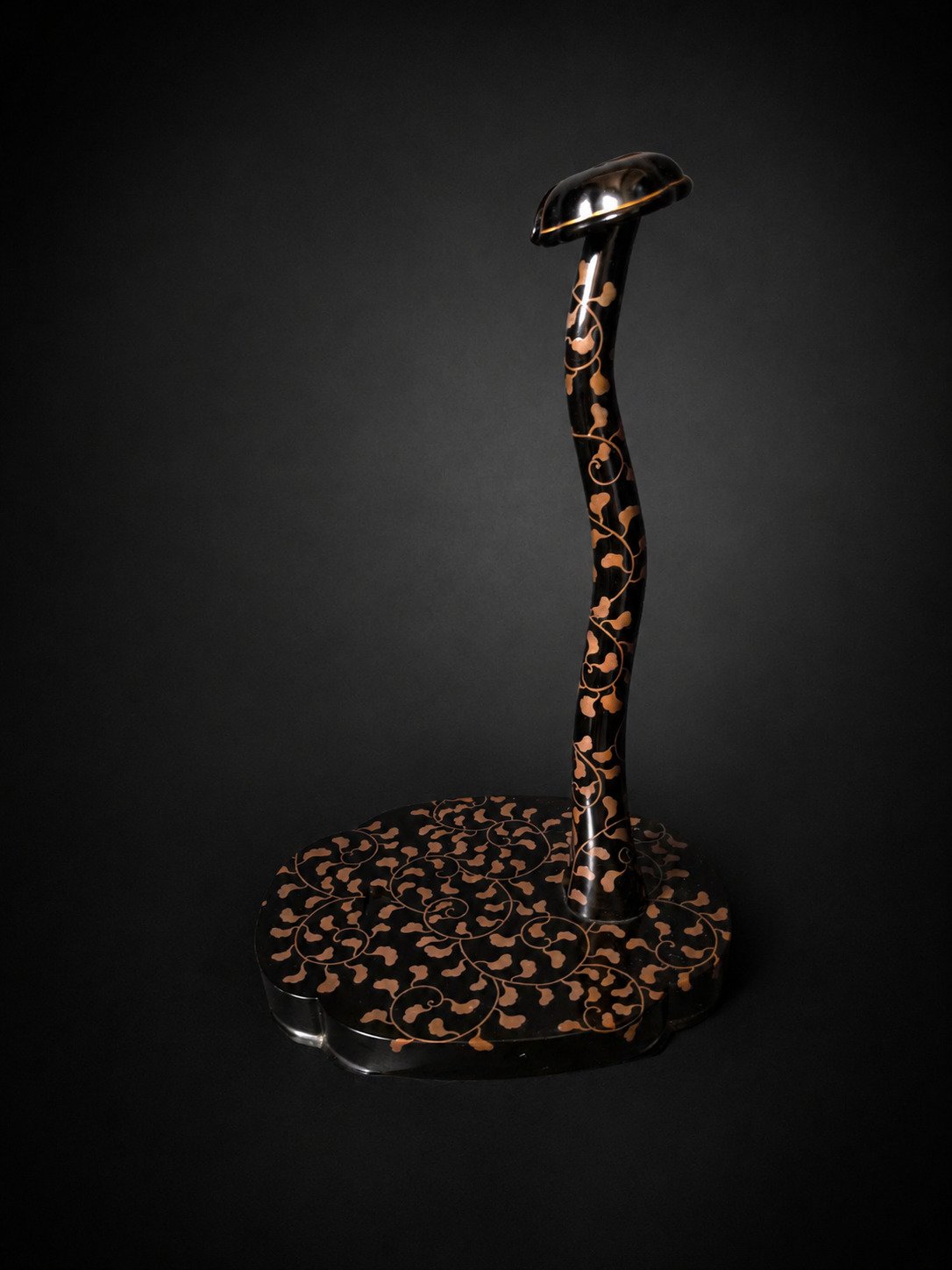
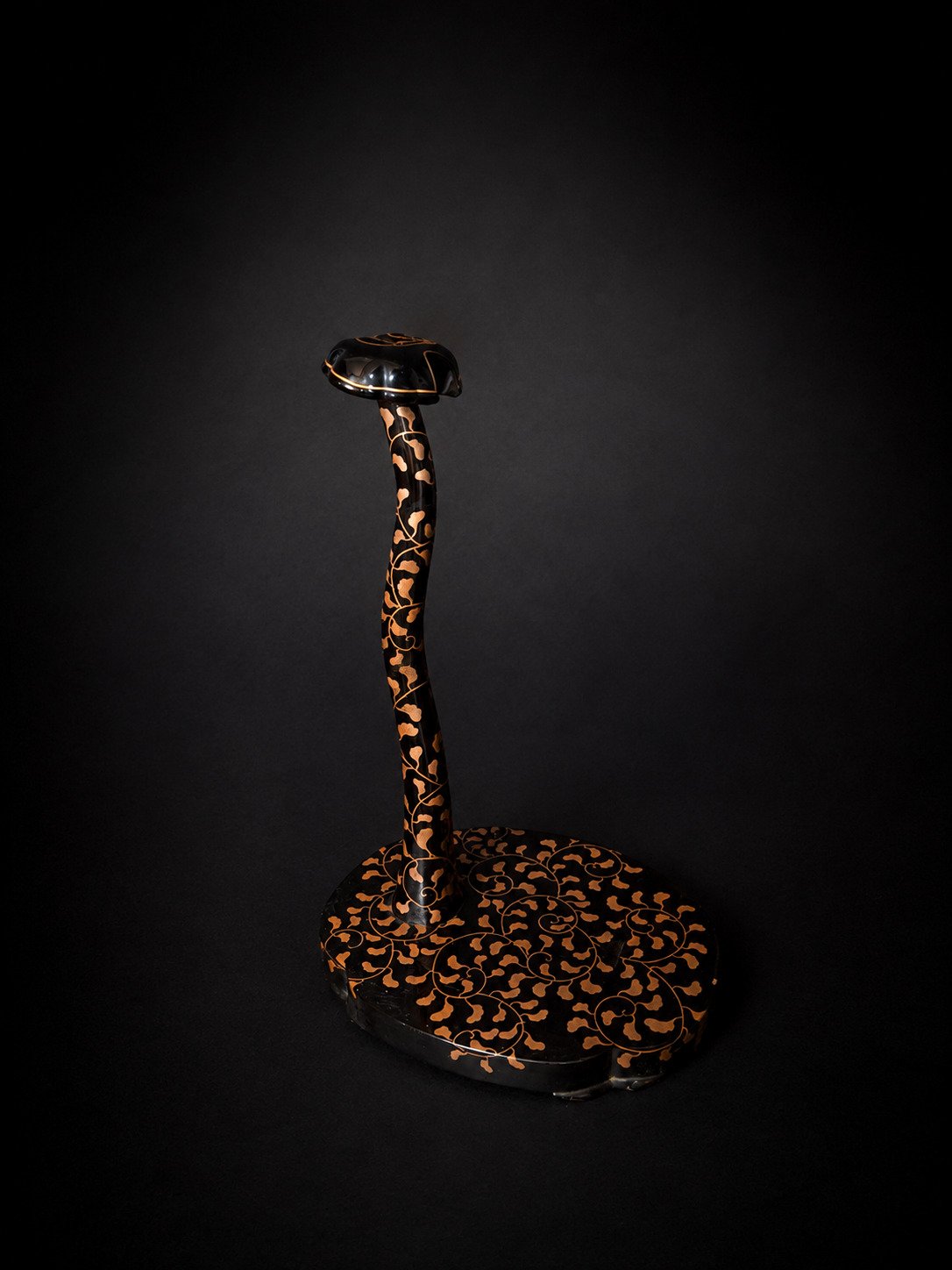
An elegant Japanese katana-kake dating to the 19th century, distinguished by its sculptural vertical form and extensive karakusa decoration executed in gold and copper-toned lacquer against a deep glossy black ground.
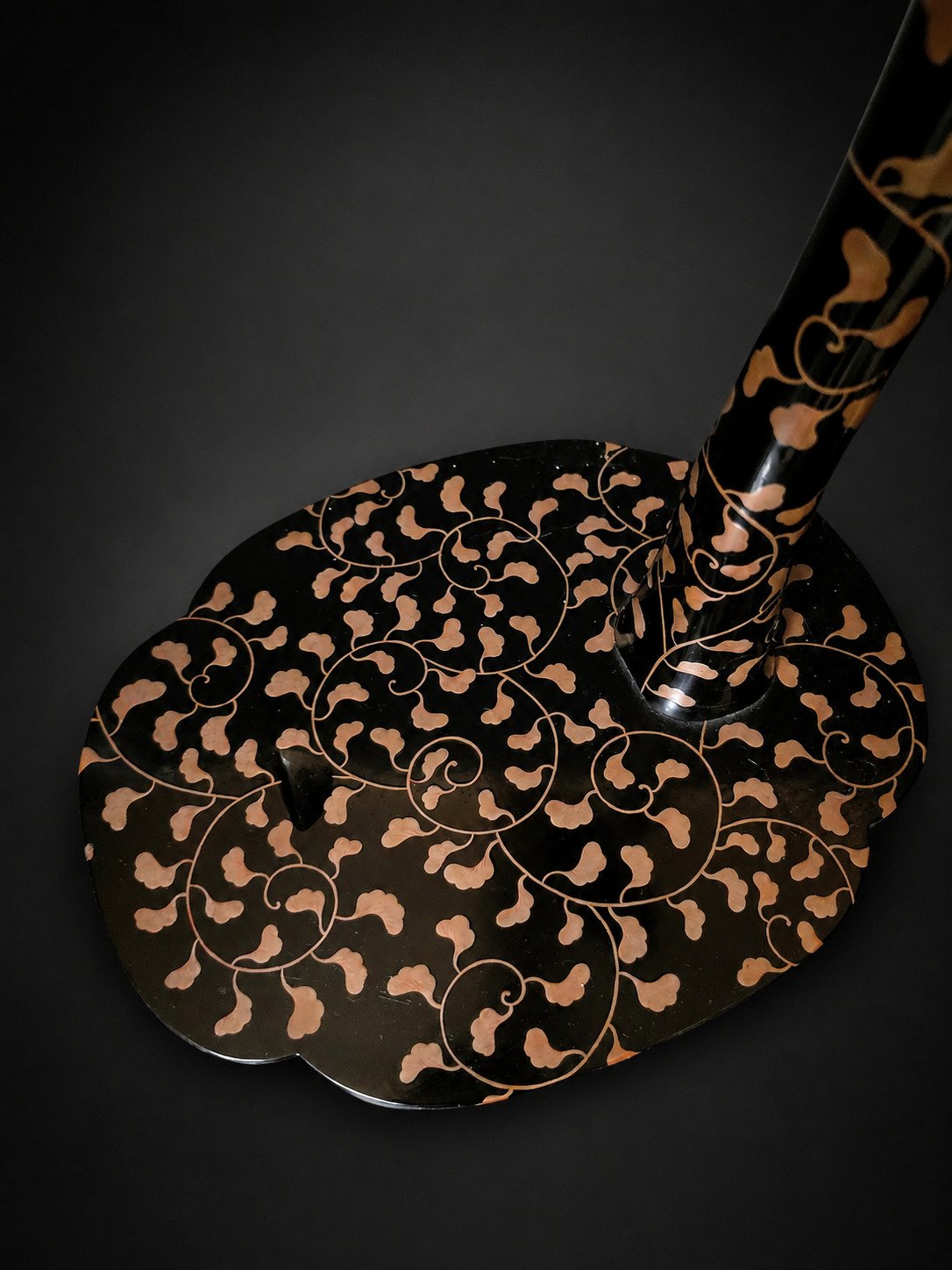
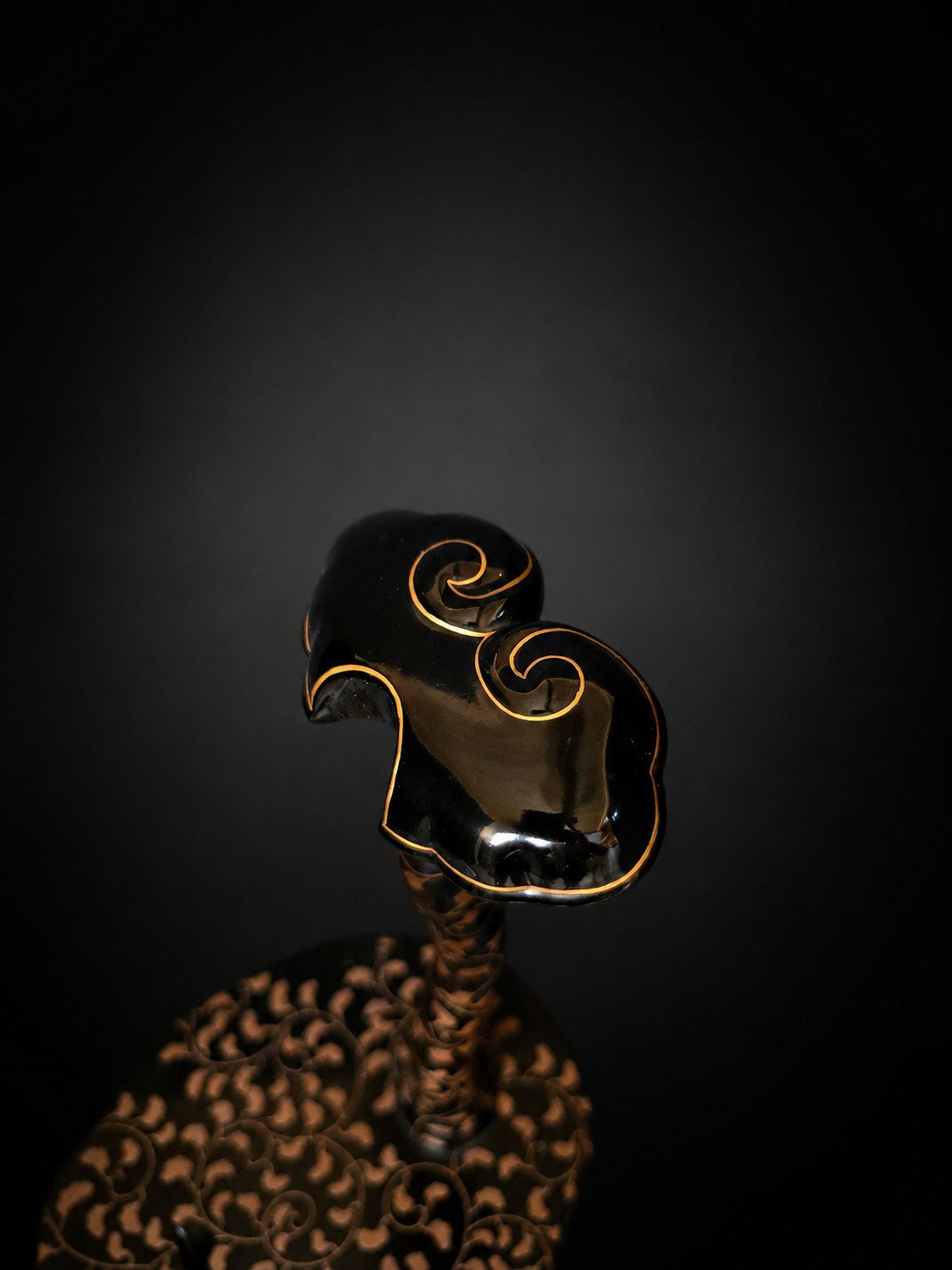
The stand combines a broad, lobed mokko-gata base with a tall, gently curved neck terminating in a flattened scalloped upper platform designed to support the sword. A shaped recess at the foot of the upright provides an additional resting point for the tsuka, creating a specialized structure specifically conceived for the presentation of a Japanese sword.
Virtually the entire visible surface is covered with dense scrolling vines executed in hiramaki-e. The alternating gold and warm copper tones create a particularly rich contrast against the polished black lacquer while preserving the elegant silhouette of the stand.
The katana-kake is constructed around a broad shaped base from which rises a slender, gently curving vertical neck.
At approximately 54 cm high, the upright creates a pronounced vertical profile while remaining visually light due to its narrow proportions and subtle curvature.
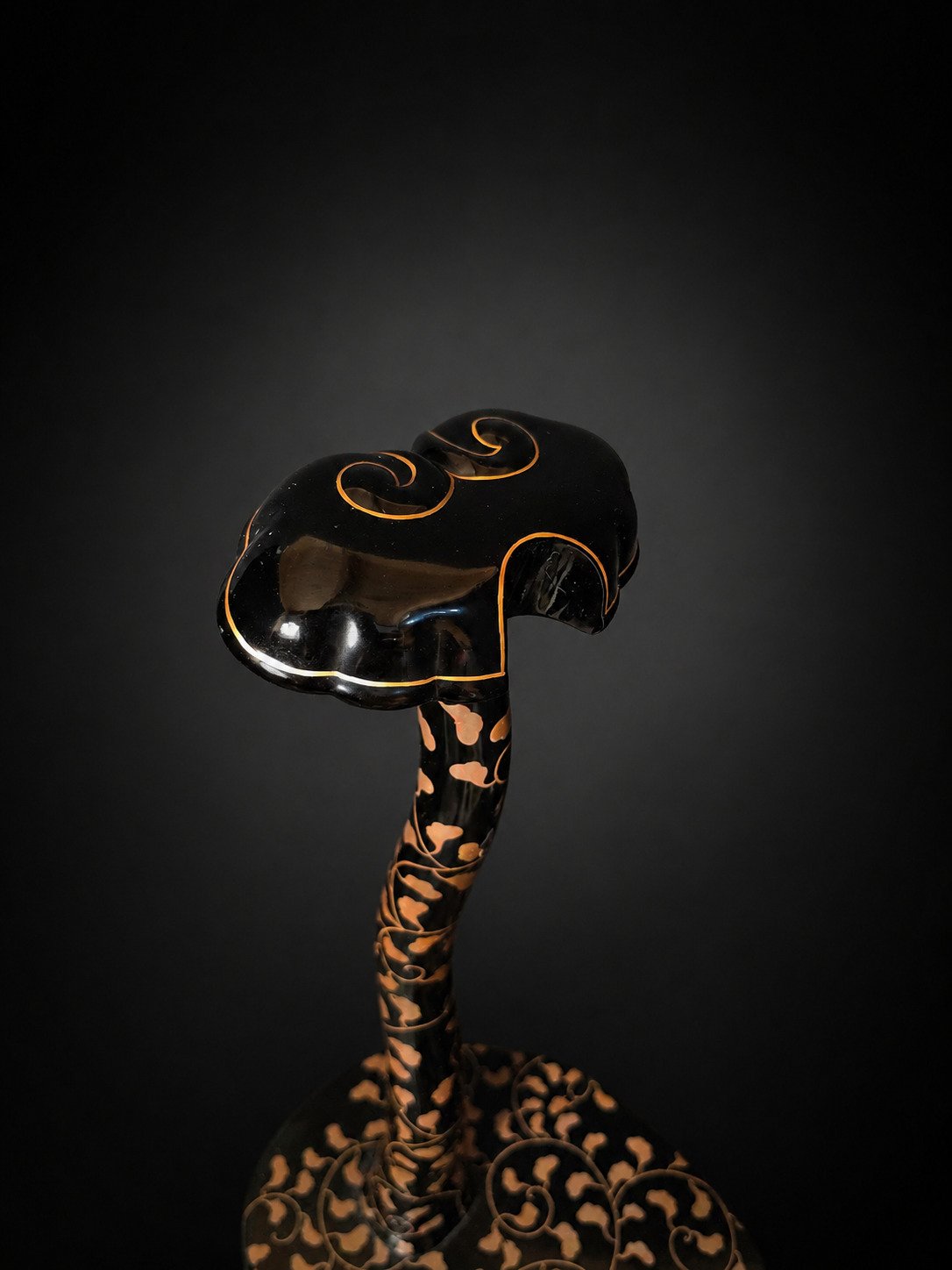
The neck terminates in a flattened, scalloped upper platform shaped to provide a stable resting point for the sword.
The relationship between the broad base, narrow upright and compact upper support gives the object a carefully balanced sculptural appearance.
The base has a distinctive lobed outline closely related to the Japanese mokko-gata form.
Characterized by rounded projecting lobes and flowing contours, the shape introduces a softer and more organic geometry than a conventional rectangular platform.
The form also provides a broad decorative field for the extensive karakusa ornament covering its upper surface.
A fine gold-toned line follows the outer contours, emphasizing the complex profile of the base against the surrounding black lacquer.
The dominant decorative theme is karakusa, the traditional Japanese scrolling-vine motif composed of continuously extending and intertwining vegetal forms.
The pattern spreads densely across the base and continues upward along the long curved neck, creating a remarkably unified decorative composition.
Rather than presenting isolated botanical elements, the vines form a continuous network of stems, curls and stylized leaves that adapts naturally to the changing shape of the object.
The flowing character of the karakusa complements the curvature of the upright particularly effectively, reinforcing the sense of movement already present in the structure itself.
The karakusa decoration is rendered using a combination of gold and warm copper-toned lacquer.
The contrasting metallic tones prevent the extensive pattern from appearing visually flat, introducing subtle variations across the numerous leaves and scrolling stems.
Against the deep black lacquer ground, the warmer copper-toned elements acquire an especially rich appearance, while the finer gold lines define the rhythm and structure of the vines.
As the viewing angle changes, reflected light moves across the metallic decoration and polished lacquer, revealing different sections of the pattern with varying intensity.
The decorative work is consistent with the visual character of hiramaki-e, a traditional Japanese lacquer technique in which metallic powders are used to create designs that remain comparatively close to the surrounding surface.
This relatively low-profile technique is particularly effective for the dense karakusa pattern found on the stand, allowing intricate ornament to cover large areas without disturbing the smooth overall silhouette.
Fine scrolling lines define the vines while broader metallic areas articulate the stylized leaves.
The result is a highly decorative surface that retains the characteristic smoothness and reflective qualities of Japanese lacquer.
The metallic decoration is set against a polished black lacquer ground, creating a dramatic contrast between dark reflective surfaces and warm metallic ornament.
The black lacquer remains visible between the individual elements of the karakusa, functioning as negative space within the composition.
This contrast allows even the smallest scrolling stems to remain clearly legible despite the extraordinary density of the overall pattern.
The polished ground also responds strongly to directional light, reinforcing the three-dimensional curvature of the neck and the contours of the base.
The long vertical neck is not treated merely as a structural support but forms an integral part of the decorative programme.
Karakusa vines climb continuously along its glossy black surface, with alternating leaves and scrolling stems following the gentle curvature of the upright.
The elongated proportions provide an ideal surface for the vertical progression of the pattern, visually connecting the richly decorated base with the upper sword support.
The combination of the curved silhouette and flowing vegetal ornament gives this section of the stand an almost calligraphic quality.
At the summit of the upright is a flattened, shaped platform designed to support the sword during display.
Its scalloped contours echo the lobed character of the base and maintain the organic visual language of the overall design.
A fine gold-toned border emphasizes its outer edge, while the black lacquer and metallic decoration continue across the visible surfaces.
This careful treatment ensures that even the most functional component of the stand remains fully integrated into the decorative composition.
A particularly interesting functional feature is the shaped recess positioned at the foot of the neck.
This element is designed to receive and steady the tsuka, or hilt, when the sword is positioned on the stand.
Together with the upper platform, it creates two distinct points of support, allowing the mounted sword to be presented securely while maintaining the intended relationship between the blade, tsuba and hilt.
The feature demonstrates that the form of the object was carefully developed around the practical requirements of sword display rather than being conceived simply as a decorative pedestal.
Fine metallic lines accentuate several of the principal contours of the stand.
These gold-toned borders are particularly effective around the base and upper platform, where they visually separate the glossy black profiles from the surrounding space.
The restrained use of these linear accents provides definition without competing with the much denser karakusa decoration.
They also emphasize the craftsmanship involved in adapting the lacquer decoration to the complex curved and lobed edges of the structure.
In contrast with the richly ornamented visible surfaces, the underside of the base is finished in comparatively restrained plain black lacquer.
This distinction reflects the functional hierarchy of the object, concentrating the elaborate metallic decoration on the surfaces intended to be visible during display.
The plain underside also provides a useful contrast with the densely decorated upper surfaces and reveals the underlying lacquer character of the piece more directly.
Katana-kake of this specialized form were conceived to present a Japanese sword when it was not being worn.
The upper platform provides support near the blade and tsuba area, while the shaped lower recess stabilizes the tsuka.
This arrangement transforms the sword and its stand into a unified display, allowing the lacquered mountings of the sword and the decoration of the katana-kake to be appreciated together.
The considerable attention devoted to the decoration of the stand reflects the importance of presentation within the broader material culture surrounding the Japanese sword.
The most striking visual characteristic of the piece is the relationship between its sculptural form and the continuous karakusa ornament.
The vines curve, turn and branch across the base before continuing upward along the gently bending neck.
This creates a sense of movement that extends across the entire object rather than remaining confined to individual decorative panels.
The repeated metallic leaves provide visual rhythm, while the finer scrolling stems connect them into a continuous ornamental network.
The extensive nature of the decoration is particularly noteworthy.
Rather than concentrating the maki-e exclusively on the broad base, the artisan continued the karakusa pattern across the upright and upper platform, adapting the design to surfaces of very different proportions and curvature.
Maintaining a dense and coherent scrolling pattern across such a complex three-dimensional structure would have required considerable control of the lacquer decoration.
The combination of polished black lacquer, metallic hiramaki-e and carefully defined contours gives the stand a refined and visually unified character.
The form, decorative vocabulary and lacquer techniques are consistent with Japanese production of the 19th century during the Edo period.
Karakusa was deeply established within Japanese decorative arts and could be adapted to objects ranging from architectural fittings and furnishings to sword-related accessories and lacquerware.
On this katana-kake, the traditional scrolling-vine motif is used particularly effectively because its continuous structure follows the unusual geometry of the object.
The result combines the practical requirements of sword presentation with the sophisticated decorative traditions of Japanese lacquer craftsmanship.
The katana-kake survives in antique condition with age-related wear consistent with a 19th-century Japanese lacquer object.
The black lacquer and extensive metallic karakusa decoration remain clearly visible, preserving the strong contrast and decorative rhythm that characterize the piece.
Minor surface wear, irregularities, losses and historical changes to the lacquer or metallic decoration should be considered within the context of the age and use of an antique object of this type.
Please examine the accompanying high-resolution photographs carefully, as they form an essential part of the description and provide the most accurate record of the object’s present condition.
This katana-kake combines several qualities of particular interest to collectors of Japanese lacquer, samurai culture and sword-related objects.
Its distinctive mokko-gata base and elegant curved upright create a sculptural form that differs considerably from more familiar horizontal multi-sword racks.
The extensive karakusa maki-e, executed in contrasting gold and copper tones against glossy black lacquer, gives the object a particularly strong decorative presence.
The shaped tsuka recess is also an important functional detail, illustrating how the architecture of the stand was specifically adapted to the presentation of a mounted Japanese sword.
At 54 × 35 cm, it represents an elegant example of how a practical object associated with Japanese sword culture could simultaneously serve as a sophisticated work of decorative lacquer art.
An elegant 19th-century Edo-period Japanese katana-kake distinguished by its sculptural form and extensive karakusa maki-e decoration. A broad lobed mokko-gata base rises through a slender, gently curved neck to a shaped upper sword platform, while a dedicated recess at the foot of the upright is designed to receive and stabilize the tsuka. Dense scrolling vines in warm gold and copper-toned hiramaki-e extend across the glossy black lacquer surface, with fine metallic borders emphasizing the contours of the base and upper support. Measuring 54 × 35 cm, this distinctive single-sword stand combines practical sword-display architecture with the refined decorative vocabulary and craftsmanship of 19th-century Japanese lacquerwork.

Order above 1.000,00 € gets free shipping.

Secure and hassle-free payment process.

Certificate of authenticity included.

Have questions? Contact us via WhatsApp.
Contact