October 10, 2026
What pigments and dyes produced the colors in six Kunisada woodblock prints? In this study of Kunisada woodblock prints, non-invasive analysis identified a range of Edo-period coloring materials, including Prussian blue, indigo, safflower, vermilion, red ochre, orpiment, and carbon-based blacks. The findings show how late Edo printing could combine mineral pigments and organic dyes, sometimes within the same visible color.
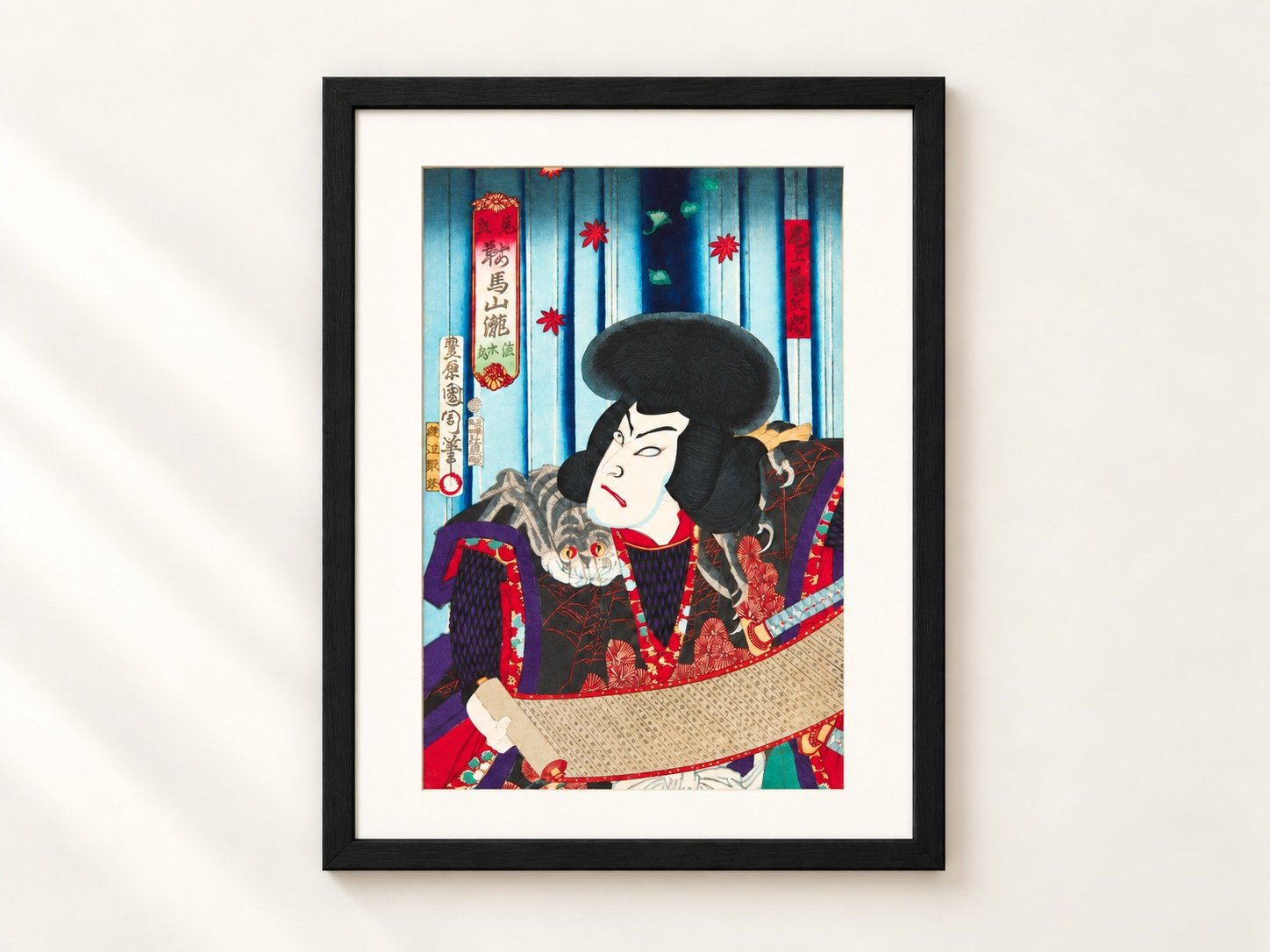
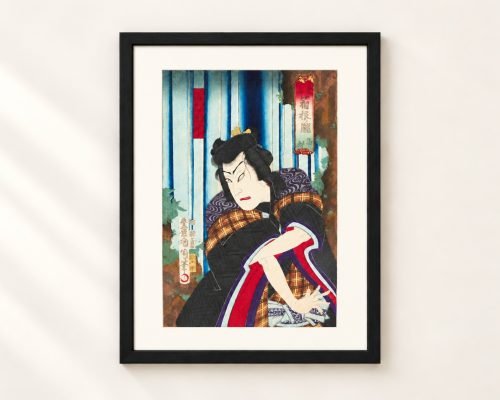
Illustrative ukiyo-e print by Utagawa Kunichika, shown here as a comparison image only. It is not one of the six Kunisada prints studied in the analysis.
To browse related Japanese prints in our collection, explore our Ukiyo-e collection.
This study examined six Utagawa Kunisada woodblock prints from the Oriental Art Museum E. Chiossone in Genoa using a non-invasive, multi-analytical approach. The team combined high-resolution imaging, reflectance transformation imaging, FORS, Raman spectroscopy, FTIR, and spectrofluorimetry to identify the coloring materials used in the prints and to document how those materials appeared across different areas. The results were intended to support conservation and interpretation while avoiding sampling of the works.
Several red materials were identified in the examined prints. Raman spectroscopy detected red ochre in some areas and vermilion in others, while spectrofluorimetry identified safflower, a red organic dye. In at least one bright red passage, the methods complemented each other: Raman pointed to vermilion, FORS suggested red ochre, and fluorescence supported safflower, showing that different techniques can reveal different parts of a complex printed area.
Yellow passages were linked to orpiment, identified by Raman bands characteristic of arsenic sulfide. The study also found an organic yellow dye in some details, with fluorescence consistent with a natural yellow colorant such as Amur cork dye, though the authors note that similar yellow dyes can be difficult to separate with certainty. In practical terms, the yellow areas show that late Edo prints could use either an inorganic pigment, an organic dye, or a combination of approaches depending on the passage examined.
Blue areas showed both Prussian blue and indigo. Raman spectroscopy identified Prussian blue in multiple places, and FTIR also gave clear evidence for it. Spectrofluorimetry identified indigo in at least one blue detail. In the dark blue background of one print, the data indicated a mixture of Prussian blue and indigo rather than a single blue material, which is a useful reminder that a visually uniform blue can conceal more than one coloring matter.
The green passages were explained by mixtures of Prussian blue and arsenic sulfide. Microscopy supported this reading by showing distinct blue and yellow particles in the same areas, and the spectroscopic data matched that interpretation. Purple details were also mixed colors: safflower red combined with a blue component, and FORS indicated indigo rather than dayflower in the mixture analyzed for one purple area. These results show that color in ukiyo-e could depend on layered or blended materials, not just on single pigments.
Black areas were associated with amorphous carbon, identified through Raman bands typical of carbon-based pigments and confirmed by near-infrared imaging in lines, contours, writing, and background passages. A brown area was linked to a mixture of red ochre and carbon black. Taken together, the identified materials were consistent with those traditionally used in the Edo period in the nineteenth century. The study therefore clarifies the physical palette of these six Kunisada prints: Prussian blue, indigo, safflower, vermilion, red ochre, yellow ochre, orpiment, and carbon-based blacks, sometimes in mixtures that created green, purple, and brown tones.
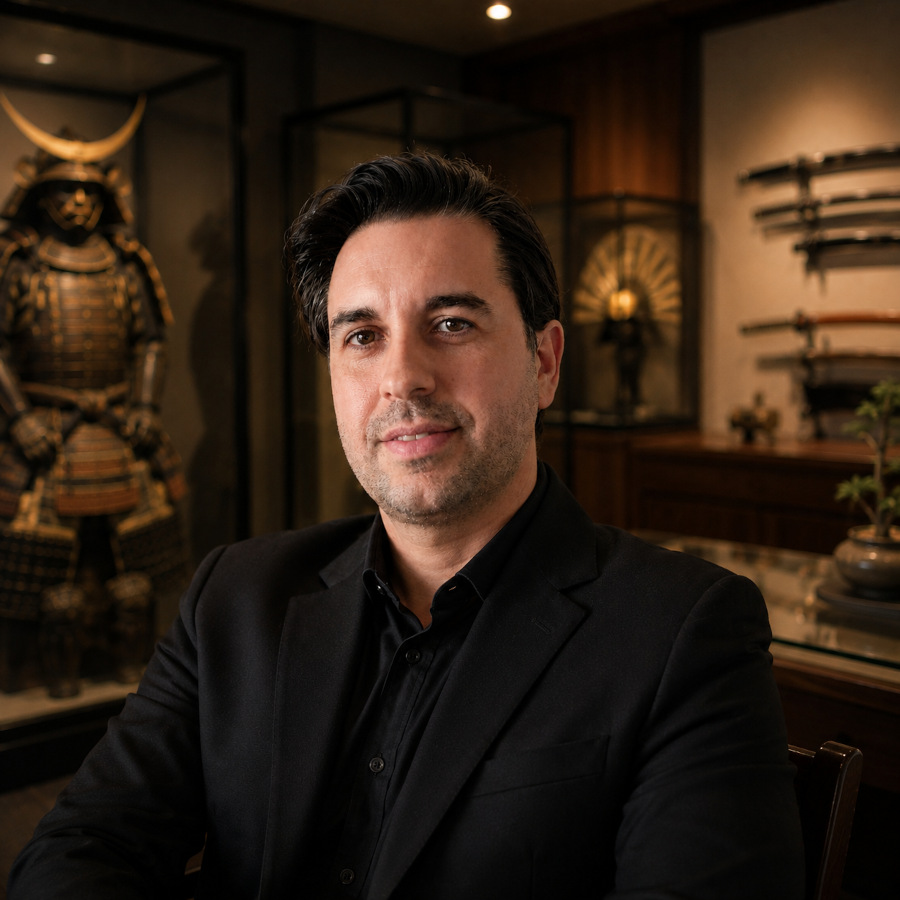
CEO of SupeinNihonto, dealer and collector of ancient Japanese art and weapons from Canillo, Andorra.
Contact