October 1, 2026
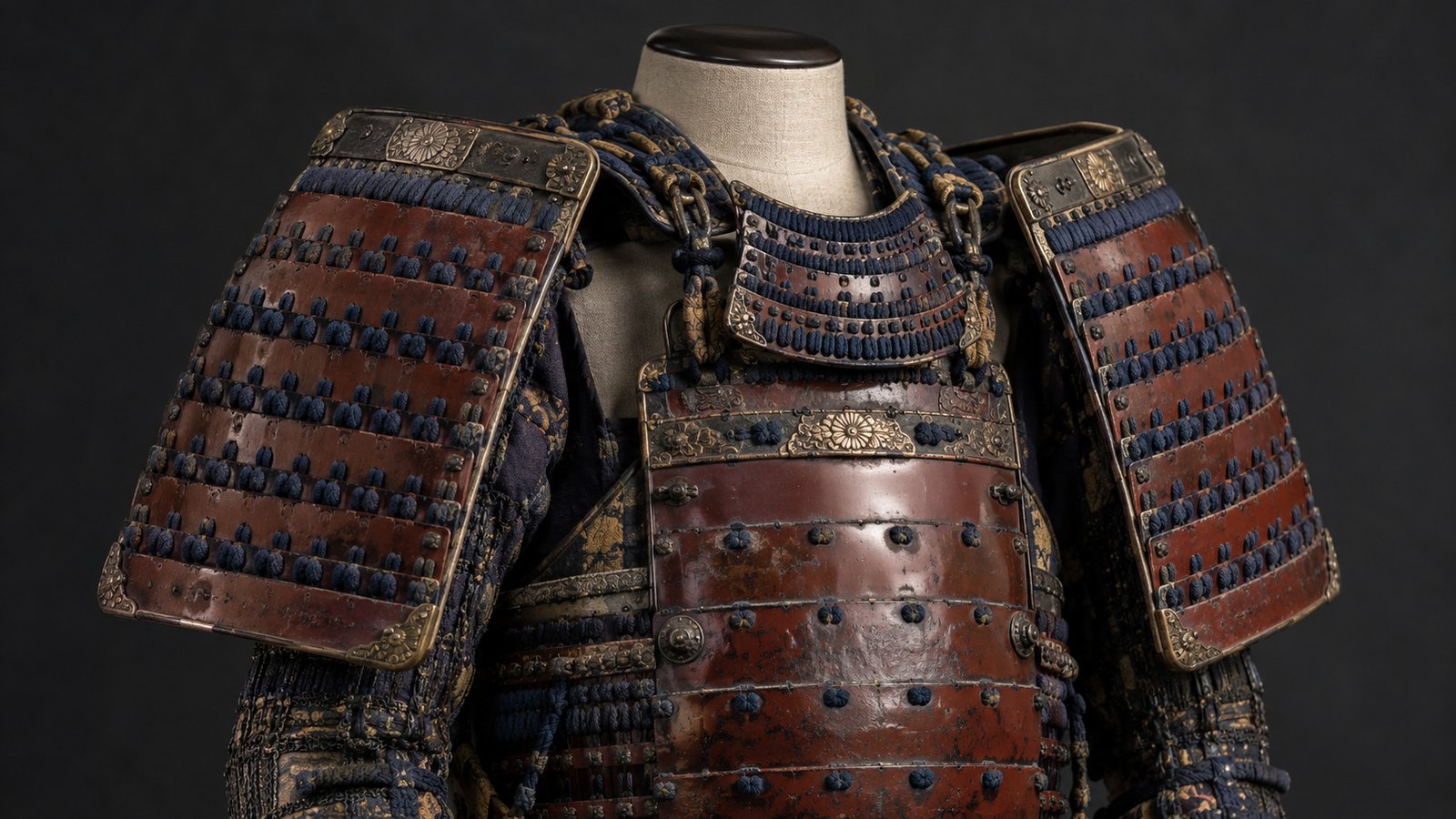
The broad, decorated panels hanging from a samurai armour’s shoulders are among its most striking features. Known as sode, these guards protected the shoulders and arms while forming part of the armour’s overall design.
Their appearance can vary considerably. Some are large and rectangular, made from rows of small plates joined by silk lacing. Other examples belong to different armour constructions and use different materials.
Looking closely at a sode reveals how protection, movement and visual detail came together in Japanese armour.
Sode is the Japanese term for a shoulder guard worn as part of a suit of armour. On some forms of armour, the guards hang from the shoulders and move with the wearer.
Their protective role was not limited to covering the top of the arm. The Victoria and Albert Museum explains that shoulder pieces on ō-yoroi armour fell into position as the arms were raised, helping protect the exposed area beneath the arm.
The Metropolitan Museum of Art notes that Japanese shoulder guards also served a role similar to shields, primarily offering protection against arrows.
These descriptions help explain why a sode should be understood as part of a moving system. Its shape and position related to the wearer’s body, the rest of the armour and the actions required in combat.
The term ō-sode refers to a large form of shoulder guard. The Met identifies large square sode as the earliest type used in Japan and documents a rare, unrestored example dating to the mid-to-late 14th century. It is made from iron, leather, lacquer, silk and gilt copper.
That example shows why it is useful to describe a guard by its documented type and construction rather than assuming every sode looks alike.
When comparing pieces, note their proportions, the arrangement of plates and the way the guards are attached. A large rectangular outline may be immediately recognisable, but the materials and surface details can tell a more specific story.
Many Japanese shoulder guards combine rigid plates with flexible connections. The plates provide coverage, while the lacing joins them into a wearable structure.
A pair of 17th-century sode in the Met’s collection illustrates this construction. The museum records lacquered iron and leather scales connected by silk lacing. Contrasting white and orange cords form a mitsudomoe design associated with Hachiman, the Japanese deity of war and archery.
When studying a pair, look at the relationship between the plates and cords:
The lacing is both a structural feature and a visible part of the object. Its colour and arrangement can change the appearance of the whole guard.
Sode are often encountered as a pair, so it is useful to examine them together as well as individually.
Compare their size, shape, construction, decoration and condition. Similarity may support the description of a matching pair, but visual resemblance alone does not prove that two guards have always belonged together.
Also look for differences that may affect how the pair is understood: repairs, replacement cords, altered fittings or variations in surface wear. Describe what is visible before drawing conclusions about when or why a difference occurred.
Photographs of the front, reverse, edges and attachment points can help make this comparison. If a guard is still mounted on a complete suit, an image of the armour provides context for its position.
A close inspection should consider more than the front decoration. Useful details include:
Construction: Look at the plates, lacing, edge fittings and attachment points. Note whether materials change across the piece.
Lacquer and surface: Record visible scratches, losses, lifting, discolouration or areas that appear to have been restored. A photograph cannot always establish the cause of a mark.
Lacing: Check for breaks, loose sections, replacement cords or uneven tension. Avoid pulling on cords to test them.
Reverse: The back can reveal how the guard was assembled and attached, as well as repairs that are not visible from the front.
Pairing and provenance: Ask whether the guards have collection records, older photographs or specialist documentation supporting their identification and history.
Do not remove or manipulate a fragile sode to obtain a better view. Existing photographs or an assessment by an armour specialist are safer ways to investigate an inaccessible attachment.
A shoulder guard is easier to understand when viewed alongside the other components of Japanese armour. Its position relates to the cuirass, arm protection and the wearer’s movement.
It also contributes to the visual character of a complete suit. The lacing, lacquer and metal fittings can echo details elsewhere in the armour or create a strong contrast with them.
When exploring the Gusoku and Yoroi in the Supein Nihonto collection, consider how the shoulder guards relate to the rest of each suit. Looking at the complete arrangement first, then at the sode in detail, helps connect construction with appearance.
Sode means shoulder guards. They are components of Japanese armour that cover the shoulder area and, depending on the armour, can help protect the upper arm and exposed areas beneath it.
Ō-sode refers to a large form of Japanese shoulder guard. Museum examples include large, rectangular guards made from materials such as iron, leather, lacquer, silk and metal fittings.
Some Japanese shoulder guards provided protection against arrows and could serve a role comparable to a shield. Their precise function depended on their form and how they were worn as part of the armour.
Documented examples use combinations of iron, leather, lacquer, silk and metal fittings. Materials vary between individual pieces.
A pair can be compared for similarities in size, construction and decoration, but differences should be recorded rather than automatically treated as proof of a problem. Repairs, later changes and the history of the objects need separate consideration.
Ask for clear views of the front, reverse, edges and attachment points, as well as a view showing the guards on the complete suit if available. Include close-ups of the lacing, surface condition and any inscriptions or marks.
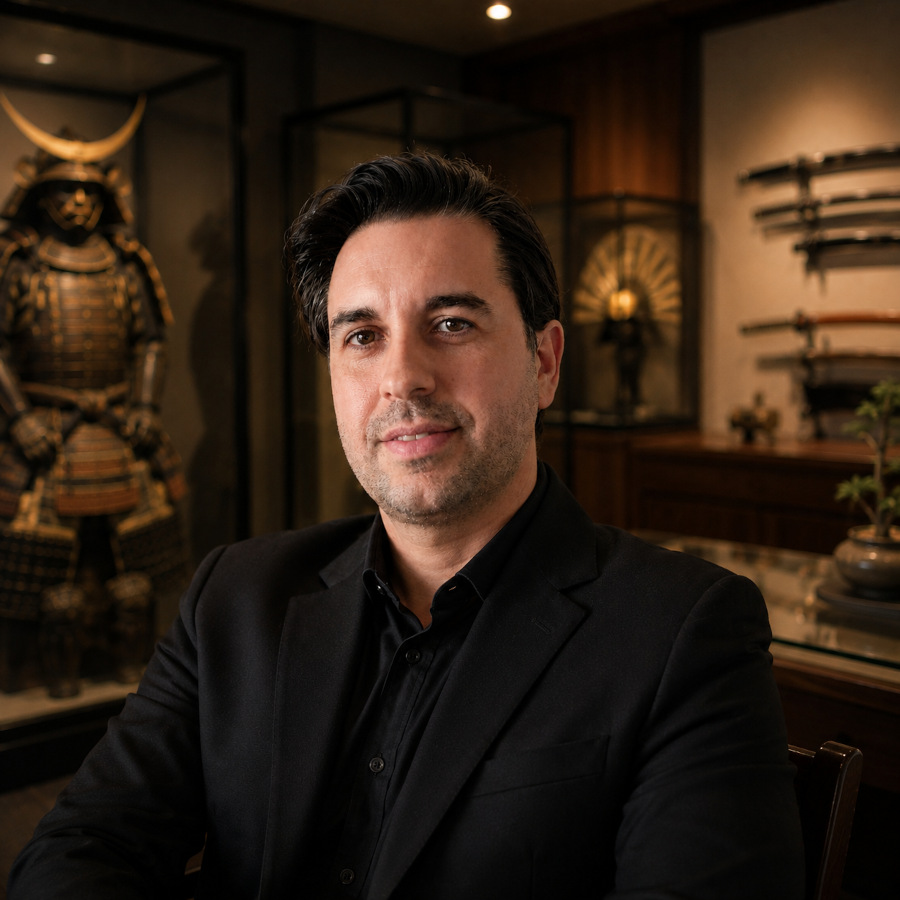
CEO of SupeinNihonto, dealer and collector of ancient Japanese art and weapons from Canillo, Andorra.
Contact