September 14, 2026

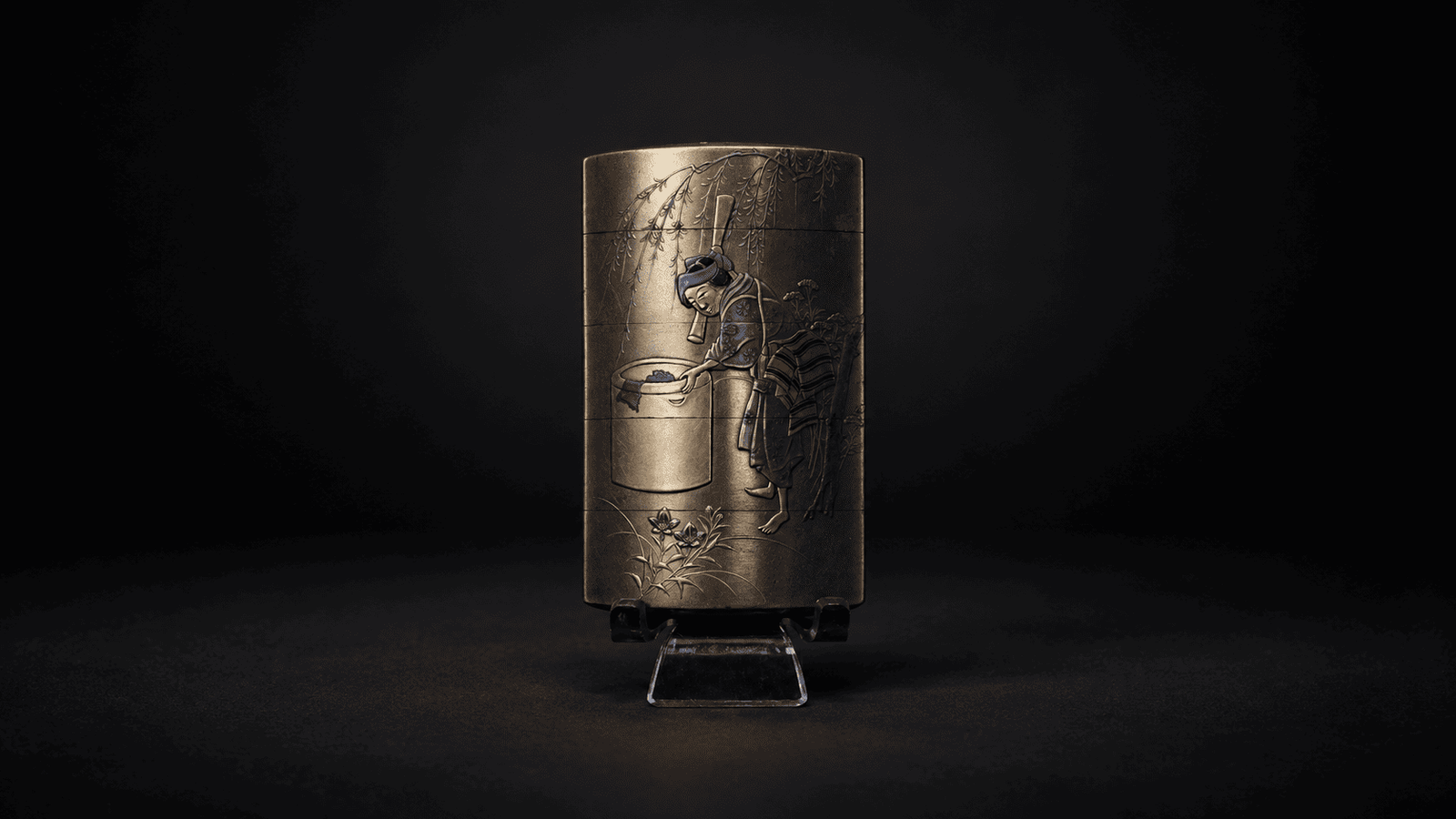
Learning how to buy an antique inro requires more than choosing the most visually impressive decoration. Two pieces may appear similar in photographs while differing considerably in lacquer quality, construction, condition, age and historical coherence.
A good comparison begins with the complete object. Its compartments should fit correctly, its decoration should make sense across every surface, and its condition should be consistent with its proposed age. Signatures, associated netsuke and prestigious techniques can add interest, but none should be considered independently.
This guide explains how to examine and compare antique Japanese inrō before making a purchase. It is intended to help collectors identify meaningful differences, ask sellers better questions and choose pieces according to quality rather than appearance alone.
If you are unfamiliar with their history and original function, begin with our introduction to Japanese inrō and traditional lacquerwork.
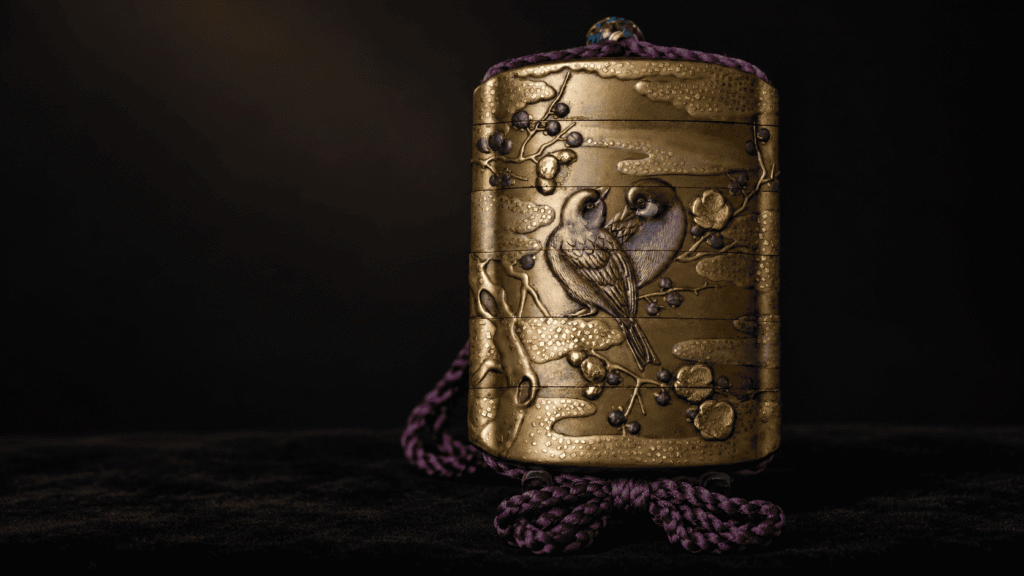
Before comparing individual pieces, decide what attracts you to inrō collecting.
Some collectors focus on Edo-period lacquer, while others prefer the technical complexity and elaborate decoration associated with the late Edo and Meiji periods. You may be interested in a particular subject, lacquer technique, school, artist or type of inlay.
Possible collecting directions include:
There is no universally correct starting point. A visually restrained inrō may display exceptional technique, while a highly elaborate example may appeal through its colour, subject and sculptural character.
Establishing your preferences makes comparison easier because you are no longer attempting to judge every inrō by the same criteria.
An inrō was designed to be handled and viewed from multiple directions. Its decoration often continues from the front to the reverse, around the sides and sometimes across several compartments.
When comparing two examples, request photographs showing:
A beautiful front photograph is not enough. Important losses, cracks, poorly fitting compartments and later repairs may only become visible when the object is opened or photographed from the side.
The most convincing inrō normally rewards examination from every angle.
Before studying the decoration, examine how the inrō has been constructed.
A traditional inrō consists of several interlocking sections, often described as cases or compartments. These sections must align precisely so that the assembled object forms a coherent exterior surface.
The number of compartments does not determine quality. A four-case inrō is not automatically less desirable than a five-case example. Construction, condition, decoration and artistic quality are more important than the number of sections.
The joints between compartments should be carefully examined.
When assembled, the sections should normally meet closely and follow the overall profile of the object. Significant gaps, uneven alignment or sections that appear to belong to different bodies may indicate distortion, damage, replacement or later assembly.
Some movement may result from age, environmental changes or wear. The aim is not to demand modern mechanical perfection, but to determine whether the construction remains coherent.
Ask the seller whether:
Never force open a compartment that resists movement. Old lacquer and wooden cores can crack under pressure.
The rims or lips where the sections meet are particularly vulnerable.
Look for:
Minor wear along the rims is understandable on an object that was repeatedly opened and closed. Extensive rebuilding, however, should be disclosed and reflected in the description.
The lacquer is often the most important artistic and technical element of an inrō.
Japanese urushi lacquer is built up through carefully prepared layers. Decoration may be applied above, within or beneath these surfaces depending on the technique employed.
When comparing two pieces, do not look only at how much gold they contain. Consider the precision, control and condition of the complete lacquer surface.
High-quality maki-e can create depth through differences in relief, metal powder, polishing and tonal contrast.
A freshly reflective surface is not necessarily superior. Antique lacquer may have developed a softer appearance through age and handling. Excessive polishing can remove delicate details, flatten relief and disturb the intended balance between the ground and decoration.
Ask whether the surface retains:
Age-related surface changes are common, but not all cracks have the same significance.
Fine stable craquelure may be less concerning than active lifting, flaking or cracks that expose the underlying wooden core. Damage near the rims and cord channels deserves particular attention because these areas are subject to repeated handling.
Potential warning signs include:
A restored inrō can still be collectible. The essential point is that the restoration should be identified and evaluated honestly.
Different techniques should not be ranked by complexity alone.
A restrained togidashi design can require extraordinary control, while elaborate Shibayama work may impress through carving, colour and material variety. Each should be judged according to what the artist intended to achieve.
In hira maki-e, the design remains relatively flat against the lacquer surface.
When comparing examples, examine the precision of the outlines, distribution of metallic powder and relationship between the decoration and the ground. Fine work can create considerable visual depth without pronounced relief.
Taka maki-e uses raised lacquer to give parts of the design physical volume.
Look at whether the relief contributes to the composition. Strong examples use different heights deliberately rather than making every decorative element equally prominent.
Inspect raised areas carefully, as they are vulnerable to impact, rubbing and restoration.
Togidashi designs are covered with additional lacquer and polished until the image is revealed as part of a smooth surface.
Compare the clarity of the design, the quality of the polishing and the subtle transitions between metallic decoration and lacquer ground.
Because the effect can be understated, good togidashi may appear less dramatic in ordinary photographs than it does under changing light.
Raden incorporates pieces of shell or mother-of-pearl.
Check whether the inlay sits correctly within the surface and whether any elements are missing, lifted or replaced. Examine changes in colour and thickness, particularly around repaired areas.
A small original loss may be preferable to a visually seamless but poorly documented reconstruction.
Shibayama work uses carved and inlaid materials to create highly detailed, often colourful compositions.
When comparing these pieces, examine the quality of the individual inlays, their relationship to the lacquer ground and the completeness of the design.
Missing petals, leaves, feathers or facial details can significantly affect the composition. Ask for close photographs because small losses may be difficult to see in a full-object image.
Some materials historically used in Shibayama work are now regulated. The seller should provide an accurate material description and any documentation required for the intended destination.
One of the best indicators of careful planning is the relationship between the decoration and the construction.
On a well-conceived inrō, landscape lines, branches, figures or clouds may continue across several sections. The composition remains legible when the compartments are assembled, despite being divided by the joints.
Look closely at whether:
Perfect continuity is not required in every design. Nevertheless, decoration that responds intelligently to the structure is evidence of artistic control.
Antique inrō were portable objects. They were handled, opened and worn against clothing, so some evidence of use is entirely natural.
The objective is not to find an object that appears new. It is to understand which changes reflect ordinary use and which compromise the construction or decoration.
This can include:
Such features should correspond logically with how the object was handled.
Pay closer attention to:
Condition should always be considered in relation to rarity and artistic quality. A rare or exceptional work may remain important despite restoration, while extensive damage may reduce the desirability of a more ordinary example.
Many fine inrō are signed, but a signature is not required for quality or authenticity.
Signatures can be genuine, copied, added later or incorrectly interpreted. Prestigious names require more scrutiny because they may influence the price substantially.
When examining a signed inrō, ask:
A seller should distinguish clearly between “signed by,” “attributed to,” “school of” and “bearing the signature of.” These expressions do not represent the same degree of certainty.
Judge the quality of the object before allowing a famous name to influence your assessment.
Edo-period inrō have a strong association with their original use as personal accessories, while Meiji-period works can demonstrate extraordinary technical ambition and elaborate decoration.
One period is not automatically superior to the other.
An Edo-period piece may appeal through age, restraint, wear and historical context. A Meiji example may offer exceptional craftsmanship, vivid inlay and a more sculptural composition.
Collectors should compare:
Be cautious when a seller gives a very precise date without explaining the reasoning. Dating should be supported by construction, decorative style, materials, signature, provenance and comparison with recorded examples.
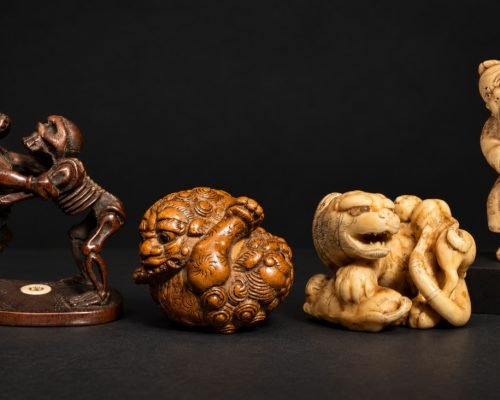
An inrō was traditionally suspended from the obi using a cord, netsuke and ojime. Today, pieces may be offered alone or as part of a complete sagemono ensemble.
A visually attractive group is not necessarily an original historical set.
Netsuke and ojime may have been associated with an inrō much later by a collector or dealer. This is not inherently problematic, but it should not be presented as an original ensemble without supporting evidence.
When comparing complete sets, consider:
A well-selected later combination may still be beautiful and collectible. Its value, however, should not depend on an unsupported claim that all the elements have always belonged together.
Elaborate decoration can be impressive, but complexity should not replace judgement.
Compare the following qualities:
A quiet landscape rendered in a limited palette may display greater refinement than a crowded composition made with expensive materials.
Choose the object, not the amount of gold or inlay.
When deciding between two pieces, use the same sequence for both.
Examine the alignment, fit and condition of the compartments. Determine whether either piece has warped, replaced or heavily rebuilt sections.
Look beyond the main design. A carefully prepared ground, subtle texture and good preservation contribute significantly to quality.
Consider precision, depth, balance and continuity rather than counting techniques or materials.
List the losses, repairs and areas of wear separately. Decide which issues are cosmetic and which affect structural stability.
Ask whether cords, rims, compartments, inlays and associated components appear original, restored or replaced.
Treat signatures and artist names as evidence requiring support. An unsigned but superior inrō may be a better purchase than a weaker signed example.
Provenance, old collection labels, auction records, boxes and specialist descriptions can strengthen an attribution and clarify ownership history.
After examining the evidence, consider which piece you would still prefer if both were anonymous. Artistic connection matters, particularly when technical quality and condition are similar.
There is no single price formula. Value results from the interaction of several factors:
A signed inrō is not automatically more valuable than an unsigned one, and an older piece is not necessarily better than a later example.
Price should reflect the complete assessment, not one attractive characteristic.
Online purchases require clear images and precise descriptions.
Before committing to a piece, ask the seller for:
Descriptions should separate visible facts from interpretation. “Signed” describes an inscription; it does not by itself prove authorship.
Approach a listing cautiously if:
One warning sign does not automatically prove that an object is unsuitable, but it should prompt further questions.
Lacquer is durable, but old lacquer surfaces and inlays require careful handling.
Store an inrō away from direct sunlight, heat and rapid changes in humidity. Avoid placing it near radiators, windows or air-conditioning outlets.
Handle it with clean, dry hands and support the complete object when opening the compartments. Do not pull forcefully on an old cord or use the netsuke to lift the inrō.
Never apply furniture polish, oil, alcohol or household cleaning products. These substances can alter the lacquer, damage restorations and leave residues that are difficult to remove.
If the surface is lifting, cracking or flaking, consult a conservator experienced with Japanese lacquer.
The best way to buy an antique inrō is to compare construction, lacquer, decoration, condition and documentation as parts of the same object.
Do not allow one famous signature, expensive material or elaborate technique to carry the entire assessment. A convincing inrō should be coherent: its compartments fit, its decoration suits its form, its wear makes sense and its description acknowledges uncertainty where necessary.
Knowledge reduces risk, but collecting is also personal. Once authenticity, quality and condition have been considered, choose an inrō whose subject, craftsmanship and character continue to reward close examination.
Explore our collection of authentic Japanese inrō to compare lacquer techniques, subjects, materials and decorative styles across individual pieces.
Essential questions about comparing the construction, lacquer, condition, attribution and documentation of antique Japanese inrō.
Start with the complete construction. Check whether the compartments align, open correctly and fit securely. Then examine the lacquer, decoration, condition, signature and documentation.
No. A signature must be assessed alongside the quality, technique, period, provenance and documented work of the proposed artist. Excellent inrō can be unsigned, while signatures may be copied or added later.
Not automatically. Edo inrō may have greater connection to traditional use, while Meiji pieces can display exceptional technical skill. Quality, condition, originality and artistic appeal are more useful criteria than period alone.
Not necessarily. Many inrō are collected separately. When a netsuke and ojime are included, ask whether they are historically associated or were combined later.
Look for differences in colour or sheen, rebuilt rims, interrupted decoration, visible adhesive, replaced inlays and areas where the surface texture changes. Professional restoration can be subtle, so request a detailed condition report.
The number of compartments is not a reliable measure of quality or value. Construction, lacquerwork, attribution, condition, rarity and artistic merit are more important.
Photographs can reveal construction, decoration and many condition issues, but they may not show subtle restoration, surface texture or material differences. Significant purchases should be supported by complete documentation and, when necessary, direct specialist examination.
Request the front, reverse, both sides, top, underside, interiors, rims, cord channels, signature and every area of damage or restoration. The compartments should be photographed both assembled and separated.
CEO of SupeinNihonto, dealer and collector of ancient Japanese art and weapons from Canillo, Andorra.