

1 in stock
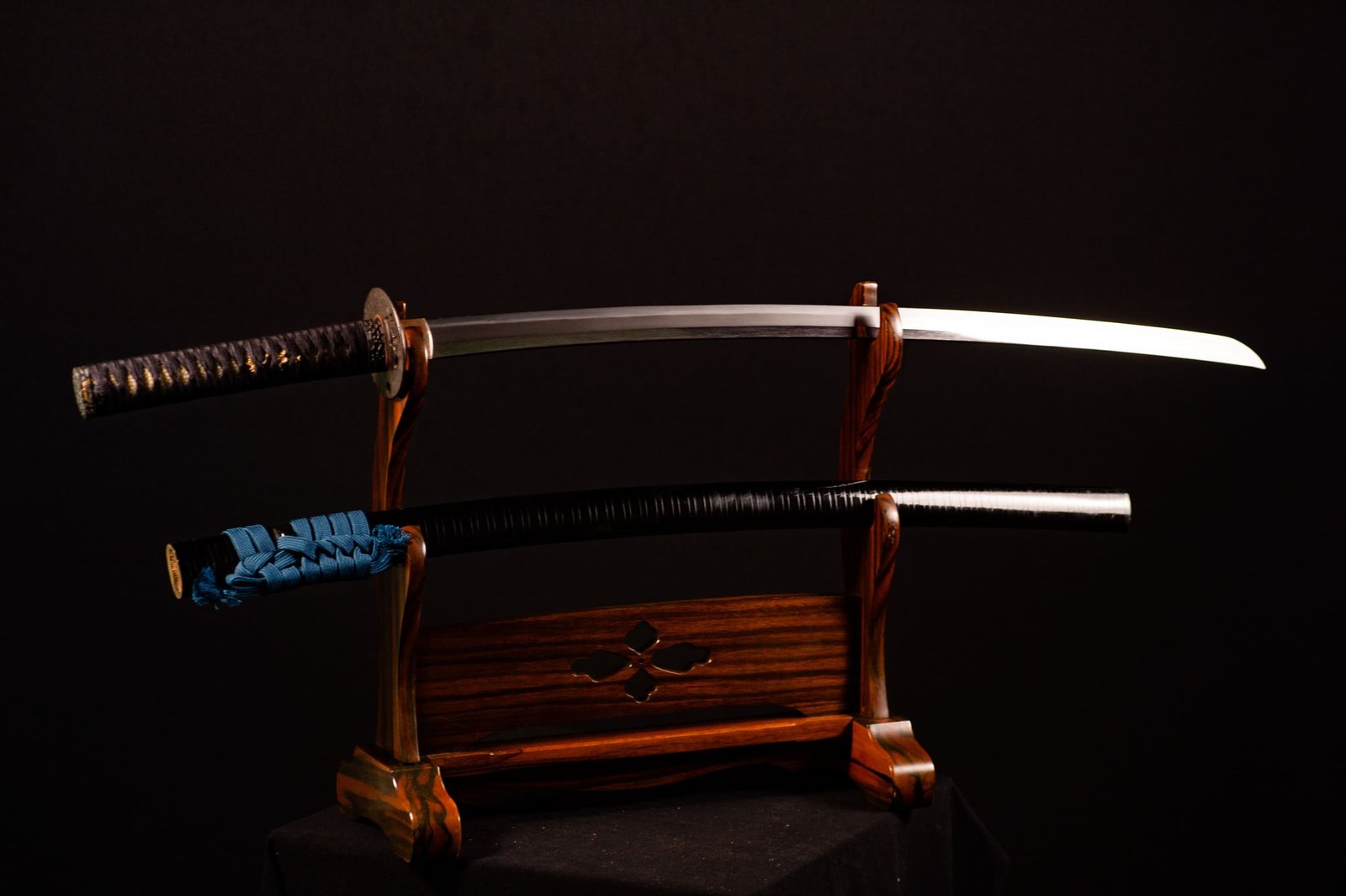
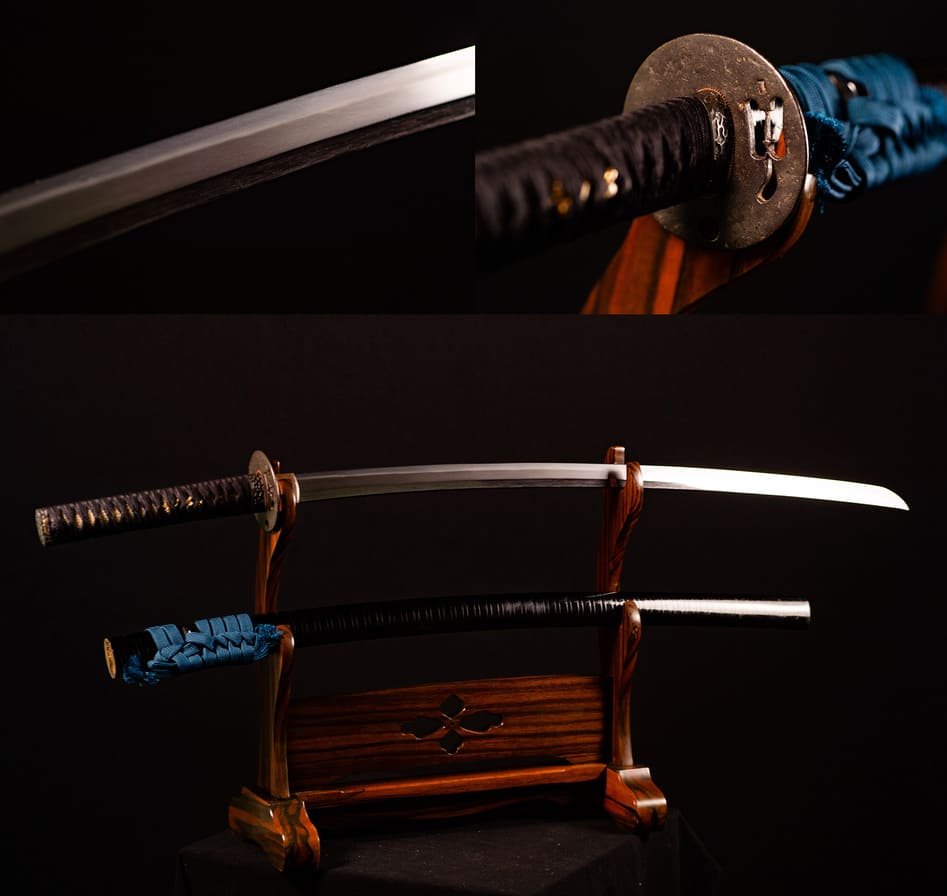
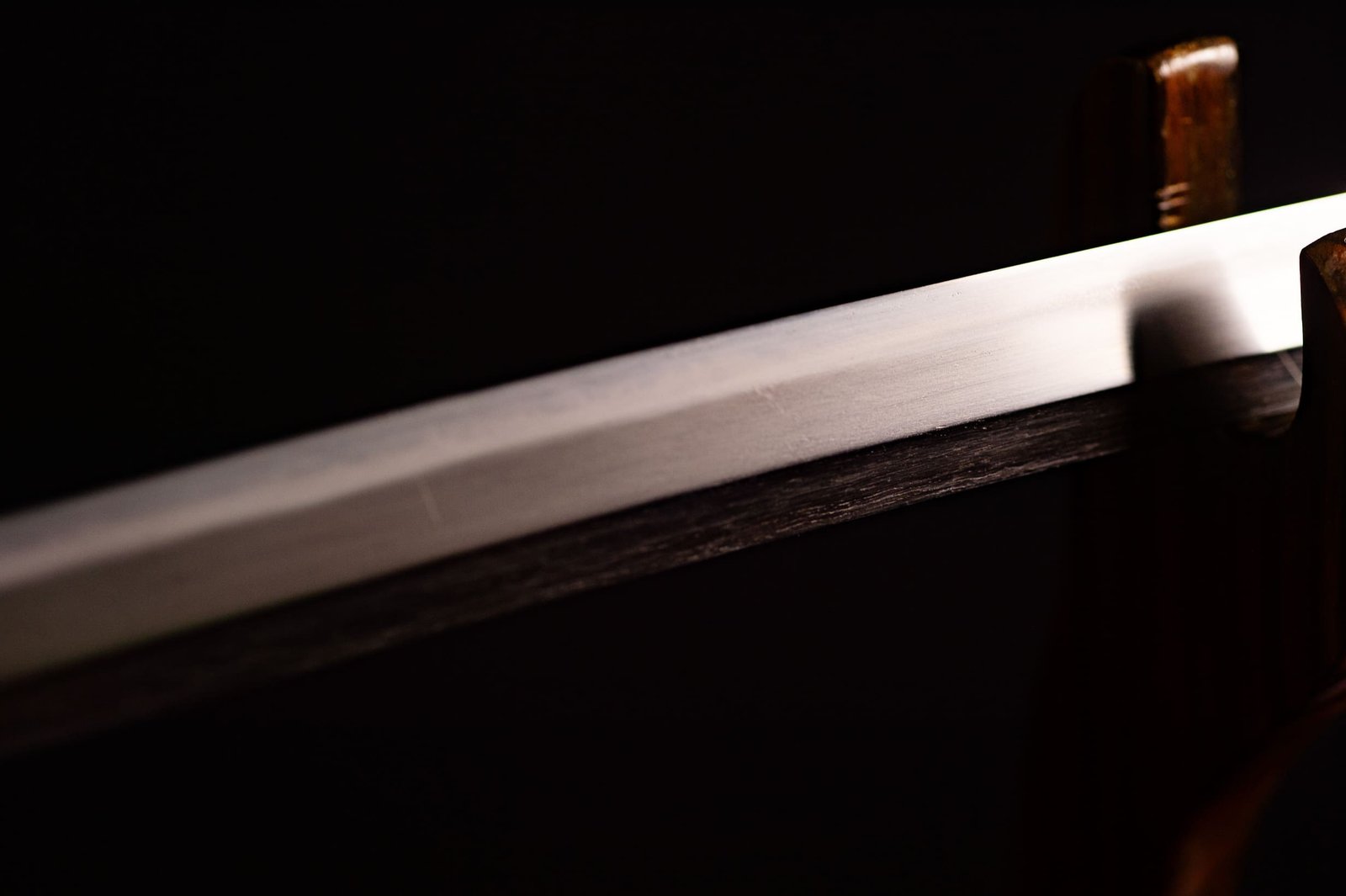
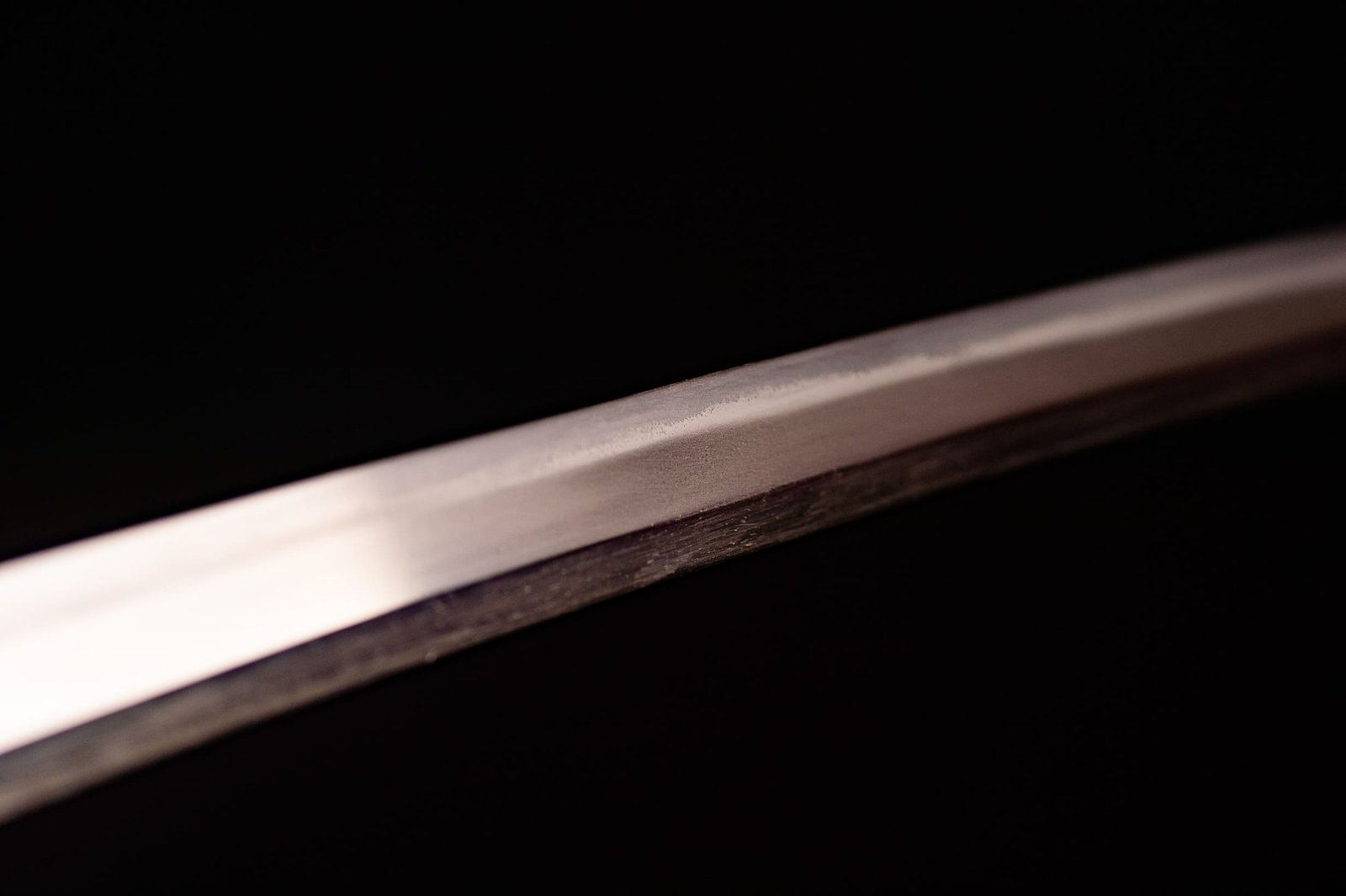
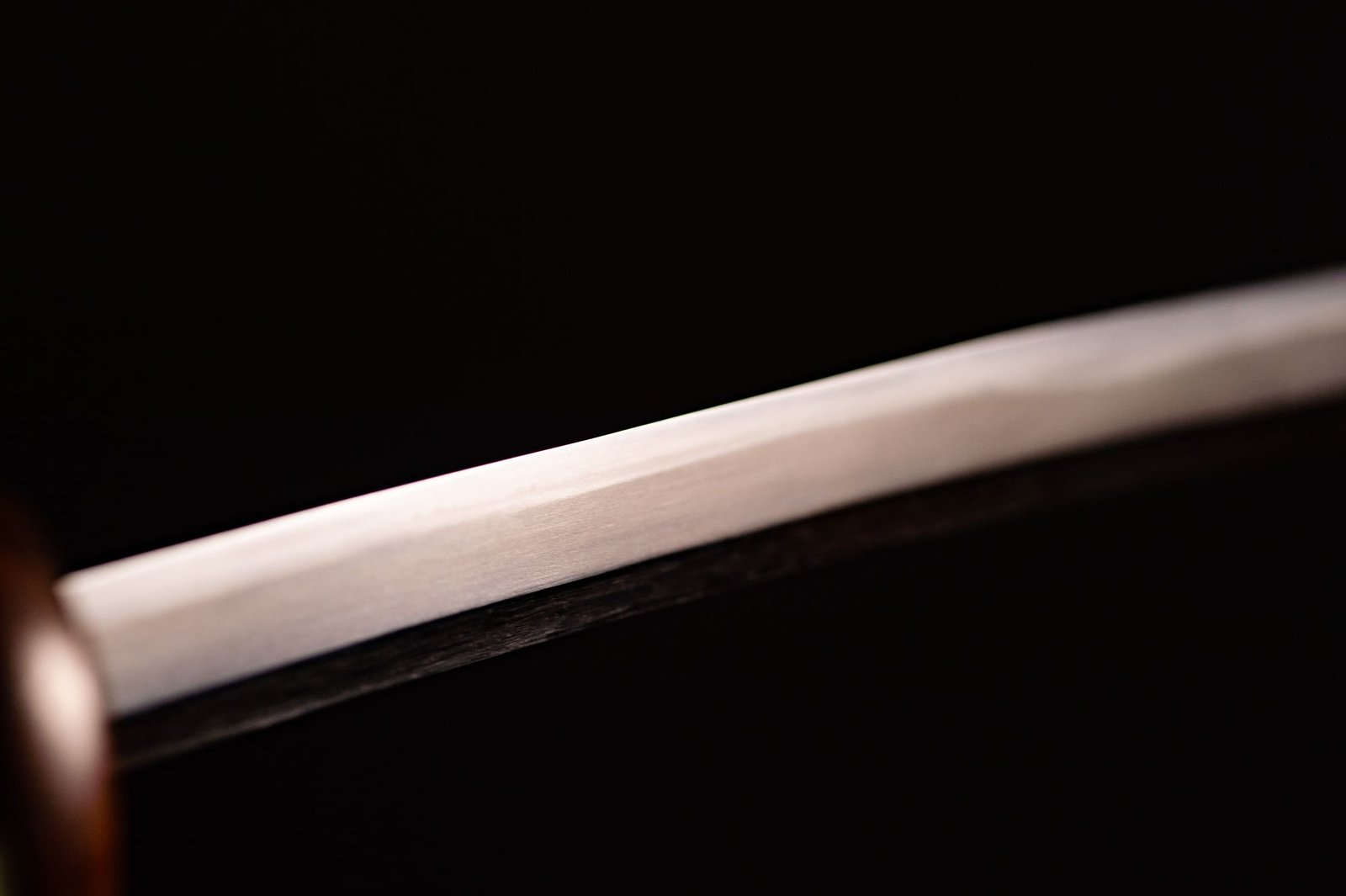
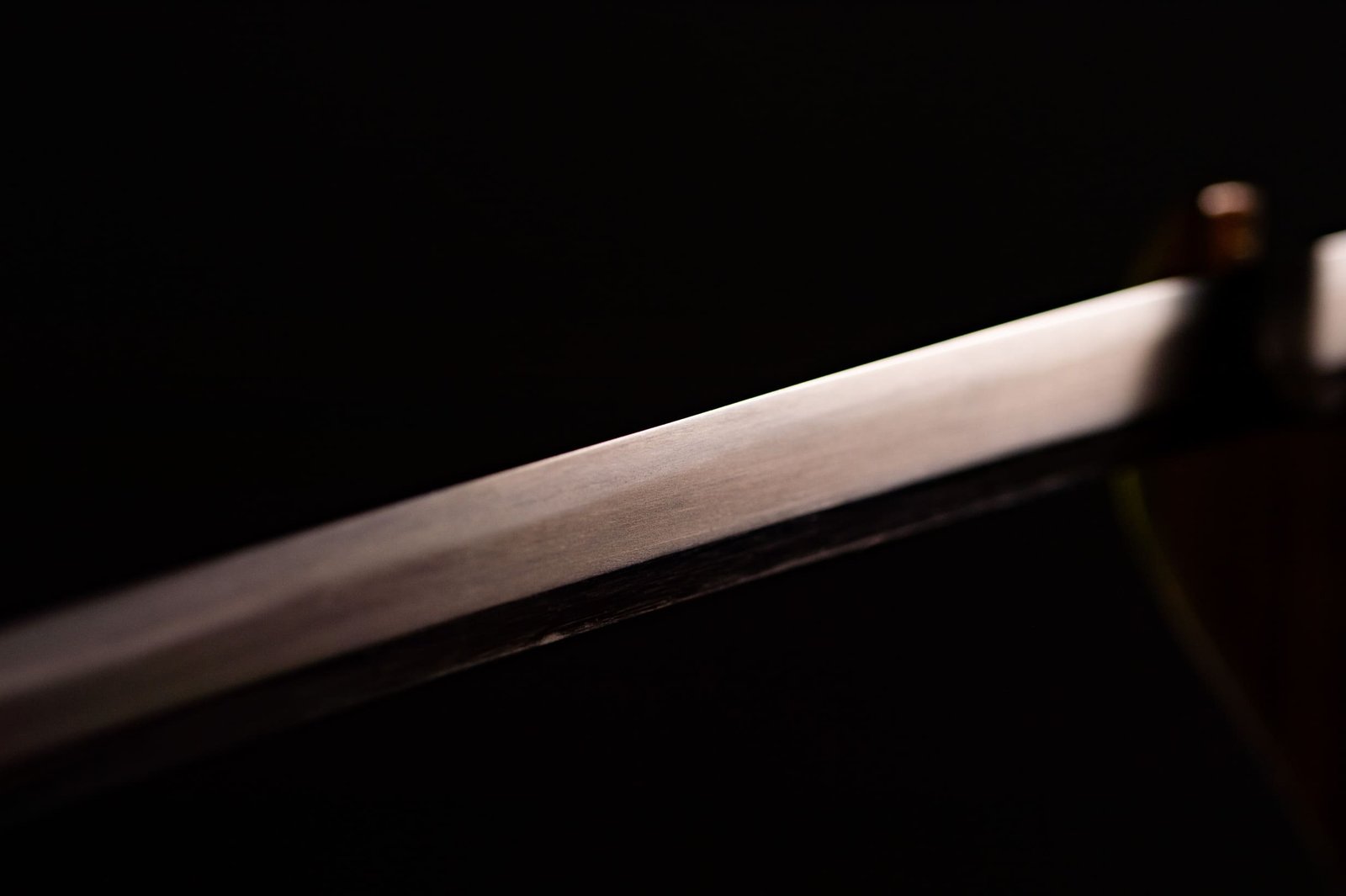
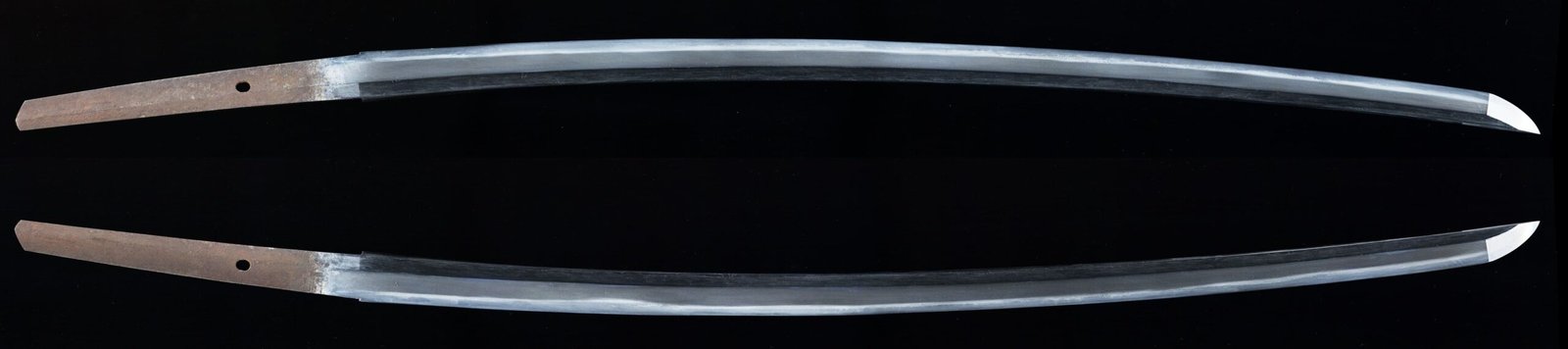
Unsigned (mumei) Japanese katana from the Edo period, with a nagasa of 69.8 cm, a powerful shinogi-zukuri form and a deep, graceful curvature of 2 cm. Its calm suguha hamon moves into gentle ko-notare, with fine nie, sunagashi and hotsure along the upper part of the blade. Presented in a restrained koshirae with iron fittings, gilt dragon menuki, a ribbed black lacquer saya and a deep blue silk sageo. Excellent condition for its age, with some damage and repairs to the koshirae, and its Japanese tōroku-shō.
1 in stock
Add to Compare
Add to Wishlist
An unsigned (mumei) Japanese katana from the Edo period, with a nagasa of 69.8 cm and a powerful shinogi-zukuri form with a deep, graceful curvature of 2 cm. Its calm suguha hamon moves into gentle ko-notare, enlivened by fine nie, sunagashi and hotsure. The blade is presented in a restrained, well-chosen koshirae with iron fittings, gilt dragon menuki, a ribbed black lacquer saya and a deep blue silk sageo.
In Japanese swordmaking, the absence of a signature is not a mark of lesser quality.
Many smiths never signed their work, especially blades made to order for a lord’s retainers or forged within a workshop where the master’s name mattered less than the steel.
Some of the most celebrated swords in Japan, including many National Treasures, are mumei. For centuries, connoisseurs learned to judge a blade by its shape, its steel and its temper line, not by the characters on its tang. An unsigned sword asks to be read rather than labelled.
This katana has a powerful shinogi-zukuri form with a deep, graceful curvature of 2 cm.
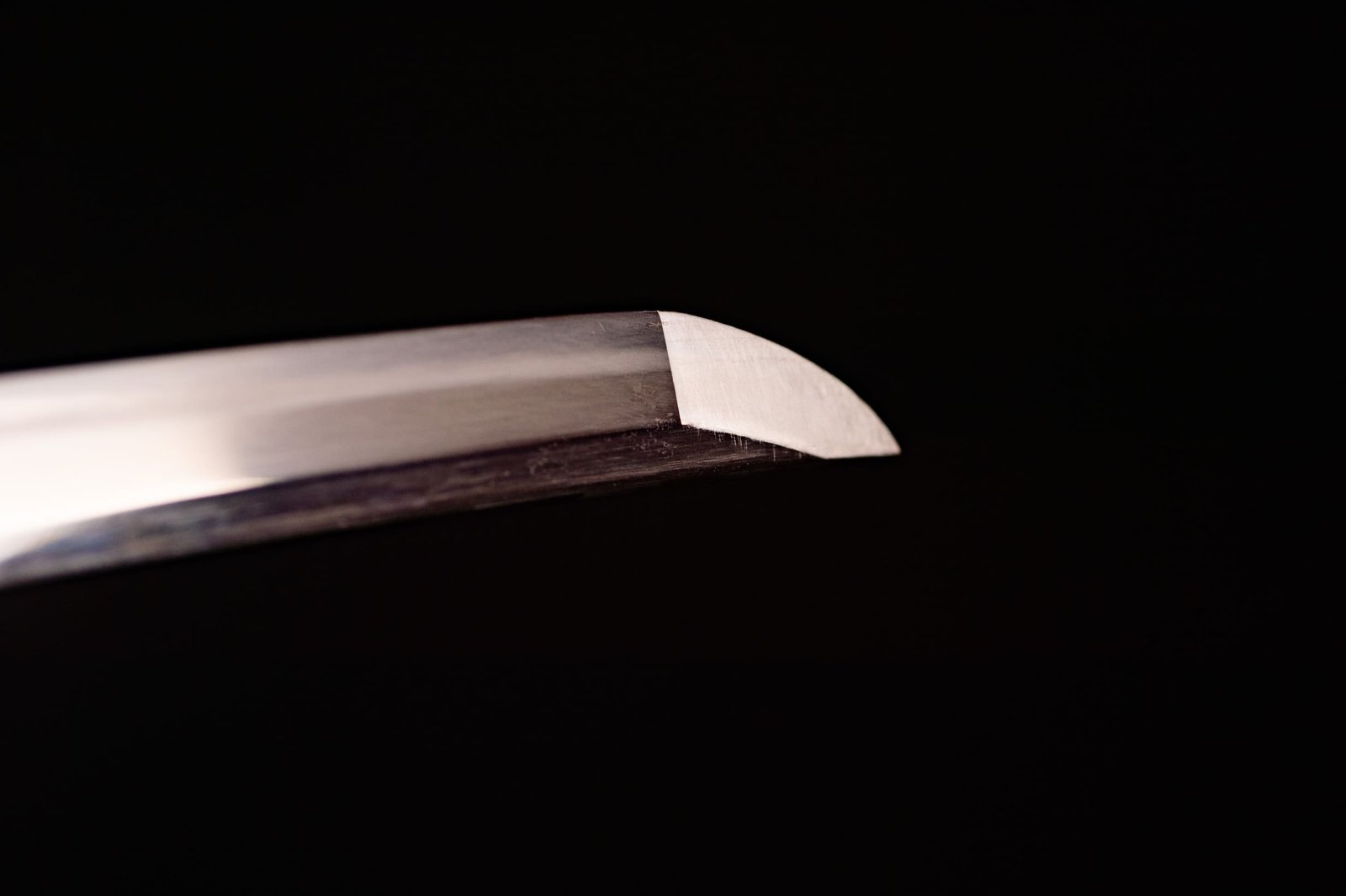
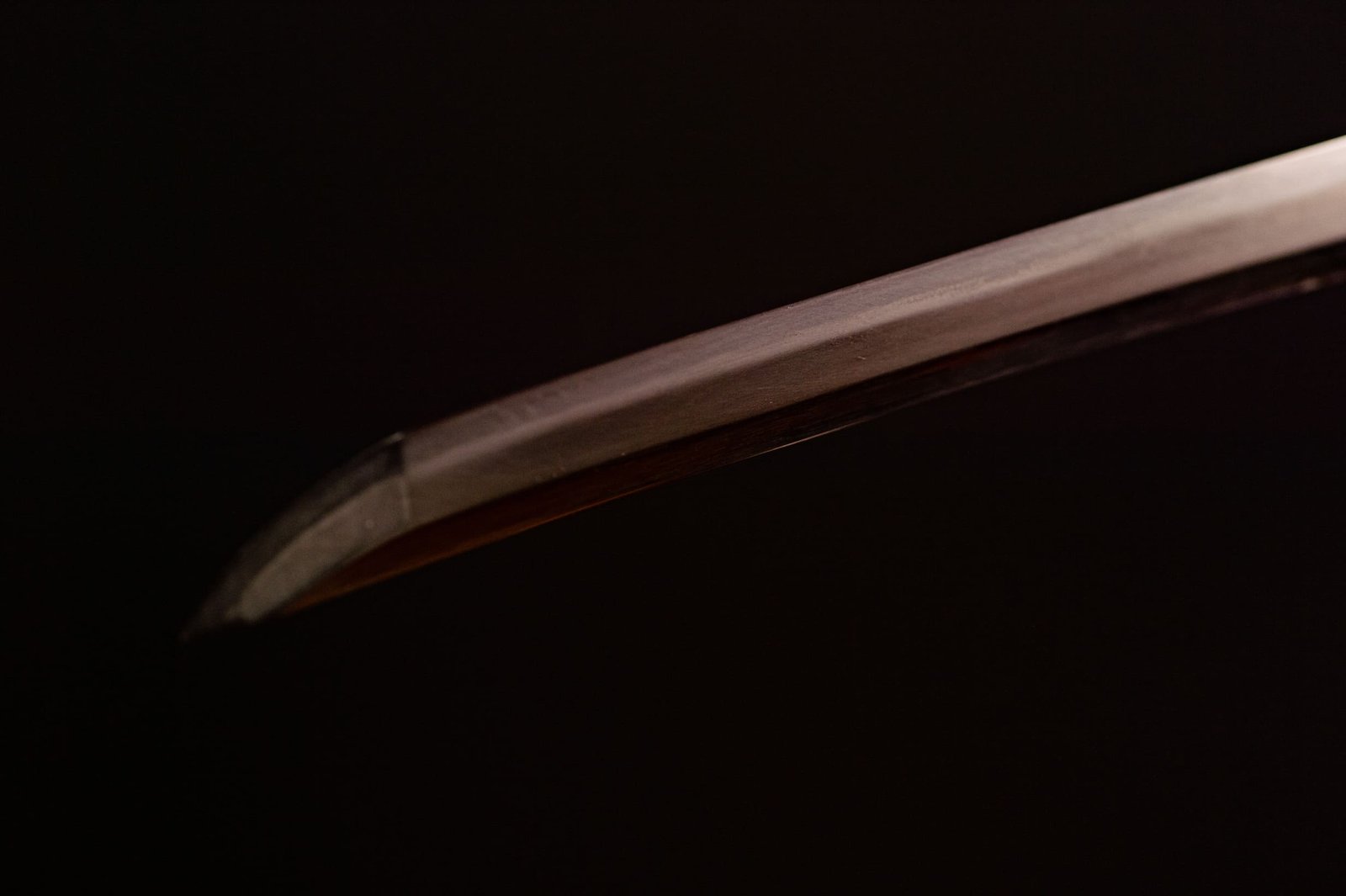
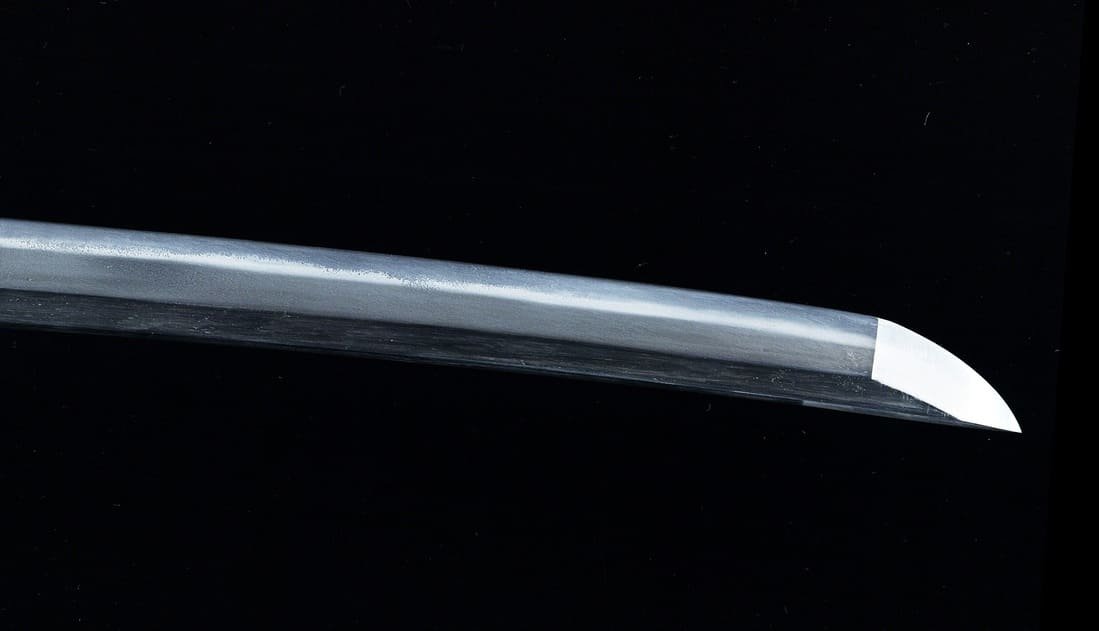
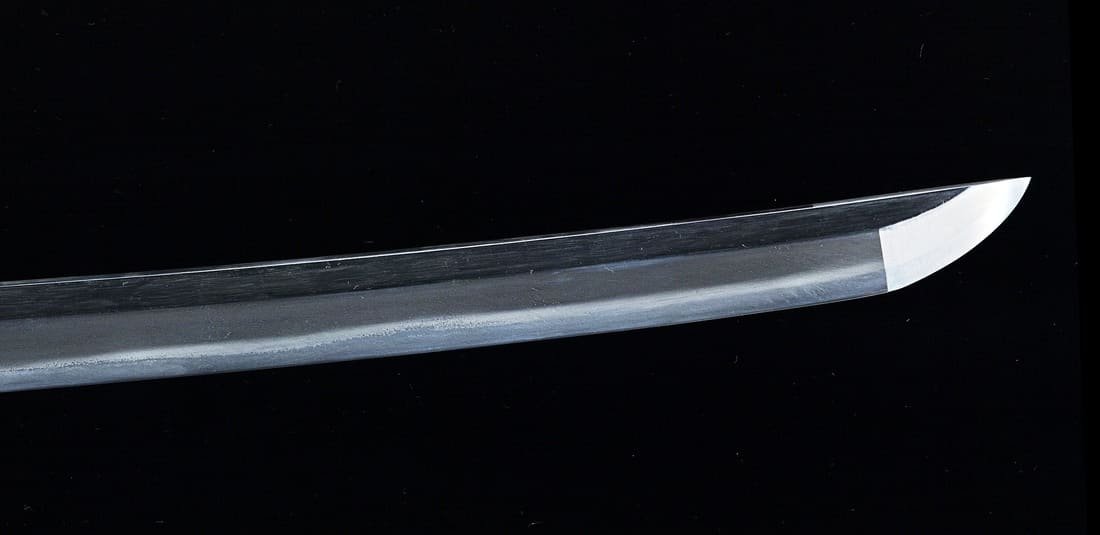
That is generous for its length, and it gives the blade a sweeping profile that recalls older sword styles. It ends in a balanced chū-kissaki.
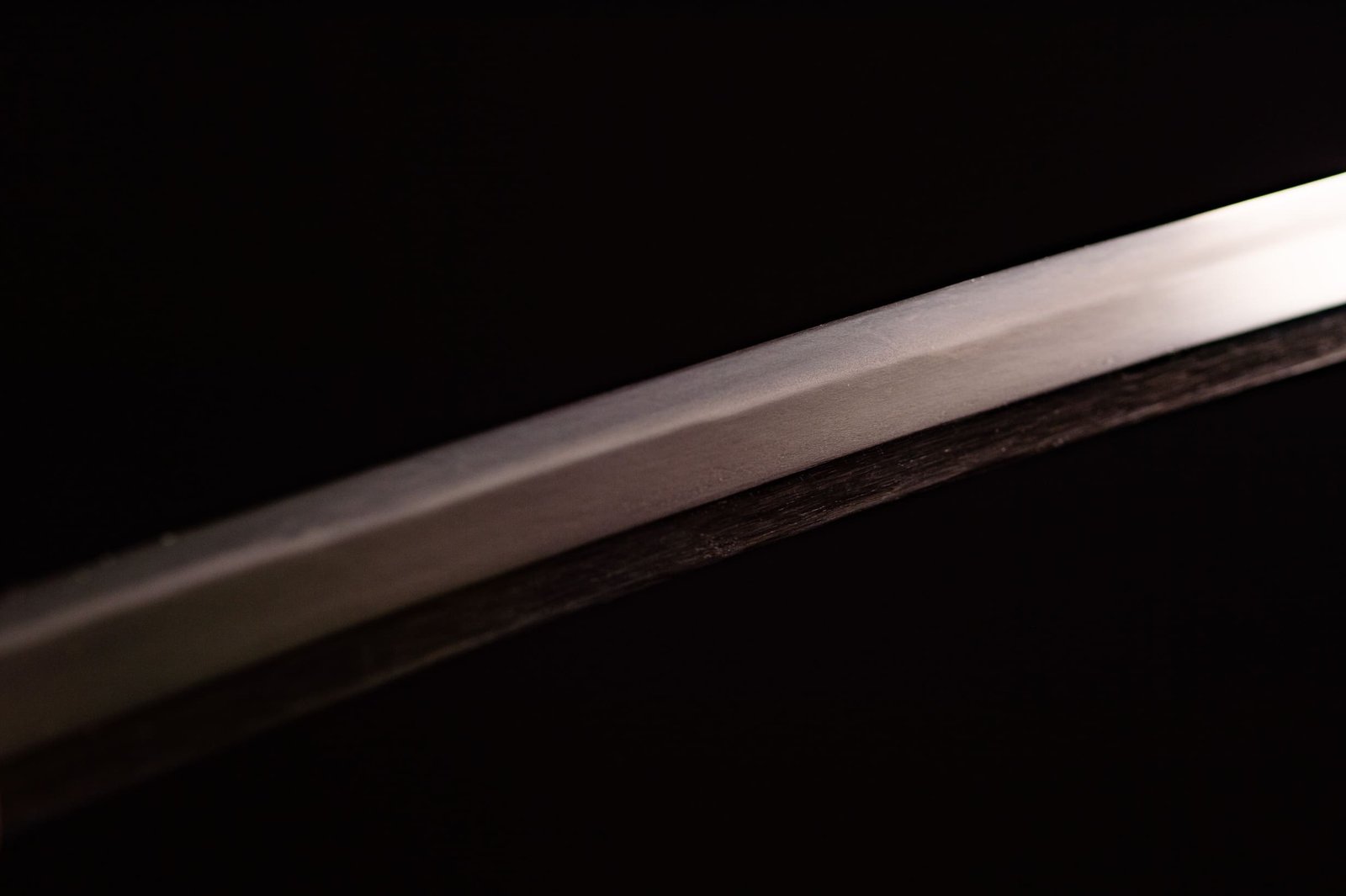
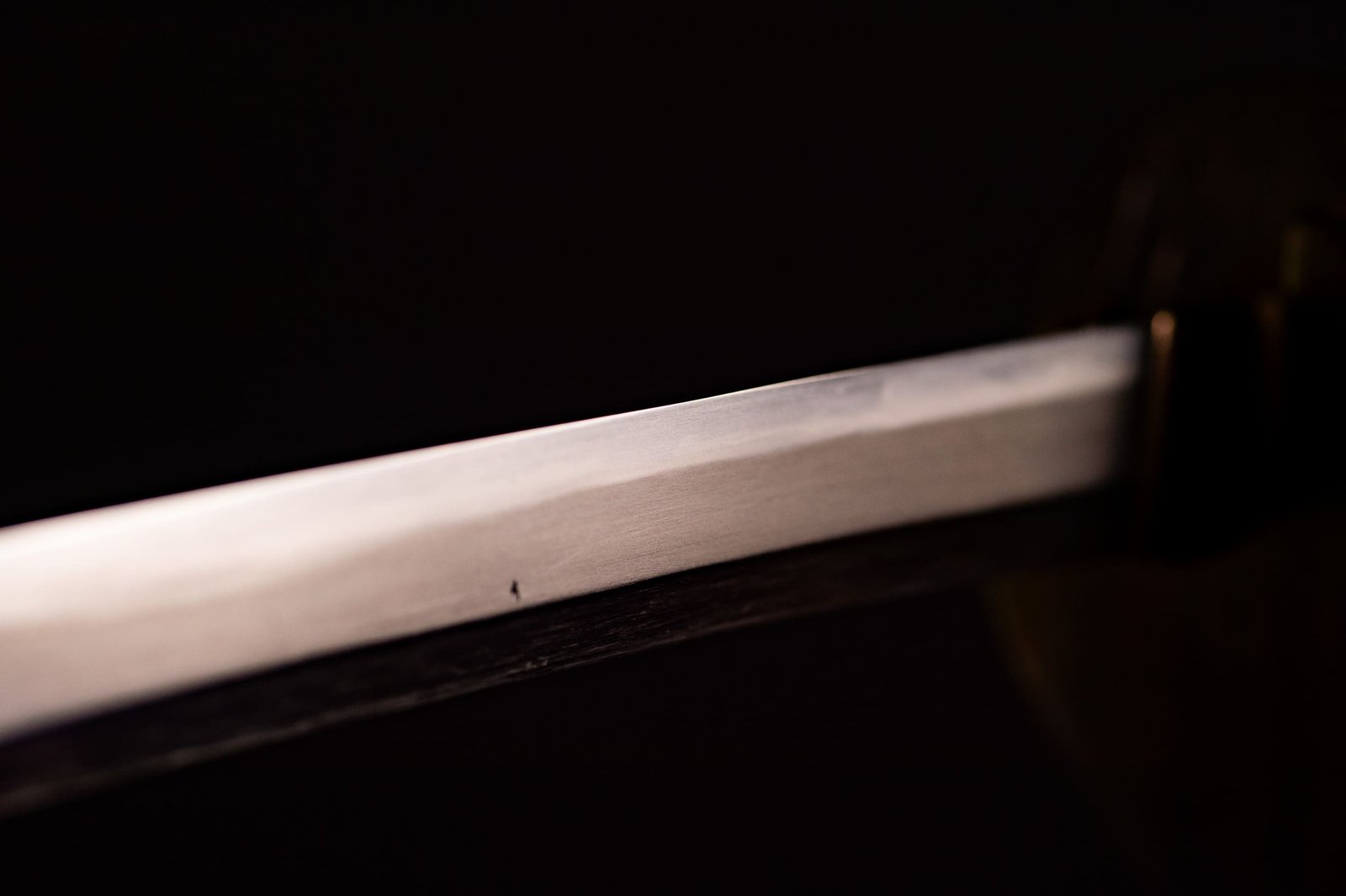
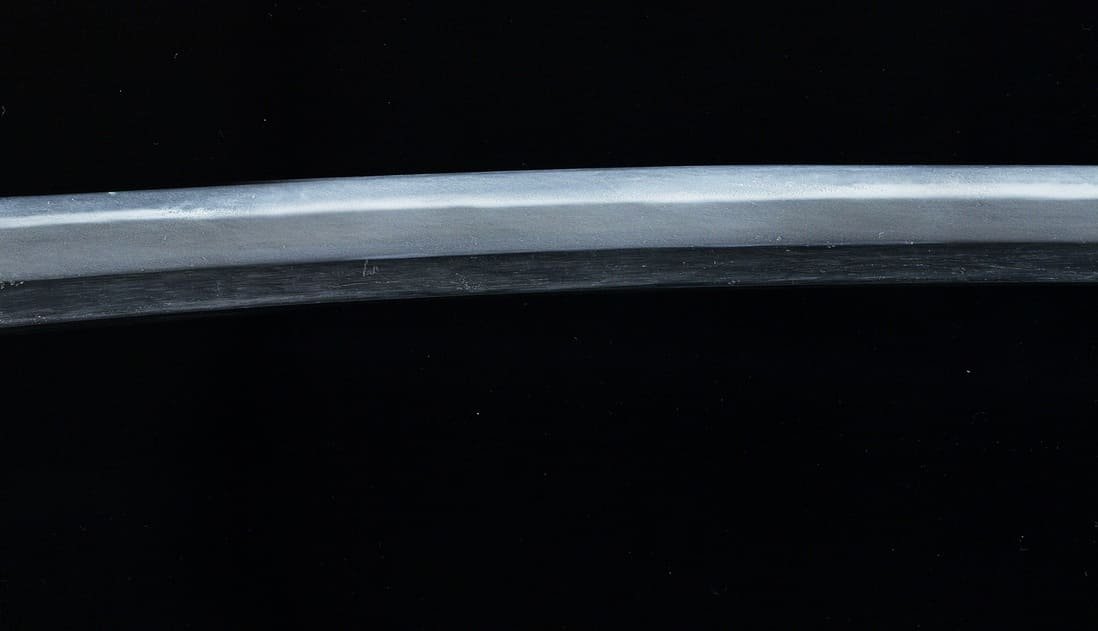
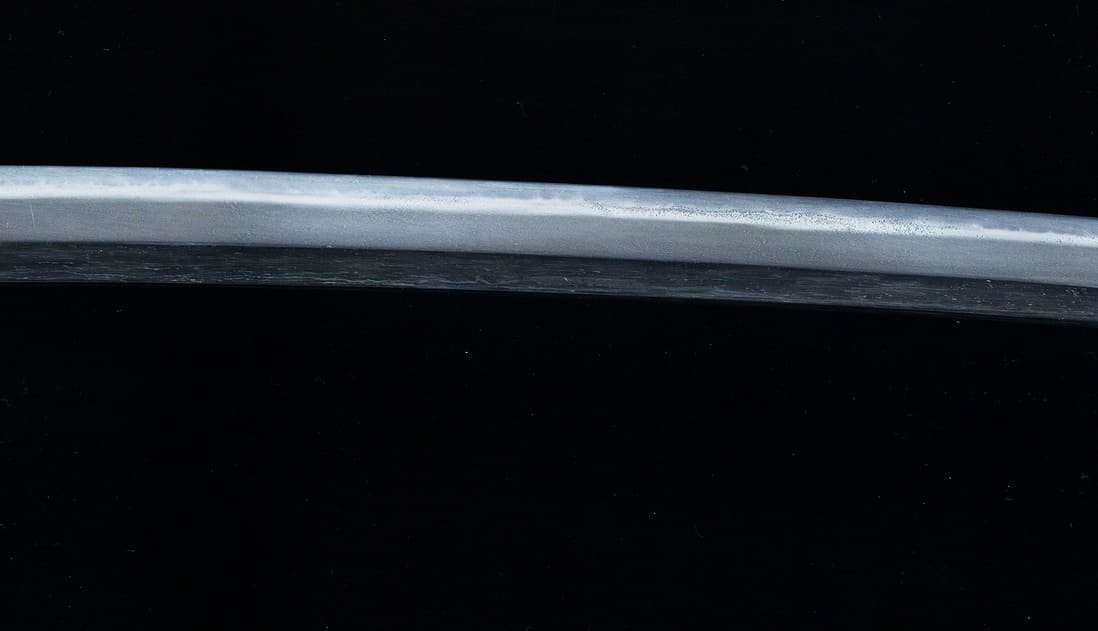
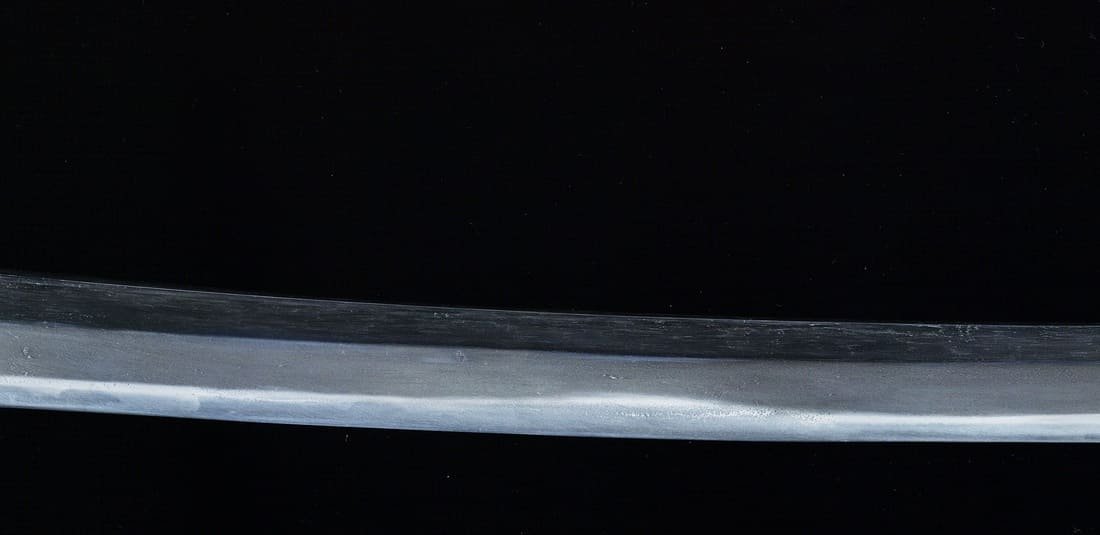
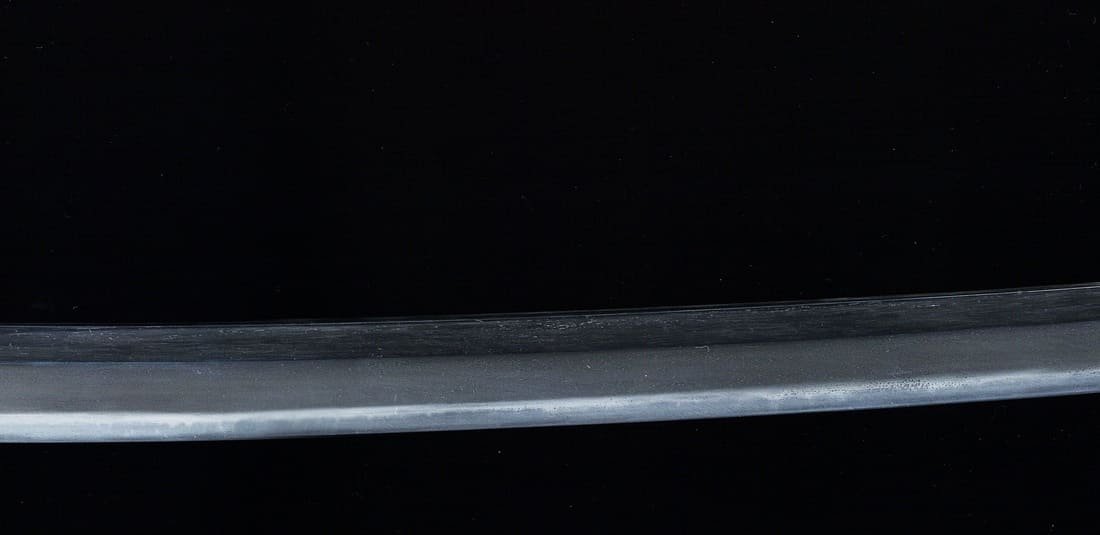
The hamon is a calm suguha that moves into gentle ko-notare, with a soft nioiguchi.
Along the upper part of the blade, fine nie scatter into delicate sunagashi and hotsure, like brushstrokes trailing along the edge.
In the point, the bōshi turns back in a neat ko-maru.
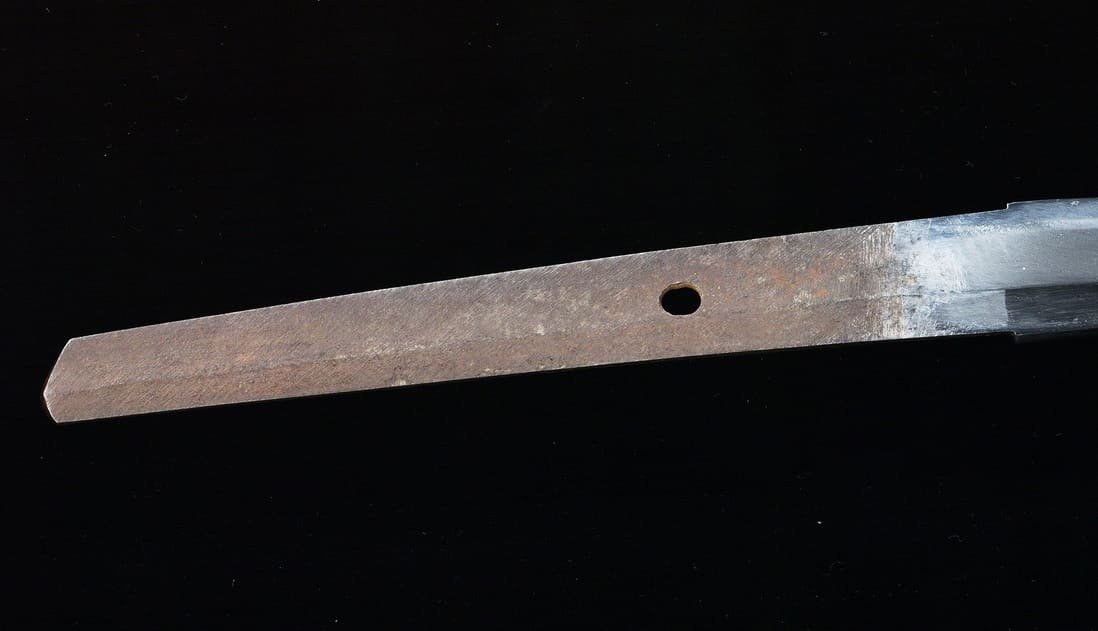
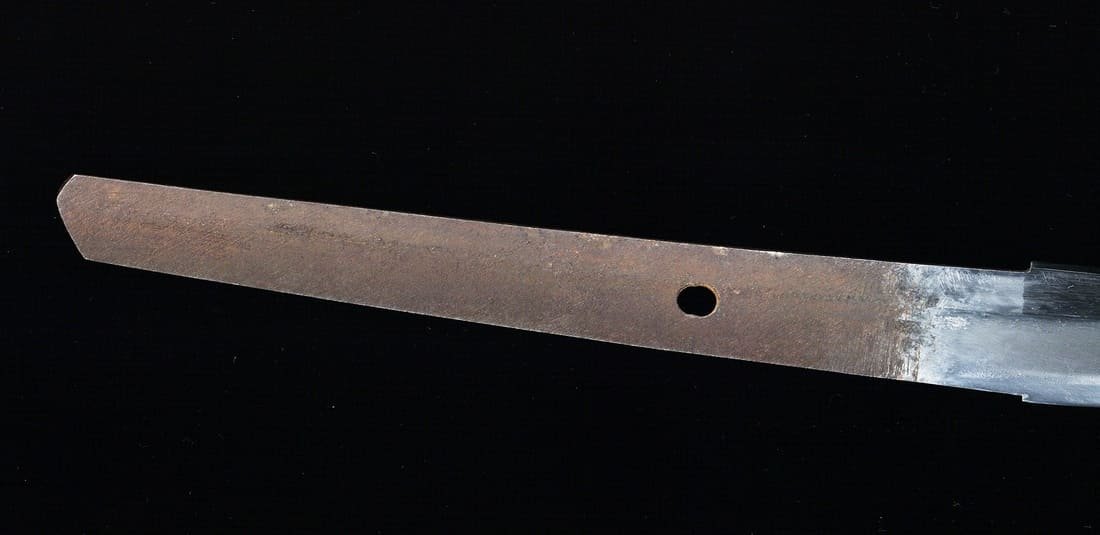
The nakago is unsigned (mumei) and has a single mekugi-ana under a warm, even patina.
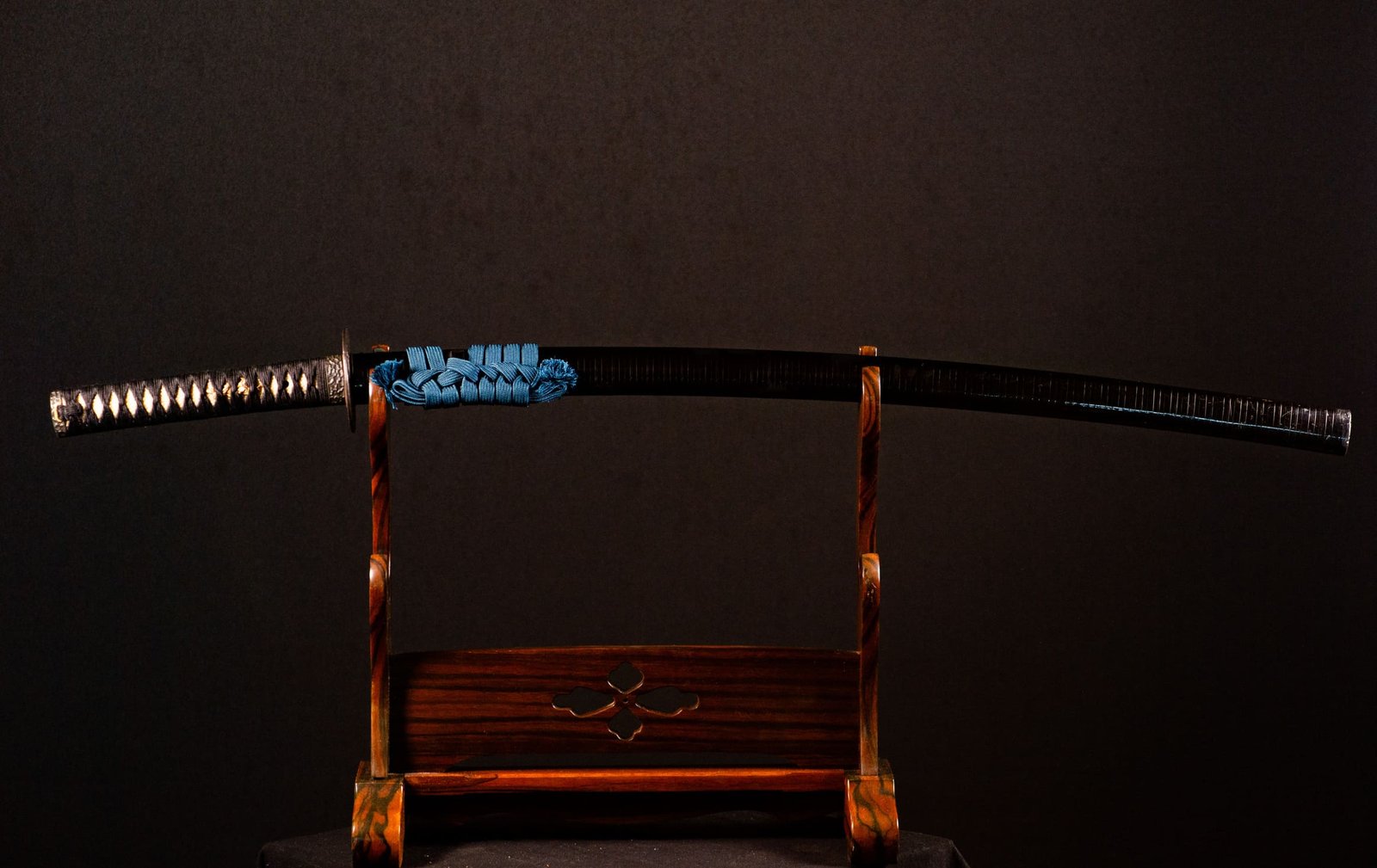
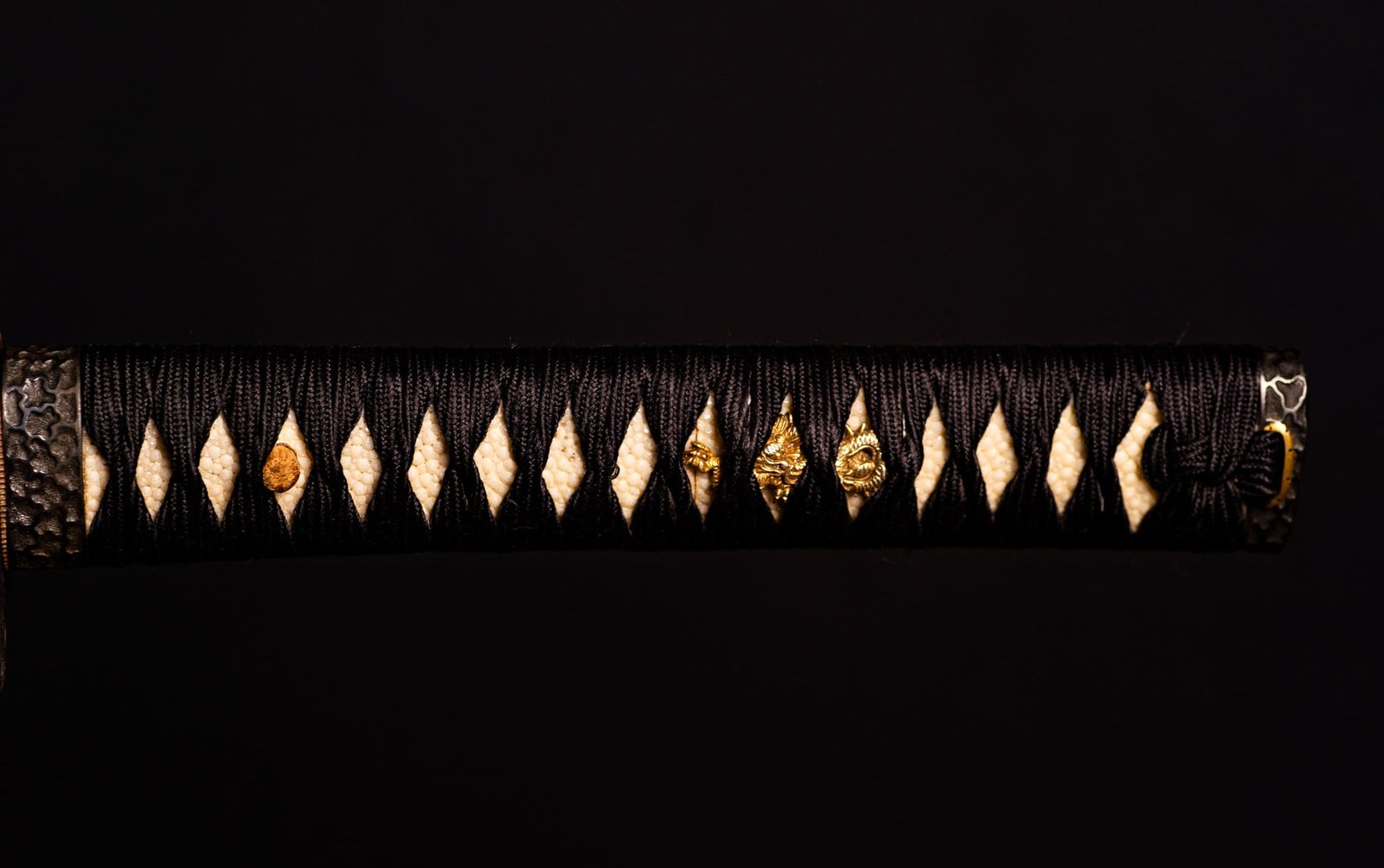
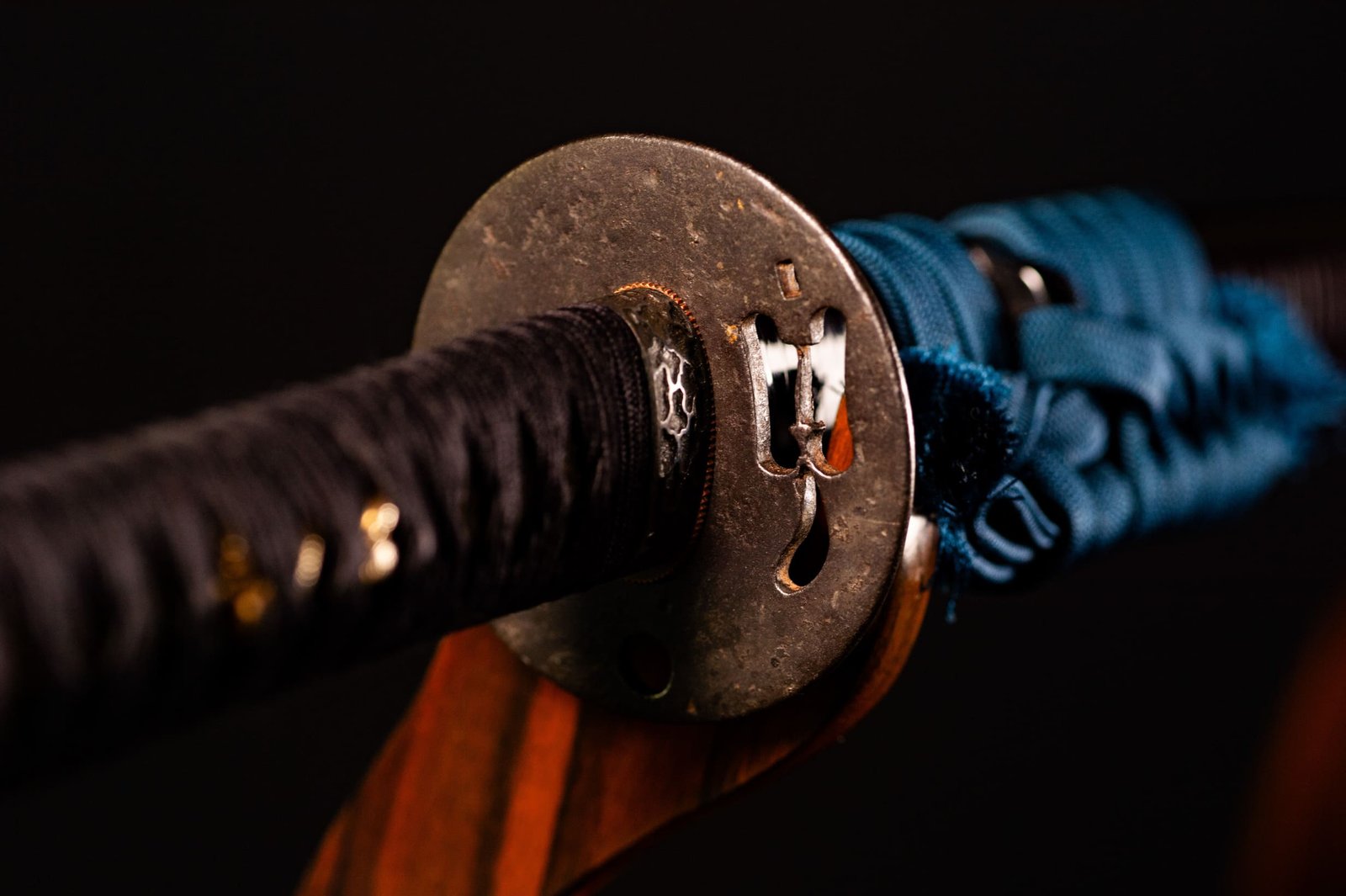
The katana is presented in a restrained, well-chosen koshirae, combining iron fittings, gilt menuki and a finely finished lacquered saya.
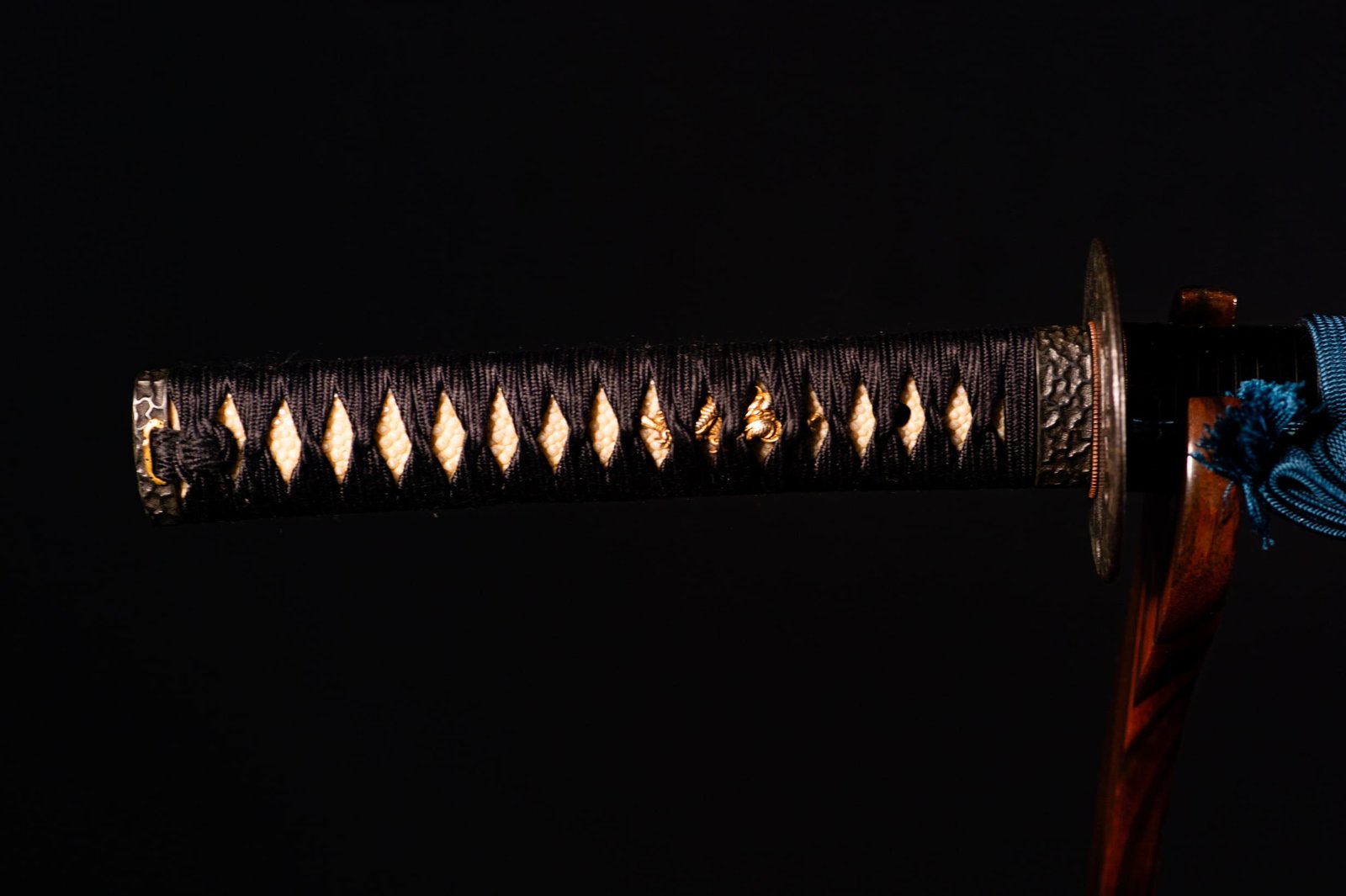
The round iron tsuba has a rich, aged surface and an openwork motif cut through the plate.
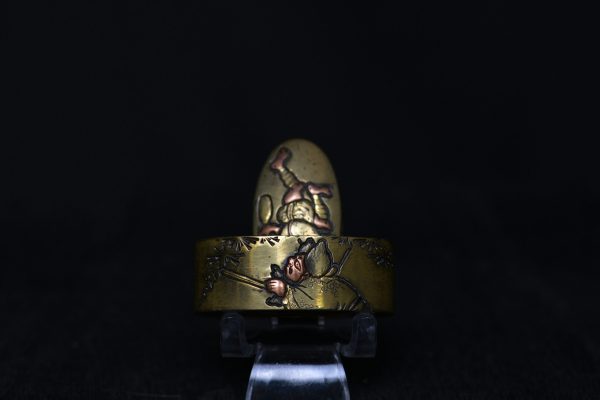
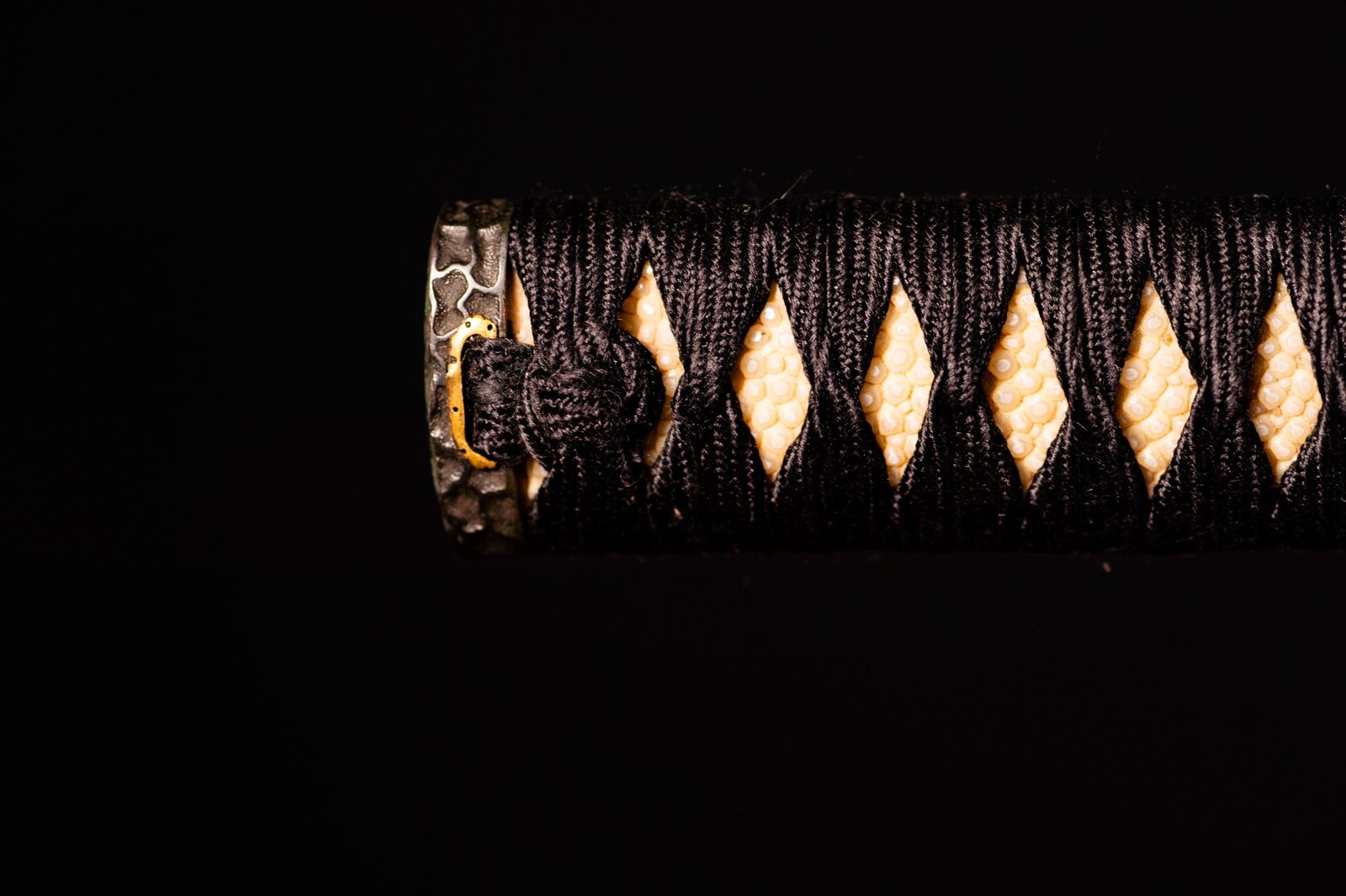
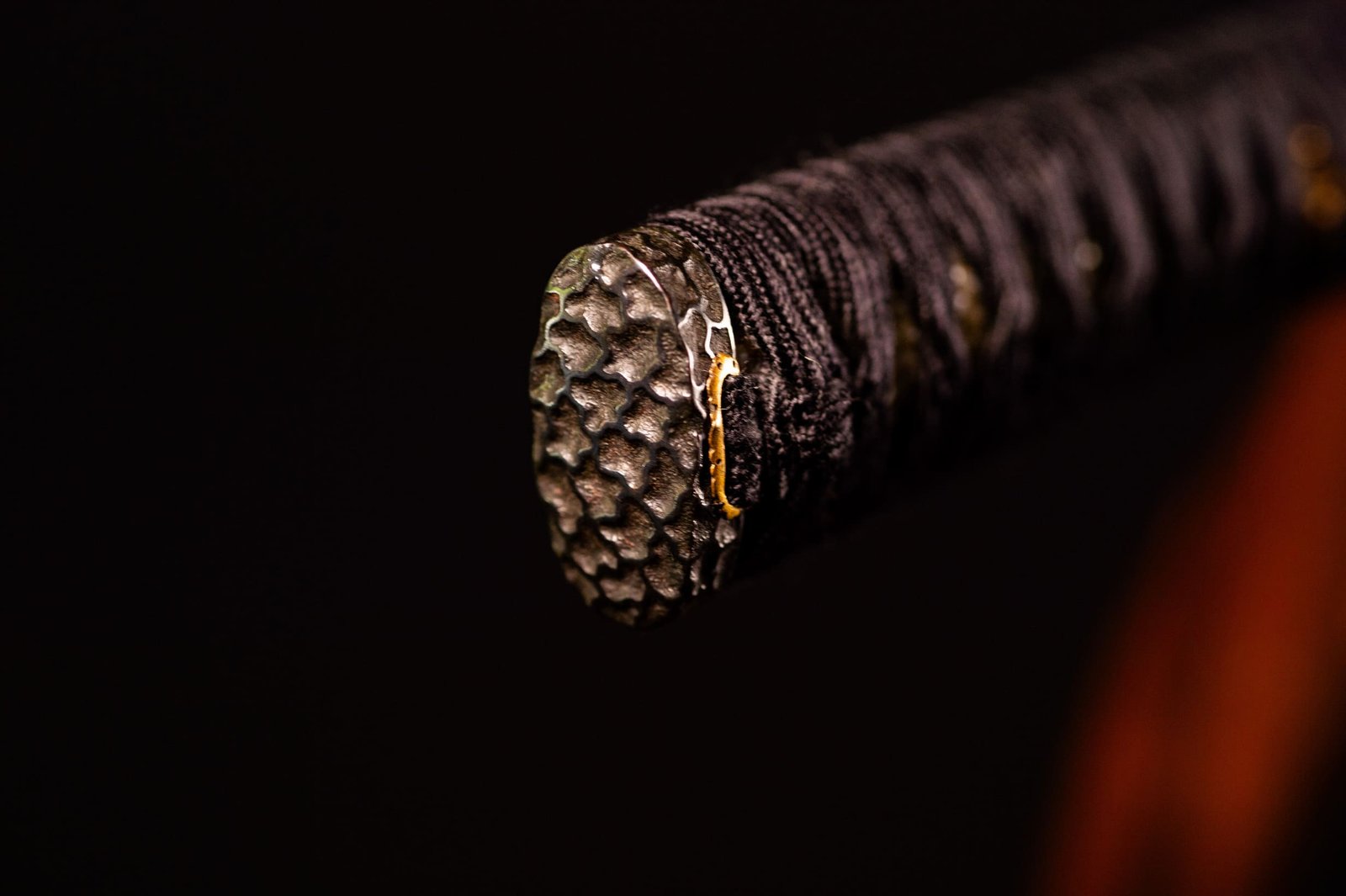
The fuchi and kashira are made of iron, worked in a bold relief pattern with silver highlights.
The kashira is finished with a gilt rim around the cord opening.
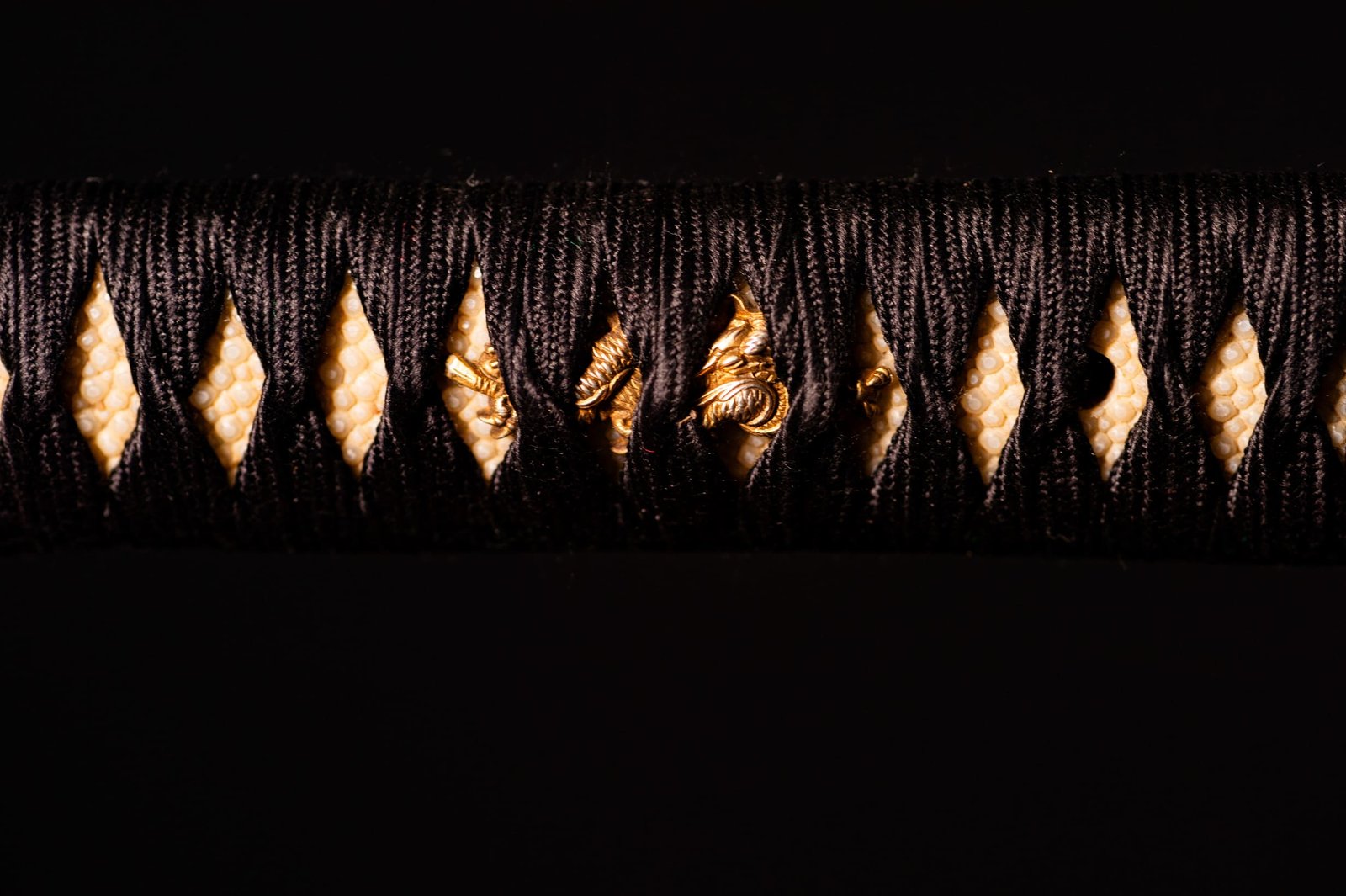
The menuki are gilt dragons, set under black silk ito over white same.
In Japan the dragon was a guardian and a bringer of rain, a symbol of power that rises from the water to the heavens. It was one of the most popular motifs among warriors.
The saya is finished in black lacquer with fine horizontal ribbing along its length.
This finish was valued for its elegance and for the secure grip it gave at the waist.
A deep blue silk sageo completes the ensemble with a striking note of colour.
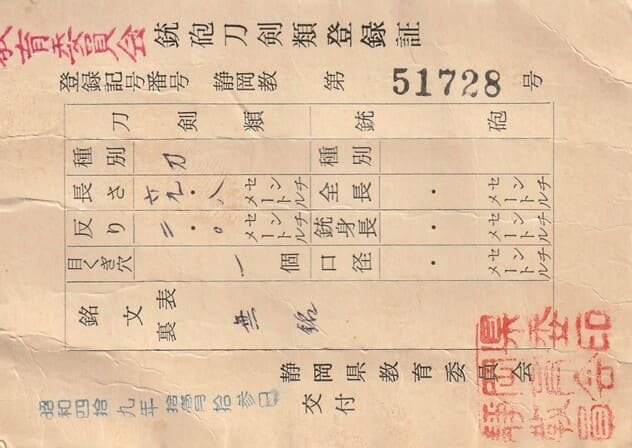
The blade comes with its Japanese registration certificate (tōroku-shō), issued in Shizuoka Prefecture in 1974.
This katana combines a shinogi-zukuri blade with a koshirae featuring iron fittings, gilt menuki, silk, same and lacquer.
Excellent condition for its age, with only minor wear consistent with its antiquity.
The koshirae shows some damage and repairs, as is normal for its age.
This katana stands out for its sweeping, deeply curved profile and its active, expressive hamon.
An unsigned katana that asks to be read rather than labelled: its sweeping curvature, expressive hamon and restrained koshirae with gilt dragon menuki speak for themselves. A compelling addition to a collection of antique Japanese swords.
| Época | Edo |
|---|

Order above 1.000,00 € gets free shipping.

Secure and hassle-free payment process.

Certificate of authenticity included.

Have questions? Contact us via WhatsApp.
Contact
Discover exceptional Japanese swords, armor and works of art with our limited-time Black Friday offers.
OFFER ENDS NOVEMBER 30, 2026
Enter your code at checkout. Discounts cannot be combined with other coupons. Eligible orders only.