


1 in stock
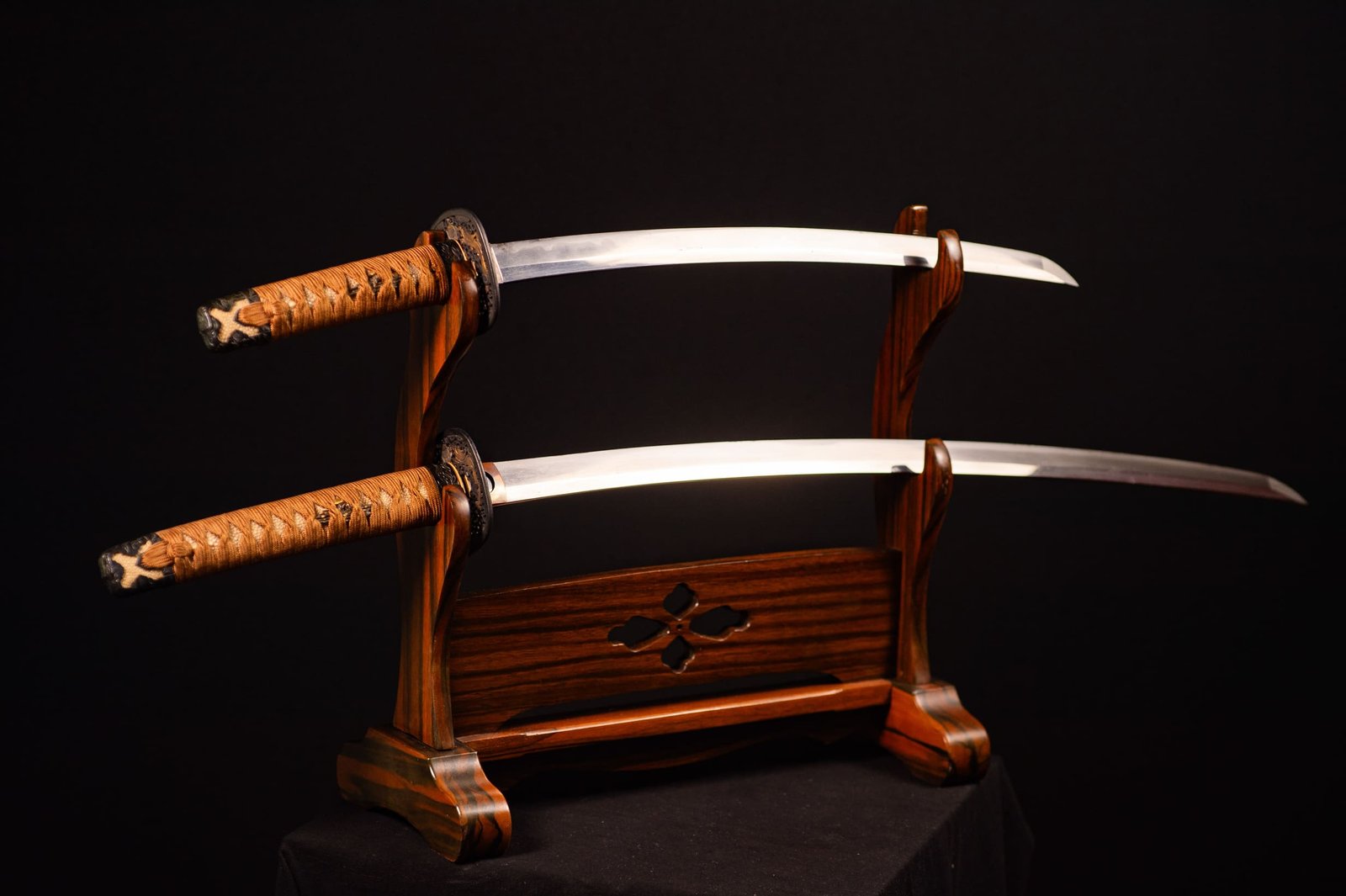
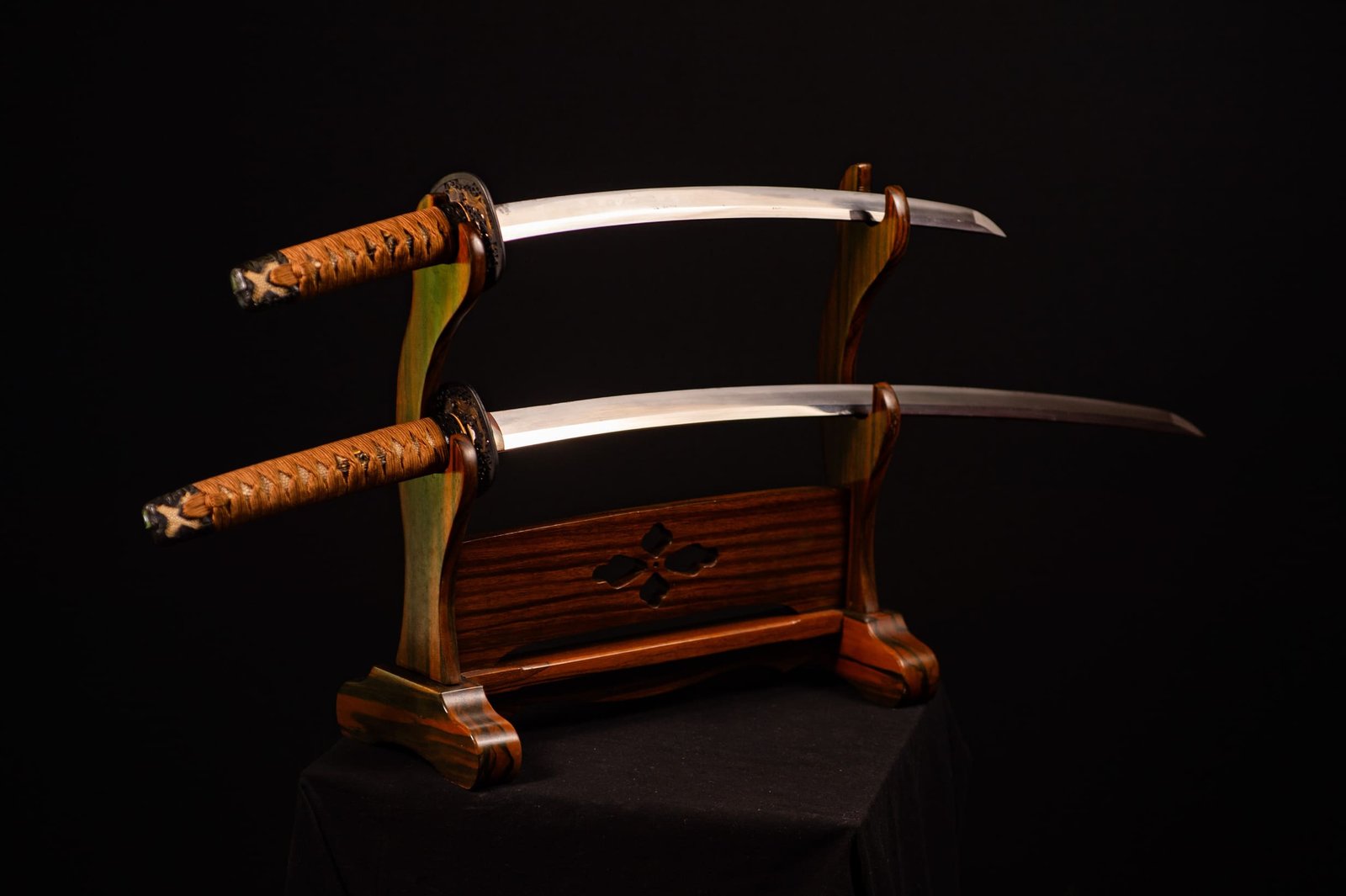
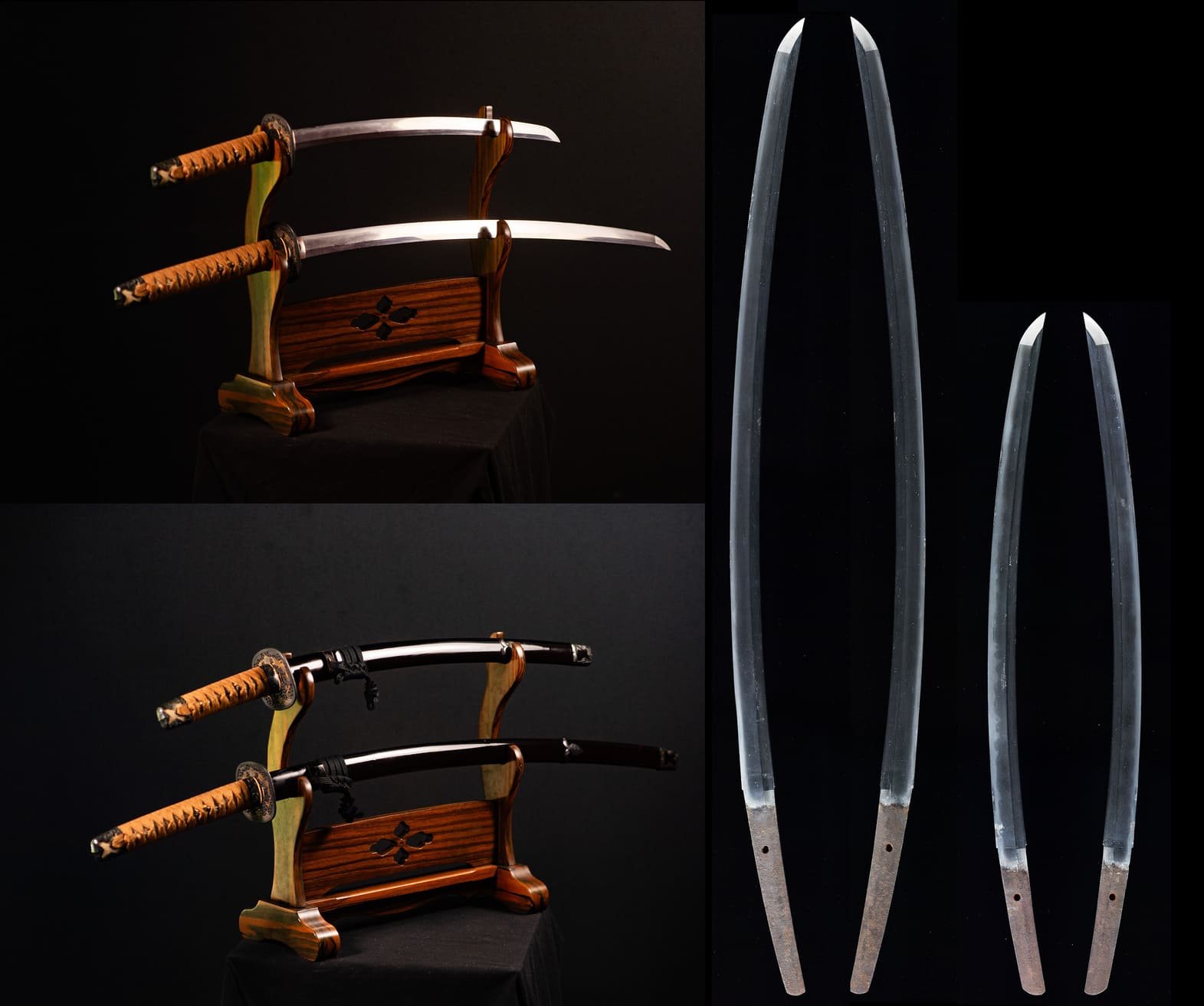
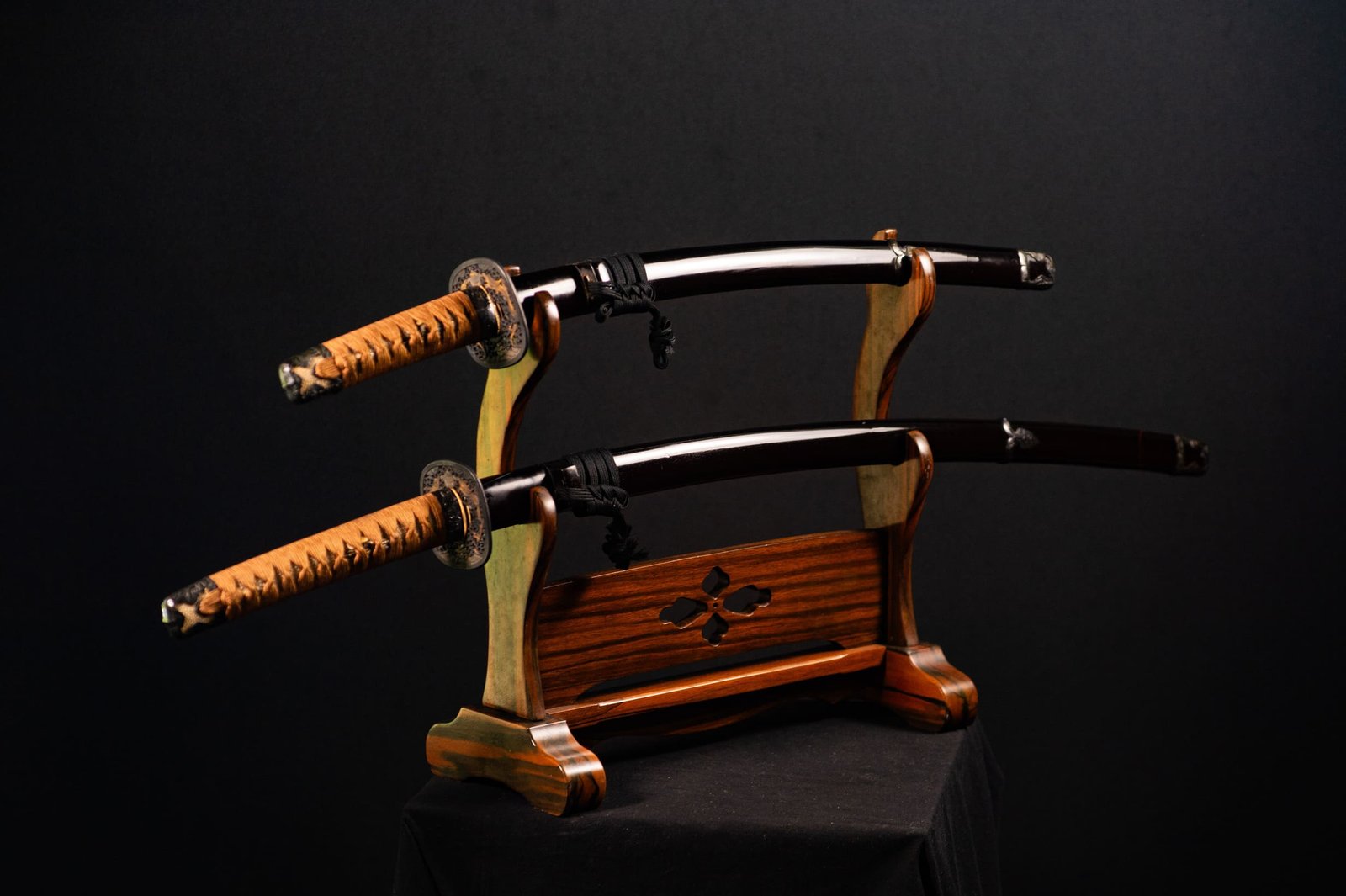
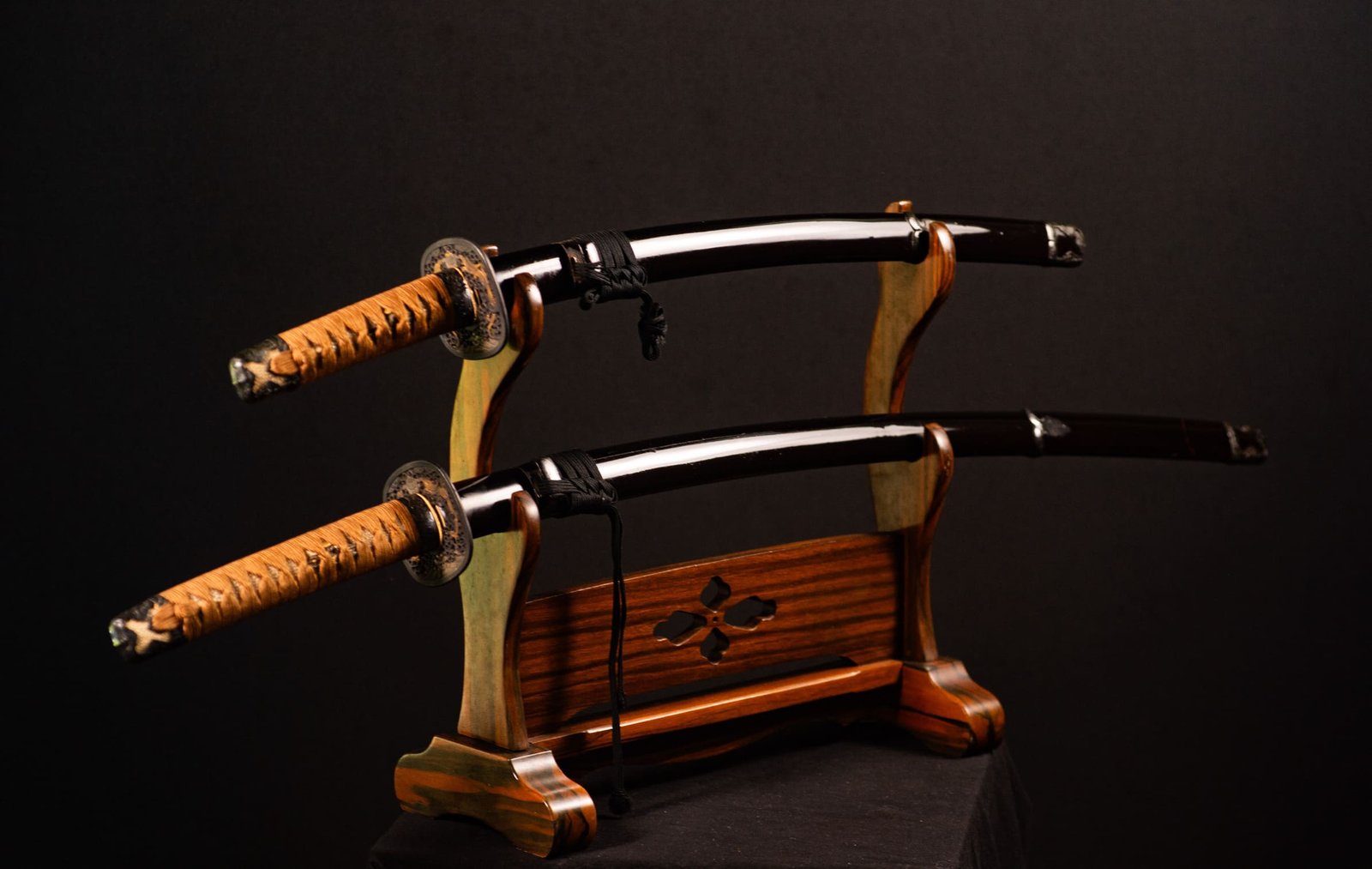
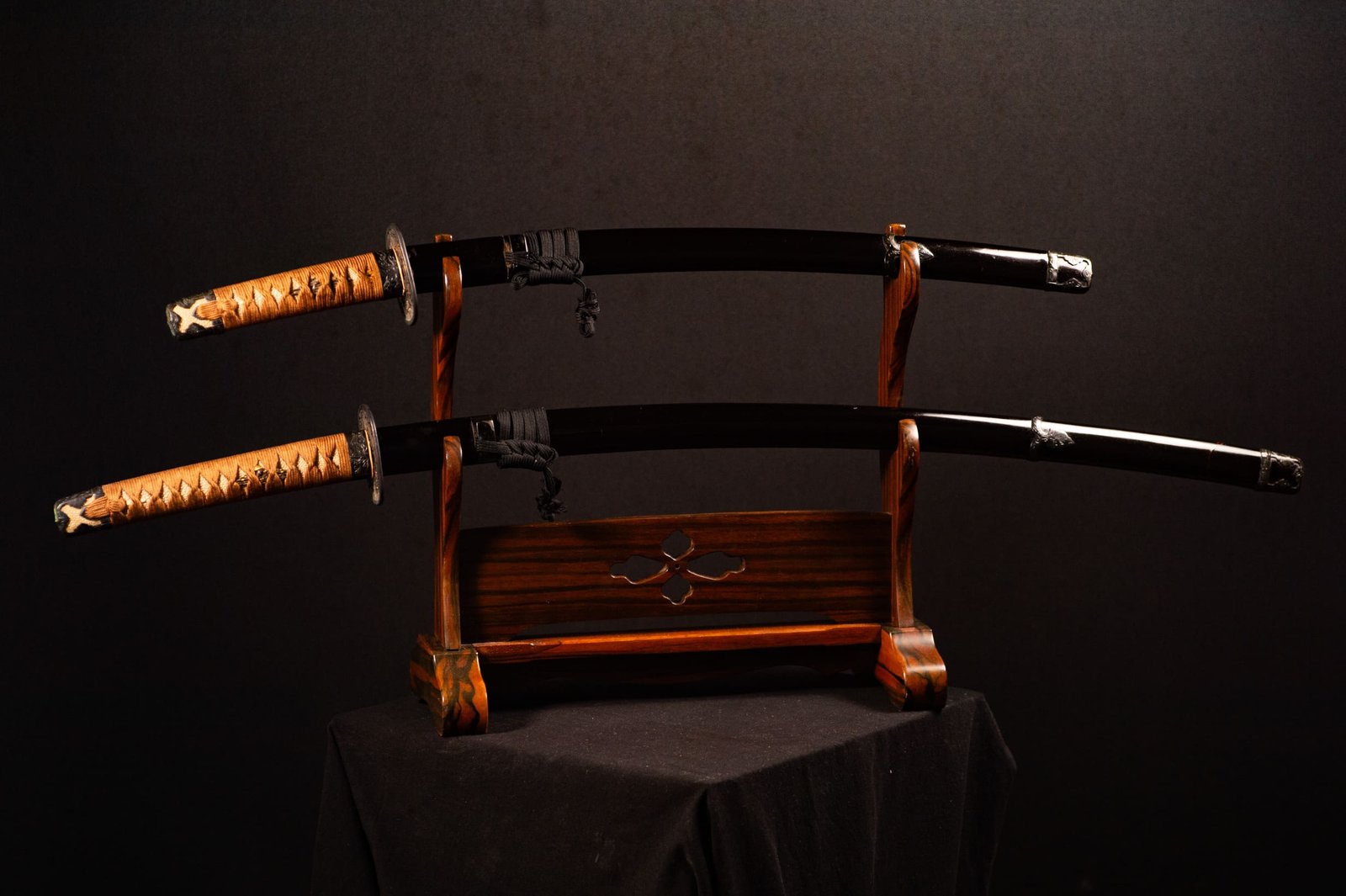
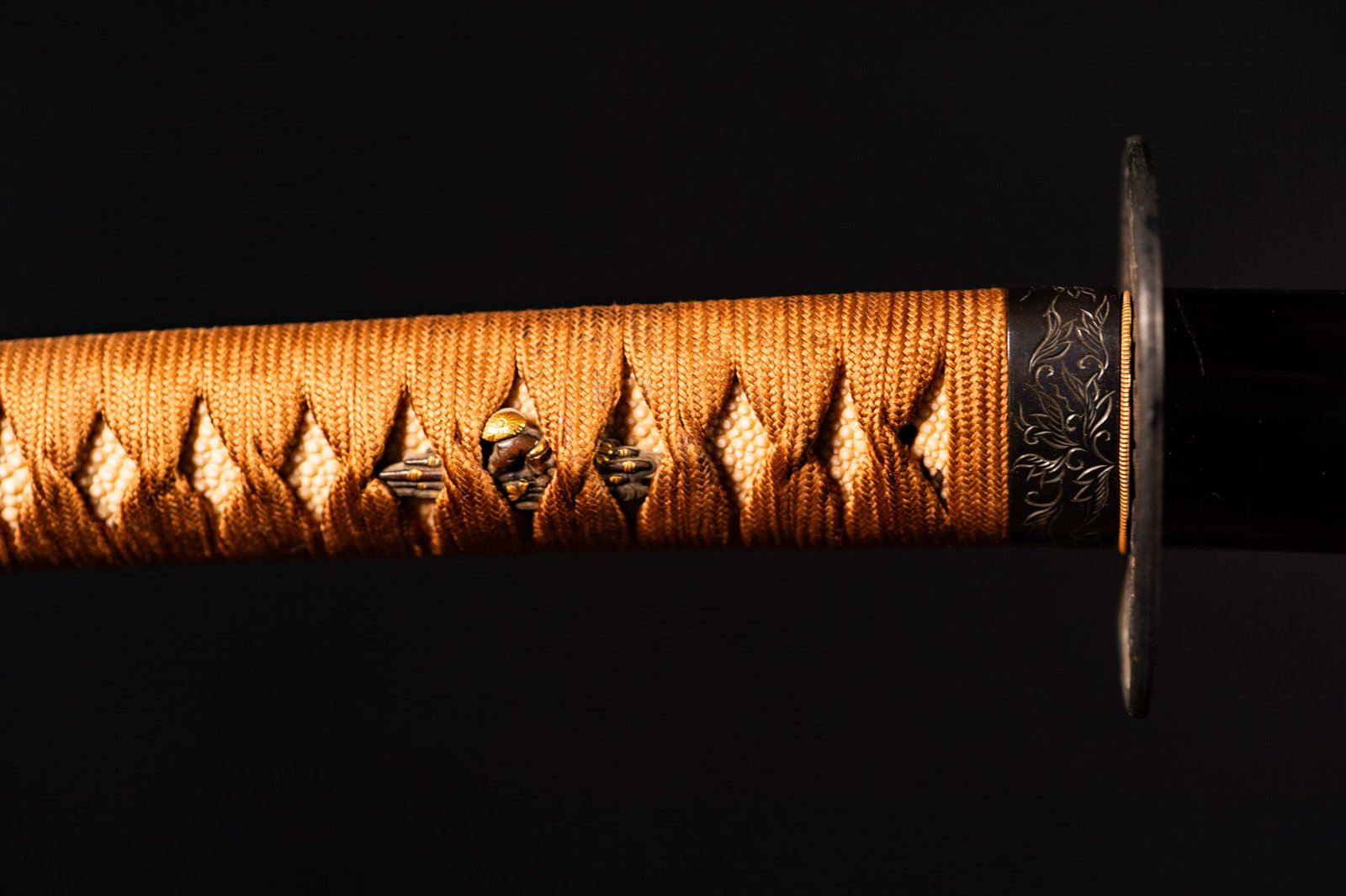
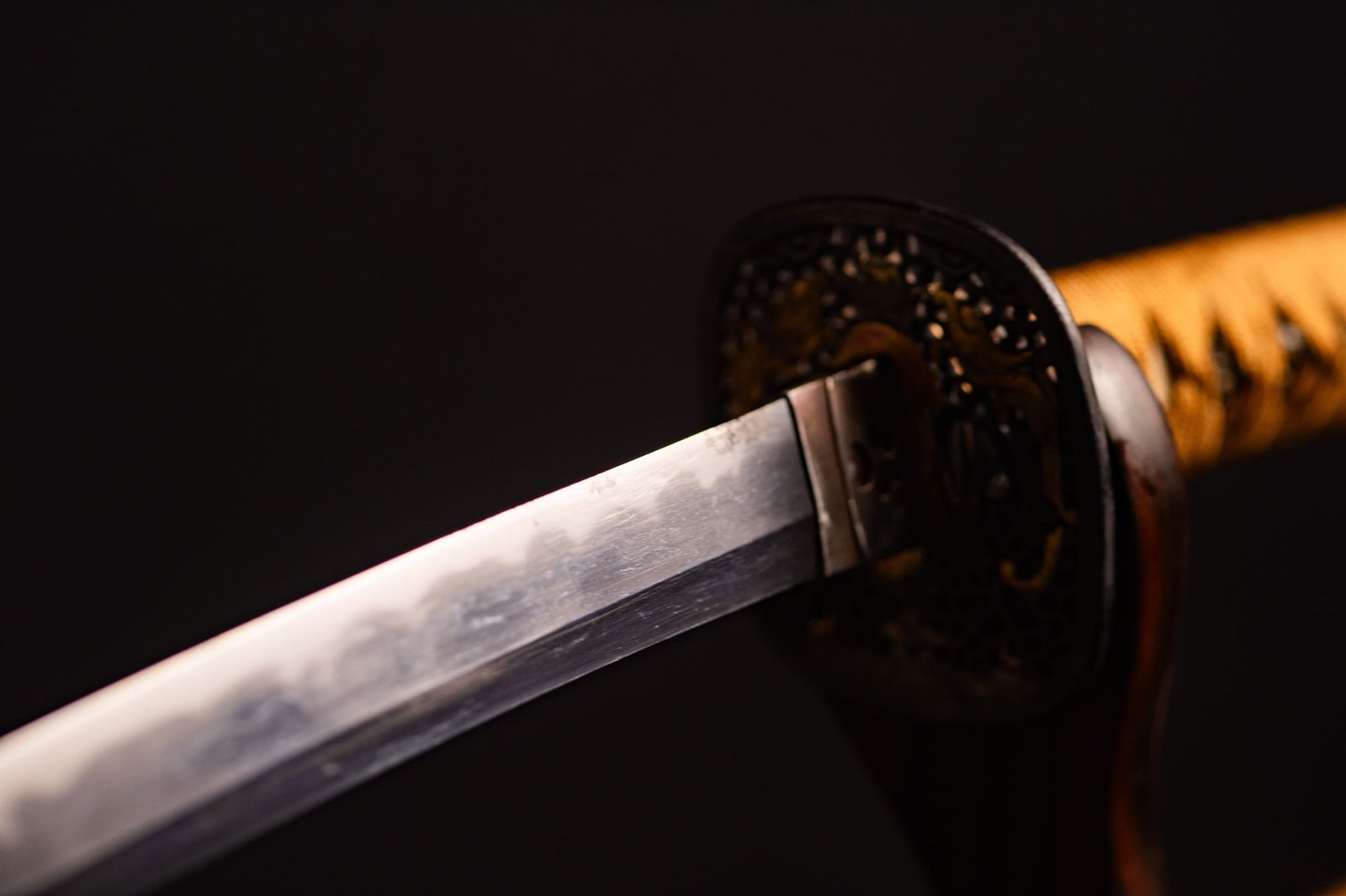
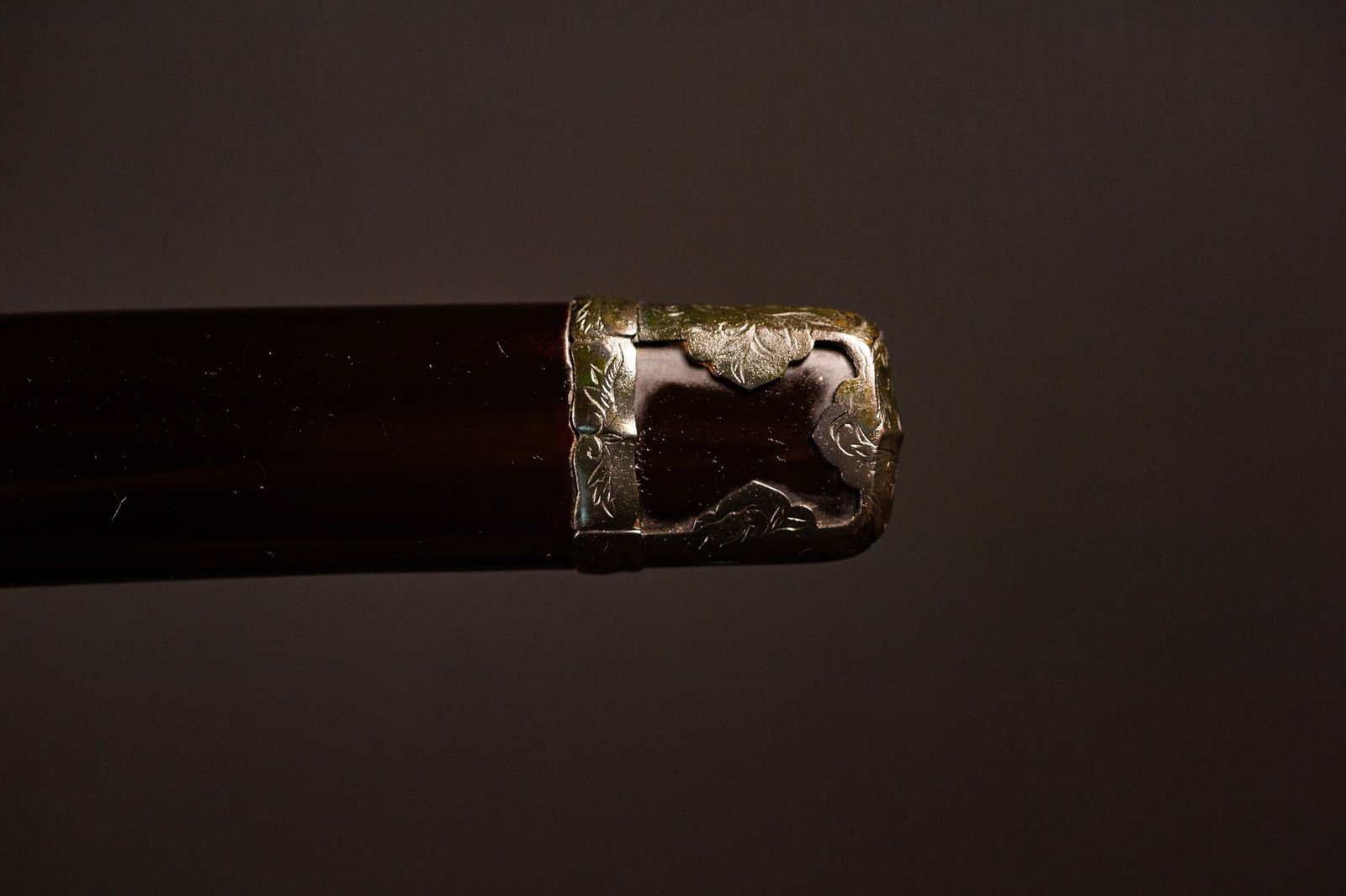
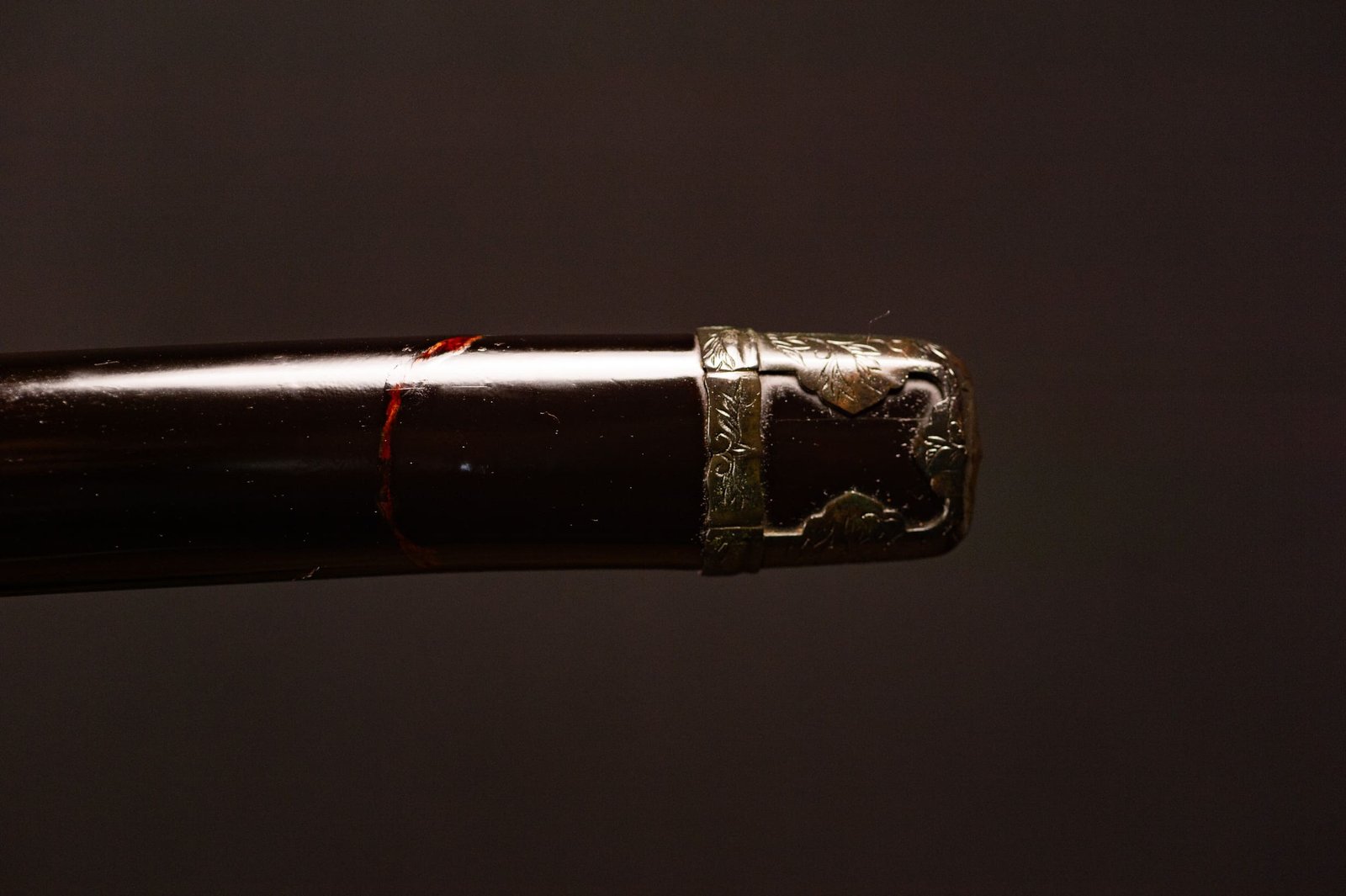
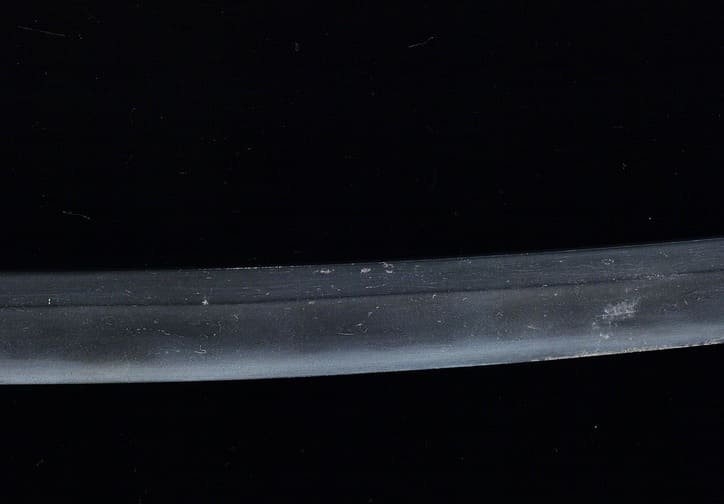
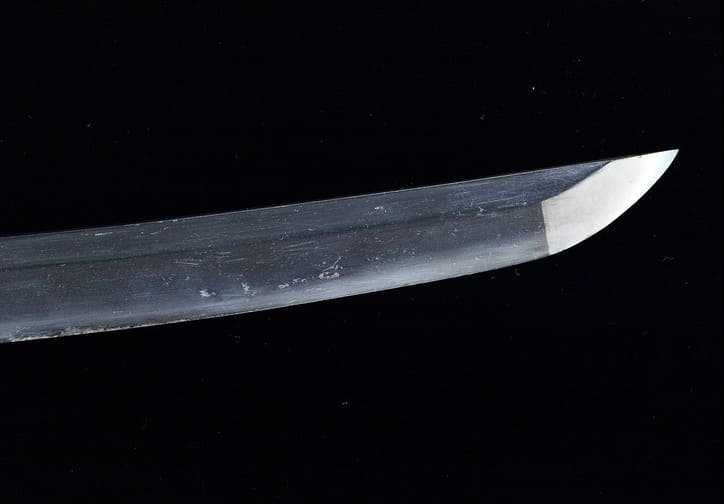
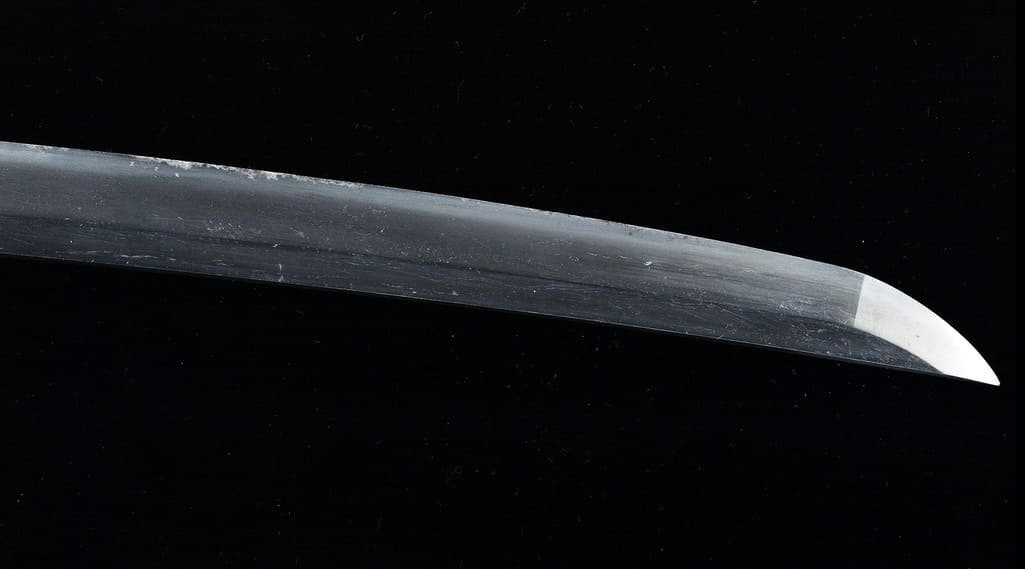
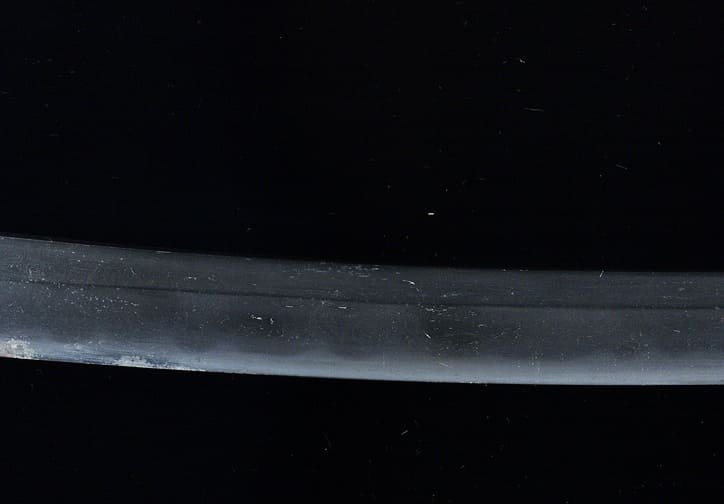
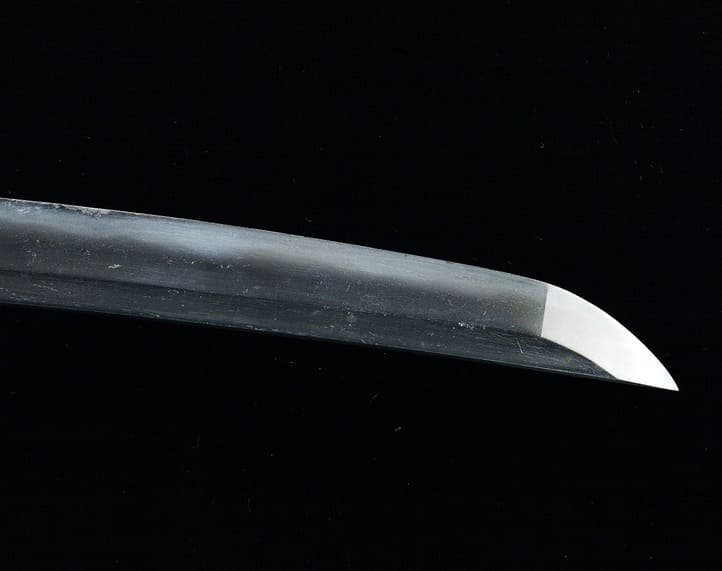
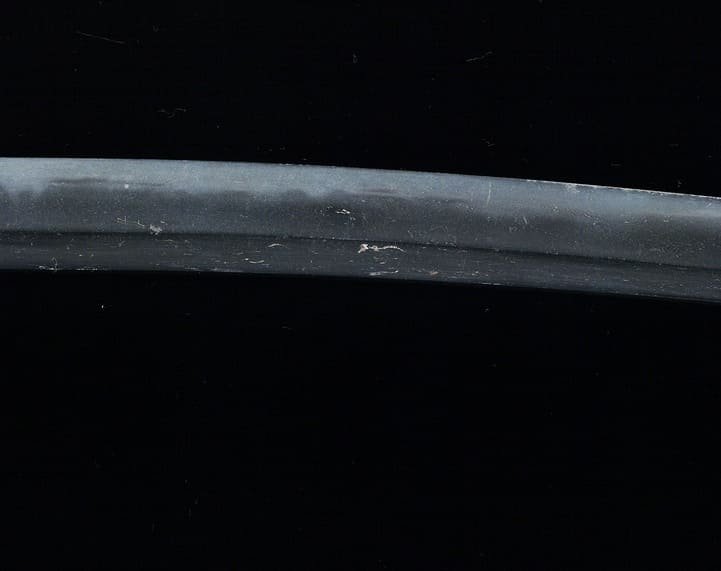
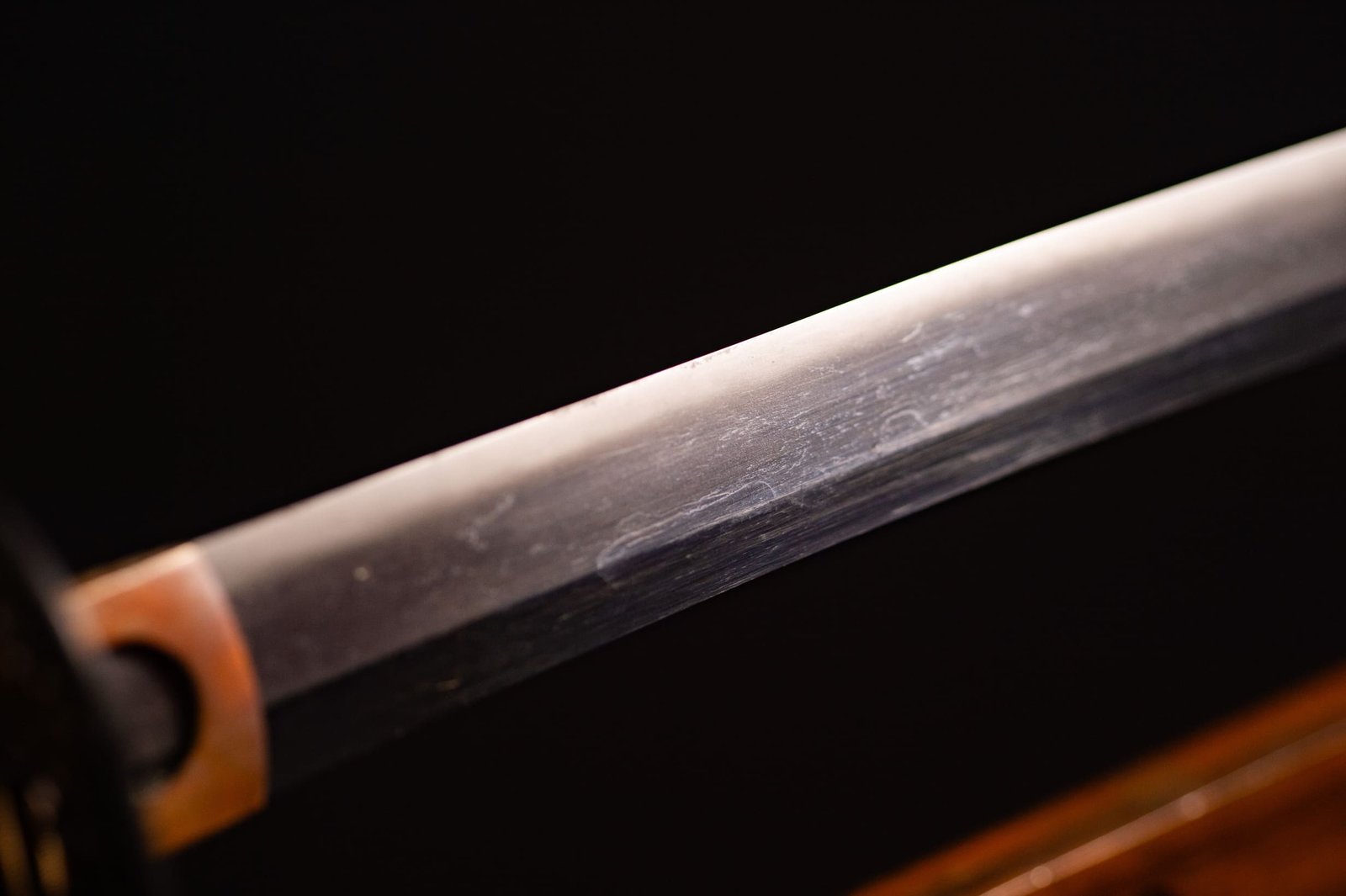
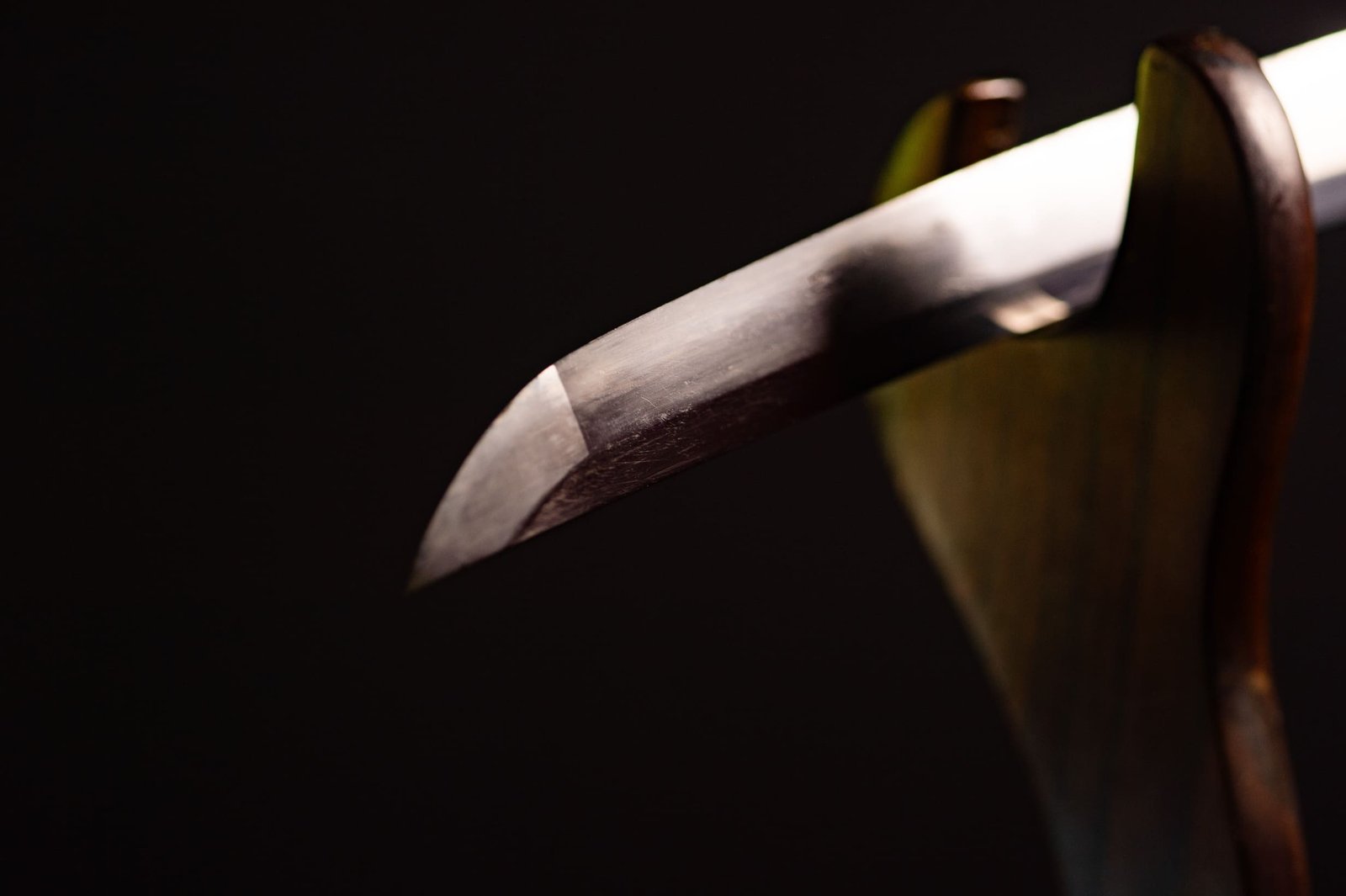
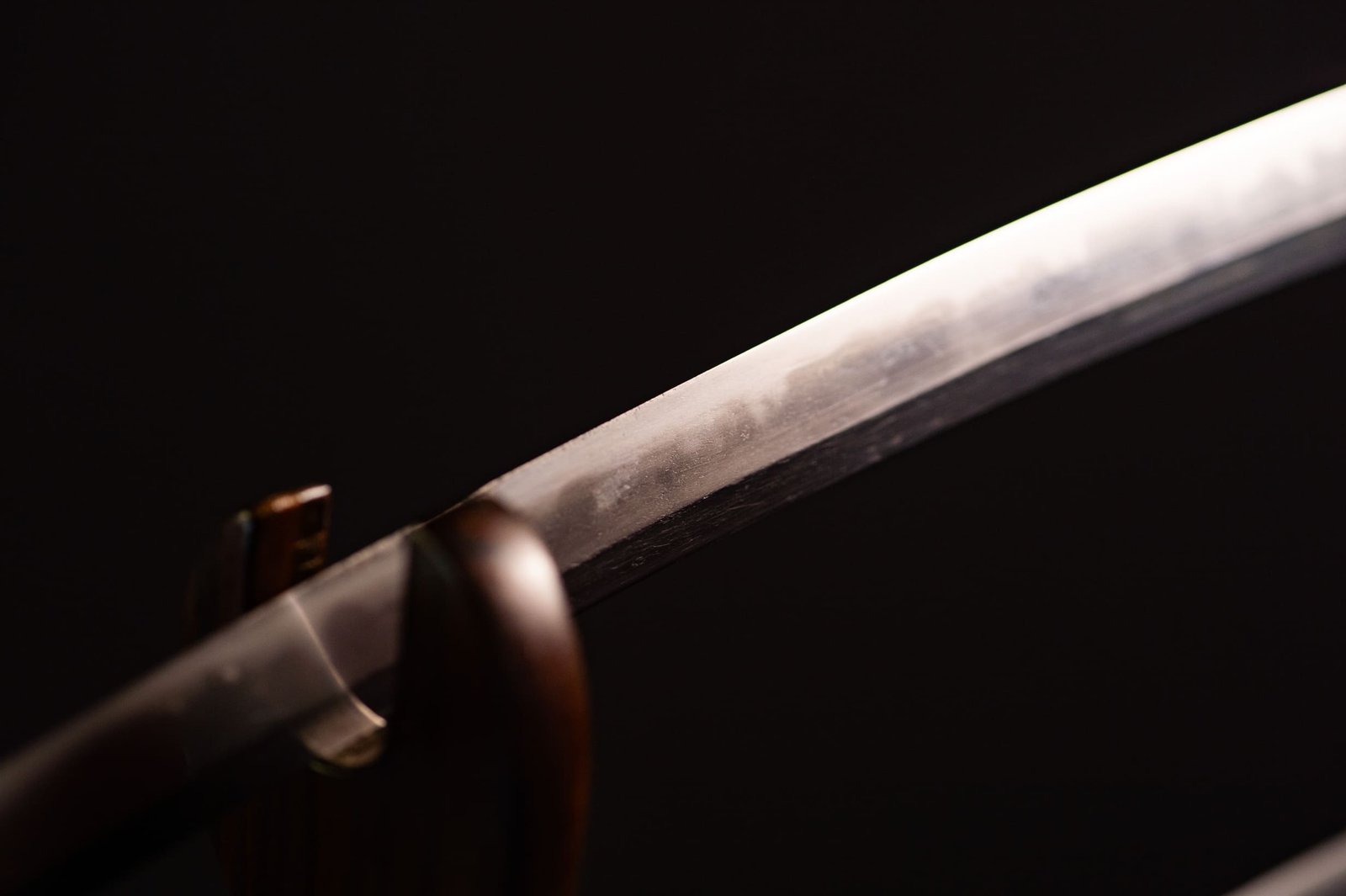
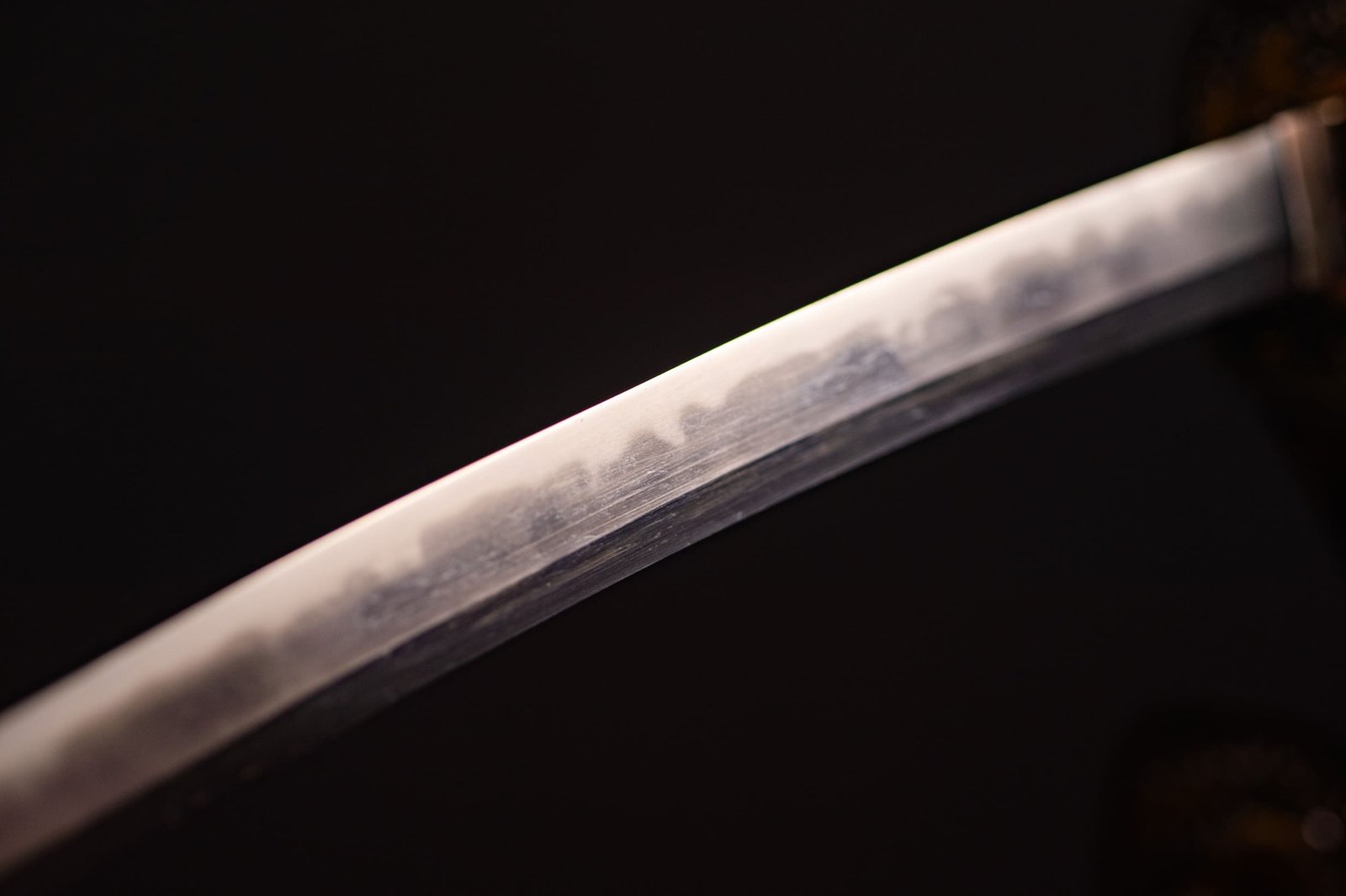
Samurai daishō composed of a katana signed Tomotsugu (友次) and an unsigned wakizashi, circa 16th century, in a pair of matching koshirae made as a set. The katana has a deep curvature of 2.5 cm and a lively gunome-notare hamon; the wakizashi echoes its form and hamon. Iron tsuba with gilt dragons among clouds and waves, engraved fuchi and kashira, warm brown silk ito, kozuka with dragon and sacred jewel, and black lacquered saya with engraved silver fittings. Registered together in 1959 under consecutive numbers. Excellent condition for its age.
EUROPEAN UNION - ALL DUTIES & TAXES COVERED
We cover all import duties, taxes and customs fees. No additional customs charges upon delivery.
Free shipping on all orders over €1,000.
INTERNATIONAL - PREFERENTIAL IMPORT RATES
In many countries, genuine antiques benefit from preferential tax treatment, with reduced import VAT and, in some cases, zero import duties.
Free worldwide shipping on all orders over €10,000.
1 in stock
Add to Compare
Add to Wishlist
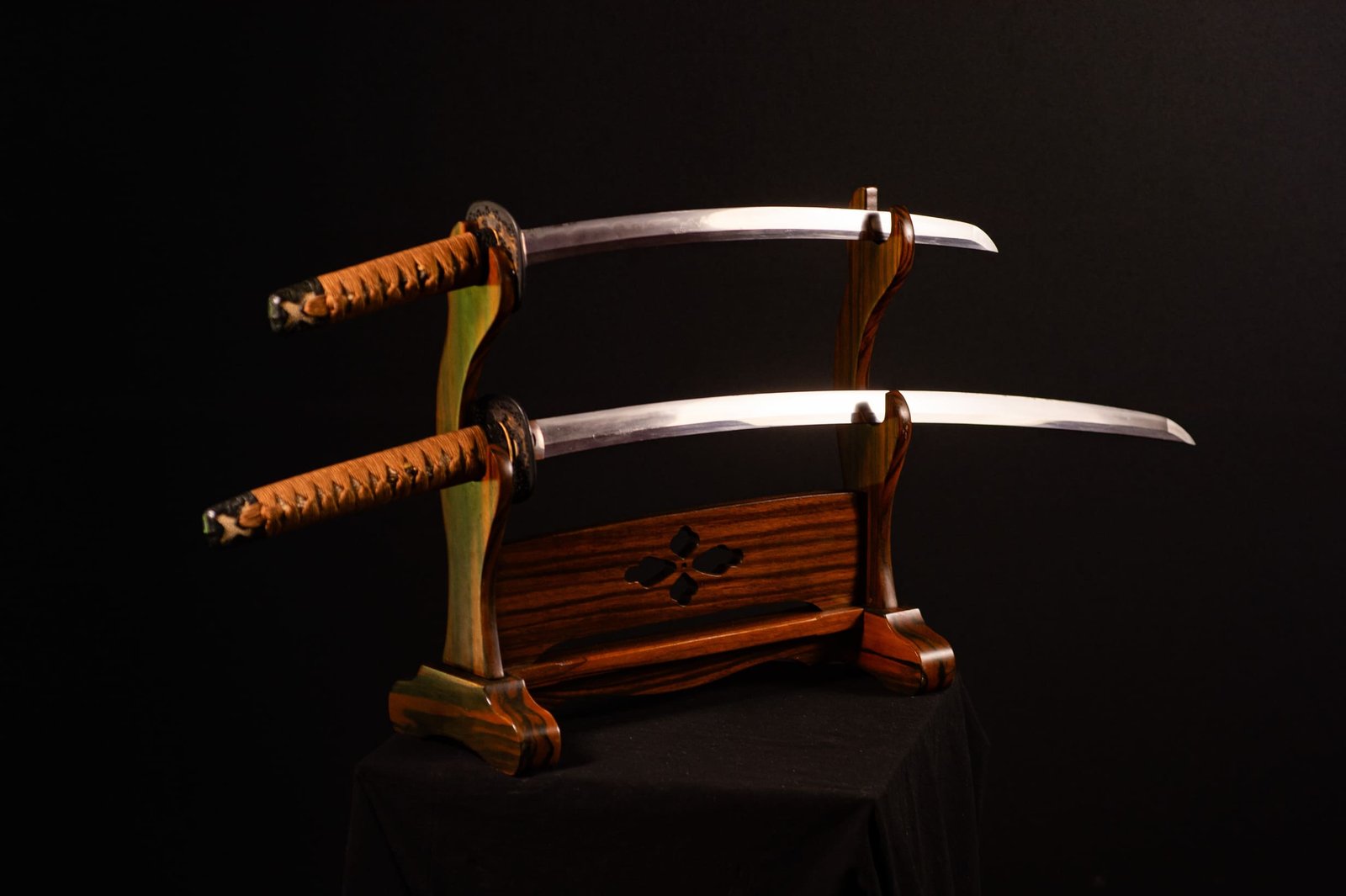
A samurai daishō composed of a katana signed Tomotsugu (友次) and an unsigned wakizashi, mounted in a pair of matching koshirae that share every element: iron tsuba with gilt dragons among clouds and waves, engraved fuchi and kashira, warm brown silk ito and glossy black lacquered saya with engraved silver fittings. Registered on the same day in 1959 under consecutive numbers, the two swords have been kept together as a pair for more than sixty years.
In Edo-period Japan, two swords at the waist meant only one thing: the wearer was a samurai.
The daishō, “large and small”, paired a long katana with a shorter wakizashi, and it became the defining emblem of the warrior class. Shogunal law reserved the full pair for samurai alone. Merchants and commoners might at most carry a single short sword.
The katana was left at the entrance when entering a house, while the wakizashi stayed at the side, so a samurai was never without a blade.
A matched daishō, mounted alike and kept together, is the clearest expression of that identity, and today such pairs rarely survive intact.
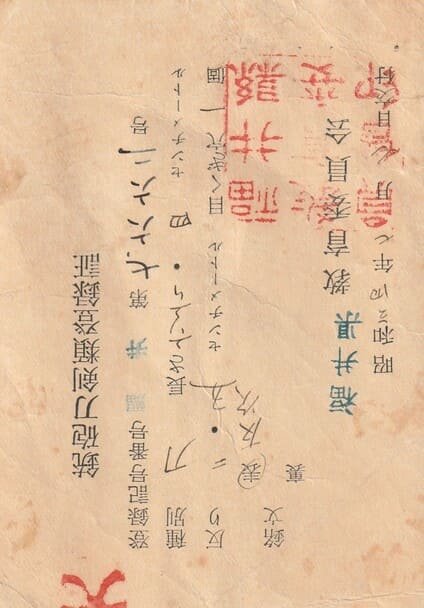
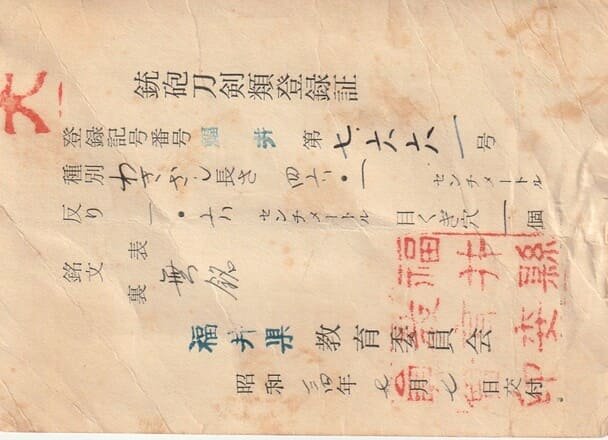
These two blades have stayed together for a long time. They were registered on the same day in July 1959 in Fukui Prefecture, under consecutive numbers (7661 and 7662).
That is clear evidence that they were already kept as a pair in Japan more than sixty years ago.
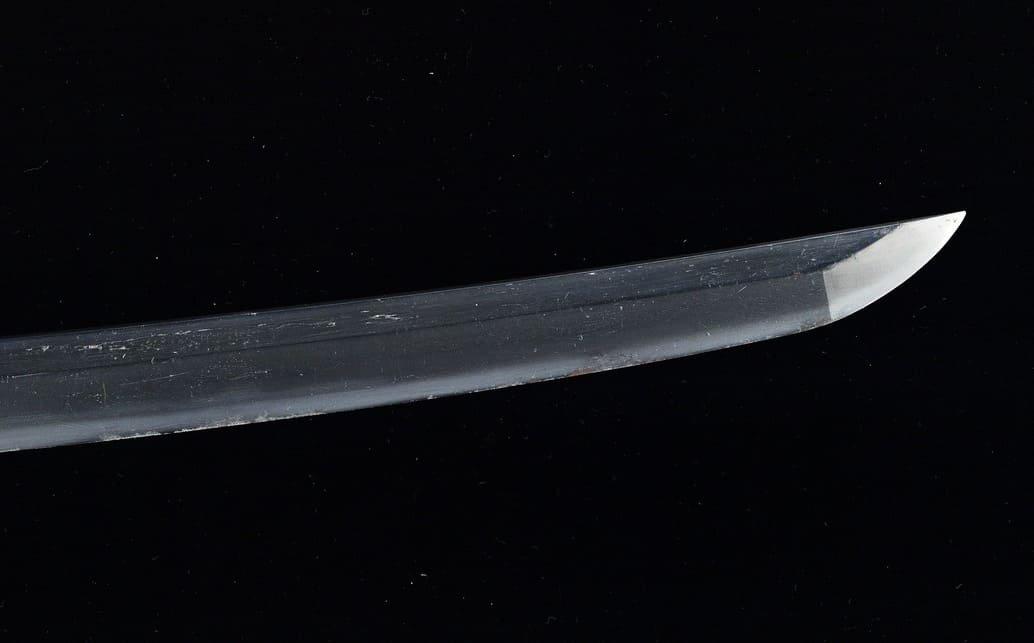
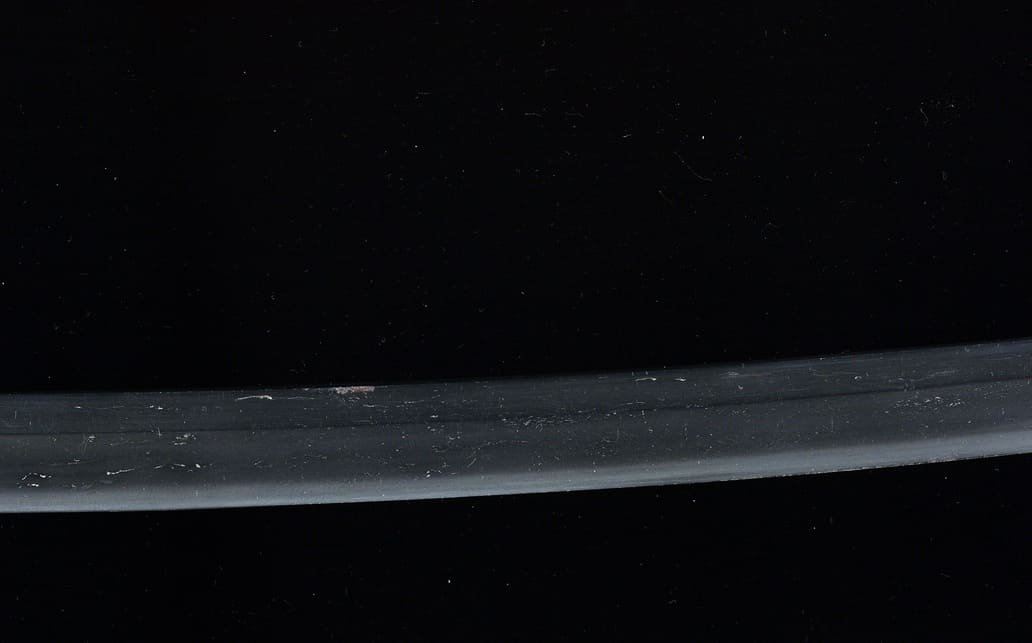
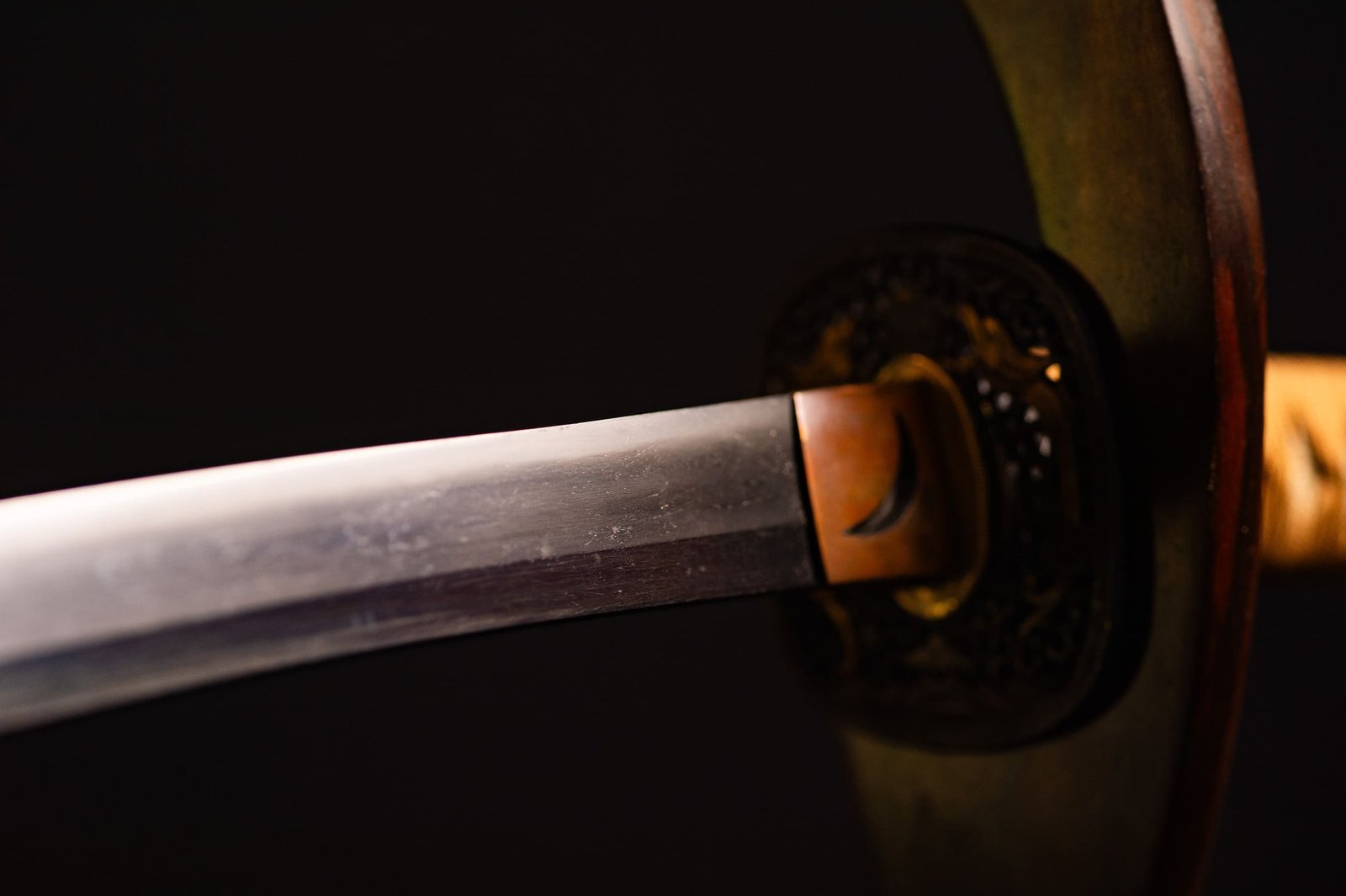
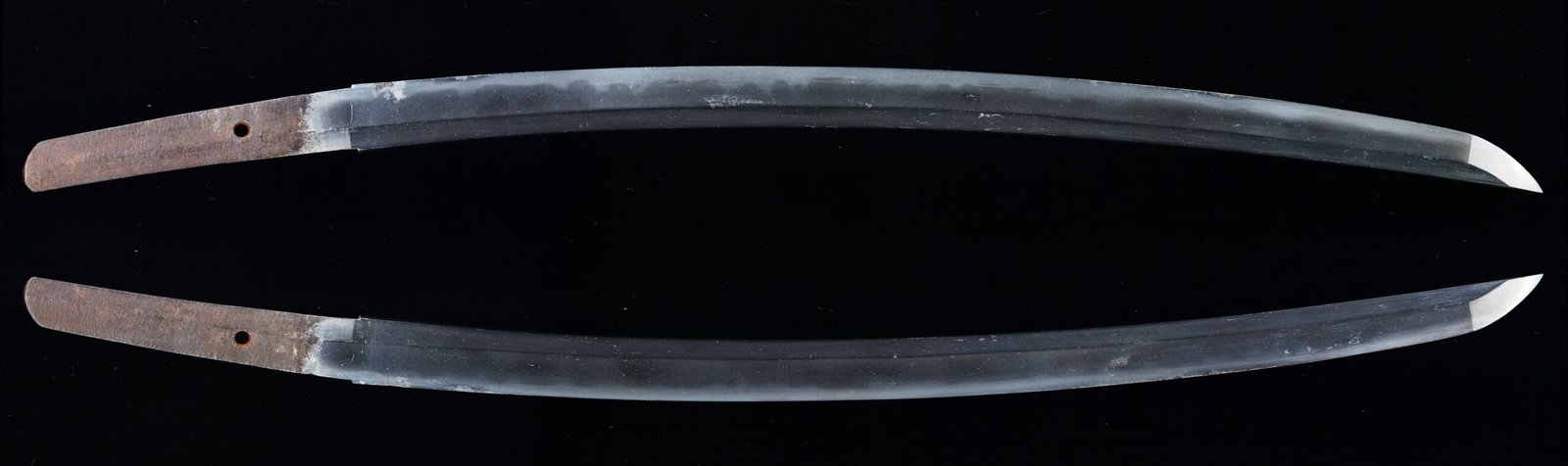
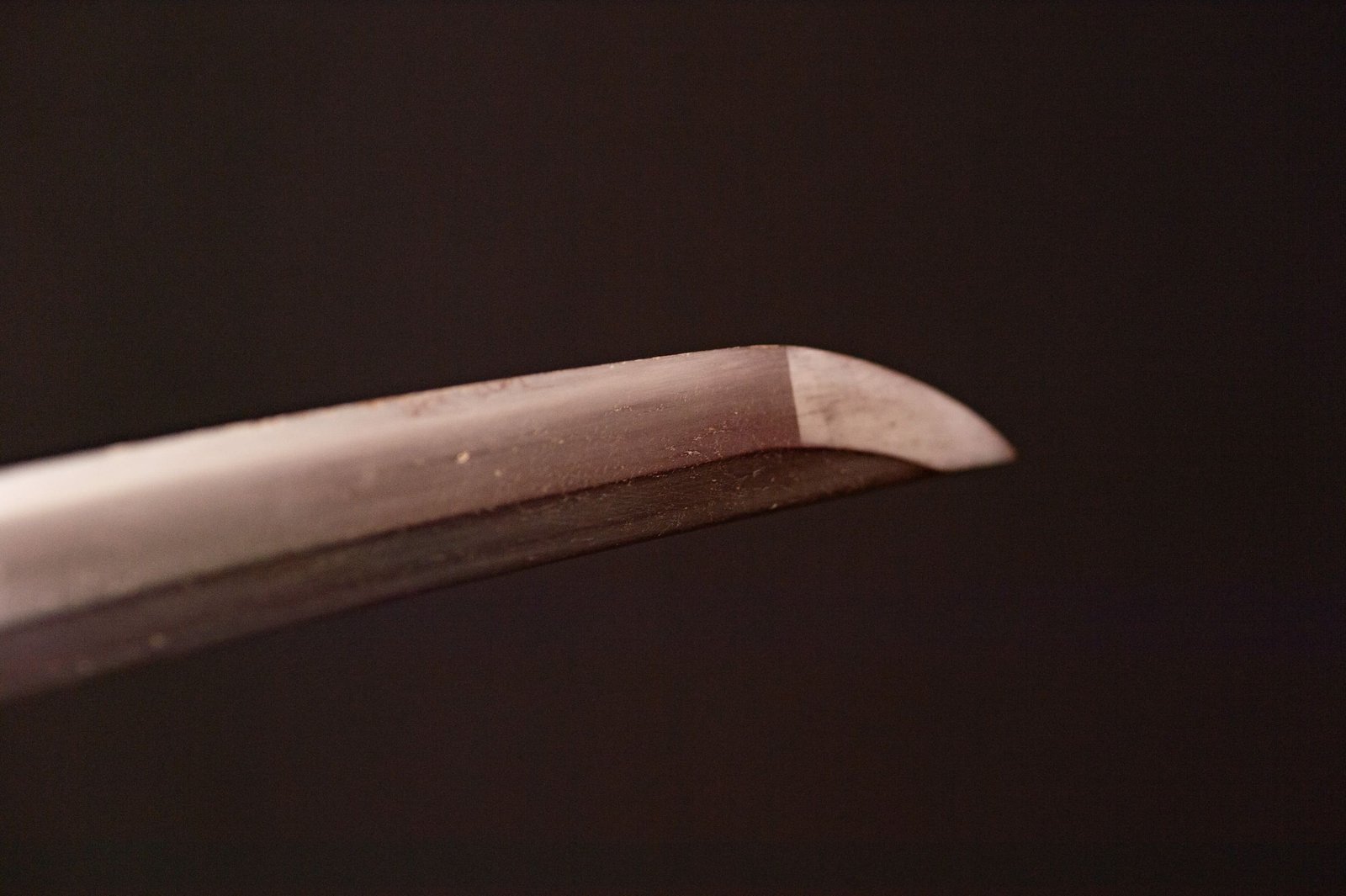
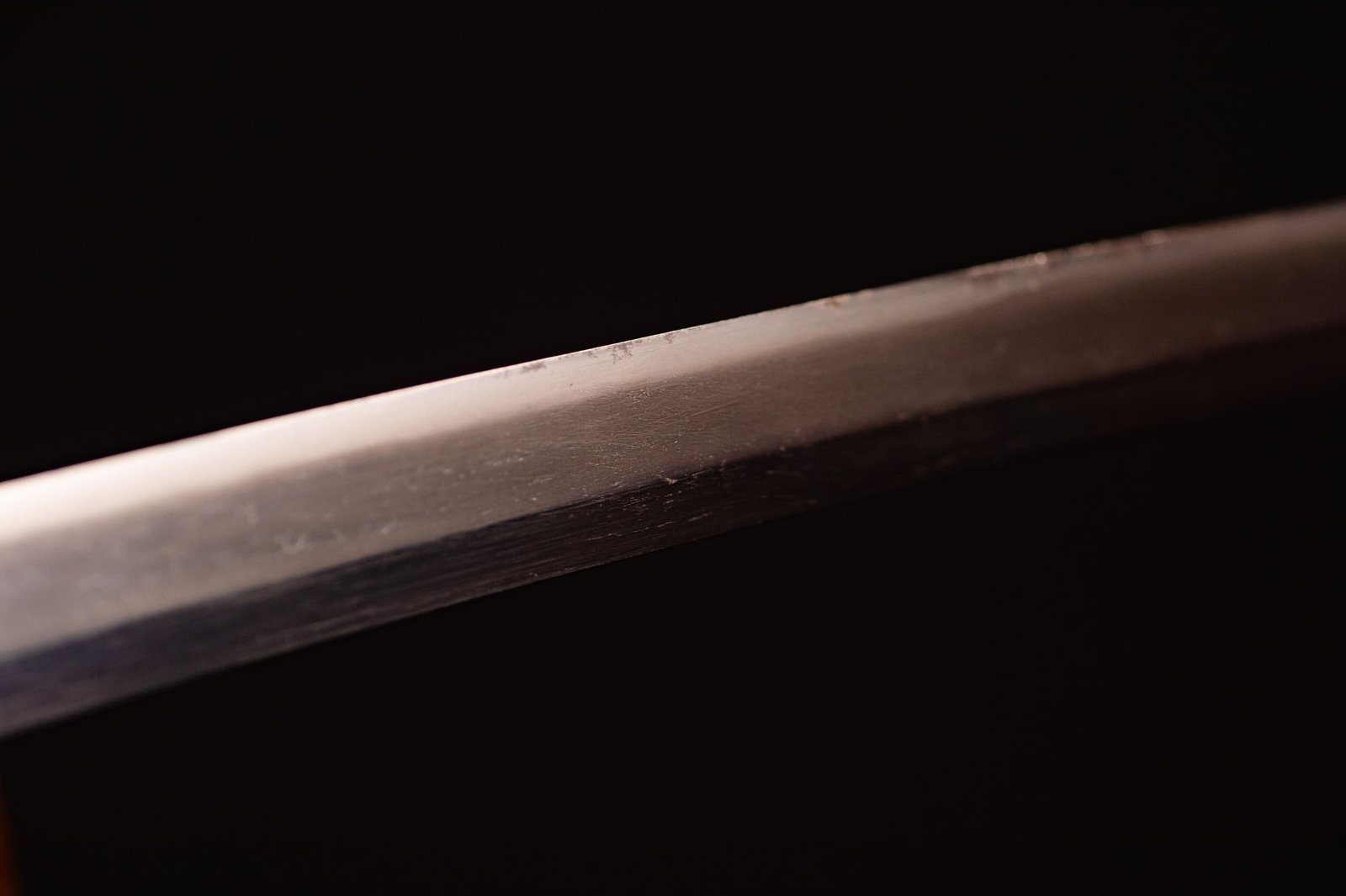
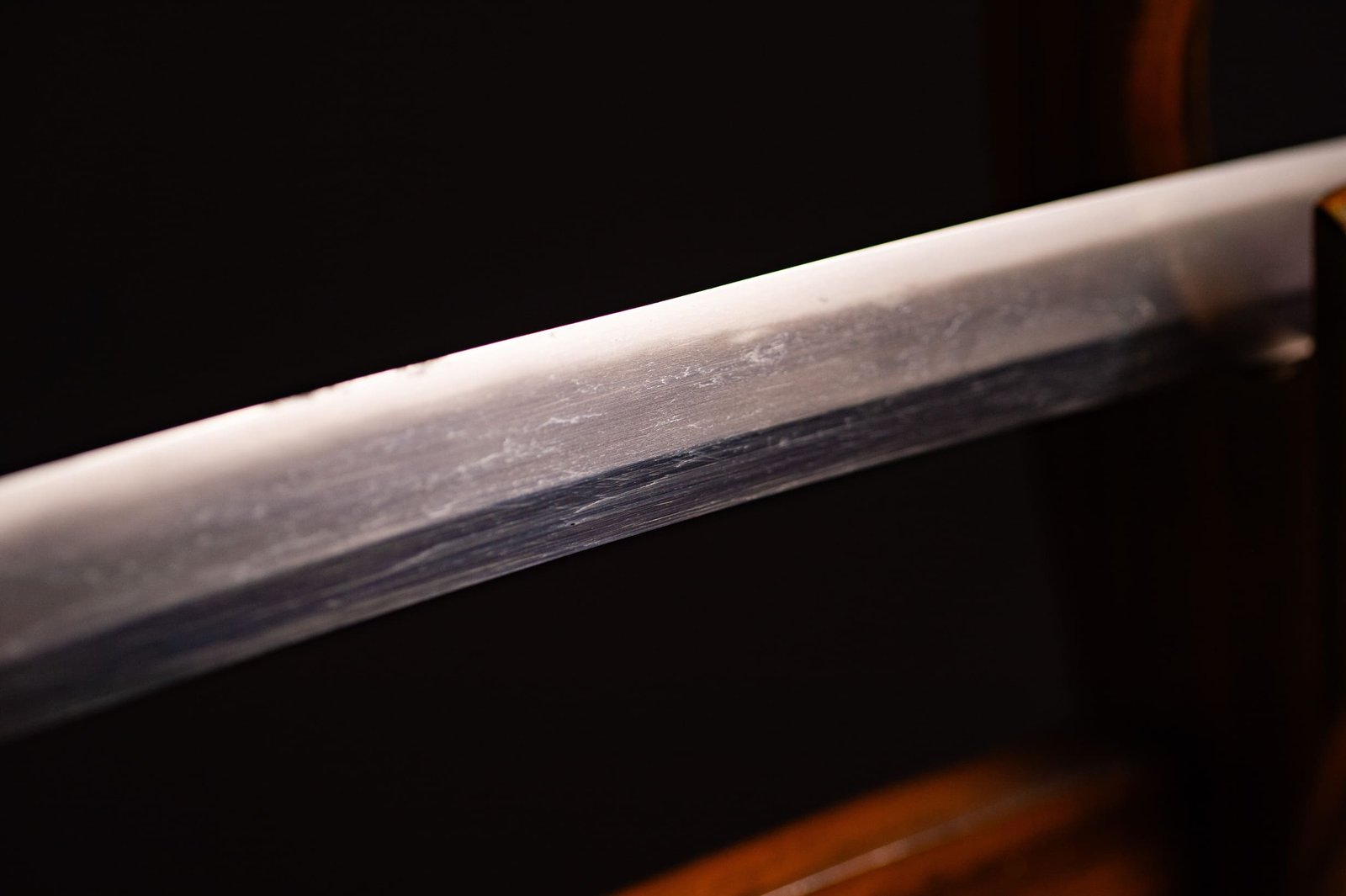
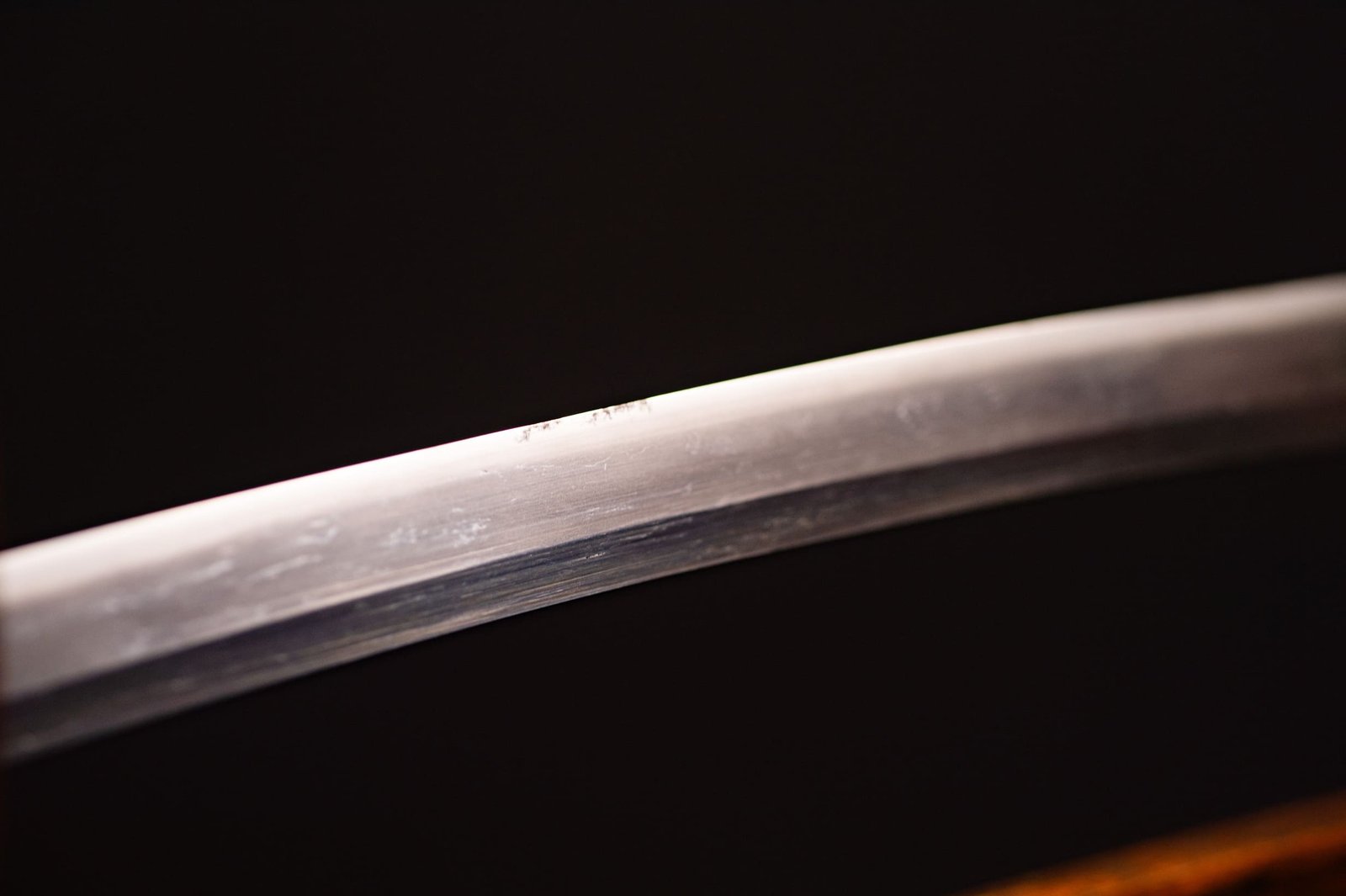
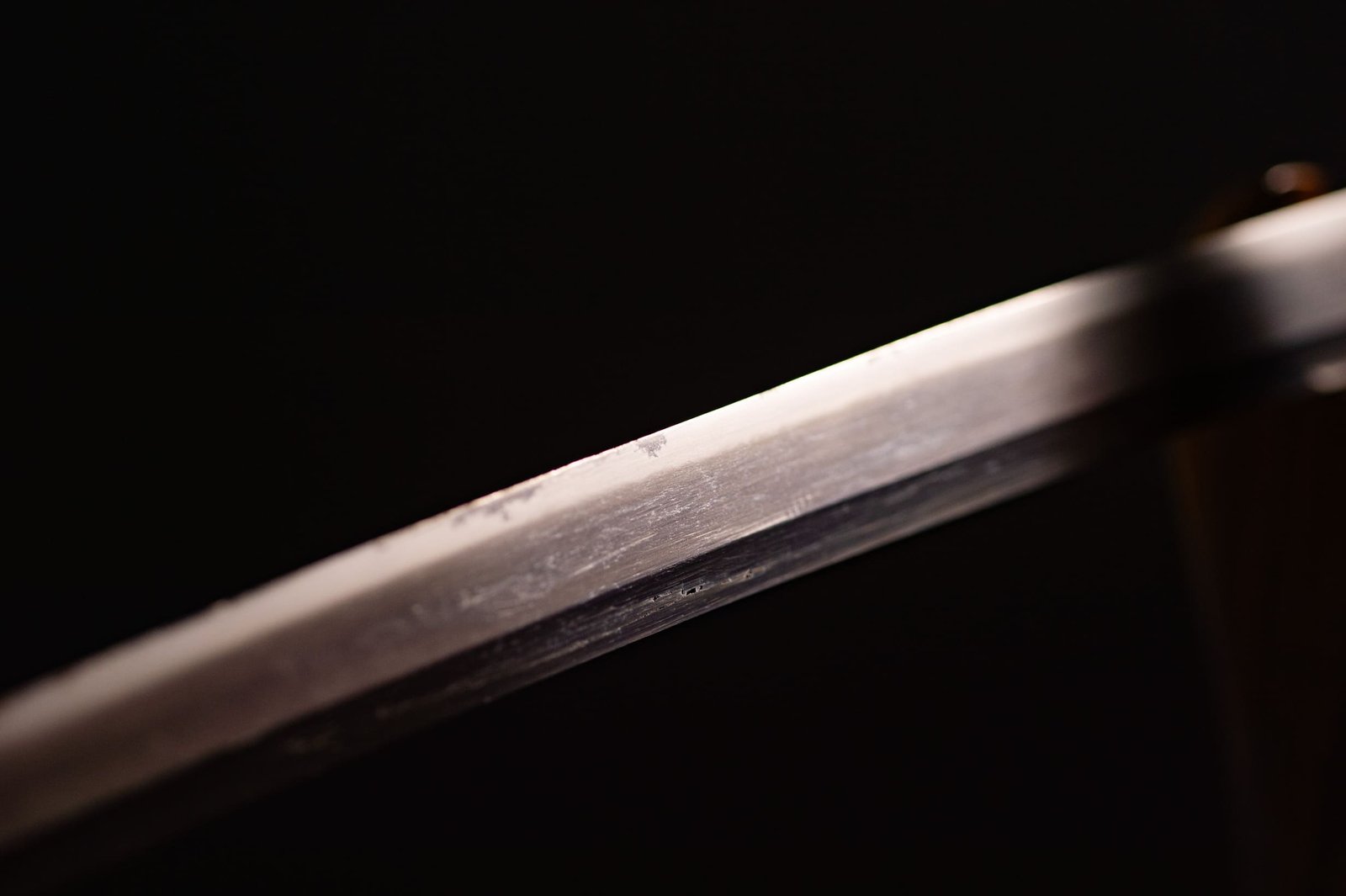
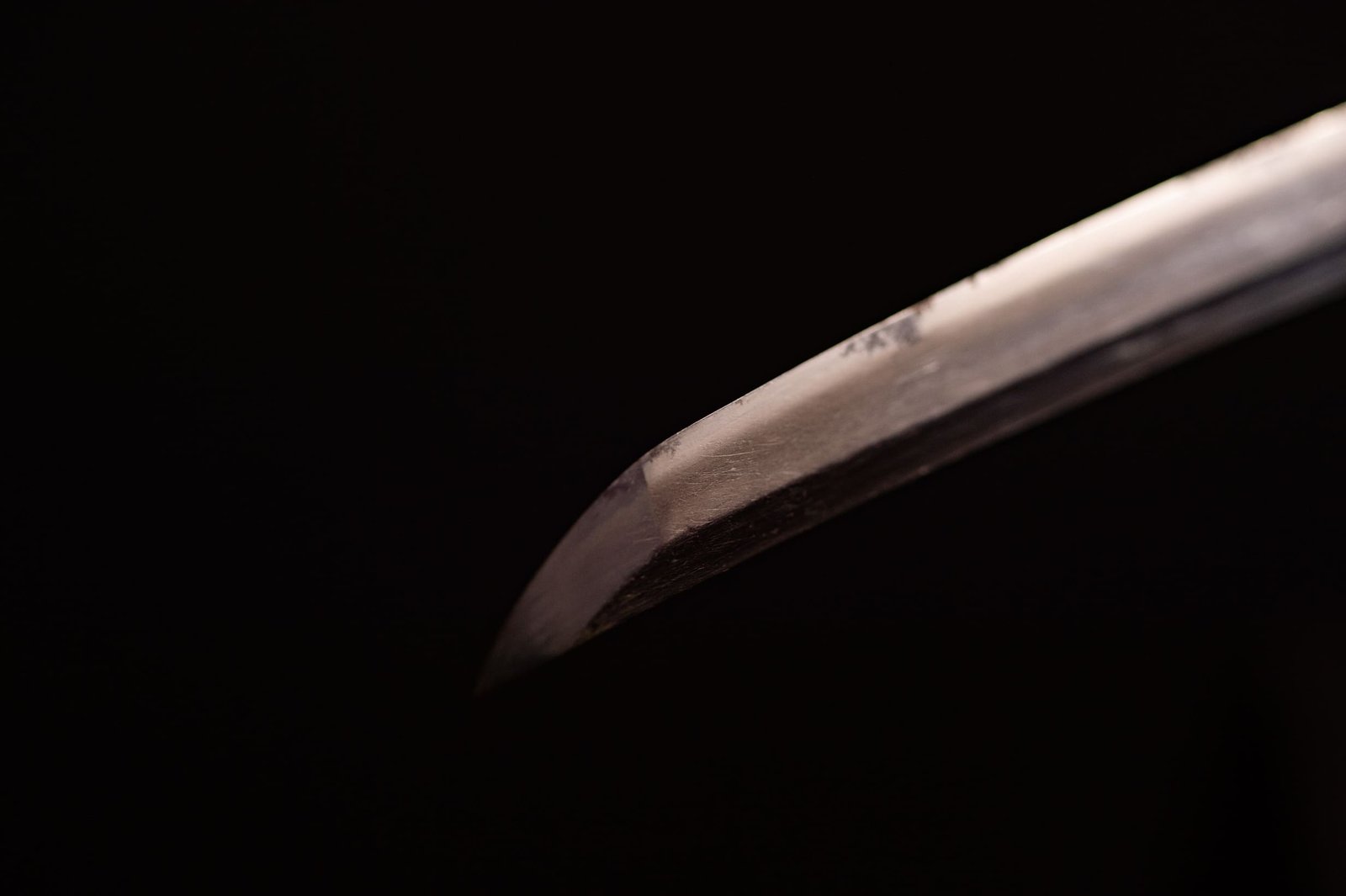
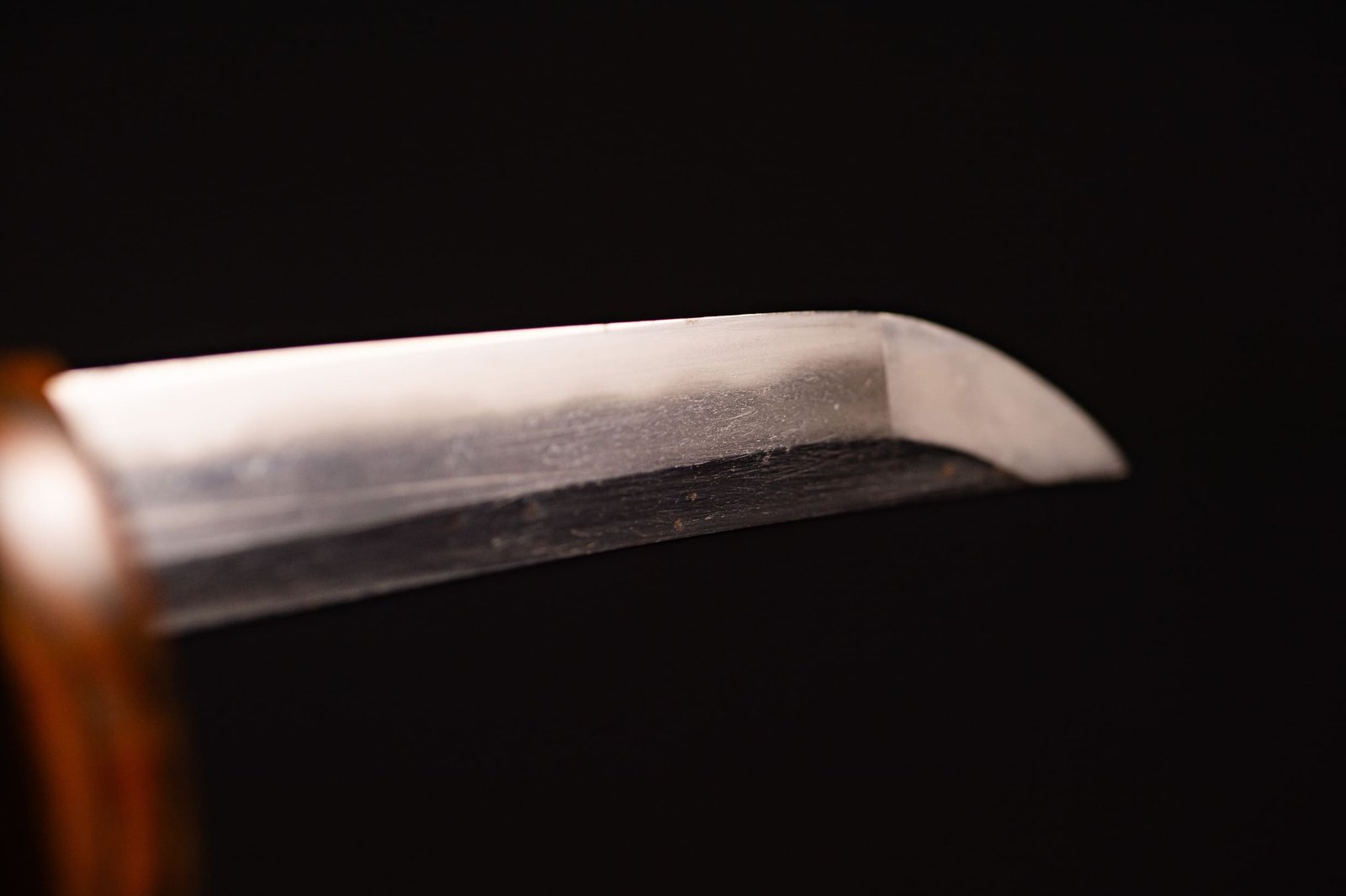
The katana has a graceful shinogi-zukuri form with a deep curvature of 2.5 cm and a chū-kissaki.
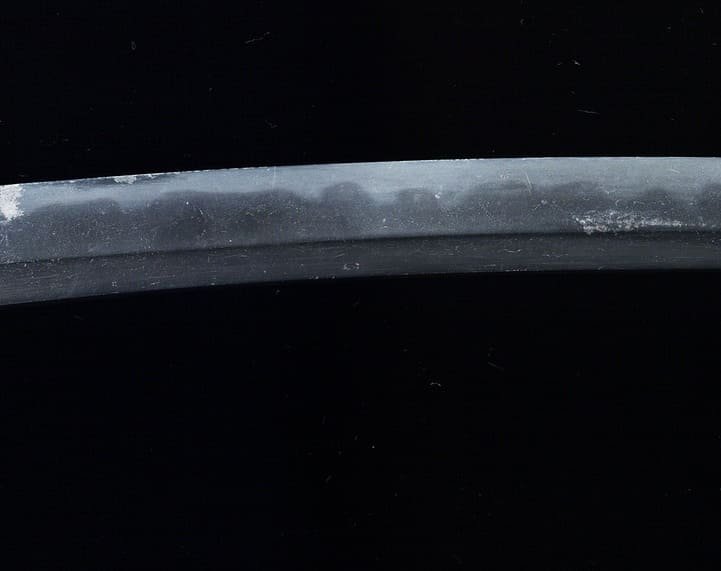
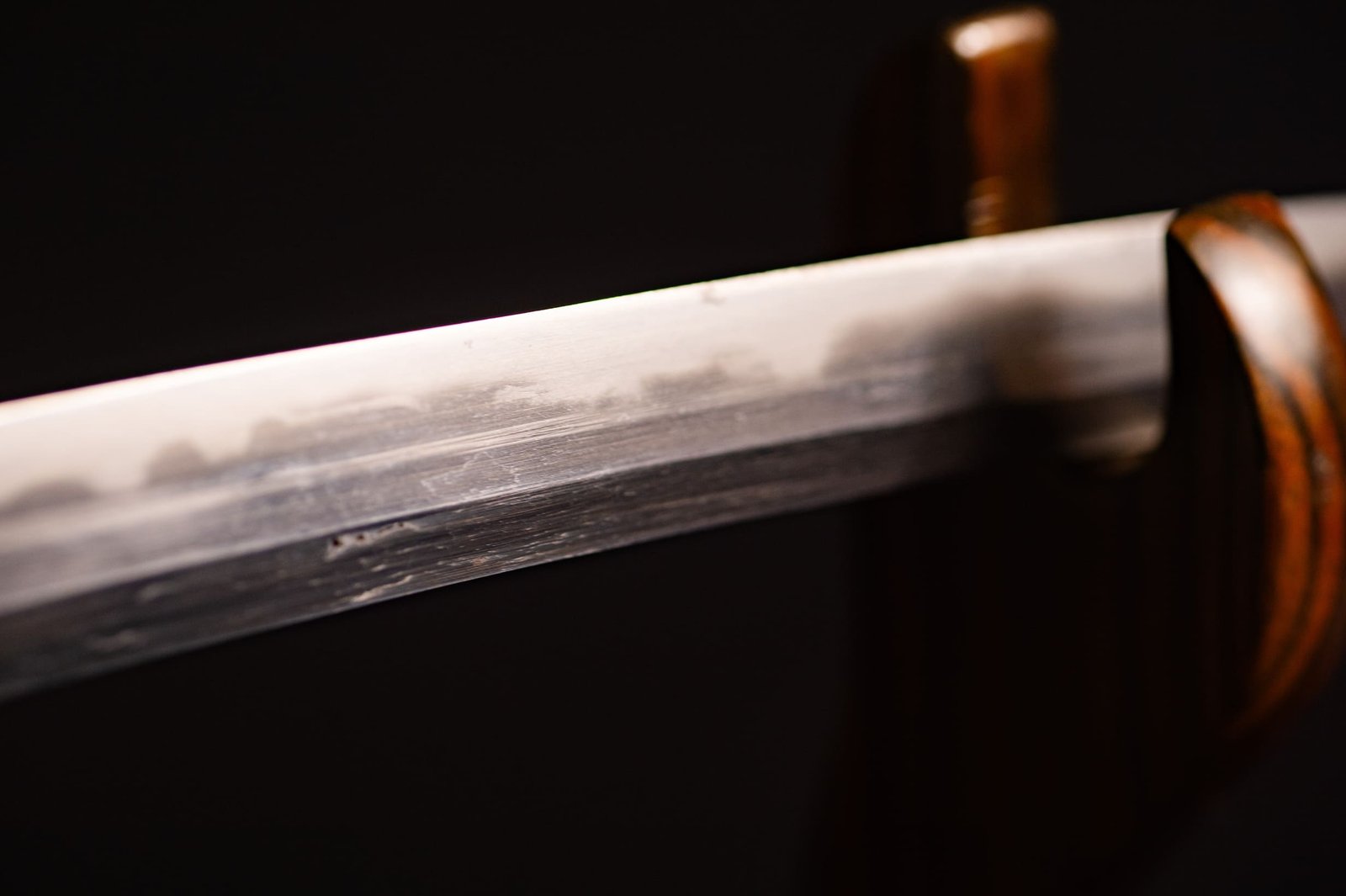
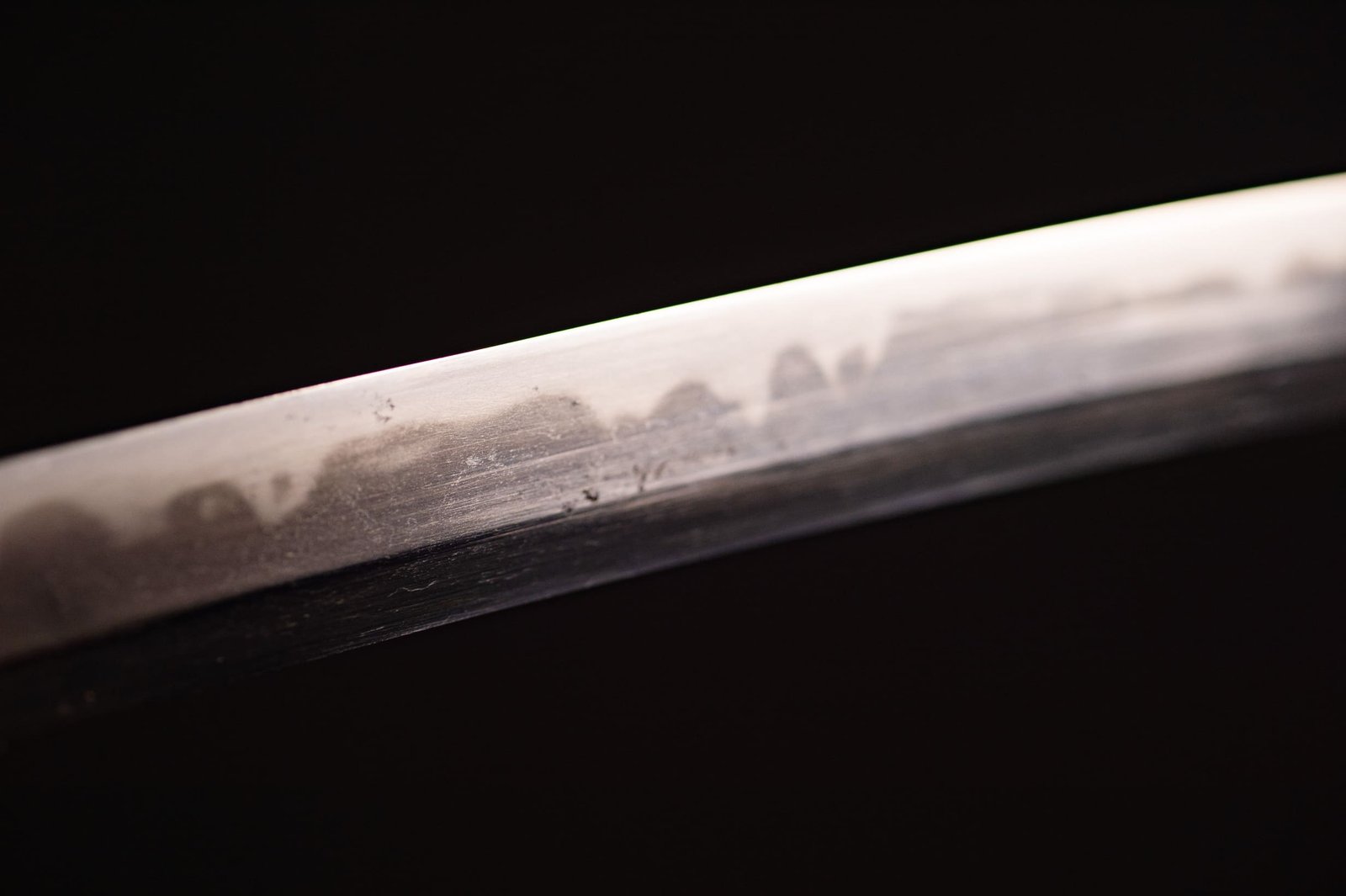
A lively gunome-notare hamon in nioi runs the length of the edge.
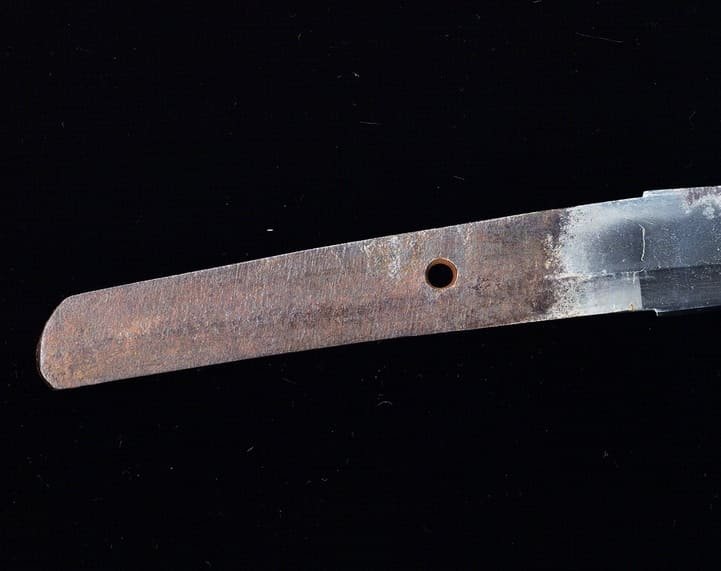
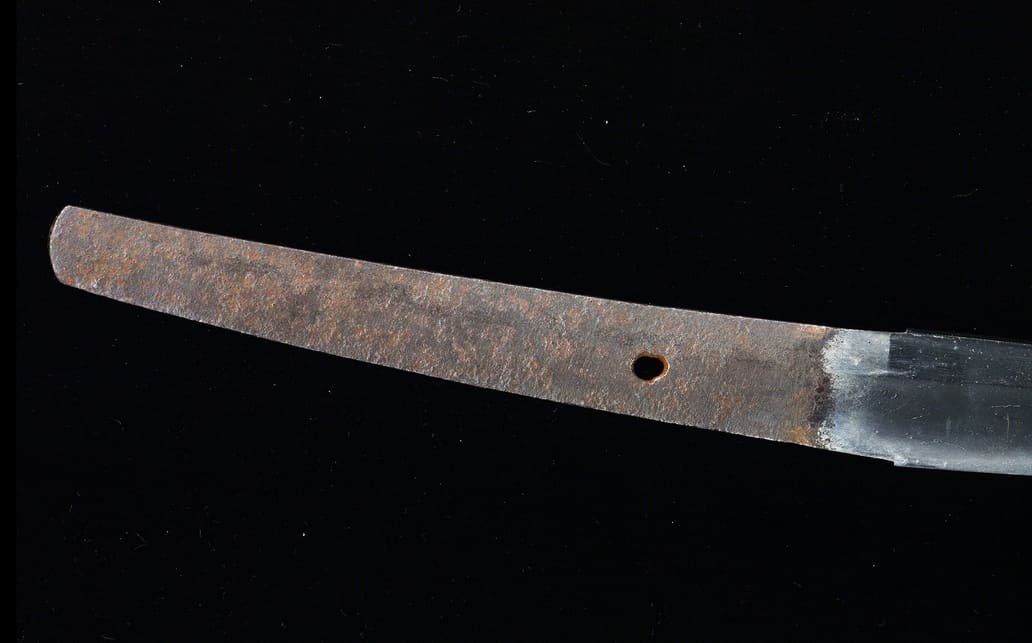
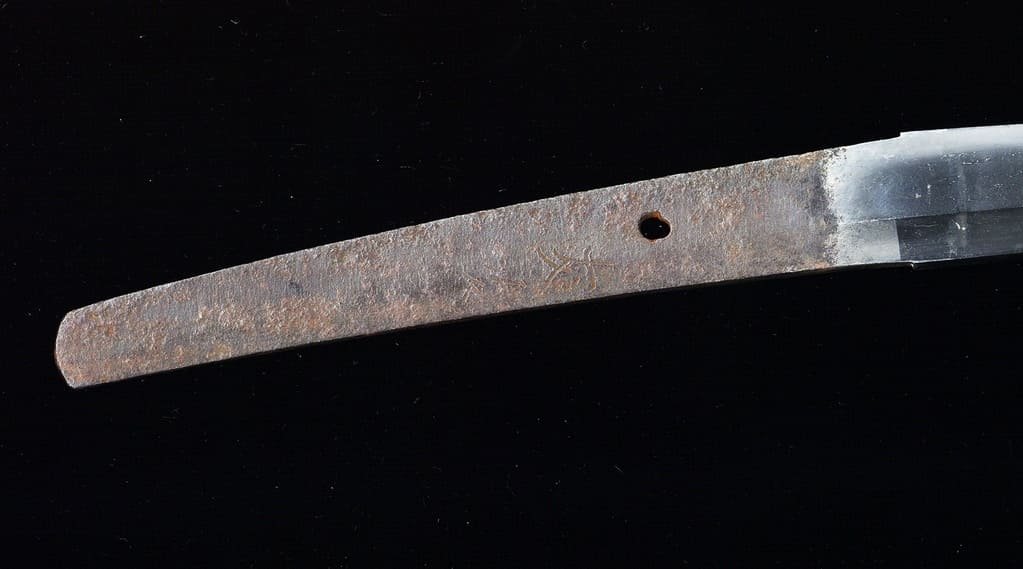
The nakago keeps a single mekugi-ana and is signed 友次, Tomotsugu.
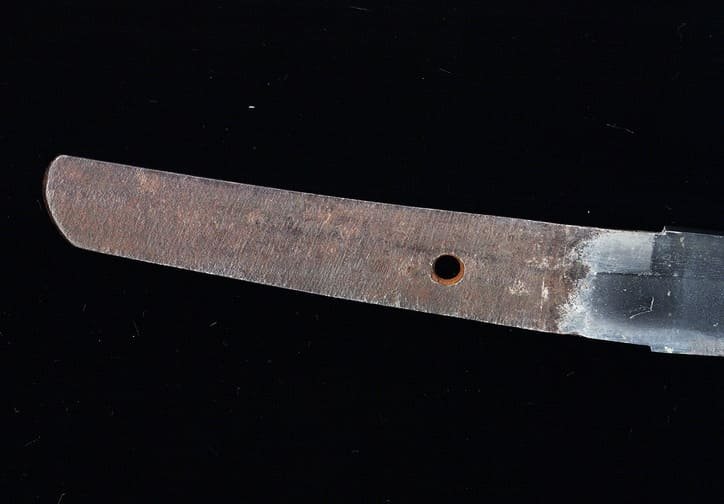
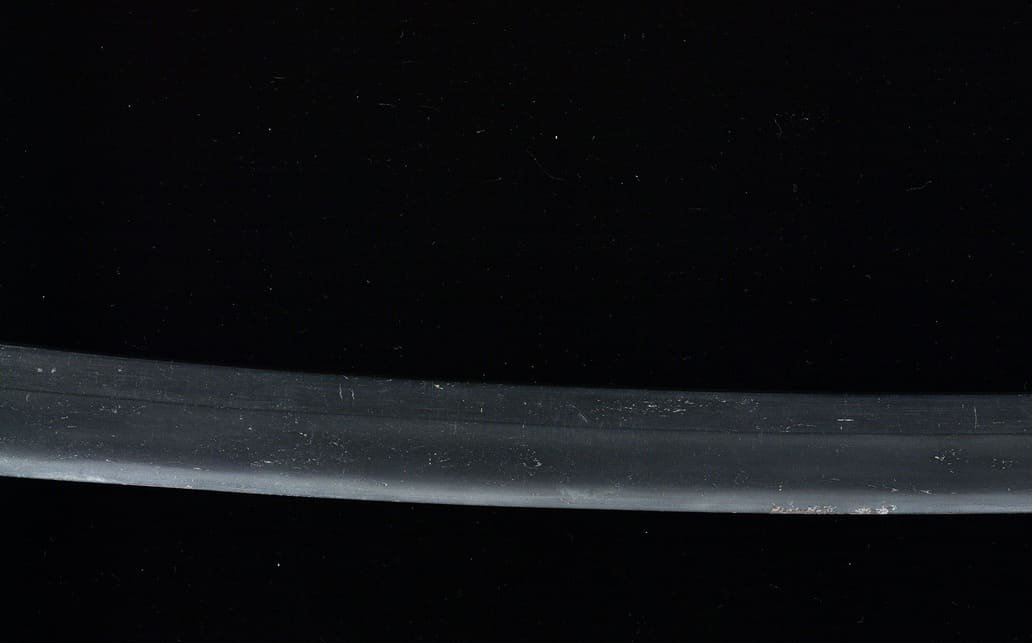
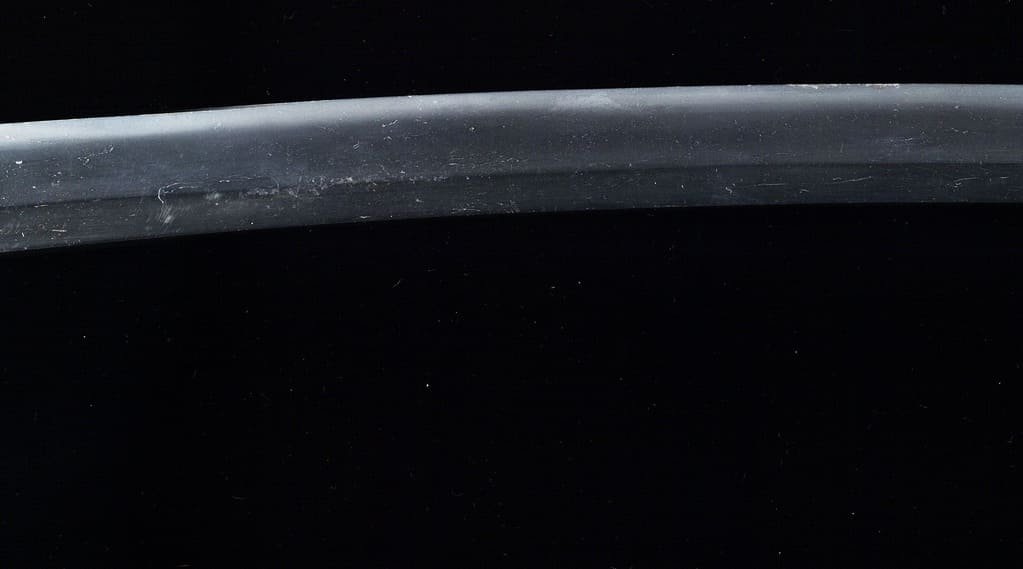
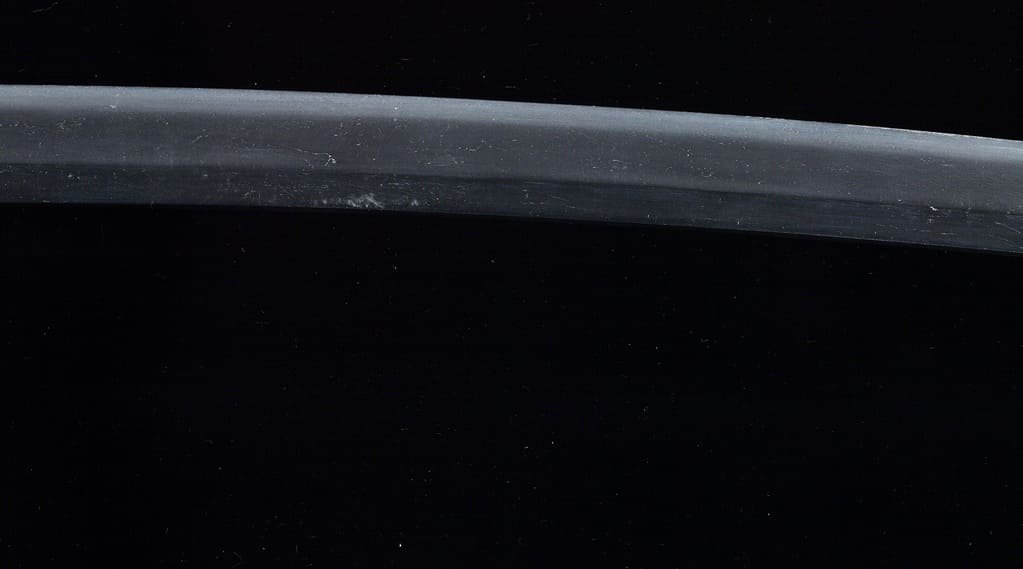
The wakizashi is unsigned (mumei), with the same elegant shinogi-zukuri form and a generous curvature that echoes the long sword.
Its hamon is in a similar gunome rhythm.
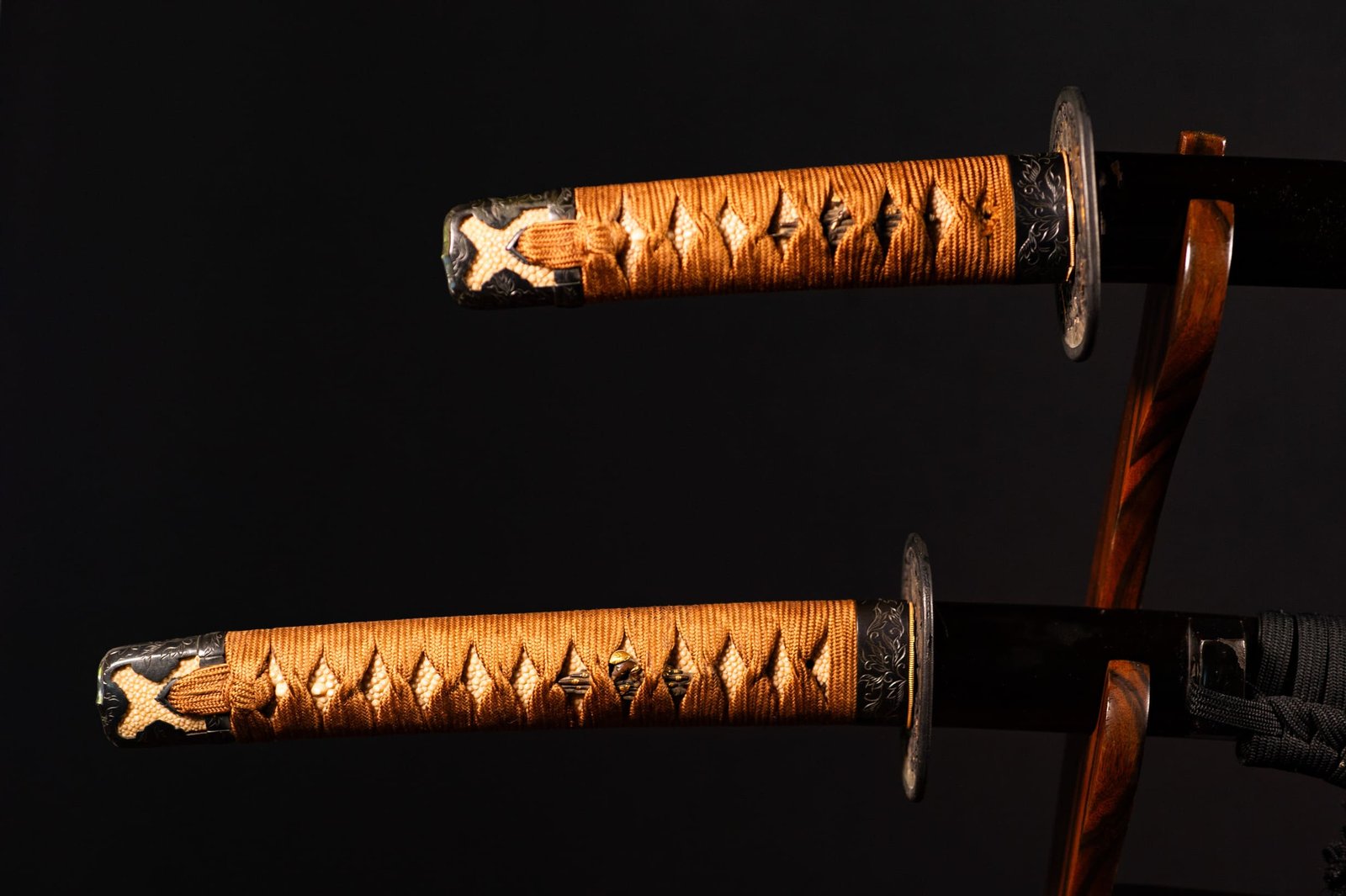
The two koshirae were made as a set and share every element, giving the daishō a unified and harmonious appearance.
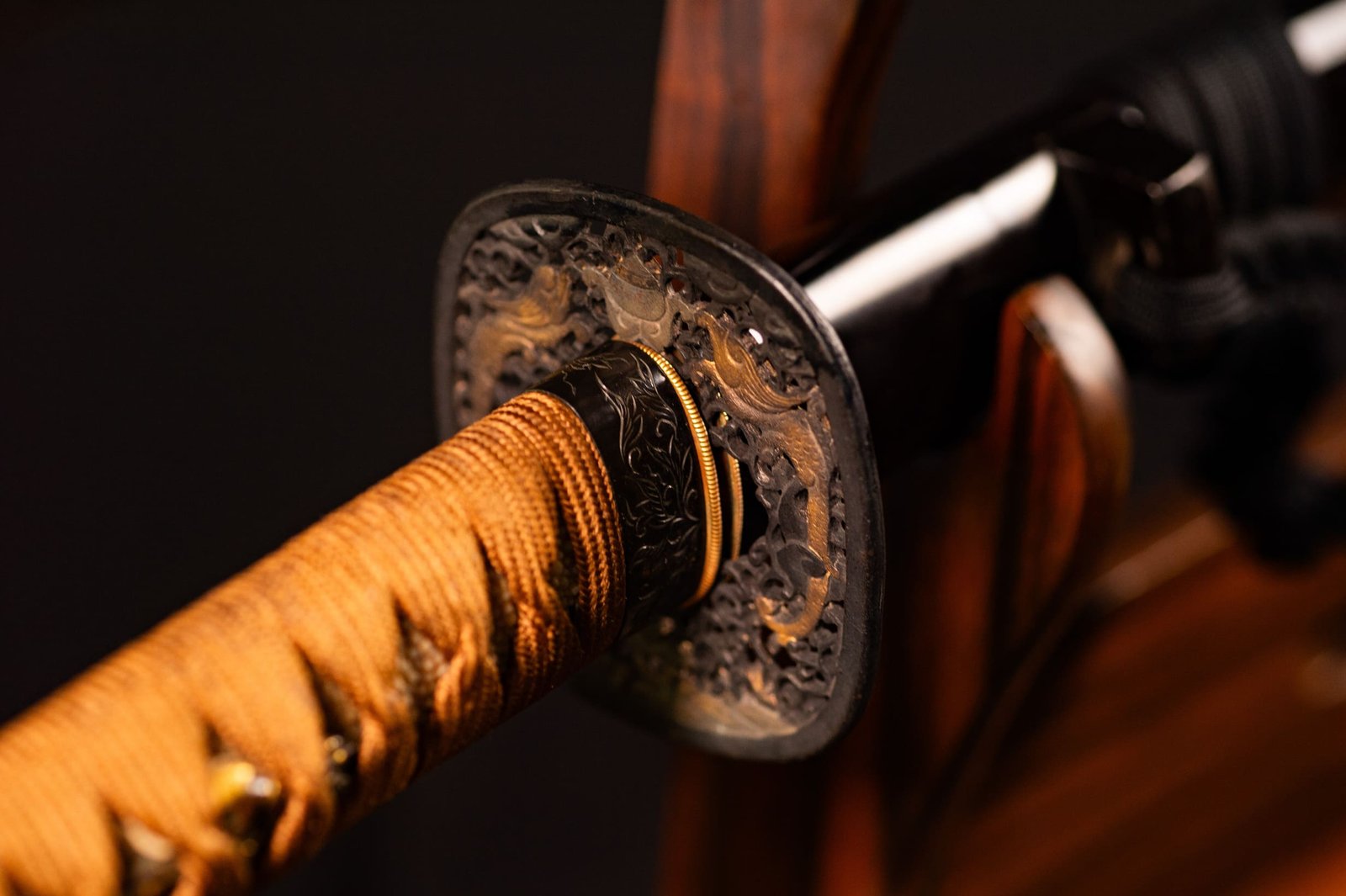
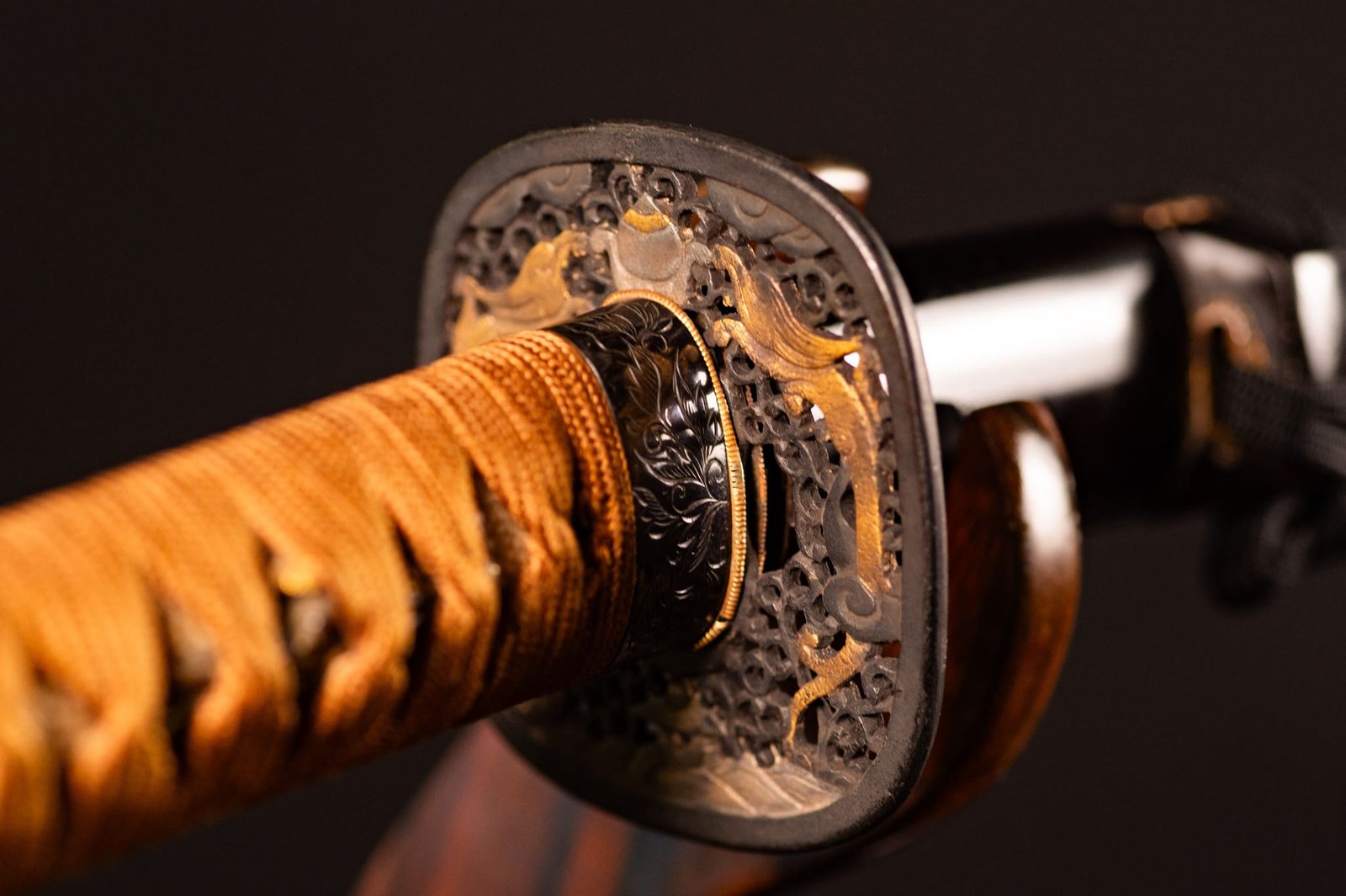
The iron tsuba are of rounded square form, worked in openwork with gilt dragons coiling through clouds above stylised waves.
The dragon was a guardian and a symbol of power that rises from the water to the sky.
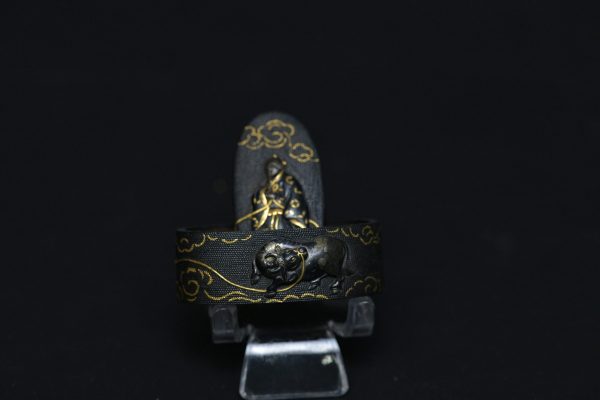
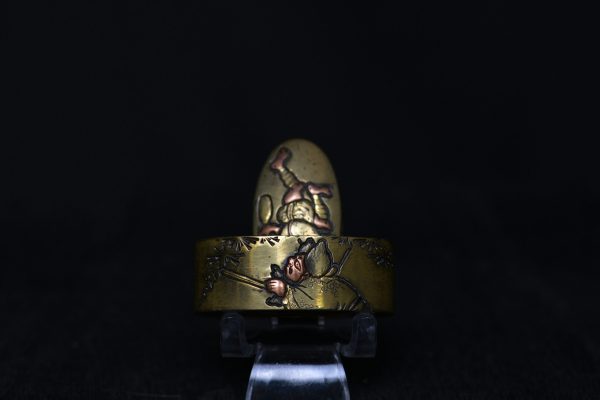
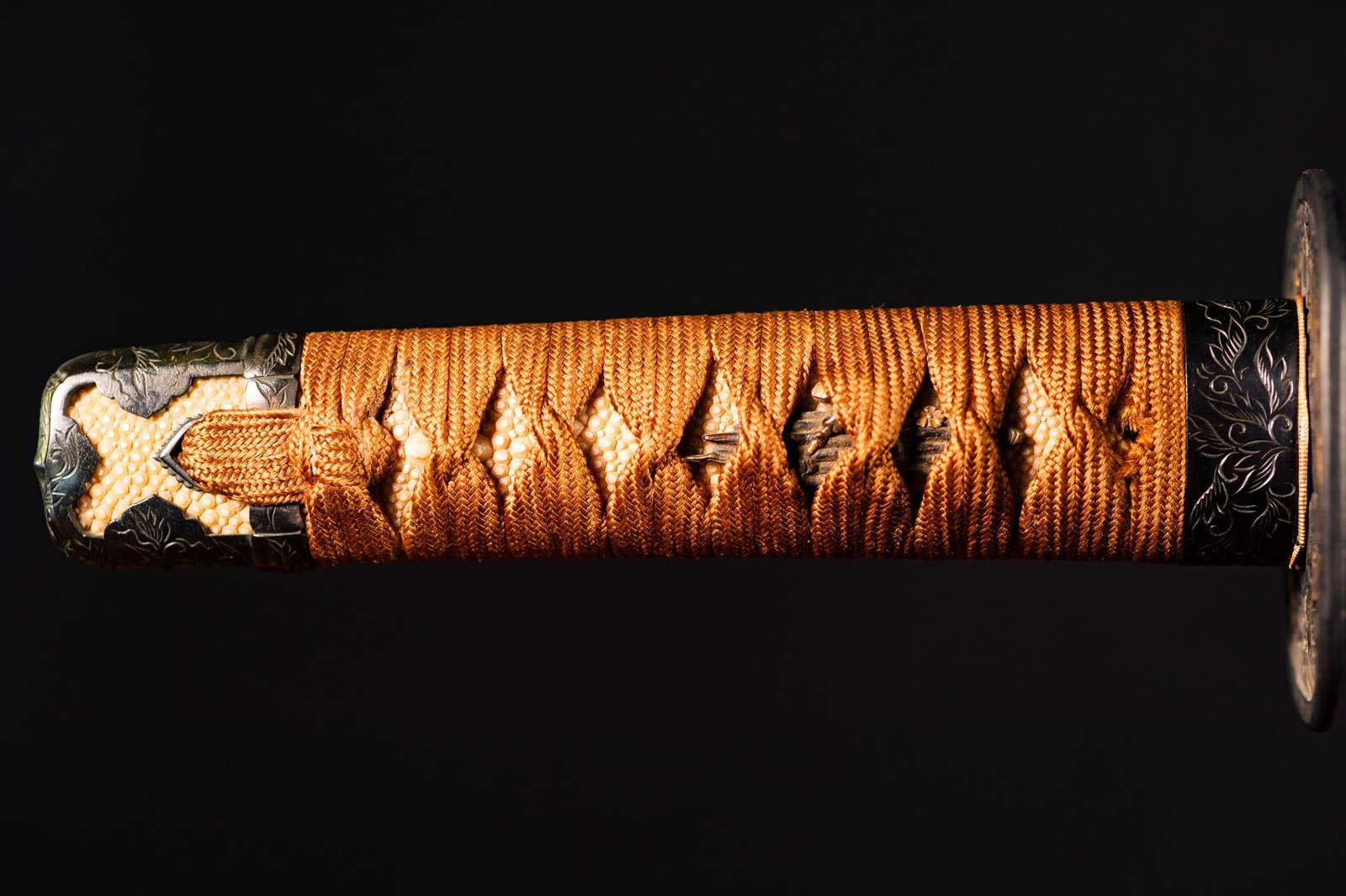
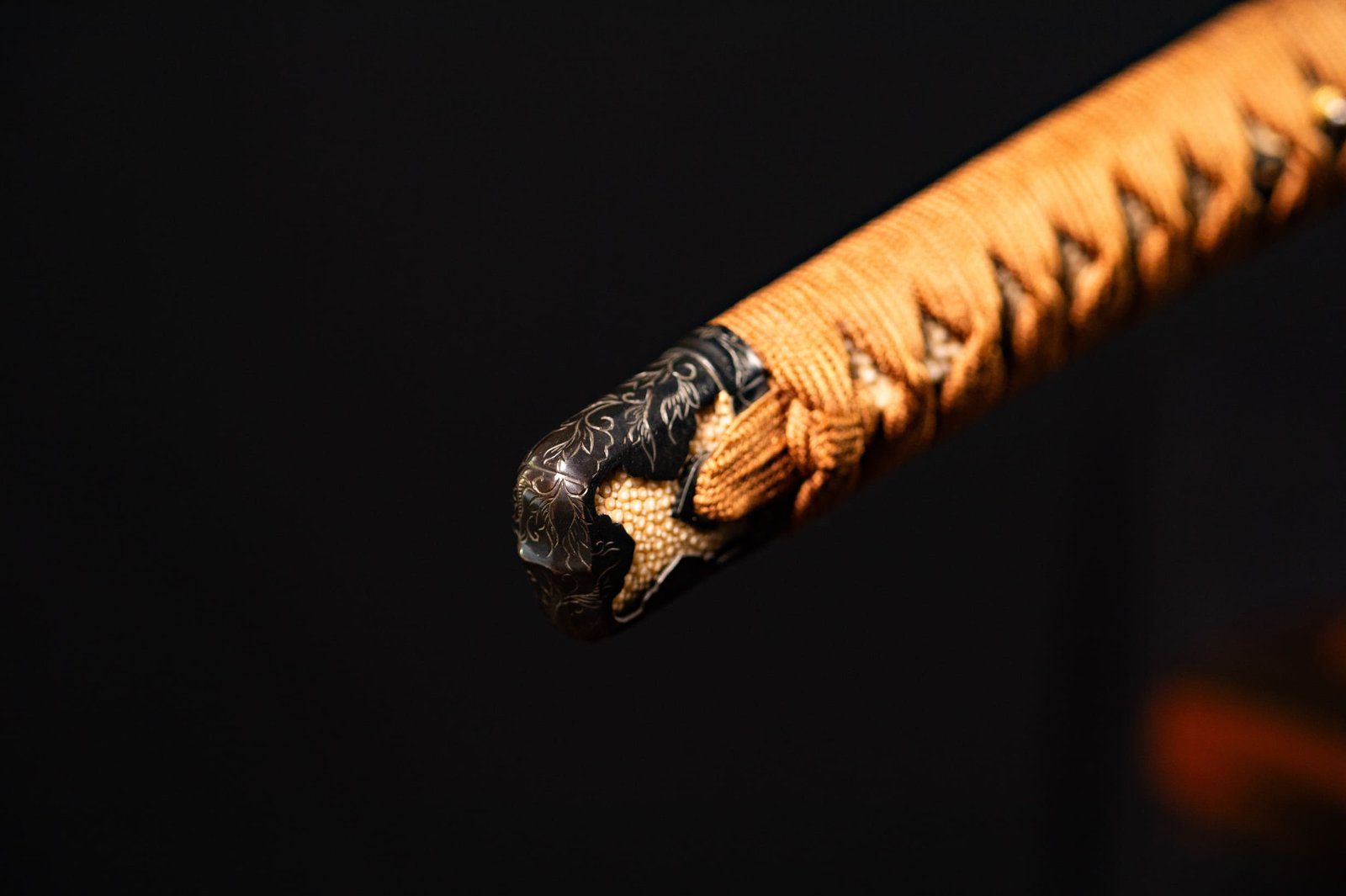
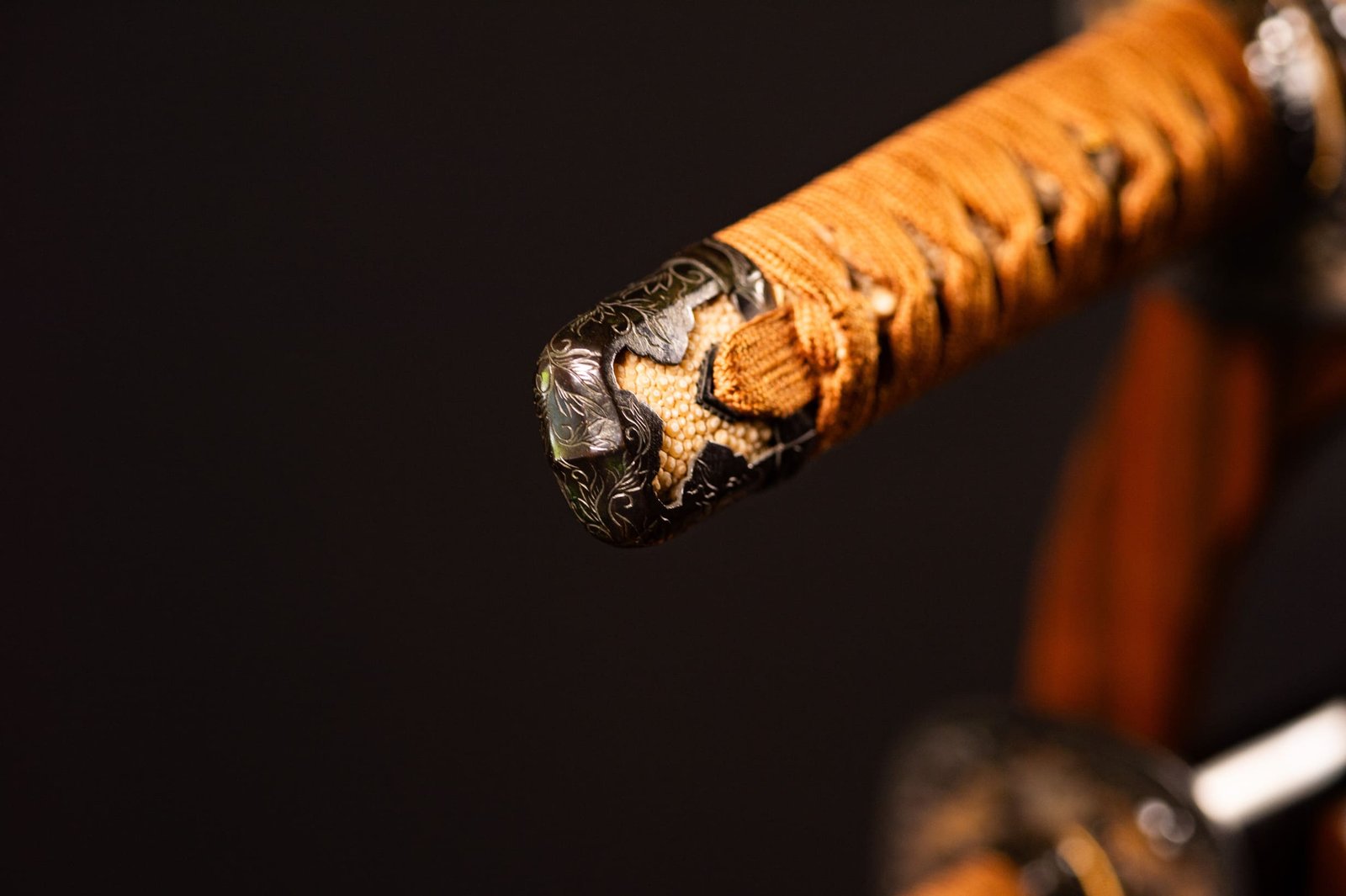
The fuchi and kashira are in black metal, finely engraved in kebori with scrolling foliage.
The kashira is cut open so that the white same shows through in a distinctive cross pattern.
The menuki are set under warm brown silk ito over white same.
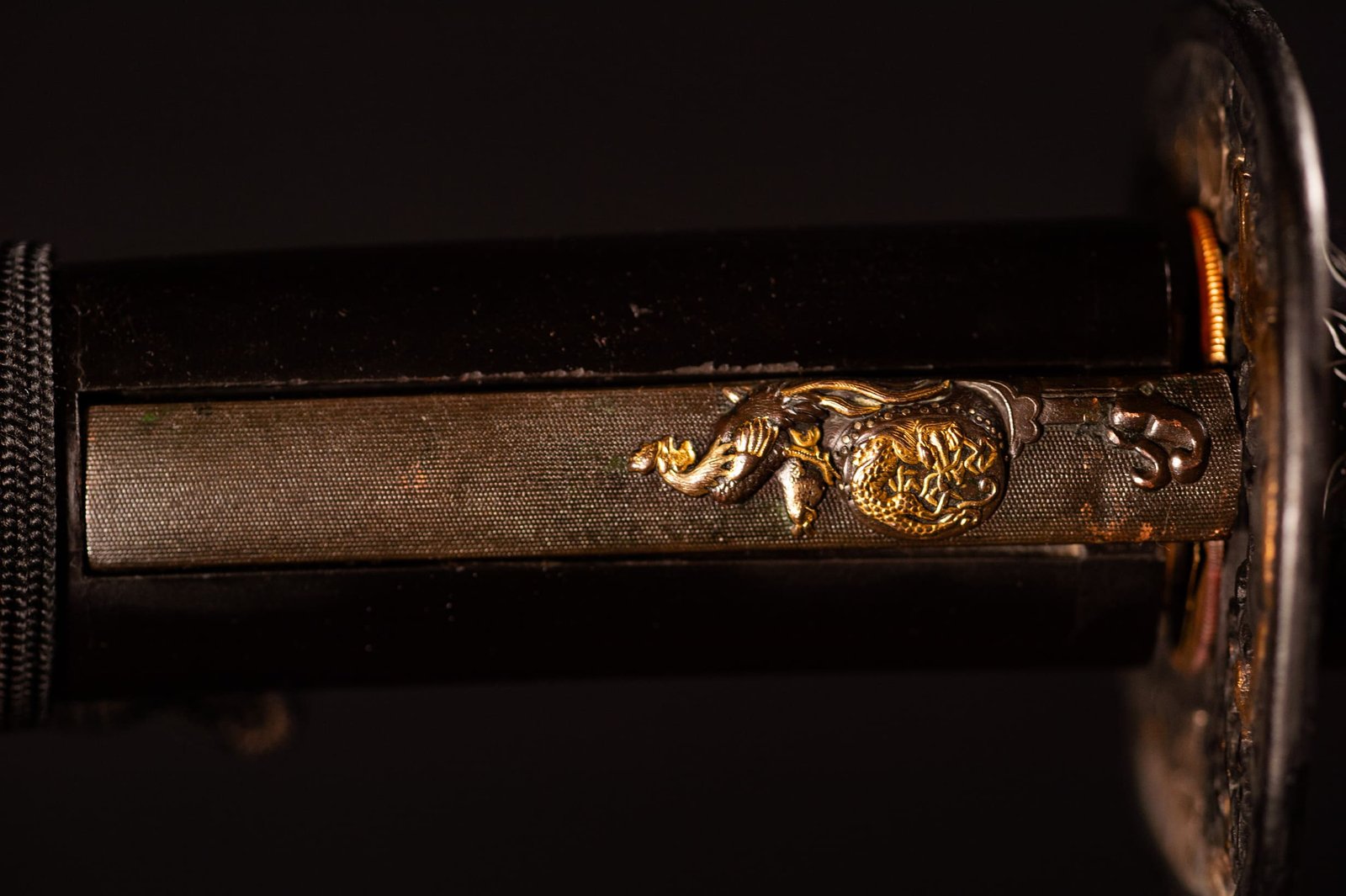
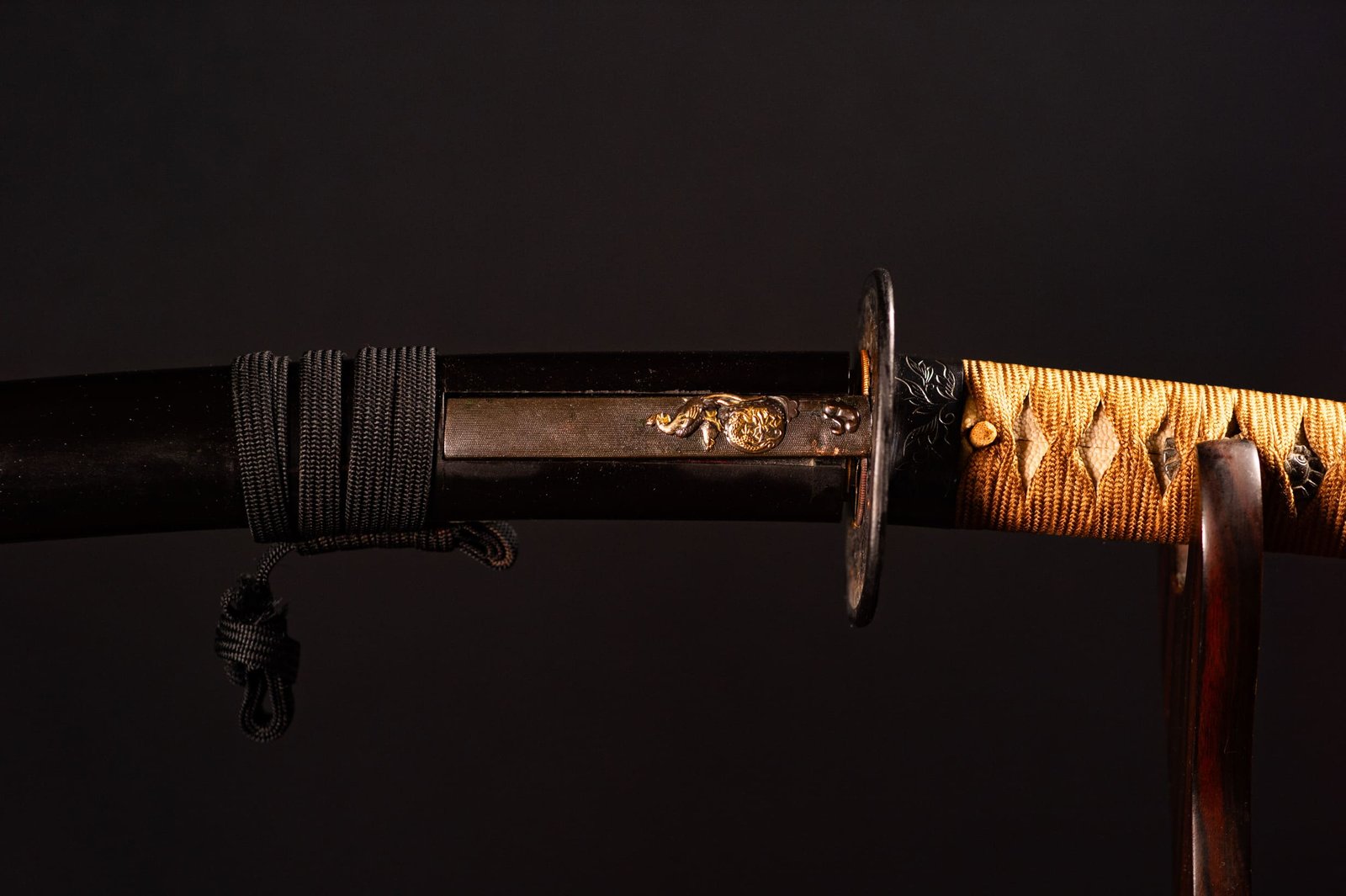
The katana keeps its kozuka, the small utility knife carried in the scabbard.
Its handle shows a dragon and a gilt sacred jewel (tama) on a fine nanako ground.
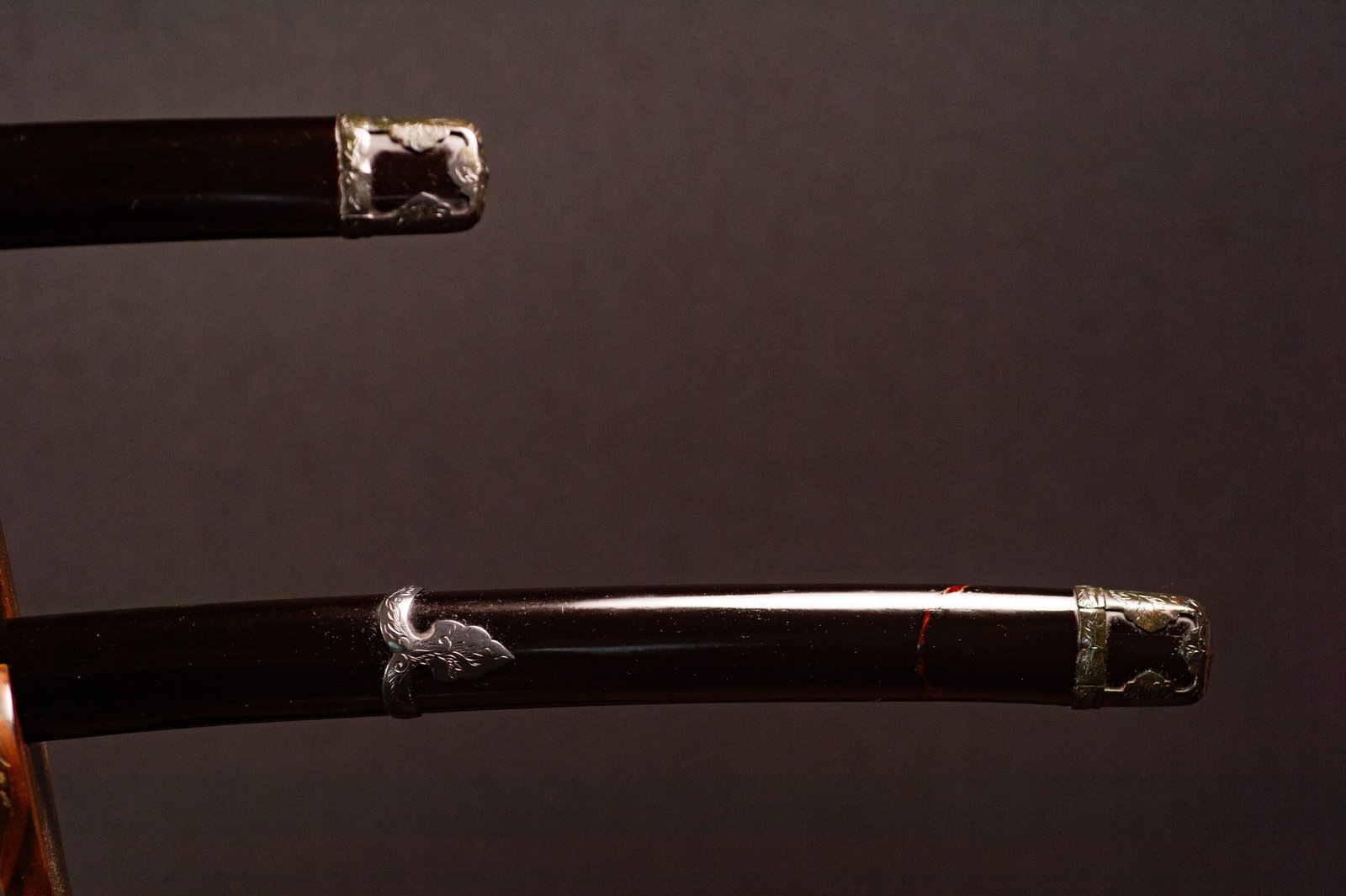
The saya are finished in glossy black lacquer with silver fittings at the kurikata, kaerizuno and kojiri, engraved with matching foliage.
Black sageo complete the mountings.
Both blades come with their Japanese registration certificates (tōroku-shō), issued on the same day in July 1959 in Fukui Prefecture under consecutive numbers.
This daishō combines two shinogi-zukuri blades with a matching pair of koshirae featuring iron, gilt decoration, engraved metal, silver, silk, same and lacquer.
Excellent condition for its age, with only minor wear consistent with its antiquity.
Both blades are presented in their matching koshirae, with the katana’s kozuka and both Japanese registration certificates (tōroku-shō).
This daishō stands out as a complete matched pair, documented together for more than sixty years.
A matched daishō, the clearest emblem of the samurai, kept together as a pair and dressed in identical mountings. Its signed katana, carefully matched koshirae and documented history make it a rare and compelling addition to a collection of antique Japanese swords.

Order above 1.000,00 € gets free shipping.

Secure and hassle-free payment process.

Certificate of authenticity included.

Have questions? Contact us via WhatsApp.
Contact
Discover exceptional Japanese swords, armor and works of art with our limited-time Black Friday offers.
OFFER ENDS NOVEMBER 30, 2026
Enter your code at checkout. Discounts cannot be combined with other coupons. Eligible orders only.