October 18, 2026

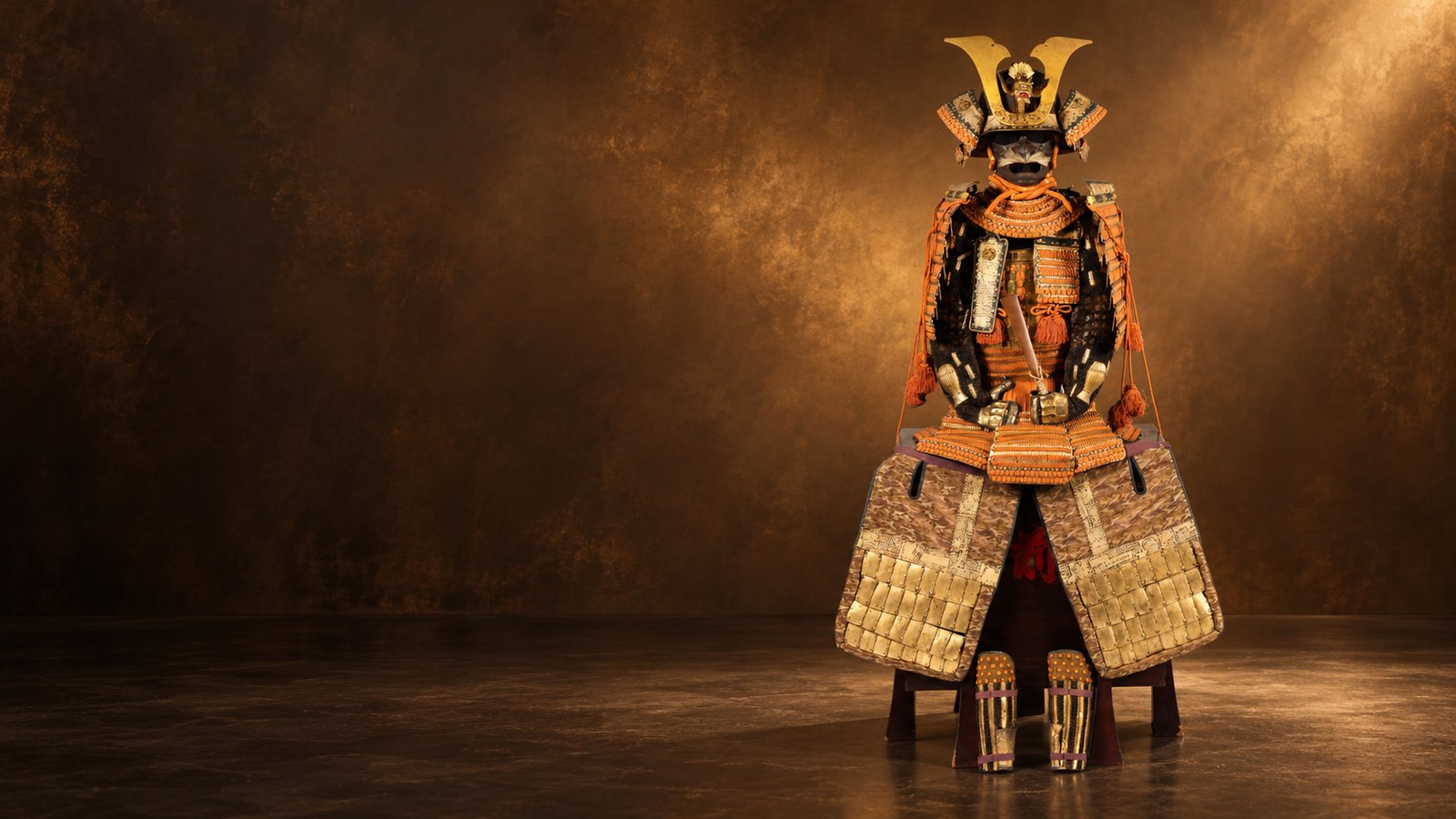
On 23 October 2026, Supein Nihonto presented 24 historical Japanese arms and armour lots at Bonhams Paris, bringing together centuries of craftsmanship, tradition and artistic heritage.
Japanese arms and armour are much more than historical military equipment. They represent centuries of specialised craftsmanship, combining the work of swordsmiths, armour makers, lacquer artists and metalworkers into objects of remarkable technical and artistic sophistication.
On 23 October 2026, Supein Nihonto participated in the international auction Asian Decorative Art, including Japanese Arms and Armour from a European Collection, held by Bonhams Paris.
The presentation brought together 24 pieces from the Supein Nihonto collection, including Edo-period samurai armour, distinctive kabuto helmets, traditionally forged katana, wakizashi and tantō.
Now that the auction has concluded, we look back at some of the remarkable objects featured in this collection and the traditions of Japanese craftsmanship they represent.
Beyond the auction itself, this event marks another chapter in Supein Nihonto‘s participation in the international Japanese art and antiques market.
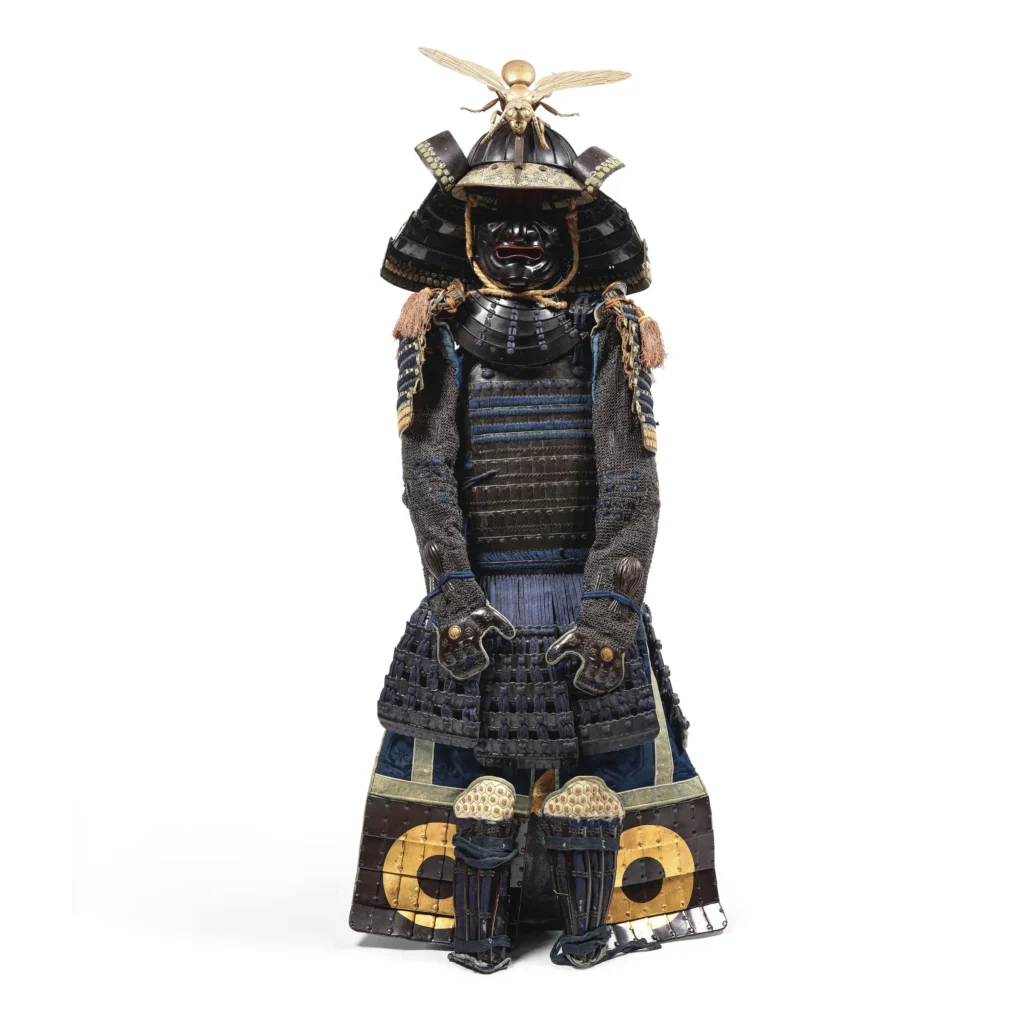
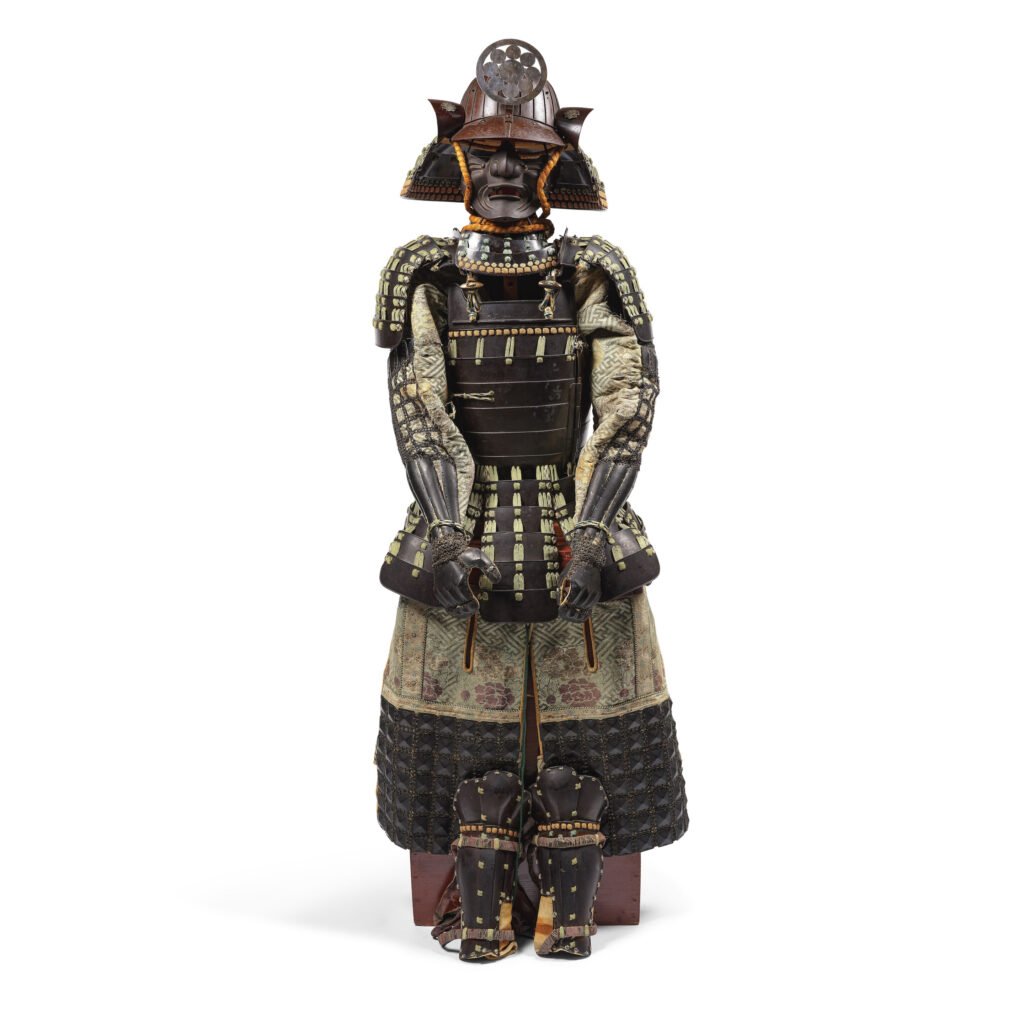
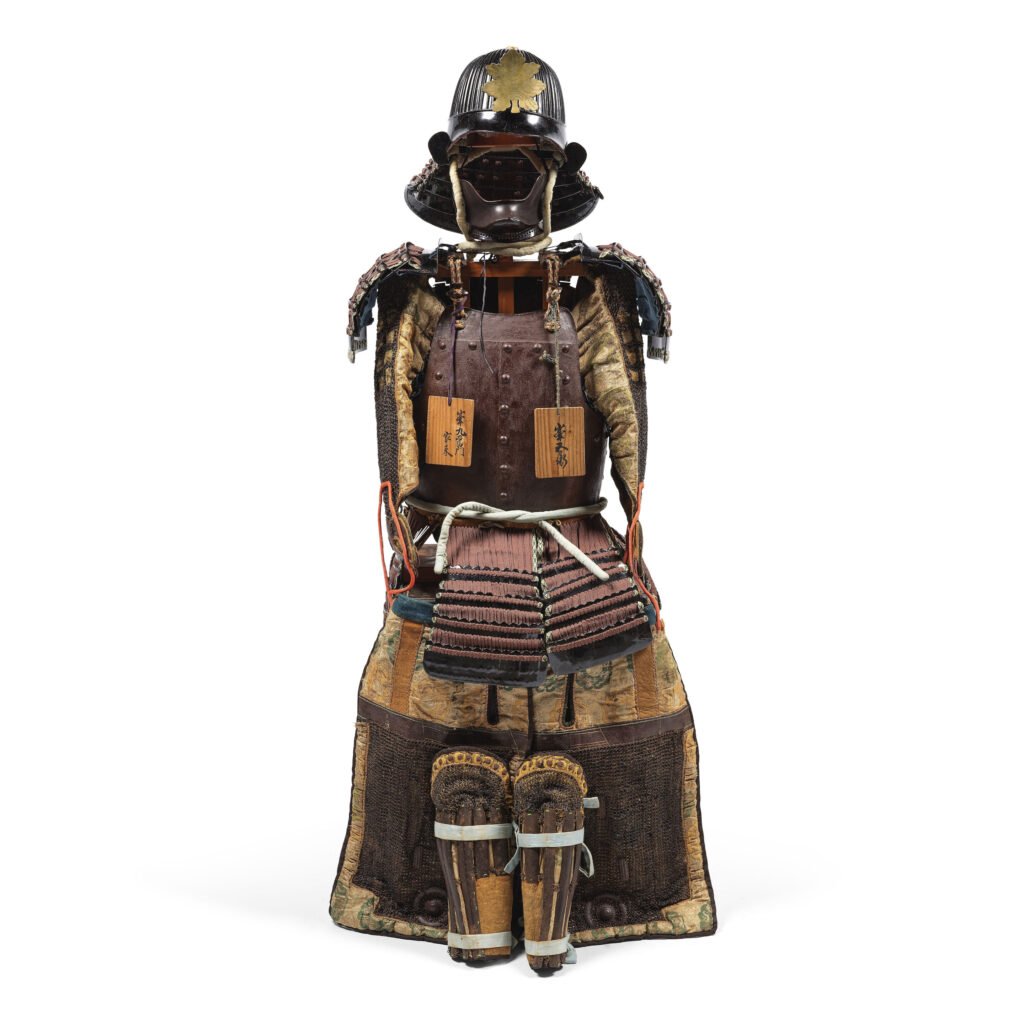
The international presentation of Japanese historical arms and armour provides an opportunity to appreciate these objects beyond their original military purpose.
A complete samurai armour, or gusoku, is the result of numerous specialised disciplines. Its construction may incorporate forged iron, lacquered protective plates, woven textiles, silk lacing, leather and intricate decorative fittings.
Similarly, a Japanese sword is both a functional object and an expression of sophisticated metallurgical knowledge, in which blade geometry, steel structure and heat treatment are inseparable from artistic craftsmanship.
The collection presented at Bonhams Paris illustrated this diversity through pieces representing different historical periods, construction methods and aesthetic traditions.
Rather than belonging to a single style, the selection offered a broad perspective on the development of Japanese arms and armour, with particular emphasis on the craftsmanship preserved from the Edo period.
For Supein Nihonto, presenting these objects through an internationally recognised auction house forms part of a continuing commitment to bringing authentic Japanese antiques to collectors around the world.
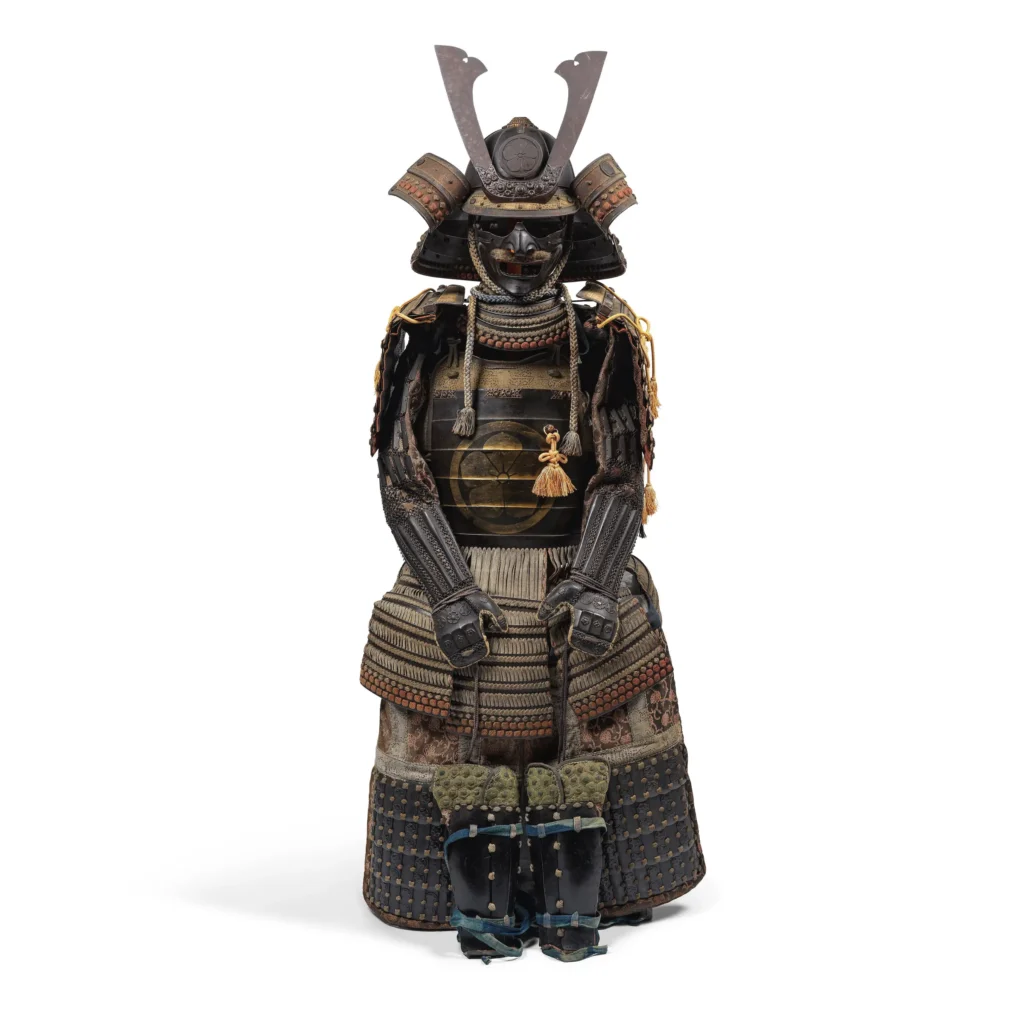
Among the most striking aspects of the Bonhams Paris collection was the variety of samurai armour.
The different suits demonstrated how Japanese armour makers combined protective construction with artistic expression, creating objects whose silhouettes, colours and decorative motifs could be remarkably distinctive.
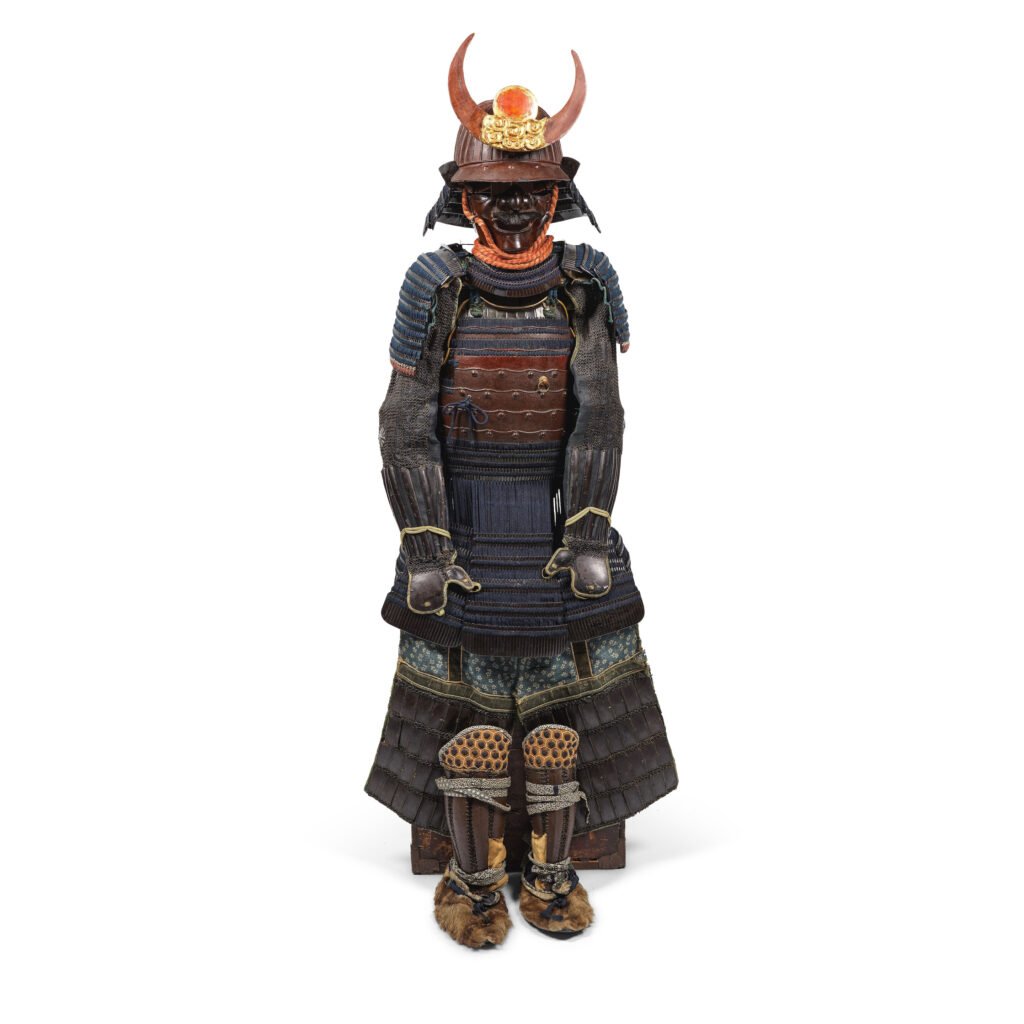
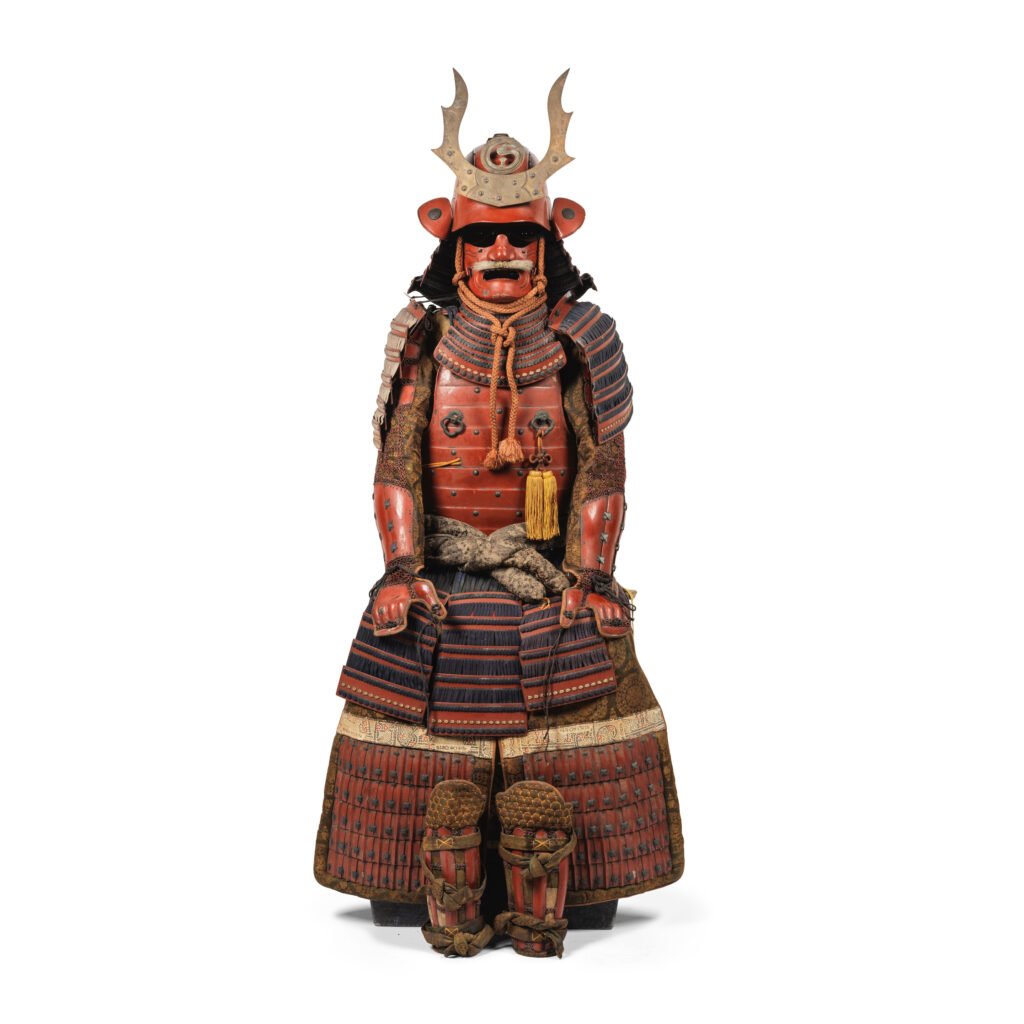
One particularly memorable piece was Lot 3, a red-lacquered samurai armour dating from the 19th century.
Its striking red surfaces were complemented by contrasting blue lacing, an expressive face mask and an imposing helmet decorated with antler-shaped ornaments.
The composition illustrates the visual importance of armour during the Edo period, when protective equipment could also communicate identity, status and aesthetic taste.
The helmet’s elaborate frontal decoration provides an excellent example of the role played by the maedate, the ornament traditionally mounted at the front of a kabuto.
These elements transformed the helmet into an unmistakable symbol of the warrior who wore it.
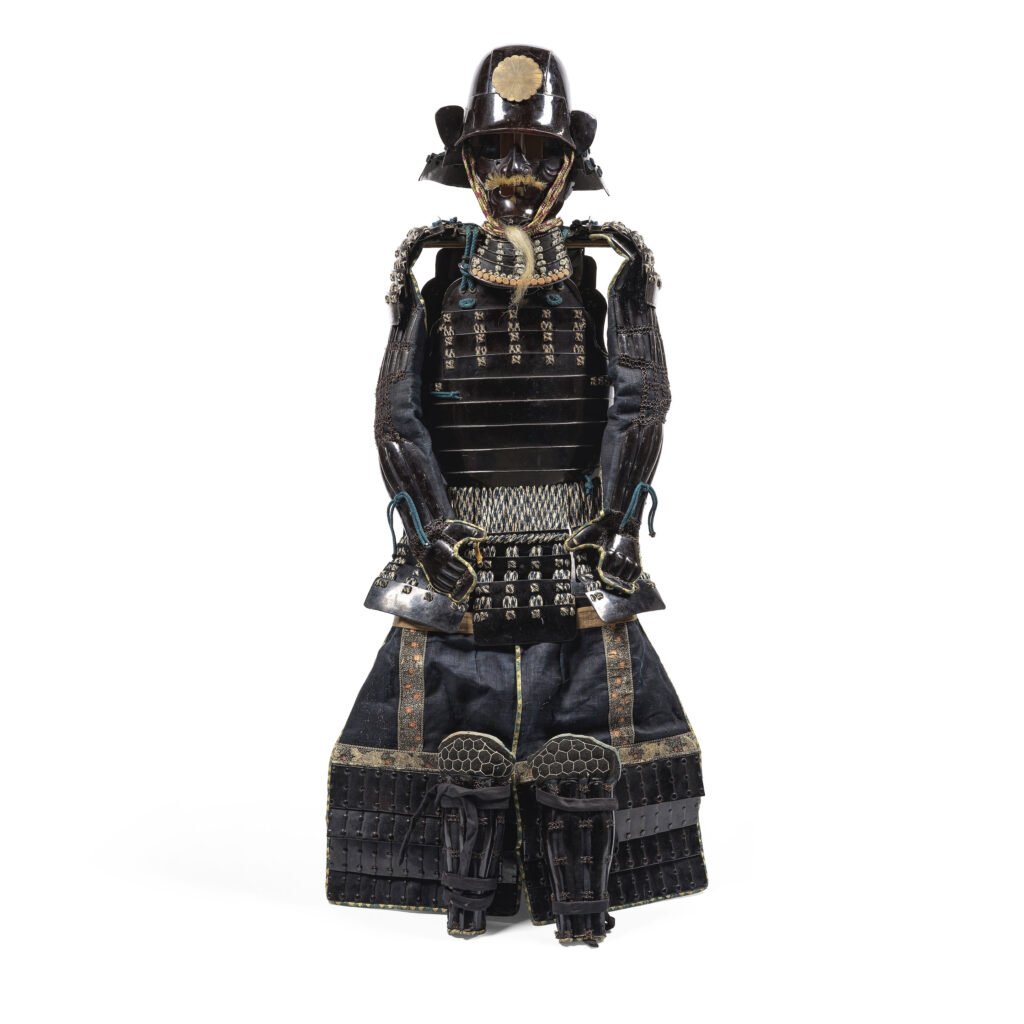
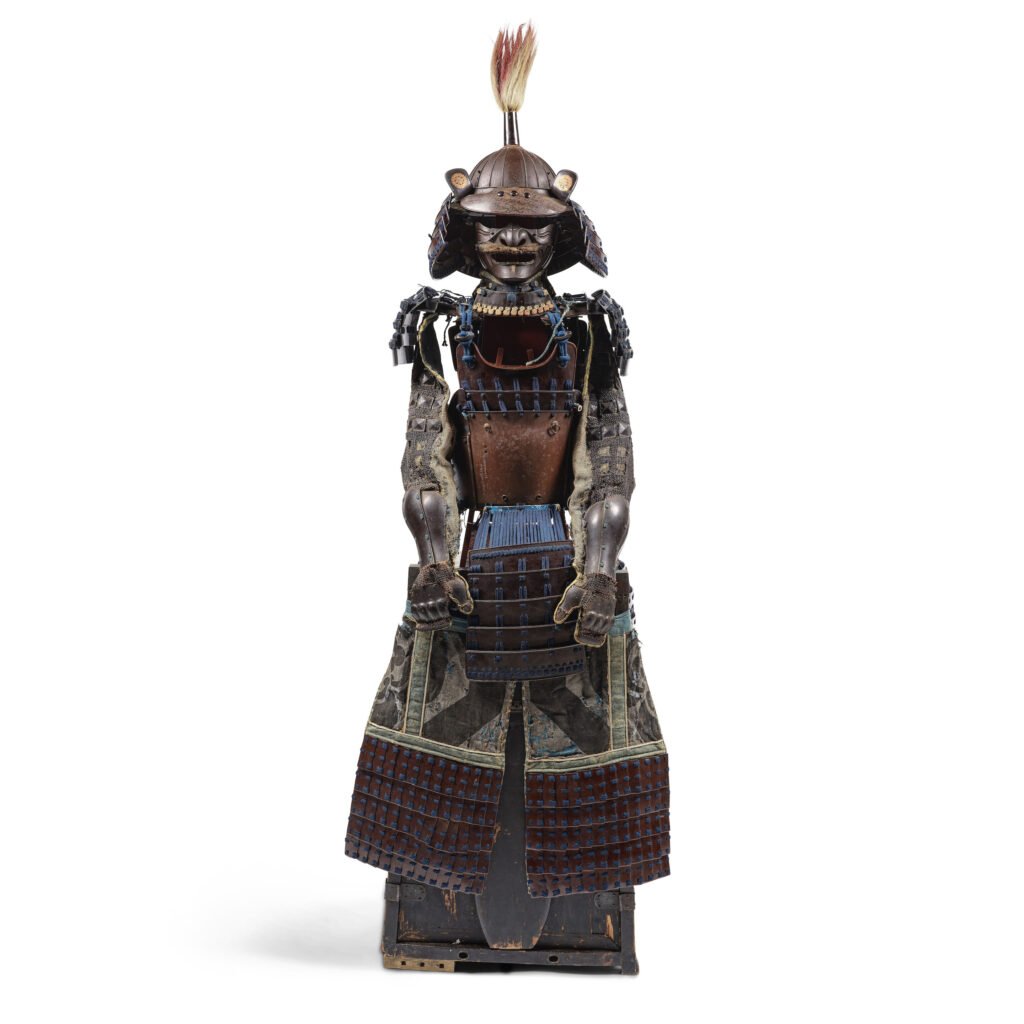
Another notable piece was Lot 6, a black-lacquered armour accompanied by a helmet catalogued as bearing the signature Myōchin Ki no Munesada.
The Myōchin name occupies an important place in the history of Japanese armour-making, particularly in relation to traditional ironworking and helmet construction.
The restrained appearance of this suit contrasted with some of the more elaborate examples in the collection.
Its dark lacquer, carefully arranged lacing and russet-iron helmet reflected a different aesthetic approach, highlighting the relationship between structural craftsmanship and decorative refinement.
The catalogue also recorded accompanying preservation documentation, an important element for collectors studying historical Japanese armour.
Signatures and documentary references must always be assessed alongside an object’s construction, condition and historical characteristics.
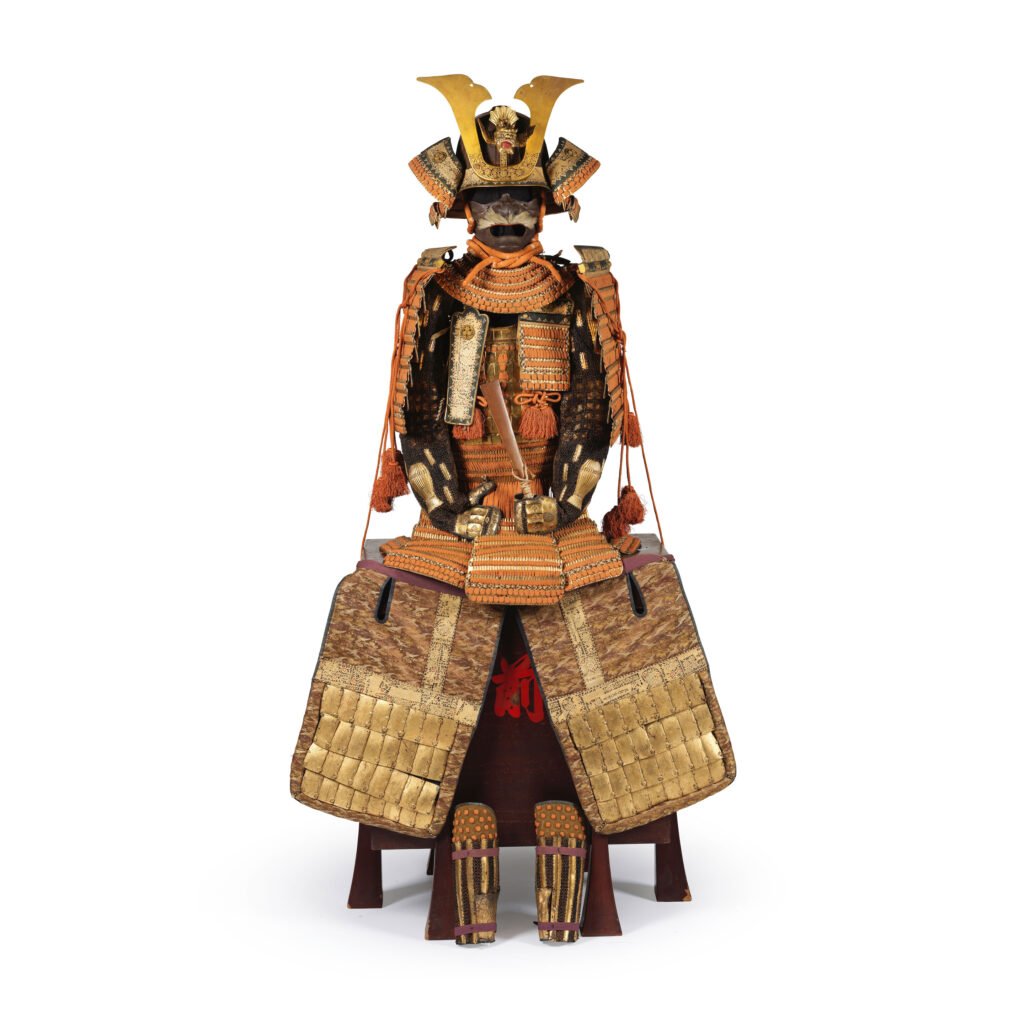
Among the most visually elaborate pieces was Lot 9, a gold-lacquered samurai armour dating from the 18th or 19th century.
Its richly decorated surfaces, contrasting orange lacing and imposing kabuto created a distinctive ensemble.
The helmet featured a decorative shachihoko ornament, drawing on the symbolic imagery found throughout Japanese art.
This type of elaborate armour illustrates how craftsmanship extended beyond practical protection.
The relationship between lacquer, metalwork, textile decoration and heraldic symbolism demonstrates the artistic sophistication associated with Japanese armour during the Edo period.
Although armour retained its connection to the warrior class, its ceremonial and representational importance also contributed to the development of increasingly elaborate designs.
Japanese helmets were another important component of the collection.
The kabuto is among the most recognisable objects associated with samurai culture, yet its construction and appearance varied considerably throughout Japanese history.
Some examples feature multiple iron plates joined with remarkable precision. Others display unusual shapes or prominent ornamental crests.
At Bonhams Paris, the selection included different helmet forms, from comparatively restrained constructions to expressive examples of kawari kabuto, helmets distinguished by their unconventional shapes.
The diversity of these pieces reflects the creativity of Japanese armour makers, who developed designs capable of combining protective construction with highly individual artistic identities.
For collectors and researchers, the study of a kabuto offers insight into metallurgy, traditional Japanese decorative motifs and the evolution of samurai equipment.
Readers interested in exploring these traditions can discover more in our guide to Japanese kabuto helmets.
Alongside the armour, the Supein Nihonto selection included traditionally forged Japanese swords representing different periods of sword-making.
Katana, wakizashi and tantō occupy a distinctive place in Japanese cultural history, combining functional design with demanding technical craftsmanship.
The forging of a nihontō requires careful control of the blade’s geometry, steel structure and heat treatment.
Characteristics such as the hada, or visible grain of the forged steel, and the hamon, the tempering pattern along the cutting edge, provide important information about a blade’s workmanship.
Several pieces presented at Bonhams Paris reflected these traditions.
Lot 12 featured a Shintō-period wakizashi catalogued as a signed work by Fujiwara Shigetaka of Echizen.
The sword brought together a historical blade and later decorative mountings, illustrating the relationship between the art of sword forging and the craftsmanship of the koshirae.
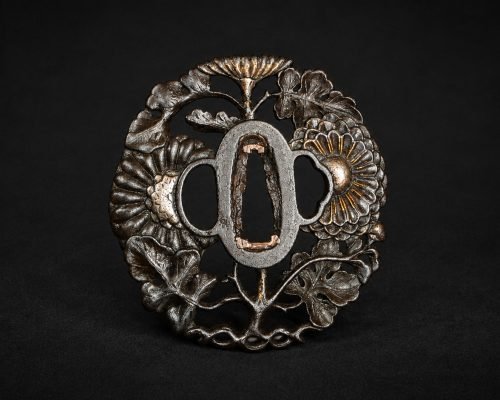
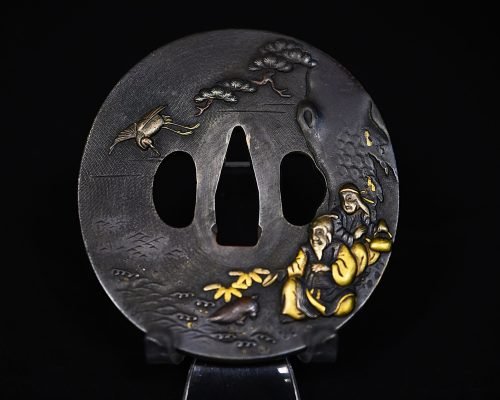
Sword fittings such as the tsuba, fuchi, kashira and menuki were frequently created by specialised artisans, whose work deserves appreciation in its own right.
Lot 13, a Shinshintō katana attributed in the catalogue to Keishinsai Naomasa, represented another chapter in Japanese sword history.
The Shinshintō period saw renewed interest in earlier sword-making techniques and styles.
Its blade and decorative mountings illustrated the continued importance of traditional sword craftsmanship during the final decades of the Edo period.
Among the earlier blades was Lot 17, a Kotō wakizashi associated with the Shitahara school and dated to the 16th century.
Presented in shirasaya with separate historical mountings, the sword demonstrated how Japanese blades could be preserved and remounted across generations.
Its combination of an earlier blade and decorative fittings offered an opportunity to appreciate the continuity of Japanese sword culture over several centuries.
Together, these pieces illustrated the variety of historical traditions represented within the Supein Nihonto collection.
Historical Japanese armour and swords are complex objects that require careful study and preservation.
Their significance lies not only in their appearance but also in the materials, construction techniques and historical details that have survived.
Lacquered surfaces, traditional textile lacing, forged iron components and decorative metal fittings all contribute to our understanding of Japanese craftsmanship.
In many cases, historical objects have undergone repairs, adjustments or the replacement of individual components during their long existence.
These interventions form part of the history of collecting and preservation, making the careful examination of each piece especially important.
For collectors, understanding an object’s construction, period, attribution and condition is essential to appreciating its historical character.
By documenting the pieces presented at Bonhams Paris, Supein Nihonto contributes to preserving a visual and descriptive record of these objects beyond the auction itself.
Those wishing to learn more about armour construction can explore our guide to traditional Japanese samurai armour.
Since 2018, Supein Nihonto has specialised in Japanese swords, samurai armour and historical Japanese antiques, working with collectors internationally.
Our participation in Bonhams Paris 2026 represents another step in that journey.
The event also follows our participation in Bonhams London in november 2024, where a selection of historical Japanese armour, kabuto and swords was presented as part of Samurai · Snow · Spectacle: Japanese Art across Seven Centuries.
Both auctions reflect the diversity of objects that have formed part of the Supein Nihonto collection and their connection to the international Japanese art market.
Each presentation has its own character, shaped by the pieces selected and the historical traditions they represent.
Rather than allowing these events to disappear after their conclusion, we believe their documentation should remain accessible to collectors, researchers and enthusiasts.
For this reason, Supein Nihonto maintains a permanent archive of its international auction participations.
Visitors can explore the original catalogues, revisit individual pieces and discover the craftsmanship behind the collections.
Explore our previous participation in Bonhams London 2024.
The conclusion of the Bonhams Paris auction marks the end of an important event, but the historical significance of the objects presented continues.
The collection offered a window into different aspects of Japanese craftsmanship, from the intricate construction of Edo-period samurai armour to the forging traditions preserved in historical Japanese swords.
Each piece reflects techniques, materials and artistic choices developed over generations.
For Supein Nihonto, sharing these objects with an international audience remains part of a broader commitment to the appreciation and preservation of Japanese cultural heritage.
We invite collectors and enthusiasts to revisit the complete selection of 24 pieces and explore the wider history of our participation in international auctions.
EXPLORE THE BONHAMS PARIS 2026 COLLECTION →
DISCOVER ALL SUPEIN NIHONTO INTERNATIONAL AUCTIONS →
This article documents Supein Nihonto’s participation in Bonhams Paris on 23 October 2026. Historical descriptions and attributions are based on the original auction catalogue. For detailed information about individual objects, readers should consult the corresponding catalogue entries.
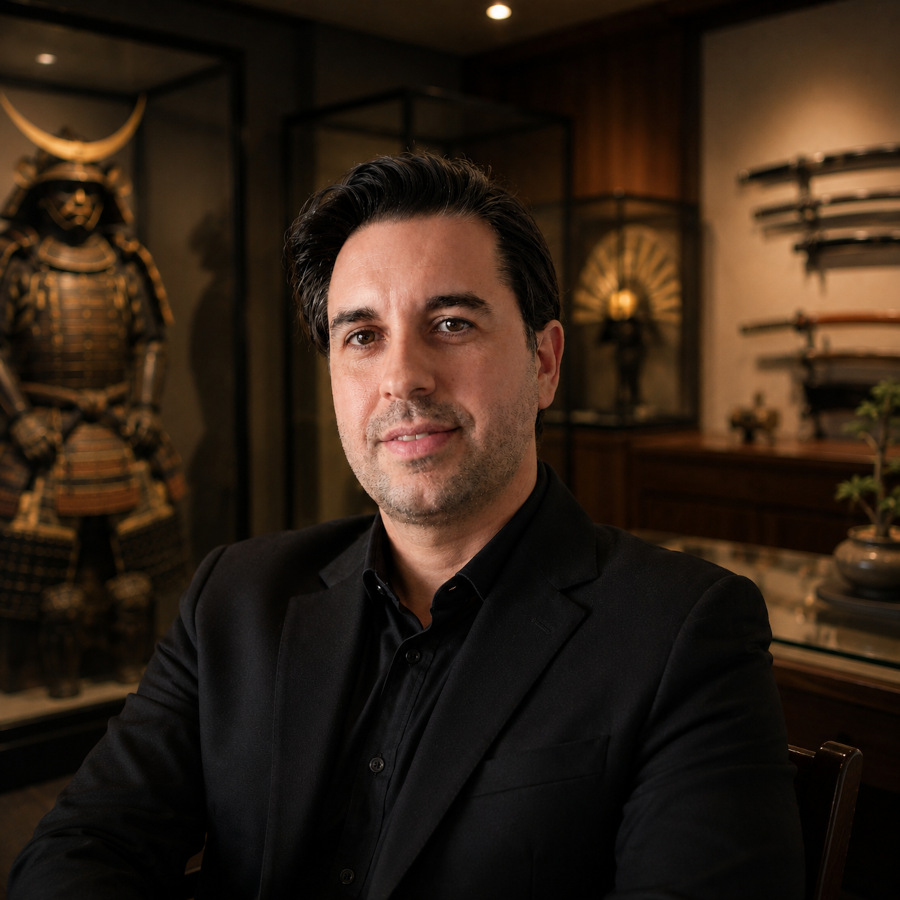
CEO of SupeinNihonto, dealer and collector of ancient Japanese art and weapons from Canillo, Andorra.