1 in stock
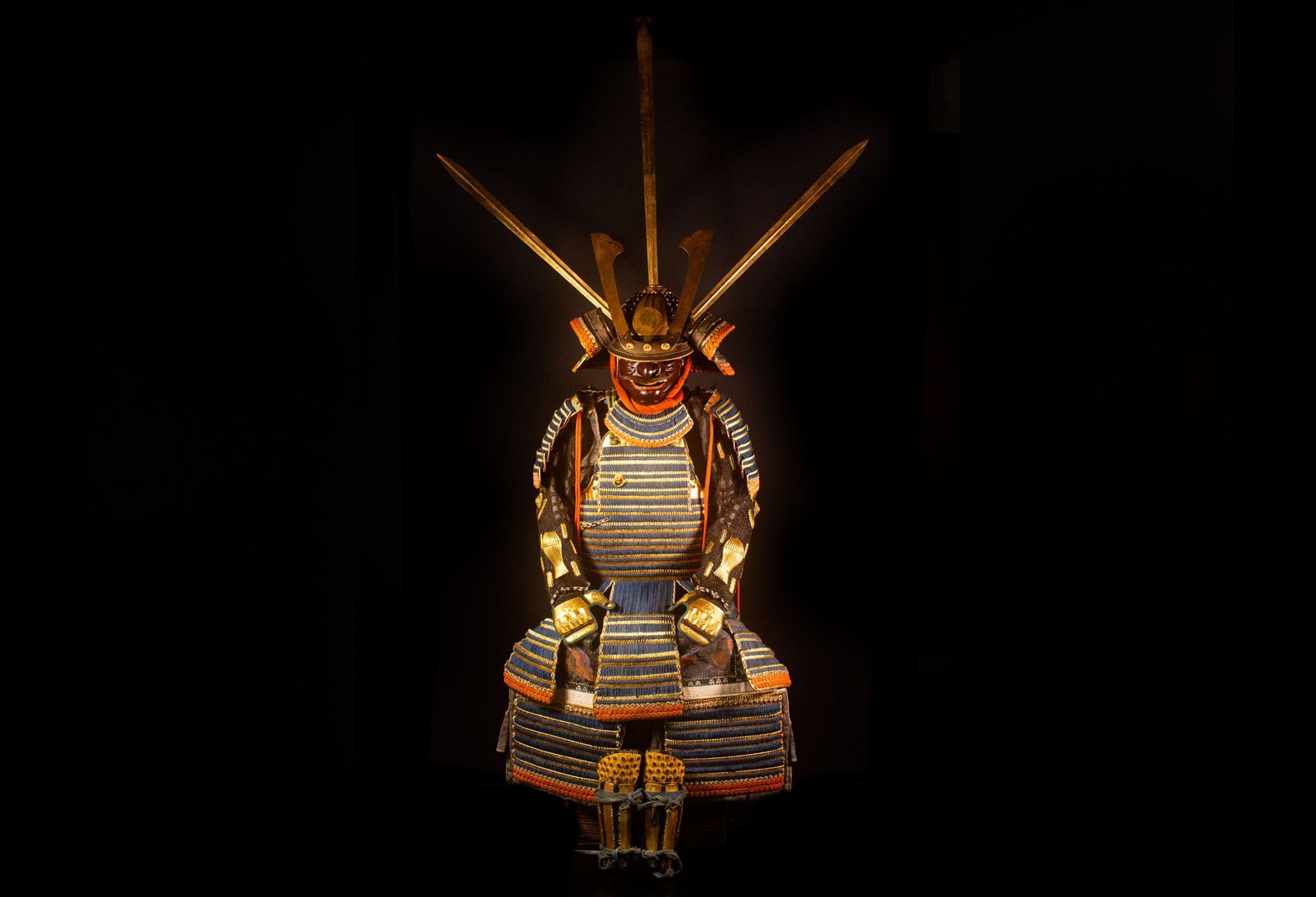
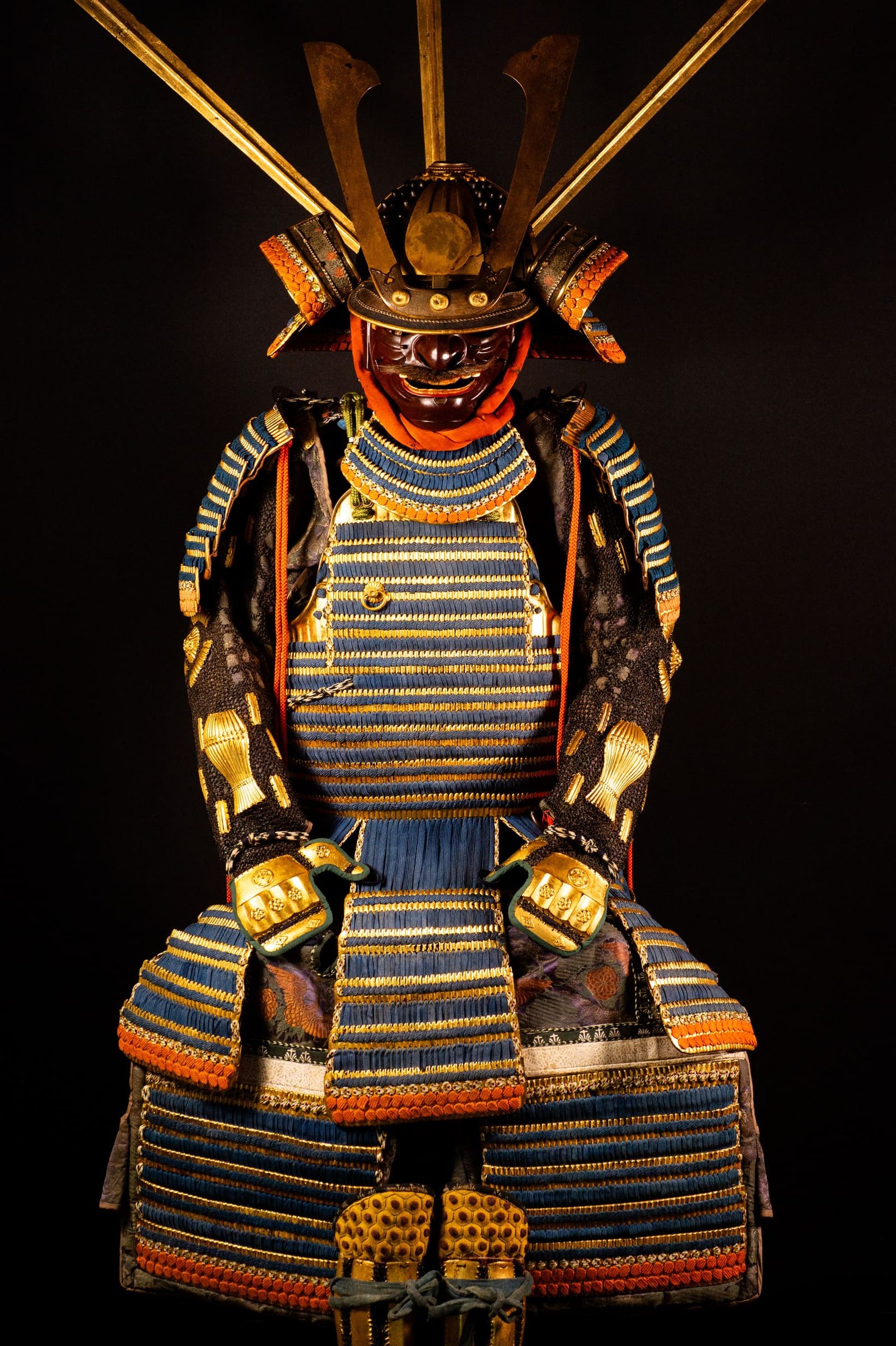
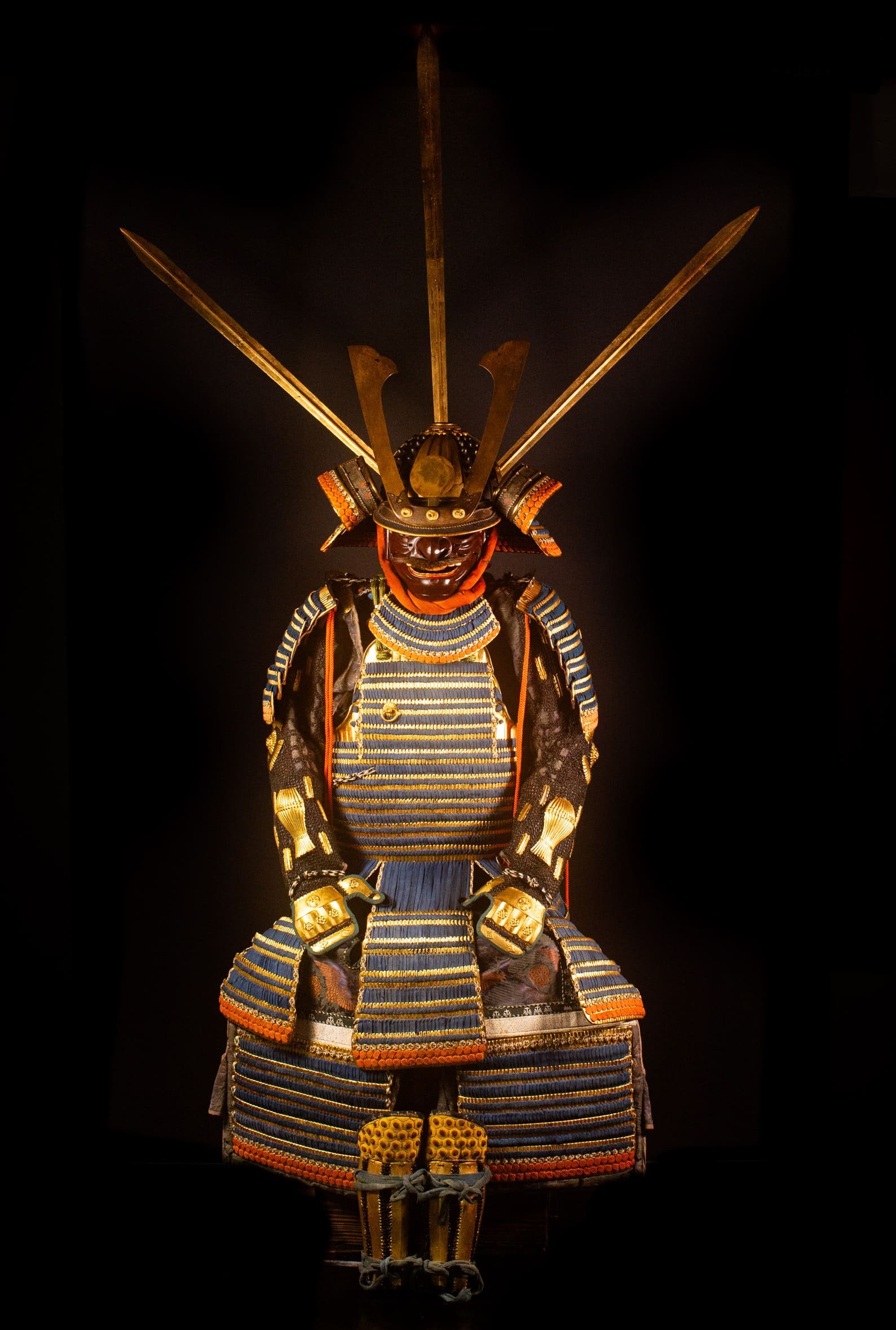
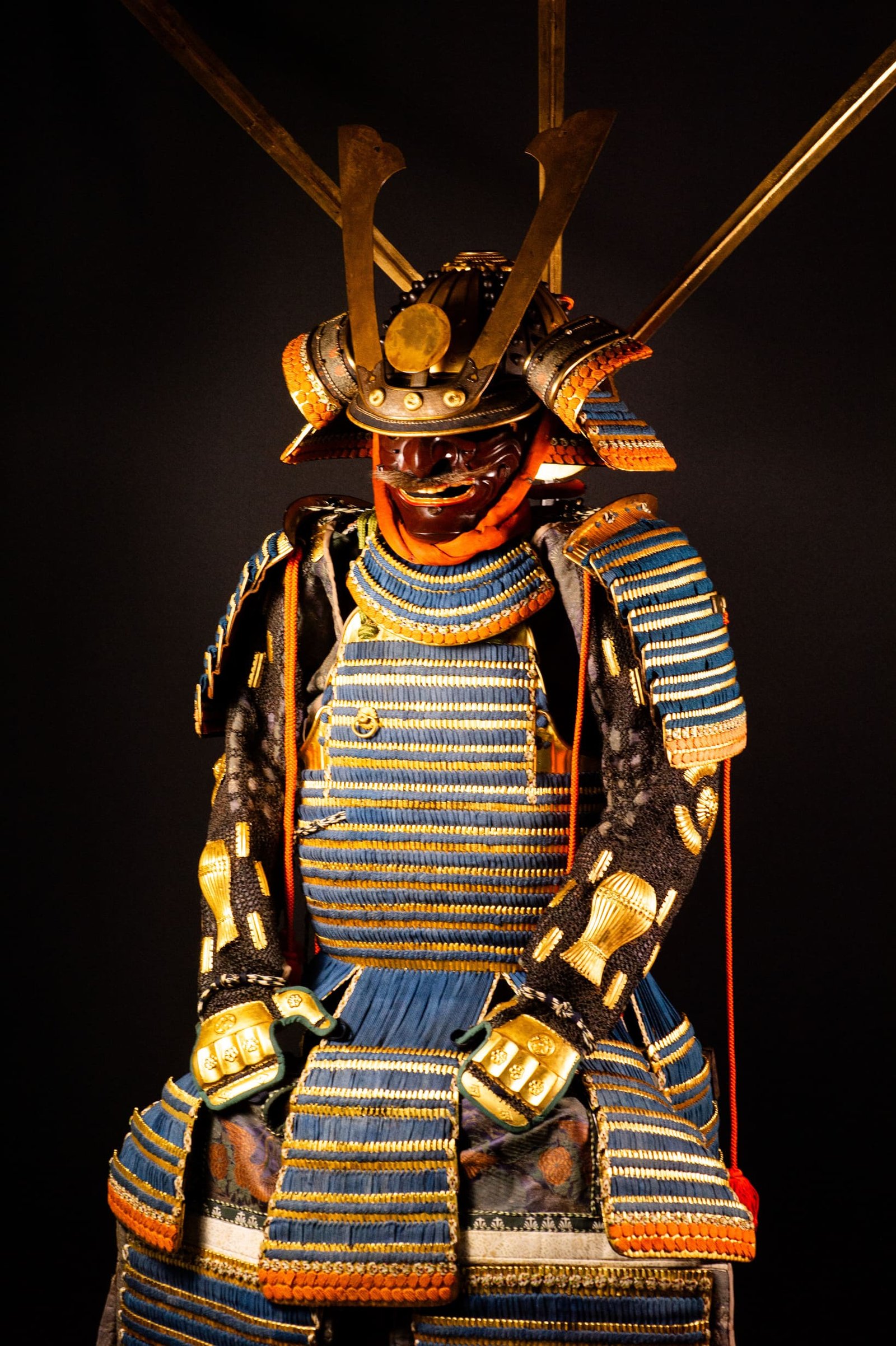
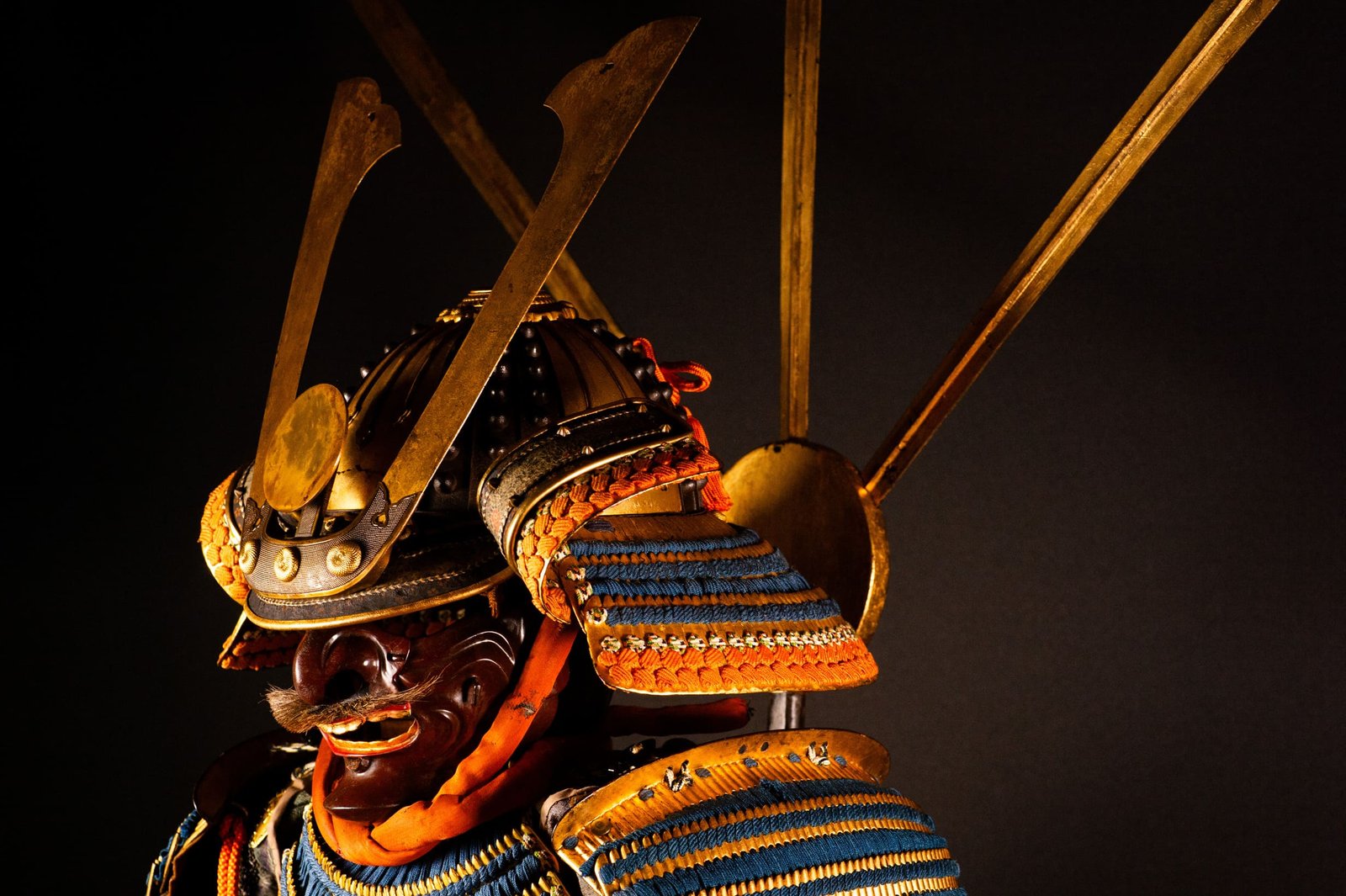
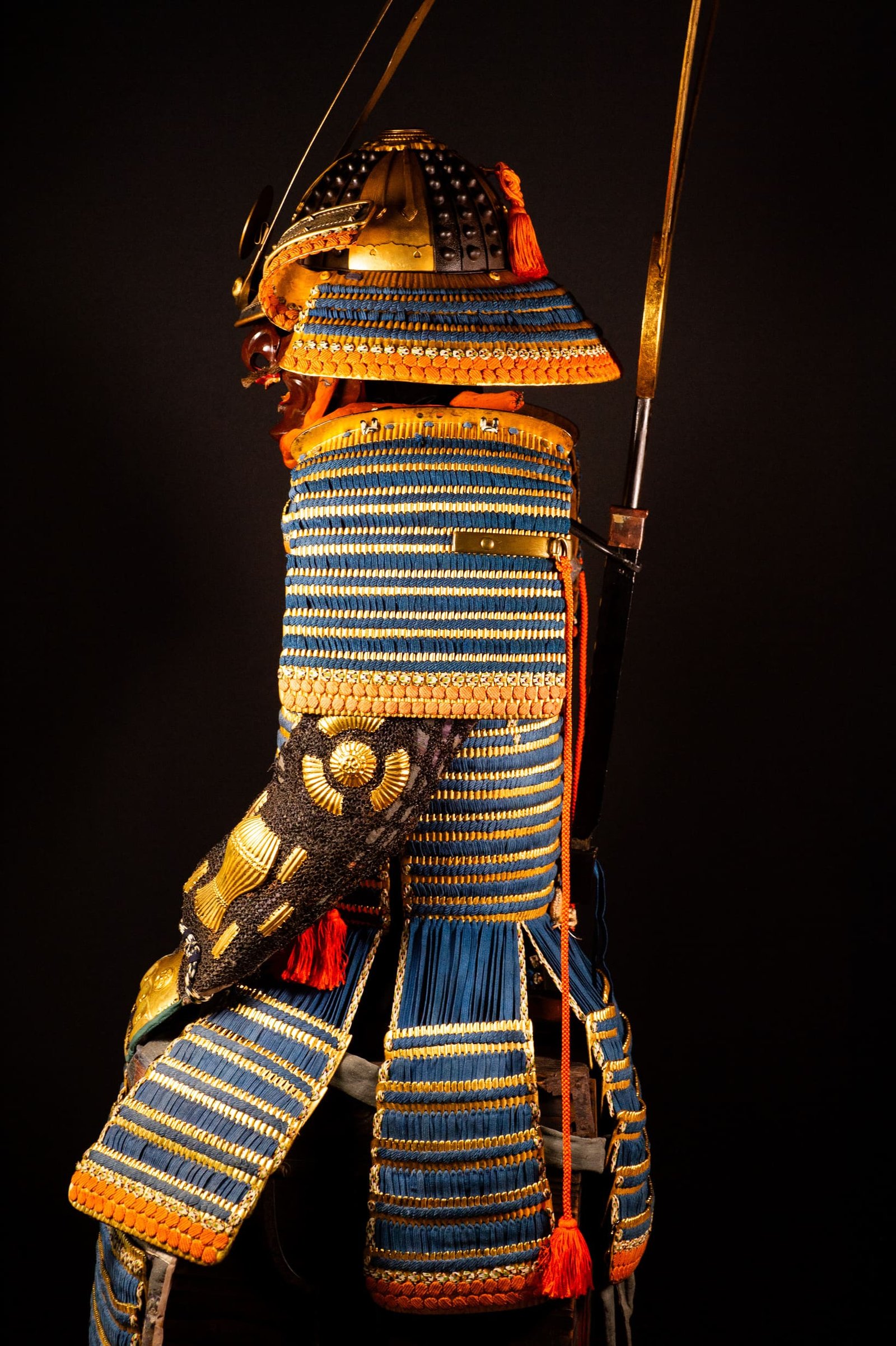
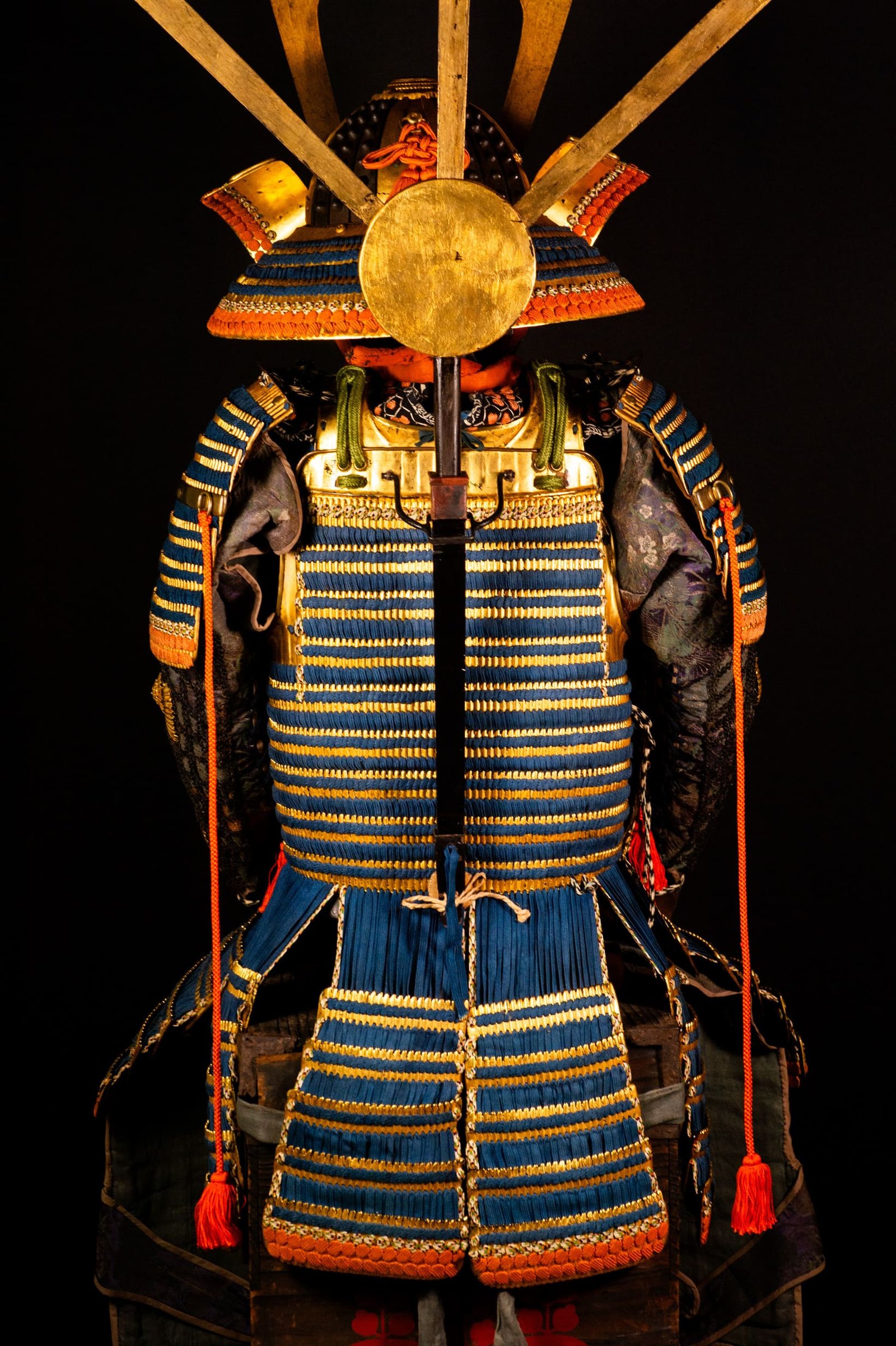
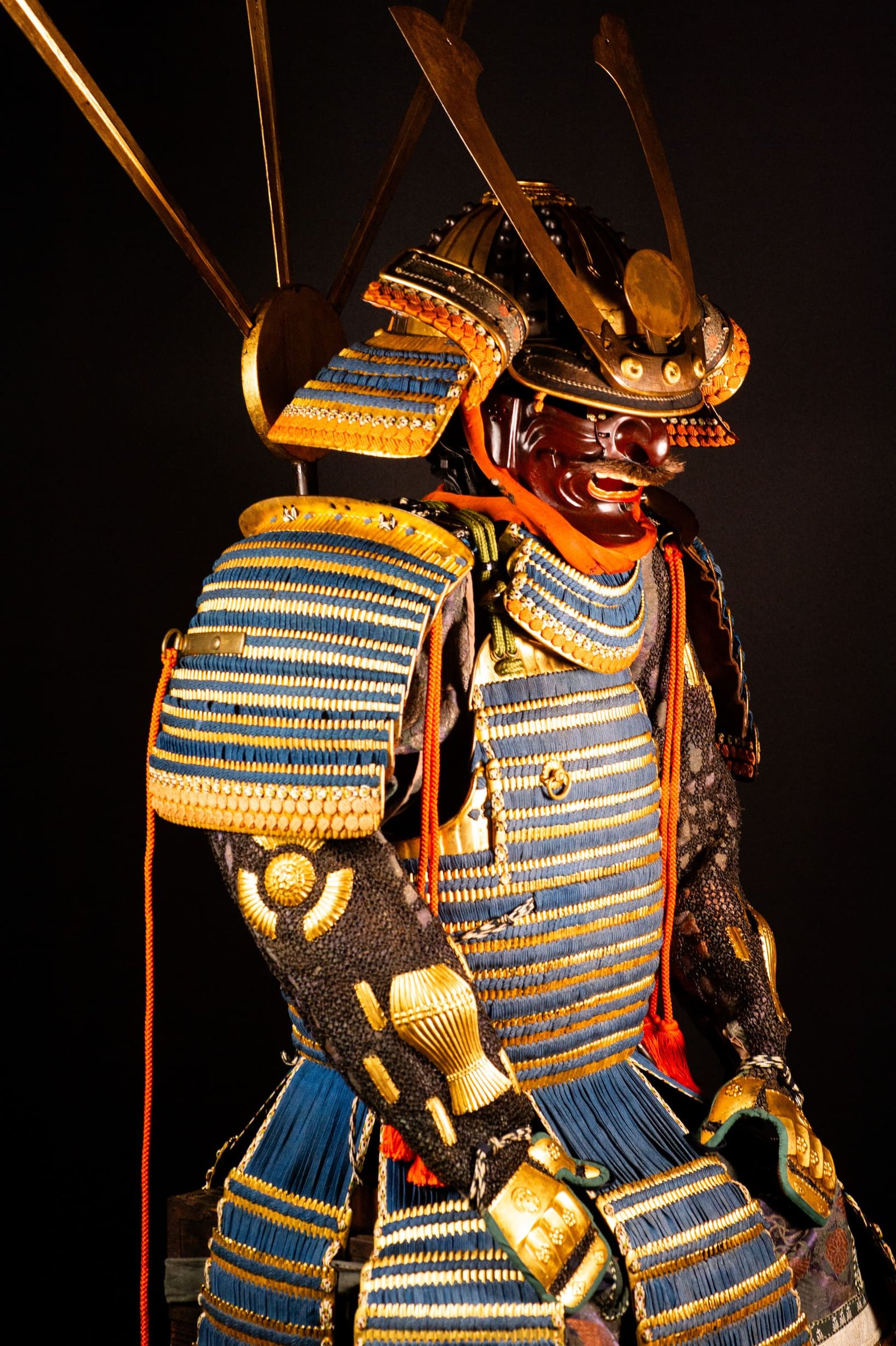
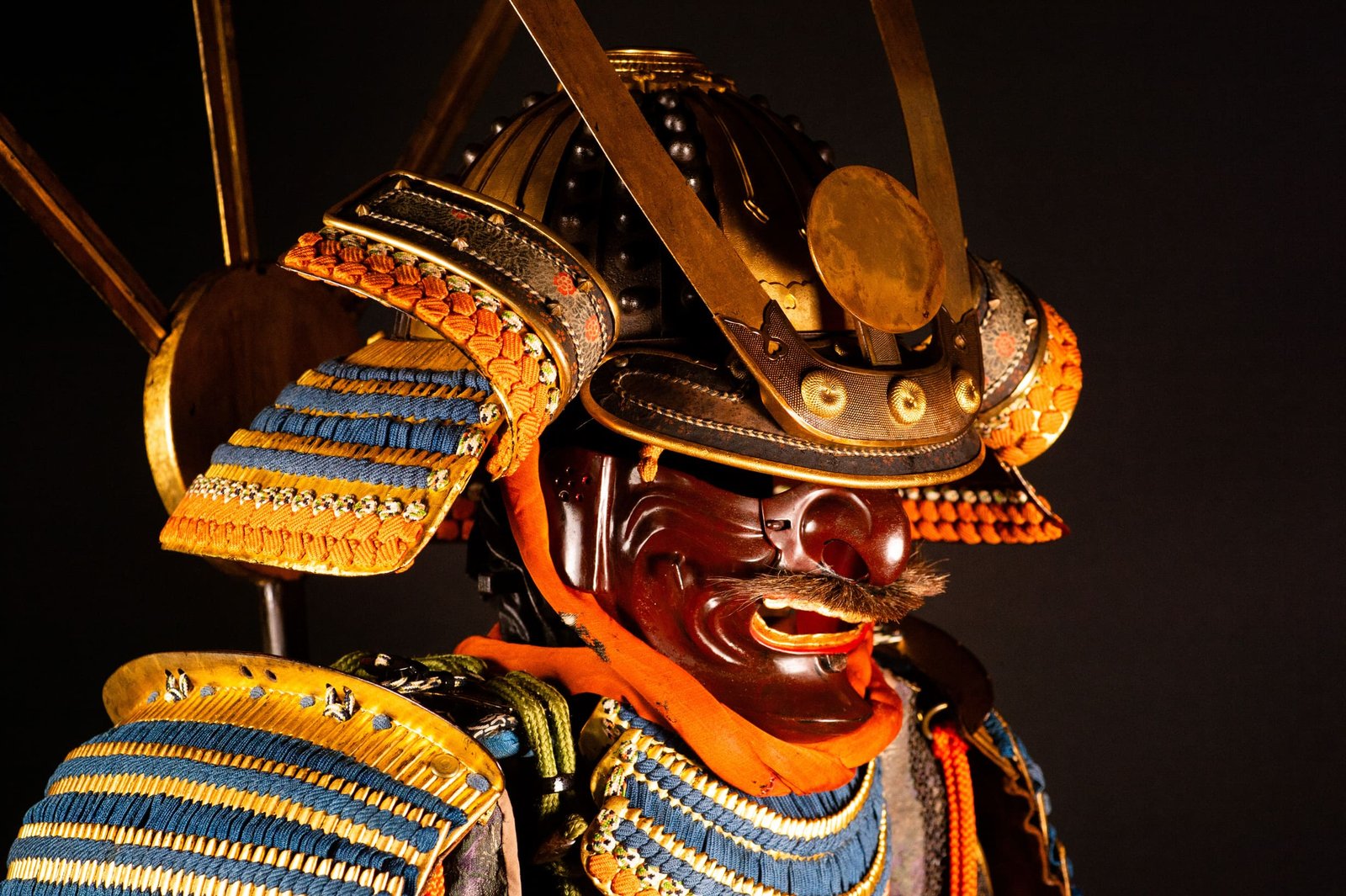
A complete 18th-century Edo-period gusoku, richly constructed with gilt lamellae closely laced in dark blue kon-ito silk in full kebiki odoshi. The armor is distinguished by its striking gold-and-indigo palette, bright orange hishinui edging, tall gilt kuwagata, reddish-brown lacquered menpō, and dramatic gilt sashimono.
The ensemble includes the kabuto, menpō, nodowa, dō, sode, kote, kusazuri, haidate, suneate, and its original wooden yoroi-bitsu storage chest. Excellent condition for its age, with only minor wear consistent with its antiquity.
EUROPEAN UNION - ALL DUTIES & TAXES COVERED
We cover all import duties, taxes and customs fees. No additional customs charges upon delivery.
Free shipping on all orders over €1,000.
INTERNATIONAL - PREFERENTIAL IMPORT RATES
In many countries, genuine antiques benefit from preferential tax treatment, with reduced import VAT and, in some cases, zero import duties.
Free worldwide shipping on all orders over €10,000.
1 in stock
Add to Compare
Add to Wishlist
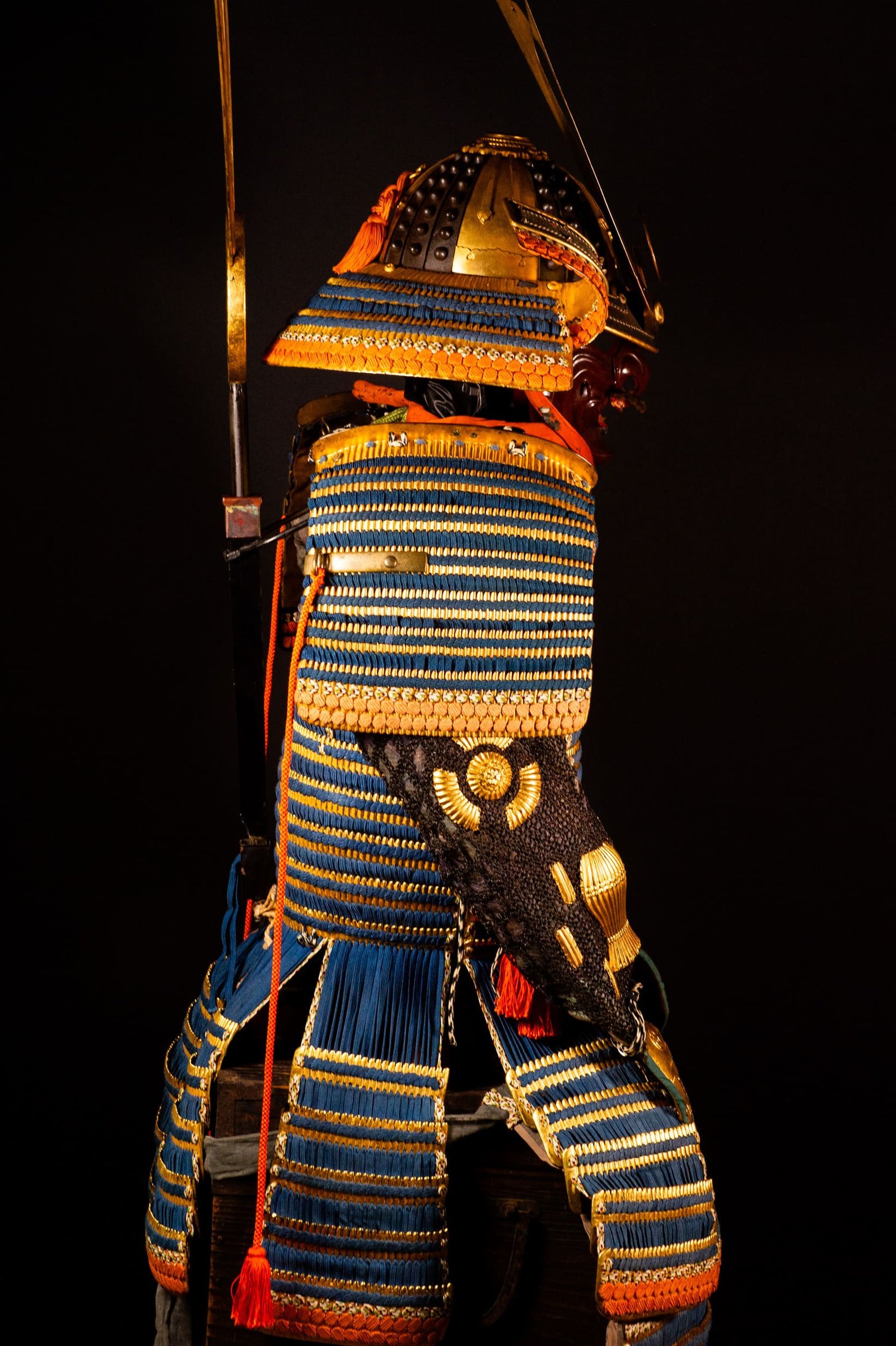
A complete Japanese gusoku from the Edo period, 18th century, distinguished by gilt lamellae closely laced in dark blue kon-ito silk in the full kebiki odoshi style. The dense blue lacing and exposed gold surfaces create a continuous rhythm of indigo and gilt across the helmet, cuirass, shoulder guards, skirt, and thigh defenses.
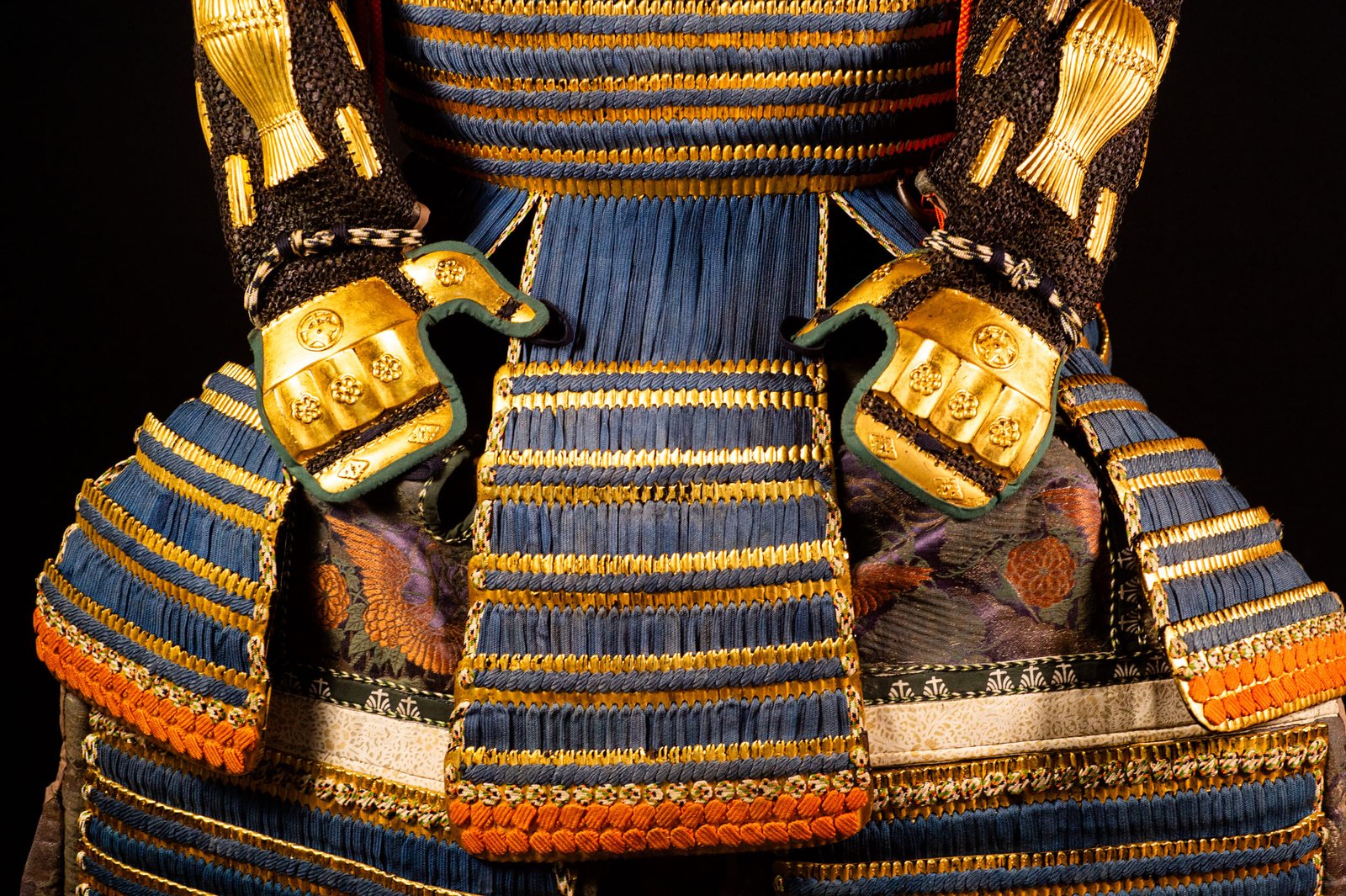
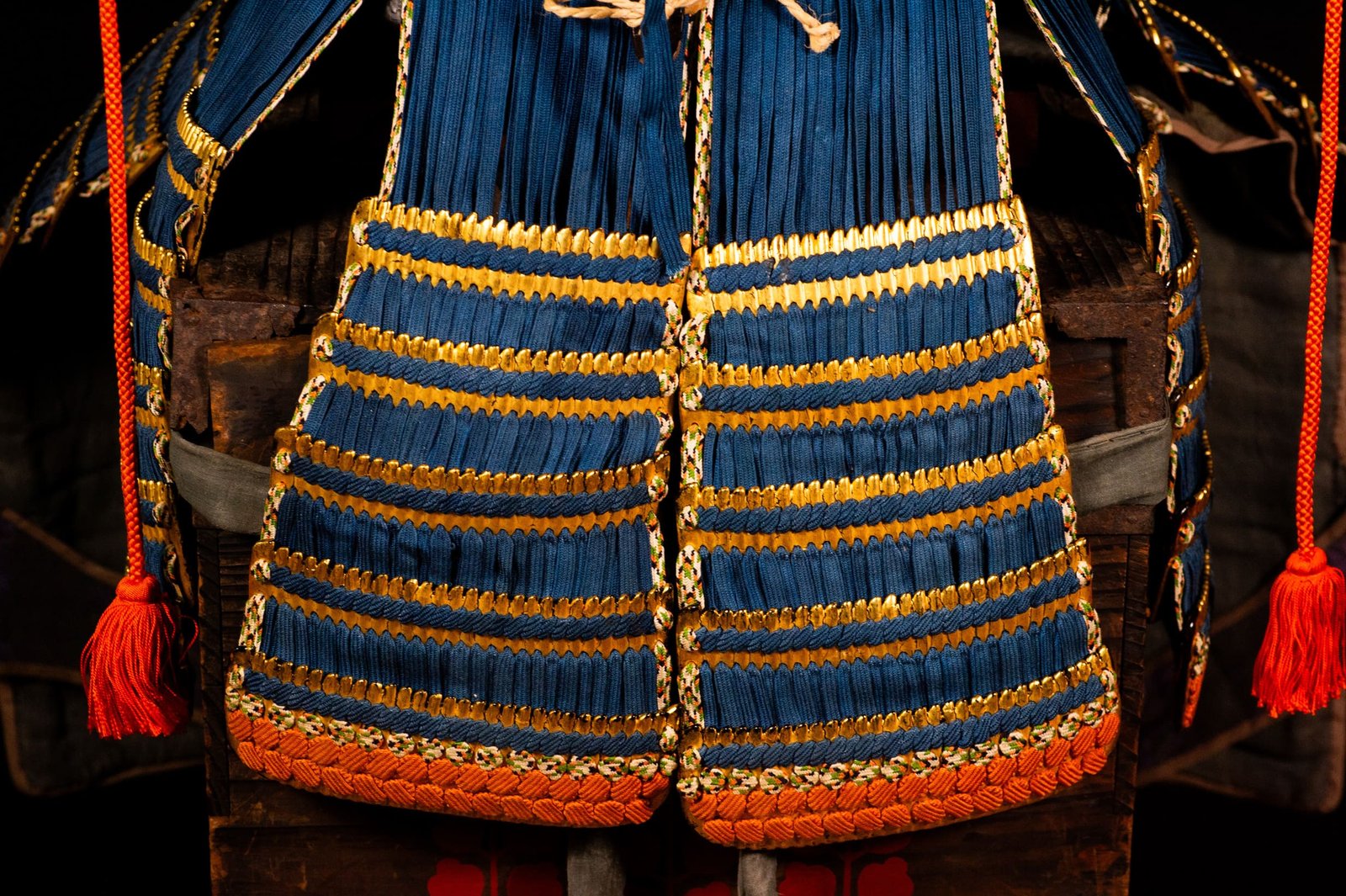
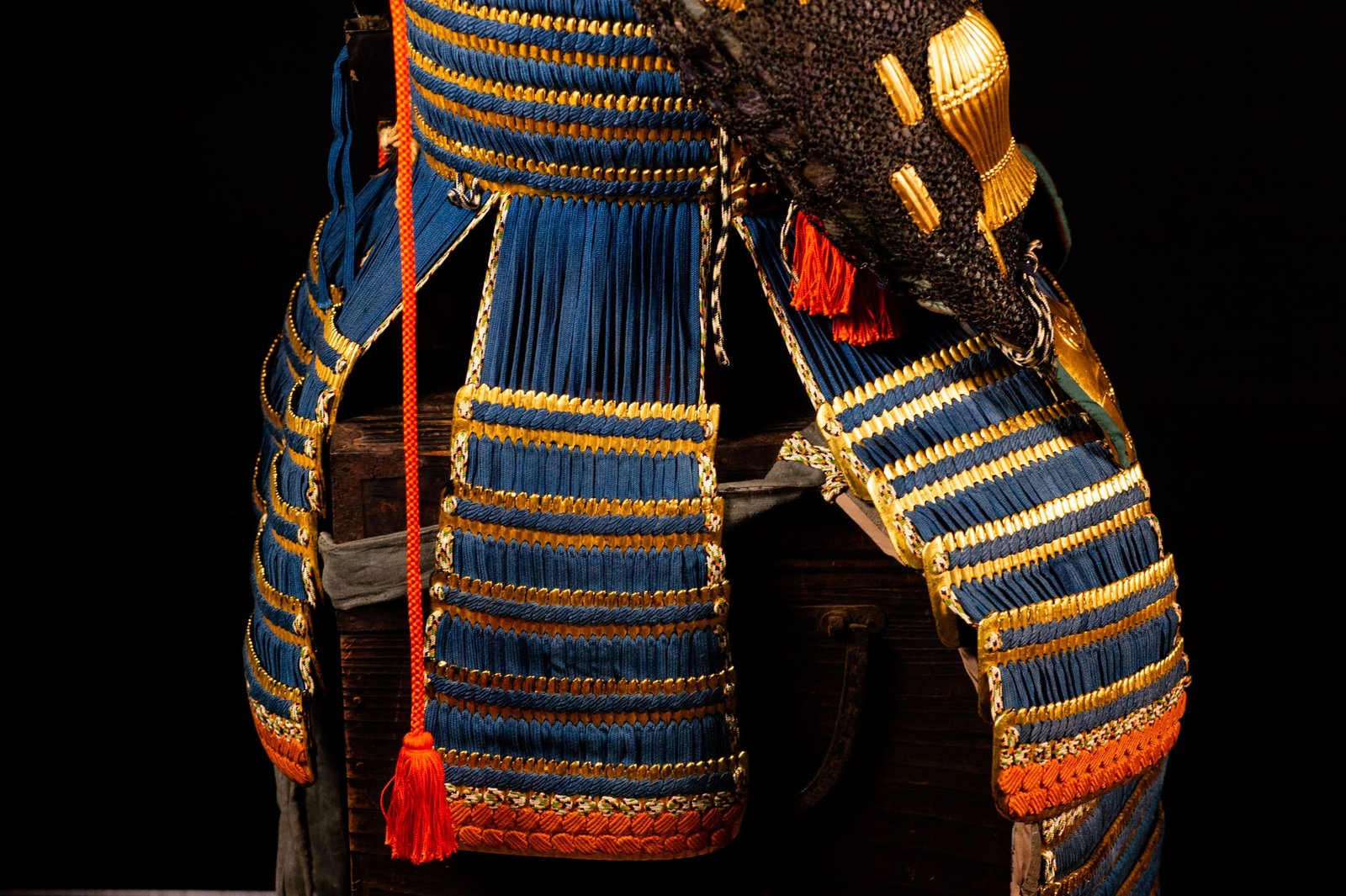
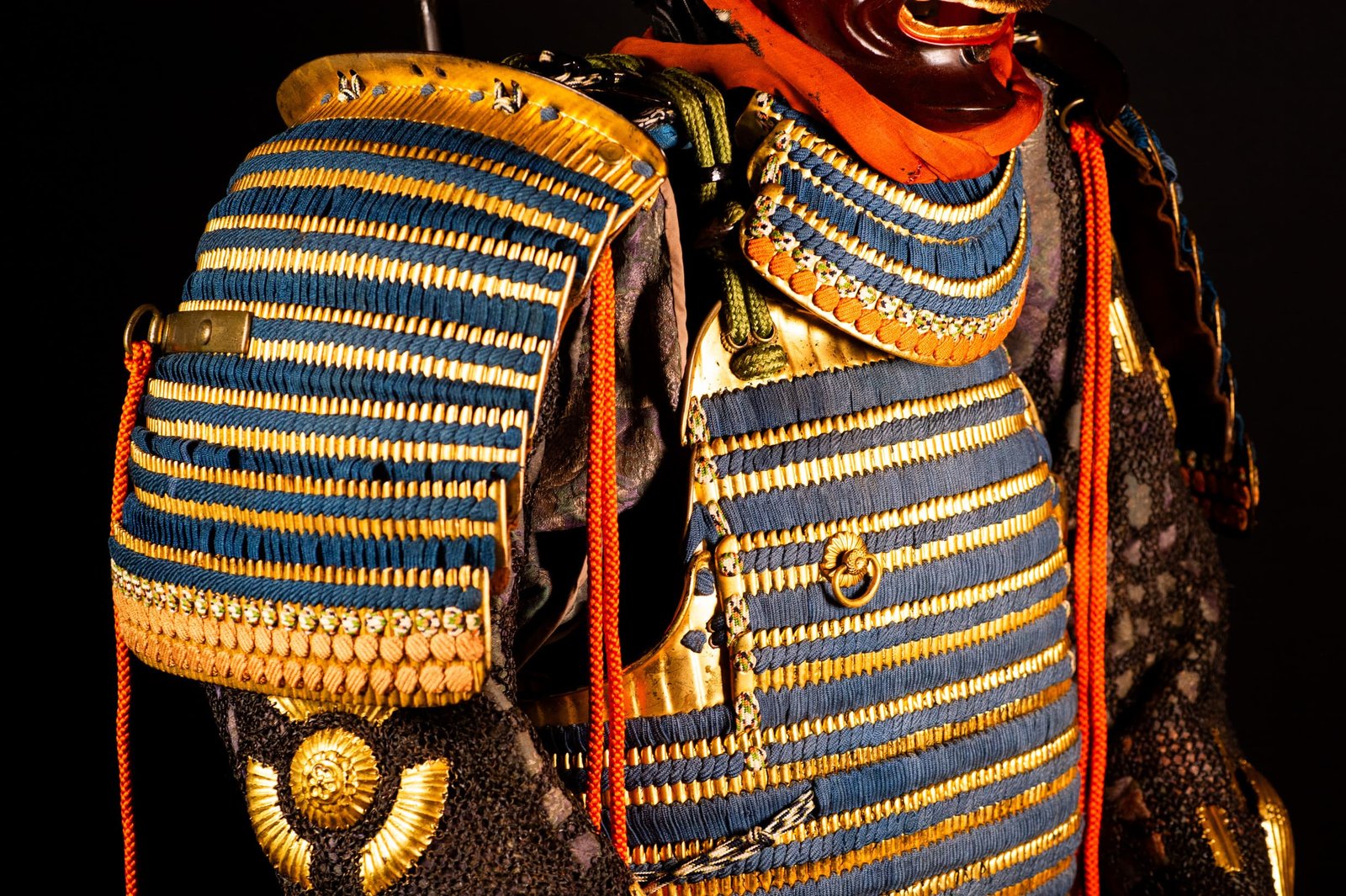
The lower rows of the principal sections are finished with bright orange hishinui cross-knots above multicolored braided mimi-ito edging. These warm accents recur throughout the ensemble, visually connecting the different components and giving the armor a particularly coherent appearance.
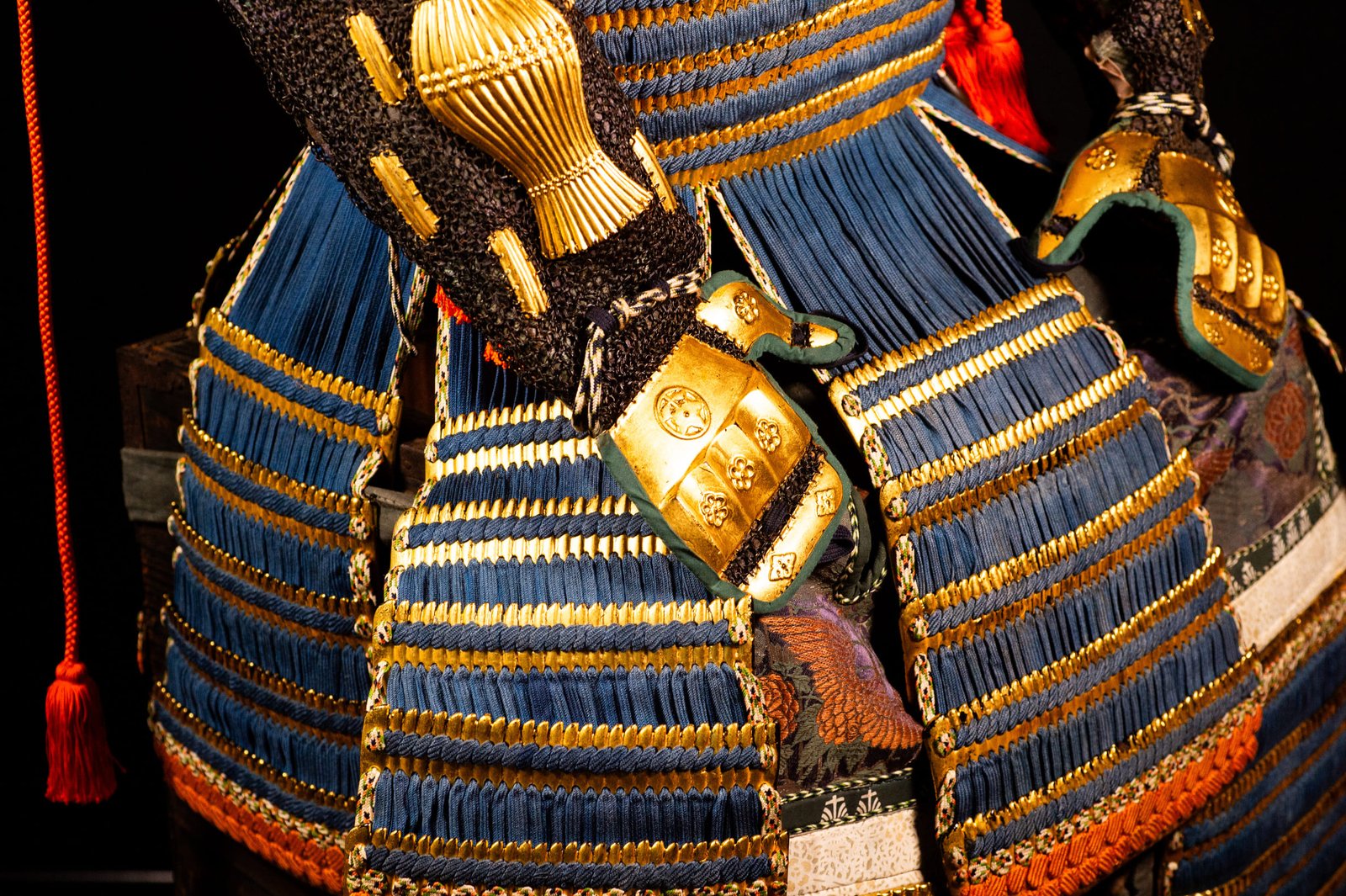
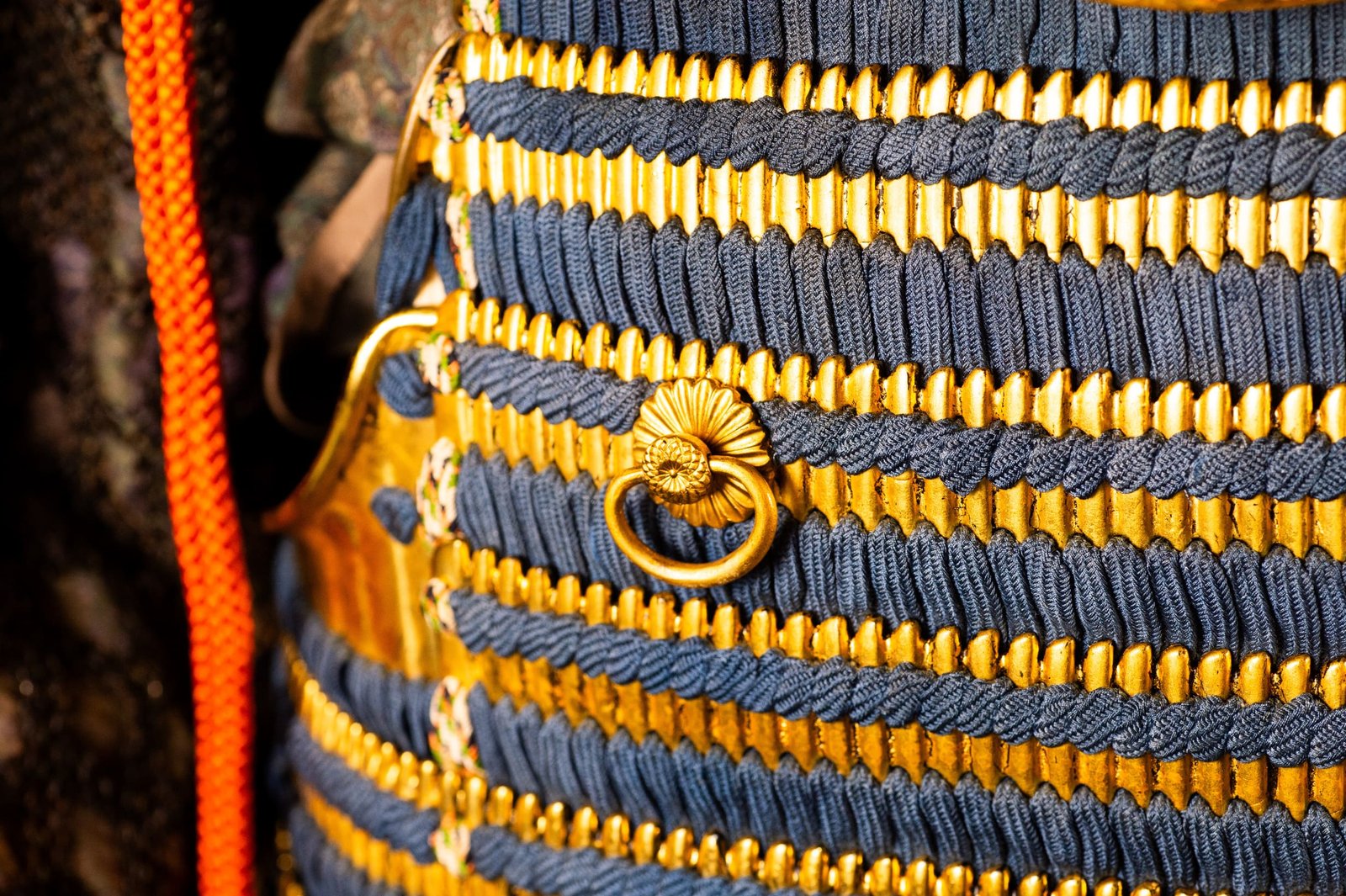
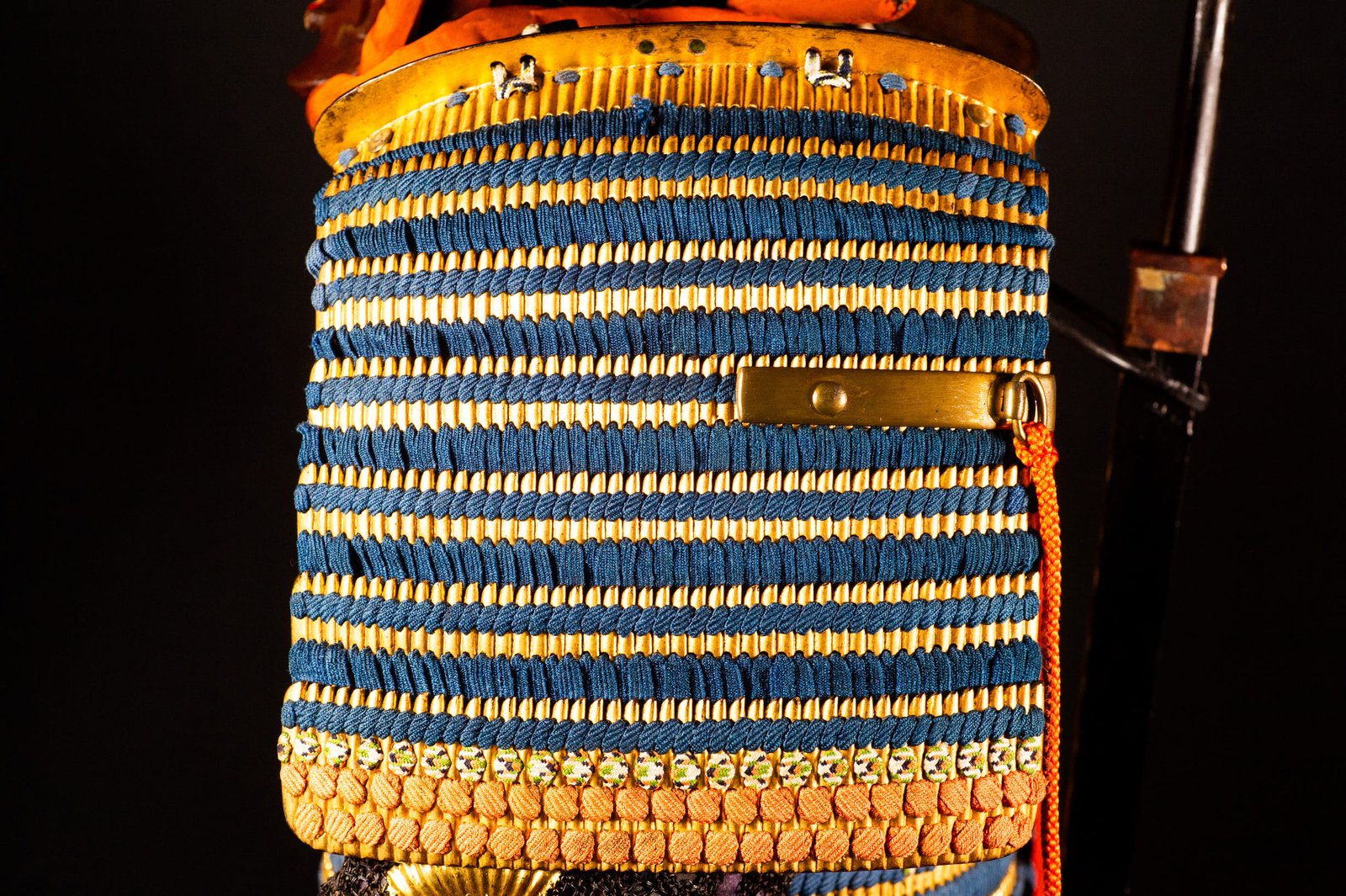
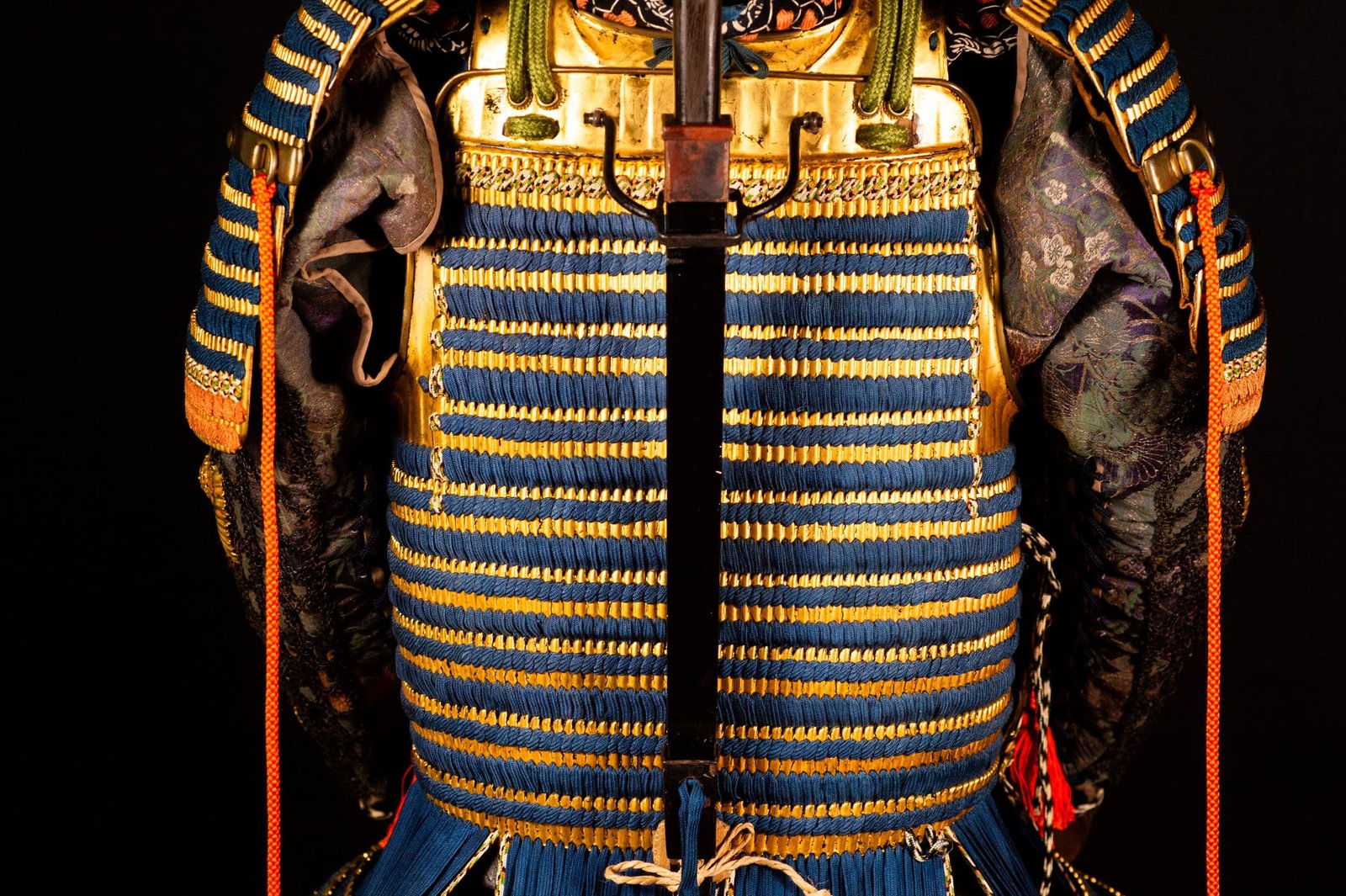
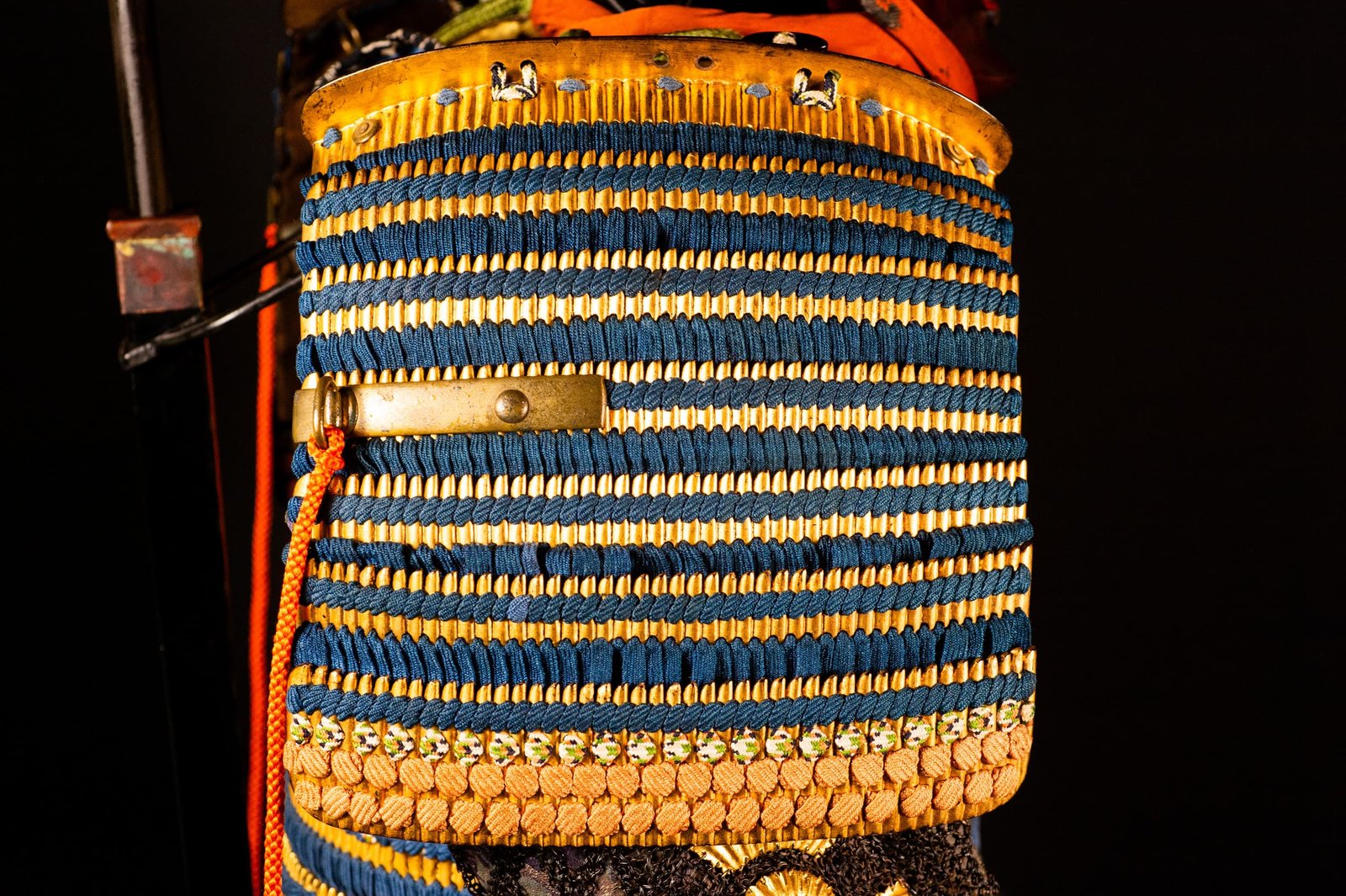
One of the defining characteristics of this armor is the extensive use of full kebiki odoshi. The silk cords are arranged closely together, covering much of the underlying structure while allowing narrow bands of gilt lamellae to remain visible between them.
The contrast between the dark blue kon-ito lacing and gold surfaces continues almost uninterrupted throughout the ensemble. Orange hishinui at the lower edges and multicolored mimi-ito provide a brighter border, framing each section without disrupting the overall blue-and-gold palette.
The effect is particularly striking when the armor is viewed as a complete ensemble, but the construction and repeated decorative details become even more apparent at close range.
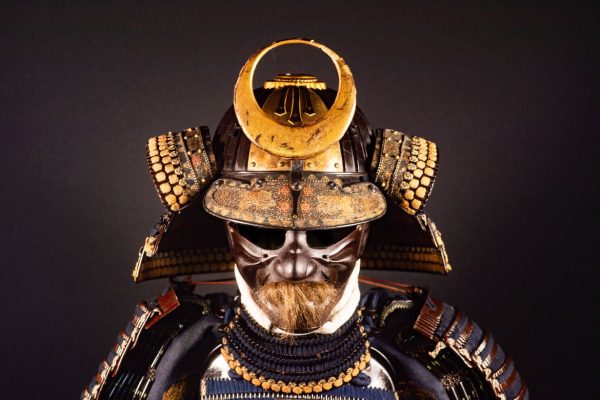
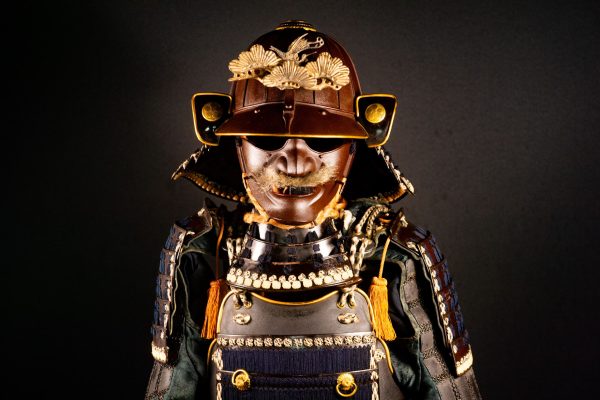
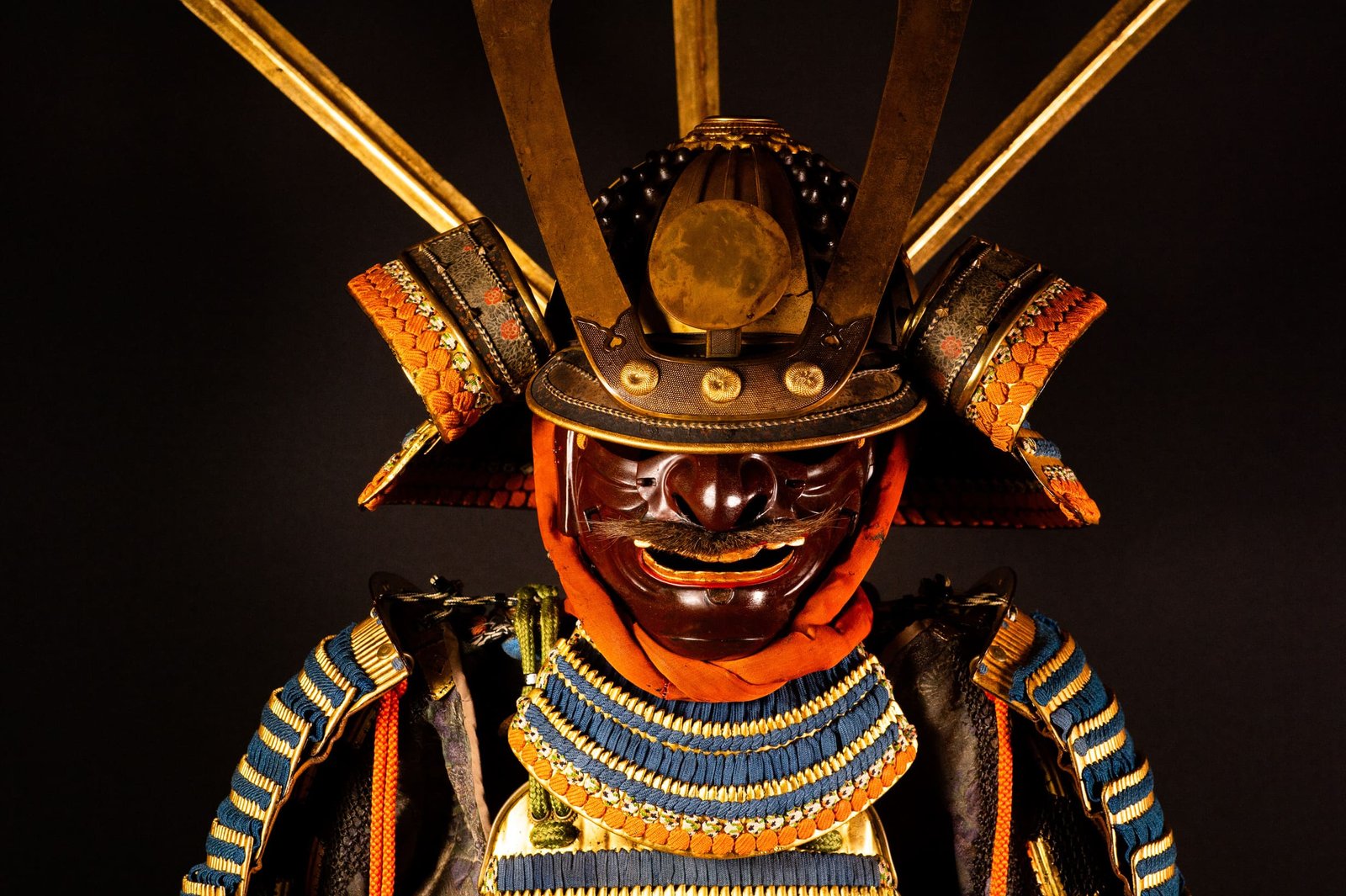
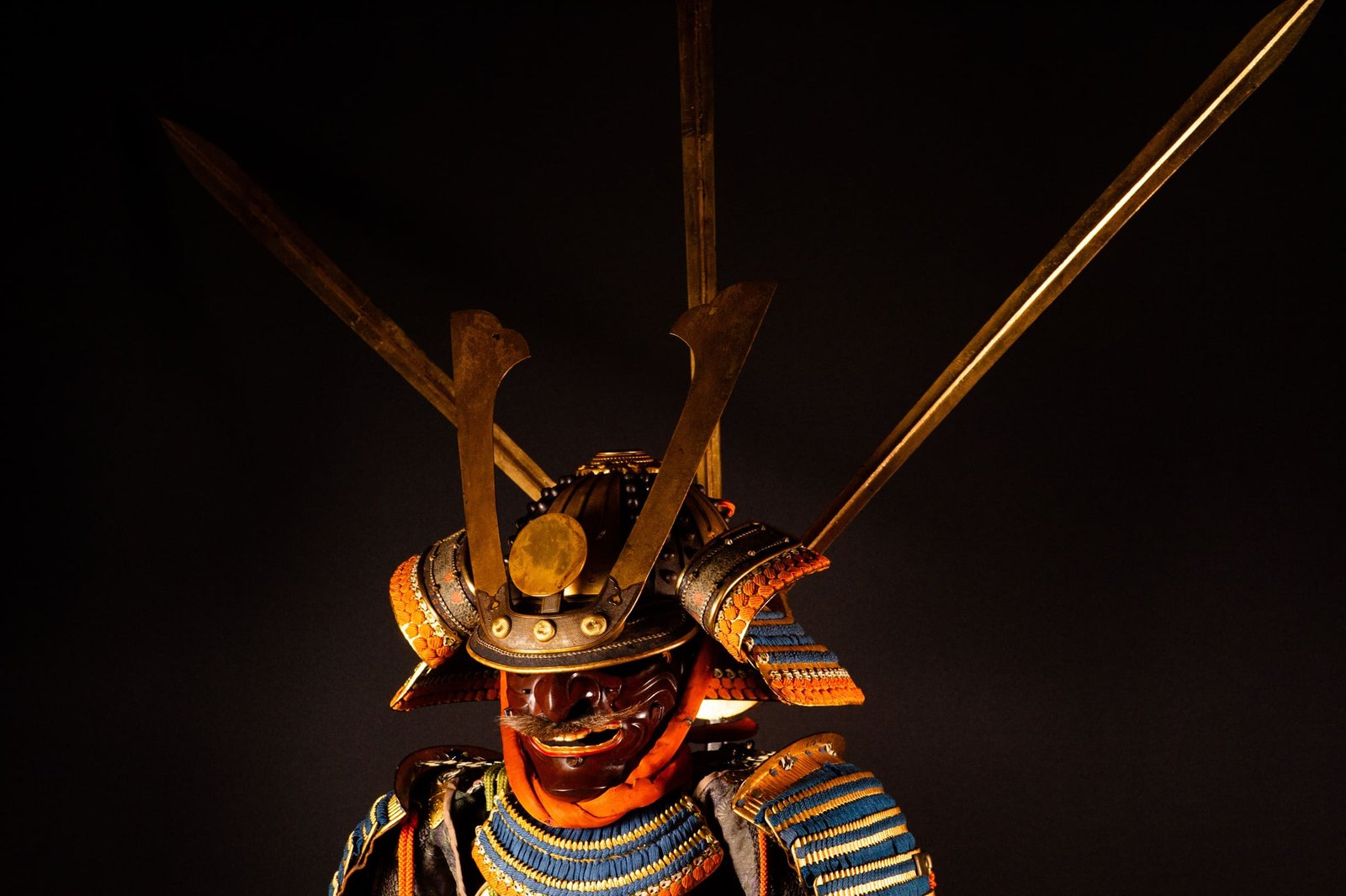
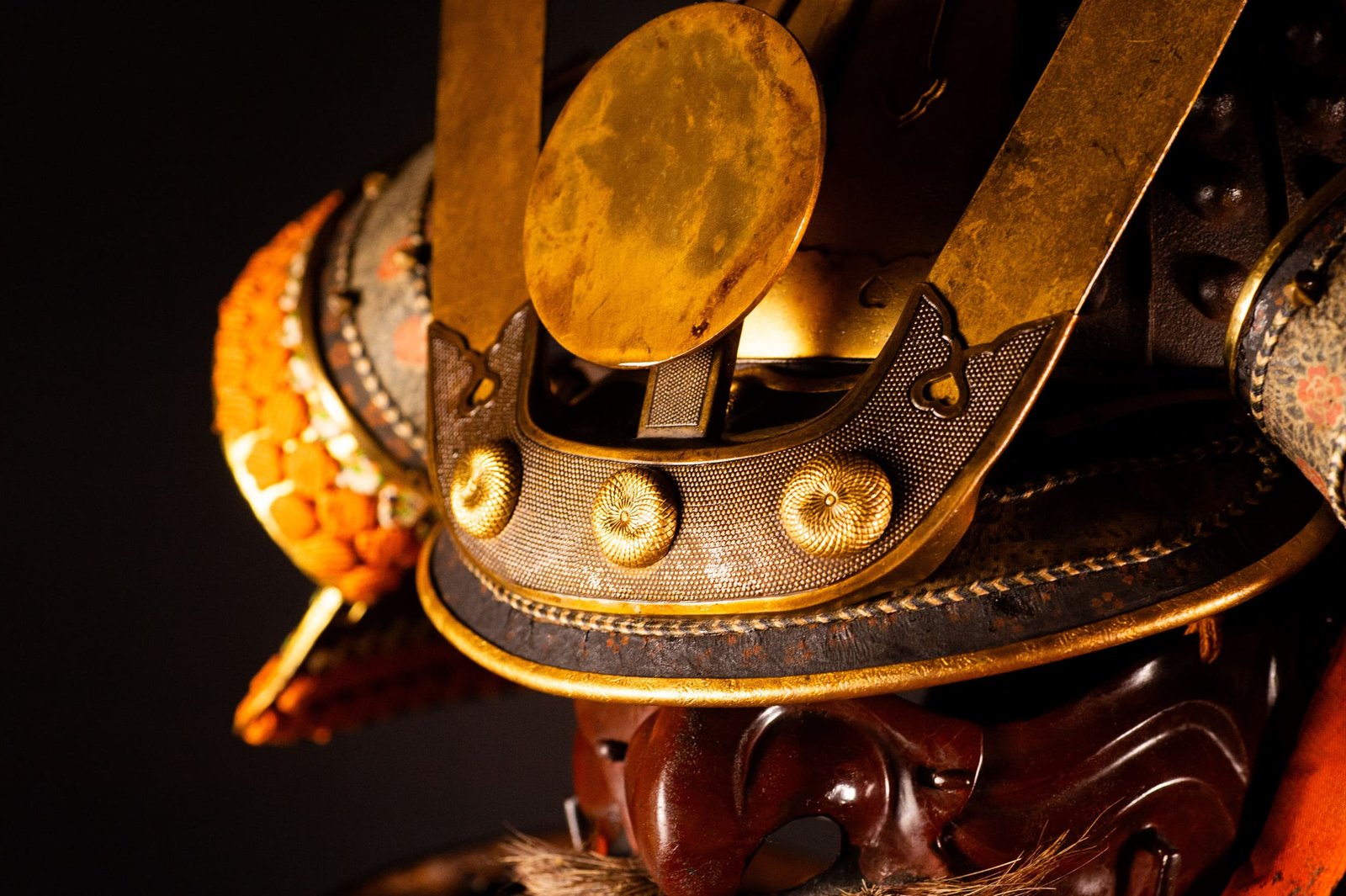
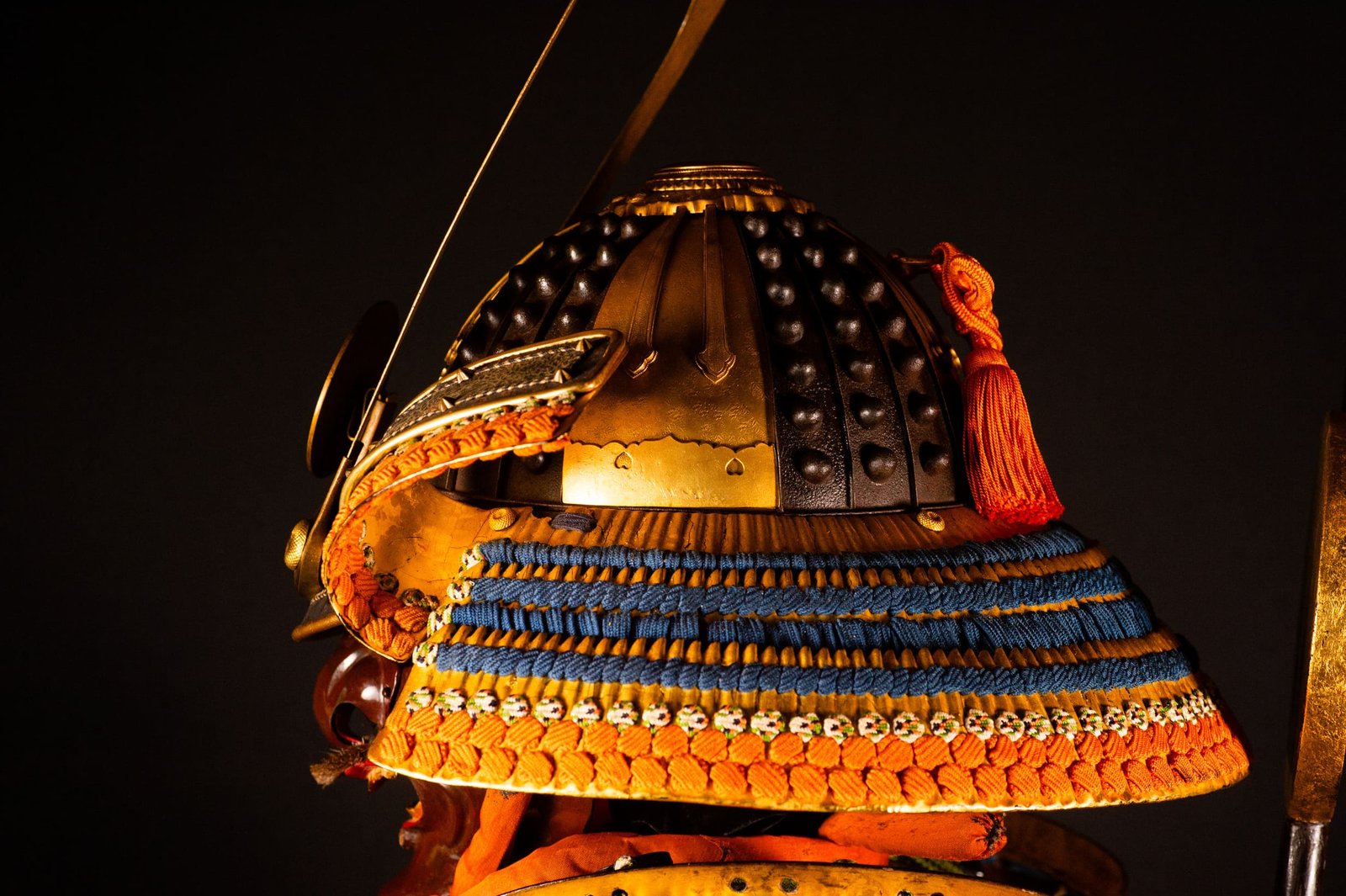
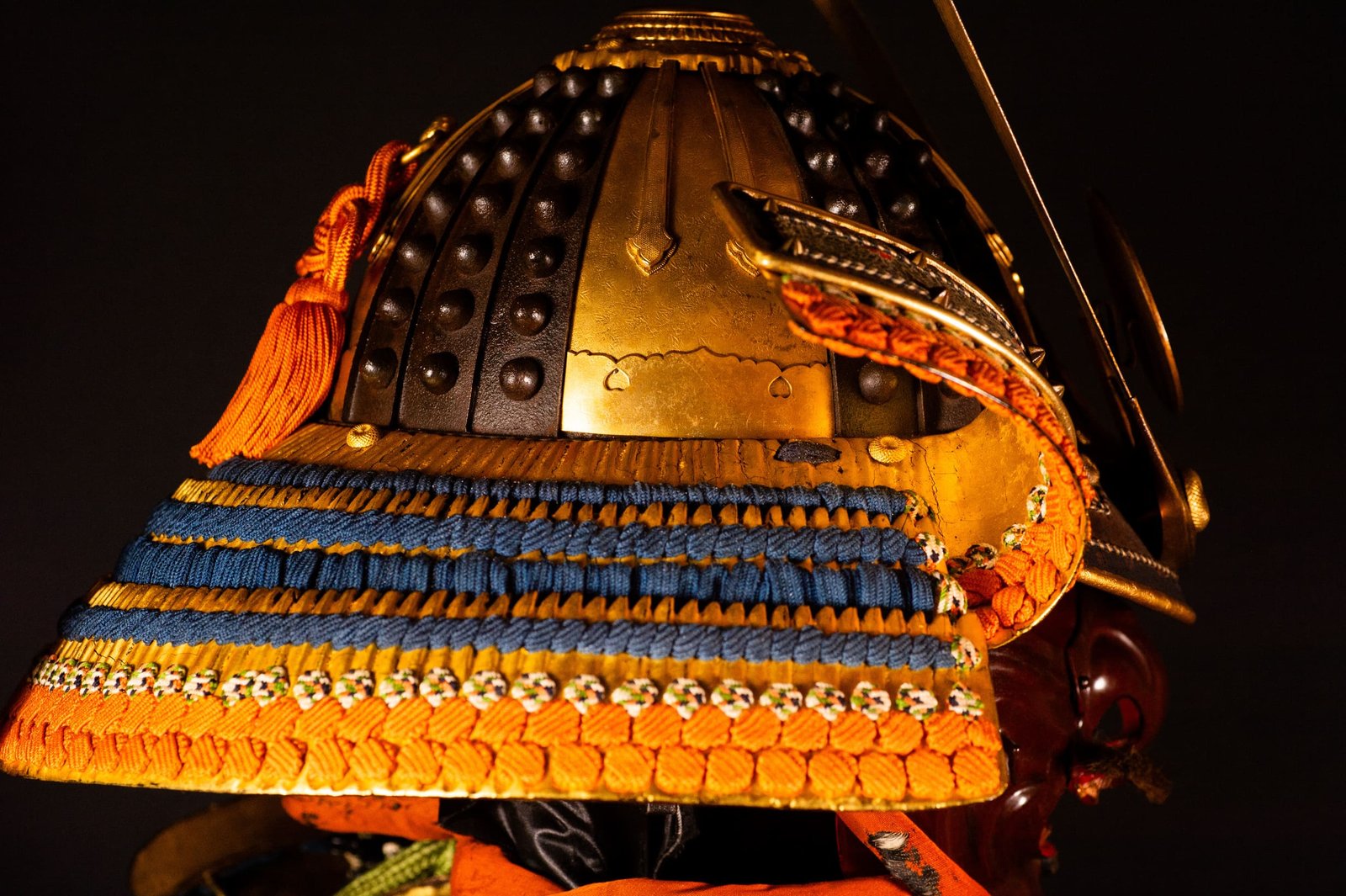
The kabuto has a helmet bowl combining rows of large, dark-lacquered standing rivets with gilt plates. At the crown is a gilt tehen kanamono, continuing the gold decoration into the uppermost part of the helmet.
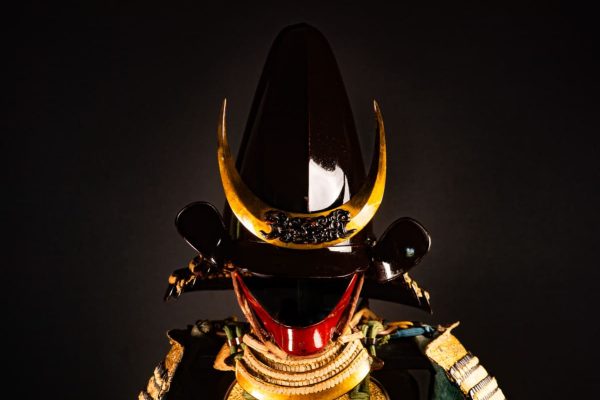
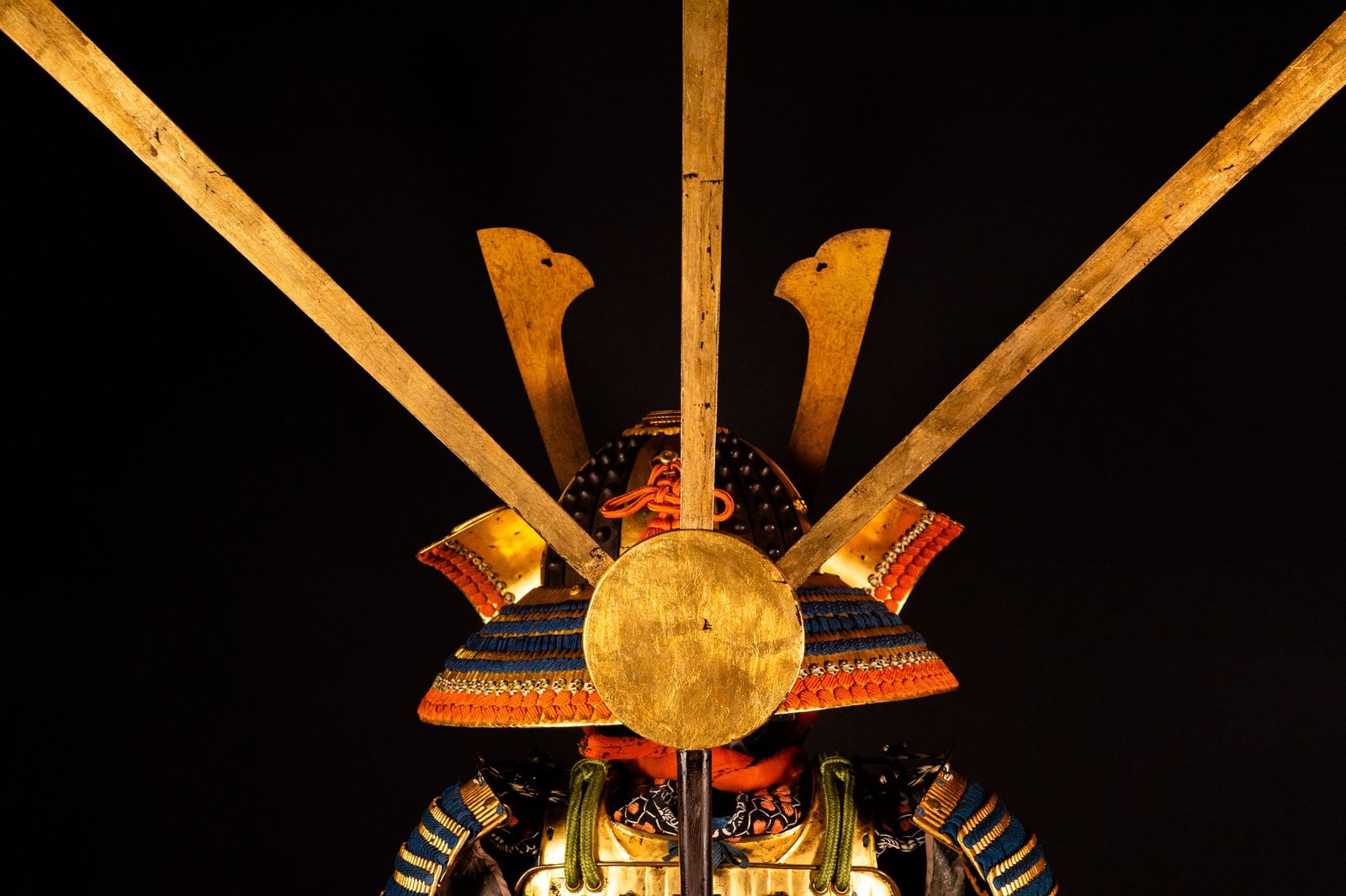
The mabizashi, or visor, is covered with a finely textured gilt plate set with three gilt rosettes. Above it rises a tall pair of gilt kuwagata with shaped finials, framing a large central gilt disc. Their height gives the helmet a particularly strong and imposing vertical presence.
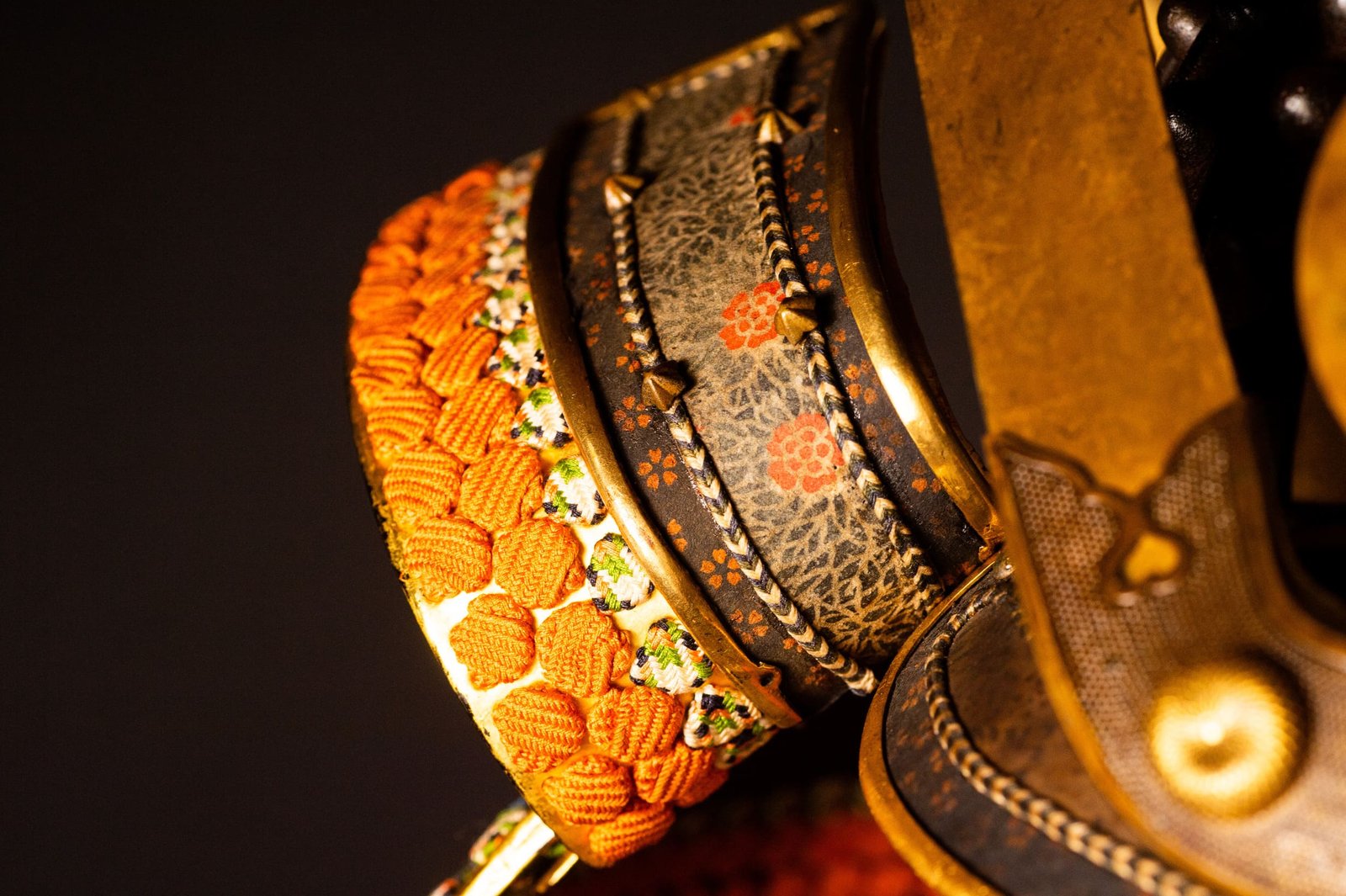
The turned-back fukigaeshi are faced with printed e-gawa leather decorated with small orange flowers. They are edged in gilt and fitted with small gilt studs.
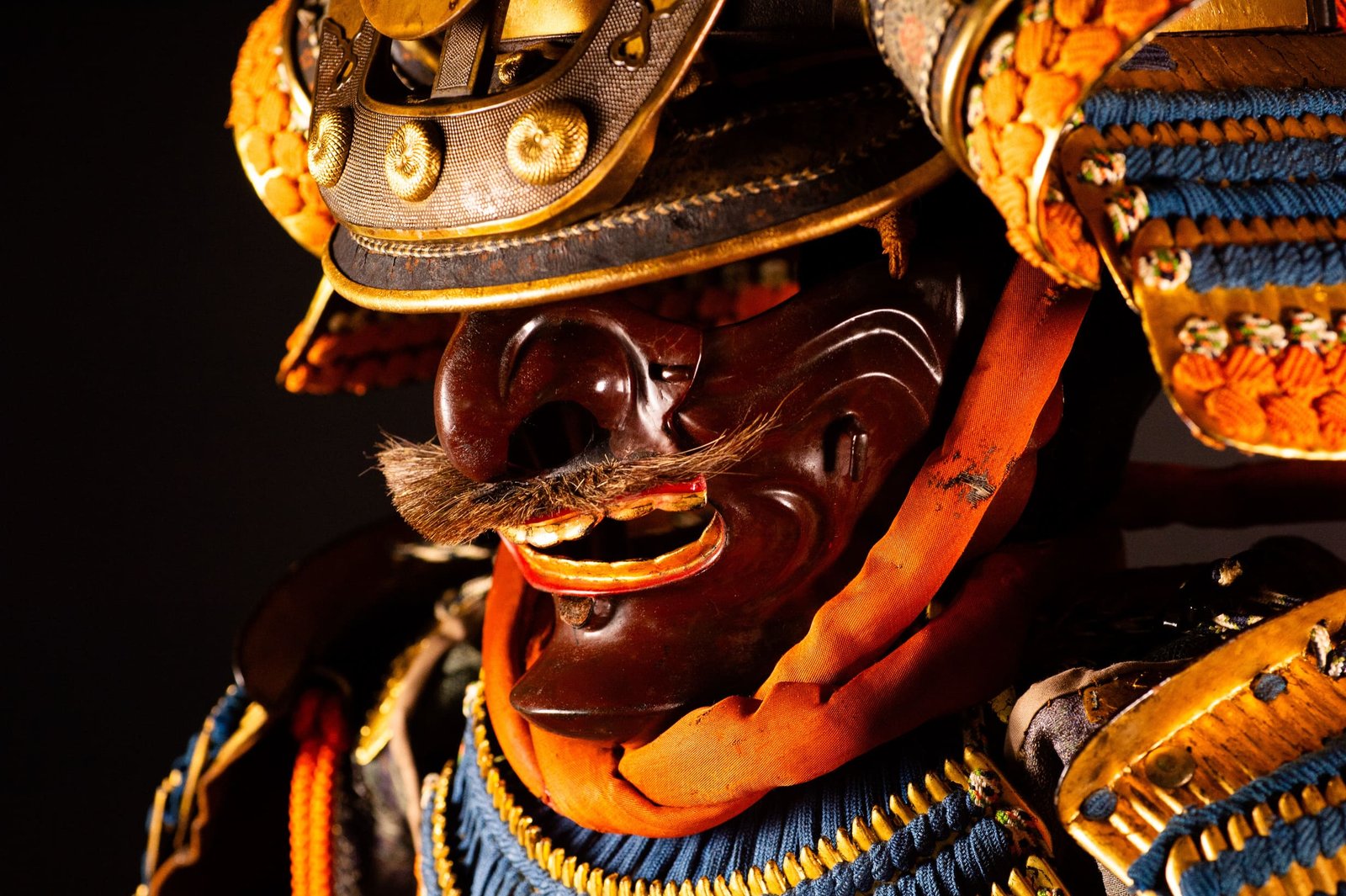
Below the bowl, the flaring shikoro is laced in the same dark blue kebiki odoshi as the rest of the armor and finished along its lower edge with bright orange hishinui.
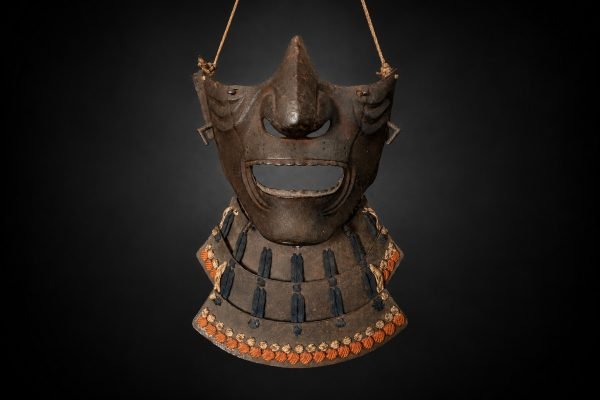
The menpō is lacquered in a deep reddish-brown tone and modeled with pronounced wrinkles and strong facial contours. A natural horsehair mustache extends across the upper lip, while the open mouth reveals gilt teeth.
The dark reddish-brown lacquer creates a strong contrast with the surrounding gold, blue, and orange elements. An orange textile is worn beneath the mask, visually connecting it to the orange lacing details repeated throughout the ensemble.
A laced nodowa protects the throat below the mask.
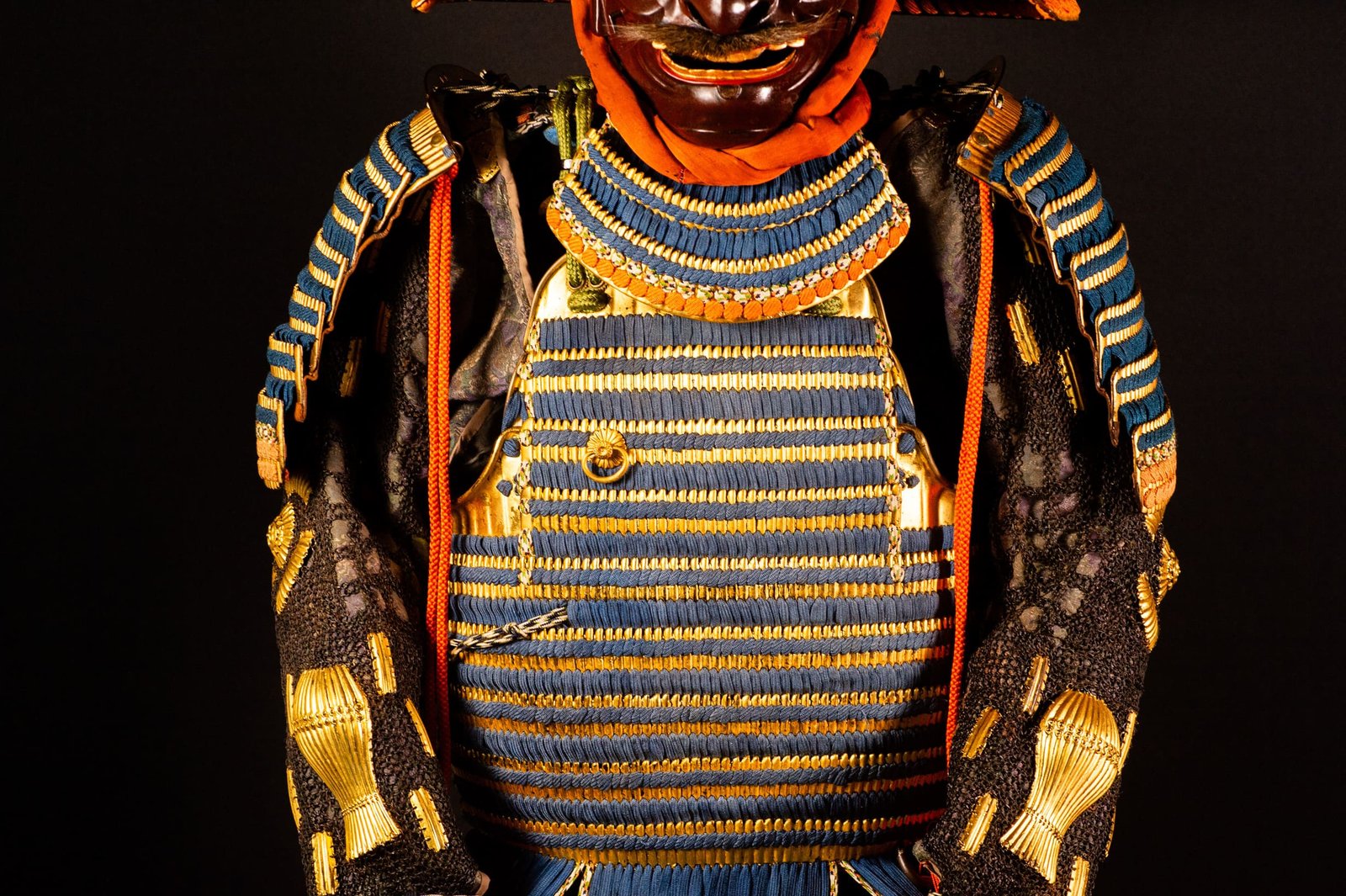
The dō, or cuirass, is laced throughout in full kebiki odoshi, with closely arranged dark blue silk cords over gilt lamellae. The repeated narrow lines of exposed gold create a regular horizontal pattern across the chest.
The upper section is fitted with gilt kanmuri-ita. At the front, a gilt ring is set on a chrysanthemum-shaped mount, providing a restrained decorative focal point against the dense lacing.
At the back are fittings for the sashimono, together with an agemaki bow finished with an orange silk tassel.
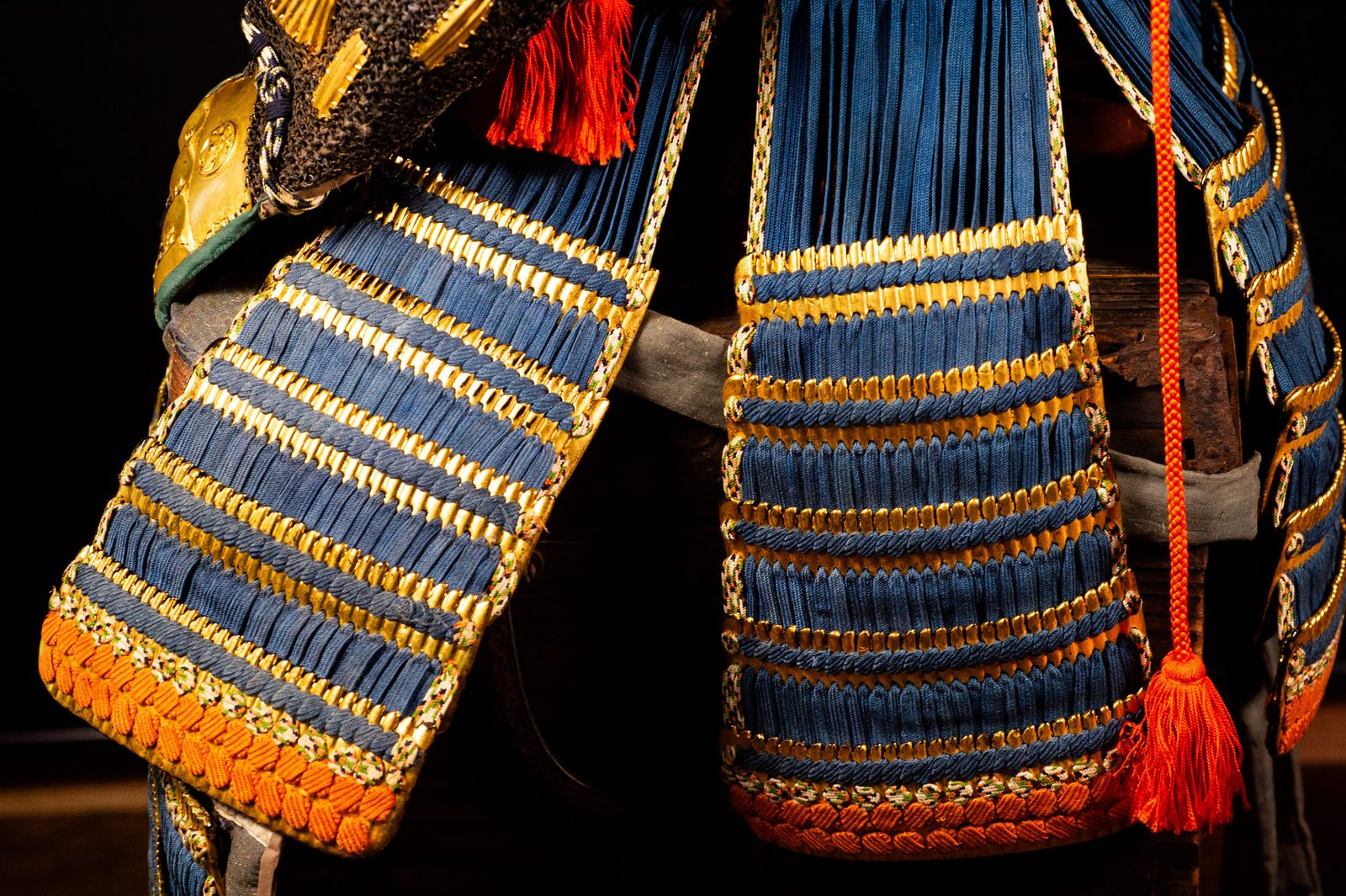
The large sode shoulder guards repeat the same gilt-and-blue construction as the cuirass. Their broad surfaces are closely laced in dark blue kebiki odoshi, with gilt plates fitted at the upper section.
The lower edges are finished in bright orange hishinui above multicolored braided edging, continuing the decorative treatment found throughout the armor.
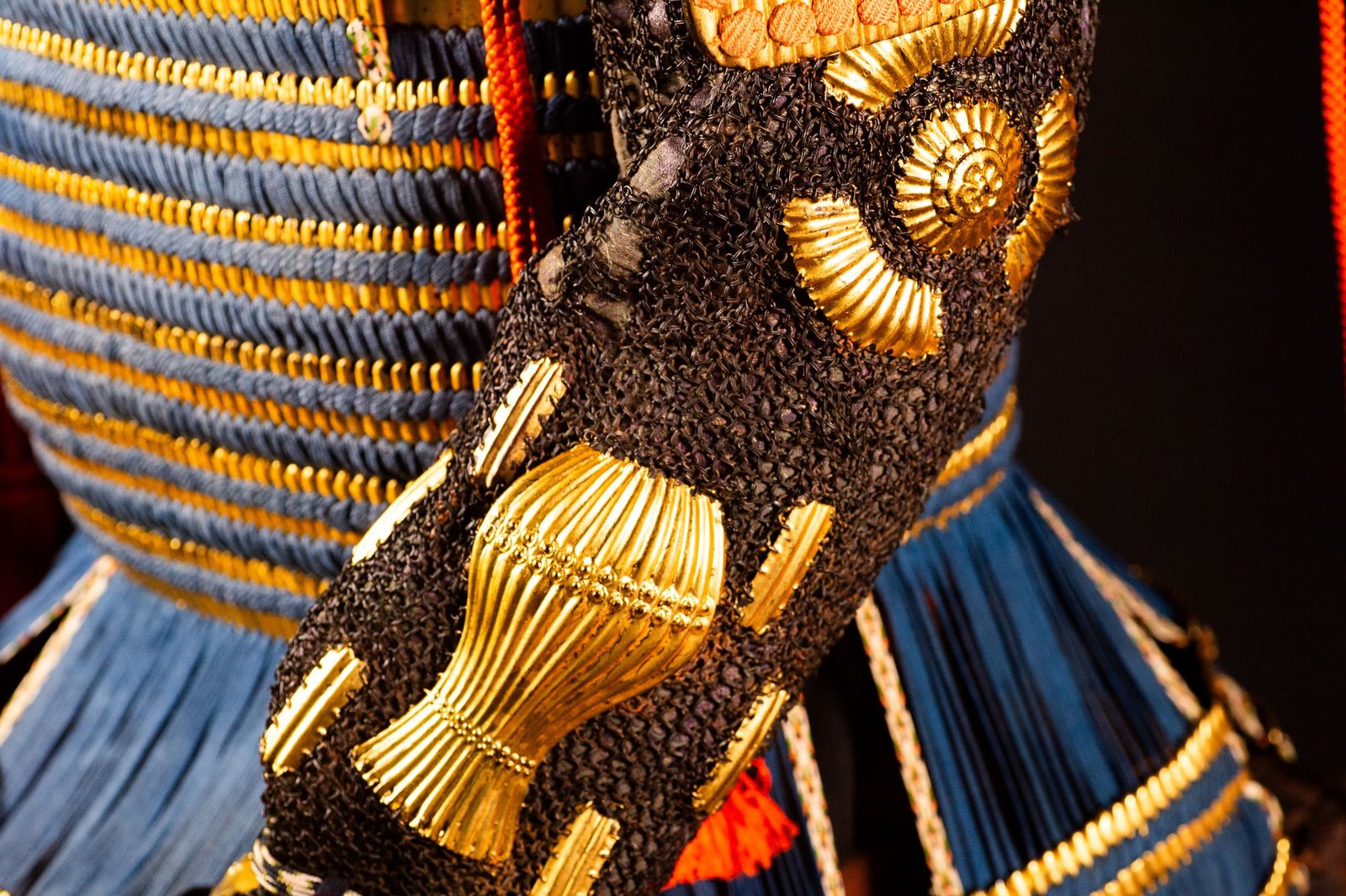
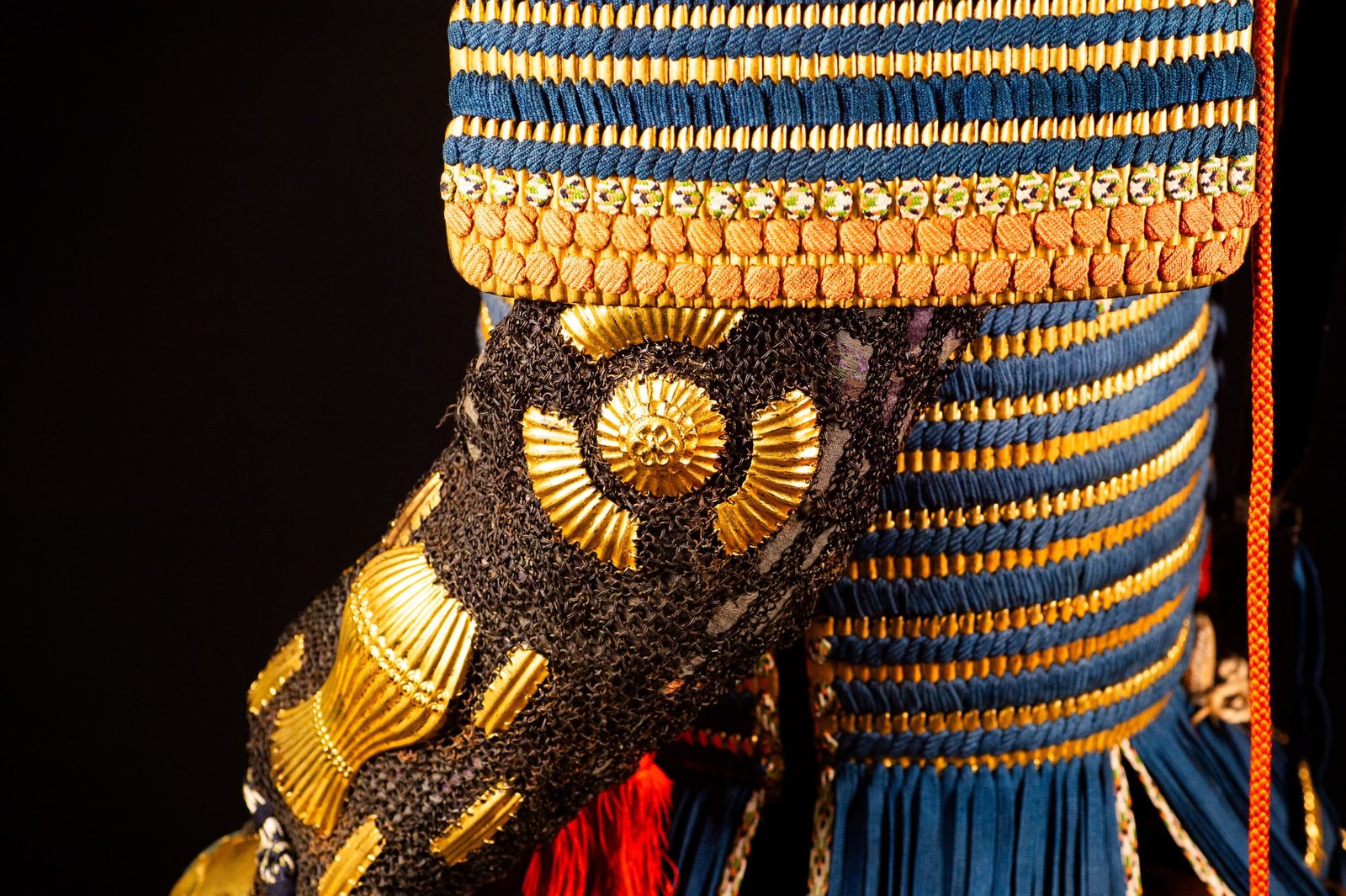
The kote, or armored sleeves, are constructed from fine black kusari chain mail laid over patterned brocade.
The sleeves are decorated with gilt metal plates in several forms. Most distinctive are the large hyōtan, or gourd-shaped, fittings, accompanied by elongated gilt bars and a round gilt chrysanthemum plate on the upper arm.
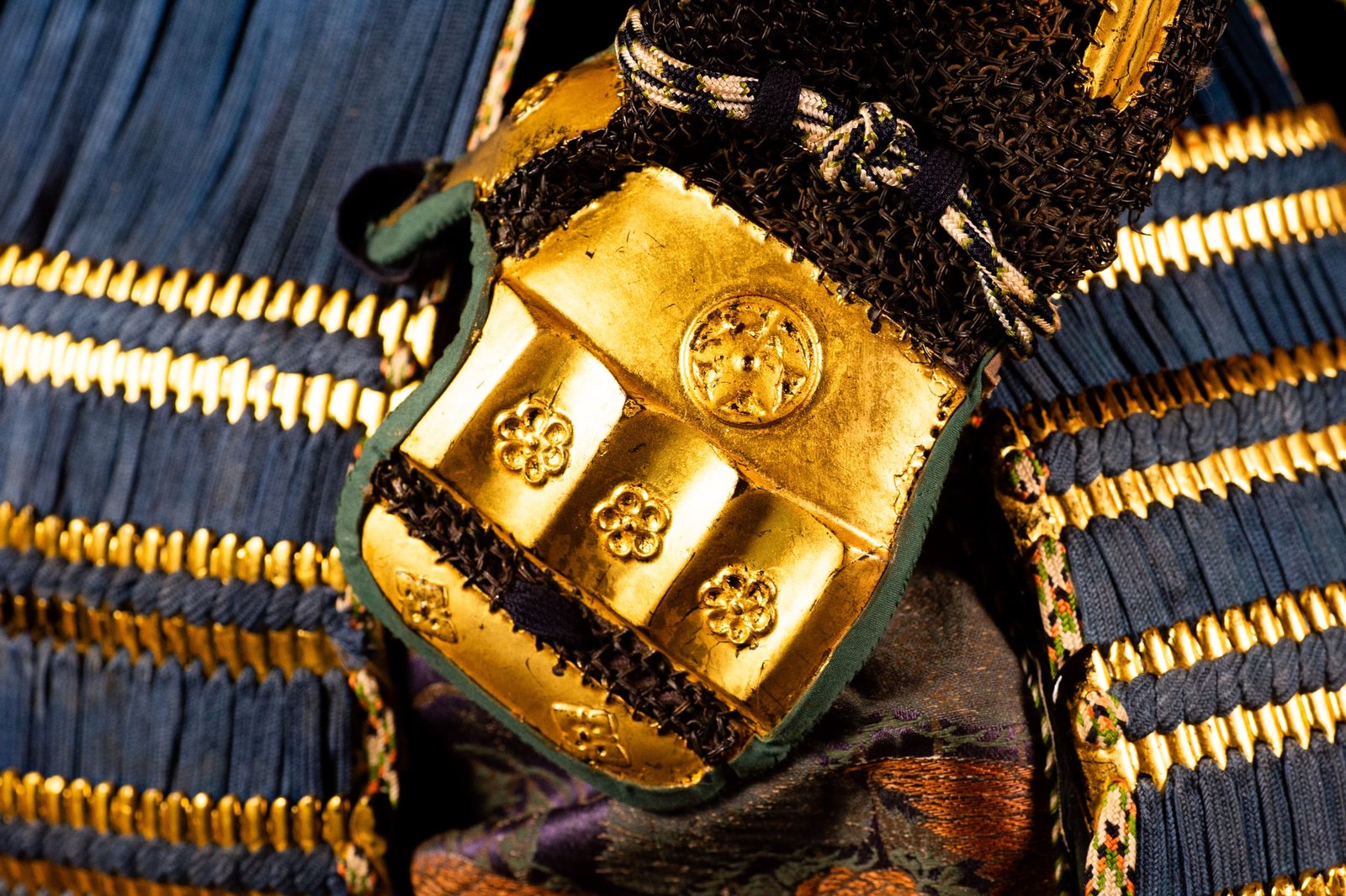
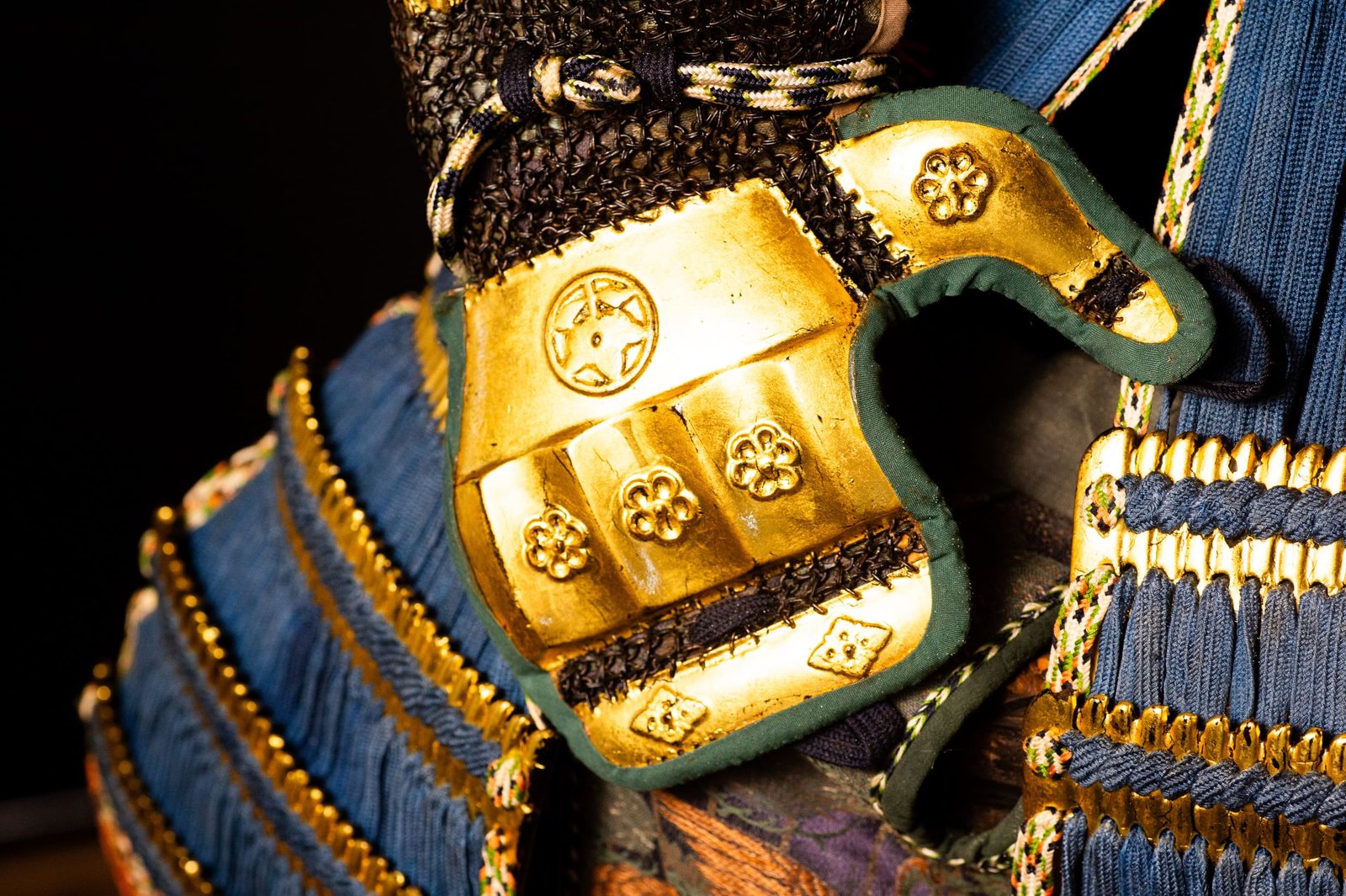
The tekkō protecting the backs of the hands are also gilt. They are embossed with a crest within a roundel and smaller floral motifs, and are finished with green textile binding around the edges.
The kusazuri, or skirt defenses, descend from the cuirass in long, flexible sections. They are closely laced to match the dō, continuing the dark blue and gilt pattern into the lower part of the armor.
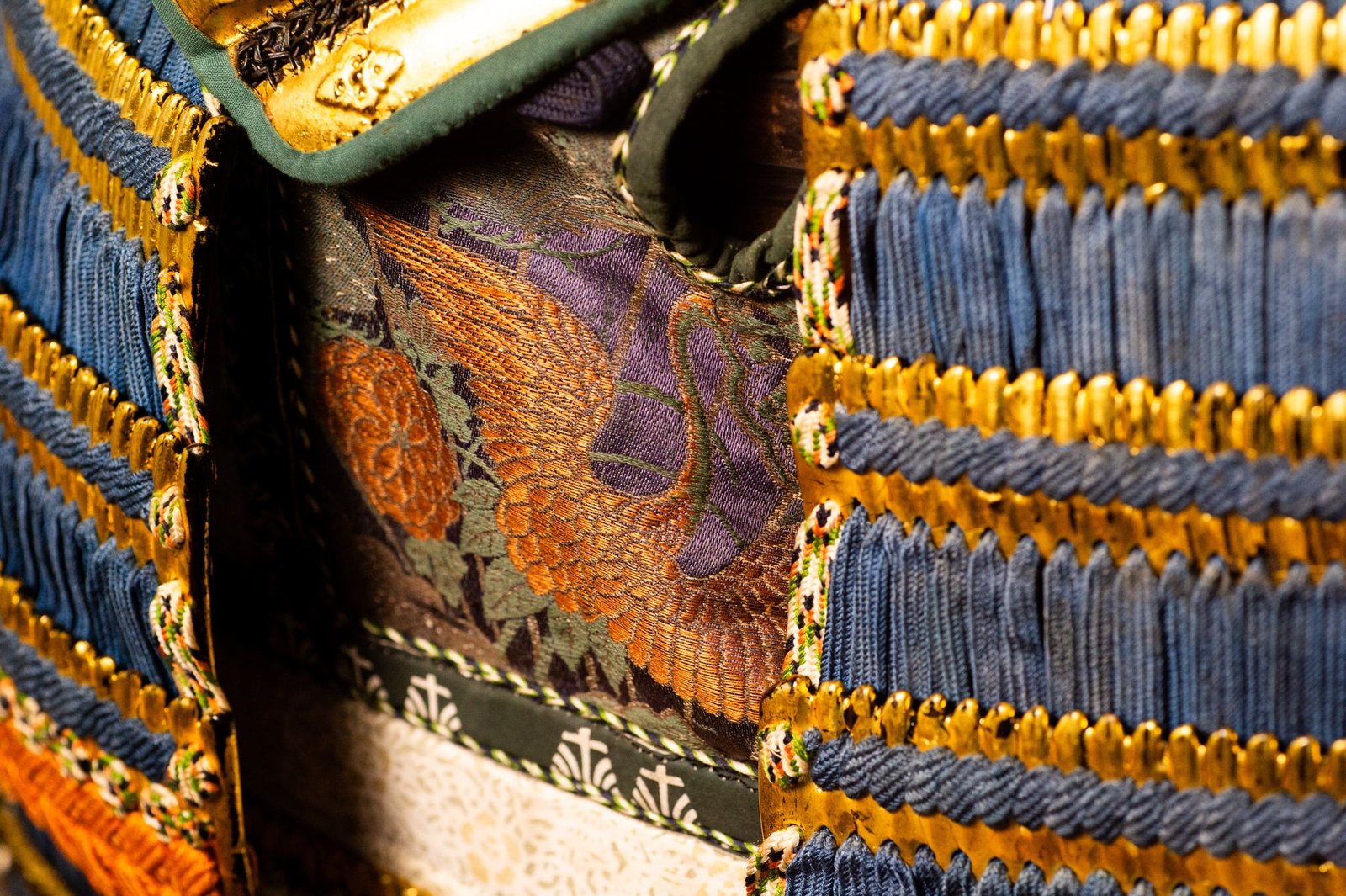
Beneath them, the haidate protect the thighs. Their construction continues the same lacing over a rich brocade ground woven with flowers and birds, introducing a more textile-rich decorative surface below the cuirass.
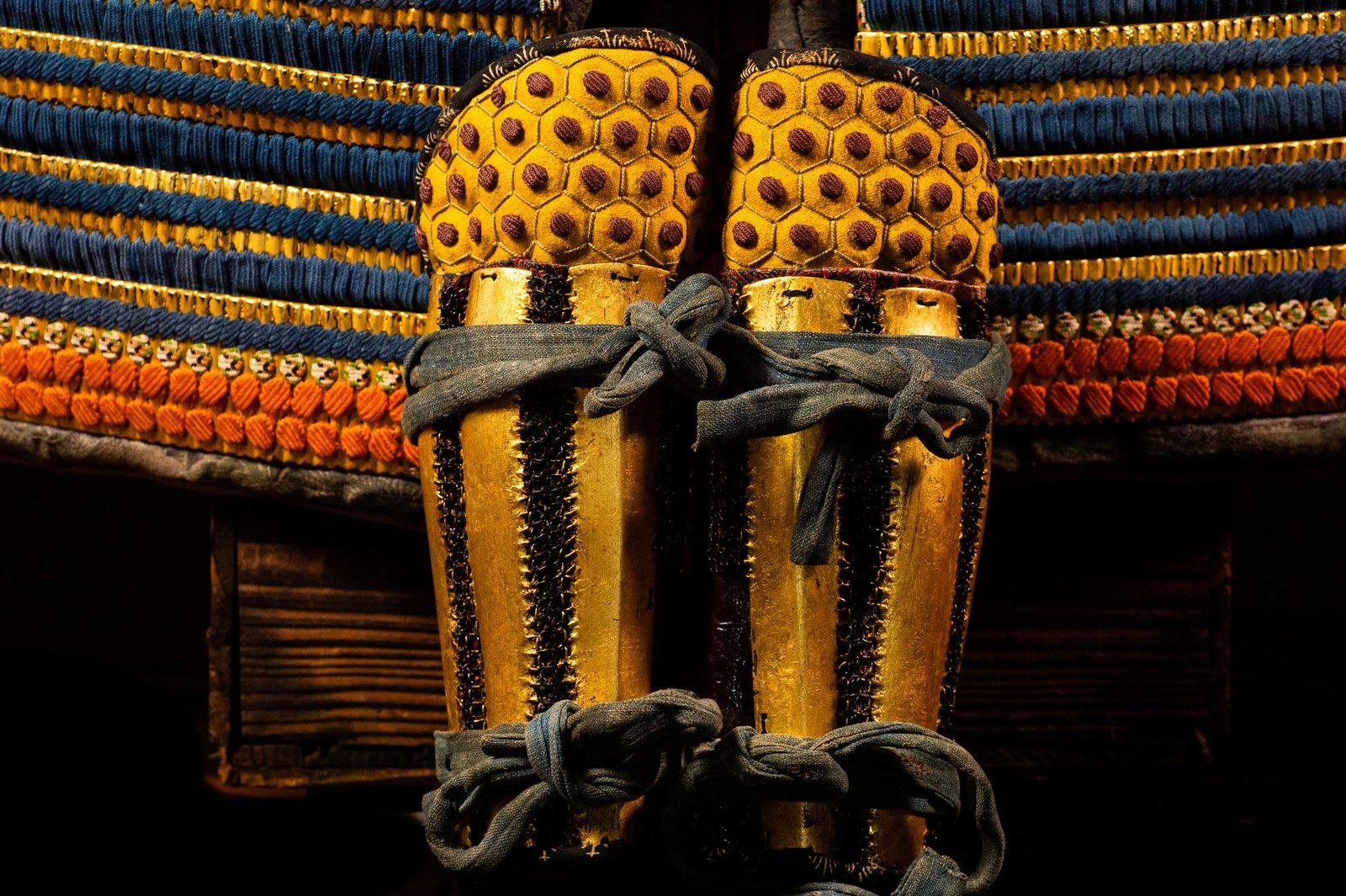
The lower legs are protected by suneate incorporating gilt plates arranged in a hexagonal kikkō pattern. They are secured with dark indigo cords, continuing the principal colors of the armor into the lower defenses.
Mounted at the back is a particularly striking gilt sashimono device. A central gilt disc is accompanied by long radiating gilt staves that extend well above and beyond the helmet.
When the armor is fully assembled, these elements create an imposing, fan-like silhouette against the dark background and give the ensemble one of its most recognizable visual characteristics.
The armor is accompanied by its wooden yoroi-bitsu, the traditional chest used for storing and transporting Japanese armor.
When not being worn, the separate components of a gusoku could be carefully packed inside such a chest, making the yoroi-bitsu an important functional part of the complete armor ensemble.
The armor is in excellent condition for its age, with only minor wear consistent with an 18th-century ensemble.
This includes gentle fading and softening of the silk lacing, light rubbing to the gilding on exposed high points, and a few small losses to the lacing on the sode.
Overall, the dark blue silk, gilt surfaces, orange hishinui, patterned leather, and decorative metalwork retain a strong visual presence throughout the complete armor.
This 18th-century Edo-period gusoku is defined by the consistency of its decoration: dark blue kebiki odoshi over gilt lamellae, orange hishinui along the borders, and carefully repeated gold fittings from the helmet to the lower defenses. Its character emerges both through the imposing silhouette created by the tall kuwagata and radiating sashimono and through the smaller details visible at close range, from the floral e-gawa of the fukigaeshi to the gilt hyōtan fittings of the kote.
| Época | Edo |
|---|

Order above 1.000,00 € gets free shipping.

Secure and hassle-free payment process.

Certificate of authenticity included.

Have questions? Contact us via WhatsApp.
Contact
Discover exceptional Japanese swords, armor and works of art with our limited-time Black Friday offers.
OFFER ENDS NOVEMBER 30, 2026
Enter your code at checkout. Discounts cannot be combined with other coupons. Eligible orders only.