

1 in stock
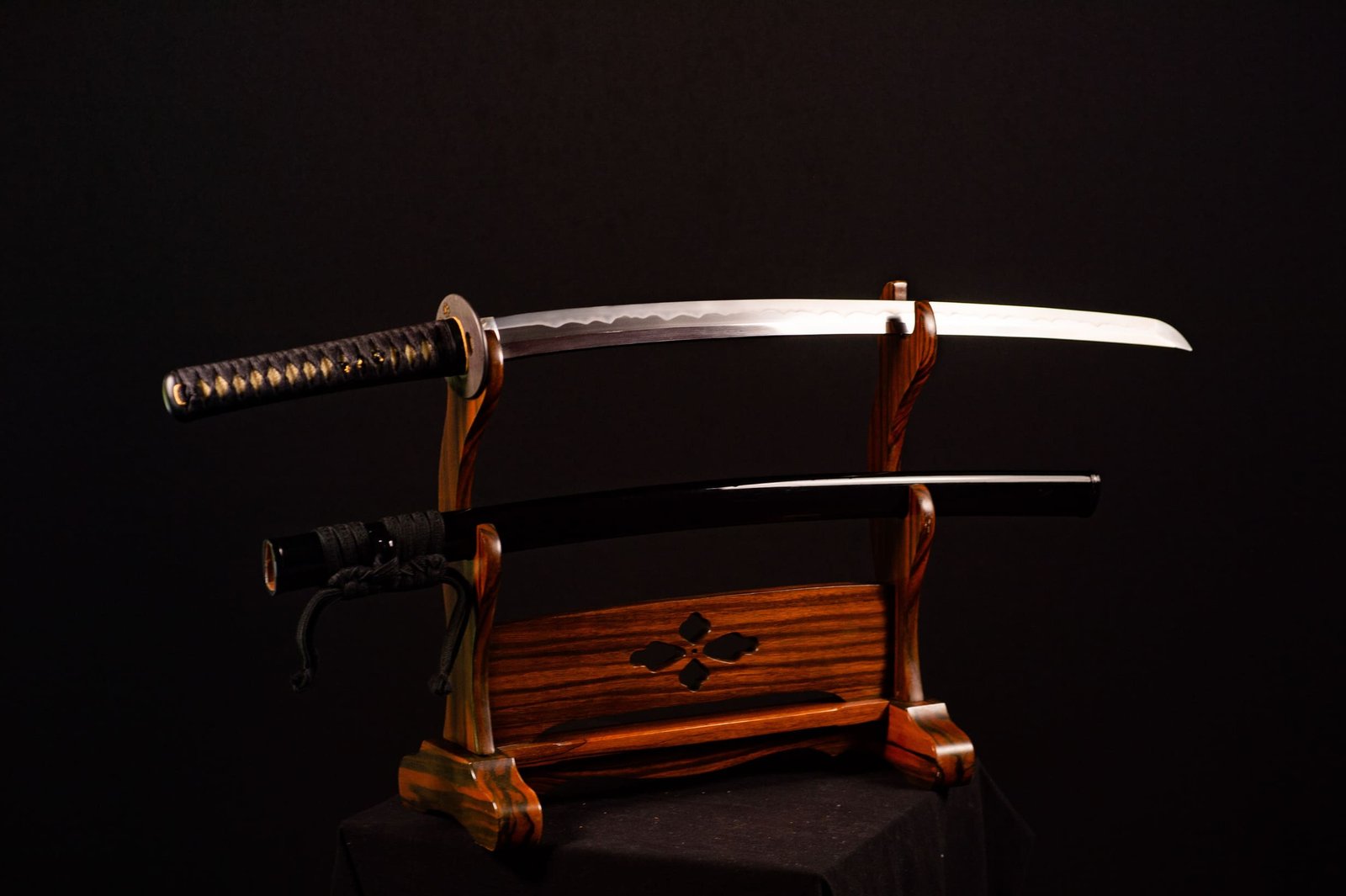
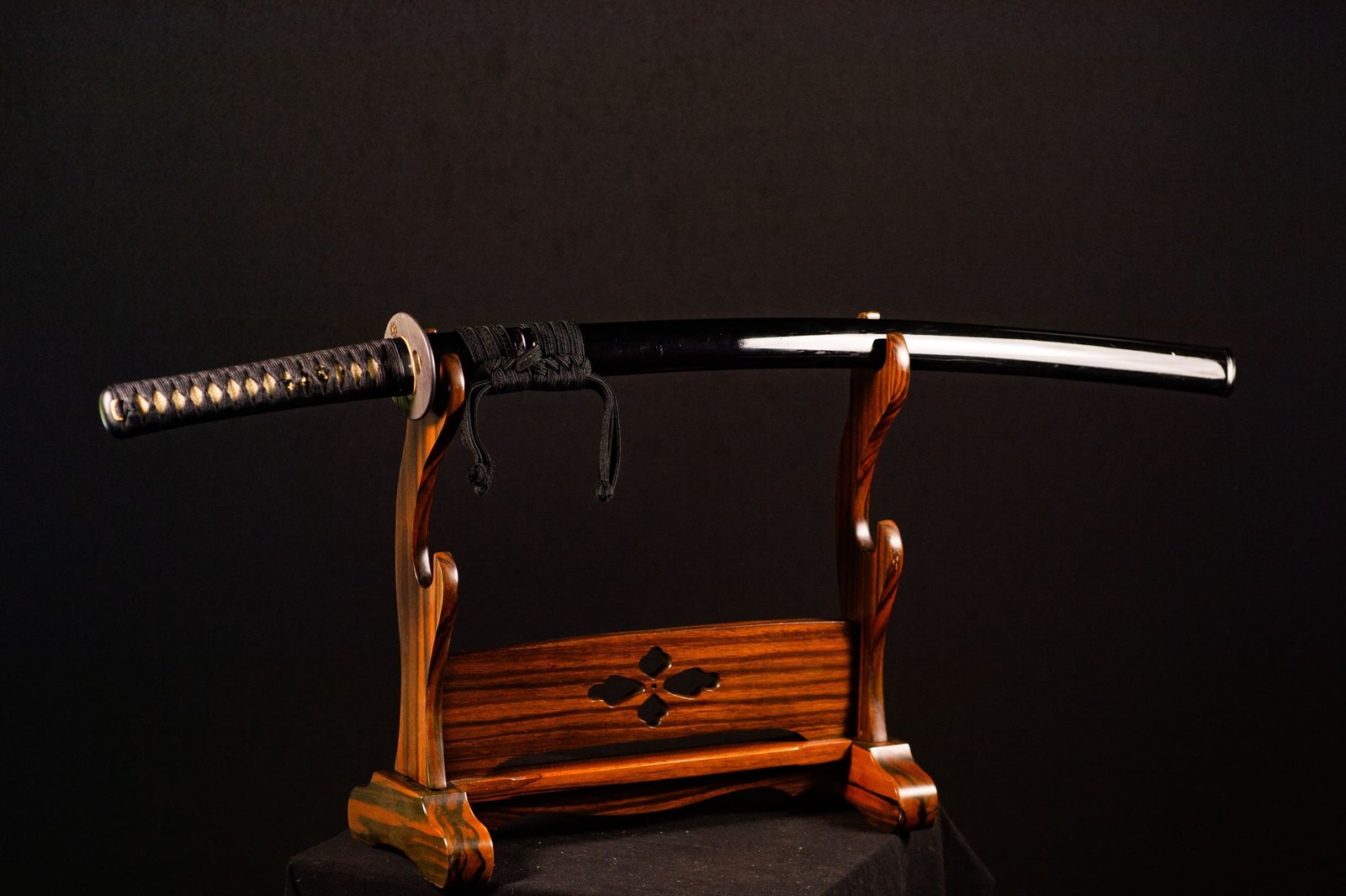
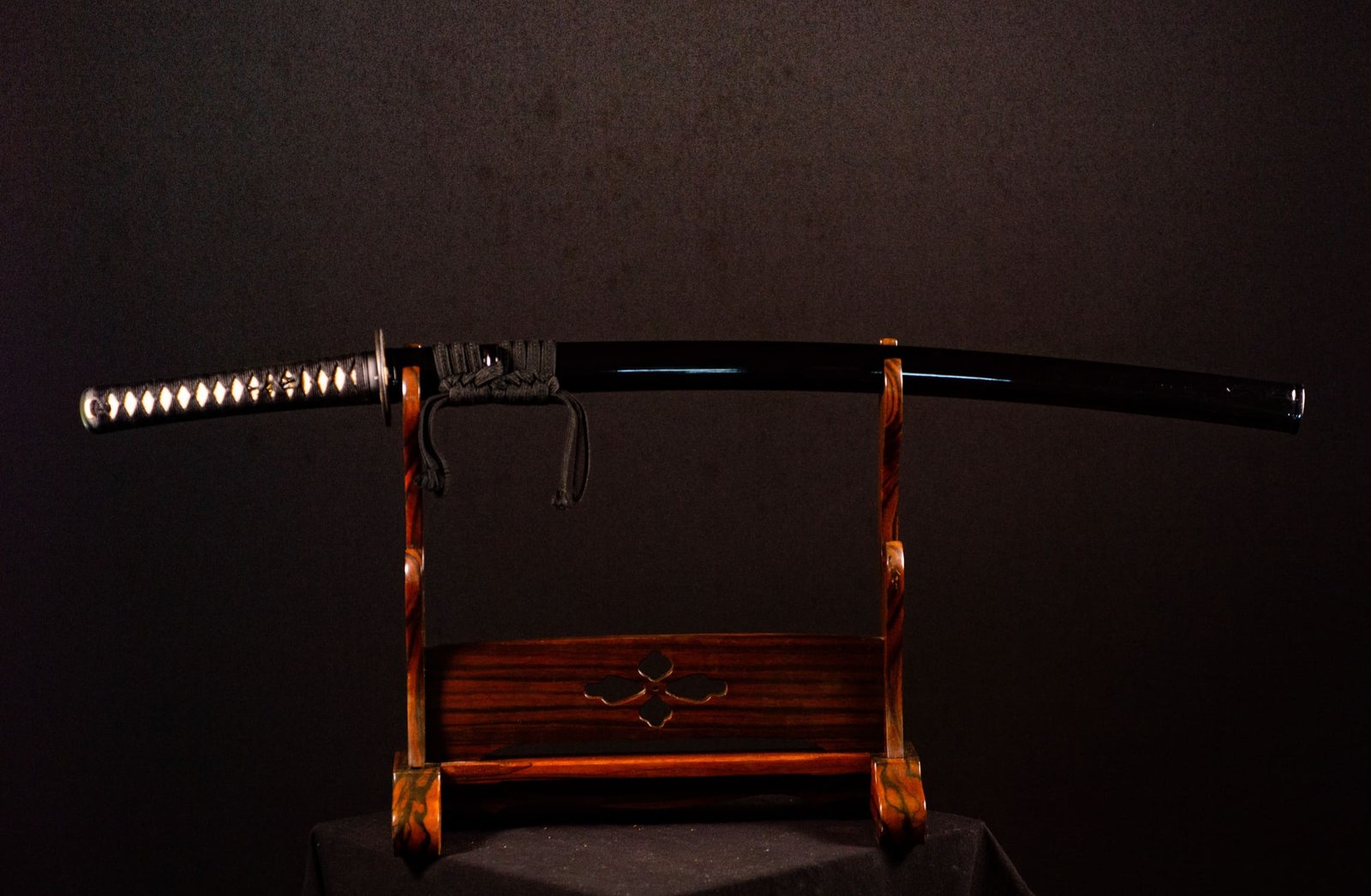
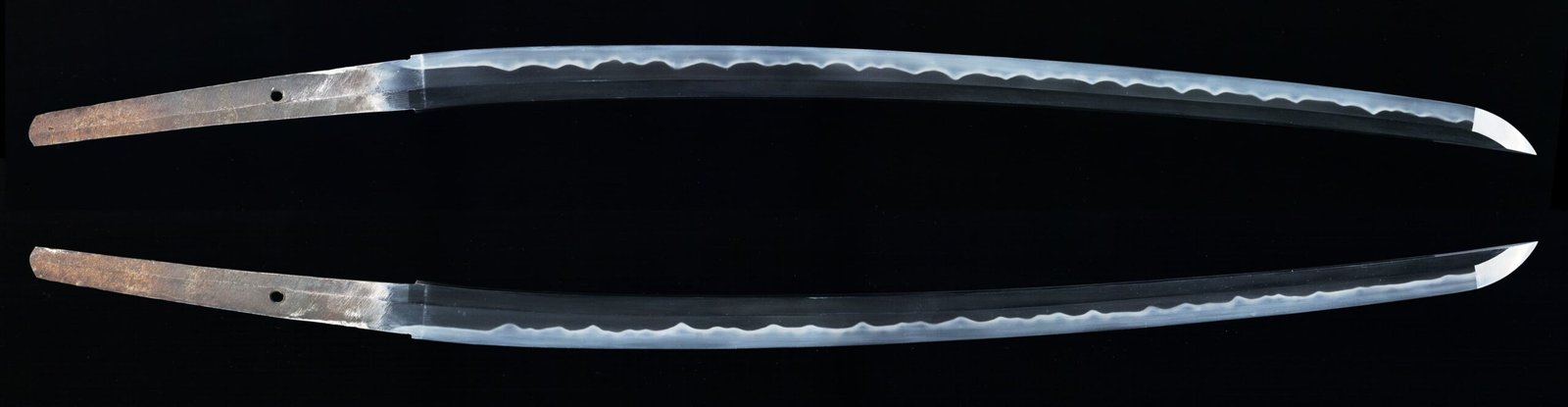
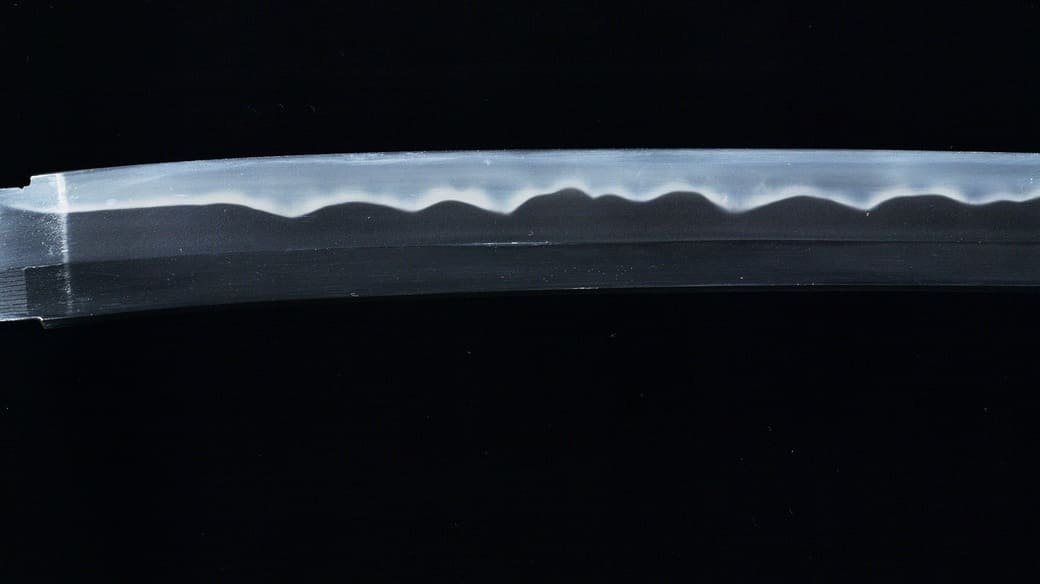
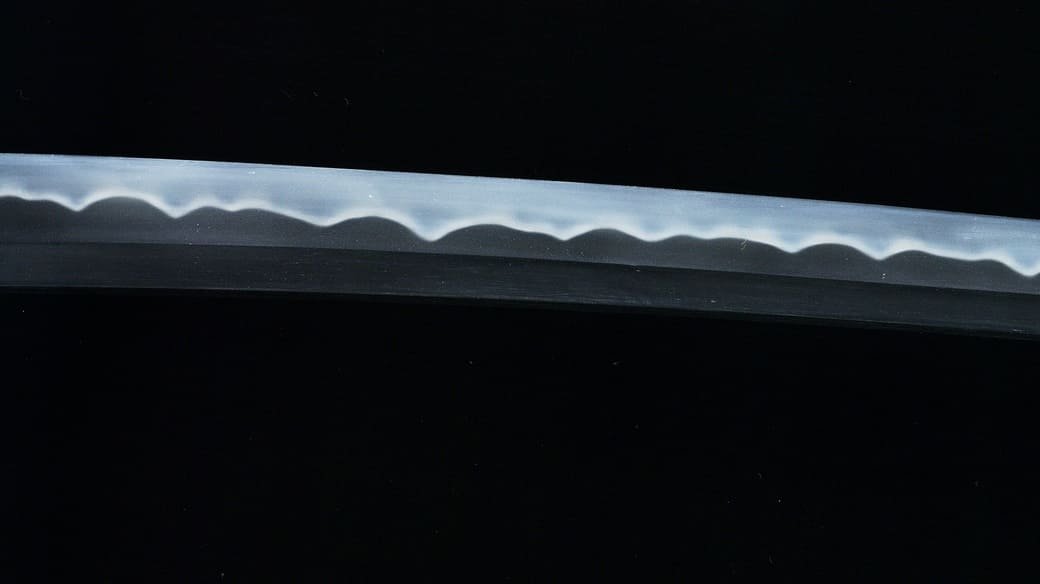
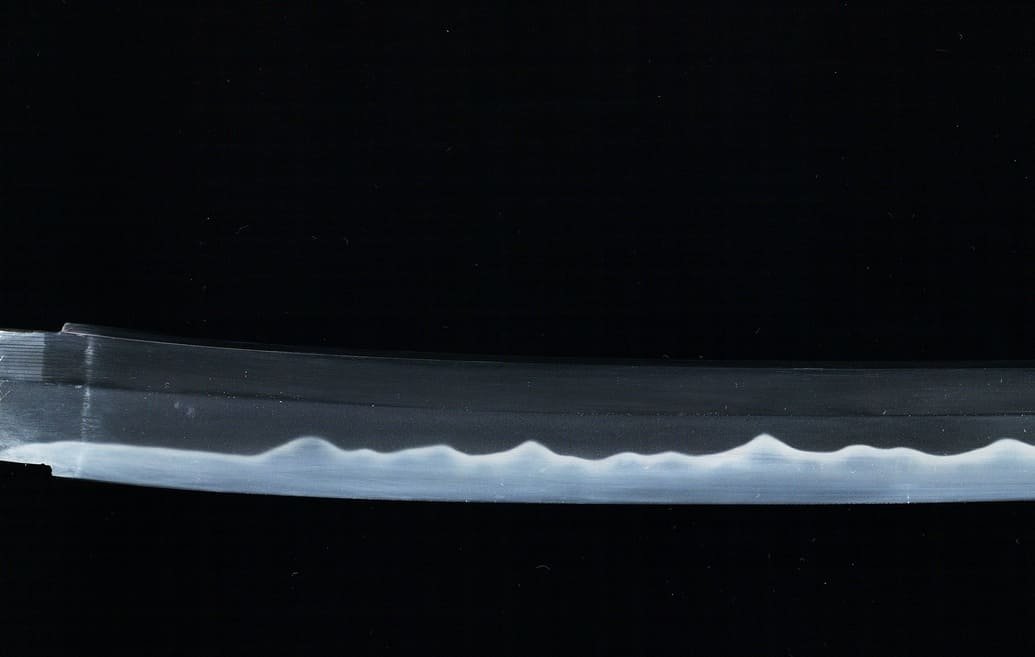
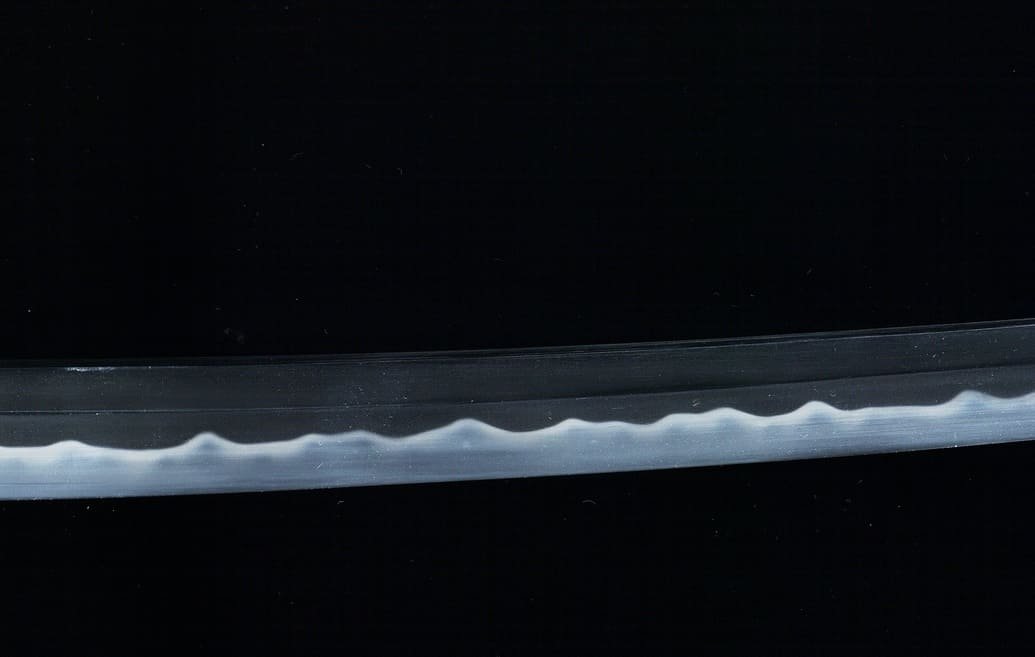
Signed katana by Kanemasa (兼正), Mino tradition, Edo period. With a nagasa of 62.6 cm, compact and practical proportions, a shinogi-zukuri form with chū-kissaki and a lively notare hamon in bright nioi rising into rounded gunome peaks. Mounted in a contemporary koshirae in the traditional style, with a round iron tsuba inlaid with plum blossoms, dragon menuki and a deep black gloss lacquer saya. Excellent condition for its age, with its Japanese tōroku-shō.
1 in stock
Add to Compare
Add to Wishlist
A signed katana by Kanemasa (兼正), a smith working in the Mino tradition, from the Edo period. With a nagasa of 62.6 cm, compact and practical proportions and a lively notare hamon rising into rounded gunome peaks, the blade is mounted in a contemporary koshirae made with care in the traditional style.
In the swordmaking towns of Mino Province, one character carried more weight than any other: 兼, kane.
From the Muromachi period on, generations of smiths in Seki and the surrounding area took it into their names: Kanesada, Kanemoto, Kanefusa and many more. It was a mark of lineage and of belonging to the forging guilds that supplied the warring clans of the Sengoku era.
Mino blades earned a lasting reputation as sharp, tough and dependable weapons. The warlords of central Japan, Oda Nobunaga among them, drew heavily on these forges as they fought to unify the country.
This katana has the compact, practical proportions favoured for close combat.
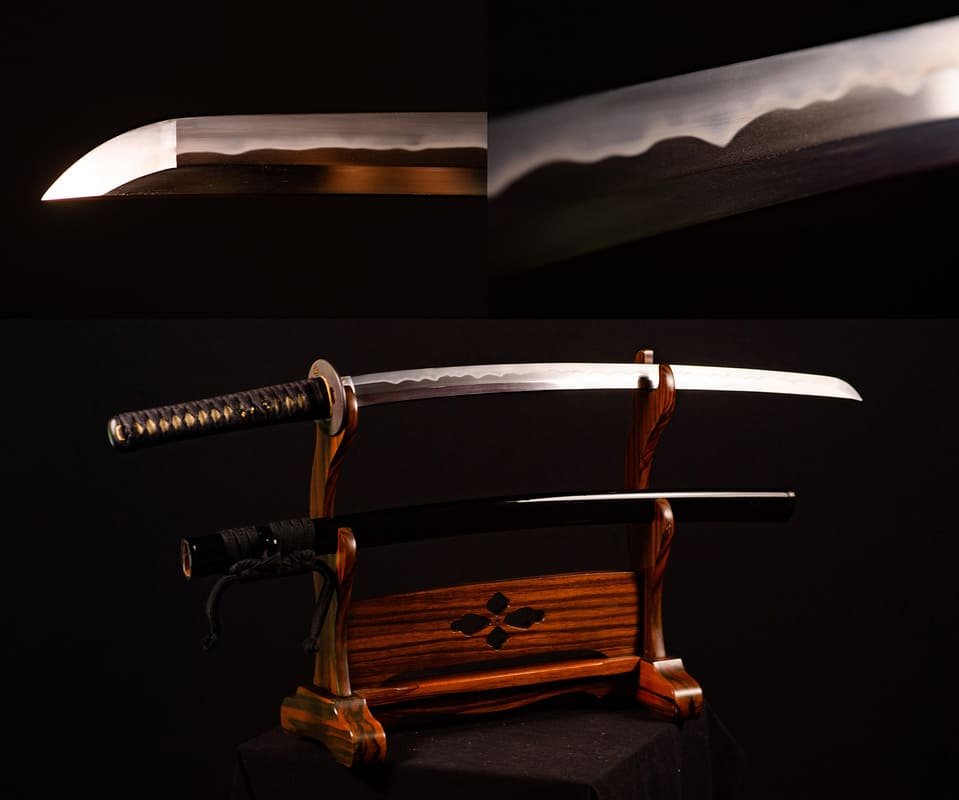
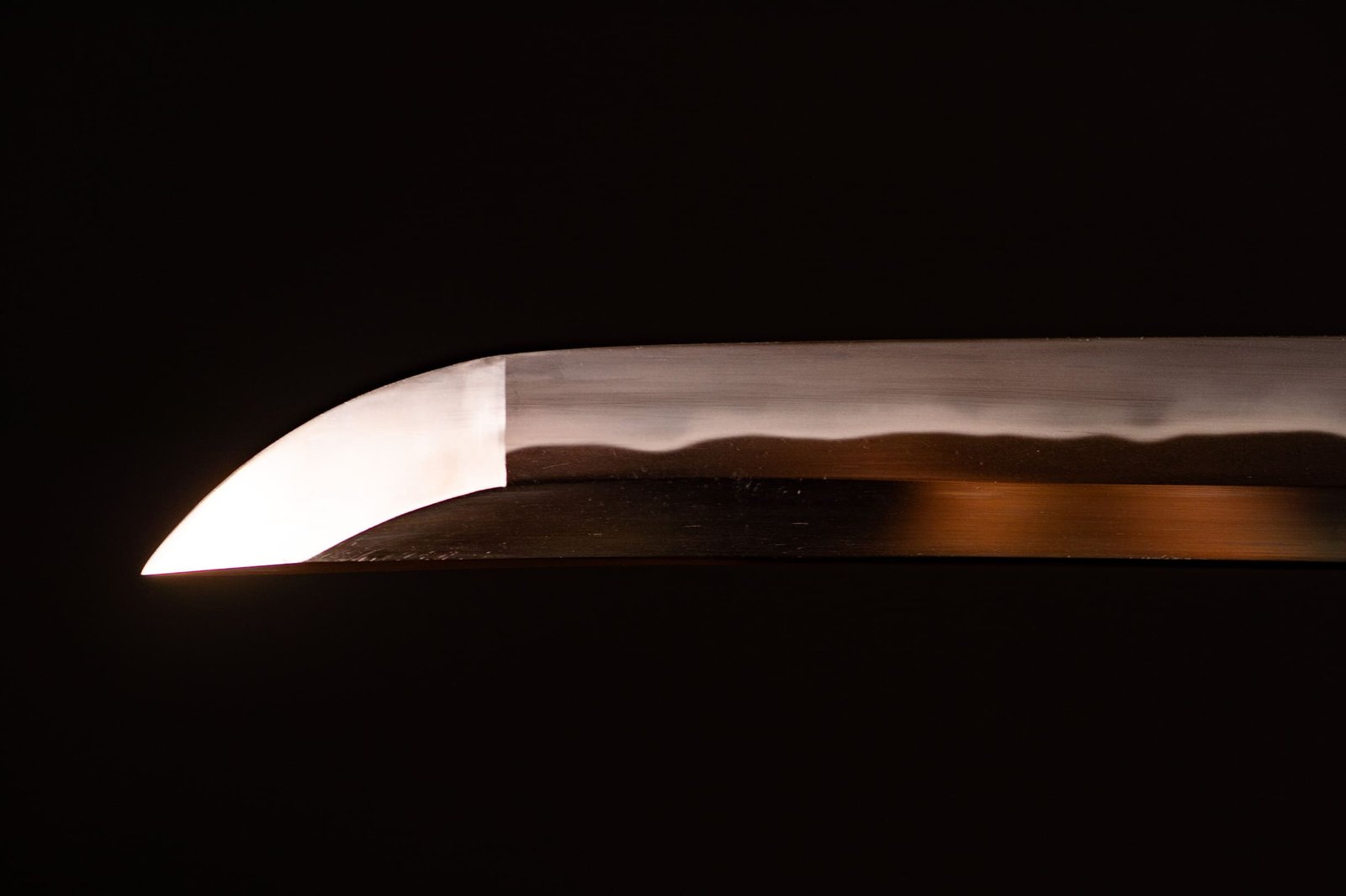
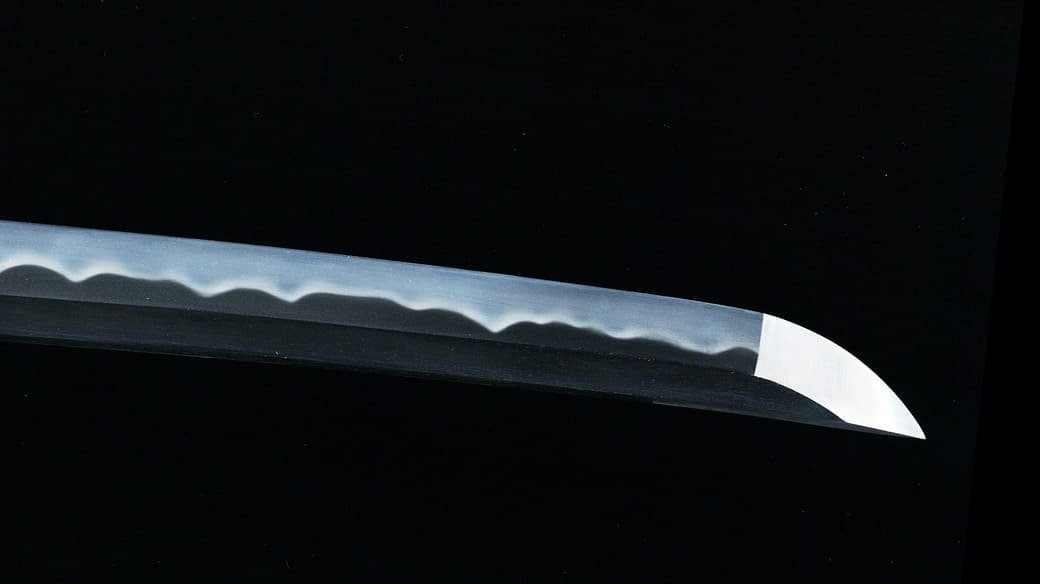
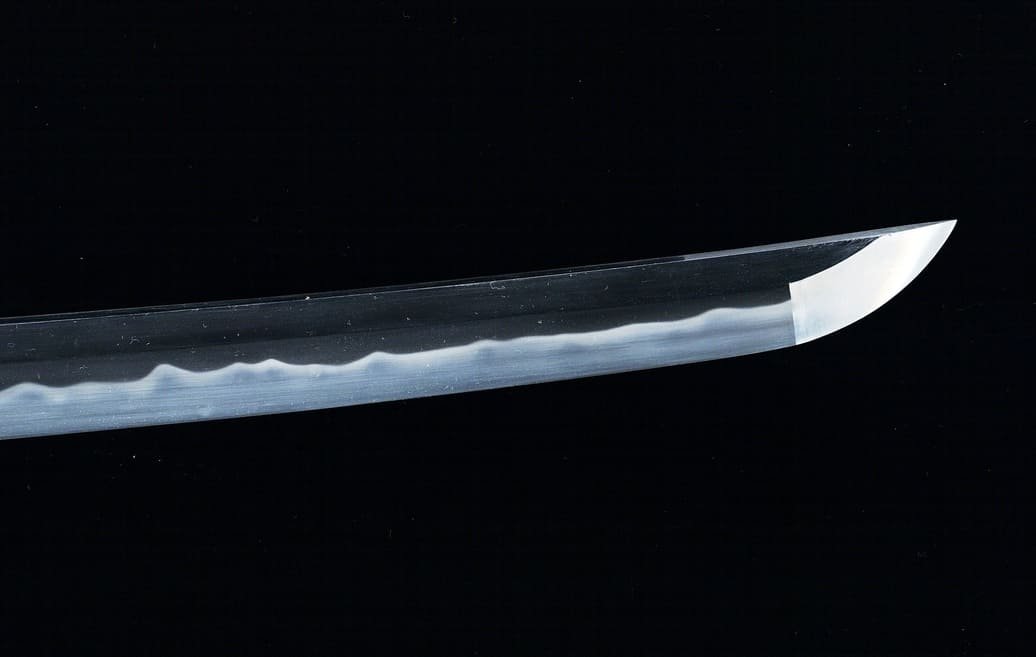
Its shinogi-zukuri form has a balanced curvature (sori of 1.5 cm) and a chū-kissaki.
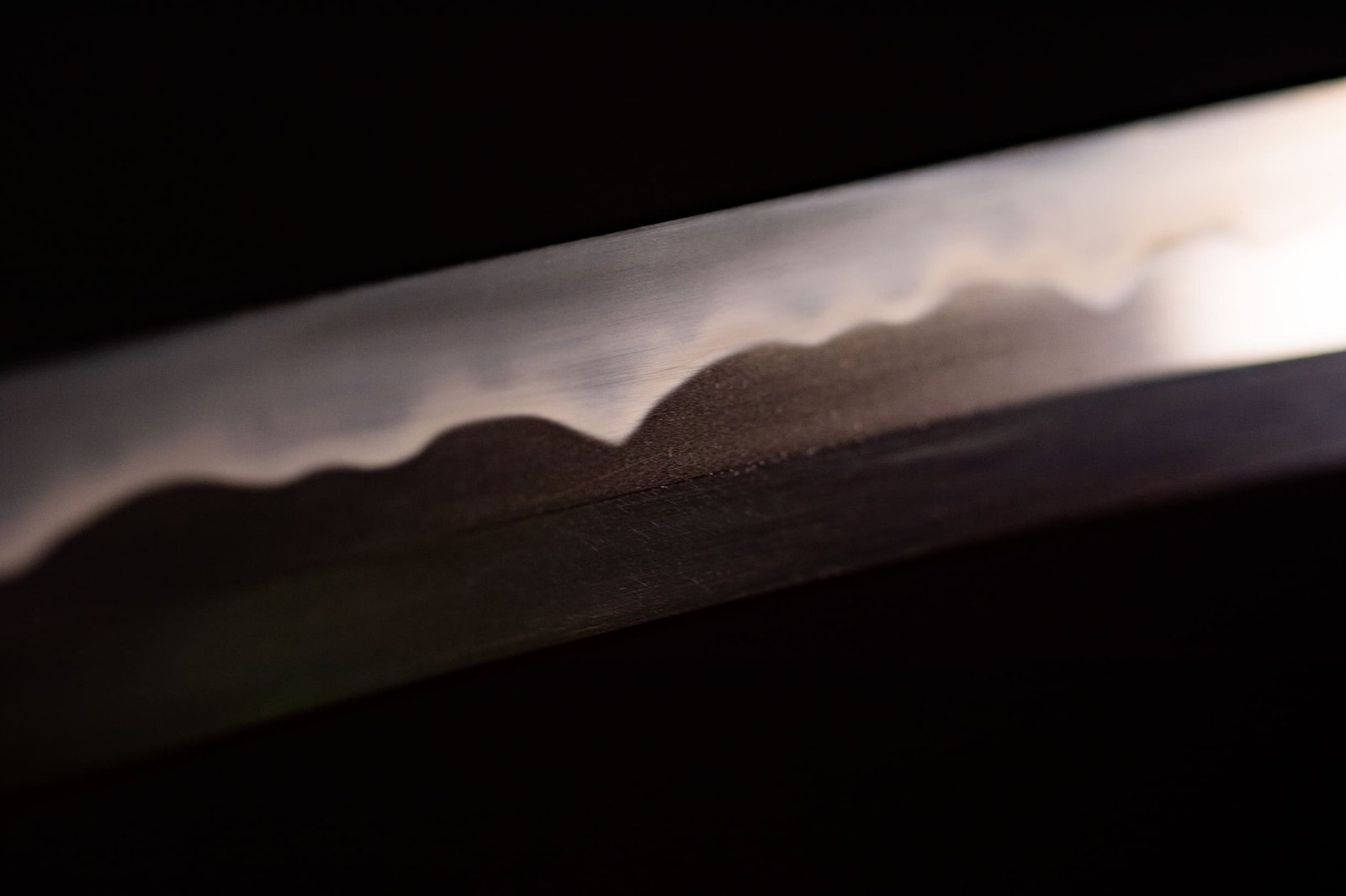
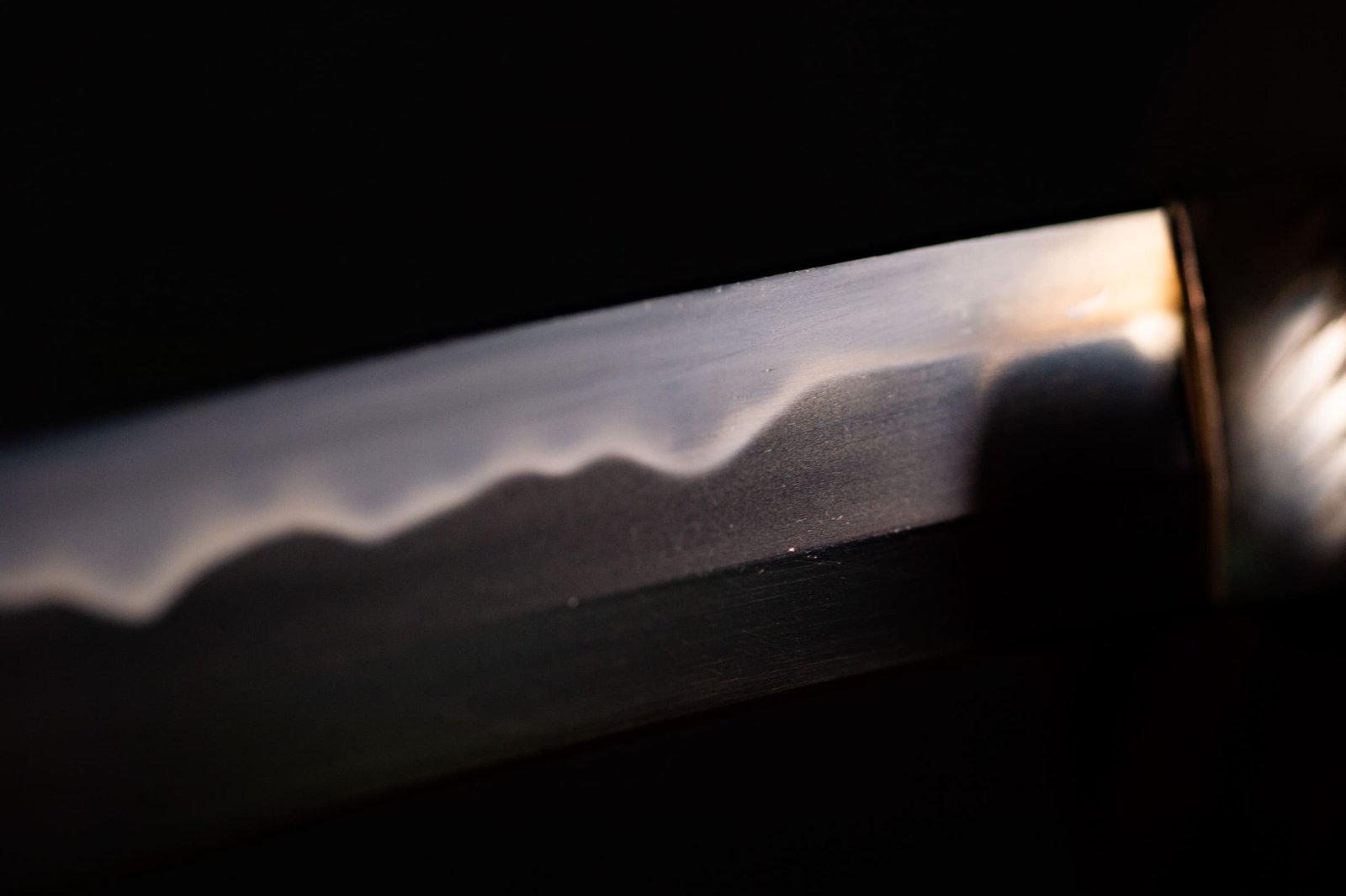
The hamon is a lively notare in bright nioi that rises into rounded gunome peaks along the edge, with a soft, well-defined nioiguchi in the Mino manner.
In the point, the bōshi turns back in a gentle curve.
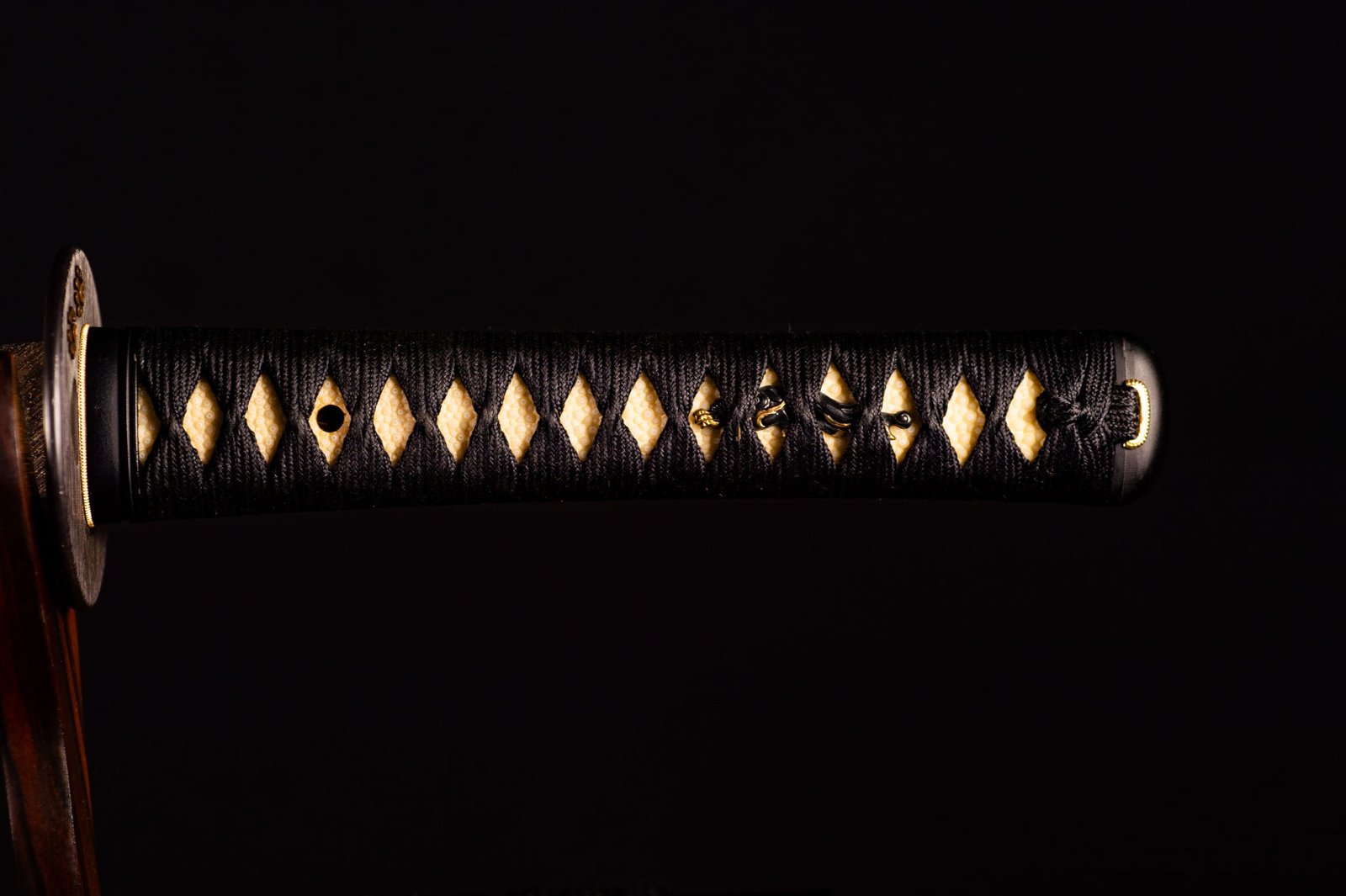
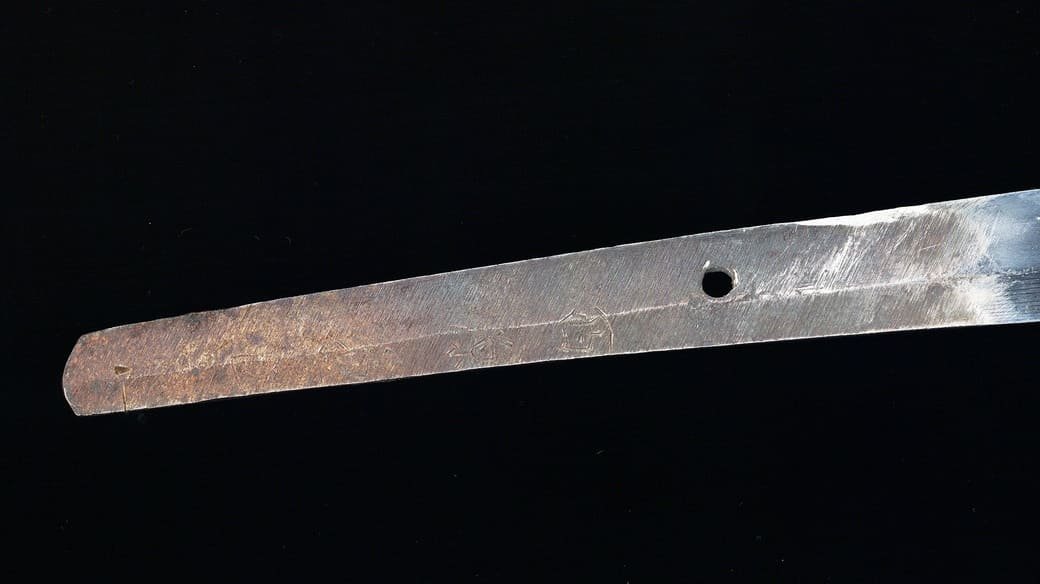
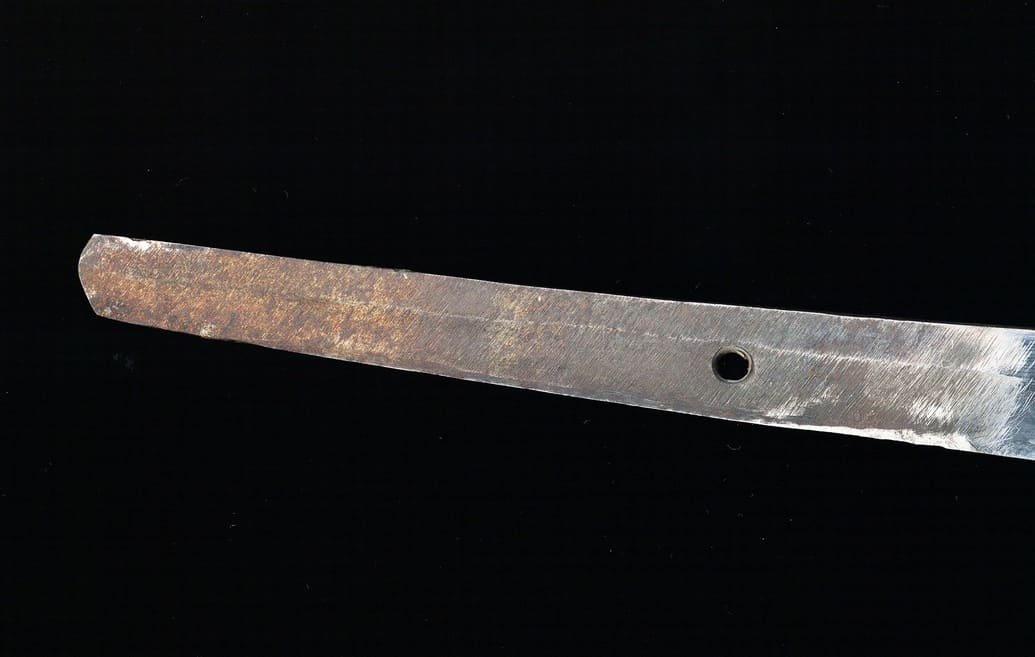
The nakago keeps a single mekugi-ana under a warm, mature patina, with slanting file marks and the signature of the smith: 兼正 (Kanemasa).
The blade is mounted in a contemporary koshirae, made with care and in keeping with the traditional style.
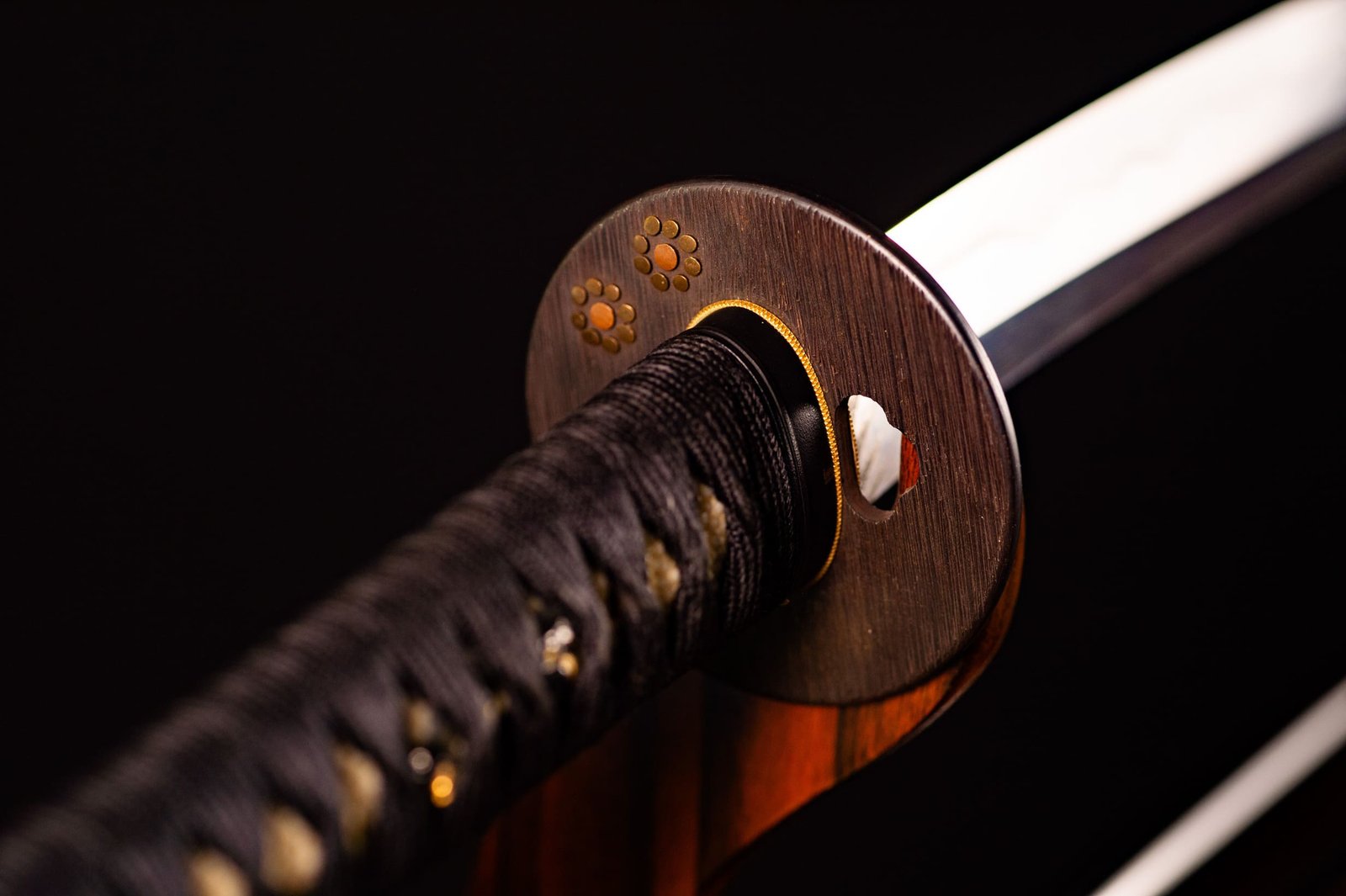
The round iron tsuba has a finely brushed surface inlaid with two blossoms formed of brass and copper dots.
They recall the plum flower, the first to bloom in the cold of late winter and a symbol of perseverance.
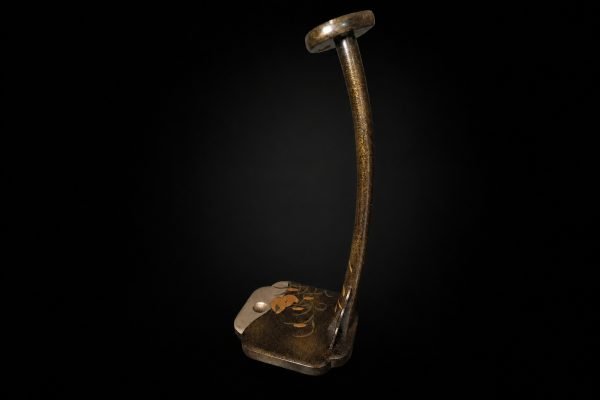
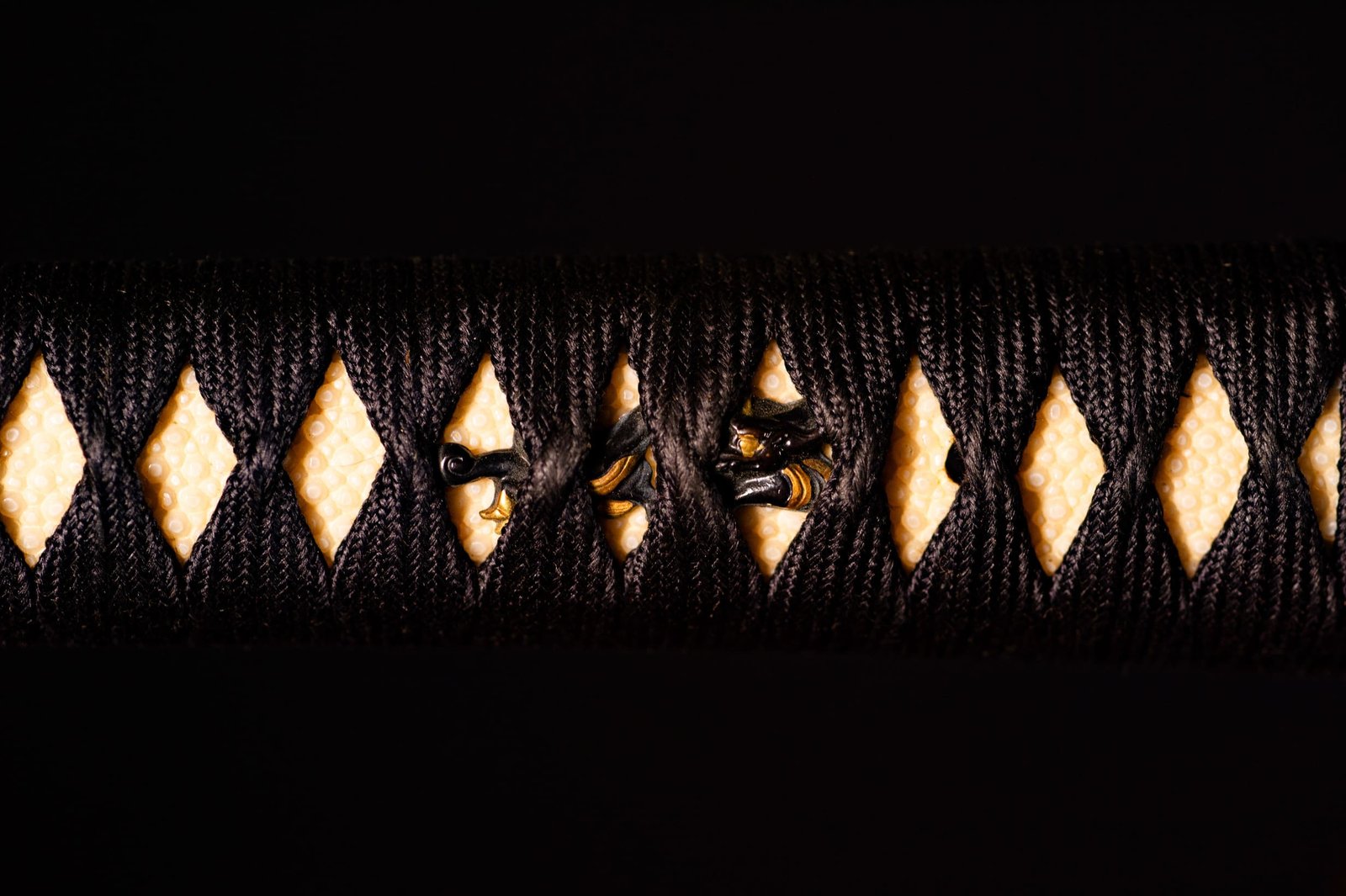
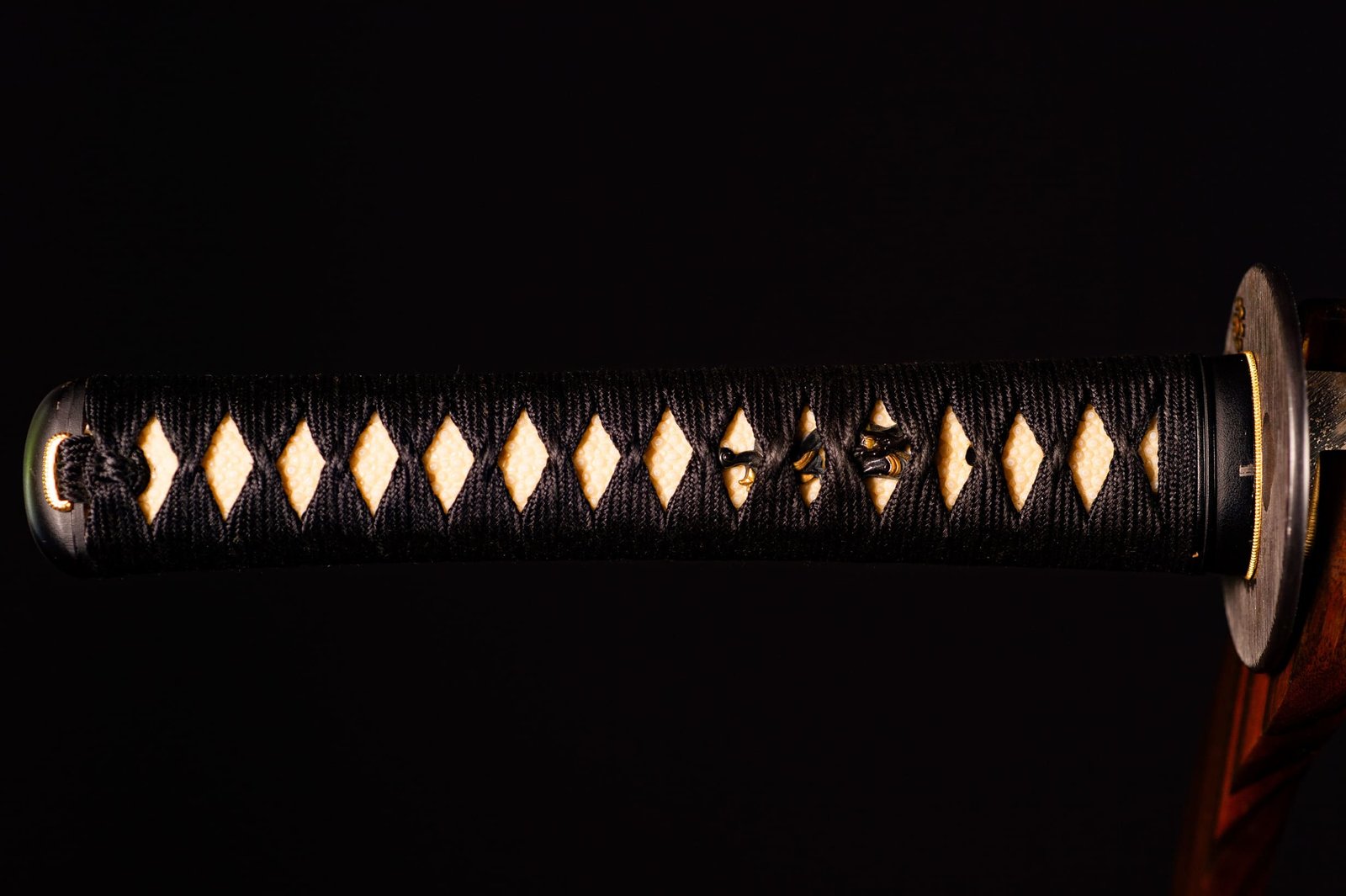
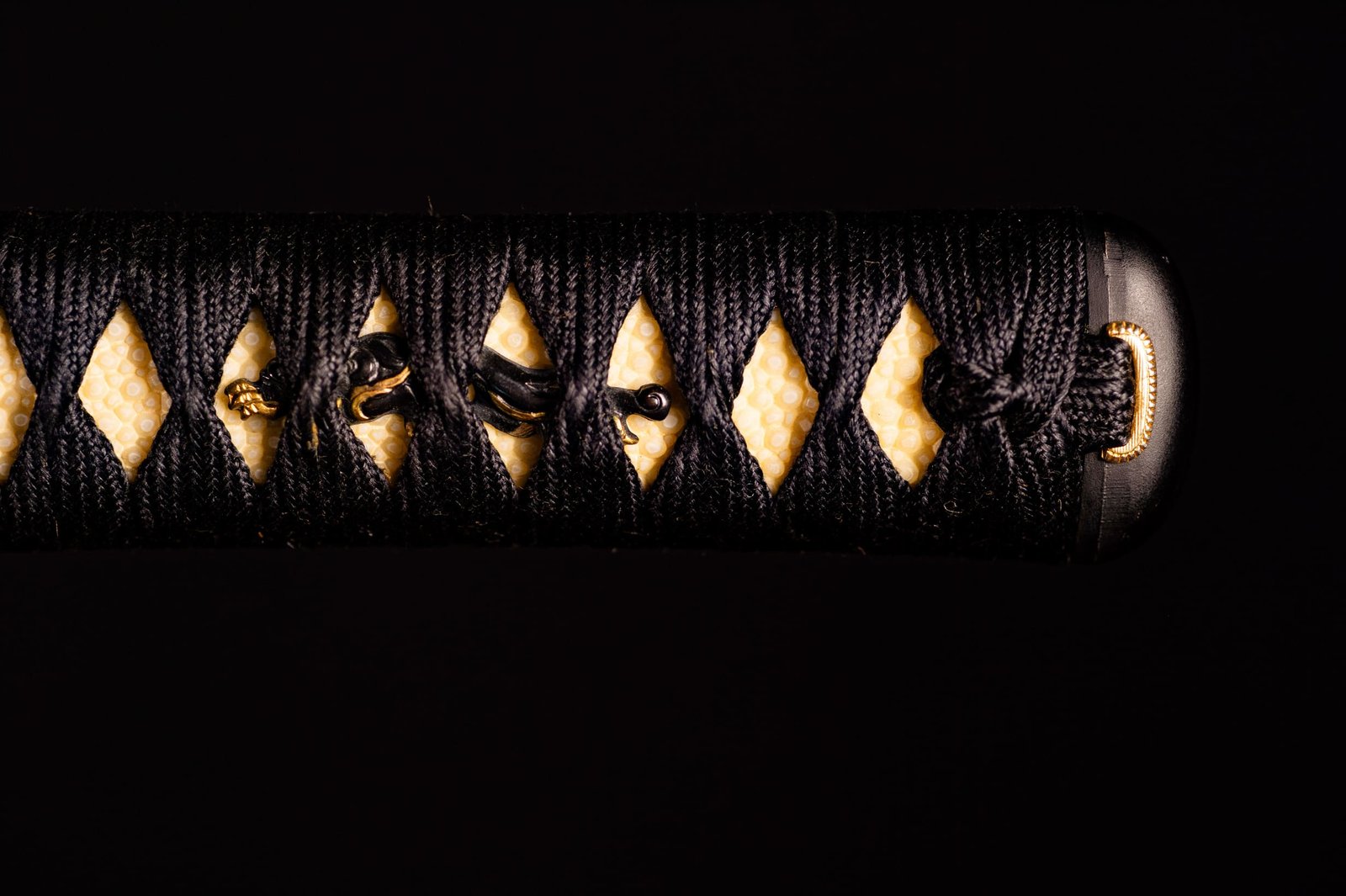
The menuki are dark-metal dragons with gilt accents, set under black silk ito over white same.
The fuchi and kashira are finished in black, with a gilt rim at the cord opening.
The saya is finished in deep black gloss lacquer and completed with a black sageo.
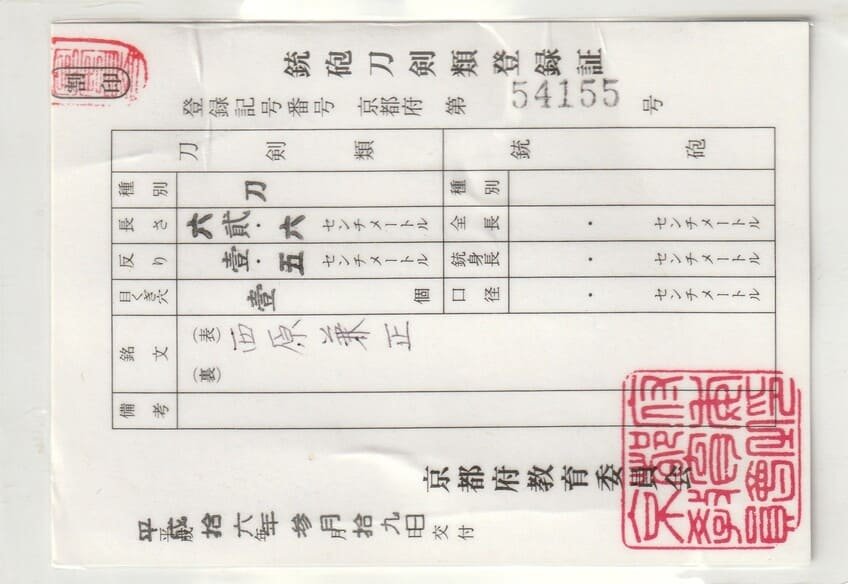
The blade comes with its Japanese registration certificate (tōroku-shō), issued in Kyoto Prefecture.
This katana combines a signed Edo-period blade with a contemporary koshirae in the traditional style.
Excellent condition for its age, with only minor wear consistent with its antiquity.
The blade is presented in a contemporary koshirae and accompanied by its Japanese registration certificate (tōroku-shō).
This katana stands out for its signed Mino blade, its lively hamon and its carefully made koshirae.
A katana that carries the name and the reputation of the Mino smiths, whose sharp, tough and dependable blades served the warlords of central Japan. Its signed nakago, lively hamon and carefully made koshirae make it a compelling addition to a collection of antique Japanese swords.
| Época | Edo |
|---|

Order above 1.000,00 € gets free shipping.

Secure and hassle-free payment process.

Certificate of authenticity included.

Have questions? Contact us via WhatsApp.
Contact
Discover exceptional Japanese swords, armor and works of art with our limited-time Black Friday offers.
OFFER ENDS NOVEMBER 30, 2026
Enter your code at checkout. Discounts cannot be combined with other coupons. Eligible orders only.