3 de octubre de 2026
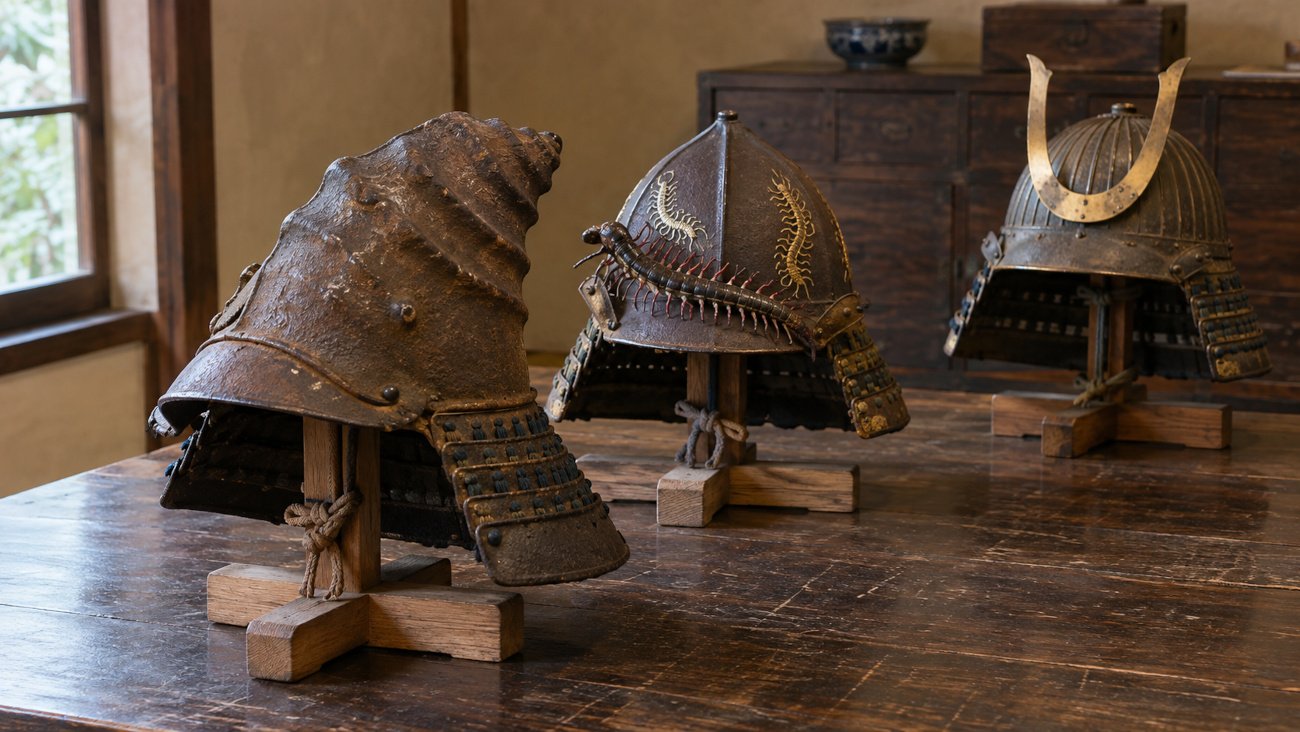
Los cascos de samurái japoneses pueden variar desde sencillos cuencos de hierro de diseño sobrio hasta extraordinarias creaciones escultóricas que representan animales, olas, conchas, gorros de la corte y seres sobrenaturales. Entre ellos, un pequeño número de *kabuto* excepcionales ha alcanzado precios notables en subastas internacionales.
However, comparing auction results requires care. A kabuto sold independently is not directly comparable with a complete suit of samurai armor that happens to include an important helmet. Auction estimates, hammer prices and final prices including the buyer’s premium must also be distinguished.
This article therefore concentrates first on individually sold Japanese kabuto with publicly documented auction results. Complete armors incorporating important helmets are discussed separately.
Among the publicly accessible auction records reviewed for this article, the highest documented result for a kabuto sold as an individual object is $377,000.
La pieza más destacada, sin duda, es un *kawari kabuto* de hierro del siglo XVIII **con forma de caracola**, vendido por Bonhams por **377.000 $**.
The result was particularly remarkable because the helmet had a presale estimate of $40,000–50,000. Intense competition pushed the final price to more than seven times the upper estimate.
Unlike other frequently cited high-value results, this was not a complete suit of armor. The $377,000 price applied to the kabuto itself.
The following results are shown in the currencies used by the auction houses at the time of sale. Sotheby’s states that the results from its 2021 London auction include its buyer’s premium but exclude applicable taxes and additional costs.
No present-day currency conversion has been applied. Exchange rates change over time, and converting historical results using a modern rate could create a misleading comparison.
Las transacciones privadas suelen ser confidenciales. Por lo tanto, en este contexto, «el más caro» se refiere a los resultados de subasta más altos documentados públicamente que se pueden verificar, no a todos los kabutos que hayan cambiado de manos en transacciones privadas.
| Auction result | Kabuto | Periodo | Auction |
|---|---|---|---|
| $377,000 | Casco *kawari kabuto* de hierro con forma de caracola | Periodo Edo, siglo XVIII | Bonhams, New York, 2013 |
| £52,920 | Suji-bachi signed Saotome Iyetada | Periodo Edo, siglo XVII | Sotheby’s, London, 2021 |
| £52,920 | Hoshi-bachi with raised rivets and preservation certificate | Periodo Edo, siglo XVII | Sotheby’s, London, 2021 |
| £50,400 | Momonari kabuto with shell-shaped wakidate | Periodo Edo, siglo XVII | Sotheby’s, London, 2021 |
| £47,880 | *Kawari kabuto* con forma de ola rompiente | Edo period, 17th–18th century | Sotheby’s, London, 2021 |
The table should not be interpreted as a precise currency-adjusted global ranking. It is a selection of significant, verifiable results for kabuto sold independently.
The most exceptional result located during this research is the eighteenth-century iron kawari kabuto shaped as a conch shell, sold by Bonhams in New York for $377,000.
Kawari kabuto—literally “unusual helmets”—allowed Japanese armorers to transform protective equipment into highly individual works of sculpture. Shells were especially suitable subjects because their spiral forms could create a dramatic silhouette while retaining symbolic and military associations.
The conch, or horagai, was used in Japanese religious and military contexts. Conch trumpets were associated with yamabushi mountain ascetics and were also used to communicate signals during military campaigns.
This particular helmet was not merely an ornamental shell placed over an ordinary bowl. Its complex form was constructed in iron, demonstrating an exceptional level of technical skill. The interior was finished in gold lacquer, further indicating the quality and importance of the object.
Its final price reflected a rare combination of factors:
The result rose dramatically above its $40,000–50,000 estimate and remains an extraordinary benchmark for an individual antique Japanese kabuto.
Ver el resultado documentado de la subasta de Bonhams
A seventeenth-century suji-bachi signed by Saotome Iyetada was sold by Sotheby’s in London in May 2021 for £52,920. Its original estimate was only £8,000–10,000.
The helmet bowl was assembled from sixty-two iron plates with clearly raised ridges. These ridges give the suji-bachi its characteristic appearance and demonstrate the precision required to shape and join numerous individual plates into a coherent bowl.
The kabuto also featured:
The Saotome school is one of the best-known traditions of Japanese armor production. Nevertheless, a signature alone does not determine value. The workmanship, construction, originality and consistency of the signature with the helmet must all be assessed.
This example exceeded its upper estimate by more than five times, showing how strongly collectors may compete for a well-presented, signed helmet associated with a respected armor-making school.
View the Saotome Iyetada suji-bachi at Sotheby’s
One of the most surprising results in the same Sotheby’s auction was achieved by a seventeenth-century hoshi-bachi. Estimated at just £4,000–6,000, it sold for £52,920.
A hoshi-bachi is characterised by the prominent rivets visible on the surface of the helmet bowl. In this example, the bowl was constructed from sixty-two iron plates and retained its raised rivets as an important part of the design.
Its principal features included:
The helmet was accompanied by a Tokubetsu Kicho Shiryo certificate issued in 2016 by the Nihon Katchu Bugu Kenkyu Hozon Kai, the Japanese Armor Preservation Society.
A certificate should never replace a direct examination of the object, but documented assessment by a recognised specialist organisation can strengthen collector confidence.
The final result was almost nine times the upper estimate. It is an excellent example of why auction estimates should not be treated as fixed valuations.
View the certified hoshi-bachi at Sotheby’s
A seventeenth-century momonari kabuto sold for £50,400 against an estimate of £20,000–30,000.
Momonari means “peach-shaped” and describes the distinctive curved profile of the helmet bowl. The form is frequently connected with the influence of European helmets introduced into Japan during the sixteenth century, particularly designs with smooth plates and a pronounced central ridge.
The Sotheby’s example was made from iron and decorated in black lacquer. Its rim had later gold and silver nashiji decoration, while the peak was embellished with gold hiramaki-e scrollwork.
The most immediately recognisable features were the lateral ornaments, or wakidate, shaped as clam shells and made from wood decorated in gold, red and black lacquer.
The helmet had also been exhibited at the Palazzo Reale in Milan in 2009 and was published in the accompanying exhibition catalogue. A documented exhibition and publication history can add authority to an object’s provenance and increase its appeal to serious collectors.
Ver el *momonari kabuto* de 20.000 dólares
Another shell-shaped helmet appeared in the Sotheby’s London sale of May 2021. This seventeenth- to eighteenth-century kawari kabuto achieved £47,880 against an estimate of £20,000–30,000.
The iron bowl was formed as a realistically rendered turbo shell. The helmet also incorporated:
Although both this helmet and the $377,000 Bonhams example were inspired by seashells, they are different objects and should not be confused.
Their results also demonstrate that a similar subject does not guarantee a similar price. Construction method, quality, condition, provenance, rarity, date and the bidders participating in a particular sale can produce dramatically different outcomes.
Ver el kawari kabuto con diseño de olas rompientes
Some very high auction prices associated with kabuto actually belong to complete suits of armor.
For example, an eighteenth-century haramaki armor incorporating an elaborate kabuto by Masanobu sold at Bonhams for $341,000. The helmet was undoubtedly one of the most important elements, but the lot also included the cuirass, mask, sleeves, shoulder guards and leg defenses.
Armadura con un gran *kawari kabuto* tipo *eboshi* recubierto de pan de plata
| Auction result | Objeto | Classification |
|---|---|---|
| $341,000 | Armadura *haramaki* con casco (*kabuto*) de Masanobu | Armadura completa |
| $40,000 | Armor with a monumental silver-leaf eboshi kawari kabuto | Armadura completa |
These results are relevant when studying important samurai armor, but they should not be inserted into a ranking of individual kabuto. Doing so would suggest that the complete price belonged exclusively to the helmet.
There is no universal price list for antique Japanese helmets. Value is created by several interconnected factors.
Kabuto associated with respected armor-making traditions such as the Myōchin, Saotome and Haruta schools may attract strong collector interest.
However, a signature must be evaluated carefully. Its form, placement, age and relationship to the helmet’s construction all matter. A prestigious name is not valuable if the signature is unreliable or was added later.
Kabuto from the Muromachi, Sengoku and Momoyama periods are generally scarcer than later examples. Nevertheless, age alone does not make a helmet important.
A later Edo-period helmet of exceptional quality, rarity and preservation may be more desirable than an earlier but heavily altered or incomplete object.
Collectors examine whether the helmet bowl, neck guard, visor, turnbacks, lacquer, lacing, fittings and ornaments belong together.
Japanese armor was frequently repaired, adapted or reassembled during its working life. Historically appropriate modifications can form part of an object’s story, but substantial reconstruction must be identified honestly.
Unusual kawari kabuto can command high prices because some designs are unique or survive in extremely small numbers.
Shells, waves, animals, plants, horns, court caps and religious symbols can make a helmet visually striking, but originality of form must be supported by convincing period construction.
A dramatic silhouette alone is not sufficient. Collectors look at the forging of the bowl, the joining of the plates, the quality of the rivets, the lacquer work and the integration of decorative elements.
Technically ambitious helmets made from iron are especially impressive because the armorer had to create a sculptural form without compromising the structure of the object.
Documented ownership, inclusion in an important collection, museum exhibition or publication in a recognised catalogue can increase confidence and desirability.
La procedencia no garantiza automáticamente la autenticidad, pero un historial de propiedad continuo y creíble reduce la incertidumbre y sitúa al objeto dentro de una tradición de coleccionismo más amplia.
Original lacquer, stable iron, preserved lacing, complete fittings and an appropriate shikoro all affect value.
Some restoration is normal in centuries-old armor. The crucial questions are how extensive it is, when it was carried out and whether it preserves or obscures the historical integrity of the helmet.
Documentation from a specialist Japanese armor organisation can support an attribution or assessment. Certification is particularly valuable when it clearly identifies the object and can be verified.
Nevertheless, the helmet itself must always remain the primary evidence. Important purchases should be assessed through the combined study of construction, materials, condition, signature, provenance and documentation.
Several different figures may appear in an auction catalogue or sales report:
These figures are not interchangeable.
The 2021 Sotheby’s auction offers two particularly clear examples. The Saotome Iyetada suji-bachi was estimated at £8,000–10,000 and sold for £52,920. The certified hoshi-bachi was estimated at £4,000–6,000 and achieved the same final result.
The market price of a rare object is ultimately determined by the competition present when it is offered.
The enormous distance between the $377,000 record and the other documented results shows how selective the high-end kabuto market can be.
Most authentic helmets—even good and collectible examples—will not approach the record price. Exceptional results occur when several desirable characteristics converge in a single object and at least two determined buyers compete for it.
The Sotheby’s results also demonstrate that visually restrained helmets can perform as strongly as dramatic kawari kabuto. The certified hoshi-bachi and the signed Saotome suji-bachi each sold for £52,920, exceeding the results of more sculptural examples in the same auction.
For serious collectors, spectacle is only one part of value. Historical construction, respected workmanship, originality, documentation and preservation can be equally important.
Un auténtico *kabuto* antiguo es, a la vez, equipo defensivo y una obra de arte que combina la metalurgia japonesa, el trabajo de laca y el diseño simbólico.
Before purchasing an important helmet, collectors should examine:
No single feature proves authenticity or value. A reliable assessment comes from studying the complete object.
You can learn more about the construction and history of these helmets in our guide to what a kabuto is.
En Supein Nihonto, nos especializamos en auténticas espadas japonesas, armaduras samurái y objetos históricos seleccionados para coleccionistas. Puede explorar nuestra selección de auténticos *kabuto* japoneses a la venta o contactarnos si necesita información adicional sobre una pieza en particular.
Información esencial sobre precios récord en subastas, los singulares *kawari-kabuto* y los factores que determinan el valor de un auténtico casco samurái japonés.
El resultado más alto claramente documentado en una subasta pública para un kabuto japonés individual es de $377,000. El casco era un kawari kabuto de hierro del siglo XVIII con forma de caracola, vendido por Bonhams en Nueva York en 2013.
No. El kawari kabuto con forma de caracola se vendió como un individual, no como parte de una armadura completa. …lo que hace que el resultado sea especialmente significativo al comparar los precios de subasta de los *kabuto* japoneses.
Una armadura *haramaki* completa del siglo XVIII con un impresionante *kabuto* de Masanobu se vendió por 341.000 dólares. Sin embargo, ese precio correspondía a la armadura completa, incluyendo la coraza, la máscara, las mangas y las protecciones para las piernas, y no solo al *kabuto*.
Su valor reflejaba una combinación de factores: su rareza, su construcción escultórica en hierro, su forma simbólica de caracola, su interior lacado en oro, su estado de conservación y su procedencia. La intensa competencia entre los postores también elevó el precio final muy por encima de la estimación inicial de la subasta.
No. Sus inusuales formas escultóricas suelen atraer a los coleccionistas, pero un casco antiguo firmado por un armero importante puede ser igualmente significativo. La época, el fabricante, la autenticidad, el estado de conservación, la procedencia y la calidad de fabricación son aspectos que deben tenerse en cuenta.
Los *kabuto* asociados a respetadas tradiciones de fabricación de armaduras, como las escuelas Myōchin, Saotome y Haruta, pueden resultar muy codiciados. Una firma por sí sola no garantiza el valor; …y debe corresponder a la construcción del casco, a la época y a la factura documentada.
Los factores principales incluyen la antigüedad, el autor, la rareza, la autenticidad, el estado de conservación, la procedencia y la importancia histórica. Los coleccionistas también examinan si el cuerpo del casco (*hachi*), el *shikoro*, la laca, los herrajes, el cordaje y el emblema (*maedate*) forman un conjunto original o si fueron ensamblados o restaurados posteriormente.
No. Un *mon* puede indicar una asociación con una familia concreta, pero los emblemas a veces se sustituían, añadían o copiaban. Para confirmar la propiedad de manera fiable se requiere documentación sobre la procedencia u otras pruebas que vinculen el casco a un samurái o a una familia *daimyō* específica.
Por lo general, no. Los precios de las ventas privadas suelen ser confidenciales. Por lo tanto, las clasificaciones de los kabuto más caros pueden documentar resultados verificados de subastas públicas, pero no pueden abarcar todas las transacciones privadas entre comerciantes y coleccionistas.
La autenticación requiere examinar el cuenco de hierro, el método de construcción, los remaches, la laca, el shikoro, los accesorios, la firma, la restauración y la procedencia. Las compras importantes deben estar respaldadas por documentación detallada y, siempre que sea posible, posible, examen directo por parte de un especialista en armaduras japonesas. armaduras.
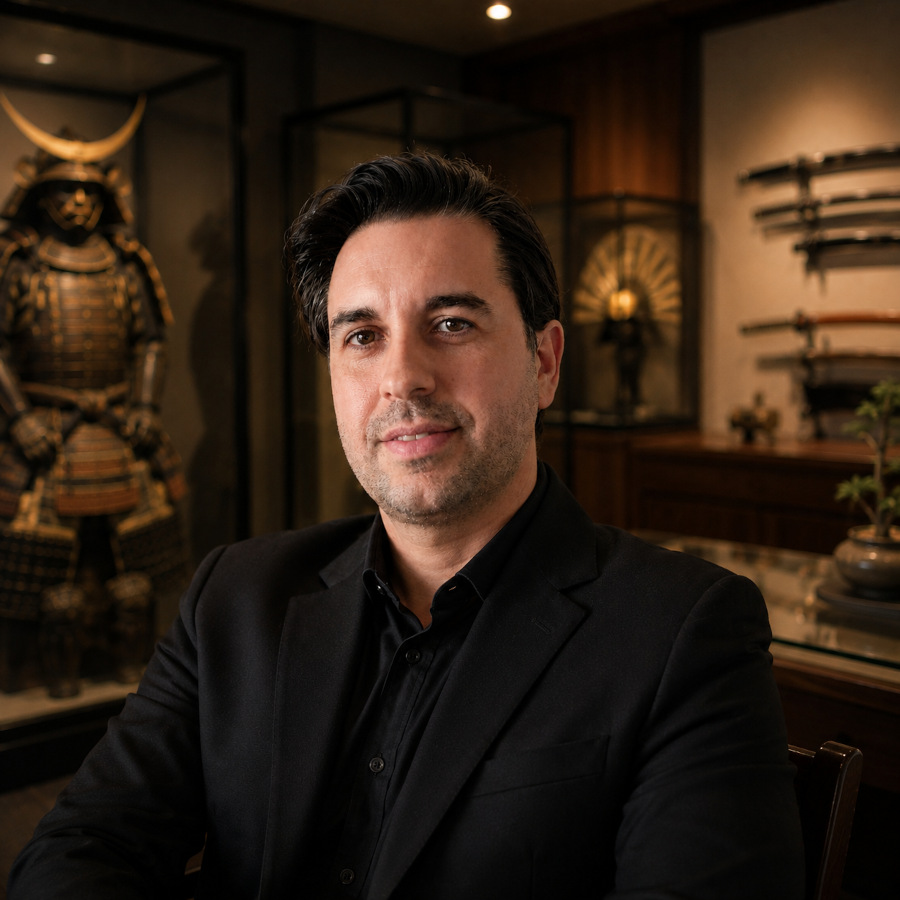
Director general de Supein Nihonto, comerciante y coleccionista de arte y armas antiguas japonesas, con sede en Canillo, Andorra.
Explora
Contacto
Espadas japonesas auténticas, armaduras de samurái y artefactos históricos procedentes directamente de Japón para coleccionistas y aficionados de todo el mundo.
© 2026 Desarrollado por Tu Especialista Web