Cutting capacity is intrinsic to the katanas because it is their Reason to be. If the katana was merely decorative it would never have existed. They were made to kill and therein (live or die by the sword) lies much of their charm. Although beauty is one of the main reasons for its purchase, be it its elegant hamon or the koshirae that surrounds it, the true practicality of its objective is what makes it beautiful in itself in a primary way.
Leaving aside the philosophy of the sword, we are going to focus on talking about its properties and its cutting quality: The Tameshishiri.

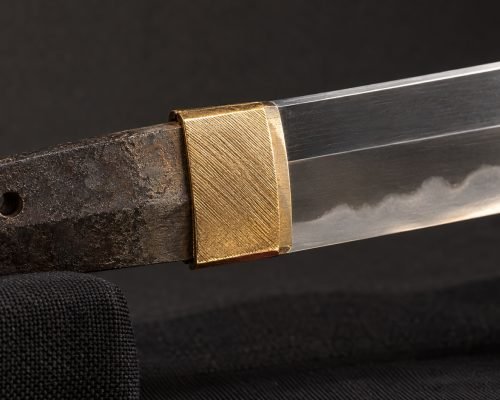
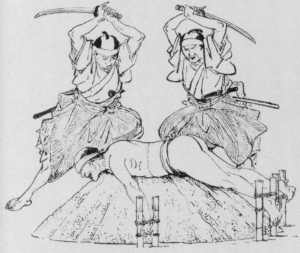
The Tameshigiri ritual, although somewhat macabre, is especially interesting for collectors, since the swords that treasure this test are highly valued. The cut and how many limbs or bodies had been severed were engraved on the tang of the sword as well as the name of the swordsman who made the test (Saidan-mei).
Although today there are different cut tests such as bamboo or mats, in the past it was They used human corpses to test the cutting ability. To be more specific this was mainly during the Edo period. Because although it is hard to believe, in older times the records show that some samurai tested their newly released blades with the local population with total impunity.
This time we will focus on the Tameshigiri of the corpses without going into ethical questions of the past of a society completely different from ours.
The court tests, despite what it may seem, were extremely thorough. Something characteristic of the Japanese throughout its history. Evidently the hand of the swordsman was equal to or more important than the make of the sword itself. In fact the cuts were made by specific families that perpetuated successive generations as swordsmen of tameshigiri for the Tokugawa shogunate. Within these, there were different ranks as it happened with apprentices and forgers for example.

PDG de SupeinNihonto, marchand et collectionneur d'art japonais ancien et d'armes japonaises anciennes, basé à Canillo, Andorre.